
There’s a moment each year — usually sometime in the second week of November — when people start looking at the grocery flyers a little differently.
Not with excitement.
Not with the old holiday anticipation.
But with calculation.
We used to joke about Thanksgiving being the one meal that knocked you into a food coma, the sacred tradition of overeating as if it were part of the liturgy. But these days, there are families out there just trying to get by — and they’re not thinking about turkey naps or stuffing round two. They’re thinking about the numbers. They’re thinking about the bill.
They’re thinking, How do I make a holiday out of what I can barely make a Tuesday out of?
And if you listen closely — not to the news, not to the politicians, but to the people — you’ll hear a quiet truth humming beneath everything:
It’s not that we don’t want the feast.
It’s that the money we have says something different.
I’ve walked through enough store aisles to know that holiday displays can feel like a taunt when your pockets aren’t lined the same way they used to be. The mountain of canned cranberry sauce. The towers of boxed stuffing. The frozen turkeys, which appear to be sagging inside their plastic, as if exhausted from waiting for a family that can afford them.
And behind those shelves, somewhere in line, is a parent calculating the cost of every side dish.
Someone is silently deciding between a whole bird and a pack of legs.
Someone choosing between dessert and a few extra days of groceries.
There is a shame that creeps in when the holiday table doesn’t look like the commercials — a quiet ache, the kind you don’t talk about.
But I want to tell you something that the world doesn’t say loud enough:
You can still have a good Thanksgiving.
Even when money is tight.
Even when the table looks different.
Even when the feast you imagined is scaled down into something far smaller, far simpler — far more honest.
It might not knock you into a coma.
It might not leave leftovers for three days.
It might not impress anyone scrolling past your photos.
But it can give you something else.
Something quieter.
Something deeper.
Something people forget to be thankful for.
It can give you presence.
It can give you a connection.
It can give you the kind of memory that doesn’t need gravy to feel full.
I’ve eaten my fair share of big meals — the kind that leave you leaning back, hands on your stomach, laughing because there’s nothing left to do but submit to gravity. But I’ve also eaten the small ones, the humble plates made from what a household could scrape together. And here’s what I’ve learned watching families stretch a dollar and a dream across a table:
The memories that stay with you aren’t always the ones built from abundance.
Sometimes they’re carved from scarcity.
Sometimes they’re shaped from the simple miracle of still being together.
A roasted chicken instead of a turkey.
Cornbread instead of rolls.
Canned green beans dressed up with whatever you had in the pantry.
A pie made with Cool Whip because heavy cream was too high this year.
Small things.
Humble things.
Real things.
People think a holiday is about the menu — but Thanksgiving, at its best, has always been about survival.
About making it through another year.
About holding close the people who made the hard days bearable.
About honoring the hands that cooked, even when the fridge was nearly empty.
There are families right now who are living that truth, whether they wanted to or not.
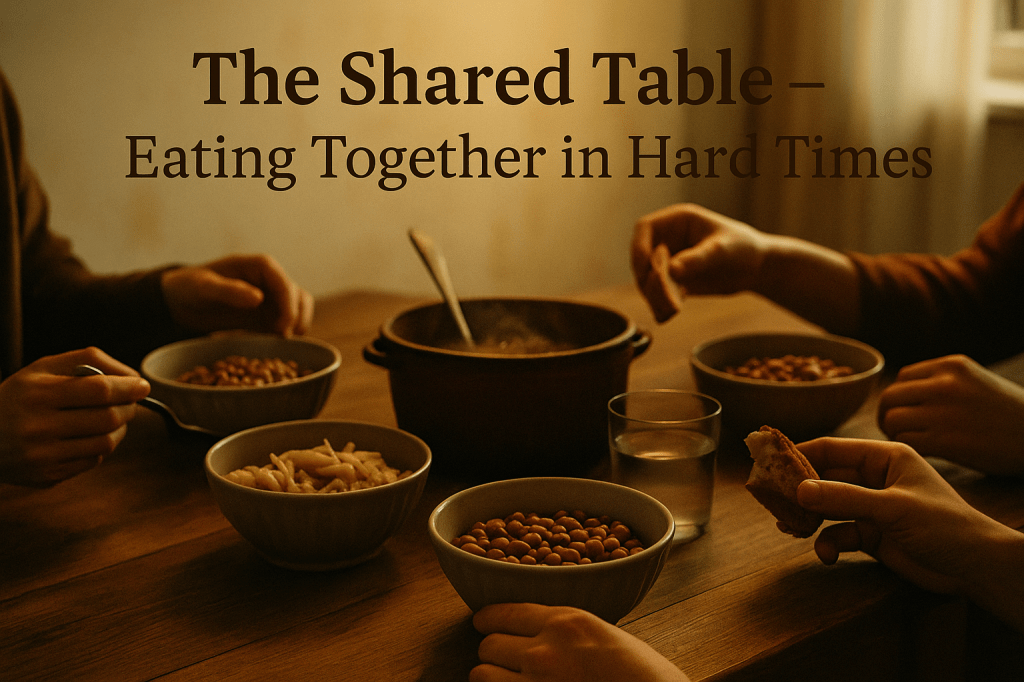
So if this year your table is smaller…
If the plates are fewer…
If the meal is simpler…
If the turkey is swapped for something that fits the math…
Please know this:
You still deserve Thanksgiving.
Not the performance of it — the heart of it.
There is dignity in doing the best you can with what you have.
There is grace in making enough when resources are scarce.
There is courage in deciding that gratitude doesn’t have to be extravagant to be real.
When you sit down to your meal — whether it’s a feast or a handful of comfort foods — take a breath. Look around. Feel the moment. Let it be enough. Let your presence be enough.
Because long after the leftovers are gone, long after the dishes are washed, you won’t remember the price of the turkey.
You’ll remember who sat with you.
You’ll remember who you held close.
You’ll remember that you made something out of nearly nothing — and that, in times like these, is its own kind of victory.
This year, let Thanksgiving be less about the coma and more about the connection.
Less about excess and more about enough.
Less about the cost of the meal and more about the worth of the moment.
When money is tight, meaning becomes easier to see.
Sometimes that’s the gift we didn’t know we needed.
Kyle J. Hayes
kylehayesblog.com
Please like, comment, and share
Related Reading:
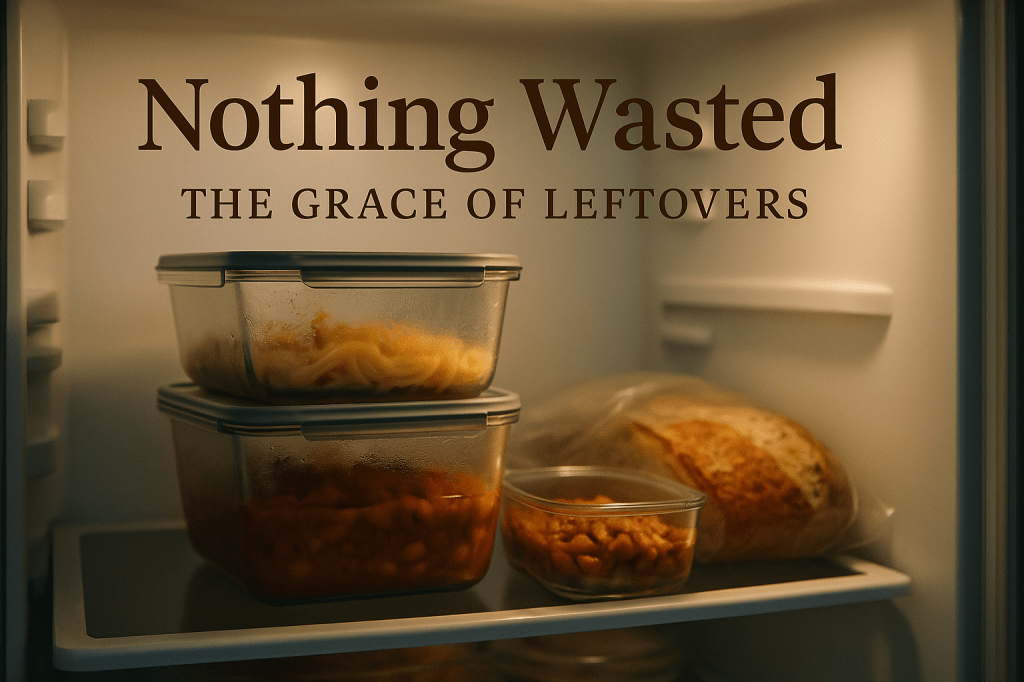
Nothing Wasted – The Grace Of Leftovers
Resources for Hard Times
If you’re looking for practical help, food support, or community resources, you can visit the Salt, Ink & Soul Resources Page.





 Salt,Ink, & Soul