Tag: comfort food

  • The Kindness Hidden in a Pot of Soup

    The Kindness Hidden in a Pot of Soup

    Salt, Ink & Soul — Humanity Through Food Series

    Some foods impress, and foods that entertain, and foods that demand your attention with spice or technique or flair. And then there is soup. Soup doesn’t perform. It doesn’t shout for applause. It just shows up—quiet, warm, patient—and asks nothing from you except a moment to breathe.

    I’ve been thinking about that lately: the way soup holds a kind of kindness that almost feels ancient.

    When we were kids, a bowl of soup could fix almost anything.

    Cold hands from staying out far too long.

    A bruised knee.

    A disappointment you didn’t yet have words for.

    Your mother could ladle warmth into you faster than any doctor ever could. The steam rising from the bowl wasn’t just heat—it was shelter. It was a reminder that even if the world out there felt too sharp, too big, too cold, someone still wanted you warm.

    And what strikes me now, all these years later, is how that same kindness follows soup wherever it goes.

    Because the smile someone gives when they’re handed a bowl of soup—the real stuff, hot and fragrant and made with small care—is the same whether they’re nine years old coming in from the cold or a grown man standing outside a shelter on a hard December night. Soup doesn’t judge circumstance. It doesn’t sort people into deserving or not.

    It simply says: Here. Eat. You matter enough for this warmth.

    I’ve written before about my green chile chicken soup—how it’s one of the few dishes I make that feels almost ceremonial. Maybe it’s the Chile. Maybe it’s the slow simmer. Maybe it’s something about putting so much of yourself into a pot that you forget, until much later, just how much you made.

    This last time, the recipe made enough to feed an entire table. Or, in my case, one man for several days. I portioned it into bowls and froze them, little time capsules of comfort stacked in my freezer like quiet promises.

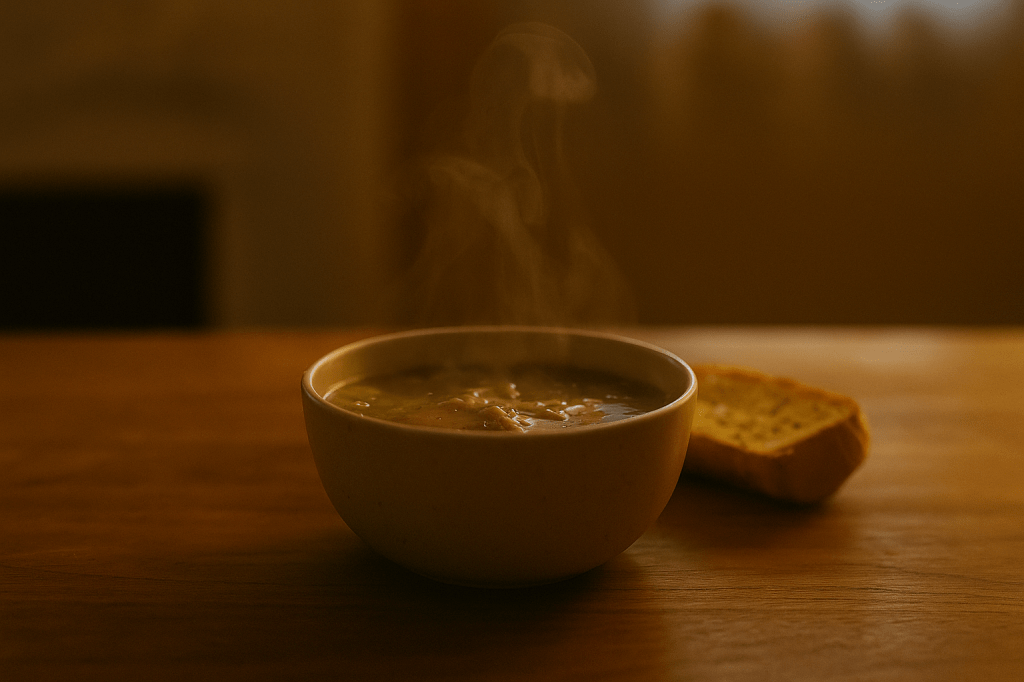
    Yesterday, I thawed one. But instead of rushing it, instead of taking the shortcut the microwave offers, I warmed it the slow way—in a pot, on low heat. Stirring occasionally. Letting the aroma rise up like a memory you didn’t realize you’d forgotten.

    Warming soup slowly feels like a kind of respect.

    A way of honoring the time it took to make it.

    A way of stepping back from the pace of everything else in life.

    When it was ready, I poured it into a bowl and paired it with garlic bread I’d tucked away in the freezer. Not fancy bread. Not homemade. But good enough—especially when its only job was to ensure that not a single drop of soup went uneaten.

    I’m generally not a fan of cold winters. The wind cuts too sharply. The days darken too early. The quiet feels heavier than I’d like to admit. But this soup—this simple bowl of warmth I made weeks ago and brought back to the stove—makes the season feel less like something to endure and more like something to move through gently.

    Soup does that.

    It softens hard days.

    It steadies you.

    It reminds you that survival doesn’t always have to be a battle—it can be as simple as letting something warm into your body and sitting still long enough to feel it.

    And maybe that’s why soup matters so much—not just to me, but to all of us.

    Because the ingredients may change. The hands that make it may differ. The kitchens may range from polished granite countertops to back-room burners in community centers. But the gift is the same:

    Here is warmth.

    Here is comfort.

    Here is something made with care, even if only for a moment.

    And in a world that asks so much of us, a simple bowl of soup can feel like an act of mercy.

    Kyle J. Hayes

    kylehayesblog.com

    Please like, comment, and share

    Resources for Hard Times

    If you’re looking for practical help, food support, or community resources, you can visit the Salt, Ink & Soul Resources Page.

    👉 Resources for Hard Times

    👉 Keto Green Chile Chicken Soup Recipe

    👉 Simple Garlic Chicken Soup Recipe

  • When a Meal Becomes a Memory

    When a Meal Becomes a Memory

    Salt, Ink & Soul — Humanity Through Food Series

      Certain meals stop being food and start becoming something else.

    They begin as plates you throw together because you’re hungry, because it’s Sunday. After all, that’s what somebody’s mother or grandmother always made when the week finally exhaled. But somewhere along the way, without ceremony or announcement, that meal crosses a line. It stops being just dinner and turns into a place you go.

    You don’t just eat it.

    You return to it.

    We don’t talk about it out loud most of the time, but all of us have that one plate we reach for when we’re sad, or tired, or quietly unraveling. The one we lean on when we’re happy, too. The meal that shows up for birthdays and bad days, big news and no news. The one you make when you want to be alone with your thoughts, and the one you order when you don’t have it in you to talk about what you’re feeling, but you still need something that understands.

    Mine is simple. So simple it almost feels silly to admit.

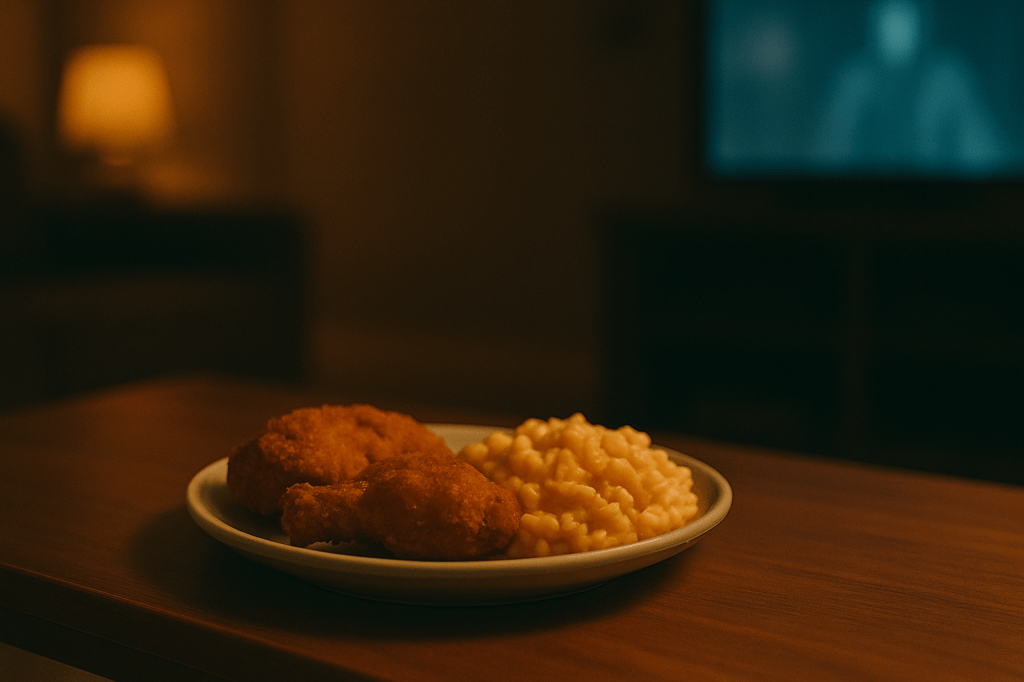
    Fried chicken and macaroni and cheese.

    That’s it.

    No fancy twist. No elevated version. Just what it is.

    From Sunday dinners to regular weekday meals, it has always been an all-purpose comfort for me. The kind of plate that doesn’t need a special occasion to make sense, but rises to meet any occasion anyway. I can’t tell you exactly when I started loving it this way. There wasn’t some cinematic moment where the camera zoomed in, and the music swelled. It just… settled in over time.

    Somewhere between childhood and now, that plate stopped being “fried chicken and mac and cheese” and became my meal. My anchor. My reset button.

      These days, it hits the hardest in December.

    Right now is the best time for it, because it’s wrapped up with another ritual: Christmas movies. The kind I’ve seen so many times I can mouth the lines before the actors say them, and yet it still doesn’t get old.

    For me, the centerpiece of that whole season is A Charlie Brown Christmas.

    I’ve watched it more times than I can count. I know when the music will swell, when the kids will dance on that small stage, when Charlie Brown will look around at the world and see something missing that nobody else wants to name. And yet, every time it comes on, it feels like I’m seeing it for the first time and coming home at the same time.

    There’s a rhythm to it now.

    I start the TV.

    I fix the plate—fried chicken, mac and cheese, nothing fancy, just right.

    I sit down and let both of them do what they do.

    The crunch of the chicken.

    The heavy, creamy weight of the mac.

    That soft, sad-sweet piano line drifting through the room.

    The screen glows. The fork moves. The world narrows down to a small circle of light, sound, and taste.

    And in that circle, I am okay.

      It’s not that the problems disappear. The bills don’t magically pay themselves because I put on a cartoon from the ’60s. The loneliness of December doesn’t evaporate because there’s cheese melting on my plate. The ghosts of old seasons, old arguments, old losses—they all still exist.

    But for the length of that special, with that plate in my lap, the sharp edges of life soften.

    The meal becomes more than calories.

    The movie becomes more than nostalgia.

    Together, they become a ritual—a small ceremony of survival.

    That’s the thing we don’t always say out loud: comfort isn’t always grand. Sometimes it’s just consistent. Sometimes it’s a plate you’ve had a hundred times and a story you know by heart showing up for you when you don’t have the words to ask for help.

    Fried chicken and mac and cheese aren’t heroic.

    Charlie Brown Christmas isn’t epic in scale.

    But somehow, when the house is quiet and the year feels heavier than you want to admit, they work together like a kind of emotional shorthand. The flavors tell your body, “You’ve been here before, and you made it through.” The movie tells your heart, “You’re not the only one who looks around and feels slightly out of place.”

      Over time, that combination becomes bigger than the sum of its parts.

    The meal calls up the memories: Sunday dinners, laughter from another room, people who were there and people who aren’t anymore. The movie folds around those memories like a blanket, wrapping the past and the present together in one long, uninterrupted feeling.

    That’s when a meal becomes a memory.

    Not because someone took a picture of it.

    Not because it landed on a holiday menu.

    But because you kept going back to it, again and again, until your life wrapped itself around it.

    You could take away the decorations, the gifts, the perfect tree, the curated seasonal playlists. And if I still had that plate and that movie, I’d still have something that felt like Christmas to me.

    It’s easy to dismiss these rituals as small, even trivial. Just comfort food. Just a cartoon. Just another December evening. But the older I get, the more I understand that these “justs” are the threads holding a lot of us together.

    Some people have big gatherings and full tables to mark this season. Others have a single plate and a glowing screen. Both are valid. Both are real. Both are ways of saying, “I’m still here. I’m still trying to feel something good.”

    So when I sit down with fried chicken, mac and cheese, and that familiar boy with the round head and heavy heart, I’m not just watching TV and eating dinner.

    I’m revisiting every version of myself that has ever needed that moment.

    Every year, I’ve made it this far.

    Every December, I’ve managed to carve out a little corner of warmth, even when the rest of the world felt cold.

    That’s the quiet power of a favorite meal in a favorite season: it doesn’t just fill you.

    It remembers you.

    It meets you where you are—sad, joyful, exhausted, hopeful, or somewhere tangled in between—and it says, “Come on. Sit down. We’ve been here before. We can do it again.”

    And in that way, a simple plate and a simple movie become something sacred.

    Kyle J. Hayes

    kylehayesblog.com

    Please like, comment, and share

    Resources for Hard Times

    If you’re looking for practical help, food support, or community resources, you can visit the Salt, Ink & Soul Resources Page.
    👉 Resources for Hard Times

  • The Quiet Reckoning of Leftovers

    The Quiet Reckoning of Leftovers

    Salt, Ink & Soul — Humanity Through Food Series

    There’s a certain hush that falls after Thanksgiving — not the fullness or fanfare of the holiday itself, but a softer, more settling quiet. The kind that wraps around a home like a warm blanket. The kind that whispers that the celebration may be over, but the comfort isn’t.

    Because today is when the real magic begins.

    Today is the day the leftovers come alive.

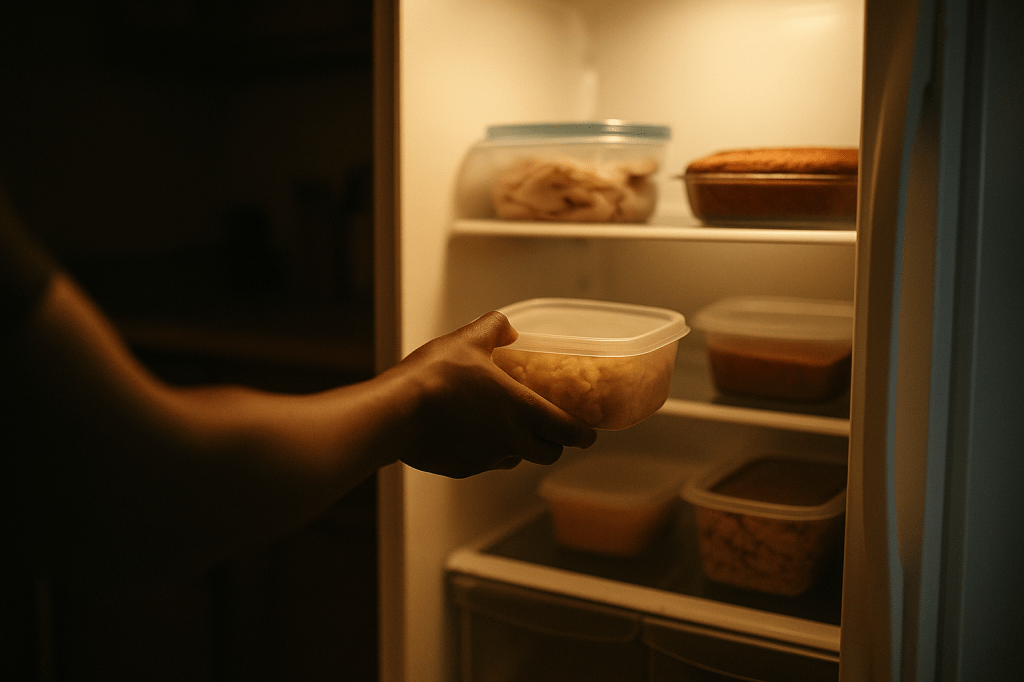
    The fridge becomes its own little universe of possibility — containers lined like tiny promises. Dressing that deepens overnight, turkey that’s ready to reinvent itself into a dozen different meals, pound cake that turns into breakfast without anyone questioning a thing. Leftovers are the afterglow of a holiday well-lived, and maybe even better lived the day after.

    For those of us raised to stretch meals like muscles, leftovers weren’t just “extra food.” They were reassurance. Security. A quiet kind of abundance that steadied you through the next few days. Maybe even next week.

    Leftovers meant:

    We’re okay. At least for now.

      There’s a joy to leftovers that feels almost childlike — the thrill of opening the fridge and imagining what new creation you’ll craft from what remains.

    Turkey and rolls?

    That’s a sandwich ritual.

    Dressing and gravy?

    That’s comfort in a bowl.

    Macaroni and cheese?

    Somehow it gets better every time it’s reheated — nobody knows the science, but nobody questions it.

    In a world obsessed with novelty, leftovers teach us a quieter truth:

    There is beauty in returning to what you already have, in transforming what remains, in finding comfort in the familiar.

    The feast is flashy.

    The leftovers do the real work.

      And then there’s the kind of generosity that only shows up after the plates are cleared — the people who send you home with more than you expected, more than you asked for, maybe even more than you felt worthy of receiving.

    The friend who packs you a dessert “just in case.”

    The auntie who fills your container until the lid strains.

    The host who insists you take another tray, their eyes saying what words never do:

    I want you fed.

    I want you steady.

    I want you to be cared for when you walk out that door.

    That is its own kind of love.

    A quiet, intentional love that doesn’t perform — it provides.

    Sometimes the food you bring home is better than anything you ate at the table, not because of the taste, but because someone wanted you to have it.

    Leftovers can be a love language, too.

      If the holiday feast is the performance, the leftovers are the truth.

    They reveal:

    • what was made with abundance

    • what was shared freely

    • what was loved most

    • what people wanted you to take with you

    • and what gets better when it rests

    Leftovers tell the story of a household — the real version. The version where people quietly look out for each other. The version where meals stretch because life requires it. The version where comfort doesn’t disappear once the guests go home.

    Leftovers tell us that survival doesn’t always look heroic.

    Sometimes it looks like enough food for tomorrow.

    Sometimes it looks like mac and cheese after a long day.

    Sometimes it looks like a pound cake eaten slowly because it feels like a blessing wrapped in foil.

      Leftovers aren’t scraps.

    They’re gifts.

    Gifts of ease.

    Gifts of warmth.

    Gifts of a holiday that lingers.

    Gifts from people who fed you in more ways than one.

    They carry the flavor of yesterday into today.

    They soften the week ahead.

    They remind you that abundance doesn’t always roar —

    sometimes it whispers from behind a refrigerator door, waiting for you to reach in and begin again.

    Because leftovers aren’t just evidence of what you had.

    They’re evidence of what still remains.

    And sometimes?

    That’s more than enough.

    Kyle J. Hayes

    kylehayesblog.com

    Please like, comment, and share

    Resources for Hard Times

    If you’re looking for practical help, food support, or community resources, you can visit the Salt, Ink & Soul Resources Page.
    👉 Resources for Hard Times

  • $10 Thanksgiving Recipes — A Collection for When Enough Has to Be Enough

    $10 Thanksgiving Recipes — A Collection for When Enough Has to Be Enough

    Salt, Ink & Soul — Humanity Through Food Series

    There’s a quiet truth most folks swallow whole and never speak aloud: Thanksgiving isn’t easy for everyone.

    Some years, the money lines up just right — the fridge humming with possibility, the pantry stacked like a promise. Those are the years when abundance feels almost ordinary, when the table groans under the weight of dishes you didn’t have to second-guess.

    And then there are the other years.

    The years when the math hits different.

    Not the math they teach in school — but the arithmetic of survival.

    The kind done in a grocery aisle with your thumb tapping the side of a dented shopping cart as you tally what can stretch, what can substitute, what can pass for tradition. The kind of math where you aren’t calculating calories or flavor — you’re calculating hope.

    Because “enough” is a slippery thing.

    Some years it looks like a feast.

    Some years, it looks like a single plate made with intention.

    And some years — the hardest ones — it looks like a meal pieced together from whatever you can afford, prayed over not because it’s sacred, but because you’re scared.

    This collection is for those years.

    Not the curated, photographed, performative holidays.

    Not the spreads built for Instagram or the tables where extra plates are laid out just for show.

    These recipes belong to the years of holding on — the years of stretching dollars, stretching ingredients, stretching yourself. The years when you’re trying your best to make Thanksgiving happen with whatever life hasn’t taken from you.

    These dishes aren’t glamorous.

    But they are honest.

    They are warm.

    They are filling.

    And they work.

    All under $10.

    All built from the basics.

    All crafted to taste like something even when the world feels like nothing.

    Let’s begin.

    1. $8 Creamy Turkey (or Chicken) Rice Bake

    A one-pan salvation dish — simple, reliable, and the kind of comfort that tastes like someone finally putting a hand on your shoulder and saying, You made it through another day.

    Ingredients ($8 total)

    • 1 can cream of chicken soup — $1.25
    • 1 cup uncooked rice — $0.60
    • 1 can mixed vegetables — $0.95
    • 1 cup shredded chicken or turkey (rotisserie leftovers work) — ~$3
    • Water + salt + pepper
    • Optional: garlic or onion powder — $0.30

    Instructions

    1. Combine all ingredients in a small baking pan.
    2. Add 1 can of water, stir, and cover with foil.
    3. Bake at 375°F for 45 minutes.
    4. Let it rest for 10 minutes to thicken.

    It won’t win any culinary awards — but on a cold Thanksgiving evening, it tastes like relief.

    2. $9 Sweet Potato Holiday Mash

    Cheaper than pie. Softer than memory. Warm enough to feel like love even when love has been scarce.

    Ingredients ($9 total)

    • 3 large sweet potatoes — $2.50
    • ¼ stick butter — $0.50
    • ¼ cup brown sugar — $0.40
    • Cinnamon — $0.25
    • Salt — $0.05
    • Mini marshmallows (optional, but they help) — $1.50
    • Milk — $0.30

    Instructions

    1. Peel and boil sweet potatoes until soft.
    2. Mash with butter and a splash of milk.
    3. Add brown sugar, salt, and cinnamon.
    4. Bake at 375°F for 10 minutes, with marshmallows if you have them.

    A reminder that sweetness still exists — even in lean years.

    3. $7 Holiday Green Bean Casserole

    Because sometimes the holiday isn’t the turkey at all — it’s the sides that taste like the homes we came from.

    Ingredients ($7 total)

    • 2 cans green beans — $2
    • 1 can cream of mushroom soup — $1.25
    • Fried onions (store brand) — $2
    • Salt + pepper — $0.10
    • Splash of milk or water

    Instructions

    1. Mix everything except the fried onions.
    2. Spread into a baking dish.
    3. Bake 20 minutes at 375°F.
    4. Top with fried onions and bake for 5 more minutes.

    It tastes like crowded kitchens, clattering pans, and the laughter that lived between generations — imperfect, but familiar.

    4. $5 Cornbread Stuffing

    Simple. Cheap. Stretchable. A dish that feels like it’s been passed through hands that learned to make magic from almost nothing.

    Ingredients ($5 total)

    • 1 box cornbread mix — $1
    • 1 egg — $0.20
    • Water or milk
    • ½ onion (optional) — $0.35
    • Butter — $0.50
    • Chicken bouillon cube — $0.20
    • Celery (optional) — $0.40

    Instructions

    1. Bake cornbread and crumble into a bowl.
    2. Sauté onions and celery in butter if you have them.
    3. Add 1 cup hot water + bouillon.
    4. Mix and bake for 15 minutes.

    Even the simplest things can feel like a holiday when you’re trying your best.

    5. $10 One-Pot Holiday Pasta

    A reimagined Thanksgiving for nights when you need a full stomach more than perfection.

    Ingredients ($10 total)

    • 1 lb pasta — $1.25
    • 1 can chicken — $2
    • 1 can of peas — $1
    • 1 can cream of chicken soup — $1.25
    • Garlic powder — $0.25
    • Parmesan shaker — $2
    • Salt + pepper

    Instructions

    1. Boil pasta.
    2. Drain and stir in remaining ingredients.
    3. Heat on low until creamy.

    Not quite turkey and gravy — but warm enough to soften the edges of the day.

    A Final Thought

    Thanksgiving was never meant to be a performance.

    It was meant to be a moment — a pause — where we gather whatever we have and honor it.

    Some years, that’s a table full of abundance.

    Some years, it’s one humble dish lit by the dim light of a kitchen bulb.

    But meaning does not require excess.

    Gratitude does not require plenty.

    These meals are for the years when you build Thanksgiving out of the little you have — and still manage to carve out something like hope.

    Because “enough” doesn’t come from abundance.

    It comes from presence, memory, and the quiet prayer that next year will be kinder than this one.

    Kyle J. Hayes

    kylehayesblog.com

    Please like, comment, and share

    Resources for Hard Times

    If you’re looking for practical help, food support, or community resources, you can visit the Salt, Ink & Soul Resources Page.

    👉 Resources for Hard Times

  • 🍰 Pound Cake: The Sweet Weight of Simplicity

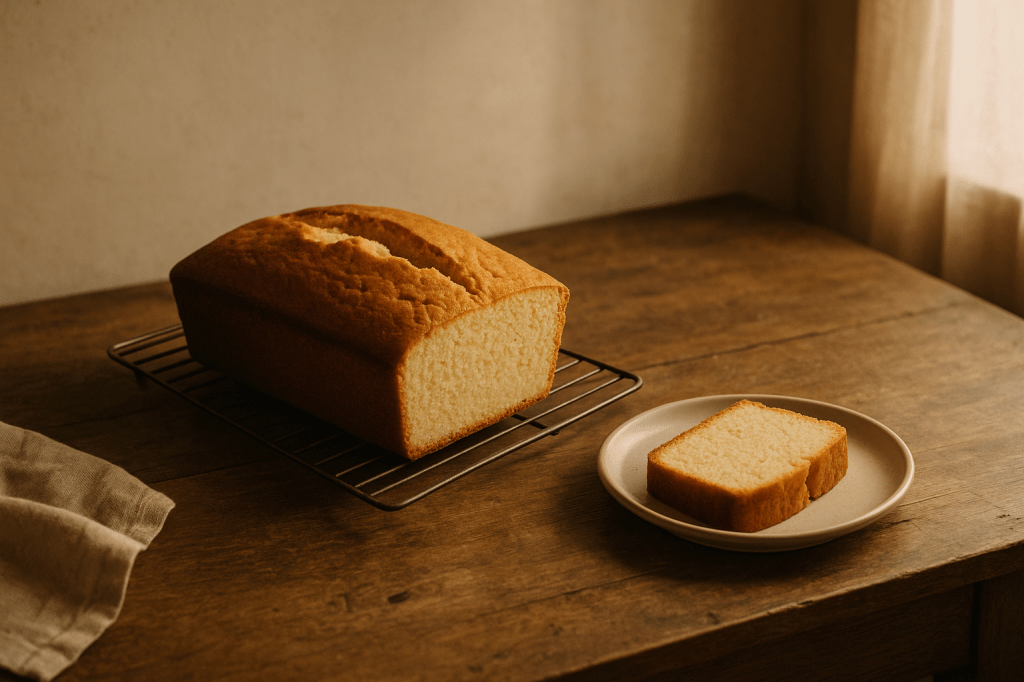
    🍰 Pound Cake: The Sweet Weight of Simplicity

    Timeless comfort from almost nothing — serves 8–10

    🧾 Ingredients

    • 2 cups all-purpose flour
    • 2 cups granulated sugar
    • 1 cup butter (2 sticks, salted or unsalted)
    • 4 large eggs
    • ½ cup milk
    • 2 tsp vanilla extract
    • 1 tsp baking powder
    • ¼ tsp salt
    • Zest of 1 lemon (optional)

    Servings: 8–10 generous slices

    🍳 Instructions

    1. Preheat & Prepare

    Set oven to 350°F (175°C).

    Grease and lightly flour a loaf pan or bundt pan.

    (Use butter for this step if you want your kitchen to smell like nostalgia.)

    2. Cream the Base

    In a large bowl, beat the butter and sugar until pale, airy, and fluffy — about 4 minutes.

    This is where patience, air, and memory become part of the batter.

    3. Add the Eggs

    Add the eggs one at a time, mixing well after each.

    Watch the mixture turn a warm golden color — the shade of good memory.

    4. Blend the Dry Ingredients

    In a separate bowl, whisk together:

    • Flour
    • Baking powder
    • Salt

    5. Bring It Together

    Add the dry ingredients to the butter mixture gradually, alternating with milk and vanilla.

    Mix only until smooth — overmixing steals tenderness.

    6. Pour & Bake

    Pour the batter into your prepared pan and smooth the top.

    Bake for 50–60 minutes, until golden brown and a toothpick inserted into the center comes out clean.

    (If the top browns too quickly, tent loosely with foil.)

    7. Cool & Serve

    Let the cake rest 10 minutes before turning it out.

    Cool completely on a rack.

    Serve plain, dusted with powdered sugar, or crowned with fresh fruit — this cake never asks for more than what you already have.

    🕯️ Stretch It Further

    • Breakfast: Toast slices with butter and a sprinkle of cinnamon.
    • Dessert: Top with berries and whipped cream.
    • Gift: Wrap in parchment and twine — nothing says love like a homemade pound cake.
    • Freezer-Friendly: Wrap individual slices in foil or plastic wrap for easy storage. Keeps up to 3 months.

    💭 The Soul Behind It

    Pound cake is one of those recipes that has survived every storm — Depression, war, loss, and celebration alike.

    It was born from equality: a pound of each ingredient, no waste, no vanity.

    It’s proof that sometimes sweetness isn’t a luxury — it’s a memory baked into the bones of survival.

    Kyle J. Hayes

    kylehayesblog.com

    Please like, comment, and share

    Resources for Hard Times

    If you’re looking for practical help, food support, or community resources, you can visit the Salt, Ink & Soul Resources Page.
    👉 Resources for Hard Times

  • Beneath the Steam: On Illness and the Old Ways

    Beneath the Steam: On Illness and the Old Ways

    It began like a thief who knew my schedule better than I did—slow, deliberate, testing every door before finding the one left unlocked. A scratch in the throat. A heaviness in the limbs. The faint suspicion that breathing had become less casual, less thoughtless, than it had been yesterday. I told myself I’d push through. I said to myself that sickness is for other people, those who have the time for it. But sickness does not bargain. By midweek, it had settled in fully, an uninvited tenant pressing down on my lungs, hijacking one of the things I hold dearest—my taste.

    Something is humbling about losing your sense of taste. I have crossed oceans for flavor. I have eaten in alleys and palaces alike, chasing the elusive truth of a dish. Food, to me, is not just sustenance—it is memory, culture, love made tangible. And now it was gone. My morning coffee could’ve been hot water from a radiator. My favorite bowl of ramen tasted like broth poured through gauze. Even the memory of taste felt muted, as though my brain were looking for a file that had been deleted.

    We live in an age where you can treat almost anything with a credit card and a ten-minute visit to the pharmacy. Pills for the fever, sprays for the throat, syrups that coat the lungs in menthol haze. Convenience at the ready. But the best cures—the ones that live in the marrow of memory—require no prescription. For me, it begins with green tea, lemon, and honey. My mother’s go-to remedy. The scent alone brings her into the room: the citrus brightness cutting through the air, the floral sweetness of honey sinking into the steam, the earthiness of green tea grounding it all. She swore by it. I still do.

    And then, there is chicken soup. I’ve traveled the country, eaten at the tables of strangers, but if America has a single unifying folk remedy, it is this. In Southern kitchens, Italian kitchens, and even kitchens in California, it’s the same idea, different dialects. Chicken, water, vegetables, salt. Sometimes noodles, sometimes rice. Always the intention to heal. And it works. I don’t know if it’s the steam easing the lungs, the broth coaxing warmth back into your bones, or the simple fact that someone cared enough to make it. But it works.

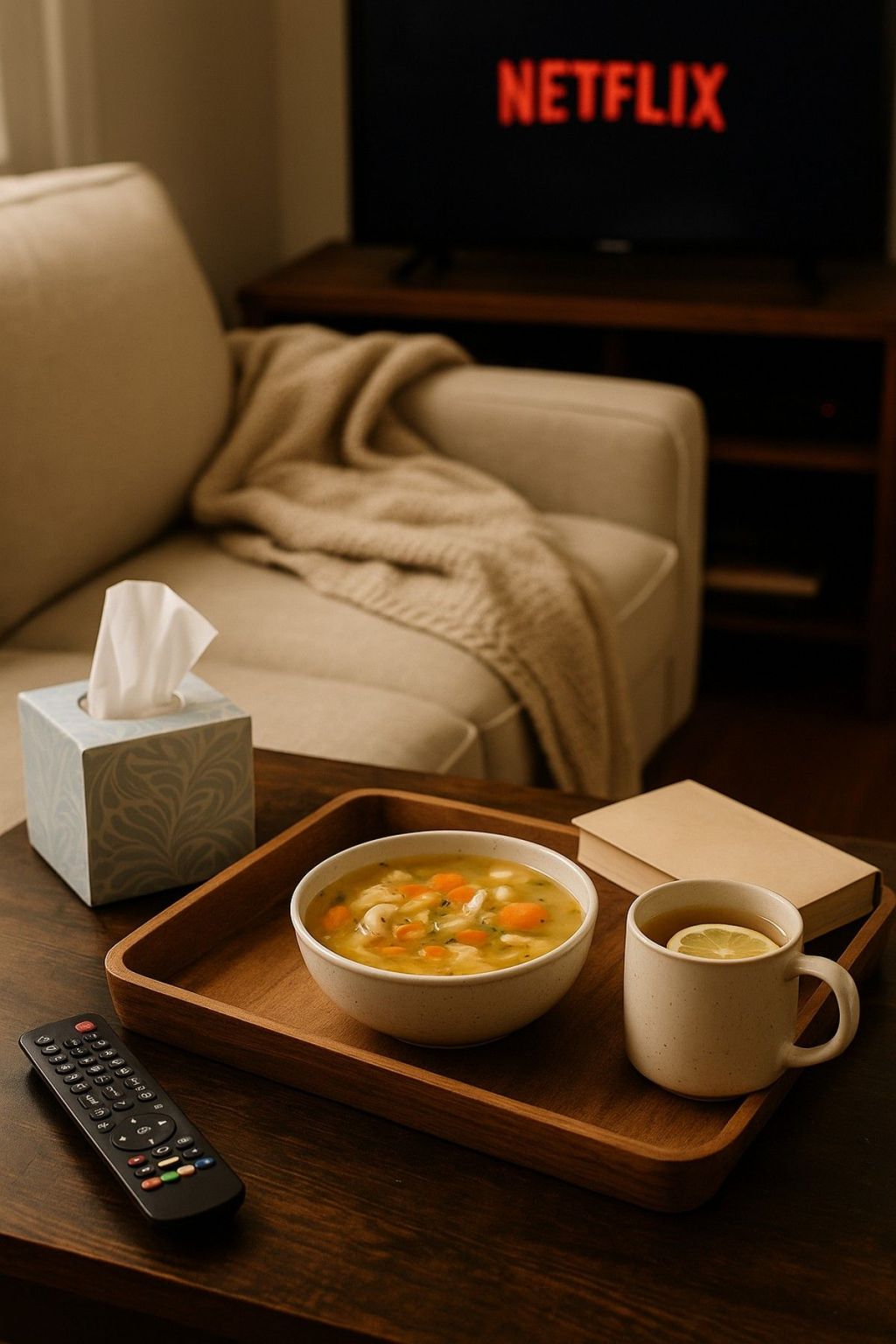
    There’s a ritual to it. Once the soup is simmering, you find your spot. For me, it’s the sofa, where the sun pools in late afternoon. Pillows arranged just so, blanket at the ready. A remote within arm’s reach, Netflix queue prepared to swallow the next several hours. This is not indulgence; this is convalescence. You let the warmth from the bowl linger in your hands before each spoonful, breathing in the scent as if it were a prayer. You sip slowly, allowing the broth to seep into the cracks that sickness has made in you.

    Recovery isn’t just about medicine. It’s about surrender—admitting that you are, in fact, mortal, and in need of care. It’s about allowing yourself to slow down, to be still, to let the old ways work their magic while the world spins on without you. Green tea and lemon. Honey. Chicken soup. These are not just cures for the body—they are acts of remembrance, of connection to the people and places that shaped you. They remind you that before we had walk-in clinics and urgent cares, we had each other. And sometimes, that was enough.

    By the time my taste returns, I know the sickness will already be loosening its grip. But the tea and the soup will remain, as they always have, waiting for the next time life reminds me that I am breakable—and that the cure is as much about being fed as it is about being healed.

    Click here for the full chicken soup recipe

    https://kylehayesblog.com/simple-garlic-chicken-soup/

    By Kyle J. Hayes

    kylehayesblog.com

    Please like, comment, and share

  • When the Lord Smiles on You (And Brings Soup)

    When the Lord Smiles on You (And Brings Soup)

    I’ve lived in New Mexico for years now. Long enough to know the smell of roasting green chile means autumn and that the line between red and green isn’t just about salsa—it’s about identity. Long enough to pretend I’ve tasted it all.

    But that’s the thing about New Mexico. You never really taste it all.

    This place holds onto its secrets.

    It waits until just the right moment—until your guard is down, until your belly’s empty, and your soul is quiet—

    Then the Lord smiles on you, and someone places a bowl in your hands that changes everything.

    Last year, it was pozole.

    Not the pozole you find at a chain or off some laminated menu.

    This was the real thing.

    Pozole with history. With lineage.

    Pozole, made by my friend’s father-in-law—an old school Mexican, the kind of man who measures time by the slow dance of a simmering pot.

    His skills? Learned not from books or shows or trendy food blogs,

    but from Oaxaca, in the old country.

    Where ingredients are respected, and nothing is wasted.

    Where cooking isn’t a task—it’s an inheritance.

    This man—quiet, steady, always working—has done more than just feed people.

    He’s helped restore and preserve one of Albuquerque’s most beloved spots: El Pinto Restaurant.

    He’s a steward of flavor and tradition who reminds you that real craftsmanship never needs to shout.

    That pozole was a revelation.

    Deep, layered, soulful.

    A bowlful of memory, spice, and heat that reached places no therapy ever has.

    And then, today, the Lord smiled on me again.

    Same friend. Different bowl.

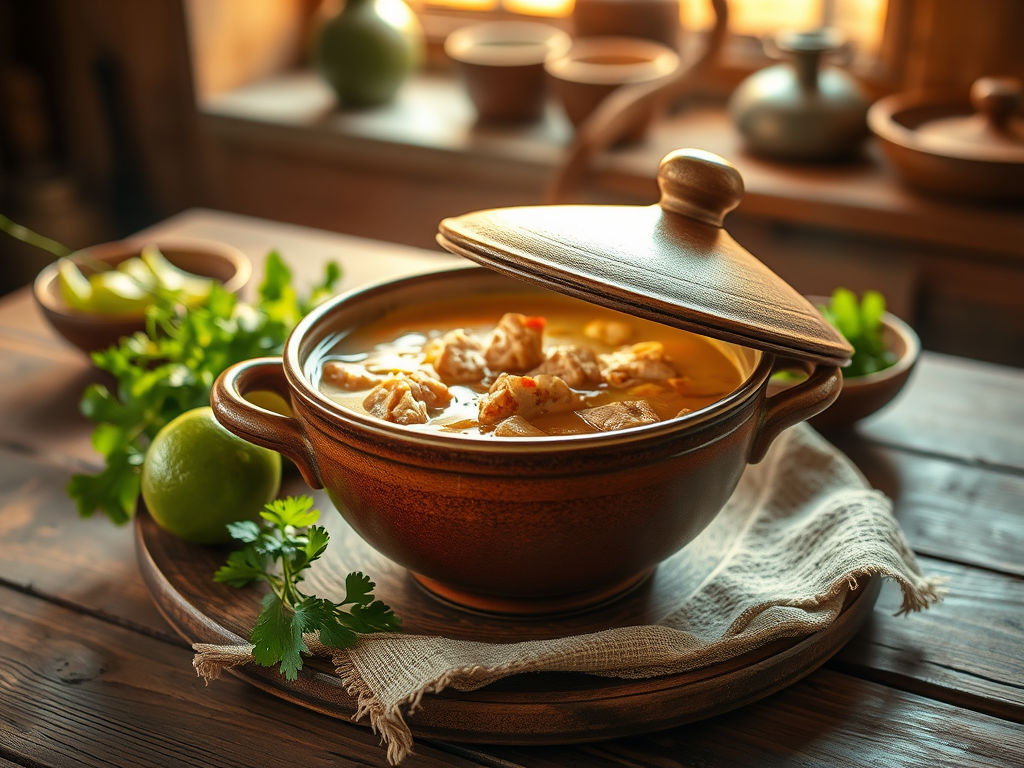
    This time, it was Chicken Caldo.

    No warning.

    No occasion.

    Just the quiet generosity of someone handing you a miracle in a paper bowl.

    Now, if you’ve never had a real caldo de pollo—not the half-hearted version simmered in a rush, but the kind that takes its time—

    let me try, poorly, to explain.

    It’s not just soup.

    It’s comfort liquified.

    Chicken is so tender it gives up.

    Vegetables that still taste like vegetables, not mush.

    And then—the lime.

    That fresh lime, squeezed just right, cuts through the warmth and lifts the flavor.

    Like a prayer whispered into something sacred.

    The taste?

    I won’t pretend I can describe it.

    All I know is that each bite felt like a home I didn’t know I missed.

    I closed my eyes and sat still, and for a few minutes, I was in heaven.

    I still haven’t tried everything New Mexico has to offer.

    Maybe I never will.

    But every now and then, I get lucky.

    And in this place, luck doesn’t come dressed in fine linen or gourmet plating.

    It comes humble, in a shared container,

    from someone who learned to cook in Oaxaca,

    someone who doesn’t care about Michelin stars,

    but who knows that feeding people—truly feeding them—is one of the last honest things we’ve got left.

    So I sit.

    I eat.

    I give thanks.

    And hope the Lord sees fit to smile on me again.

    By Kyle Hayes