Tag: field journal

  • A Gentle Return

    A Gentle Return

    Salt, Ink & Soul — Field Journal Series, Part III

    It was as if I’d never started. All my momentum gone — vanished like breath on glass. The old voice returned, whispering reasons to stay still.

    Why go? It asked. You can see everything on a screen.

    Going outside is what made you sick.

    Your car is too big. The police will stop you.

    Each thought a stone in my gut, each hesitation dressed as reason.

    Still, I drove — slow, deliberate, a man testing the edge of his own promise. The sun climbed high over Albuquerque as if to dare me. I turned off Montaño and followed the signs toward Pueblo Montaño Picnic Area, a place recommended by a co-worker. At first, it seemed I was never meant to find it, but I did, somehow.

    At the entrance, the first thing I saw was the carvings — towering guardians hewn from fallen trees. Birds poised mid-flight, turtles climbing, coyotes howling into the stillness. Their faces caught the morning light, wood polished by wind and time.

    For a moment, I thought about turning around. The same quiet panic pressed behind my ribs: You’ve seen enough. You can take a photo from the car. No one will know the difference.

    But something in the carvings — maybe the permanence of their stillness — silenced the argument. I stepped out.

    The path curved through low brush and cottonwoods, beginning to yellow with the season. The air was sharp with the scent of sage and sun-warmed dust. My body, still cautious from its revolt, protested at first — a cough, an ache, a slow complaint in the knees. But the further I walked, the more those protests dissolved into breath.

    At a small bench near a patch of golden brush, I stopped. The wood was warm. The wind moved like a whisper that had nothing to prove. From where I sat, I could see the Rio Grande glinting between the trees — quiet, relentless, alive.

    And for the first time in days, I didn’t feel like a man recovering. I felt like one returning.

    Progress may not come in the form of long drives or grand destinations. Maybe it’s just the act of standing outside yourself long enough to see where you are.

    The world isn’t waiting to be conquered — it’s waiting to be witnessed.

    As I turned back toward the car, the carvings seemed different. The bird looked less like it was guarding the trail and more like it was blessing the departure. The coyotes, once frozen in howls, now looked like they were calling me forward.

    Maybe that’s what growth really looks like — not grand adventures, but small acts of motion.

    What do you think… should I keep going?

    Kyle J. Hayes

    kylehayesblog.com

    Please like, comment, and share

  • Notes for the Road

    Notes for the Road

    Salt, Ink & Soul — Field Journal Series, Part II

    We’ve all heard the phrase, “I’m not as young as I used to be.”

    But for me, it’s never really been about age — it’s about gravity. The pull of places, the way life settles you down unless you fight to stay awake inside it. Some people live where they were born, their stories looping through familiar streets and steady skies. I’ve always lived apart — even when I was close, I was at the edge.

    People call it a wandering spirit.

    I prefer searching spirit. Wandering implies lostness. Searching carries intent — a hunger for something not yet found but deeply felt.

    The Pull

    When I first moved to Albuquerque, the desert had its own kind of whisper. The space between things felt wider here — room for thoughts to stretch, for silence to mean something. I learned about  Earthship homes — houses built from recycled materials, designed to sustain themselves off-grid and to live with the land rather than against it.

    It wasn’t just their design that intrigued me — it was their defiance. They refused permission. They were proof that you could live differently and still live beautifully.

    So I made the trip north.

    The Earthships

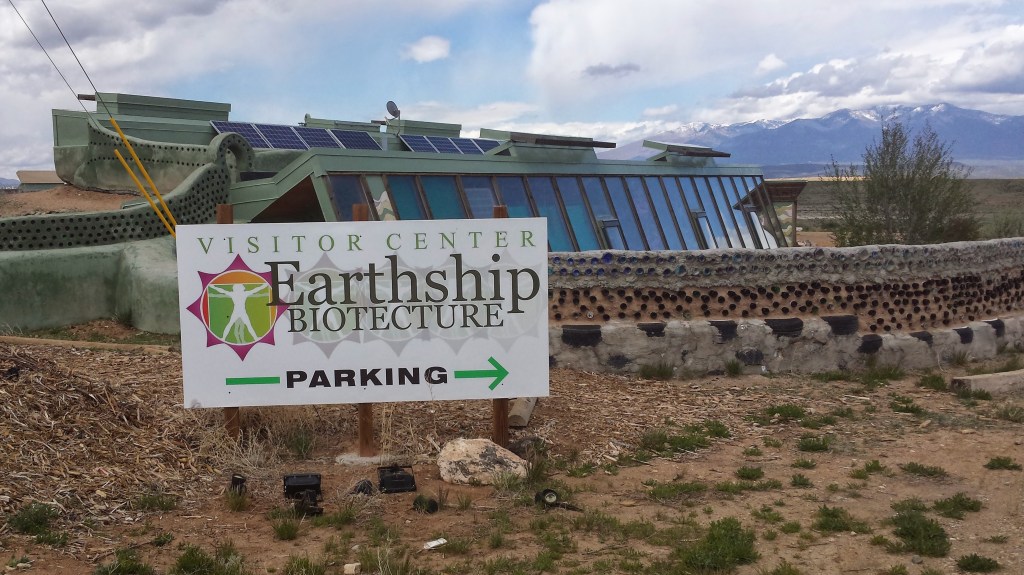
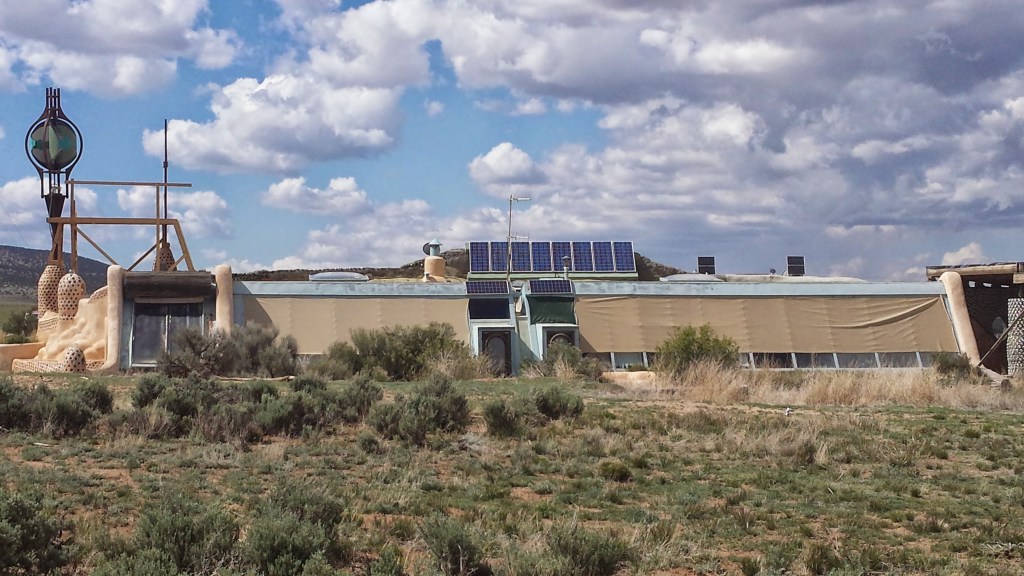
    The drive into Taos feels like crossing a threshold — sagebrush to sand, sky expanding until it seems to hum. Then, at the edge of nowhere, the Earthships appear like a dream half-finished — domed roofs, bottle walls shimmering in sunlight, glass catching sky.

    I took the tour slowly. Inside, the air felt calm, held. The walls glowed faintly green where glass bottles caught the light. Planters of herbs ran along windows, drinking sunlight and water collected from the rain. It was quiet — not empty, just balanced.

    The guide spoke about sustainability, but I was hearing something else — a kind of philosophy of living: build with what’s been discarded, make beauty out of survival. It reminded me that creation isn’t always new; sometimes it’s just rearranged endurance.

    “Exterior of Earthship home near Taos, New Mexico”
    exterior of earthship

      The Staircase

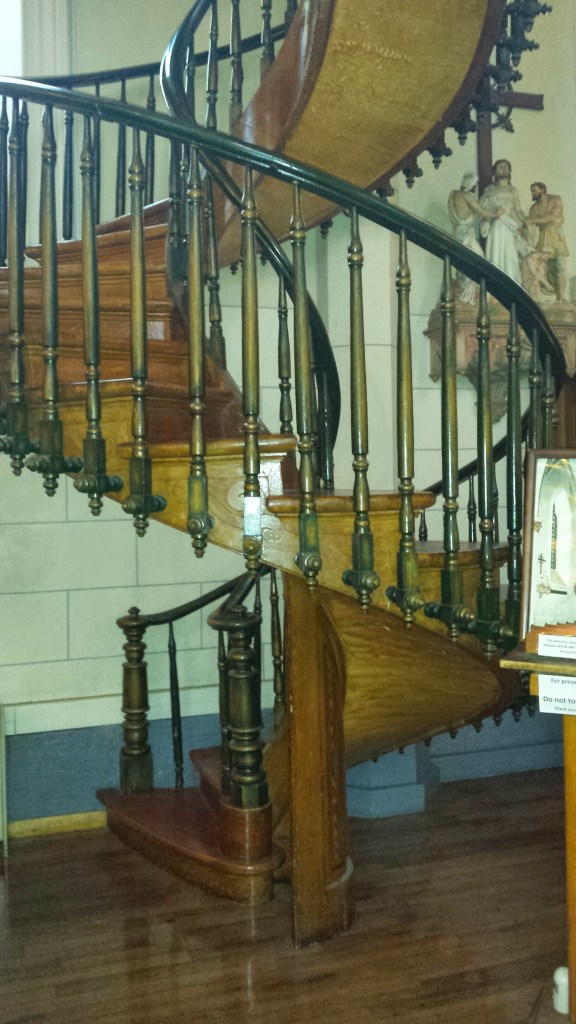
    From Taos, I drove south to Santa Fe, to the Loretto Chapel. I’d heard the story — the mysterious carpenter, the spiral staircase with no visible supports, built after the nuns prayed for a solution. Seeing it in person was something else.

    The staircase curves upward like a question that answers itself — no nails, no center post, just precision and faith. I stood beneath it, tracing the grain of the wood with my eyes, thinking about the people who build because they have to believe it will stand.

    Stairs said to be made by an Angel

      The Gorge

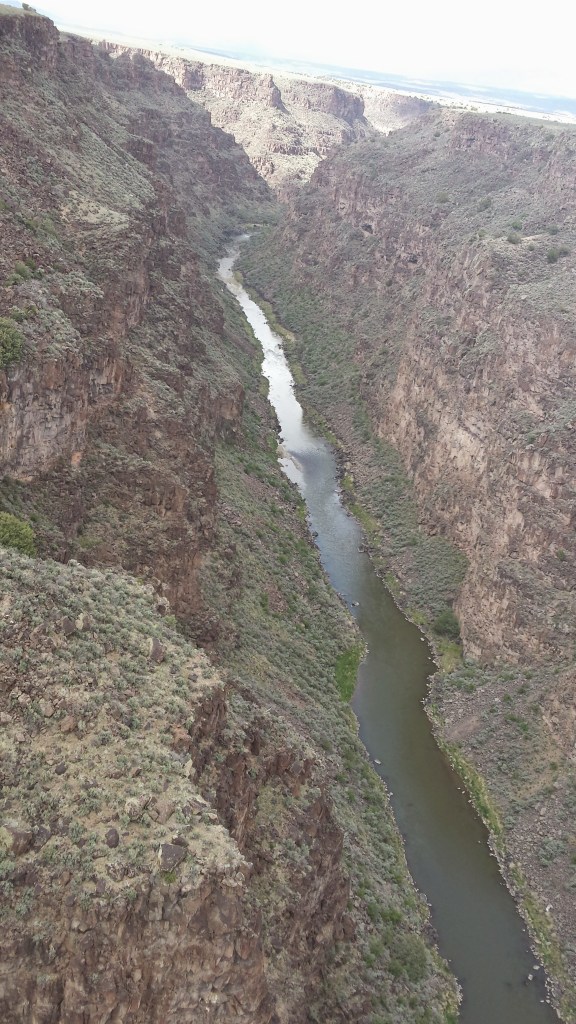
    Then there was the Rio Grande Gorge — where the land simply falls away.

    I parked, stepped out, and felt the wind announce itself. Heights and I have never been friends. I walked to the railing anyway.

    Below, the river glinted like a silver thread stitching through time. When a semi-truck passed, the bridge shuddered beneath my feet, and I gripped the rail tighter than I’d admit. But I stayed long enough to feel it — that strange marriage of fear and awe.

    breathtaking View
    View from the bridge

    That’s what this road was always about. Not conquering fear — just walking out far enough to meet it honestly.

    On the drive home, I realized I wasn’t chasing wonder anymore. I was studying it — seeing what remains when the awe fades and only understanding is left.

    Maybe the Earthship homes, the staircase, and the gorge were all saying the same thing:

    Build something that endures.

    Trust what you can’t see holding you.

    Look down, but don’t stay afraid.

    The road home was quieter. The car hummed its low prayer, tires counting miles of reflection. I thought about all I’d seen, and how every place had its lesson written in silence.

    Maybe I’m still searching, but it’s a better kind of searching now. Not for arrival — but for alignment. For the places and people that hold when the ground trembles.

    The road doesn’t always offer answers.

    Kyle J. Hayes

    kylehayesblog.com

    Please like, comment, and share

  • The Road Teaches Us to Listen

    The Road Teaches Us to Listen

    Salt, Ink & Soul — Field Journal Series, Part I

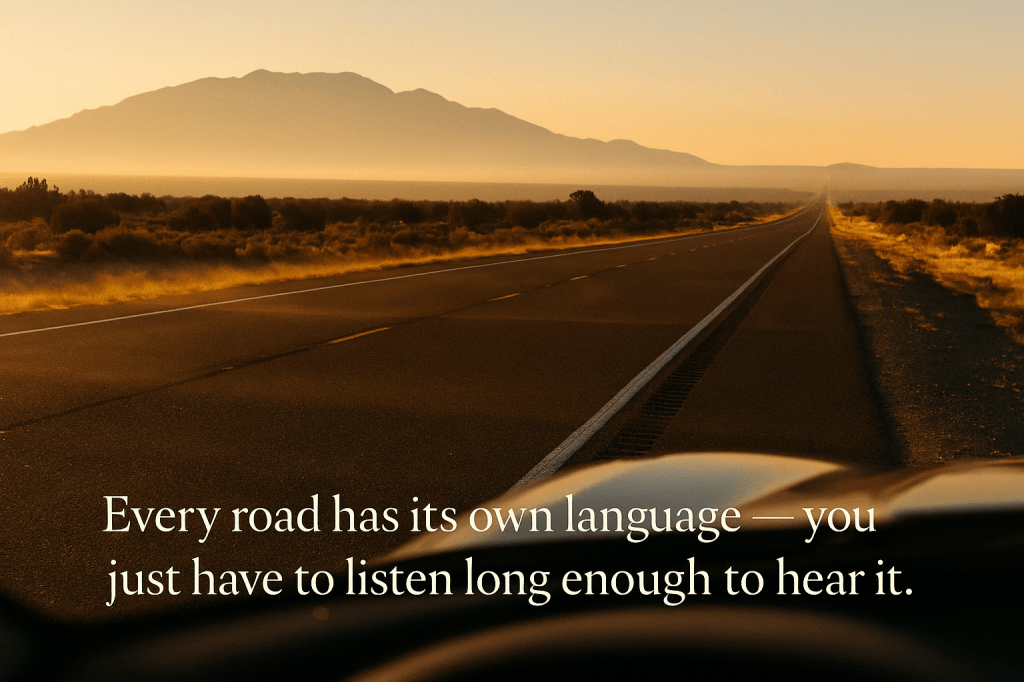
    The road begins long before you step onto it.

    For me, it starts with a small decision that never feels small: go. That’s the quiet contract I sign with myself in the dark—turn off the clock, get out of bed, make coffee even if the morning looks like a bad idea. Rain against the window, frost on the glass, wind leaning into the stucco—you go anyway. Jacket. Keys. A hand to the door, a muttered prayer that sounds like breath.

    Inside the car, I choose the season by touch. Heat in winter until my fingers thaw. Air in summer until the cabin stops tasting like sleep. The engine wakes with that low, devotional sound—humble, faithful, unglamorous. I sit with it a moment, letting my doubts burn off like fog on a warm hood. There’s always a reason to cancel. Fatigue. Weather. The long shadow of a mood I can’t name. The old lie that today isn’t the day.

    I have learned this much about myself: the early stops are the trap. You pause for a snack you don’t need, a second coffee you’re already holding, and suddenly the road becomes optional. Detours multiply. The invisible hand is never dramatic—it taps your shoulder with errands and returns you safely to the couch. So I pass the first exit. I don’t look right or left. I’ve stocked the snacks, filled the tank, and told no one where I’m headed. Commitment looks like a car at speed. The on-ramp curves up like a question, then drops you into a lane where the only language is forward.

    The interstate is my point of no return. The lines gather under the car like stitches sewing me to the day. I breathe out—a slight relief that feels larger than it should. I did the hard part. I left. I find the playlist that knows my miles: songs that ride low and steady, not too eager, not too clever. Something with space in it. Enough room for the land to speak.

    This is where the road begins to teach, if you let it.

    It teaches patience first. Mile markers count like beads through your fingers. Semis pass with the dignity of whales. The horizon doesn’t arrive; it reveals. You become a witness to your own habits—how your chest loosens after the second exit, how your jaw unclenches when the first long stretch unfolds, how your shoulders drop when the radio fades to static. The world steals the choreography you keep trying to impose on it. You start to hear the hum—tires negotiating asphalt, crosswinds tuning the cabin to a note you can almost name, the slight rattle of a life you’ve packed in a hurry.

    It teaches with small mercies. A gas station clerk who calls you “love” without making it a performance. A church sign that gets the parable right by accident. A plastic bag snared on a fence, stubborn against the wind. The familiar ache of a diner mug against your palms. Eggs that taste better for the road it took to get there. The cook who doesn’t look up but understands precisely who you are: someone who left a house this morning to go looking for something they can’t carry back in both hands.

    It teaches with the kind of quiet that isn’t empty. Out here, silence has texture. It lives in the low whine of steel guardrails, in the dry grass that whispers even when there’s no breeze, in the pale blue that the sky saves for days like this. You roll the window down and the air meets you, honest—dust, oil, a memory of rain. Somewhere just beyond the shoulder, a hawk draws solemn circles in a column of heat and refuses to explain itself.

    The road talks in fragments and expects you to assemble meaning. A boarded-up motel where someone once honeymooned in good faith. A burial of sun-bleached crosses huddled on a ridge. A billboard sermon that works only because the sky won’t stop listening. Nothing arrives tidy. The point isn’t clarity. The point is attention.

    I used to believe you traveled to escape your life for a while. Now I think you travel to stop lying to it. Movement scrapes the varnish off your days. It replaces routine with exposure: the vulnerability of a stalled engine, the humility of a wrong turn, the grace of a stranger who points you toward a road you didn’t know you needed. Each mile asks a better question than the one before it. Who are you when nobody is asking for your performance? Who are you when the only thing to do is keep going?

    The farther I get from my usual noise, the more I understand the discipline of listening. I turn the music down until the speakers barely breathe. I count cattle guards without trying. I let the wind dictate when the window goes up or down. The road becomes a metronome for the part of me that won’t learn patience any other way. My foot steadies. My mind does not empty; it organizes. Old griefs get filed under new light. The never-ending list shortens, not because the tasks vanish, but because the road insists on proportion: you are small, and still held.

    By midday, the light changes its mind. Shadows shorten, and the heat decides what kind of day it wants to be. 

    I pull off onto a frontage road that minors in regret and majors in perspective. The surface is rough enough to earn respect. A low ridge rises, and I climb it on foot because the day asks and because sometimes the answer is yes, even when you don’t know the question. Up top, the wind has a cathedral voice. The land arranges itself into a map you can read with your tongue—dust, sun, iron, a little mercy. I don’t take a picture. I don’t say a word. I let the horizon do what it does best: decide nothing for me and change everything anyway.

    Back in the car, I don’t check the time. Time is a city tool. Out here, we measure by light—how it sharpens, how it softens, how it lifts off the hood like a thin leafing. I aim the nose toward home, not because I’m finished, but because finishing is not the point. The road has said what it needed to say: that listening is work, that attention is a sacrament, that the world is not waiting to be narrated so much as witnessed with a bit of respect.

    Near the interstate, the old instincts return. The exits appear like promises or temptations. The hand that tried to steer me back this morning is quieter now. It didn’t vanish; it lost its authority. I put the playlist away and let the tires do the singing. The lines pull me forward, not faster, just truer.

    I don’t come back with revelations big enough for billboards. I come back with small instructions written in dust: drink water; call your people; cook something simple; write a sentence that owes nothing to applause. The engine cools. The day lowers its shoulders. I sit a moment before going in, the car clicking as it forgets its heat.

    Maybe the road isn’t a way out so much as a way through. Maybe its gift is not destination but calibration—the chance to tune your own noise until you can hear the hum beneath everything, the one that was there before playlists and plans, the one that sounds like wind across open ground.

    Maybe the point was never to arrive.

    Maybe it was to finally listen.

    Kyle J. Hayes

    kylehayesblog.com

    Please like, comment, and share