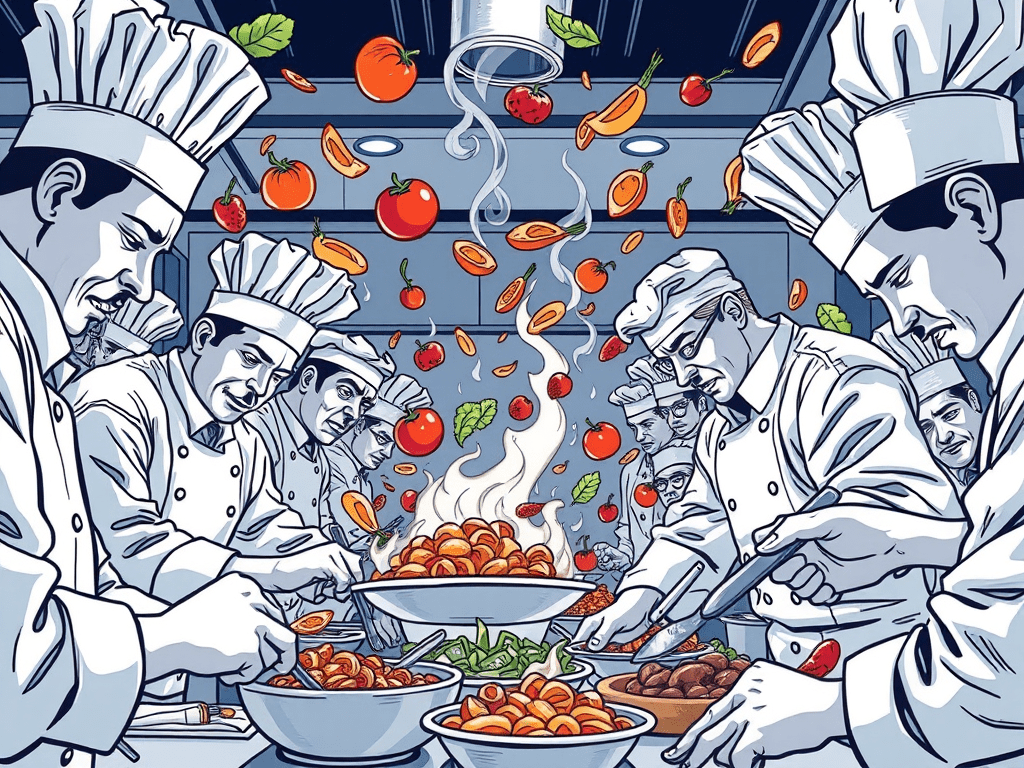
Tag: food

  • The People Who Make the Sky Possible

    The People Who Make the Sky Possible

      We always start with the balloons. It’s hard not to; those floating colors command the horizon, pulling the eye upward until you forget your neck is sore. We discuss the chase trucks, their history, and the roots of flight in France and its rebirth in the soil of New Mexico. We speak of mass ascensions and Dawn Patrol, of Darth Vader and cows and hearts suspended against the dawn. But beneath all of it—the fabric, the burners, the photographs—is something more ordinary, and maybe more sacred: the people.

    Not just the pilots, not just the crews. The others.

    The volunteers, for instance, who rise earlier than even the birds, long before the sun thinks of climbing over the Sandias. They are there in the half-dark, directing traffic, holding ropes, keeping the rhythm of a ritual that looks effortless only because someone else made it so. They do this not for glory or paychecks, but because something within them decided that one week in October was worth sacrificing their sleep and time to help thousands of strangers feel wonder. They are the kind of people who disappear into the background, allowing the balloons to dominate the frame. And yet without them, there is no frame at all.

    Then there are the vendors. Their labor is not spectacle—it is fuel. They stand in lines of steam and scent, ladling out hot coffee, burritos, and sweet pastries to crews, balloonists, and wide-eyed tourists who arrive before dawn. They are there in the cold, their hands working the heat of the griddle while we marvel at the heat of the burners. They remind us that even awe requires calories. That memory is easier to hold when your fingers are warm against a paper cup.

    But the Fiesta isn’t confined to the field. For nine days, Albuquerque becomes a host. Visitors don’t only look up; they wander sideways. They move through Old Town’s adobe walls, tracing steps along Route 66, ducking into shops where turquoise glints under fluorescent light. They pause to listen to a drumbeat in a plaza, to hear the echoes of Native voices that remind them this land has been witness to centuries before balloons ever grazed its skies. They sit in diners and brewpubs, ask about “red or green,” and learn the shorthand of a state where chile is not just food but language, not just spice but identity.

    That’s what we forget when we reduce the Fiesta to balloons alone: it is not just a celebration of flight. It is a celebration of place. A city, a state, a culture flinging its doors wide and saying Come see us, come taste us, come know us. For nine days, New Mexico is not an afterthought on a map but the center of the world’s gaze. People arrive from Japan, Brazil, Wisconsin, Bristol, China, and Kenya. They stand shoulder to shoulder with locals, their accents colliding over green chile stew. And when they return home, they carry with them more than pictures of balloons—they carry New Mexico itself: the food, the hospitality, the community that rose as surely as the balloons did.

    I think about this often: balloons drift. They rise, they scatter, they vanish into the horizon. Their beauty is in their impermanence. But the people—the ones who cook, who sell, who welcome—are the tether. They keep the Fiesta from being only about what escapes into the sky. They anchor it in the soil, in red earth and chile smoke, in the hands that hand you coffee at dawn.

    Nine days in October. That’s what it is. Nine days when the world’s compass needle swings toward New Mexico, and all those who live here become part of something larger than themselves. Not by flying, but by feeding, guiding, welcoming, and reminding. The sky may belong to the balloons. But the heart of the Fiesta—always, inevitably—belongs to the people.

    By Kyle J. Hayes

    kylehayesblog.com

    Please like, comment, and share
  • When the Lord Smiles on You (And Brings Soup)

    When the Lord Smiles on You (And Brings Soup)

    I’ve lived in New Mexico for years now. Long enough to know the smell of roasting green chile means autumn and that the line between red and green isn’t just about salsa—it’s about identity. Long enough to pretend I’ve tasted it all.

    But that’s the thing about New Mexico. You never really taste it all.

    This place holds onto its secrets.

    It waits until just the right moment—until your guard is down, until your belly’s empty, and your soul is quiet—

    Then the Lord smiles on you, and someone places a bowl in your hands that changes everything.

    Last year, it was pozole.

    Not the pozole you find at a chain or off some laminated menu.

    This was the real thing.

    Pozole with history. With lineage.

    Pozole, made by my friend’s father-in-law—an old school Mexican, the kind of man who measures time by the slow dance of a simmering pot.

    His skills? Learned not from books or shows or trendy food blogs,

    but from Oaxaca, in the old country.

    Where ingredients are respected, and nothing is wasted.

    Where cooking isn’t a task—it’s an inheritance.

    This man—quiet, steady, always working—has done more than just feed people.

    He’s helped restore and preserve one of Albuquerque’s most beloved spots: El Pinto Restaurant.

    He’s a steward of flavor and tradition who reminds you that real craftsmanship never needs to shout.

    That pozole was a revelation.

    Deep, layered, soulful.

    A bowlful of memory, spice, and heat that reached places no therapy ever has.

    And then, today, the Lord smiled on me again.

    Same friend. Different bowl.

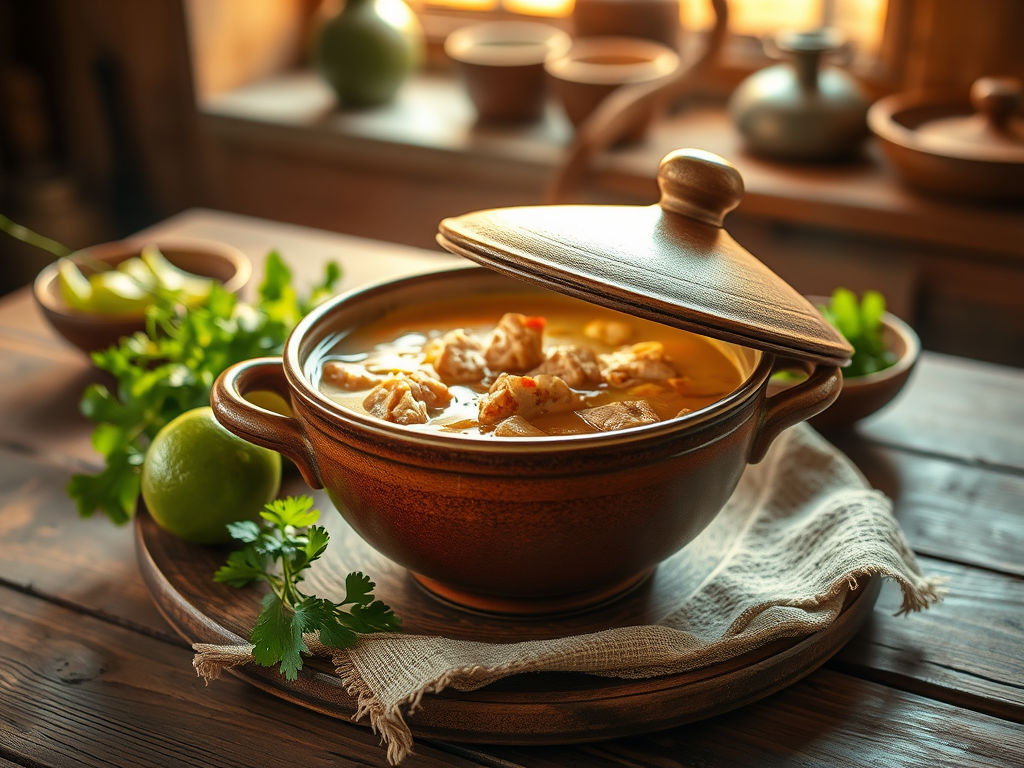
    This time, it was Chicken Caldo.

    No warning.

    No occasion.

    Just the quiet generosity of someone handing you a miracle in a paper bowl.

    Now, if you’ve never had a real caldo de pollo—not the half-hearted version simmered in a rush, but the kind that takes its time—

    let me try, poorly, to explain.

    It’s not just soup.

    It’s comfort liquified.

    Chicken is so tender it gives up.

    Vegetables that still taste like vegetables, not mush.

    And then—the lime.

    That fresh lime, squeezed just right, cuts through the warmth and lifts the flavor.

    Like a prayer whispered into something sacred.

    The taste?

    I won’t pretend I can describe it.

    All I know is that each bite felt like a home I didn’t know I missed.

    I closed my eyes and sat still, and for a few minutes, I was in heaven.

    I still haven’t tried everything New Mexico has to offer.

    Maybe I never will.

    But every now and then, I get lucky.

    And in this place, luck doesn’t come dressed in fine linen or gourmet plating.

    It comes humble, in a shared container,

    from someone who learned to cook in Oaxaca,

    someone who doesn’t care about Michelin stars,

    but who knows that feeding people—truly feeding them—is one of the last honest things we’ve got left.

    So I sit.

    I eat.

    I give thanks.

    And hope the Lord sees fit to smile on me again.

    By Kyle Hayes

  • What Happened to the Food Network?

    What Happened to the Food Network?

    By Kyle J. Hayes

    This has been on my mind for quite some time now.

    I didn’t want to write it. Honestly, I didn’t.

    Because this is something I loved. I still do, somewhere deep beneath the mess it’s become.

    There was a time—not that long ago—when the Food Network was sacred ground.

    A place where you learned, and recipes weren’t just entertainment—they were an invitation.

    An onion wasn’t a punchline or a mystery basket twist. It was the start of something real.

    You’d sit down, flip it on, and suddenly, you’d be guided through the slow, patient beauty of roasting a chicken or building a béchamel.

    The chefs were teachers.

    The food was possible.

    It wasn’t about flash or drama or who could sculpt the tallest cake while blindfolded in a wind tunnel.

    It was about cooking.

    It was about learning to feed yourself and the people you love.

    And now?

    Now, it’s wall-to-wall competitions.

    Cupcakes and sabotage.

    Holiday-themed cage matches.

    The kind of shows where you never see how anything is made—just the fast-forwarded montage of panic, plating, and dramatic cuts to commercial.

    And somewhere in all of this noise, the food got lost.

    Don’t get me wrong—Guy Fieri has his lane. And he’s damn good at it.

    Diners, Drive-Ins, and Dives have become the eternal rerun of American comfort food. It’s cotton candy television. You know precisely what you’re getting—grease, cheese pulls, and one man losing his mind over chili dogs in sunglasses.

    But when that’s the backbone of your programming?

    When every show is a variation of a bake-off, cook-off, or kitchen showdown, what are you actually feeding people?

    We Used to Cook

    This is where I get personal.

    Because I learned to cook by watching the Food Network.

    I mean, really cook.

    Not sprinkle herbs on a plate and call it rustic.

    I mean, stand in the kitchen, follow the steps, make mistakes, burn the garlic, and try again.

    Dinner parties came back—not because we suddenly became gourmet, but because the shows made it seem doable.

    There was something radical about it—the idea that good food didn’t have to come from a restaurant.

    You could make risotto or bake a roast and have people over, sit down, and just be human together.

    It was empowering.

    It gave people ownership of their kitchens again.

    But then the Network changed.

    Because they didn’t want you cooking at home.

    They didn’t want you making pasta with your grandmother’s rolling pin or searing steaks in a cast iron pan you inherited.

    They wanted you to watch.

    And when you were done watching, they wanted you to go out—to one of the restaurants owned by the judges, the hosts, the celebrity chefs.

    Make no mistake—this was never about the love of food.

    Not anymore.

    This is about building brands, selling tickets, and spinning off frozen meals with a famous face on the box.

    The Food Network doesn’t teach you how to cook anymore.

    It teaches you how to consume.

    What We’ve Lost

    And look, I get it.

    Entertainment wins. Drama sells.

    People love a good showdown, a time crunch, a last-minute twist.

    But for those of us who still believe food is more than that—who believe it’s culture, memory, and connection—we’re left flipping channels, wondering where the real food went.

    And maybe it’s still out there.

    It could be on YouTube channels, in cookbooks, or in the weekend classes in the back of indie bookstores.

    Maybe it’s in our kitchens, waiting for us to come back.

    All I know is this:

    There was a time when the Food Network made us better cooks.

    And now, it just wants to make us better customers.

    And I miss the food.

    I miss the quiet.

    I miss the why.

    Please Like, Comment, and subscribe

  • The Family Table

    The Family Table

    By Kyle J. Hayes

    Family-style food.

    Most people hear that, and they think of big tables, long benches, and a group of people laughing too loud over plates passed back and forth. But that’s not what I’m talking about. Not today.

    I’m talking about restaurants run by families.

    It is not some faceless corporate chain where recipes are born in a test kitchen, engineered by marketing teams to maximize shelf life and “mouthfeel.”

    I’m talking about food with history, with bloodlines, with stories.

    Food where the recipe doesn’t come from a corporate memo but from someone’s grandmother.

    Food brought over from the old country—whether that country is Mexico, Korea, Vietnam, or somewhere in between—served with the kind of pride you can taste in every bite.

    Albuquerque happens to be one of the best cities in America for this.

    A city that has kept its soul intact, where authentic New Mexican cuisine still sits at the center of the table, smothered in red and green chile. Where you can find Mexican food served out of family-run spots that have no PR teams, no focus groups—just a sign out front and a kitchen that runs out of beef tongue tacos because they’re that good.

    Places that don’t need Instagram filters or foodie influencers because their customers already know.

    And don’t even get me started on the Asian spots—Orchid Thai, my quiet little secret I hate to share because I know what happens when the wrong people find out.

    I’ve seen it before.

    Take Coda Bakery, my go-to for an excellent banh mi. I always order the #1. It used to be a hidden gem until the word got out.

    Then came the food bloggers.

    Then came the Food Network.

    Now, I stand in line with tourists, waiting for something that once felt like mine alone.

    But that’s how it goes.

    The best things, once discovered, never stay secret.

    And in a way, that’s okay.

    The beauty of family-run restaurants isn’t just that they make the best food you’ve ever had—they make it proudly, and they’ll make it for everyone.

    The recipe doesn’t change when the line gets longer.

    The taste doesn’t shift to accommodate Yelp stars or branded merch.

    What you’re eating is still the same dish someone’s auntie made years ago, the same soup someone’s father learned to perfect, the same bread someone’s mother kneaded in the early morning hours.

    It’s real.

    And real food leaves a mark.

    Most of the time, I’m not one to go out. I don’t care much for the noise, the scene, the crowd.

    I get my food to-go, bring it home, eat in peace.

    But occasionally, when I need to remind myself why it matters, I’ll go.

    I’ll sit.

    Order a beer.

    And try to guess what I should get.

    Yes, it helps that I know the owners.

    But friendship only gets you so far.

    The food does the rest.

    That’s family style.

    Not the furniture.

    Not the gimmick.

    But the food—and the love—you’ll never find in a chain.

    And the family that keeps serving it anyway.

    Please Like and comment

  • The Great Pizza Debate: A Slice of America

    By Kyle J. Hayes

    We’ve all been there.

    Sitting around a table, maybe a few drinks deep, maybe already two slices in, when someone—loud, confident, maybe even a little too sure of themselves—declares who has the best pizza.

    And just like that, the debate begins.

    It’s a ritual, really. An argument older than most friendships.

    But when it comes down to it, the big three have always stood tall: Chicago. New York. Detroit.

    And yes, there are others—those small regional legends and local spots that are too niche or strange to be included in the national conversation.

    And by strange, I do mean you, California.

    I’ll get to you in a minute.

    The Titans: New York, Chicago, Detroit

    New York.

    The king of portability. The slice you fold in half, dripping grease onto the paper plate, eaten on the move, city horns blaring in the distance.

    New York pizza is unapologetically simple: thin crust, crisp but chewy, sauce lightly spread, mozzarella bubbling. It’s not meant to be analyzed—it’s meant to be devoured.

    And that’s part of its brilliance. No frills, no fuss. It’s the street food of dreams.

    But simplicity is a double-edged sword—one bad step, one lazy ingredient, and the whole thing falls apart. New York pizza is as good as the hands making it, no better, no worse.

    Chicago.

    Now, Chicago doesn’t want you eating on the move.

    With your fork and knife in hand, Chicago wants you seated, ready to commit.

    Some say the deep dish is an experience—a casserole pretending to be a pizza. Still, it forces you to slow down and let the sauce, cheese, and thick buttery crust remind you that pizza can be hearty, indulgent, or even excessive.

    But it’s not an everyday slice. It’s the heavyweight champ that demands respect, but maybe not the guy you want in your corner every single night.

    Detroit.

    The underdog that’s climbed its way into the big leagues.

    Rectangular, caramelized cheese edges, a thick but airy crust, sauce ladled on top after baking.

    Detroit is blue-collar pizza—born in auto factories, unapologetically square, sharp-edged, and strong.

    It feels like the kind of pie made for people who work with their hands.

    And the first bite hits you hard—the crunch, the chew, the sweet-savory punch of sauce.

    It’s everything you didn’t know you wanted from pizza.

    The Outlier: California

    And then there’s California.

    California walks in wearing flip-flops, kale on the crust, maybe figs, goat cheese, a drizzle of something organic and local.

    They didn’t come to play by the rules.

    Is it still pizza?

    Technically, yes.

    But is it trying too hard?

    Absolutely.

    California pizza isn’t about comfort; it’s about reinvention. And depending on who you are, that’s either refreshing—or an insult to everything sacred about a pie.

    But Let’s Be Honest…

    I could weigh the merits of each all day long.

    But the truth is, 

      The best pizza I’ve ever had wasn’t about the zip code.

    It was at Dion’s in Albuquerque, where the crust is seasoned just right, and every bite feels like someone cared about what they were doing.

    Or Happy Joe’s in Rock Island, Illinois—home of the greatest Taco Pizza in the world, and yes, I’ll stand on that hill until the day I die.

    They don’t compete by numbers.

    They don’t have the same recognition.

    But they don’t have to.

    Because what makes pizza great isn’t the city.

    It’s the hands that made it. The people behind the oven.

    The memory attached to that first bite.

    So argue all you want—New York, Chicago, Detroit, or California.

    But the honest answer?

    It’s wherever you sat down, took a bite, and thought:

    This is exactly where I’m supposed to be.

    Please like and leave a comment.