By Kyle J. Hayes
This has been on my mind for quite some time now.
I didn’t want to write it. Honestly, I didn’t.
Because this is something I loved. I still do, somewhere deep beneath the mess it’s become.
There was a time—not that long ago—when the Food Network was sacred ground.
A place where you learned, and recipes weren’t just entertainment—they were an invitation.
An onion wasn’t a punchline or a mystery basket twist. It was the start of something real.
You’d sit down, flip it on, and suddenly, you’d be guided through the slow, patient beauty of roasting a chicken or building a béchamel.
The chefs were teachers.
The food was possible.
It wasn’t about flash or drama or who could sculpt the tallest cake while blindfolded in a wind tunnel.
It was about cooking.
It was about learning to feed yourself and the people you love.
And now?
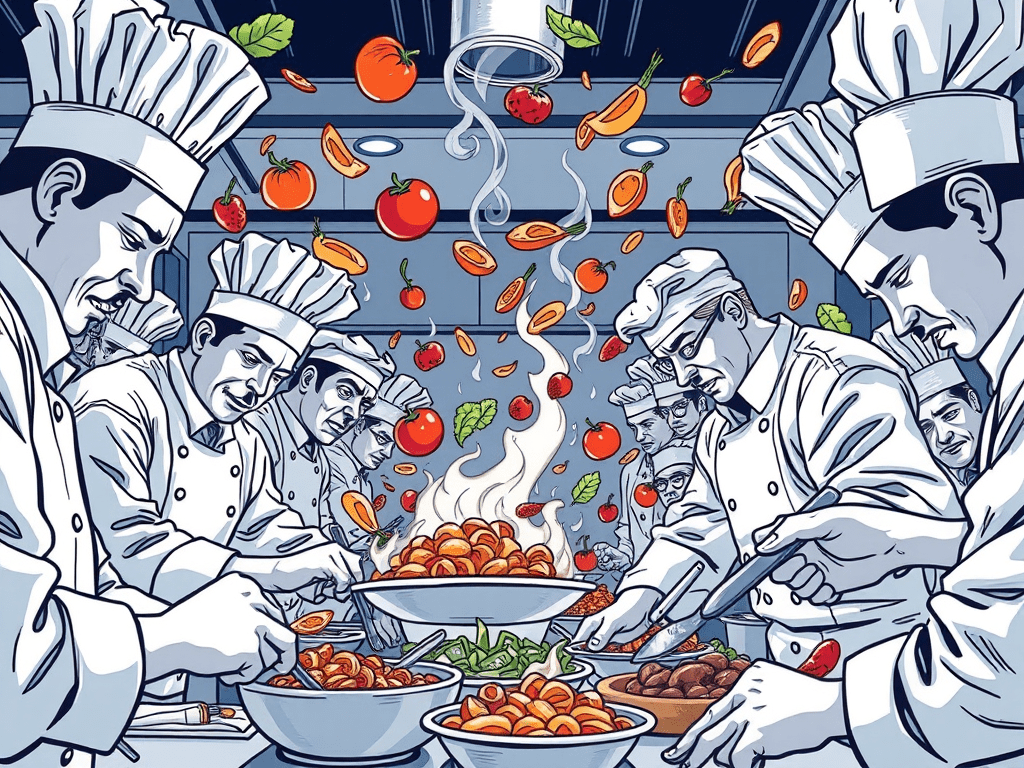
Now, it’s wall-to-wall competitions.
Cupcakes and sabotage.
Holiday-themed cage matches.
The kind of shows where you never see how anything is made—just the fast-forwarded montage of panic, plating, and dramatic cuts to commercial.
And somewhere in all of this noise, the food got lost.
Don’t get me wrong—Guy Fieri has his lane. And he’s damn good at it.
Diners, Drive-Ins, and Dives have become the eternal rerun of American comfort food. It’s cotton candy television. You know precisely what you’re getting—grease, cheese pulls, and one man losing his mind over chili dogs in sunglasses.
But when that’s the backbone of your programming?
When every show is a variation of a bake-off, cook-off, or kitchen showdown, what are you actually feeding people?
We Used to Cook
This is where I get personal.
Because I learned to cook by watching the Food Network.
I mean, really cook.
Not sprinkle herbs on a plate and call it rustic.
I mean, stand in the kitchen, follow the steps, make mistakes, burn the garlic, and try again.
Dinner parties came back—not because we suddenly became gourmet, but because the shows made it seem doable.
There was something radical about it—the idea that good food didn’t have to come from a restaurant.
You could make risotto or bake a roast and have people over, sit down, and just be human together.
It was empowering.
It gave people ownership of their kitchens again.
But then the Network changed.
Because they didn’t want you cooking at home.
They didn’t want you making pasta with your grandmother’s rolling pin or searing steaks in a cast iron pan you inherited.
They wanted you to watch.
And when you were done watching, they wanted you to go out—to one of the restaurants owned by the judges, the hosts, the celebrity chefs.
Make no mistake—this was never about the love of food.
Not anymore.
This is about building brands, selling tickets, and spinning off frozen meals with a famous face on the box.
The Food Network doesn’t teach you how to cook anymore.
It teaches you how to consume.
What We’ve Lost
And look, I get it.
Entertainment wins. Drama sells.
People love a good showdown, a time crunch, a last-minute twist.
But for those of us who still believe food is more than that—who believe it’s culture, memory, and connection—we’re left flipping channels, wondering where the real food went.
And maybe it’s still out there.
It could be on YouTube channels, in cookbooks, or in the weekend classes in the back of indie bookstores.
Maybe it’s in our kitchens, waiting for us to come back.
All I know is this:
There was a time when the Food Network made us better cooks.
And now, it just wants to make us better customers.
And I miss the food.
I miss the quiet.
I miss the why.
Please Like, Comment, and subscribe
 Salt,Ink, & Soul