It began like a thief who knew my schedule better than I did—slow, deliberate, testing every door before finding the one left unlocked. A scratch in the throat. A heaviness in the limbs. The faint suspicion that breathing had become less casual, less thoughtless, than it had been yesterday. I told myself I’d push through. I said to myself that sickness is for other people, those who have the time for it. But sickness does not bargain. By midweek, it had settled in fully, an uninvited tenant pressing down on my lungs, hijacking one of the things I hold dearest—my taste.
Something is humbling about losing your sense of taste. I have crossed oceans for flavor. I have eaten in alleys and palaces alike, chasing the elusive truth of a dish. Food, to me, is not just sustenance—it is memory, culture, love made tangible. And now it was gone. My morning coffee could’ve been hot water from a radiator. My favorite bowl of ramen tasted like broth poured through gauze. Even the memory of taste felt muted, as though my brain were looking for a file that had been deleted.
We live in an age where you can treat almost anything with a credit card and a ten-minute visit to the pharmacy. Pills for the fever, sprays for the throat, syrups that coat the lungs in menthol haze. Convenience at the ready. But the best cures—the ones that live in the marrow of memory—require no prescription. For me, it begins with green tea, lemon, and honey. My mother’s go-to remedy. The scent alone brings her into the room: the citrus brightness cutting through the air, the floral sweetness of honey sinking into the steam, the earthiness of green tea grounding it all. She swore by it. I still do.
And then, there is chicken soup. I’ve traveled the country, eaten at the tables of strangers, but if America has a single unifying folk remedy, it is this. In Southern kitchens, Italian kitchens, and even kitchens in California, it’s the same idea, different dialects. Chicken, water, vegetables, salt. Sometimes noodles, sometimes rice. Always the intention to heal. And it works. I don’t know if it’s the steam easing the lungs, the broth coaxing warmth back into your bones, or the simple fact that someone cared enough to make it. But it works.
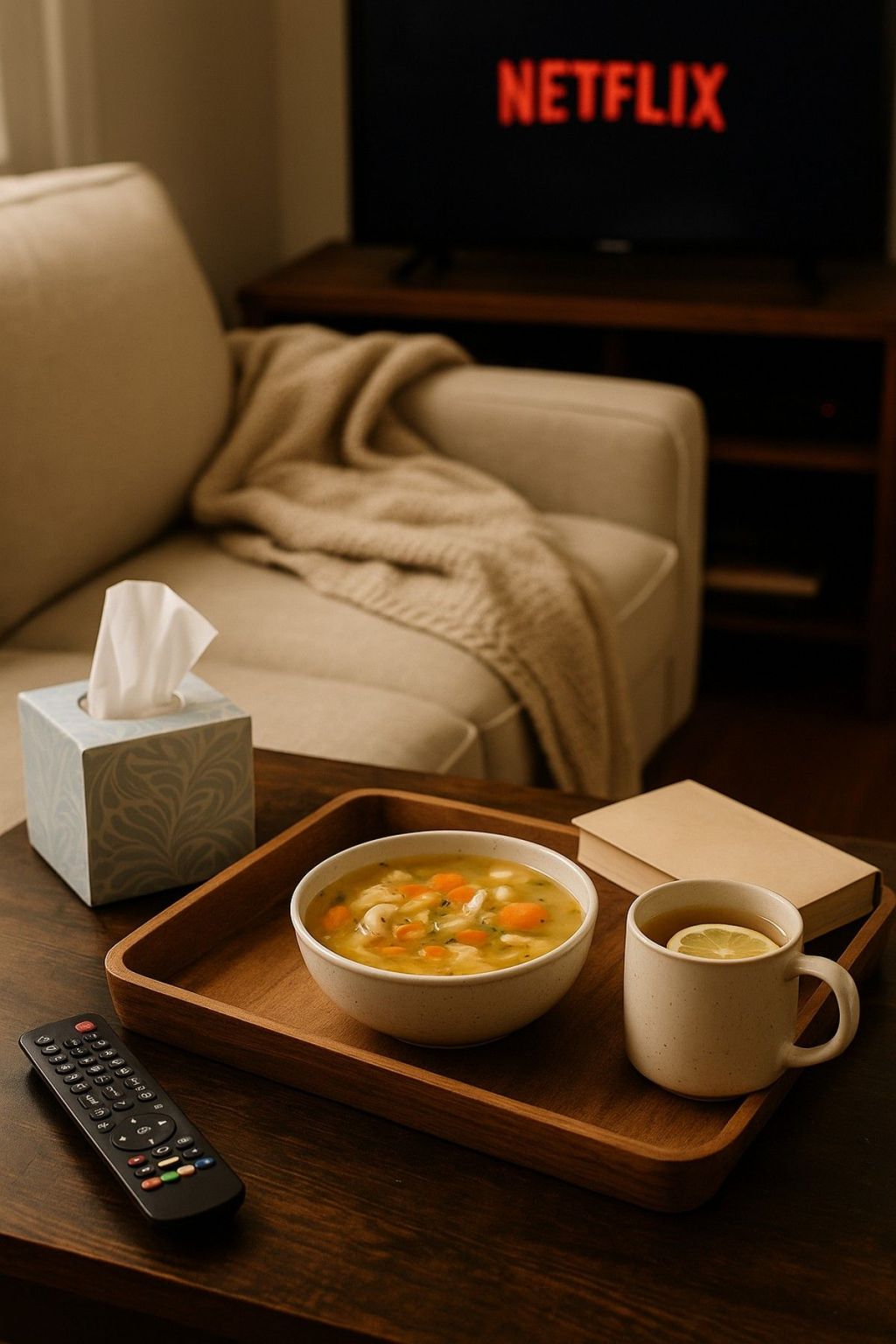
There’s a ritual to it. Once the soup is simmering, you find your spot. For me, it’s the sofa, where the sun pools in late afternoon. Pillows arranged just so, blanket at the ready. A remote within arm’s reach, Netflix queue prepared to swallow the next several hours. This is not indulgence; this is convalescence. You let the warmth from the bowl linger in your hands before each spoonful, breathing in the scent as if it were a prayer. You sip slowly, allowing the broth to seep into the cracks that sickness has made in you.
Recovery isn’t just about medicine. It’s about surrender—admitting that you are, in fact, mortal, and in need of care. It’s about allowing yourself to slow down, to be still, to let the old ways work their magic while the world spins on without you. Green tea and lemon. Honey. Chicken soup. These are not just cures for the body—they are acts of remembrance, of connection to the people and places that shaped you. They remind you that before we had walk-in clinics and urgent cares, we had each other. And sometimes, that was enough.
By the time my taste returns, I know the sickness will already be loosening its grip. But the tea and the soup will remain, as they always have, waiting for the next time life reminds me that I am breakable—and that the cure is as much about being fed as it is about being healed.
Click here for the full chicken soup recipe
https://kylehayesblog.com/simple-garlic-chicken-soup/
By Kyle J. Hayes
kylehayesblog.com
Please like, comment, and share
 Salt,Ink, & Soul