Tag: Kyle J. Hayes

  • Nothing Wasted – The Grace of Leftovers

    Nothing Wasted – The Grace of Leftovers

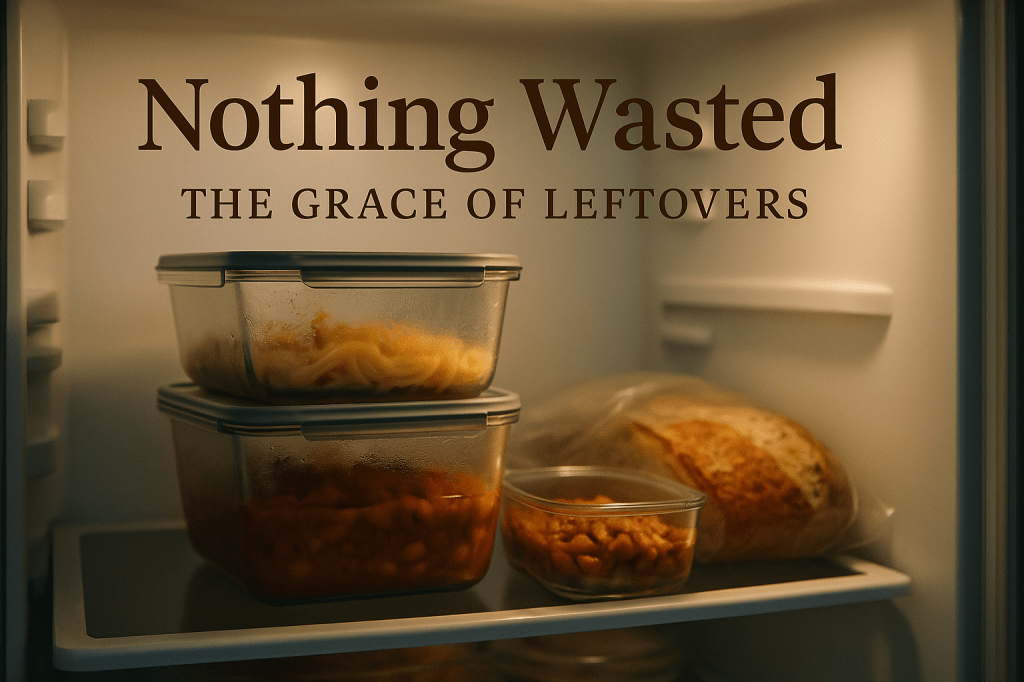
    I grew up in a house where tomorrow lived in the refrigerator—stacked in mismatched containers, labeled only by memory and love. We didn’t have much, so we learned to keep what we had. A pot cooled on the stove like a promise. A slice of bread wrapped in a paper towel felt like insurance against whatever the next day might bring.

    So when I hear people say they don’t eat leftovers—say it like a flex, like the world owes them a fresh performance every night—I don’t understand. Why throw away another lunch, another midnight snack, another chance to make something out of almost nothing? Where I’m from, waste isn’t just waste. It’s disrespect—to the hands that cooked, to the hours that earned the money, to the hunger we remember even when our plates are full.

    Leftovers carry a particular kind of grace. They’re proof that somebody planned ahead, that care was stretched across time. They’re the echo of yesterday’s effort, still singing. And yes—I still cook too much on purpose. Because there’s a relief in opening the door after a heavy day and finding your own kindness waiting for you in a glass dish.

    The world will tell you that food is a spectacle, a one-night show with a Michelin curtain call. But in the kitchens where I learned, food was a continuum. It traveled: pot to plate to container to skillet to lunchbox to after-school bowl. It got better with time, the way beans deepen and soups settle into themselves. The trick wasn’t reinvention for the sake of reinvention. It was respect.

    Here’s what I’ve learned about the second life of supper—the way a meal can keep feeding us if we let it.

    Second Lives (How I use Leftovers)

    Bread

    • Day 2: Toast with a swipe of butter and a little salt.
    • Day 3: Croutons (cube, oil, bake) or breadcrumbs (dry, blitz, jar).
    • Day 4: Bread pudding—milk, eggs, a handful of raisins; Sunday morning becomes gentler.

    Roast Chicken or Baked Thighs

    • Night after: Shred into tacos or quesadillas with onions and a squeeze of lime.
    • Lunch: Chicken salad with whatever’s around—celery, apple, a spoon of yogurt or mayo.
    • Final act: Simmer bones with onion ends and carrot stubs to create a stock that tastes like patience.

    Rice

    • Day after: Fried rice—egg, scallions, soy, any lonely vegetables.
    • Or fold into soup to make it stick to your ribs.
    • Or press into a pan with oil for a crispy rice cake topped with a soft egg.

    Beans

    • Next day: Blend half for a quick refried spread; reserve the other half whole.
    • Stretch: Chili with whatever ground meat (or none), or spoon over toast with hot sauce.
    • Last stop: Bean soup—stock, garlic, a heel of Parmesan if you’ve got it.

    Roasted Vegetables

    • Breakfast: Hash in a skillet with an egg on top.
    • Bowl life: Toss with greens and grains; finish with vinaigrette.
    • Soup move: Blitz with warm stock, then drizzle with olive oil and a sprinkle of pepper.

    Pasta & Sauce

    • Baked life: Mix with a spoon of ricotta or cottage cheese, top with breadcrumbs, and bake.
    • Pan-fry in a little olive oil until the edges crackle; suddenly, the old becomes new.

    Casseroles

    • Next day slice: Reheat in a skillet with a little butter for crisp corners and a better story.
    • Croquettes: Mash, bread, pan-fry—humble gold.

    Steak, Pork Chops, or Sausage (leftover bits)

    • Fried rice, breakfast hash, or quick tacos with pickled onions.
    • Tiny pieces become flavor—sprinkled into greens or beans like punctuation.

    The Scraps

    • Herb stems → chimichurri or stock.
    • Parmesan rinds → soup.
    • The last spoon of jam → vinaigrette with vinegar and oil.
    • Pickle brine → marinade for chicken, or a bracing splash in potato salad.

    The Quiet Rules (Because Respect Is Also Safety)

    Cool food within two hours. Store in shallow containers.

    Most cooked dishes: 3–4 days in the fridge; many soups and casseroles freeze up to 2 months.

    Reheat until steaming—not just warm, but honest. Label and date so that in the future you don’t have to guess.

    The Weeklong Buffet We Call Thanksgiving

    Thanksgiving is the high holy day of leftovers—the only time Americans brag about cold turkey like it’s a love language. The fridge becomes a geography: stuffed with hills, cranberry lakes, and green-bean valleys. We start with the classic sandwich—turkey, dressing, gravy, maybe that scandalous swipe of cranberry—and then we get clever:

    • Turkey pot pie with leftover vegetables and gravy, topped with a quick crust.
    • Stuffing waffles pressed in the iron, crowned with a runny egg.
    • Mashed potato pancakes—crisp outside, forgiving inside.
    • Bone broth that warms the house for days.

    Thanksgiving teaches what the year forgets: abundance is not a single meal but a stretch of days made tender by forethought.

    When people say they won’t eat leftovers, I hear a kind of amnesia. I hear a forgetting of the hands that peeled, stirred, salted, tasted. I hear a forgetting of the mile between hunger and relief. In my kitchen, we don’t forget. We reheat. We revive. We say thank you twice.

    Because leftovers aren’t the past. They’re the persistence of care.

    They are proof that enough can last, if we let it.

    And in a life that asks so much of us, there’s no virtue more radical than refusing to throw away what still has love to give.

    Kyle J. Hayes

    kylehayesblog.com

    Please like, comment, and share

    Resources for Hard Times

    If you’re looking for practical help, food support, or community resources, you can visit the Salt, Ink & Soul Resources Page.
    👉 Resources for Hard Times

  • The Weight of Enough – The Evolution of Survival Food

    The Weight of Enough – The Evolution of Survival Food

      I remember coming home from school, kicking off my shoes by the door, and walking into the kitchen to find a pot of beans soaking in the sink. That image never left me. It was more than just food preparation—it was a message written in silence. It said, We’re making it work. It said, We may not have much, but we have a plan.

    Back then, in houses filled with too many people and too few dollars, meals weren’t about individual plates or balanced portions. There wasn’t a “starch, meat, and vegetable” arrangement like you see on cooking shows now. There was one pot. One pan. One chance to stretch a few ingredients into something that felt like home.

    Large families, tight budgets, and long days demanded creativity. You learned to make things that filled the space—both in the belly and in the heart. And that’s where casseroles came in. They were the unsung heroes of survival: layered, forgiving, endlessly adaptable. Casseroles didn’t judge you for being poor. They rewarded you for being resourceful.

    Everyone had their version. Some made them creamy with soup and cheese; others baked them dry and crisp on top. You could throw in whatever you had—no shame, no rules. Maybe that’s why I still love them. They remind me that abundance isn’t about what’s on the table—it’s about who’s gathered around it.

    Even now, I see casseroles for what they are: a working-class masterpiece. Budget-friendly, easy to make, and rich in the kind of flavor only struggle can season. They fed the tired, the hopeful, and the ones just trying to get through another week. They turned scarcity into comfort, and comfort into something close to gratitude.

    And among them all, one dish reigns supreme—The tuna casserole.

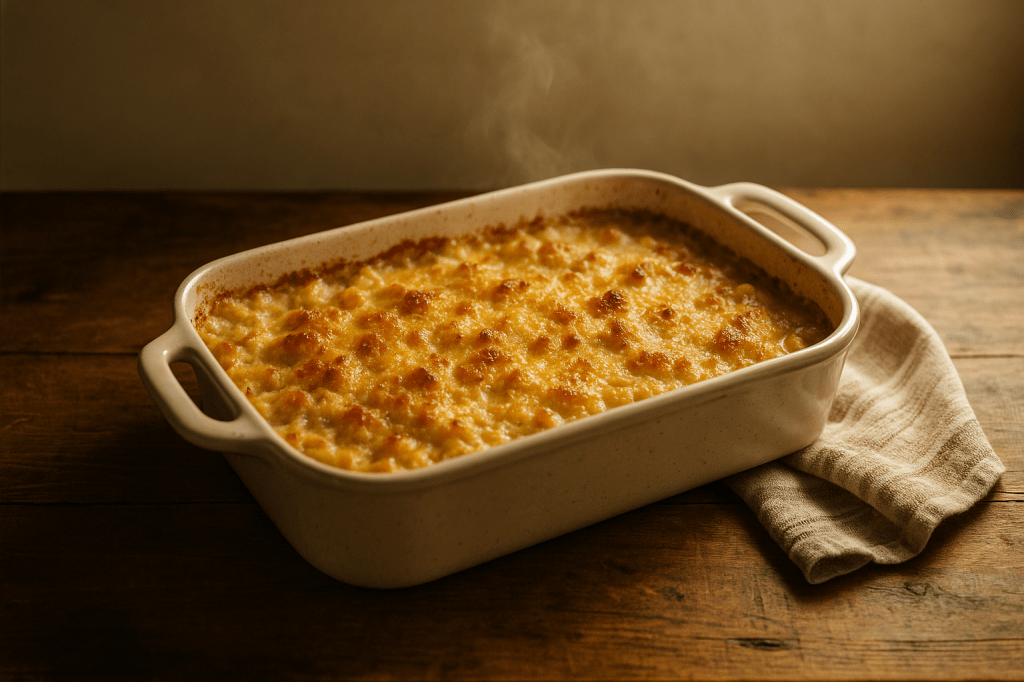
    There’s nothing glamorous about it. Just noodles, canned tuna, soup, and maybe a handful of frozen peas if you had them. But when it came out of the oven—bubbling, golden, smelling faintly of warmth and memory—it was enough. Enough to feed five. Enough to quiet the noise of hunger. Enough to make the world, for a few minutes, feel merciful.

    It wasn’t luxury that kept us going; it was the quiet faith that one can of tuna, a few noodles, and some love could be enough. Even now, it still is. For less than ten dollars, you can make a meal that hums with history—a dish that has fed generations without needing more than it asks for.

    That’s what I think about now, every time I pull a casserole from the oven. The weight of the pan in my hands feels heavier than it should. Maybe it’s not just the food—it’s the memory, the repetition of an act passed down from one generation to the next. Each time we stir, layer, and bake, we’re participating in something bigger than the recipe.

    We’re reminding ourselves that we come from people who made enough from almost nothing.

    And that, even in times like these, might be the most nourishing meal of all.

    This piece is part of The $10 Meals Collection—The recipes and reflections that sustained us when the world gave us little. Because food, at its best, has never been about wealth—it’s been about survival, love, and the quiet grace of making enough.

    Kyle J. Hayes

    kylehayesblog.com

    Please like, comment, and share

    Resources for Hard Times

    If you’re looking for practical help, food support, or community resources, you can visit the Salt, Ink & Soul Resources Page.

    👉 Resources for Hard Times

  • A Gentle Return

    A Gentle Return

    Salt, Ink & Soul — Field Journal Series, Part III

    It was as if I’d never started. All my momentum gone — vanished like breath on glass. The old voice returned, whispering reasons to stay still.

    Why go? It asked. You can see everything on a screen.

    Going outside is what made you sick.

    Your car is too big. The police will stop you.

    Each thought a stone in my gut, each hesitation dressed as reason.

    Still, I drove — slow, deliberate, a man testing the edge of his own promise. The sun climbed high over Albuquerque as if to dare me. I turned off Montaño and followed the signs toward Pueblo Montaño Picnic Area, a place recommended by a co-worker. At first, it seemed I was never meant to find it, but I did, somehow.

    At the entrance, the first thing I saw was the carvings — towering guardians hewn from fallen trees. Birds poised mid-flight, turtles climbing, coyotes howling into the stillness. Their faces caught the morning light, wood polished by wind and time.

    For a moment, I thought about turning around. The same quiet panic pressed behind my ribs: You’ve seen enough. You can take a photo from the car. No one will know the difference.

    But something in the carvings — maybe the permanence of their stillness — silenced the argument. I stepped out.

    The path curved through low brush and cottonwoods, beginning to yellow with the season. The air was sharp with the scent of sage and sun-warmed dust. My body, still cautious from its revolt, protested at first — a cough, an ache, a slow complaint in the knees. But the further I walked, the more those protests dissolved into breath.

    At a small bench near a patch of golden brush, I stopped. The wood was warm. The wind moved like a whisper that had nothing to prove. From where I sat, I could see the Rio Grande glinting between the trees — quiet, relentless, alive.

    And for the first time in days, I didn’t feel like a man recovering. I felt like one returning.

    Progress may not come in the form of long drives or grand destinations. Maybe it’s just the act of standing outside yourself long enough to see where you are.

    The world isn’t waiting to be conquered — it’s waiting to be witnessed.

    As I turned back toward the car, the carvings seemed different. The bird looked less like it was guarding the trail and more like it was blessing the departure. The coyotes, once frozen in howls, now looked like they were calling me forward.

    Maybe that’s what growth really looks like — not grand adventures, but small acts of motion.

    What do you think… should I keep going?

    Kyle J. Hayes

    kylehayesblog.com

    Please like, comment, and share

  • The Body’s Revolt  

    The Body’s Revolt  

    Today, the rebellion didn’t come from outside. It rose in my own chest—cough first, then that raw-edged scrape across the throat, the slow ache that spreads like a rumor to joints and fingers. My body filed a complaint in every language it knew: fatigue, pressure, heat. It felt less like illness and more like a verdict. Maybe this is what happens when you dare the air to touch you after years of letting walls do the holding. Perhaps some older part of me—the cautious archivist, the keeper of soft corners—finally stood up and said, Sit down.

    I am home. Not the heroic threshold of a parking lot or a panoramic windshield, but the quiet geography of a kitchen table. The Green Tea with Lemon & Honey steeped too long. Honey pools at the rim of a jar like a promise I don’t believe in yet. A pile of tissues sag with the weight of their job. The notebook lies shut under the pen I’d placed there with good intentions, the cover warm from the light but stubborn in its silence. The window stays closed, the sunlight pressing its face against the glass—proof enough, I tell myself, that the air out there can’t be trusted. The room hums softly with my own confinement, the kind of silence that sounds like waiting for permission to move.

    This is not the scene we celebrate. No triumphant shot of road and horizon. No clean moral in which discomfort becomes courage becomes motion. Instead: the stall. The human stutter. The gulp of disappointment that tastes like metal and old plans. I keep waiting for the narrative to break in my favor, for the part where resolve conquers symptoms, where I lace up shoes and walk straight into the weather. But the boots sit obediently near the door, a small sermon on readiness I haven’t earned.

    It would be easier to call this a cold and let it pass without comment. But the body keeps secrets only when we ask it to. Today, mine is talkative. It says: You have learned to love the museum of control. Measured light, predictable temperature, the still life of comforts arranged just so. It says: Maybe cowardice is the name we give the tenderness we don’t yet know how to carry. That one stings. Not because it’s cruel, but because it might be true.

    I take a sip of tea and the heat climbs my throat, then lowers a rope into the hurt. I pretend that counts as bravery. I inventory the tools: steam, citrus, ginger, honey, patience. Each one is a small citizen in the fragile republic of the body. Each one is voting for me to stay. I listen for the old voice—Everything you need is here—and hear its new clause: …for now. There’s mercy in that ellipsis. There’s also a dare.

    People talk about transformation like it’s a door you stride through, a hinge that swings, a sky that opens. Sometimes it’s closer to the slow rotation of a dimmer switch. Sometimes change is a cough you stop resisting, a nap you refuse to shame, a page you agree to leave blank until your hands remember how to hold a line without shaking. I want to be the version of myself who chooses outside as a reflex, not as an achievement. Today I am not him. Today I am a person sitting at a table, watching light lose its patience across the floorboards, trying not to mistake stillness for surrender.

    There’s a particular disappointment that comes from failing your own promise. It arrives with the officiousness of a hall monitor: Weren’t you the one who said— Yes. I was. I am. I will be again. But today the body votes no, and the mind—traitor or guardian, I can’t tell—counts the ballots twice. That, too, is information. Maybe growth isn’t the victory lap; maybe it’s the audit.

    I catch myself reaching for explanations —little alibis to hand the reader on my way past: allergies, the season, the stress that’s stacked up, and finally, asking for rent. But the truth is plainer. Stepping into the world costs something, and my pockets are light today. The shame isn’t that I don’t have the fare; it’s that I keep checking the same empty pockets and pretending I’m surprised.

    So this is what I can offer: witness. The ordinary, unbeautiful courage of not pretending. No conquest narrative, no panoramic proof. Just the still life of a day that didn’t go. Steam thinning above a cup. The honey’s slow gold. A pen that will write again when it’s ready and not a minute earlier. 

      Failure, I am learning, is a translator. It renders ambition into a tongue the body can understand. It says: You want to move? Then rest as if you mean it. It says: You want the world? Then take this room seriously. Practice gentleness here until your hands remember how to carry it outside. It says: Cowardice is a story; try another draft.

    If there’s a lesson in the ache—beyond fluids and sleep and the quiet arithmetic of recovery—it might be this: I don’t have to be the hero of my own day to be its honest historian. The page will forgive me for showing up without a conclusion. The sun, which has shifted now to the other end of the room, will rise again with or without my approval. Some mornings, it will find me on a trailhead with lungs like bright bells. Others, it will find me measuring ginger and watching dust fall through its light like notes on a staff.

    I look at the shoes by the door. I do not put them on. I look at the pen on the notebook. I do not force the line. I lift the cup and let the heat speak through me. The body is still lobbying its case. I am still listening. Between shame and mercy is a small table where I can sit for as long as it takes. The world will wait. The door is not going anywhere. Neither am I—until I am.

    Maybe tomorrow the hinge swings. Next week, the sky opens. Or I could learn to honor the days that don’t move, the ones that teach me how to carry silence without dropping it. If that sounds like cowardice to someone with stronger lungs, so be it. I know what it costs to breathe.

    When the tea is gone and the light snuffs itself along the baseboards, I open the notebook just enough to hear the paper sigh. No sentences come, but the page no longer feels like a closed fist. It feels like a palm.

    That will have to count for progress tonight. And if it doesn’t, I will learn to count differently.

    Kyle J. Hayes

    kylehayesblog.com

    Please like, comment, and share

  • Should We Forget, Remember, or Just Move Forward? On Grief, Ozzy Osbourne, and the Ghosts We Keep

    Should We Forget, Remember, or Just Move Forward? On Grief, Ozzy Osbourne, and the Ghosts We Keep

    Some weeks feel heavier than others. Not because the calendar says so. Not because tragedy itself is rare—death moves through every week like fog. But because sometimes loss has a shape, a face, a voice you didn’t realize had been echoing in the corners of your life until the silence arrives.

    This week, we lost two.

    One was known more for music. The other, for acting.

    Both architects of something bigger than entertainment culture.

    And one of them was Ozzy.

    Ozzy Osbourne.

    Lead singer of Black Sabbath.

    Rock god.

    Sabbath’s frontman.

    The man who growled verses that sounded like scripture torn from a post-apocalyptic Bible.

    The soft-speaking Brit whose singing voice sounded clearer than his speech.

    The one who turned chaos into chorus.

    I wasn’t a disciple. I didn’t wear the T-shirts or memorize the track lists.

    But I knew Ozzy.

    That’s the thing about culture—you don’t have to invite it in for it to sit down in your house.

    You could’ve never bought an album and still know the riffs of “Iron Man.”

    You could’ve avoided MTV and still felt the Osbournes crawling across the pop landscape.

    You didn’t have to watch the show to be caught in the blast radius of what it pioneered: celebrity confession as spectacle. The camera lens as altar.

    Ozzy was always there, somewhere between myth and meme.

    Slurred sentences, eyeliner, doves, bats, and blurred subtitles.

    A walking contradiction—strange, chaotic, fragile, funny, wild, legendary.

    And now he’s gone.

    And I find myself asking the question that grief always drags behind it:

    What do we do now?

    Do we forget?

    Do we remember?

    Or do we simply move forward?

    The Gen X in me tends to lean toward forgetting. We were built to press forward, to walk away from burning buildings and collapsing ideas.

    We buried our childhoods in cassette tapes and camcorder memories.

    We watched the world grow louder, faster, and messier, and we learned to keep moving.

    Because that’s what survival looked like.

    But forgetting has a cost.

    And sometimes that cost is ourselves.

    So I try to remember.

    Not just the famous bits—the hair, the stage presence, the controversy.

    But what did his existence mean to a culture that was always looking for an edge?

    Ozzy didn’t just perform chaos.

    He was the chaos.

    And somehow, he turned that chaos into art.

    That, to me, is the lesson.

    He didn’t tidy up his pain for mass consumption.

    He screamed it.

    He played it at maximum volume.

    He lived it—and maybe stumbled through it—but he offered it to us without polish or apology.

    And that makes me think about grief in a different way.

    The point isn’t to forget, or even to remember perfectly.

    Maybe it’s simply to hold space—however messy, however incomplete.

    We remember not because it makes us better archivists, but because remembrance is resistance to the idea that people disappear completely when they die.

    We carry them forward—not in perfection, but in pieces.

    A lyric.

    A laugh.

    A guitar riff that rides the back of your throat when the room goes too quiet.

    A moment in the car when the radio plays something old and loud and reckless and suddenly you’re sixteen again, unsure of everything but the volume.

    So what now?

    Now, we grieve.

    Now, we say Rest in Power to the legends and the lost.

    Now, we play the songs we half-remember and let them soundtrack the ache.

    And then, yes—we move forward.

    But we move forward with ghosts.

    We let them walk beside us.

    We let them interrupt the silence with memory.

    We let them whisper in the spaces where culture once gave them a stage.

    Because in the end, grief is not a detour.

    It’s not the opposite of progress.

    It’s part of the road.

    And we don’t heal by forgetting.

    We heal by carrying well.

    Rest in peace, Ozzy.

    You howled your way into the marrow of a generation.

    We heard you.

    And in our own way—we won’t forget.

    By Kyle J. Hayes

    kylehayesblog.com

    Please Like, comment, and share

  • The Notes Between the Lines:   Malcolm-Jamal Warner, Miles Long, and Never Knowing

    The Notes Between the Lines: Malcolm-Jamal Warner, Miles Long, and Never Knowing

    I found out he passed the way we find out everything now—fast, impersonal,

    And I froze.

    Not because I was surprised that death comes—it always comes. Not even because of what I remembered of him as Theo—the boyish laugh, the missteps, the way he made failing seem soft enough to try again.

    I froze because I didn’t know I would miss him.

    I knew the actor. The icon. The cultural marker that helped redefine what it meant to be young, Black, and trying to find your place in a home that wasn’t perfect, but at least pretended to be.

    But I didn’t know the man.

    Not really.

    After the shock wore off, I did what so many of us do now when we grieve—I searched. Not through photo albums or eulogies, but online.

    That led me to Apple Music.

    I typed his name.

    And that’s when I found it.

    Miles Long.

    I didn’t know what to think at first. But no—it was him. His name. His band. His voice.

    Miles Long. A play on his full name. A double entendre wrapped in legacy and intention.

    I started at the beginning: The Miles Long Mixtape. Pressed play.

    And something strange happened.

    It wasn’t like discovering a new artist. It was like recovering a part of myself I didn’t know I had lost.

    The music pulled me into the 90s, yes—but not the polished nostalgia of playlist rewinds or streaming service suggestions. This was a lived-in sound. The kind of R&B and early Neo Soul that knew about heartbreak and healing in the same breath. You could hear the weight of lessons that never made it into scripts. You could feel the poetry of someone who had been quietly documenting what wasn’t televised.

    Basslines that whispered.

    Grooves that curled like smoke around memory.

    Lyrics that didn’t beg for attention—they just stayed.

    Like grief.

    Like wisdom.

    And I couldn’t help but ask: How did I not know this?

    How did I live under the illusion that he stopped at Acting?

    What does it mean that even in my admiration, I had still reduced him?

    We talk so much about giving people their flowers, but we rarely ask if we ever truly saw the full garden they were planting—quietly, consistently, in the cracks where cameras don’t go.

    Malcolm wasn’t chasing fame. He was chasing truth.

    And the music proves it.

    He wasn’t sampling culture. He was documenting it.

    In bass. In breath. In bars of spoken word so raw they sound like prayers.

    I listen now not as a fan, but as a student.

    As someone ashamed that it took death to open the album.

    As someone mourning not just the man, but the years I could’ve been learning from him and didn’t.

    There is a unique ache in discovering the depths of a person after they’re gone.

    It feels like theft.

    Not by them, but by time.

    By distraction.

    By the illusion that we know people just because we remember who they were on our screens.

    I didn’t know him.

    But I know something now.

    I know that he created art without seeking applause.

    I know that he raised a generation onscreen and then tried to heal that same generation with poems, melodies, and grooves that felt like balm.

    I know that Miles Long was more than a name—it was a statement.

    About the journey. About pace. About the distance between how we’re seen and who we really are.

    Tonight, I’ll play the mixtape again.

    Not because I’m trying to hold onto something, but because I finally showed up.

    And it is the most devastating beauty—to arrive late and still be welcomed by the work.

    I don’t know how to explain this grief.

    It’s not celebrity worship. It’s not nostalgia.

    It’s the sorrow of realizing you almost missed someone you should’ve known intimately.

    It’s the ache of belated recognition.

    It’s love, delayed—but no less real.

    Rest well, Malcolm.

    By Kyle J. Hayes

    kylehayesblog.com

    Please Like, comment, and share