Tag: leftovers

  • The Quiet Alchemy of Stretching What Remains

    The Quiet Alchemy of Stretching What Remains

    There’s a quiet kind of magic in taking what’s left and turning it into something warm and sustaining. A half-used onion. A lone sausage link. A handful of cabbage that has more to give than anyone expects. This dish honors that ceremony — the alchemy of making enough from what remains.

    As the skillet warms and the ingredients soften, they remind us that transformation often begins in places we overlook. This simple meal is proof that “enough” is not a limitation; it is a beginning.

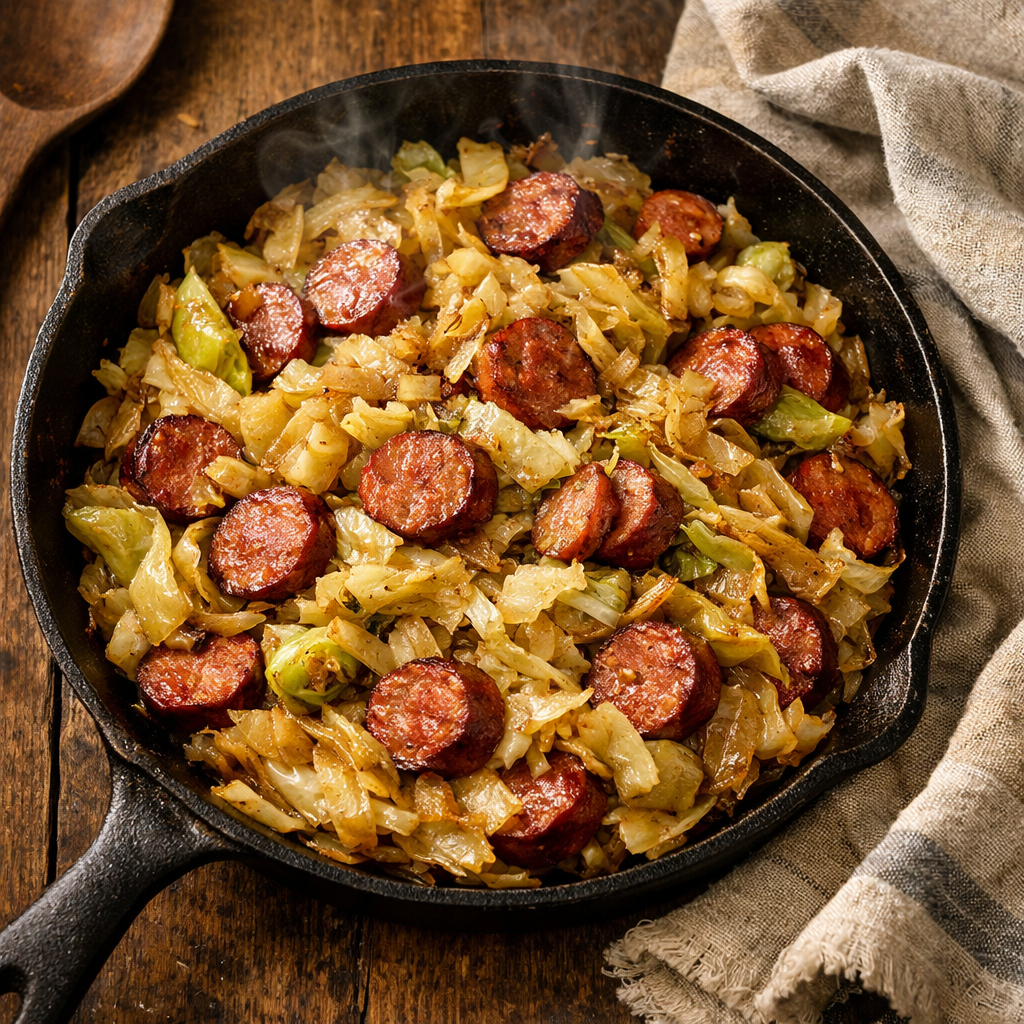
    Sausage & Cabbage Skillet for Two

    Ingredients

    • 1 tablespoon butter or olive oil
    • 6–8 ounces smoked sausage (leftover links welcome), sliced
    • ½ medium onion, sliced thin
    • 2 cloves garlic, minced
    • 4 cups shredded cabbage (or the last half of a head)
    • Salt and black pepper, to taste
    • ¼ teaspoon smoked paprika (optional, but adds depth)
    • 1 tablespoon Dijon mustard (optional, for brightness)
    • 1–2 tablespoons chicken broth or water, if needed
    • Red pepper flakes (optional, for heat)

    Instructions

    1. Begin with what remains.

    Heat the butter or oil in a large skillet over medium heat.

    Add the sliced sausage and let it brown gently, releasing its smoky scent — a reminder that even small things can carry big flavor.

    2. Build the foundation.

    Add the sliced onion and cook until it softens, turning translucent around the edges.

    Stir in the garlic and let it bloom for 30 seconds.

    This is where the kitchen starts to smell like memory — familiar, grounding, almost ancestral.

    3. Let the cabbage transform.

    Add the cabbage to the skillet.

    Season with salt, pepper, smoked paprika, and red pepper flakes for warmth, if you want.

    The cabbage will seem abundant at first, towering over the pan, but it will yield.

    It always does — softening, sweetening, becoming more than what it appeared.

    4. Stretch it gently.

    If the skillet runs dry, splash in chicken broth or water.

    Cover for 3–4 minutes to let the cabbage steam and tenderize, then uncover and stir.

    Add Dijon mustard if you want brightness — a spark of character in a humble dish.

    5. Taste for enough.

    Adjust seasoning.

    Let the flavors settle into one another, each one offering what it can.

    Serve warm, straight from the pan, honoring the quiet work that made it possible.

    Notes & Reflections

    This meal isn’t meant to be perfect.

    It’s meant to be possible.

    A dish sewn from scraps and softened edges, from small acts of culinary courage.

    It echoes the wisdom passed down through generations who learned how to turn shortage into sustenance and leftovers into legacy.

    They understood something we often forget:

    Enough is a sacred word.

    A reminder that abundance is not always required for nourishment —

    Sometimes, it only takes what we already have.

    Kyle J. Hayes

    kylehayesblog.com

    Please like, comment, and share

    Resources for Hard Times

    If you’re looking for practical help, food support, or community resources, you can visit the Salt, Ink & Soul Resources Page.

    👉 Resources for Hard Times

  • What I’m Grateful For on the Days After

    What I’m Grateful For on the Days After

    Salt, Ink & Soul — Weekend Reflection

    The days after Thanksgiving have always felt like a breath I didn’t realize I was holding. The noise fades, the house settles, and suddenly there’s space — space to think, to feel, to hear the quiet truths that get lost in the rush of the holiday.

    There’s a different kind of gratitude that lives in these slower hours.

    Not the big, performative kind that gets spoken around tables or posted online.

    But the smaller, steadier kind — the gratitude that rises from the life you return to when the celebration ends.

    I’m grateful that I have a place to stay — a space that holds me, shelters me, and gives me room to breathe.

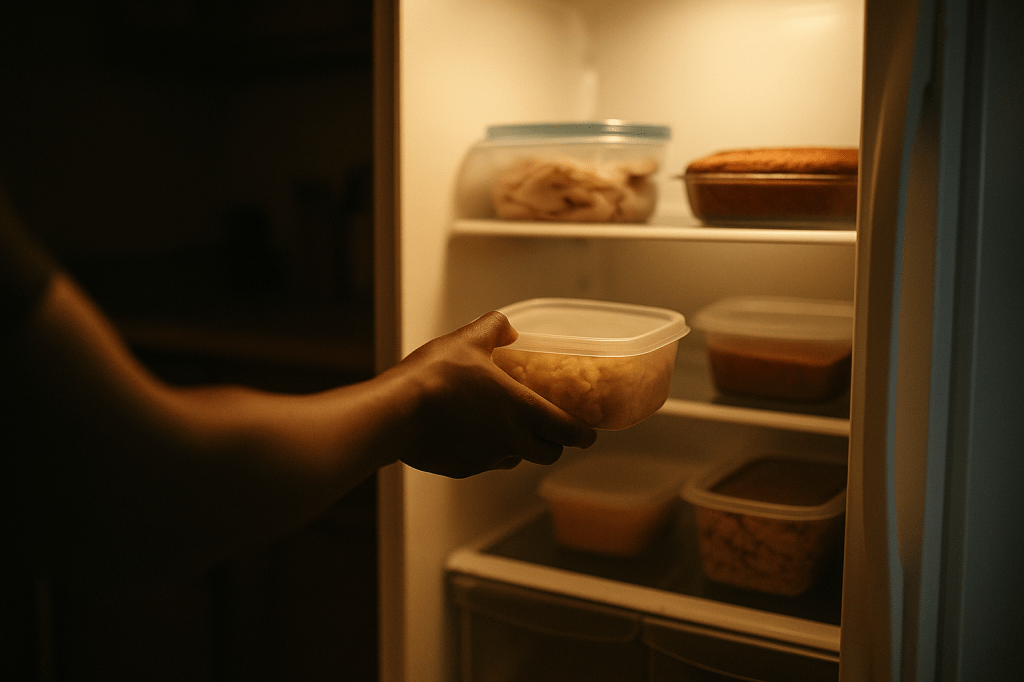
    I’m grateful that I have food to eat — not just the leftovers stacked in the fridge, but the comfort of knowing the next meal is within reach.

    I’m grateful that I have a job to go to — a place to show up, to contribute, to remain anchored in a world that often feels uncertain.

    And I’m grateful — deeply, quietly grateful — for my friends.

    The ones who check in without being asked.

    The ones who text or call just to make sure I’m alright.

    The ones who notice the small shifts in my voice and remind me I don’t have to carry everything alone.

    That kind of care is its own blessing.

    Soft, steady, and honest.

    I’m grateful for the leftovers that gently carry me into the days ahead.

    For the containers packed a little fuller than expected.

    For the warmth of yesterday lingering inside today’s refrigerator light.

    Some blessings arrive loud.

    Others whisper.

    And I’m learning — slowly, steadily — to hear both.

    Kyle J. Hayes

    kylehayesblog.com

    Please like, comment, and share

    Resources for Hard Times

    If you’re looking for practical help, food support, or community resources, you can visit the Salt, Ink & Soul Resources Page.
    👉 Resources for Hard Times

  • The Quiet Reckoning of Leftovers

    The Quiet Reckoning of Leftovers

    Salt, Ink & Soul — Humanity Through Food Series

    There’s a certain hush that falls after Thanksgiving — not the fullness or fanfare of the holiday itself, but a softer, more settling quiet. The kind that wraps around a home like a warm blanket. The kind that whispers that the celebration may be over, but the comfort isn’t.

    Because today is when the real magic begins.

    Today is the day the leftovers come alive.

    The fridge becomes its own little universe of possibility — containers lined like tiny promises. Dressing that deepens overnight, turkey that’s ready to reinvent itself into a dozen different meals, pound cake that turns into breakfast without anyone questioning a thing. Leftovers are the afterglow of a holiday well-lived, and maybe even better lived the day after.

    For those of us raised to stretch meals like muscles, leftovers weren’t just “extra food.” They were reassurance. Security. A quiet kind of abundance that steadied you through the next few days. Maybe even next week.

    Leftovers meant:

    We’re okay. At least for now.

      There’s a joy to leftovers that feels almost childlike — the thrill of opening the fridge and imagining what new creation you’ll craft from what remains.

    Turkey and rolls?

    That’s a sandwich ritual.

    Dressing and gravy?

    That’s comfort in a bowl.

    Macaroni and cheese?

    Somehow it gets better every time it’s reheated — nobody knows the science, but nobody questions it.

    In a world obsessed with novelty, leftovers teach us a quieter truth:

    There is beauty in returning to what you already have, in transforming what remains, in finding comfort in the familiar.

    The feast is flashy.

    The leftovers do the real work.

      And then there’s the kind of generosity that only shows up after the plates are cleared — the people who send you home with more than you expected, more than you asked for, maybe even more than you felt worthy of receiving.

    The friend who packs you a dessert “just in case.”

    The auntie who fills your container until the lid strains.

    The host who insists you take another tray, their eyes saying what words never do:

    I want you fed.

    I want you steady.

    I want you to be cared for when you walk out that door.

    That is its own kind of love.

    A quiet, intentional love that doesn’t perform — it provides.

    Sometimes the food you bring home is better than anything you ate at the table, not because of the taste, but because someone wanted you to have it.

    Leftovers can be a love language, too.

      If the holiday feast is the performance, the leftovers are the truth.

    They reveal:

    • what was made with abundance

    • what was shared freely

    • what was loved most

    • what people wanted you to take with you

    • and what gets better when it rests

    Leftovers tell the story of a household — the real version. The version where people quietly look out for each other. The version where meals stretch because life requires it. The version where comfort doesn’t disappear once the guests go home.

    Leftovers tell us that survival doesn’t always look heroic.

    Sometimes it looks like enough food for tomorrow.

    Sometimes it looks like mac and cheese after a long day.

    Sometimes it looks like a pound cake eaten slowly because it feels like a blessing wrapped in foil.

      Leftovers aren’t scraps.

    They’re gifts.

    Gifts of ease.

    Gifts of warmth.

    Gifts of a holiday that lingers.

    Gifts from people who fed you in more ways than one.

    They carry the flavor of yesterday into today.

    They soften the week ahead.

    They remind you that abundance doesn’t always roar —

    sometimes it whispers from behind a refrigerator door, waiting for you to reach in and begin again.

    Because leftovers aren’t just evidence of what you had.

    They’re evidence of what still remains.

    And sometimes?

    That’s more than enough.

    Kyle J. Hayes

    kylehayesblog.com

    Please like, comment, and share

    Resources for Hard Times

    If you’re looking for practical help, food support, or community resources, you can visit the Salt, Ink & Soul Resources Page.

    👉 Resources for Hard Times

  • Nothing Wasted – The Grace of Leftovers

    Nothing Wasted – The Grace of Leftovers

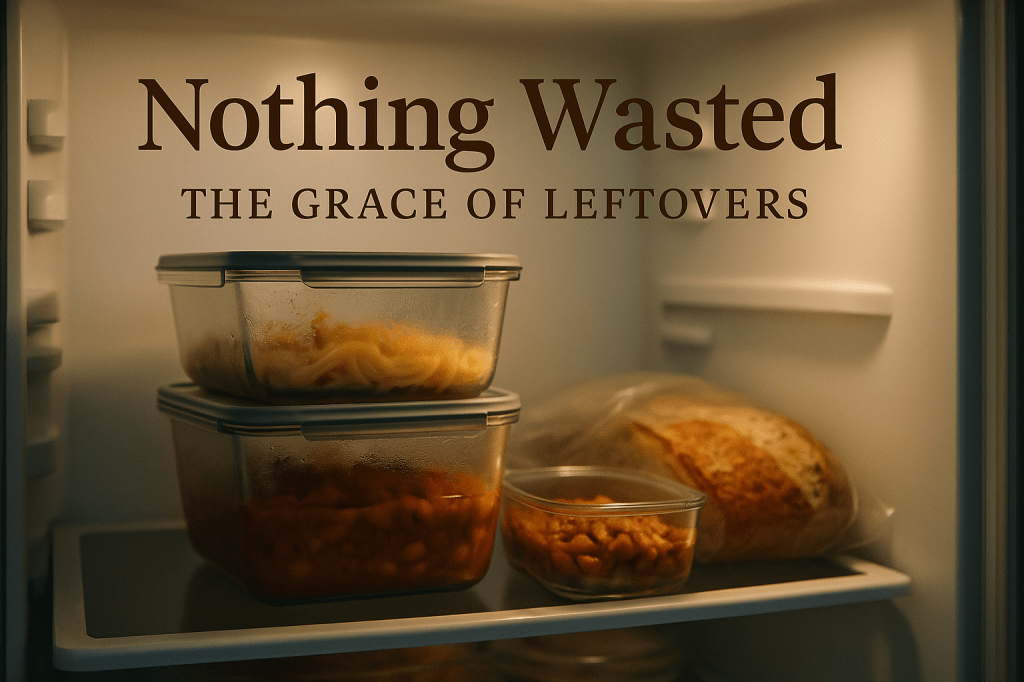
    I grew up in a house where tomorrow lived in the refrigerator—stacked in mismatched containers, labeled only by memory and love. We didn’t have much, so we learned to keep what we had. A pot cooled on the stove like a promise. A slice of bread wrapped in a paper towel felt like insurance against whatever the next day might bring.

    So when I hear people say they don’t eat leftovers—say it like a flex, like the world owes them a fresh performance every night—I don’t understand. Why throw away another lunch, another midnight snack, another chance to make something out of almost nothing? Where I’m from, waste isn’t just waste. It’s disrespect—to the hands that cooked, to the hours that earned the money, to the hunger we remember even when our plates are full.

    Leftovers carry a particular kind of grace. They’re proof that somebody planned ahead, that care was stretched across time. They’re the echo of yesterday’s effort, still singing. And yes—I still cook too much on purpose. Because there’s a relief in opening the door after a heavy day and finding your own kindness waiting for you in a glass dish.

    The world will tell you that food is a spectacle, a one-night show with a Michelin curtain call. But in the kitchens where I learned, food was a continuum. It traveled: pot to plate to container to skillet to lunchbox to after-school bowl. It got better with time, the way beans deepen and soups settle into themselves. The trick wasn’t reinvention for the sake of reinvention. It was respect.

    Here’s what I’ve learned about the second life of supper—the way a meal can keep feeding us if we let it.

    Second Lives (How I use Leftovers)

    Bread

    • Day 2: Toast with a swipe of butter and a little salt.
    • Day 3: Croutons (cube, oil, bake) or breadcrumbs (dry, blitz, jar).
    • Day 4: Bread pudding—milk, eggs, a handful of raisins; Sunday morning becomes gentler.

    Roast Chicken or Baked Thighs

    • Night after: Shred into tacos or quesadillas with onions and a squeeze of lime.
    • Lunch: Chicken salad with whatever’s around—celery, apple, a spoon of yogurt or mayo.
    • Final act: Simmer bones with onion ends and carrot stubs to create a stock that tastes like patience.

    Rice

    • Day after: Fried rice—egg, scallions, soy, any lonely vegetables.
    • Or fold into soup to make it stick to your ribs.
    • Or press into a pan with oil for a crispy rice cake topped with a soft egg.

    Beans

    • Next day: Blend half for a quick refried spread; reserve the other half whole.
    • Stretch: Chili with whatever ground meat (or none), or spoon over toast with hot sauce.
    • Last stop: Bean soup—stock, garlic, a heel of Parmesan if you’ve got it.

    Roasted Vegetables

    • Breakfast: Hash in a skillet with an egg on top.
    • Bowl life: Toss with greens and grains; finish with vinaigrette.
    • Soup move: Blitz with warm stock, then drizzle with olive oil and a sprinkle of pepper.

    Pasta & Sauce

    • Baked life: Mix with a spoon of ricotta or cottage cheese, top with breadcrumbs, and bake.
    • Pan-fry in a little olive oil until the edges crackle; suddenly, the old becomes new.

    Casseroles

    • Next day slice: Reheat in a skillet with a little butter for crisp corners and a better story.
    • Croquettes: Mash, bread, pan-fry—humble gold.

    Steak, Pork Chops, or Sausage (leftover bits)

    • Fried rice, breakfast hash, or quick tacos with pickled onions.
    • Tiny pieces become flavor—sprinkled into greens or beans like punctuation.

    The Scraps

    • Herb stems → chimichurri or stock.
    • Parmesan rinds → soup.
    • The last spoon of jam → vinaigrette with vinegar and oil.
    • Pickle brine → marinade for chicken, or a bracing splash in potato salad.

    The Quiet Rules (Because Respect Is Also Safety)

    Cool food within two hours. Store in shallow containers.

    Most cooked dishes: 3–4 days in the fridge; many soups and casseroles freeze up to 2 months.

    Reheat until steaming—not just warm, but honest. Label and date so that in the future you don’t have to guess.

    The Weeklong Buffet We Call Thanksgiving

    Thanksgiving is the high holy day of leftovers—the only time Americans brag about cold turkey like it’s a love language. The fridge becomes a geography: stuffed with hills, cranberry lakes, and green-bean valleys. We start with the classic sandwich—turkey, dressing, gravy, maybe that scandalous swipe of cranberry—and then we get clever:

    • Turkey pot pie with leftover vegetables and gravy, topped with a quick crust.
    • Stuffing waffles pressed in the iron, crowned with a runny egg.
    • Mashed potato pancakes—crisp outside, forgiving inside.
    • Bone broth that warms the house for days.

    Thanksgiving teaches what the year forgets: abundance is not a single meal but a stretch of days made tender by forethought.

    When people say they won’t eat leftovers, I hear a kind of amnesia. I hear a forgetting of the hands that peeled, stirred, salted, tasted. I hear a forgetting of the mile between hunger and relief. In my kitchen, we don’t forget. We reheat. We revive. We say thank you twice.

    Because leftovers aren’t the past. They’re the persistence of care.

    They are proof that enough can last, if we let it.

    And in a life that asks so much of us, there’s no virtue more radical than refusing to throw away what still has love to give.

    Kyle J. Hayes

    kylehayesblog.com

    Please like, comment, and share

    Resources for Hard Times

    If you’re looking for practical help, food support, or community resources, you can visit the Salt, Ink & Soul Resources Page.

    👉 Resources for Hard Times