Tag: lifelessons

  • Where the Real Food Lives

    Where the Real Food Lives

    There’s a quiet truth you learn if you sit down and listen long enough at a table that isn’t yours. I’m talking about food—the real kind. The kind that doesn’t come with laminated menus, mood lighting, or some Instagram-ready plate presentation designed to be photographed more than eaten. I like food the way it was meant to be cooked. Not dressed up for the American palate, not hollowed out of spice and soul, not twisted into something that feels “safe” for the suburbs. No. I want the unfiltered version. The authentic, in all its greasy, spicy, loud, proud, home-cooked glory.

    So when I get that itch—when I want Thai that actually burns, or birria that makes you sweat and sigh and say something profane under your breath—I don’t walk into a chain restaurant that’s polished its identity clean off. I ignore the neon signs, the catchy slogans, the smiling mascots. I go looking for them. The people who know it best. The ones who were raised with it, who smell a particular spice and remember their grandmother’s hands, who understand that food isn’t a product—it’s inheritance.

    So I ask. I walk up, sometimes awkward, always respectful. Where do you eat when you want the good stuff? And almost without fail, the answer is the same: my mother’s house.

    And listen—if they’re willing to take me? I go. You better believe I go. Because that house, that kitchen, that woman—she’s the final boss of flavor. Her curry will humble you. Her pho will make you question every bowl you’ve ever had. Her dumplings will taste like someone finally told the truth.

    But if that invite isn’t on the table—and it usually isn’t—I ask for the next best thing. The real-deal hole-in-the-wall. The strip-mall treasure with the chipped menu and plastic chairs, where the spice level isn’t adjusted to your comfort, where grandma is still in the back with a ladle in one hand and a cigarette in the other. That place. And when I find it, I sit down, shut up, and eat.

    But I can’t always go out. As it turns out, life is full of dishes that have nothing to do with food. So when I can’t chase it out in the wild, I chase it in my kitchen.

    And when I do, I don’t cut corners. I don’t swap the Sichuan peppercorns for black pepper because it’s easier. I don’t use pre-minced garlic from a jar or ditch the fish sauce because someone on Reddit said it smells weird. I try to cook it their way. Because it’s not mine to change. Because what right do I have to remix someone else’s survival?

    These recipes—their recipes—were forged in kitchens without much to spare. They came out of migration, colonization, desperation, and adaptation. They were stitched together over generations, passed down in pinches and palmfuls, in scents and stories. And here I come, with all my privilege, trying to “improve” it?

    Nah. That’s not what this is.

    Cooking someone else’s food the way they do is my way of showing up with my shoes off and my mouth shut. It’s reverence, not recreation. I don’t want to make it mine. I want to understand it—just a little.

    And in doing so, I find that food is maybe the last honest language we still speak. It tells you who someone is, where they’ve been, what they’ve lost, and what they’ve held onto with white-knuckled grit. You just have to listen.

    So no, I don’t want the watered-down version, the sanitized, culturally bleached, deep-fried-in-mayo, made-for-mass-appeal rendition. I want the dish that was never meant to be sold. I want the one your mom makes on a rainy Tuesday. I want truth.

    And if I’m lucky, I’ll get to sit at that table.

    But if not, I’ll light the burner, open the cookbook, and try to honor it—one clumsy chop, scorched pan, and heartfelt bite at a time.

    Because that’s how you show respect when you can’t speak the language.

    You taste it.

    And you don’t dare change the damn thing.

    By. Kyle Hayes

    Please Like, comment, and subscribe
  • Grams Not Guesses

    Grams Not Guesses

    So I wanted to cook,

    Not to become a chef. Not to impress anyone.

    I wanted to cook because I loved sweets. I loved good food.

    That pure, unsophisticated craving for something warm, buttery, something you pull out of the oven and burn your tongue on because you just couldn’t wait.

    But there’s a difference between loving food and understanding it.

    Between throwing ingredients together and crafting something worth remembering.

    Everyone wants to skip straight to the fun part. The stirring. The sizzling. The magic.

    But before you set up your mise en place, before the measuring cups hit the counter or the oven light flickers on, there’s one thing I recommend you do first:

    Learn the damn metric system.

    I know, I know.

    Growing up in America, we treated the metric system like some kind of foreign threat—a decimal-based conspiracy from the cold bureaucrats of Europe and Asia.

    Why use grams and milliliters when you could fumble through cups, tablespoons, ounces, and whatever a pint actually is?

    We were proud of our confusion.

    We turned inconsistency into tradition.

    But if you want to cook—and I mean really cook—you’ve got to let that go.

    Because the metric system isn’t about politics.

    It’s about precision.

    A gram is a gram.

    It doesn’t change depending on the weather, your mood, or how aggressively you packed that cup of flour.

    And that level of consistency is everything.

    Ever wonder why that cake turns out dry even though you swear you followed the recipe?

    Why did the sauce split, the bread collapsed, or the texture didn’t feel right?

    It’s probably because you were measuring like a cowboy.

    So here’s what you do.

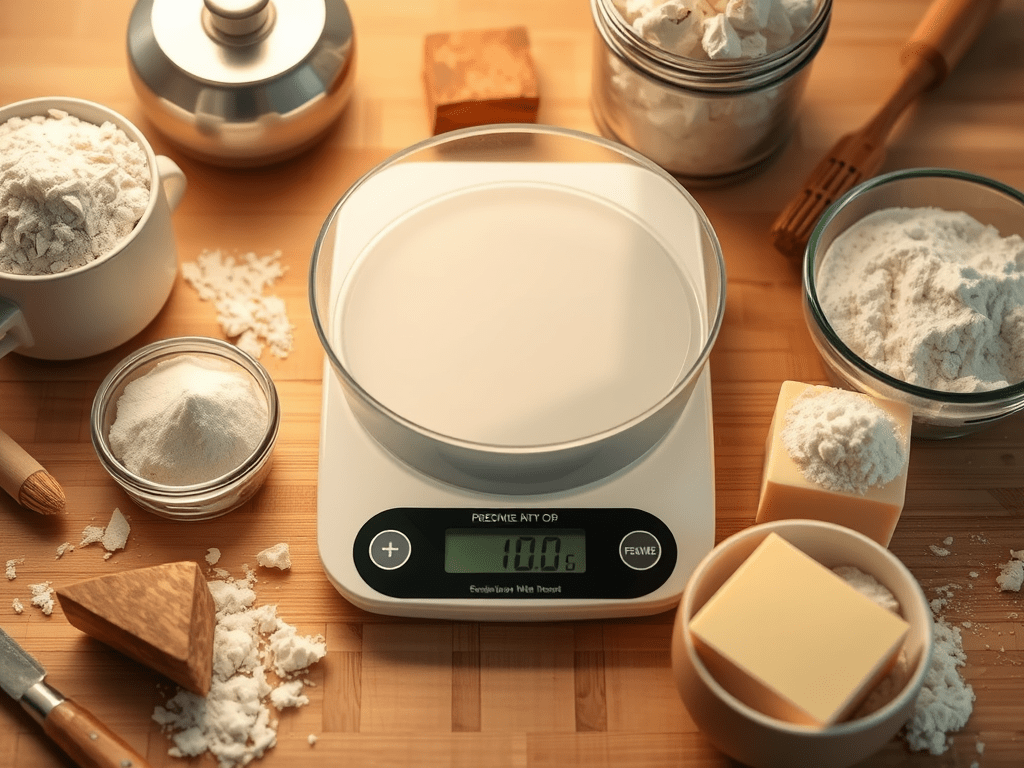
    Go out and buy a digital scale.

    Not the fancy kind. Just a solid, reliable one.

    Get yourself a digital thermometer while you’re at it.

    Knowing the internal temperature of your roast matters more than what the recipe says 45 minutes in the oven should look like.

    These two tools—simple and affordable—will change the way you cook.

    Not because they make you smarter.

    But because they force you to slow down and pay attention.

    And that’s what cooking really is.

    It’s not chaos. It’s not improvisation.

    It’s control disguised as creativity.

    The freedom to riff, to invent, to push boundaries?

    That comes later.

    First, you need discipline.

    A foundation. A system.

    And it starts with knowing how much 200 grams of flour actually feels like.

    It starts with temperature, timing, and respect for the numbers.

    So yeah, you want to make sweets?

    Great.

    Start with the scale.

    Get your metrics straight.

    Because food is a lot like life.

    It’s better when you stop guessing.

    By Kyle Hayes

    Please Like, comment, and subscribe.

  • Mise en Place and the Mess That Made Me

    Mise en Place and the Mess That Made Me

    When I first started cooking, it was chaos.

    A beautiful, clumsy, borderline dangerous kind of chaos.

    Pots clanged, drawers opened, and knives were in all the wrong places. Every piece of silverware I owned was used, and every pan was dirty. And the recipe?

    I was reading it while I cooked, squinting through steam and panic, trying to figure out the difference between “simmer” and “boil.”

    And still, somehow, the food turned out okay.

    Not great. Not refined.

    But edible.

    Which, given the circumstances, felt like a minor miracle.

    Back then, cooking was survival mixed with ambition.

    A love letter written in all caps with a grease-stained pen.

    But then I learned about mise en place.

    And everything changed.

    Mise en place: “Everything in its place.”

    A phrase you hear in culinary schools whispered like gospel across stainless steel kitchens, tattooed into the souls of anyone who’s ever worked a line.

    But it’s more than just a cooking philosophy—a way of life.

    The Breakdown

    Plan: Read the damn recipe. All of it.

    This isn’t a Choose-Your-Own-Adventure. Know what you’re about to get into.

    Get – Gather your ingredients and your gear.

    Every spoon, every pan, every awkward little measuring cup you’ll inevitably forget if you don’t do this step.

    Prepare – Chop. Measure. Peel.

    Treat each ingredient like it matters because it does.

    Sort —Use small bowls, containers, or whatever you have. Separate your garlic from your ginger, your wet from your dry.

    Place: Lay it all out around your cooking space.

    A clean space is a clear mind. Keep a towel on your shoulder—you’ll need it.

    I know people get tired of hearing this.

    They want the shortcut. The life hack. The TikTok version.

    But I’m gonna keep saying it until it sinks in.

    Because mise en place isn’t just about food.

    It’s about respect—for the process, ingredients, and yourself.

    It saves you time.

    It saves your sanity.

    And yeah, it makes your food better.

    As a nurse, I’ve always set up my cart the same way every shift.

    Same rhythm. Same layout. Same tools, same order.

    It’s not because I’m obsessive—when the heat hits and the pressure’s on, your body remembers what your mind forgets.

    It works in the kitchen, too.

    When I have a big cooking day, I prep the night before.

    I chop. I portion. I lay it all out like I’m about to do surgery.

    And when it’s time to cook, it flows.

    Not without effort—but without panic.

    It becomes a craft, not a scramble.

    So yeah, I’ll keep saying it.

    Take the time.

    Do the work.

    Respect the process.

    Because food isn’t just about flavor—it’s about intention.

    And if you can find clarity in the kitchen, the mess, the heat, and the chaos…

    You can find it everywhere else, too.

    By Kyle J. Hayes

    Please Like, Comment, and subscribe