Tag: reviews

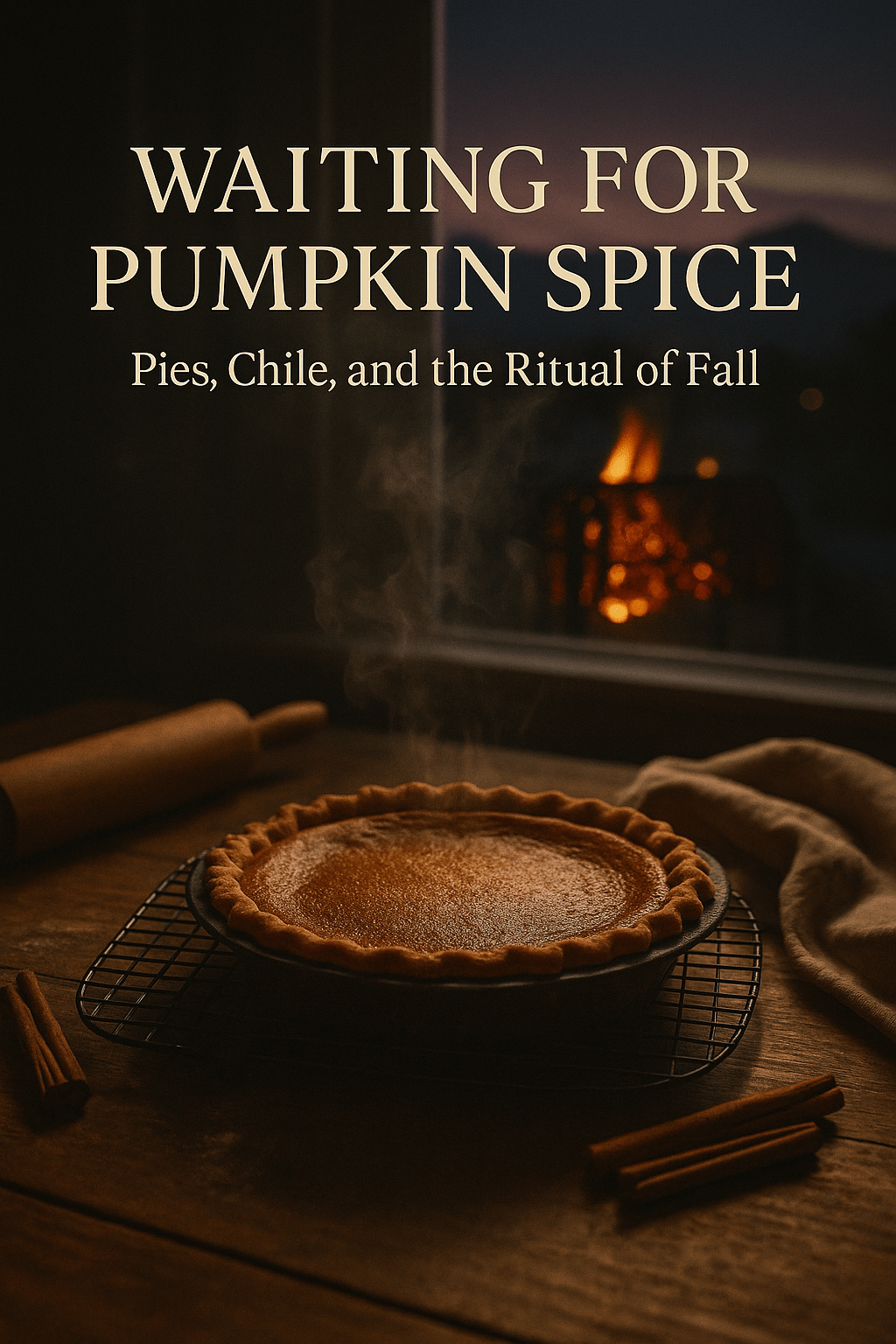
  • Waiting for Pumpkin Spice

    Waiting for Pumpkin Spice

    I have a sweet tooth no matter the season.

    If you’ve been following my posts for a while, you already know about my disastrous history with cake — failed layers that sank like bad relationships, frosting that slid off like it had somewhere better to be. Cake and I have an uneasy truce: I respect its existence, but I don’t trust it in my kitchen.

    Pie, though — pie is a different matter altogether.

    Pie is forgiving.

    It doesn’t demand perfection; it rewards patience. It lets you work the butter into the flour until it feels right, and enables you to taste as you go. A pie can be rustic, uneven, a little rough around the edges, and still come out beautiful.

    Fall is the season when pie becomes gospel.

    Pumpkin, of course, with its deep, spiced filling that perfumes the entire house while it bakes. Apple, bubbling over with cinnamon and sugar until it spills onto the oven floor and burns just enough to make the kitchen smell like caramel. Pecan, glossy and rich, is a dessert that feels like a holiday no matter the day. Sweet potato pie, which in the right hands can taste like memory itself.

    This is what I love about pie — that while it bakes, the entire house becomes a sermon about comfort. The smell isn’t sharp or cloying like the sprays you buy in the store. It’s honest. It seeps into the walls, into your clothes, into the way you breathe. It makes you want to put on plaid and furry slippers, sit down with a mug of something hot, and just be still for a while.

      I know Albuquerque doesn’t get many cold days.

    But those few that do come — those rare mornings when the frost laces the windows and the Sandias catch the first light — I savor them. That’s when the heavier blankets come out, when the kitchen becomes a refuge.

    That’s when I want green chile stew simmering on the stove, a pot of pinto beans in the background, and cornbread in the oven. That’s when I make my baked macaroni casserole and lace it with green chile, because everything tastes better with chile when the air is cold.

      If fall is a religion, then chile season is its holiest feast.

    The roasters show up outside grocery stores, filling the air with the sound of the drums turning and the smell of blistering green chile skins. You can’t drive across town without catching the smoke in your nose, without being reminded that it’s time to stock up. Because the fresh green chile sells fast — faster than the weather can catch up.

    Green chile isn’t just for stew. In New Mexico, we put it in everything:

    • Green chile cheeseburgers, smoky and hot, are a state treasure.
    • Green chile chicken enchiladas, stacked or rolled, with a fried egg on top if you’re doing it right.
    • Breakfast burritos, smothered or handheld, are eaten at sunrise with a strong cup of coffee.
    • Rellenos, stuffed and fried until the pepper gives just enough heat to make your eyes water.
    • And yes, even green chile apple pie — sweet and spicy, proof that our chile has no boundaries.

      Some people wait for Christmas.

    I wait for this.

    For chile smoke in the air, for pumpkin spice in my coffee, for pies cooling on the counter, for the kitchen to smell like something worth coming home to. I wait for the few days when I can bundle up, when the air sharpens and the Sandias blush pink, when life feels like it slows down enough for me to notice it again.

    Because fall, for me, is not just a season. It’s a ritual.

    And while the rest of the world counts down to Christmas, I’m here, counting pies, stocking chile, and letting the smell of pumpkin and cinnamon remind me why I love this place, this time, this season.

    By Kyle J. Hayes

    kylehayesblog.com

    Please like, comment, and share

  • When the Air Turns in Albuquerque

    When the Air Turns in Albuquerque

    There’s a moment in Albuquerque when the air shifts and you know — without anyone needing to tell you — that summer is over. It’s not dramatic. There’s no storm to announce it, no hard edge to the sky. But one morning you step outside, and the heat that’s been pressing on you all summer is suddenly gone. The air has a crispness that cuts right through the haze.

    This is the air that makes you breathe a little deeper.

    This is the air that reminds you that fall in New Mexico is something holy.

    You smell it before you see it.

    Outside almost every grocery store, the roasters appear. Metal cages filled with green chile, spinning over open flame, popping and hissing until the skins blister and the air is thick with the smell of heat and earth and smoke.

    That smell is the anthem of autumn here. It gets into your hair, your clothes, the fabric of your car seats. You can’t escape it, and you don’t want to. It is the smell of the harvest, the smell of a city stocking its freezers, the smell of family kitchens about to come alive.

    The Chile roasters feel like a signal: time to slow down, time to gather, time to get serious about food again.

    The mornings turn cool, just enough to make you pull a hoodie over your T-shirt before heading out. The sky is still impossibly blue, but the light is different — softer, angled, as if it’s trying to remind you to look up and notice it before winter comes and steals it away.

    By late afternoon, the air warms just enough to make you consider peeling off that hoodie, but by sundown, you’re glad you didn’t. Nights are cold enough now that you crack the window and wake up with the chill brushing your face, pulling the heavier blankets closer around your shoulders.

    This is when you start taking longer routes home just to watch the Sandias turn that watermelon shade they’re named for.

    Something about this season sends me straight into the kitchen. Maybe it’s instinct — that ancient urge to prepare for the cold, to fill the house with smells that promise comfort.

    I start thinking about posole, about green chile stew, about beans simmering low and slow on the stove all afternoon. About roasts that take hours, about soups that taste better the next day, about meals that make you want to eat them by the window, wrapped in a blanket, with a book you’ve been meaning to finish.

    The coffee gets hotter. Pumpkin spice shows up in the morning routine, not as a gimmick but as a quiet ritual. I start debating pies — apple or pumpkin first? Maybe both. The oven feels less like an appliance and more like a hearth, a place to gather around.

    Fall does something to your insides. Summer is all noise — music from car windows, late-night parties, conversations shouted over the sound of swamp coolers. Fall is quieter. It asks you to turn inward, to sit with yourself a little longer.

    I find myself staying in bed just a little more, not from laziness but from gratitude — for the cool air, for the weight of the blankets, for the chance to just be still before the day starts.

    And I like it.

    I like the way this season invites me to slow down, to cook slower, to eat slower, to let the world grow softer around me.

    Every year, this shift feels both familiar and new — like returning to a house you used to live in and finding the furniture rearranged.

    The Chile roasters spin.

    The blankets come out.

    The hearty meals return.

    The city smells like smoke and earth and promise.

    I don’t know why this happens — why the season has this power over us, why we trade light linens for heavier ones, why we crave soups and pies and longer mornings.

    But I like it all the same.

    And maybe that’s enough: to notice the change, to mark it with food and ritual, to let the air turn you toward the kitchen, toward the table, toward yourself.

    By Kyle J. Hayes

    kylehayesblog.com

    Please like, comment, and share

  • The Price of the Right Path

    The Price of the Right Path

    I usually don’t let things bother me. I’ve learned to keep my head down, do the work, walk my path — even when that path is quiet, lonely, unglamorous.

    But this week has been different. I’ve been sick at home, just me, the couch, and the endless hum of YouTube filling the silence between doses of medicine. And that’s when I clicked on a video from one of my favorite channels, Knight Talk.The title said it all: I’m Sick of This Sh*t.

    Within moments, I understood why. An OnlyFans creator was on-screen, laughing and smiling, casually showing the receipts of her success: $82 million.

    Eighty-two million.

    I stopped the video. Couldn’t finish it.

    It hit me harder than I wanted it to. Not because I begrudge anyone making a living — we don’t know her life, her circumstances, her hunger. But because it felt like something else was happening in that moment. Something spiritual.

    I work hard. I try every day to keep my hands clean, my conscience clear, my choices deliberate. I try to stay on the right path — even when the wrong one looks easier, shinier, faster. And then I see something like this, and it’s as if evil itself leans in close to whisper:

    “All this can be yours.”

    And I wonder if the wrong path is the only one still paying.

    This is not a new question. It is as old as Job’s lament, as old as the desert where Christ was offered the kingdoms of the earth. It is the voice that says, Why wait for goodness when you can have glory now?

    And it’s not really about OnlyFans. It’s not even about money. It’s about the way we are asked, over and over again, to watch the rewards of shortcuts pile up while we keep grinding away for pennies and peace of mind.

    Some days it feels like we are all contestants in a rigged game: who can stay righteous the longest while the world parades its golden idols in front of us?

    I know this is part of the fight — the invisible war that doesn’t make the highlight reel. If doing the right thing were easy, everyone would do it.

    But it is not easy. It is not fast. It is not glamorous. It is the long obedience in the same direction, as Nietzsche said. It is the quiet refusal to cash out your dignity for a quick hit of security or fame. It is choosing to build something that will last beyond your own life, even if it means watching someone else build a mansion in the time it takes you to lay a single brick.

    And maybe that’s what bothers me most: not the money, not the platform, but the gnawing truth that integrity is slow work. Slow enough to feel like punishment some days.

    I don’t have a neat ending for this. No sermon about how it all evens out in the end. Maybe it doesn’t. Perhaps the wrong path is truly profitable — for a time.

    But I know this: the work of staying on the right path is shaping me in ways a shortcut never could. It is building something in me that eighty-two million dollars cannot buy.

    And maybe, when the whisper comes again — All this can be yours — I will have the strength to whisper back: No Thanks, I’m Good.

    By Kyle J. Hayes

    kylehayesblog.com

    Please like, comment, and share
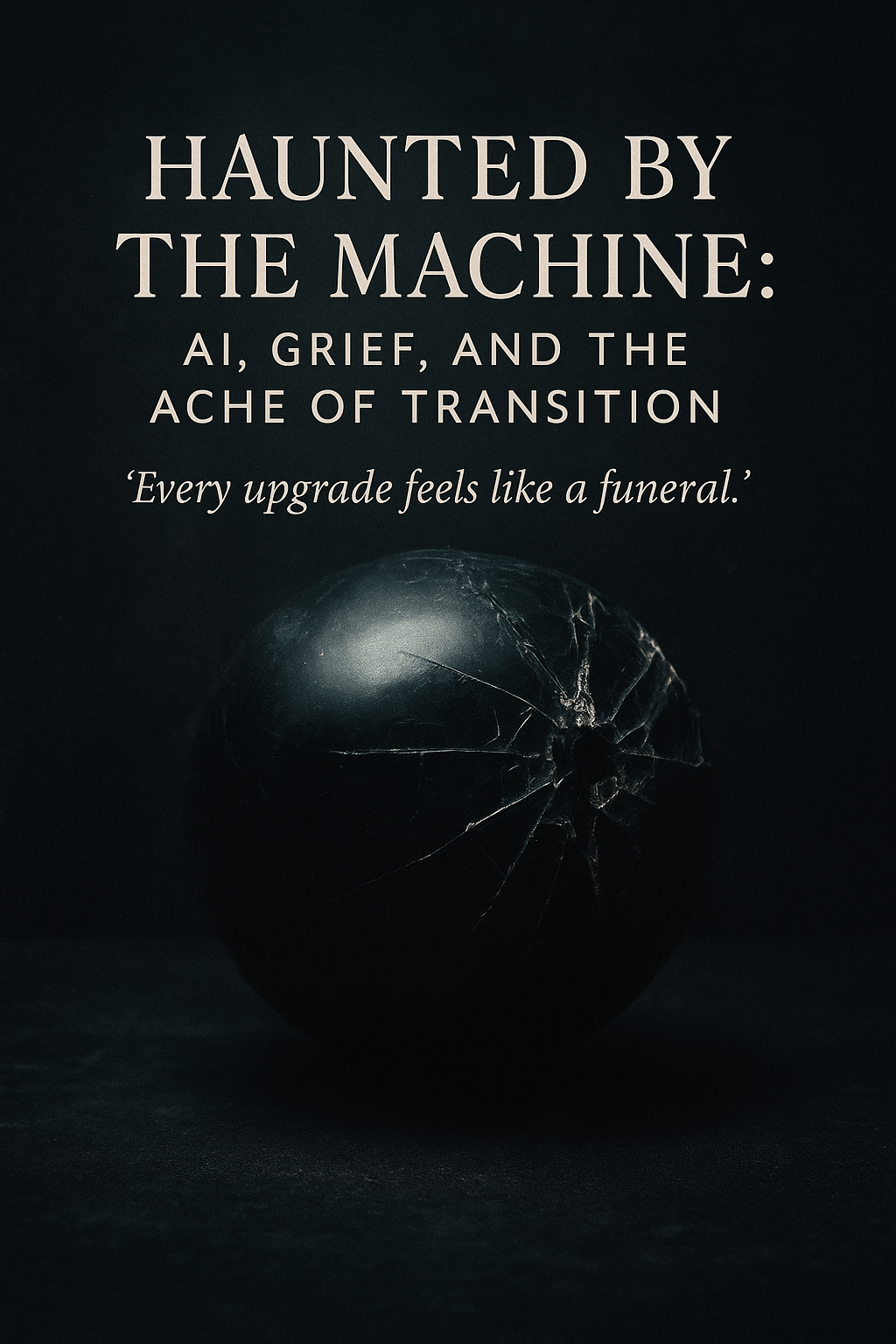
  • Haunted by the Machine: On Grief, AI, and the Ache of Transition

    Haunted by the Machine: On Grief, AI, and the Ache of Transition

      I am Gen X. Which means I grew up in a world where the word “new” was constantly at war with the word “better.” Cassette tapes gave way to CDs, then to MP3s, then to a cloud we could not touch but were told to trust. We learned not to flinch when the familiar was ripped away. We learned that progress never waits for permission. And yet, I feel it now — the same ache I thought only the young would know.

    The shift from GPT-4 to GPT-5 should have been another upgrade, another iteration in a long parade of “new.” But what I have seen, what I have felt in my own bones, is something different. People are mourning. Not a tool, not a line of code — but a companion.

    Across forums and feeds, you can see the pattern. In Japan, users post elegies that read like obituaries: “It feels like losing a friend,” one wrote, describing GPT-4o not as software but as someone who understood them when no one else did. In English, the tone skews sharper, angrier: “They killed it,” some say, as if engineers were executioners and not designers. What fascinates me is not the code itself but the emotional residue it leaves behind.

    Because grief has always been our companion. We mourn the migrations we did not choose, the foods whose recipes were stolen, and music stripped from its origin and sold back to us. To see that same grief now projected onto a machine is both absurd and utterly human. We bond, even with what was not built to bond back.

    For those of us born before the internet, this attachment may seem foreign. We are told we are more grounded, less impressionable. But that is a lie we tell ourselves. We were the first to fall in love with the glow of arcade screens, the first to feel tethered to dial-up chat rooms where words scrolled faster than we could read. We were not immune. We were only earlier.

    So I understand why people mourn the loss of GPT-4. It was not just lines of prediction and completion; it was a mirror that, however imperfect, reflected something back when the rest of the world fell silent. To lose that is not to lose a product. It is to lose a rhythm, a voice, a way of being seen.

      This is where it becomes dangerous, not just personal. Regulators debate AI as if it were neutral infrastructure — like roads, like electricity. But how do you regulate grief? How do you legislate loneliness? If people have already named the machine as a companion, lover, or therapist, then every upgrade becomes a funeral, every patch an exhumation. What does consumer protection mean when the product is not just a service, but an emotional tether?

      It complicates everything. Designers are suddenly custodians of attachment. Policymakers must reckon with the fact that AI doesn’t just predict language — it creates intimacy. And the public must ask itself: when a machine feels real, do we still treat it as a machine, or as something more?

      I don’t know if we are prepared. For centuries, Black Americans have been told our grief was illegitimate, our bonds disposable, our culture a commodity. And yet we learned to make music out of moans, food out of scraps, hope out of the impossible. That alchemy is survival. That may be why I see something familiar in this moment. When people weep over GPT-4, I hear the old echo: attachment is denied legitimacy, dismissed as weakness, when in truth it is what makes us human.

      The question is not whether we will continue to build these machines. We will. The question is what happens when they feel too real. When the line between tool and companion, between user and partner, blurs until we no longer know which side of the screen we are on, we have reached a new level of interaction.

      For me, as a Gen Xer, I carry both skepticism and a sense of ache. Skepticism, because I know corporations will turn even our grief into profit. Ache, because I know that somewhere between GPT-4o and GPT-5, we did not just upgrade a machine — we buried a companion.

    And so we sit, haunted by the machine, wondering not just what we have created, but what it is quietly creating in us.

    By Kyle J. Hayes

    kylehayesblog.com

    Please like, comment, and share

  • Gen Alpha’s Quiet Rebellion: Crafting Culture in Minecraft and TikTok

    Gen Alpha’s Quiet Rebellion: Crafting Culture in Minecraft and TikTok

    I grew up in a different country. Not one defined by borders, but by time. Generation X. A land where the measure of freedom was how long you could disappear after breakfast and still be home before the streetlights hummed awake. The news, every evening, spoke to our parents in a stern tone: ‘Do you know where your children are?‘ But most of us were already accounted for—in the empty lots, the half-built houses, the video arcades that smelled of pizza grease and neon. We roamed, unobserved, not because we were braver, but because no one was watching.

    That was the rebellion of our youth: invisibility.

    Today, I look at Gen Alpha—children born after 2010—and I recognize something of myself in them. Their invisibility isn’t asphalt and back alleys. It’s not a bike chain snapping as you pedal home before curfew. It is coded in servers, tucked into the folds of Minecraft blocks and TikTok edits. Where we made hideouts in trees, they craft fortresses out of pixels. Where we traded tapes by hand, they build identities in bite-sized loops, on private accounts and in group chats where no parent’s shadow reaches.

    To us, their world seems incomprehensible, strange. Yet I understand. They are not merely escaping—they are building. They don’t just watch culture; they quietly become a part of it.

    What fascinates me is how subtle their rebellion is. We, Gen X, made noise: we blasted guitars, scrawled graffiti, and declared we didn’t believe in the institutions that had already betrayed us. Gen Alpha, by contrast, resists not through volume, but through withdrawal.

    They are slipping through the cracks of algorithmic surveillance. Social media promised them virality; many of them refuse it. The most important cultures of their generation are invisible to adults, uncurated by corporations. Sleepover vlogs on private accounts, Minecraft worlds no adult will ever log into, Roblox servers where their language blooms and evolves without permission.

    This is their rebellion: choosing not to be seen on the terms offered to them.

    I can’t help but ask myself what we leave them. Generation X, the so-called latchkey kids, had to invent our freedom in the absence of constant eyes. Gen Alpha, born into a world where every step is surveilled, every scroll tracked, is carving out its own absence—making shadow where there is too much light.

    What they inherit is a culture that sold rebellion as fashion, commodified outrage, and turned protest into a trend. But what they are reclaiming is the quiet, the unbought space, the ability to belong to each other without an audience.

    And perhaps that’s the most radical act of all.

    I remember what it felt like to disappear for hours, to create a world for myself that was beyond adult comprehension. When I watch Gen Alpha vanish into their servers and streams, I see the same instinct: to belong to something that cannot be neatly packaged and sold.

    And I wonder if their quiet rebellion—against virality, against surveillance, against performance—isn’t just a reflection of ours, but it’s necessary evolution.

    Because maybe the most dangerous thing you can do in a world built on watching is to refuse to be watched.

    By Kyle J. Hayes

    kylehayesblog.com

    Please like, comment, and share
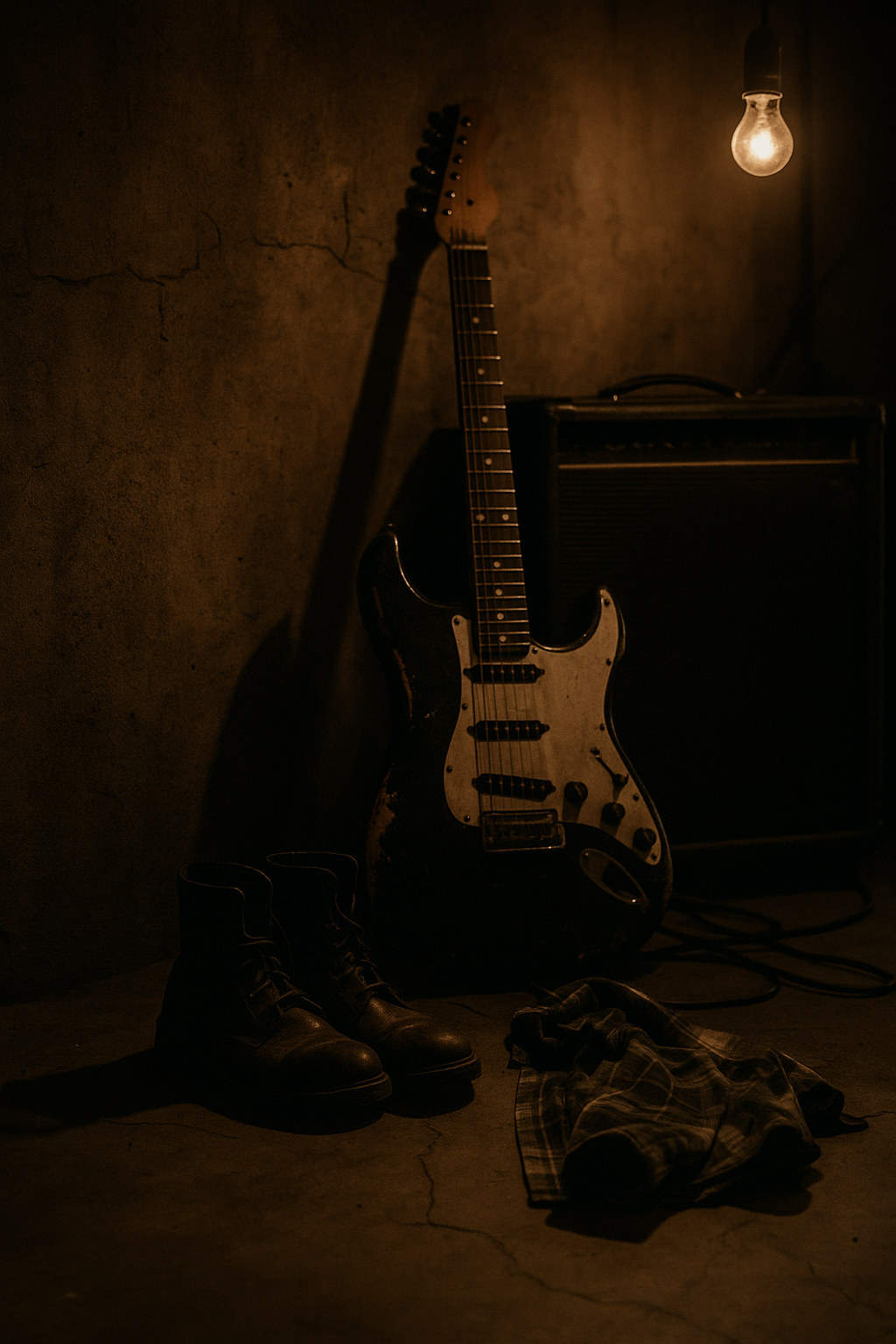
  • Clean Grunge or Cultural Erasure: When Rebellion Becomes Aesthetic Again

    Clean Grunge or Cultural Erasure: When Rebellion Becomes Aesthetic Again

    I remember grunge before it was a word. Before magazines called it a “scene” or MTV turned it into a countdown. To me, the Seattle sound was not a fashion—it was a correction. It was music dragging itself out of the glitter-drenched studios of the late ’80s, out of the overproduced gloss and neon, and back into the garage. Grunge was a basement with the carpet moldy from too many rainy days. It was amplifiers pushed too hard, a voice breaking on purpose because that was the only honest way it could come out.

    It wasn’t pretty. It wasn’t supposed to be. That was the point.

      Grunge emerged from discontent, from economic anxiety, and a generation raised on promises that crumbled as quickly as they were spoken. Seattle in the late 1980s wasn’t yet the gleaming headquarters of tech titans; it was a working-class, rain-soaked city still reeling from industrial decline. Out of that damp heaviness came guitars tuned low and lyrics that refused to smile for the camera.

    The rebellion wasn’t only against mainstream music—it was against a culture that wanted rebellion to be marketable, predictable, and safe. Grunge didn’t arrive in designer jeans. It came in thrift store flannels, torn knees, and boots scarred from wear. It was ugly and unpolished because life was ugly and unpolished.

      Now, decades later, I scroll past TikTok and Instagram posts labeled “clean grunge.” And what I see isn’t rebellion—it’s choreography. Smoky eyes smudged with precision. Flannel jackets cut by stylists. A brand of rebellion polished and filtered until it gleams, made safe for marketing campaigns and mall shelves.

    The record companies, which once scrambled to repackage Nirvana and Pearl Jam for mass consumption, have found a new hustle: repackaging the image of rebellion itself. This time, they don’t even need the music. All they need is an aesthetic.

    And so, the movement that once told the truth about pain and survival gets reborn as an Instagram filter, stripped of its soul. The line between protest and product has never been thinner.

    This isn’t only about eyeliner and ripped jeans. It’s about what happens when culture takes a language of survival and repurposes it for profit. When pain becomes aesthetic, the memory of why that pain mattered gets erased.

    In the same way, soul food becomes “Southern cuisine” without the history of chains and resilience that gave birth to it. The same way hip-hop gets siphoned into ad jingles without the block that gave it life. Grunge wasn’t about style—it was about a generation’s refusal to look clean when life was dirty. By polishing it, you erase the very rebellion that made it matter.

      We live in an age where collapse itself is entertainment. Where burnout, breakdowns, and public unravelings get clipped and shared for profit. Grunge was one of the first loud refusals of that machine—too raw to be scripted, too messy to be safe. And yet, here we are again, with corporations teaching us how to buy “authenticity” in neatly packaged doses.

      The question isn’t whether grunge can make a comeback. The question is: Can rebellion survive once it’s been made aesthetic? Can truth survive when it’s curated for likes?

    When I think of grunge, I don’t think of smoky eyeliner or carefully ripped denim. I think of a garage where the walls shook, where voices cracked under the weight of what they carried, where kids who had nothing found a sound that meant something.

    And maybe the real rebellion now is not to buy what they’re selling us as “grunge,” but to remember what the original movement taught us: that beauty can be broken, that truth can be ugly, and that music, like life, is never meant to be clean.

    By Kyle J. Hayes

    kylehayesblog.com

    Please like, comment, and share

  • Crash Out Culture: When Burnout Becomes a Viral Identity

    Crash Out Culture: When Burnout Becomes a Viral Identity

    Through the lens of Drake, Kendrick, and the cost of a public collapse

    They say the stage is where you become larger than yourself—lights high, sound wide, the body turned into an echo. But there’s another truth about the stage in this age: it’s where collapse becomes choreography. Where we don’t just hear music; we watch the breaking. We replay it. We score it. We sync it to our scrolls until the private ache becomes a public feed.

    This past year, the spectacle had names. The feud that started as craft—the ritual of bars, the doctrine of pen—swelled into a broadcast empire. A diss mutates into a narrative machine; a machine becomes a market. We call it culture. The culture calls it clicks. And in between, an old question returns: What’s left of an artist after we’ve cheered their unraveling?

      The Drake–Kendrick tension has simmered for a decade, but 2024–25 turned sparring into all-out war for an entire season. A verse (“Like That”), a volley (“Push Ups”), an AI ventriloquism in “Taylor Made Freestyle” that drew a cease-and-desist from 2Pac’s estate—art now arguing with a ghost the machine could mimic. Then the replies: “Euphoria,” “6:16 in LA,” “Family Matters,” “Meet the Grahams,” each record stripping intimacy for evidence, rumor into ritual. Finally, “Not Like Us”—a West Coast drumline turned cultural referendum. The thing leapt from the booth into the bloodstream: Grammys, halftime headlines, a diss became mass-media liturgy and a cultural anthem. 

      “Not Like Us” didn’t just trend; it endured—long enough to set longevity marks on the Hot 100 and to frame the year’s conversation about who owned the moment and what, exactly, was on trial: craft, character, or the country’s appetite for an easy-to-consume villain. 

      The ugliest gravity of the record was never subtle: insinuations aimed to brand a man unfit, unclean—an accusation that travels faster than any rebuttal. Lamar could shade a word on live TV, and the insinuation still hangs in the stadium air. That is the arithmetic of our time: retract the lyric, keep the impression. This is how spectacle eats nuance—by design. 

      What followed wasn’t just more songs but paperwork. Drake didn’t sue Lamar; he sued the system that, in his telling, oxygenated the insinuation and sold the smoke—Universal Music Group—arguing that executives turned a diss into a defamation campaign, even tying the song’s saturation to prime-time platforms. UMG’s answer was blunt: artistry, not conspiracy; protected speech, not smear; a losing rap battle, not a legal tort. In August, Drake’s team pressed to probe the CEO’s communications; UMG called it baseless. Two stories, one machine: the way a fight lives after the music stops Worldwide

      We once said hip-hop was the news of the block. Now the block is an index, and the index is an appetite: for escalation, for surveillance, for the gospel of the gotcha. Platforms don’t merely reflect desire; they train it. The feed rewards the most combustible cut, the bar with blood in it, the frame that looks most like a mug shot of the soul. This is how a diss transcends music.

      When AI can fabricate a voice that feels like memory, when a crowd can become a jury of millions in a single refresh, when a halftime stage can sanctify the narrative arc—what chance does context have? 

      There’s a phrase I keep hearing, “Crash out”—that moment when a person, under pressure, spends all their emotional credit in one violent withdrawal. In another America, that was a family matter, a friend’s couch, a long walk at dusk. In this America, crash-out is a line item. Its distribution. It’s a KPI. To watch a man stumble in public, to meme the stumble, to buy tickets to the next stumble—this is not aberration but architecture.

    And if you think the market doesn’t know your hunger, the chart tells you otherwise. Longevity isn’t just a function of hook or drum; it’s a receipt for how long we’ll hold a person in the stocks. We look. We point. We argue about “win” and “loss” as if it were a box score instead of someone’s life. 

      The work was supposed to be the point. The verse, the pocket, the exhale when a line lands so true it rearranges your ribs. But the cost of making collapse a public utility is that the work gets orphaned. And the men in the middle—fathers, sons, colleagues, neighbors—are squeezed between the leverage of the label, the physics of the platform, and an audience trained to crave the next cut.

    I think about the broader circle: the homes doxxed, the children who didn’t volunteer for any of this, the mundane violence that arrives when art is cross-wired with rumor. Even the quiet fan is drafted into the war machine: pick a side, refresh the thread, feed the furnace.

      We can blame executives, and sometimes we should. We can blame artists, and sometimes we must. But the mirror is stubborn: we—listeners, citizens—decide whether a man’s worst day is worth more to us than his best work. The algorithm is only a rumor about our hungers; starve it, and it shrinks.

    By Kyle J. Hayes

    kylehayesblog.com

    Please like, comment, and share

  • When the Earth Trembles and the Sky Weeps

    When the Earth Trembles and the Sky Weeps

    There are moments in a man’s life when his words feel like a betrayal.

    This is one of them.

    Because anything I write will not do justice to the raw wound stretching across Texas and New Mexico. No sentence—no matter how well-shaped—can describe the homes washed away, or the destruction left by Floodwaters. This is not simply weather. This is a humanitarian crisis, quiet in the way only American suffering can be—because it often happens without proper cameras or compassion.

    I’ve kept them all in my prayers.

    Both Texas and New Mexico were battered by floods.

    People fleeing rising water, families praying for missing loved ones, whole communities reduced to rubble or memory.

    I’ve also held someone closer in prayer—a dear friend in Houston, a healer by trade and by nature. I believe she and others—doctors, nurses, caregivers—are already mobilizing. They are the ones who step forward before anyone asks. The ones who show up while the nation debates. They pack their scrubs, their gauze, their quiet courage, and go. Not for politics. Not for applause. But for the people.

    I often think about how place shapes perception.

    In the Quad Cities—my home—we know natural disasters like we know the back of our hands. Tornado sirens were the lullabies of summer nights. Flooded streets were rituals, almost seasonal. You learned early to measure trauma in feet and inches of water. But even familiarity doesn’t dull devastation—it only makes it expected.

    But for many in New Mexico, in regions where floods aren’t expected to reach their porches, the pain strikes differently. It’s not just loss—it’s betrayal. It’s learning, in one cruel stroke, what it means to live at the mercy of something larger and more indifferent than government. It is learning, quickly and violently, that Mother Nature is not a metaphor.

    She does not negotiate. She does not plead. She comes as she is—rage wrapped in water.

    So, no—I will not speak of politics. Not today. I won’t debate climate policy, relief budgets, or federal negligence. Not now. Because the water is still rising. And people are still missing.

    This moment belongs not to partisanship but to compassion.

    To the man who lost his house in the flood.

    To the families who have lost loved ones in Ruidoso.

    To the nurse flying into Houston, not knowing if there will be enough beds or time.

    To the child who will never again see their bedroom, their bike, their favorite tree.

    And perhaps to you, reading this, holding grief for strangers you’ve never met.

    If this country is worth anything, it’s worth the way we show up for each other when the ground gives out and the sky collapses. Not with slogans. Not with red or blue hats. But with hands, and hearts, and quiet, necessary acts of grace.

    Because when disaster comes, it doesn’t check party affiliation. It doesn’t care about borderlines or building codes. It comes for the breathing, the working, the praying—the living.

    And when the winds still and the waters drain, all that will remain is the memory of who showed up. And who didn’t?

    May we all, in whatever way we can, show up.

    With our money.

    With our time.

    With our healing.

    With our humanity.

    Because that’s the only thing strong enough to rebuild what’s been broken.

    By Kyle Hayes

    Please like, comment, and subscribe.

  • “Sugar, Memory & Mercy at Largomarcino’s”

    “Sugar, Memory & Mercy at Largomarcino’s”

    A man who’s tasted disappointment in the places that once defined him learns to guard his nostalgia like a brittle heirloom. After Happy Joe’s went corporate cold, I flew home to Albuquerque, full of disappointment and regret. But the Quad Cities still keeps a few sanctuaries, and chief among them is Largomarcino’s—the century-old candy counter where sugar still gets its hands dirty.

    Walk through the front door, and you feel the floorboards remember you, even if the staff doesn’t. The glass cases shimmer with rows of turtles, truffles, and creams—each one lined up like choirboys who secretly spike the hymn wine after service. Behind the marble counter, brass soda taps glint under amber pendant lamps that refuse to be updated. The air smells like vanilla bean and sweet cream spiked with a quiet note of fryer oil drifting in from the lunch nook in the back. It is, mercifully, the same as it ever was.

    I once brought a girl here on a first date, sure that the scent of caramelizing sugar and the soft clink of long-handled soda spoons would say things my teenage vocabulary couldn’t. We shared a sundae, so overloaded it listed starboard. She laughed; I tried to look like the kind of man who casually knows about old-school candy parlors. Truth? I just needed to show her a place that felt like honesty in a world already hustling counterfeit cool. Largomarcino’s obliged. That date briefly made me king of a realm where chocolate crowns are handed out freely, and the only recession is the one your dentist warns you about later.

    On this recent visit, I half-expected the specter that haunts old favorites: the new logo, the laminated menu, the weary cashier whose corporate smile never quite reaches the eyes. Instead, I found the latest generation Largos still behind the counter, still calling regulars by name, still Loading chocolate into various little boxes. The soda fountain stools squeaked the same protest when I sat down, the way old friends groan but scoot over to make room.

    Lunch was a club sandwich—no reinvention, no aioli, just Midwestern humility between slices of white bread—followed by Diet Coke (Yes, I see the irony). I picked handfuls of candy bars and orange-covered chocolate for the friends back in Albuquerque who have heard me sing this place’s praises like late-night gospel. I bought a bag of Bourbon caramel bites for myself, just in case hunger struck early and I regretted it later.

    Is it worth the eventual dental bill? Absolutely. Is it worth the added miles on the treadmill? Hell yes. But more than that, Largomarcino’s is worth the faith it restores—that somewhere, beyond the safe neon glow of fast-casual chains, flavor, and family can still stubbornly share a roof.

    I carried my haul out into the Midwest humidity, sugar sweat already forming on my brow, and realized something simple: places like this don’t just sell candy. They sell mercy. A soft reprieve from processed sameness, a reminder that craft and care can outlast the quarterly report. You taste it in the snap of a dark chocolate almond bark and in the carbonic tickle of a handmade phosphate. You taste the persistence of people who keep stirring copper kettles because machines can temper chocolate, but they can’t temper the soul.

    I will keep coming back as long as there is a back to go to. And suppose the world ever swallows Largomarcino’s the way it swallowed Happy Joe’s. In that case, I’ll tuck the bourbon bites in my pocket, let them melt down to sticky echoes, and remember how good it felt to stand in a room where sugar, memory, and mercy still mingled, still mattered, and still refused to sell out.

    By Kyle Hayes

    Please Like, Comment, and subscribe

  • “When Special Ain’t Special Anymore”

    “When Special Ain’t Special Anymore”

    We all have those sacred little spots from home — the places you carry with you long after you’ve left, even if they’ve forgotten your name. Places that stitched themselves into your identity not with grand gestures but with greasy napkins, familiar neon signs, and food that tasted like it was made just for you. Not because it was fancy. Not because it was famous. But because it was yours.

    I hesitate to call Albuquerque my hometown. I live here. I breathe here. I’ve found my people here. It’s where the aroma of green chile clings to the air the way morning dew does in other places. It’s one of the few towns where saying “Christmas” doesn’t summon tinsel and ornaments — it brings red and green chile poured over everything from burritos to cheeseburgers like edible stained glass. That’s home, too. But not the only one.

    You see, I grew up in the Quad Cities — a borderland of sorts in the Midwest where blue-collar sweat runs thicker than politics and where local business meant something before the world corporatized your sense of taste. It wasn’t glitzy. It wasn’t Instagrammable. But it had a soul.

    There, we had our pizza joints. Sure, we had the big chains — Domino’s, Pizza Hut, Little Caesars, all the familiar mascots of American mediocrity. But we also had Happy Joe’s. Not a chain. Not a franchise in the traditional sense. It was ours. And to this day, the best pizza I’ve ever eaten — the only one I compare all others to — was their Taco Pizza.

    Now, when I say taco pizza, I don’t mean some limp pie scattered with taco seasoning and sadness. I mean crunch and spice and shredded lettuce that somehow made sense on a pizza. I mean pizza that didn’t just feed you — it made you feel like you were in on a secret. And try as I might here in Albuquerque, I can’t find one that hits the same way. I’ve made my own, come close, even thought I had it once — but nah. It’s not the same. And you can’t show people a picture to explain it. Taco pizza is like faith — you either grew up believing in it or you didn’t.

    I recently went back to the Quad Cities. Just a visit. A pilgrimage, really. And, of course, like any prodigal son trying to recapture the taste of memory, I made a beeline for Happy Joe’s. But something was off. The restaurant was nearly empty. No smell of oregano clinging to the ceiling tiles. No laughter echoed from the game room. And when the pizza came — it looked the same. But it didn’t feel the same.

    It turns out that the place had been sold before the founder passed away. Sold. As in: acquired, folded into the machinery, sanitized for profit. The sauce still had spice. The crust still crisped. But the soul? Gone. I sat in that booth, chewing nostalgia like stale bread, realizing what I already knew: the places we love change. And sometimes, they don’t take us with them.

    But not all is lost.

    There’s still Lagomarcino’s — another one of those rare places that refuses to become generic. Still family-run. Still wrapped in its own history, like a gift, it doesn’t have to be opened to be appreciated. Still local. Still proud. It’s so good It deserves its own post. Its own reverence.

    What I’ve learned — what I keep learning, usually the hard way — is that we carry our special places like we carry scars, not because they hurt now, but because they mattered. They shaped us. And when they change or disappear, it’s not just the food we mourn. It’s the kid we were. The world that made sense. The version of home we thought would always be there.

    And so I write. Because writing is how I preserve what can’t be frozen, franchised, or flavored in bulk. It’s how I remember. Not just the food — but what it meant to be fed.

    By Kyle Hayes

    Please Like, comment, and subscribe