Tag: salt ink and soul

  • A Veterans Day Reflection

    A Veterans Day Reflection

    Lately, this space has been about doing what I can — small things, quiet things. Writing about food that costs less but still feeds fully. Reminding people that hard times have come before, and somehow, we made it. Trying to turn memory into a map, so maybe others can find their way through their own lean seasons.

    But today, I want to turn that attention outward — toward a different kind of endurance. Toward a group of people who also know what it means to do what they can — and often, far more. The ones who gave years, limbs, sanity, and sometimes everything, in the name of something larger than themselves.

    We set aside a day for them — Veterans Day — meant to honor those who served this country and, in too many cases, came home carrying its invisible weight. We say “thank you for your service,” and we mean it, most of us. But I keep wondering if that’s all we’ve learned to say.

    You don’t have to look far to see the contradiction: a country that never stops telling itself that it leaves no one behind, and yet, at almost every intersection, you can see someone it did. Veterans sleeping under bridges. Holding cardboard signs. Waiting at food pantries. People who once trained to survive in the most hostile places on earth are now fighting to survive at home.

    Yes, there are programs. Yes, there are benefits. But if you’ve ever stood in line at the VA or talked to someone navigating that system, you know the difference between what exists and what works.

    I’m not here to offer solutions. I don’t have them. I don’t know how to fix the machinery of a government that can spend billions on war but seems to run out of compassion on the return trip. What I know are smaller things — human things. I know how to say thank you. I know how to feed someone. I know how to remember.

    And maybe that’s something, even if it isn’t enough.

    When I write about food, I’m really writing about survival — about how we keep going when everything feels stripped bare. And in a way, that’s what veterans know better than anyone. They know how to keep moving through the noise. How to turn discipline into a ritual. How to make meaning in the middle of chaos. They’ve done it for us, even when we didn’t deserve it.

    The stories I tell, about stretching enough to feed a family — they’re small, domestic wars of endurance. Theirs were louder, bloodier, lonelier. But the lesson is the same: survival costs something, and someone always pays.

    I think about the phrase “thank you for your service.”

    How tidy it sounds. How quick. It fits easily into conversation, into tweets, into holiday speeches. But behind that politeness are pieces of people scattered across decades — the ones who never came back, and the ones who did, but not completely.

    I don’t have parades or medals to give.

    I have words — small, imperfect ones, but offered with weight.

    To every man and woman who served — thank you. For your strength, your sacrifice, your impossible patience. For doing what many couldn’t or wouldn’t.

    And to those still fighting their own wars at home — for housing, for healthcare, for peace of mind — I see you. I don’t have answers, but I have recognition. I have gratitude. And I have the conviction that we can do more, that we must do more, for a country that still calls itself free.

    So today, I’ll do what I can — remember, write, feed whoever I can reach.

    Because service shouldn’t end when the war does.

    Kyle J. Hayes

    kylehayesblog.com

    Please like, comment, and share

    Resources for Hard Times

    If you’re looking for practical help, food support, or community resources, you can visit the Salt, Ink & Soul Resources Page.
    👉 Resources for Hard Times

  • Nothing Wasted – The Grace of Leftovers

    Nothing Wasted – The Grace of Leftovers

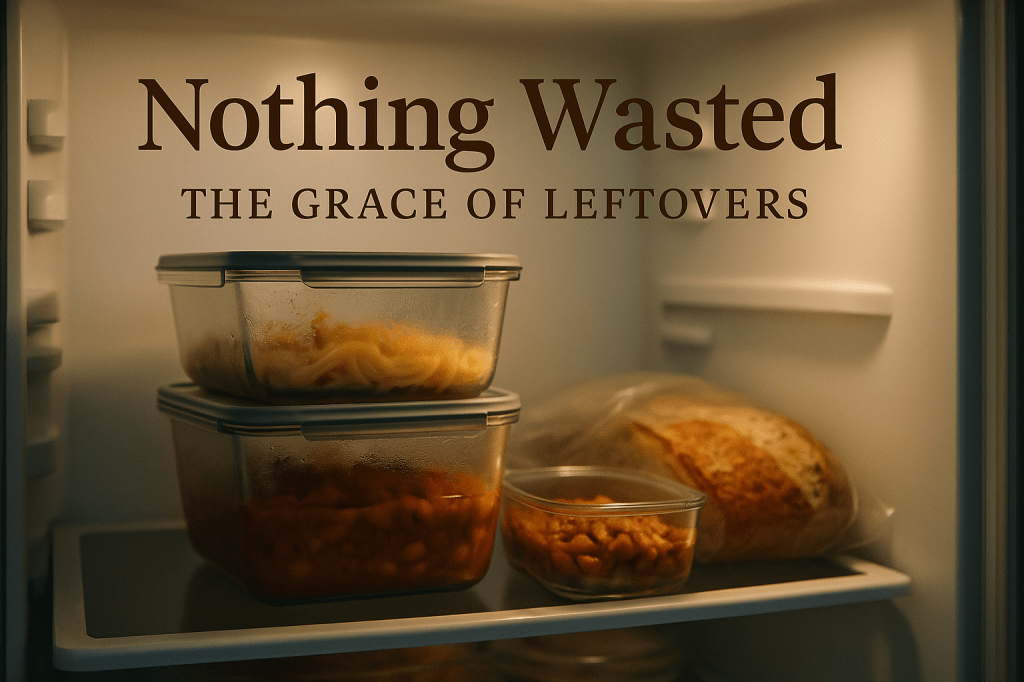
    I grew up in a house where tomorrow lived in the refrigerator—stacked in mismatched containers, labeled only by memory and love. We didn’t have much, so we learned to keep what we had. A pot cooled on the stove like a promise. A slice of bread wrapped in a paper towel felt like insurance against whatever the next day might bring.

    So when I hear people say they don’t eat leftovers—say it like a flex, like the world owes them a fresh performance every night—I don’t understand. Why throw away another lunch, another midnight snack, another chance to make something out of almost nothing? Where I’m from, waste isn’t just waste. It’s disrespect—to the hands that cooked, to the hours that earned the money, to the hunger we remember even when our plates are full.

    Leftovers carry a particular kind of grace. They’re proof that somebody planned ahead, that care was stretched across time. They’re the echo of yesterday’s effort, still singing. And yes—I still cook too much on purpose. Because there’s a relief in opening the door after a heavy day and finding your own kindness waiting for you in a glass dish.

    The world will tell you that food is a spectacle, a one-night show with a Michelin curtain call. But in the kitchens where I learned, food was a continuum. It traveled: pot to plate to container to skillet to lunchbox to after-school bowl. It got better with time, the way beans deepen and soups settle into themselves. The trick wasn’t reinvention for the sake of reinvention. It was respect.

    Here’s what I’ve learned about the second life of supper—the way a meal can keep feeding us if we let it.

    Second Lives (How I use Leftovers)

    Bread

    • Day 2: Toast with a swipe of butter and a little salt.
    • Day 3: Croutons (cube, oil, bake) or breadcrumbs (dry, blitz, jar).
    • Day 4: Bread pudding—milk, eggs, a handful of raisins; Sunday morning becomes gentler.

    Roast Chicken or Baked Thighs

    • Night after: Shred into tacos or quesadillas with onions and a squeeze of lime.
    • Lunch: Chicken salad with whatever’s around—celery, apple, a spoon of yogurt or mayo.
    • Final act: Simmer bones with onion ends and carrot stubs to create a stock that tastes like patience.

    Rice

    • Day after: Fried rice—egg, scallions, soy, any lonely vegetables.
    • Or fold into soup to make it stick to your ribs.
    • Or press into a pan with oil for a crispy rice cake topped with a soft egg.

    Beans

    • Next day: Blend half for a quick refried spread; reserve the other half whole.
    • Stretch: Chili with whatever ground meat (or none), or spoon over toast with hot sauce.
    • Last stop: Bean soup—stock, garlic, a heel of Parmesan if you’ve got it.

    Roasted Vegetables

    • Breakfast: Hash in a skillet with an egg on top.
    • Bowl life: Toss with greens and grains; finish with vinaigrette.
    • Soup move: Blitz with warm stock, then drizzle with olive oil and a sprinkle of pepper.

    Pasta & Sauce

    • Baked life: Mix with a spoon of ricotta or cottage cheese, top with breadcrumbs, and bake.
    • Pan-fry in a little olive oil until the edges crackle; suddenly, the old becomes new.

    Casseroles

    • Next day slice: Reheat in a skillet with a little butter for crisp corners and a better story.
    • Croquettes: Mash, bread, pan-fry—humble gold.

    Steak, Pork Chops, or Sausage (leftover bits)

    • Fried rice, breakfast hash, or quick tacos with pickled onions.
    • Tiny pieces become flavor—sprinkled into greens or beans like punctuation.

    The Scraps

    • Herb stems → chimichurri or stock.
    • Parmesan rinds → soup.
    • The last spoon of jam → vinaigrette with vinegar and oil.
    • Pickle brine → marinade for chicken, or a bracing splash in potato salad.

    The Quiet Rules (Because Respect Is Also Safety)

    Cool food within two hours. Store in shallow containers.

    Most cooked dishes: 3–4 days in the fridge; many soups and casseroles freeze up to 2 months.

    Reheat until steaming—not just warm, but honest. Label and date so that in the future you don’t have to guess.

    The Weeklong Buffet We Call Thanksgiving

    Thanksgiving is the high holy day of leftovers—the only time Americans brag about cold turkey like it’s a love language. The fridge becomes a geography: stuffed with hills, cranberry lakes, and green-bean valleys. We start with the classic sandwich—turkey, dressing, gravy, maybe that scandalous swipe of cranberry—and then we get clever:

    • Turkey pot pie with leftover vegetables and gravy, topped with a quick crust.
    • Stuffing waffles pressed in the iron, crowned with a runny egg.
    • Mashed potato pancakes—crisp outside, forgiving inside.
    • Bone broth that warms the house for days.

    Thanksgiving teaches what the year forgets: abundance is not a single meal but a stretch of days made tender by forethought.

    When people say they won’t eat leftovers, I hear a kind of amnesia. I hear a forgetting of the hands that peeled, stirred, salted, tasted. I hear a forgetting of the mile between hunger and relief. In my kitchen, we don’t forget. We reheat. We revive. We say thank you twice.

    Because leftovers aren’t the past. They’re the persistence of care.

    They are proof that enough can last, if we let it.

    And in a life that asks so much of us, there’s no virtue more radical than refusing to throw away what still has love to give.

    Kyle J. Hayes

    kylehayesblog.com

    Please like, comment, and share

    Resources for Hard Times

    If you’re looking for practical help, food support, or community resources, you can visit the Salt, Ink & Soul Resources Page.
    👉 Resources for Hard Times

  • The Weight of Enough – The Evolution of Survival Food

    The Weight of Enough – The Evolution of Survival Food

      I remember coming home from school, kicking off my shoes by the door, and walking into the kitchen to find a pot of beans soaking in the sink. That image never left me. It was more than just food preparation—it was a message written in silence. It said, We’re making it work. It said, We may not have much, but we have a plan.

    Back then, in houses filled with too many people and too few dollars, meals weren’t about individual plates or balanced portions. There wasn’t a “starch, meat, and vegetable” arrangement like you see on cooking shows now. There was one pot. One pan. One chance to stretch a few ingredients into something that felt like home.

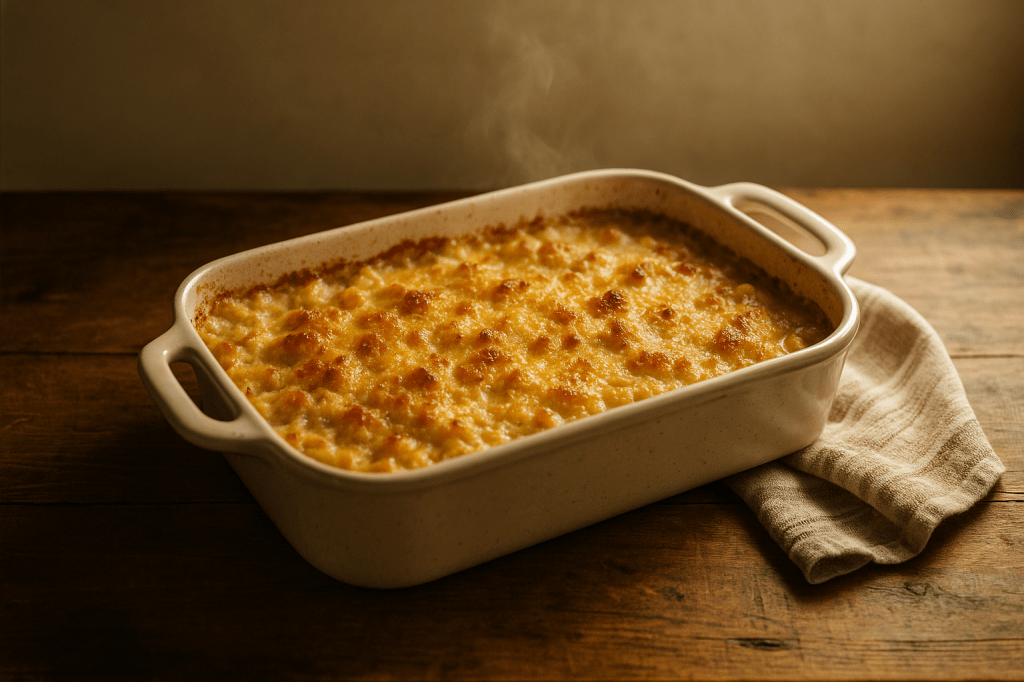
    Large families, tight budgets, and long days demanded creativity. You learned to make things that filled the space—both in the belly and in the heart. And that’s where casseroles came in. They were the unsung heroes of survival: layered, forgiving, endlessly adaptable. Casseroles didn’t judge you for being poor. They rewarded you for being resourceful.

    Everyone had their version. Some made them creamy with soup and cheese; others baked them dry and crisp on top. You could throw in whatever you had—no shame, no rules. Maybe that’s why I still love them. They remind me that abundance isn’t about what’s on the table—it’s about who’s gathered around it.

    Even now, I see casseroles for what they are: a working-class masterpiece. Budget-friendly, easy to make, and rich in the kind of flavor only struggle can season. They fed the tired, the hopeful, and the ones just trying to get through another week. They turned scarcity into comfort, and comfort into something close to gratitude.

    And among them all, one dish reigns supreme—The tuna casserole.

    There’s nothing glamorous about it. Just noodles, canned tuna, soup, and maybe a handful of frozen peas if you had them. But when it came out of the oven—bubbling, golden, smelling faintly of warmth and memory—it was enough. Enough to feed five. Enough to quiet the noise of hunger. Enough to make the world, for a few minutes, feel merciful.

    It wasn’t luxury that kept us going; it was the quiet faith that one can of tuna, a few noodles, and some love could be enough. Even now, it still is. For less than ten dollars, you can make a meal that hums with history—a dish that has fed generations without needing more than it asks for.

    That’s what I think about now, every time I pull a casserole from the oven. The weight of the pan in my hands feels heavier than it should. Maybe it’s not just the food—it’s the memory, the repetition of an act passed down from one generation to the next. Each time we stir, layer, and bake, we’re participating in something bigger than the recipe.

    We’re reminding ourselves that we come from people who made enough from almost nothing.

    And that, even in times like these, might be the most nourishing meal of all.

    This piece is part of The $10 Meals Collection—The recipes and reflections that sustained us when the world gave us little. Because food, at its best, has never been about wealth—it’s been about survival, love, and the quiet grace of making enough.

    Kyle J. Hayes

    kylehayesblog.com

    Please like, comment, and share

    Resources for Hard Times

    If you’re looking for practical help, food support, or community resources, you can visit the Salt, Ink & Soul Resources Page.

    👉 Resources for Hard Times

  • Bread, Memory, and the Price of Enough

    Bread, Memory, and the Price of Enough

    There were five of us—three girls and two boys—and we were poor. The kind of poor that leaves fingerprints on your adulthood. Back when “food stamps” weren’t digital cards but booklets you tore from and handed to the cashier like confessions. We weren’t the only ones, though it sometimes felt that way. Poverty has a way of isolating you, even when the whole block is living on the same prayer.

    Back then, families were closer. Sunday dinners were sacred, not just for the food but for the ritual of it. You could smell a neighborhood coming alive—collard greens wilting slowly on one stove, beans softening on another, cornbread baking somewhere down the street. These weren’t meals for show. They were meals that stuck to your ribs—food that held you up when money couldn’t. The kind of food that whispered, You’ll make it another week.

    Now, everything feels fragile. Groceries cost more than rent used to. People work two jobs and still stand in lines that stretch around food banks. The price of “enough” keeps climbing, and somehow, we’re supposed to just keep smiling through it.

      And with this government shutdown—when paychecks stop, and benefits are frozen—it’s hard not to feel that same hollow echo in the stomach that so many of us grew up with. You start to realize how close the edge really is, and how many are already there.

    We have celebrity chefs and cooking competitions, but fewer people know how to create something from almost nothing. Food has become entertainment instead of education. We scroll past videos of perfectly plated dishes while families debate whether to buy milk or gas. Somewhere between delivery apps and drive-thrus, we forgot how to feed ourselves.

    Maybe the answer isn’t some new system or trend. Perhaps it’s about remembering what our grandparents knew—the art of stretching a dollar, of savoring time itself, and learning to make the basics again. Bread. Beans. Rice. The things that built us.

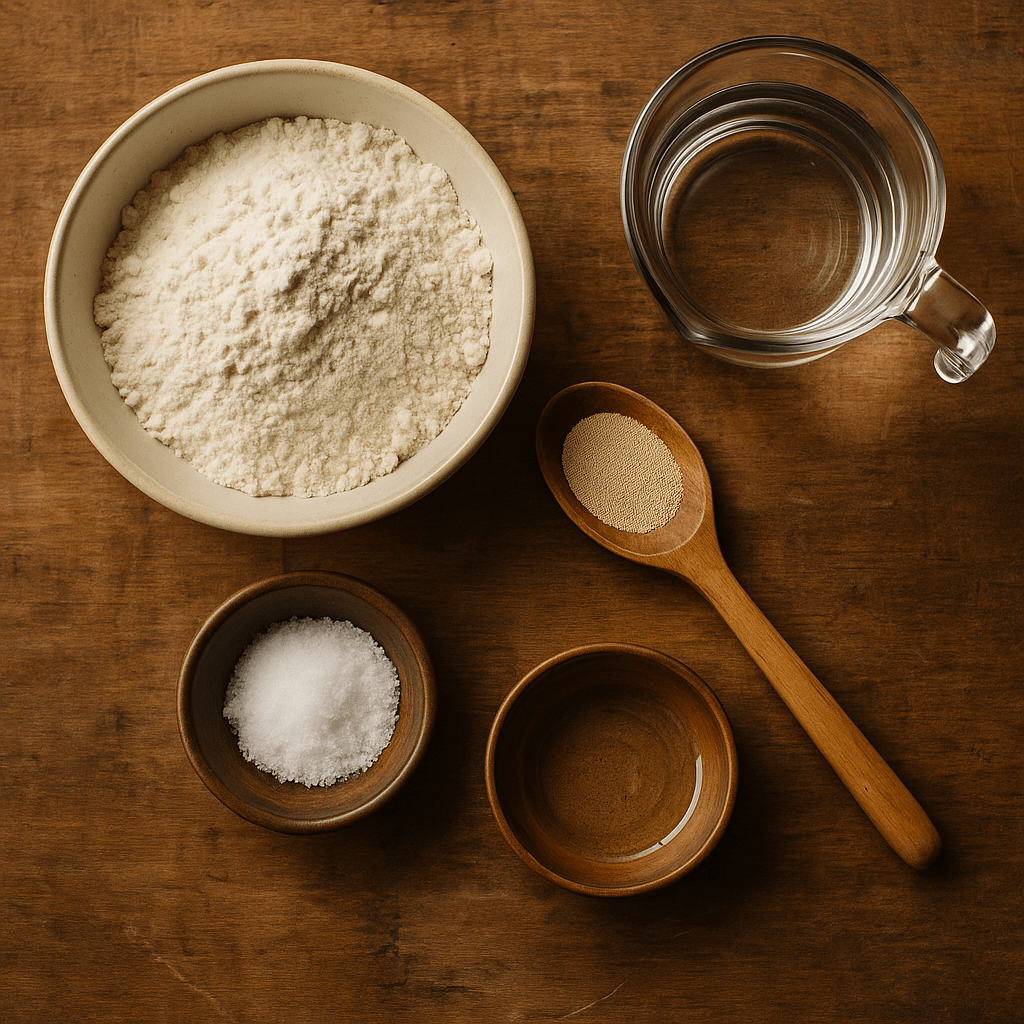
    Because bread isn’t just flour, salt, yeast, and water, it’s patience. It’s a skill born from necessity. It’s history kneaded into muscle memory. Once you have the supplies, it’s cheaper than store-bought—and better for you, body and spirit alike. I’ve found that unfortified flour—the kind left untouched by additives—makes a difference. It’s raw, honest, and stripped down to its true essence.

    That’s what we need more of now.

    Less enrichment, more essence.

    Less spectacle, more survival.

    Learning to make the basics again might not fix everything, but it’s a start—a quiet way of reclaiming control in a world that continually raises the price of dignity. Because the table, when it’s full of simple food and shared stories, still has a kind of wealth that can’t be counted.

    And maybe that’s what it really means to eat something that sticks to your ribs.

    If you want to start anywhere, start with bread. The most basic bread is humble—just flour, salt, yeast, and water: no milk, no butter, no sugar. You stir, you wait, you fold. You give it time to rise, and it teaches you patience in return. Baked until golden and stiff on the outside, soft and honest on the inside. Tear it apart while it’s still warm, and you’ll understand why people around the world have made it for centuries. It’s not about luxury—it’s about survival, about care, about transforming the simplest things into something that sustains.

      And in moments like this—when uncertainty feels like the new normal—maybe that kind of bread, bare and honest, isn’t just food. Perhaps it’s a reminder that we’ve been here before and we made it through.

    Kyle J. Hayes

    kylehayesblog.com

    Please like, comment, and share

    Note from the Author:

    If this reflection stirred something in you — that quiet urge to create, to remember, to feed — you can start where I did: with bread.

    I’ve shared the simplest recipe I know, one that costs little and teaches much.

    👉 The Most Basic Bread Recipe

    Four ingredients. A little patience.

    And a reminder that even in hard times, we can still make enough.

    Resources for Hard Times

    If you’re looking for practical help, food support, or community resources, you can visit the Salt, Ink & Soul Resources Page.

    👉 Resources for Hard Times

  • The Most Basic Bread

    The Most Basic Bread

    (Flour. Salt. Yeast. Water. Nothing else.)

    Ingredients

    • 3 cups (375g) unfortified all-purpose or bread flour
    • 1 teaspoon fine sea salt
    • ½ teaspoon active dry yeast
    • 1¼ cups (300ml) warm water (around 105–110°F / 40°C)

    Instructions

    1. Mix the Basics
    2. In a large bowl, combine the flour, salt, and yeast. Pour in the warm water and stir with a spoon or your hands until it forms a shaggy, sticky dough. Don’t overthink it—just bring it together.
    3. Rest and Wait
    4. Cover the bowl with a damp cloth or plastic wrap. Let it sit at room temperature for 12–18 hours. Time is your secret ingredient here—patience transforms the dough into something alive.
    5. Shape and Rest Again
    6. When the dough has doubled in size and is dotted with bubbles, scrape it onto a floured surface. Gently fold it over a few times, shaping it into a round loaf. Place it on parchment paper or a lightly floured towel, cover again, and let it rest for 1–2 more hours.
    7. Preheat and Bake
    8. Place a heavy pot with a lid (like a Dutch oven) into your oven and preheat to 450°F (230°C). When hot, carefully place your dough inside, cover, and bake for 30 minutes. Remove the lid and bake for an additional 10–15 minutes, until the crust turns a deep golden brown and becomes hard.
    9. Cool and Remember
    10. Let it cool before slicing—if you can resist the temptation. The crust will crackle, the inside will steam. Tear off a piece, hold it warm in your hands, and remember that this is what survival tastes like.

    Notes

    • If you only have instant yeast, reduce to ¼ teaspoon.
    • Whole wheat or rye flour can replace up to one-third of the white flour for more depth.
    • The flavor deepens overnight, just like the memory of meals that once held families together.

    This bread doesn’t ask for luxury—just time, trust, and a little hunger to remind you what’s real.

    Resources for Hard Times

    If you’re looking for practical help, food support, or community resources, you can visit the Salt, Ink & Soul Resources Page.

    👉 Resources for Hard Times

  • A Gentle Return

    A Gentle Return

    Salt, Ink & Soul — Field Journal Series, Part III

    It was as if I’d never started. All my momentum gone — vanished like breath on glass. The old voice returned, whispering reasons to stay still.

    Why go? It asked. You can see everything on a screen.

    Going outside is what made you sick.

    Your car is too big. The police will stop you.

    Each thought a stone in my gut, each hesitation dressed as reason.

    Still, I drove — slow, deliberate, a man testing the edge of his own promise. The sun climbed high over Albuquerque as if to dare me. I turned off Montaño and followed the signs toward Pueblo Montaño Picnic Area, a place recommended by a co-worker. At first, it seemed I was never meant to find it, but I did, somehow.

    At the entrance, the first thing I saw was the carvings — towering guardians hewn from fallen trees. Birds poised mid-flight, turtles climbing, coyotes howling into the stillness. Their faces caught the morning light, wood polished by wind and time.

    For a moment, I thought about turning around. The same quiet panic pressed behind my ribs: You’ve seen enough. You can take a photo from the car. No one will know the difference.

    But something in the carvings — maybe the permanence of their stillness — silenced the argument. I stepped out.

    The path curved through low brush and cottonwoods, beginning to yellow with the season. The air was sharp with the scent of sage and sun-warmed dust. My body, still cautious from its revolt, protested at first — a cough, an ache, a slow complaint in the knees. But the further I walked, the more those protests dissolved into breath.

    At a small bench near a patch of golden brush, I stopped. The wood was warm. The wind moved like a whisper that had nothing to prove. From where I sat, I could see the Rio Grande glinting between the trees — quiet, relentless, alive.

    And for the first time in days, I didn’t feel like a man recovering. I felt like one returning.

    Progress may not come in the form of long drives or grand destinations. Maybe it’s just the act of standing outside yourself long enough to see where you are.

    The world isn’t waiting to be conquered — it’s waiting to be witnessed.

    As I turned back toward the car, the carvings seemed different. The bird looked less like it was guarding the trail and more like it was blessing the departure. The coyotes, once frozen in howls, now looked like they were calling me forward.

    Maybe that’s what growth really looks like — not grand adventures, but small acts of motion.

    What do you think… should I keep going?

    Kyle J. Hayes

    kylehayesblog.com

    Please like, comment, and share

  • The Body’s Revolt  

    The Body’s Revolt  

    Today, the rebellion didn’t come from outside. It rose in my own chest—cough first, then that raw-edged scrape across the throat, the slow ache that spreads like a rumor to joints and fingers. My body filed a complaint in every language it knew: fatigue, pressure, heat. It felt less like illness and more like a verdict. Maybe this is what happens when you dare the air to touch you after years of letting walls do the holding. Perhaps some older part of me—the cautious archivist, the keeper of soft corners—finally stood up and said, Sit down.

    I am home. Not the heroic threshold of a parking lot or a panoramic windshield, but the quiet geography of a kitchen table. The Green Tea with Lemon & Honey steeped too long. Honey pools at the rim of a jar like a promise I don’t believe in yet. A pile of tissues sag with the weight of their job. The notebook lies shut under the pen I’d placed there with good intentions, the cover warm from the light but stubborn in its silence. The window stays closed, the sunlight pressing its face against the glass—proof enough, I tell myself, that the air out there can’t be trusted. The room hums softly with my own confinement, the kind of silence that sounds like waiting for permission to move.

    This is not the scene we celebrate. No triumphant shot of road and horizon. No clean moral in which discomfort becomes courage becomes motion. Instead: the stall. The human stutter. The gulp of disappointment that tastes like metal and old plans. I keep waiting for the narrative to break in my favor, for the part where resolve conquers symptoms, where I lace up shoes and walk straight into the weather. But the boots sit obediently near the door, a small sermon on readiness I haven’t earned.

    It would be easier to call this a cold and let it pass without comment. But the body keeps secrets only when we ask it to. Today, mine is talkative. It says: You have learned to love the museum of control. Measured light, predictable temperature, the still life of comforts arranged just so. It says: Maybe cowardice is the name we give the tenderness we don’t yet know how to carry. That one stings. Not because it’s cruel, but because it might be true.

    I take a sip of tea and the heat climbs my throat, then lowers a rope into the hurt. I pretend that counts as bravery. I inventory the tools: steam, citrus, ginger, honey, patience. Each one is a small citizen in the fragile republic of the body. Each one is voting for me to stay. I listen for the old voice—Everything you need is here—and hear its new clause: …for now. There’s mercy in that ellipsis. There’s also a dare.

    People talk about transformation like it’s a door you stride through, a hinge that swings, a sky that opens. Sometimes it’s closer to the slow rotation of a dimmer switch. Sometimes change is a cough you stop resisting, a nap you refuse to shame, a page you agree to leave blank until your hands remember how to hold a line without shaking. I want to be the version of myself who chooses outside as a reflex, not as an achievement. Today I am not him. Today I am a person sitting at a table, watching light lose its patience across the floorboards, trying not to mistake stillness for surrender.

    There’s a particular disappointment that comes from failing your own promise. It arrives with the officiousness of a hall monitor: Weren’t you the one who said— Yes. I was. I am. I will be again. But today the body votes no, and the mind—traitor or guardian, I can’t tell—counts the ballots twice. That, too, is information. Maybe growth isn’t the victory lap; maybe it’s the audit.

    I catch myself reaching for explanations —little alibis to hand the reader on my way past: allergies, the season, the stress that’s stacked up, and finally, asking for rent. But the truth is plainer. Stepping into the world costs something, and my pockets are light today. The shame isn’t that I don’t have the fare; it’s that I keep checking the same empty pockets and pretending I’m surprised.

    So this is what I can offer: witness. The ordinary, unbeautiful courage of not pretending. No conquest narrative, no panoramic proof. Just the still life of a day that didn’t go. Steam thinning above a cup. The honey’s slow gold. A pen that will write again when it’s ready and not a minute earlier. 

      Failure, I am learning, is a translator. It renders ambition into a tongue the body can understand. It says: You want to move? Then rest as if you mean it. It says: You want the world? Then take this room seriously. Practice gentleness here until your hands remember how to carry it outside. It says: Cowardice is a story; try another draft.

    If there’s a lesson in the ache—beyond fluids and sleep and the quiet arithmetic of recovery—it might be this: I don’t have to be the hero of my own day to be its honest historian. The page will forgive me for showing up without a conclusion. The sun, which has shifted now to the other end of the room, will rise again with or without my approval. Some mornings, it will find me on a trailhead with lungs like bright bells. Others, it will find me measuring ginger and watching dust fall through its light like notes on a staff.

    I look at the shoes by the door. I do not put them on. I look at the pen on the notebook. I do not force the line. I lift the cup and let the heat speak through me. The body is still lobbying its case. I am still listening. Between shame and mercy is a small table where I can sit for as long as it takes. The world will wait. The door is not going anywhere. Neither am I—until I am.

    Maybe tomorrow the hinge swings. Next week, the sky opens. Or I could learn to honor the days that don’t move, the ones that teach me how to carry silence without dropping it. If that sounds like cowardice to someone with stronger lungs, so be it. I know what it costs to breathe.

    When the tea is gone and the light snuffs itself along the baseboards, I open the notebook just enough to hear the paper sigh. No sentences come, but the page no longer feels like a closed fist. It feels like a palm.

    That will have to count for progress tonight. And if it doesn’t, I will learn to count differently.

    Kyle J. Hayes

    kylehayesblog.com

    Please like, comment, and share

  • Notes for the Road

    Notes for the Road

    Salt, Ink & Soul — Field Journal Series, Part II

    We’ve all heard the phrase, “I’m not as young as I used to be.”

    But for me, it’s never really been about age — it’s about gravity. The pull of places, the way life settles you down unless you fight to stay awake inside it. Some people live where they were born, their stories looping through familiar streets and steady skies. I’ve always lived apart — even when I was close, I was at the edge.

    People call it a wandering spirit.

    I prefer searching spirit. Wandering implies lostness. Searching carries intent — a hunger for something not yet found but deeply felt.

    The Pull

    When I first moved to Albuquerque, the desert had its own kind of whisper. The space between things felt wider here — room for thoughts to stretch, for silence to mean something. I learned about  Earthship homes — houses built from recycled materials, designed to sustain themselves off-grid and to live with the land rather than against it.

    It wasn’t just their design that intrigued me — it was their defiance. They refused permission. They were proof that you could live differently and still live beautifully.

    So I made the trip north.

    The Earthships

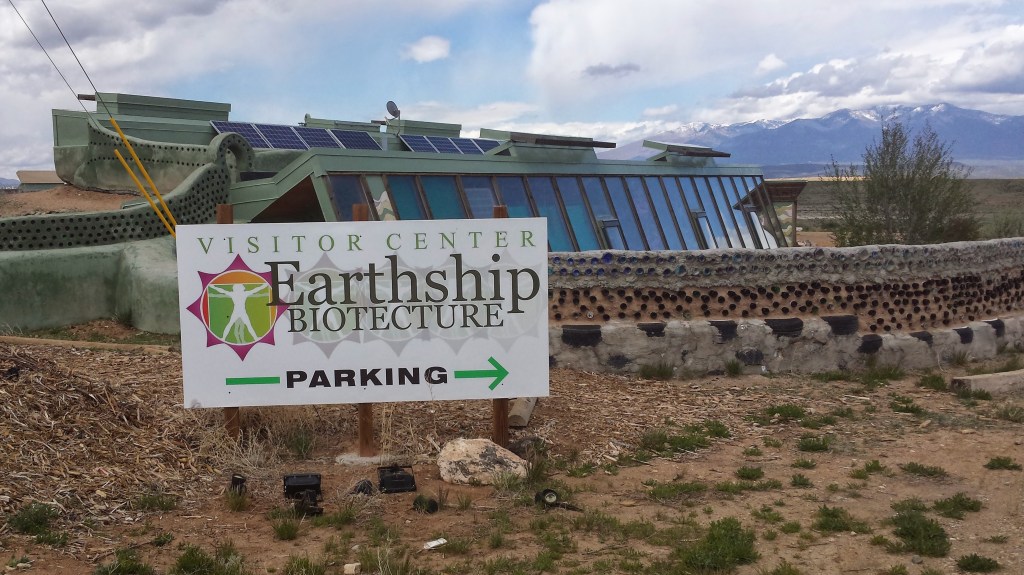
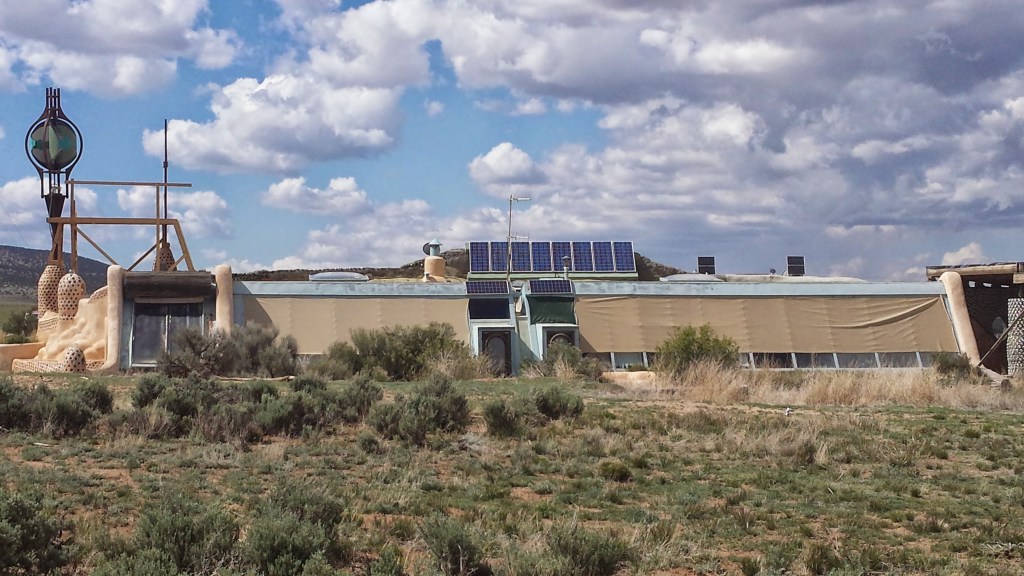
    The drive into Taos feels like crossing a threshold — sagebrush to sand, sky expanding until it seems to hum. Then, at the edge of nowhere, the Earthships appear like a dream half-finished — domed roofs, bottle walls shimmering in sunlight, glass catching sky.

    I took the tour slowly. Inside, the air felt calm, held. The walls glowed faintly green where glass bottles caught the light. Planters of herbs ran along windows, drinking sunlight and water collected from the rain. It was quiet — not empty, just balanced.

    The guide spoke about sustainability, but I was hearing something else — a kind of philosophy of living: build with what’s been discarded, make beauty out of survival. It reminded me that creation isn’t always new; sometimes it’s just rearranged endurance.

    “Exterior of Earthship home near Taos, New Mexico”
    exterior of earthship

      The Staircase

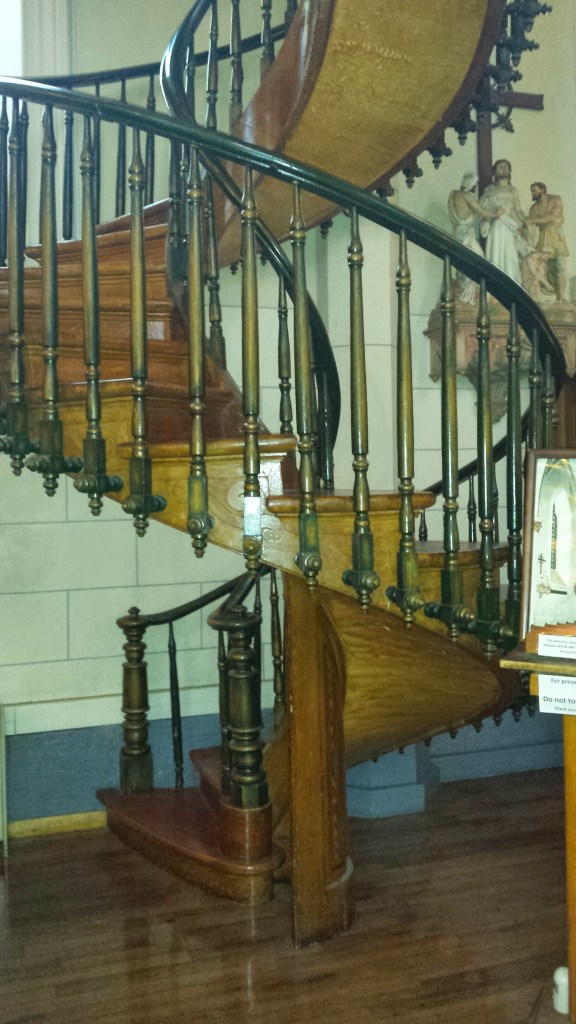
    From Taos, I drove south to Santa Fe, to the Loretto Chapel. I’d heard the story — the mysterious carpenter, the spiral staircase with no visible supports, built after the nuns prayed for a solution. Seeing it in person was something else.

    The staircase curves upward like a question that answers itself — no nails, no center post, just precision and faith. I stood beneath it, tracing the grain of the wood with my eyes, thinking about the people who build because they have to believe it will stand.

    Stairs said to be made by an Angel

      The Gorge

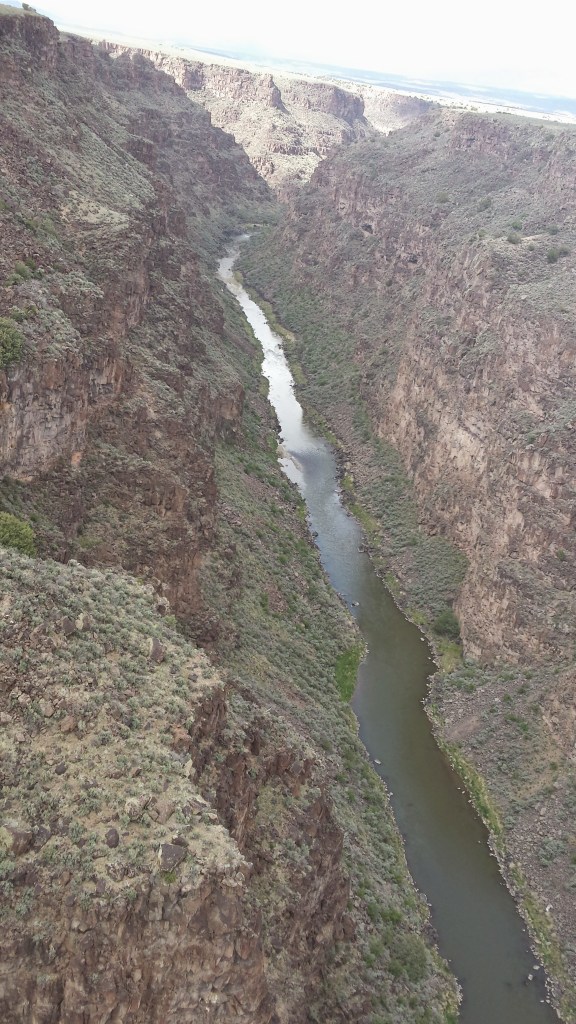
    Then there was the Rio Grande Gorge — where the land simply falls away.

    I parked, stepped out, and felt the wind announce itself. Heights and I have never been friends. I walked to the railing anyway.

    Below, the river glinted like a silver thread stitching through time. When a semi-truck passed, the bridge shuddered beneath my feet, and I gripped the rail tighter than I’d admit. But I stayed long enough to feel it — that strange marriage of fear and awe.

    breathtaking View
    View from the bridge

    That’s what this road was always about. Not conquering fear — just walking out far enough to meet it honestly.

    On the drive home, I realized I wasn’t chasing wonder anymore. I was studying it — seeing what remains when the awe fades and only understanding is left.

    Maybe the Earthship homes, the staircase, and the gorge were all saying the same thing:

    Build something that endures.

    Trust what you can’t see holding you.

    Look down, but don’t stay afraid.

    The road home was quieter. The car hummed its low prayer, tires counting miles of reflection. I thought about all I’d seen, and how every place had its lesson written in silence.

    Maybe I’m still searching, but it’s a better kind of searching now. Not for arrival — but for alignment. For the places and people that hold when the ground trembles.

    The road doesn’t always offer answers.

    Kyle J. Hayes

    kylehayesblog.com

    Please like, comment, and share

  • The Road Teaches Us to Listen

    The Road Teaches Us to Listen

    Salt, Ink & Soul — Field Journal Series, Part I

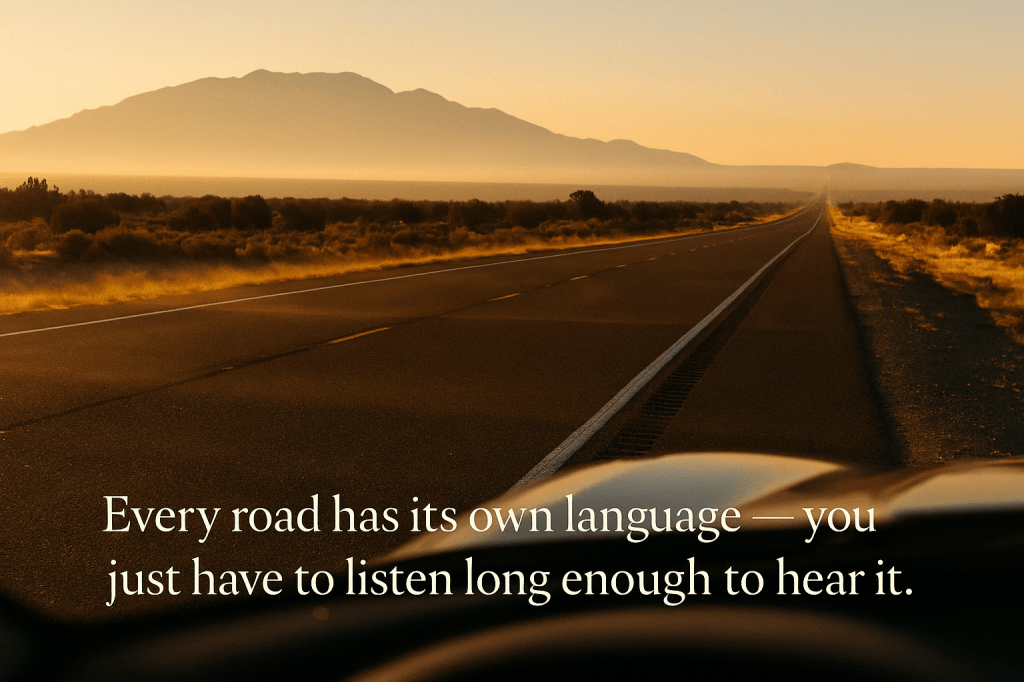
    The road begins long before you step onto it.

    For me, it starts with a small decision that never feels small: go. That’s the quiet contract I sign with myself in the dark—turn off the clock, get out of bed, make coffee even if the morning looks like a bad idea. Rain against the window, frost on the glass, wind leaning into the stucco—you go anyway. Jacket. Keys. A hand to the door, a muttered prayer that sounds like breath.

    Inside the car, I choose the season by touch. Heat in winter until my fingers thaw. Air in summer until the cabin stops tasting like sleep. The engine wakes with that low, devotional sound—humble, faithful, unglamorous. I sit with it a moment, letting my doubts burn off like fog on a warm hood. There’s always a reason to cancel. Fatigue. Weather. The long shadow of a mood I can’t name. The old lie that today isn’t the day.

    I have learned this much about myself: the early stops are the trap. You pause for a snack you don’t need, a second coffee you’re already holding, and suddenly the road becomes optional. Detours multiply. The invisible hand is never dramatic—it taps your shoulder with errands and returns you safely to the couch. So I pass the first exit. I don’t look right or left. I’ve stocked the snacks, filled the tank, and told no one where I’m headed. Commitment looks like a car at speed. The on-ramp curves up like a question, then drops you into a lane where the only language is forward.

    The interstate is my point of no return. The lines gather under the car like stitches sewing me to the day. I breathe out—a slight relief that feels larger than it should. I did the hard part. I left. I find the playlist that knows my miles: songs that ride low and steady, not too eager, not too clever. Something with space in it. Enough room for the land to speak.

    This is where the road begins to teach, if you let it.

    It teaches patience first. Mile markers count like beads through your fingers. Semis pass with the dignity of whales. The horizon doesn’t arrive; it reveals. You become a witness to your own habits—how your chest loosens after the second exit, how your jaw unclenches when the first long stretch unfolds, how your shoulders drop when the radio fades to static. The world steals the choreography you keep trying to impose on it. You start to hear the hum—tires negotiating asphalt, crosswinds tuning the cabin to a note you can almost name, the slight rattle of a life you’ve packed in a hurry.

    It teaches with small mercies. A gas station clerk who calls you “love” without making it a performance. A church sign that gets the parable right by accident. A plastic bag snared on a fence, stubborn against the wind. The familiar ache of a diner mug against your palms. Eggs that taste better for the road it took to get there. The cook who doesn’t look up but understands precisely who you are: someone who left a house this morning to go looking for something they can’t carry back in both hands.

    It teaches with the kind of quiet that isn’t empty. Out here, silence has texture. It lives in the low whine of steel guardrails, in the dry grass that whispers even when there’s no breeze, in the pale blue that the sky saves for days like this. You roll the window down and the air meets you, honest—dust, oil, a memory of rain. Somewhere just beyond the shoulder, a hawk draws solemn circles in a column of heat and refuses to explain itself.

    The road talks in fragments and expects you to assemble meaning. A boarded-up motel where someone once honeymooned in good faith. A burial of sun-bleached crosses huddled on a ridge. A billboard sermon that works only because the sky won’t stop listening. Nothing arrives tidy. The point isn’t clarity. The point is attention.

    I used to believe you traveled to escape your life for a while. Now I think you travel to stop lying to it. Movement scrapes the varnish off your days. It replaces routine with exposure: the vulnerability of a stalled engine, the humility of a wrong turn, the grace of a stranger who points you toward a road you didn’t know you needed. Each mile asks a better question than the one before it. Who are you when nobody is asking for your performance? Who are you when the only thing to do is keep going?

    The farther I get from my usual noise, the more I understand the discipline of listening. I turn the music down until the speakers barely breathe. I count cattle guards without trying. I let the wind dictate when the window goes up or down. The road becomes a metronome for the part of me that won’t learn patience any other way. My foot steadies. My mind does not empty; it organizes. Old griefs get filed under new light. The never-ending list shortens, not because the tasks vanish, but because the road insists on proportion: you are small, and still held.

    By midday, the light changes its mind. Shadows shorten, and the heat decides what kind of day it wants to be. 

    I pull off onto a frontage road that minors in regret and majors in perspective. The surface is rough enough to earn respect. A low ridge rises, and I climb it on foot because the day asks and because sometimes the answer is yes, even when you don’t know the question. Up top, the wind has a cathedral voice. The land arranges itself into a map you can read with your tongue—dust, sun, iron, a little mercy. I don’t take a picture. I don’t say a word. I let the horizon do what it does best: decide nothing for me and change everything anyway.

    Back in the car, I don’t check the time. Time is a city tool. Out here, we measure by light—how it sharpens, how it softens, how it lifts off the hood like a thin leafing. I aim the nose toward home, not because I’m finished, but because finishing is not the point. The road has said what it needed to say: that listening is work, that attention is a sacrament, that the world is not waiting to be narrated so much as witnessed with a bit of respect.

    Near the interstate, the old instincts return. The exits appear like promises or temptations. The hand that tried to steer me back this morning is quieter now. It didn’t vanish; it lost its authority. I put the playlist away and let the tires do the singing. The lines pull me forward, not faster, just truer.

    I don’t come back with revelations big enough for billboards. I come back with small instructions written in dust: drink water; call your people; cook something simple; write a sentence that owes nothing to applause. The engine cools. The day lowers its shoulders. I sit a moment before going in, the car clicking as it forgets its heat.

    Maybe the road isn’t a way out so much as a way through. Maybe its gift is not destination but calibration—the chance to tune your own noise until you can hear the hum beneath everything, the one that was there before playlists and plans, the one that sounds like wind across open ground.

    Maybe the point was never to arrive.

    Maybe it was to finally listen.

    Kyle J. Hayes

    kylehayesblog.com

    Please like, comment, and share

  • The Invisible Hand and the Road Not Taken

    The Invisible Hand and the Road Not Taken

    I bought a vehicle that can go anywhere—mountains, mesas, the forgotten roads that stretch like veins across the desert. Yet somehow, I’ve gone nowhere. There’s an invisible hand that holds me in place, the same quiet force that makes stepping into a restaurant alone feel like walking into a storm. I need purpose, or company, or both, to push past it.

    Lately, though, the sky has been whispering louder than my fear. During the Balloon Fiesta, I watched people from every corner of the world stand in awe of the same morning light I’ve taken for granted. Strangers were out there feeling the beauty of this place—my place—while I stood behind my walls, waiting for permission to belong. That realization loosened the hand’s grip just enough for me to move.

    So I began small.

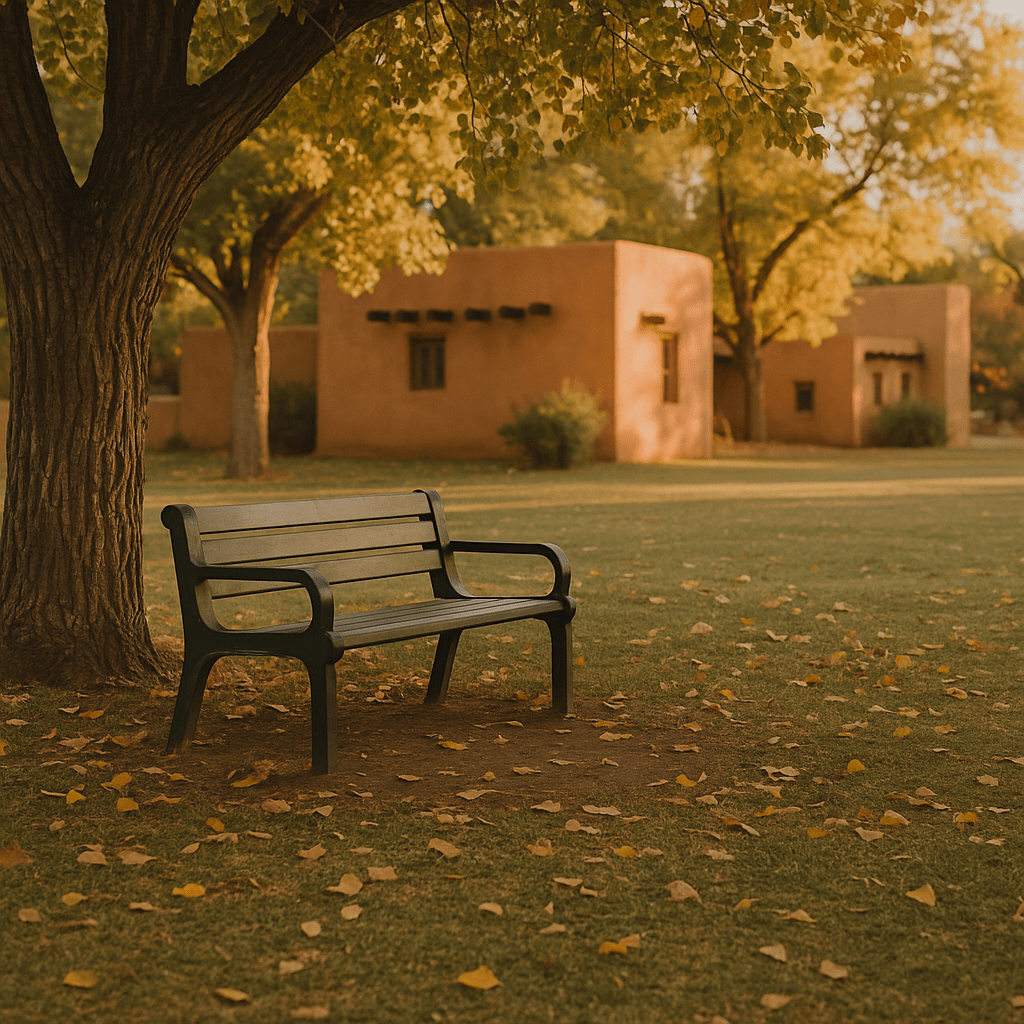
    Tiguex Park

    Tiguex Park isn’t large or loud. It’s one of those places that feels like an exhale—the kind of open green that reminds you the desert can still be gentle. Cottonwoods border its edges, their leaves whispering stories to anyone who’ll listen. The grass carries the echo of a thousand family picnics, soccer games, and lazy afternoons.

    I sat on a bench and listened. The wind carried the faint clang of church bells from San Felipe de Neri. A child laughed somewhere behind me; a dog barked once and then twice. The air smelled faintly of dust and Pinon Coffee from stores nearby. I could almost feel the heartbeat of Albuquerque pulsing under the soil—slow, steady, stubborn.

    For a few minutes, I wasn’t thinking about where I should be. I was simply here. And that was enough.

    Old Town

    When I left the park, I drifted toward Old Town, a place I wasn’t even sure I’d ever been. The streets were narrower than I expected, like they were designed to make people slow down and see. My vehicle felt too big for this kind of space, a metaphor I didn’t miss—how often have I felt too big, too loud, too something for the places I wanted to fit into?

    I found parking near a cluster of adobe buildings washed in warm earth tones and trimmed in turquoise. Every corner seemed alive with color: handwoven blankets, clay pottery, silver jewelry glinting in the sun. But the crowds pressed close, a river of bodies and voices that threatened to sweep me away. Anxiety whispered, You don’t belong here, and I believed it for a moment.

    Still, I stayed long enough to see what I needed to see. The history in the walls. The persistence of beauty. The courage of people who choose to create, to sell, to share, even when the world is watching. Eventually, the noise became too much, and my anxiety reminded me it was time to go. But as I left, I felt something else—I had gone.

    Sometimes that’s the victory: motion.

    Chile Addict

    Leaving Old Town, I wasn’t ready for home yet. I wanted something that spoke to the culture I had only brushed against. A museum? A gallery? Maybe food? I found all three at Chile Addict on Eubank.

    If passion had a smell, it would be chile. Inside, every inch of space was filled—ristras hanging from the ceiling like red jewelry, shelves lined with sauces from every corner of New Mexico, even dish towels embroidered with peppers in every shade of fire. I bought a bottle of Albuquerque Hot Sauce, labeled “Extra Hot.” I didn’t realize “extra” meant something different here—this was heat meant for native tongues, not transplants like me. But I loved that. It was honest. It burned like truth.

    There was something sacred in that store: the way it celebrated an ingredient that’s more than food—it’s memory, identity, inheritance. It reminded me that culture isn’t confined to museums or galleries. Sometimes it’s bottled, hanging, or simmering quietly in someone’s kitchen.

    What Comes Next

    Driving home, I thought about how long I’ve let that invisible hand dictate my movements. How many experiences have I let anxiety edit out before they began? This small journey—Tiguex Park, Old Town, Chile Addict—felt like a rebellion against that stillness.

    Maybe I should do this every week? Not for content or performance, but as a ritual of re-entry into life. To see my city not as a backdrop but as a living text—one I’ve been too afraid to read.

    Exploration doesn’t always begin on the open road. Sometimes it starts at the park down the street, or in the narrow lanes of a place you’ve always avoided. Sometimes the bravest thing you can do is just go.

    Maybe that’s what growth really looks like—not grand adventures, but small acts of motion. What do you think… Should I keep going?

    Kyle J. Hayes

    kylehayesblog.com

    Please like, comment, and share