I remember coming home from school, kicking off my shoes by the door, and walking into the kitchen to find a pot of beans soaking in the sink. That image never left me. It was more than just food preparation—it was a message written in silence. It said, We’re making it work. It said, We may not have much, but we have a plan.
Back then, in houses filled with too many people and too few dollars, meals weren’t about individual plates or balanced portions. There wasn’t a “starch, meat, and vegetable” arrangement like you see on cooking shows now. There was one pot. One pan. One chance to stretch a few ingredients into something that felt like home.
Large families, tight budgets, and long days demanded creativity. You learned to make things that filled the space—both in the belly and in the heart. And that’s where casseroles came in. They were the unsung heroes of survival: layered, forgiving, endlessly adaptable. Casseroles didn’t judge you for being poor. They rewarded you for being resourceful.
Everyone had their version. Some made them creamy with soup and cheese; others baked them dry and crisp on top. You could throw in whatever you had—no shame, no rules. Maybe that’s why I still love them. They remind me that abundance isn’t about what’s on the table—it’s about who’s gathered around it.
Even now, I see casseroles for what they are: a working-class masterpiece. Budget-friendly, easy to make, and rich in the kind of flavor only struggle can season. They fed the tired, the hopeful, and the ones just trying to get through another week. They turned scarcity into comfort, and comfort into something close to gratitude.
And among them all, one dish reigns supreme—The tuna casserole.
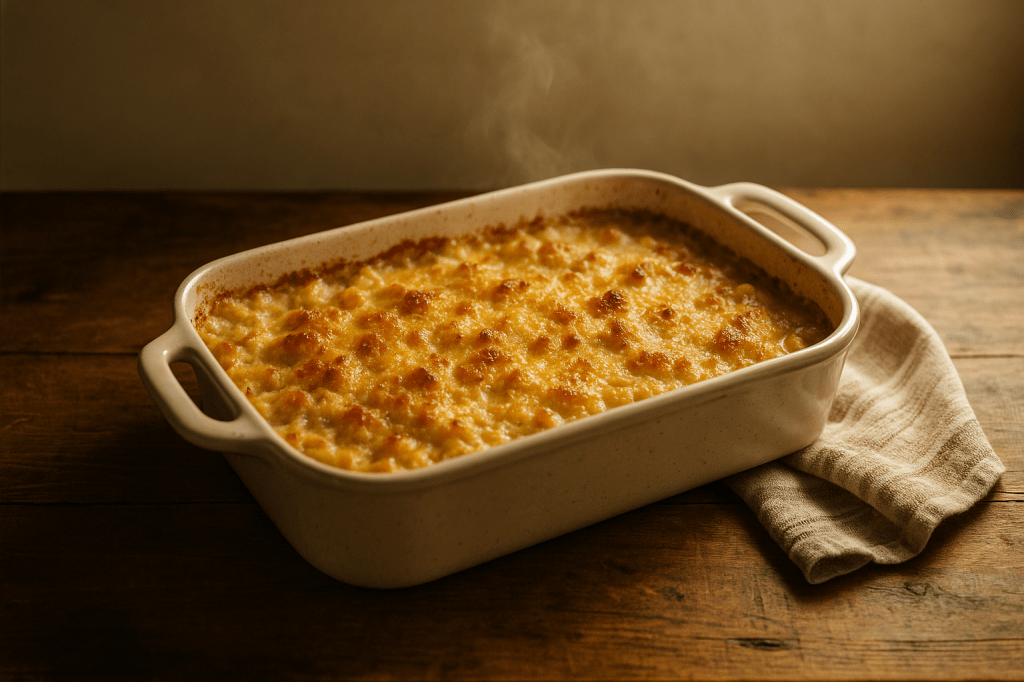
There’s nothing glamorous about it. Just noodles, canned tuna, soup, and maybe a handful of frozen peas if you had them. But when it came out of the oven—bubbling, golden, smelling faintly of warmth and memory—it was enough. Enough to feed five. Enough to quiet the noise of hunger. Enough to make the world, for a few minutes, feel merciful.
It wasn’t luxury that kept us going; it was the quiet faith that one can of tuna, a few noodles, and some love could be enough. Even now, it still is. For less than ten dollars, you can make a meal that hums with history—a dish that has fed generations without needing more than it asks for.
That’s what I think about now, every time I pull a casserole from the oven. The weight of the pan in my hands feels heavier than it should. Maybe it’s not just the food—it’s the memory, the repetition of an act passed down from one generation to the next. Each time we stir, layer, and bake, we’re participating in something bigger than the recipe.
We’re reminding ourselves that we come from people who made enough from almost nothing.
And that, even in times like these, might be the most nourishing meal of all.
This piece is part of The $10 Meals Collection—The recipes and reflections that sustained us when the world gave us little. Because food, at its best, has never been about wealth—it’s been about survival, love, and the quiet grace of making enough.
Kyle J. Hayes
kylehayesblog.com
Please like, comment, and share
Resources for Hard Times
If you’re looking for practical help, food support, or community resources, you can visit the Salt, Ink & Soul Resources Page.




 Salt,Ink, & Soul