Tag: SaltInkAndSoul

  • The Quiet Dignity of Beans

    The Quiet Dignity of Beans

    Salt, Ink & Soul — Humanity Through Food Series

    I live now in New Mexico — a place where beans are more than food.

    They’re a landscape.

    A rhythm.

    A quiet religion built into the daily life of the people who’ve been here long before asphalt and subdivisions.

    Out here, beans carry the weight of generations. They simmer slowly on back burners, folded into stews, stretched across cold evenings, made sacred by repetition and memory. People speak of them with a kind of reverence I’m still learning to understand — the way you might talk about a story your grandmother told you a hundred times, knowing the hundred-and-first will still matter.

    But that wasn’t my experience growing up.

    Where I came from, the sight of beans didn’t bring comfort.

    It filled my stomach with dread.

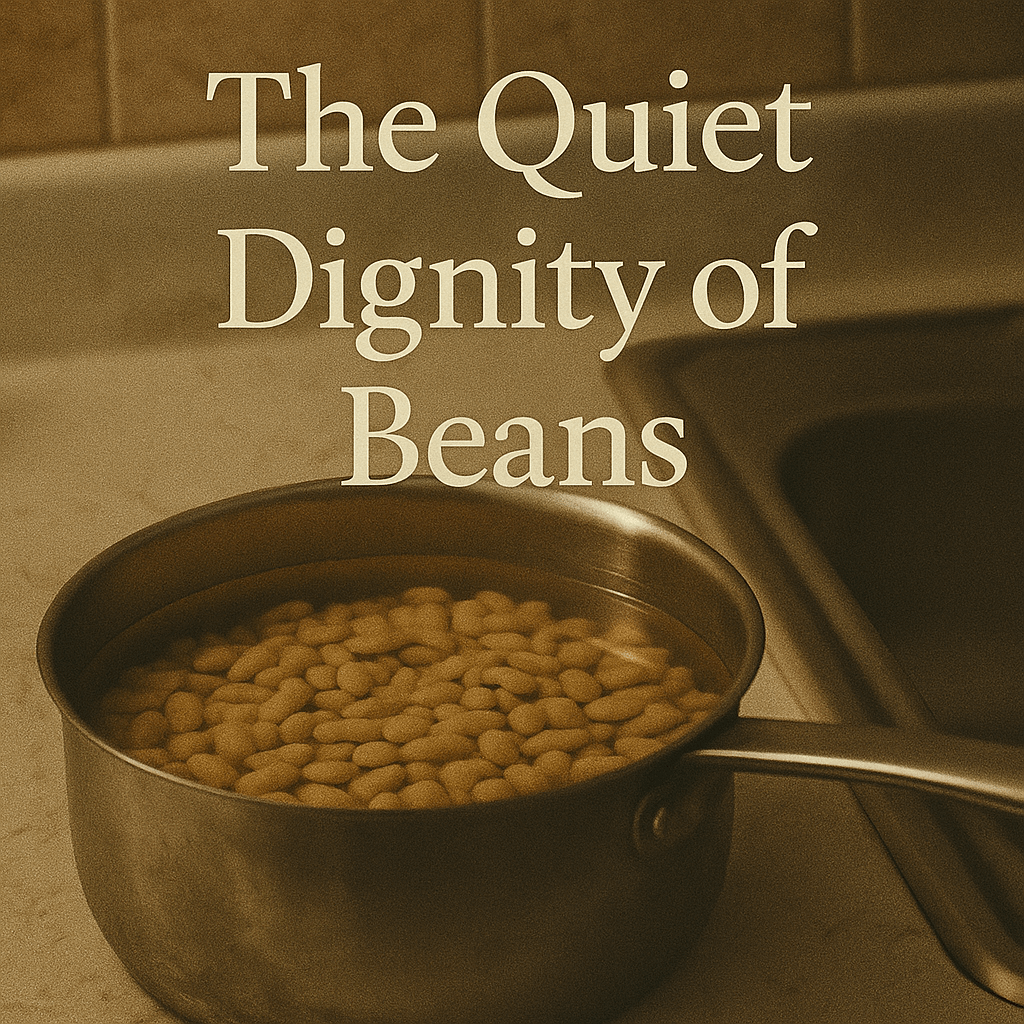
      I’ve written before about the sinking feeling that washed over me when I saw a pot of beans soaking in the sink. It was a kind of childhood math — unspoken but understood. Beans meant money was tight. Beans meant there were no extra groceries to choose from. Beans meant stretching, rationing, surviving.

    As kids, we formed a silent pact around it — not one spoken in words but in looks exchanged across the kitchen. We all felt it. That quiet disappointment disguised as appetite. Beans were never the meal we hoped for. They were the meal we needed.

    And the way we carried that memory into adulthood…

    That’s its own complicated story.

    One of my sisters swears she’s “allergic” to beans.

    A medical impossibility, the rest of us laugh at —

    not out of cruelty, but out of recognition.

    We know the truth.

    It’s not her body reacting — it’s the past.

    Invisible scars are funny that way —

    they flare up without warning,

    dictate tastes and habits,

    and live under the skin long after the hard years have passed.

    For each of us, beans became something to avoid —

    a symbol of the lean seasons we survived together.

    But here’s the truth buried under all that resistance:

    We didn’t like them…

    But they kept us alive.

    And we knew it.

    When I talk to others about this — about beans, scarcity, survival food — I’m surprised by how familiar the story feels.

    Almost everyone has a version of the same confession:

    “We didn’t like it. But we didn’t starve.”

    Peanut butter sandwiches.

    Canned soup.

    Government cheese.

    Rice dishes stretched thin.

    Leftovers reinvented until they became something else entirely.

    And, of course, beans.

    It’s strange how something so simple can carry so much emotional weight.

    A pot of beans meant another day we’d make it.

    Another day, we wouldn’t go to bed hungry.

    Another day, we’d stretch what we had until something better came along.

    Beans were the food that stood between us and the cliff.

    And now, all these years later, we still feel the echo of that grind.

      Moving to New Mexico forced me to reconsider everything I thought I knew about beans.

    Here, they aren’t a symbol of lack.

    They’re a symbol of identity.

    Of pride.

    Of cultural endurance.

    Of flavors perfected not out of necessity but out of intention.

    I’ve watched families here talk about beans the way some people talk about heirlooms — with respect, with memory, with joy. They’re part of feasts, gatherings, rituals. They hold meaning.

    It’s made me rethink what I grew up believing.

    Made me wonder if healing sometimes looks like learning to see an old wound through a new lens.

    Someone recently told me to try Navajo tacos.

    And maybe I will — perhaps that’s my first step into rewriting a relationship shaped by childhood scarcity.

    Maybe the world has been trying to teach me that beans are more than the fear I attached to them.

    I don’t know if my siblings feel that shift.

    I don’t know if they ever will.

    But I’m starting to.

    The Quiet Dignity of What Sustains Us

    The older I get, the more I realize this:

    There is a quiet dignity in the foods that kept us alive.

    Even the ones we claimed to resent.

    Even the ones that came with silent embarrassment.

    Even the ones we push away now, out of habit or history.

    Because survival has its own kind of grace —

    a soft, steady grace that doesn’t ask to be admired.

    It just asks to be acknowledged.

    Beans taught me that.

    They taught me resilience long before I had the language for it.

    They taught me how families stretch together.

    How siblings develop the same scars in different shapes.

    How a kitchen can hold both struggle and salvation at once.

      Beans may not have been our first choice. They may have carried more memories than flavor back then. But they fed us. They kept us standing. And in their own quiet way, they taught us how to survive when survival felt like the only thing we could afford.

      I wish I could end this with a great bean recipe—some treasured family dish or perfected method—but the truth is, I don’t have one. If you do, or if there’s a recipe that carried you through your own seasons of scraping by and making do, please share the link. I’d be grateful to learn from you.

    Kyle J. Hayes

    kylehayesblog.com

    Please like, comment, and share

    Resources for Hard Times

    If you’re looking for practical help, food support, or community resources, you can visit the Salt, Ink & Soul Resources Page.
    👉 Resources for Hard Times

  • “Questions for the Future”

    “Questions for the Future”

    There’s a kind of fear that doesn’t arrive all at once. It doesn’t kick down the door. It seeps in, like humidity through cracked paint or smoke through the seams of a closed window. The kind that makes a home in your chest, building slowly and silently. That’s the kind of fear I’ve had about writing.

    Because writing—real writing—isn’t just performance. It’s not what you show them. It’s what leaks out in the spaces you don’t control. In the metaphors you didn’t mean to use. The slip of a memory. The softness in a sentence when you swore you were being strong. That’s the terror. That somehow, on a blank page, people will see you—unasked, unfiltered, unprepared.

    And I’ve been dodging that kind of exposure for a long time.

      You grow up learning to hide parts of yourself. In some neighborhoods, vulnerability is just another way to get hit—emotionally, spiritually, or with something less metaphorical. So you learn. You get good at it. You make armor out of silence and humor out of pain. You laugh loud enough to drown out the parts of yourself you don’t want heard.

      For me, it started early—ridiculed for being soft. For caring. For feeling things too deeply. Every time I let something slip, there was a consequence. Sometimes it was teasing. Sometimes it was loneliness. Over time, the message became clear: protect yourself.

    So I did. I built walls with intention. Not just to keep people out, but to keep something in—me.

      Lately, though, I’ve started letting people in. Not the whole crowd. Just a few. Just enough. You find someone you trust—maybe a friend who knows the shape of your silence—and you let them see a little more. A crack. A draft of warmth. Not a storm.

    But still, I worry.

      Because once the dam is broken, who controls the flood?

    That’s the thing about pain: it’s obedient until it isn’t.

    So I let it out in trickles. A sentence here. A sigh there. I’ve convinced myself that’s safer. That if the moment goes sideways, I can slam the valve shut and pretend like I never said anything at all.

    I’m curious if that’s preservation or cowardice. Or both.

      Sometimes, the isolation feels like a weighted blanket that won’t get off my chest. You carry the weight of your untold stories like overdue bills, knowing the interest is accumulating. You pretend you’re just private. But privacy, in excess, becomes starvation.

    You tell yourself you’re protecting yourself—but at what cost?

    When no one knows your whole name, who will mourn you properly?

      That’s the mess of it. Writing—this act of storytelling—isn’t always about catharsis. Sometimes it’s confrontation. Sometimes it’s putting a mirror to your own face and realizing you’ve spent years looking away. The stories we don’t tell are often the ones we most need to understand.

    I write now not because I want to be known, but because I’m starting to believe that parts of me are worth knowing.

    And if someone out there reads this and recognizes their own mask, their own silence, their own slow-burning rage and resignation—maybe we’ve both done something that matters.

      I don’t have answers. Just questions for the future.

    What happens when you open too much?

    What happens when you never open at all?

    Maybe the trick isn’t to dam the flood or drown in it—maybe it’s to learn to wade.

    Even if it means revealing that you bleed just like everyone else.

    Kyle J. Hayes

    kylehayesblog.com

    Please like, comment, and share

    Resources for Hard Times

    If you’re looking for practical help, food support, or community resources, you can visit the Salt, Ink & Soul Resources Page.
    👉 Resources for Hard Times

  • What I’m Grateful For on the Days After

    What I’m Grateful For on the Days After

    Salt, Ink & Soul — Weekend Reflection

    The days after Thanksgiving have always felt like a breath I didn’t realize I was holding. The noise fades, the house settles, and suddenly there’s space — space to think, to feel, to hear the quiet truths that get lost in the rush of the holiday.

    There’s a different kind of gratitude that lives in these slower hours.

    Not the big, performative kind that gets spoken around tables or posted online.

    But the smaller, steadier kind — the gratitude that rises from the life you return to when the celebration ends.

    I’m grateful that I have a place to stay — a space that holds me, shelters me, and gives me room to breathe.

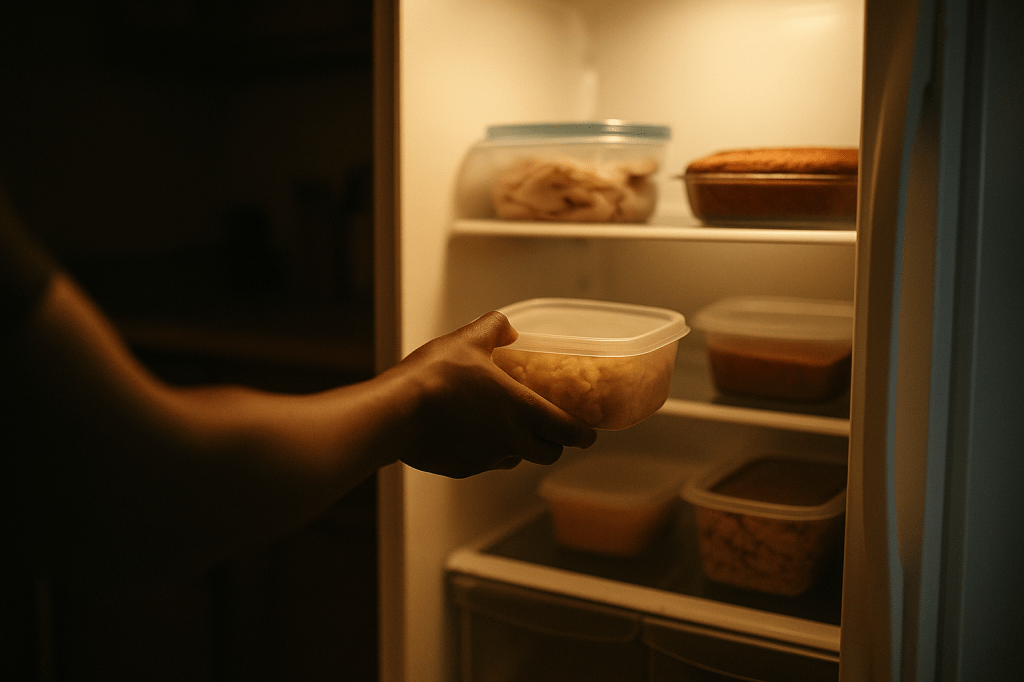
    I’m grateful that I have food to eat — not just the leftovers stacked in the fridge, but the comfort of knowing the next meal is within reach.

    I’m grateful that I have a job to go to — a place to show up, to contribute, to remain anchored in a world that often feels uncertain.

    And I’m grateful — deeply, quietly grateful — for my friends.

    The ones who check in without being asked.

    The ones who text or call just to make sure I’m alright.

    The ones who notice the small shifts in my voice and remind me I don’t have to carry everything alone.

    That kind of care is its own blessing.

    Soft, steady, and honest.

    I’m grateful for the leftovers that gently carry me into the days ahead.

    For the containers packed a little fuller than expected.

    For the warmth of yesterday lingering inside today’s refrigerator light.

    Some blessings arrive loud.

    Others whisper.

    And I’m learning — slowly, steadily — to hear both.

    Kyle J. Hayes

    kylehayesblog.com

    Please like, comment, and share

    Resources for Hard Times

    If you’re looking for practical help, food support, or community resources, you can visit the Salt, Ink & Soul Resources Page.
    👉 Resources for Hard Times

  • The Quiet Reckoning of Leftovers

    The Quiet Reckoning of Leftovers

    Salt, Ink & Soul — Humanity Through Food Series

    There’s a certain hush that falls after Thanksgiving — not the fullness or fanfare of the holiday itself, but a softer, more settling quiet. The kind that wraps around a home like a warm blanket. The kind that whispers that the celebration may be over, but the comfort isn’t.

    Because today is when the real magic begins.

    Today is the day the leftovers come alive.

    The fridge becomes its own little universe of possibility — containers lined like tiny promises. Dressing that deepens overnight, turkey that’s ready to reinvent itself into a dozen different meals, pound cake that turns into breakfast without anyone questioning a thing. Leftovers are the afterglow of a holiday well-lived, and maybe even better lived the day after.

    For those of us raised to stretch meals like muscles, leftovers weren’t just “extra food.” They were reassurance. Security. A quiet kind of abundance that steadied you through the next few days. Maybe even next week.

    Leftovers meant:

    We’re okay. At least for now.

      There’s a joy to leftovers that feels almost childlike — the thrill of opening the fridge and imagining what new creation you’ll craft from what remains.

    Turkey and rolls?

    That’s a sandwich ritual.

    Dressing and gravy?

    That’s comfort in a bowl.

    Macaroni and cheese?

    Somehow it gets better every time it’s reheated — nobody knows the science, but nobody questions it.

    In a world obsessed with novelty, leftovers teach us a quieter truth:

    There is beauty in returning to what you already have, in transforming what remains, in finding comfort in the familiar.

    The feast is flashy.

    The leftovers do the real work.

      And then there’s the kind of generosity that only shows up after the plates are cleared — the people who send you home with more than you expected, more than you asked for, maybe even more than you felt worthy of receiving.

    The friend who packs you a dessert “just in case.”

    The auntie who fills your container until the lid strains.

    The host who insists you take another tray, their eyes saying what words never do:

    I want you fed.

    I want you steady.

    I want you to be cared for when you walk out that door.

    That is its own kind of love.

    A quiet, intentional love that doesn’t perform — it provides.

    Sometimes the food you bring home is better than anything you ate at the table, not because of the taste, but because someone wanted you to have it.

    Leftovers can be a love language, too.

      If the holiday feast is the performance, the leftovers are the truth.

    They reveal:

    • what was made with abundance

    • what was shared freely

    • what was loved most

    • what people wanted you to take with you

    • and what gets better when it rests

    Leftovers tell the story of a household — the real version. The version where people quietly look out for each other. The version where meals stretch because life requires it. The version where comfort doesn’t disappear once the guests go home.

    Leftovers tell us that survival doesn’t always look heroic.

    Sometimes it looks like enough food for tomorrow.

    Sometimes it looks like mac and cheese after a long day.

    Sometimes it looks like a pound cake eaten slowly because it feels like a blessing wrapped in foil.

      Leftovers aren’t scraps.

    They’re gifts.

    Gifts of ease.

    Gifts of warmth.

    Gifts of a holiday that lingers.

    Gifts from people who fed you in more ways than one.

    They carry the flavor of yesterday into today.

    They soften the week ahead.

    They remind you that abundance doesn’t always roar —

    sometimes it whispers from behind a refrigerator door, waiting for you to reach in and begin again.

    Because leftovers aren’t just evidence of what you had.

    They’re evidence of what still remains.

    And sometimes?

    That’s more than enough.

    Kyle J. Hayes

    kylehayesblog.com

    Please like, comment, and share

    Resources for Hard Times

    If you’re looking for practical help, food support, or community resources, you can visit the Salt, Ink & Soul Resources Page.

    👉 Resources for Hard Times

  • Reclaiming the Family Table in a Digital World

    Reclaiming the Family Table in a Digital World

    Salt, Ink & Soul — Humanity Through Food Series

    There’s a particular kind of loneliness that only shows up when the room is full.

    The plates are set, the glasses sweating, conversation circling the table in half-sentences and faded memories. Someone laughs at a story you told five years ago. Someone else is reaching for the salt. And still, somehow, you feel like you’re eating alone.

    Because right there—between the fork and the folded napkin—sits the real guest of honor: the glowing screen.

    I’ve watched it happen more times than I care to admit.

    A table full of people I care about, people I don’t see nearly enough, and right as the food hits the table, the choreography begins.

    Not grace. Not a clinking of glasses.

    The camera roll.

    Phones are raised like tiny altars. Plates turn and rotate, bowls are angled just so, garnishes are nudged into the light. Someone stands up to get the “better angle.” Another person rearranges the dish itself—not to eat it, but to make it photogenic. I’ve watched steam rise and fade while people adjust filters.

    I’ve seen folks talk to their followers before they talk to the person sitting next to them.

    “Hold on, I just gotta post this real quick.”

    “Wait, don’t eat yet—I didn’t get the shot.”

    The food is right here, the people are right here, but we’re busy proving it to everyone who isn’t.

    We live in a world where the meal isn’t real until it’s posted. Where you can sit across from someone and still be miles away from them, because their attention is split into a hundred glowing fragments. They know what’s trending. They know who broke up, who clapped back, and who went viral. But ask them how their mother is doing or what they’ve truly been carrying this year, and suddenly there’s a silence you can’t blame on the Wi-Fi.

    It’s a strange thing: to be left alone inside a conversation that never actually stops.

    To share a meal and still feel like you were never really there.

    I grew up in a world where the table did quiet magic.

    The table was where you found out the truth.

    You learned who was mad at whom based on who passed the cornbread and who didn’t.

    You could measure the mood of the room by how the macaroni and cheese moved: whether it made it all the way around or stopped right in front of one person and stayed, like a confession. You heard about layoffs and breakups and diagnoses not through announcements, but through sighs and stories, passed around like side dishes.

    The table was both a surveillance and a sanctuary.

    You were seen there.

    You couldn’t hide—at least not entirely.

    Back then, if you were distant, somebody noticed.

    If you stared at your plate too long, someone asked, “Baby, you alright?”

    If you got quiet three dinners in a row, you had at least one aunt ready to corner you at the sink while washing dishes and say, “Tell me what’s really going on.”

    Now, you can sit at a table full of people and vanish in plain sight.

    All you have to do is look down.

    We call it “staying connected.”

    We tell ourselves we’re just checking something “real quick.”

    But the quickness stacks up. One check becomes ten. One notification becomes a thread. We leave the room without ever leaving our chairs.

    We say we don’t want to lose touch, but somewhere along the way, we stopped noticing who we were losing touch with.

    There’s a particular cruelty to the way the digital world replaces the slow work of getting to know people.

    Instead of asking, “How have you been?” we scroll.

    Instead of listening to how someone’s year cracked and healed, we skim their updates like headlines.

    We trade depth for highlights. We replace presence with proof.

    And there is always proof.

    Proof you were here, proof you ate well, proof you have people—whether or not you actually felt held by them.

    I’ve sat at tables where every story got interrupted by a ringtone.

    Where the joke doesn’t land because someone had to answer a text.

    Where the meal never quite settles into that deep, heavy rhythm—the one where everyone is finally full enough, comfortable enough, to let the truth slip out between bites.

    I’ve watched someone look more devastated by a low battery than by a friend’s confession.

    This is not just about etiquette.

    This is about what we’re willing to lose in the name of never missing out.

    The table used to be a place where we risked being known.

    Now it’s another backdrop.

    But here’s the thing: we’re not powerless in this.

    The digital world didn’t sneak into our homes through the foundation. We invited it in. We set the place for it. We laid out the napkin. We made room.

    Which means we can uninvite it, too—or at least ask it to wait its turn.

    I keep thinking about a small, almost silly rebellion:

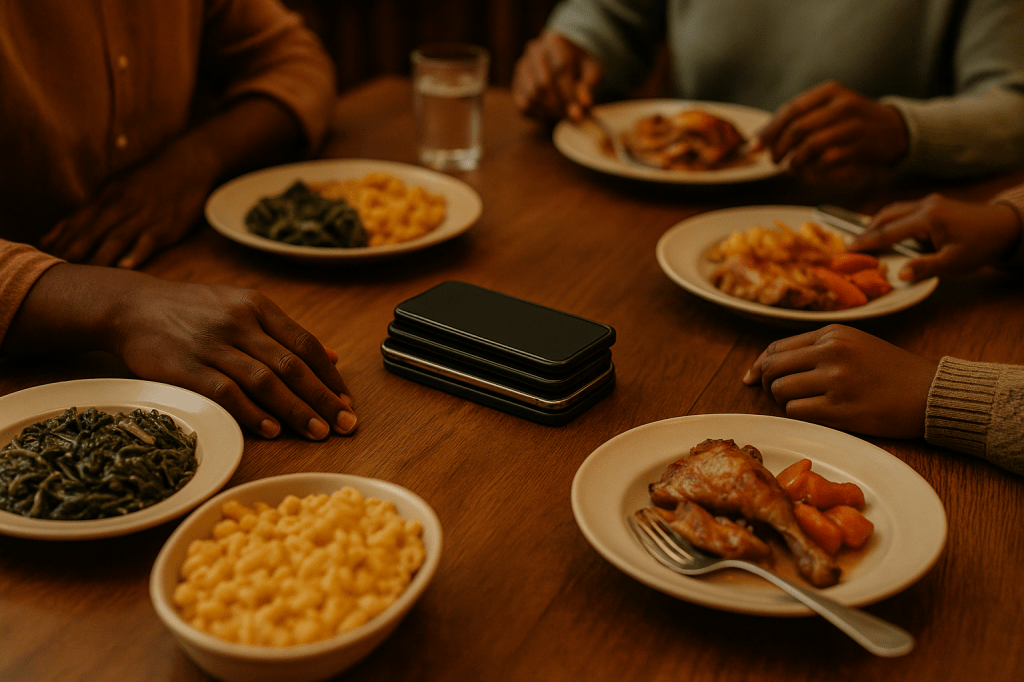
    A stack of phones in the center of the table, all face down.

    No grand speeches.

    No self-righteous declarations about “screen time” or “kids these days.”

    Just a quiet, intentional act of reclaiming.

    You walk into the dining room, set your plate, and hug the people you haven’t seen in weeks or months. Maybe you’re tired. Maybe you’re grieving. You may be just here because showing up feels easier than explaining why you didn’t.

    Before you sit down, you take your phone—the same device that holds your calendar, your playlists, your panic, your plausible deniability—and you place it in the middle of the table, face down. Everyone else does too. No buzzing on laps. No screens glowing beneath the table like secret altars. Just a small pile of surrendered attention.

    Not forever.

    Just for this meal.

    That stack becomes its own centerpiece.

    A reminder: we are here. Together. Right now.

    Without the screens, the room feels different. At first, it might feel awkward—like standing in a house after the power’s gone out. You can almost hear the absence of the digital hum. You look up and realize you’re making eye contact with people you haven’t really seen in months, even though you’ve “liked” every single update.

    You notice the way your cousin’s shoulders slump when she says work is “fine.”

    You hear the tremor in your friend’s voice when he talks about how the holidays feel different this year.

    You catch the way your father stares at an empty chair a moment too long.

    None of that would’ve made it into a caption.

    It doesn’t photograph well.

    But it’s the real meal.

    Reclaiming the family table in a digital world isn’t about pretending the internet doesn’t exist. It does, and it’s not going anywhere. Our recipes live there now. Our group chats. Our long-distance love stories and late-night confessions. Our survival has braided itself into those wires and signals.

    But the table—the real, physical table—does something the feed can’t.

    It holds the weight of us.

    It reminds us that people are not content.

    They are bodies and breath, nervous laughter and long pauses, second helpings and half-finished sentences. They are the way someone leans back in their chair when they’re finally relaxed, the way they push food around when they’re not okay, the way they reach for your hand without checking who’s watching.

    If we want to rebuild community in a culture addicted to elsewhere, we have to start by choosing here.

    Not every meal will be a breakthrough. Some nights, the best you can do is talk about nothing and pass the beans. That’s fine. Sacred, even. But when we stop curating our lives for people who aren’t in the room, we make space to notice the people who are.

    We make room for the slow, unglamorous work of knowing and being known.

    We make room for the kind of silence that isn’t empty, but safe.

    We make room for stories that don’t need hashtags to be real.

    Maybe the revolution isn’t dramatic.

    It could be a small family in a small kitchen, stacking their phones face down and picking up their forks. Maybe it’s a group of friends deciding that for one hour, they don’t need proof—only presence.

    Because the truth is, the table remembers us.

    Even when we forget ourselves.

    The chair still holds your shape after you leave.

    The plates still carry fingerprints.

    The air above the table holds the echo of your laughter, your arguments, your apologies.

    The digital world will always want another piece of you—another photo, another thought, another performance of your life. But the table wants something different.

    It wants you as you are: tired, hungry, complicated, half-healed, fully human.

    And that—no matter how advanced our screens become—is something no app can ever duplicate.

    Kyle J. Hayes

    kylehayesblog.com

    Please like, comment, and share

    Resources for Hard Times

    If you’re looking for practical help, food support, or community resources, you can visit the Salt, Ink & Soul Resources Page.
    👉 Resources for Hard Times

  • $10 Thanksgiving Recipes — A Collection for When Enough Has to Be Enough

    $10 Thanksgiving Recipes — A Collection for When Enough Has to Be Enough

    Salt, Ink & Soul — Humanity Through Food Series

    There’s a quiet truth most folks swallow whole and never speak aloud: Thanksgiving isn’t easy for everyone.

    Some years, the money lines up just right — the fridge humming with possibility, the pantry stacked like a promise. Those are the years when abundance feels almost ordinary, when the table groans under the weight of dishes you didn’t have to second-guess.

    And then there are the other years.

    The years when the math hits different.

    Not the math they teach in school — but the arithmetic of survival.

    The kind done in a grocery aisle with your thumb tapping the side of a dented shopping cart as you tally what can stretch, what can substitute, what can pass for tradition. The kind of math where you aren’t calculating calories or flavor — you’re calculating hope.

    Because “enough” is a slippery thing.

    Some years it looks like a feast.

    Some years, it looks like a single plate made with intention.

    And some years — the hardest ones — it looks like a meal pieced together from whatever you can afford, prayed over not because it’s sacred, but because you’re scared.

    This collection is for those years.

    Not the curated, photographed, performative holidays.

    Not the spreads built for Instagram or the tables where extra plates are laid out just for show.

    These recipes belong to the years of holding on — the years of stretching dollars, stretching ingredients, stretching yourself. The years when you’re trying your best to make Thanksgiving happen with whatever life hasn’t taken from you.

    These dishes aren’t glamorous.

    But they are honest.

    They are warm.

    They are filling.

    And they work.

    All under $10.

    All built from the basics.

    All crafted to taste like something even when the world feels like nothing.

    Let’s begin.

    1. $8 Creamy Turkey (or Chicken) Rice Bake

    A one-pan salvation dish — simple, reliable, and the kind of comfort that tastes like someone finally putting a hand on your shoulder and saying, You made it through another day.

    Ingredients ($8 total)

    • 1 can cream of chicken soup — $1.25
    • 1 cup uncooked rice — $0.60
    • 1 can mixed vegetables — $0.95
    • 1 cup shredded chicken or turkey (rotisserie leftovers work) — ~$3
    • Water + salt + pepper
    • Optional: garlic or onion powder — $0.30

    Instructions

    1. Combine all ingredients in a small baking pan.
    2. Add 1 can of water, stir, and cover with foil.
    3. Bake at 375°F for 45 minutes.
    4. Let it rest for 10 minutes to thicken.

    It won’t win any culinary awards — but on a cold Thanksgiving evening, it tastes like relief.

    2. $9 Sweet Potato Holiday Mash

    Cheaper than pie. Softer than memory. Warm enough to feel like love even when love has been scarce.

    Ingredients ($9 total)

    • 3 large sweet potatoes — $2.50
    • ¼ stick butter — $0.50
    • ¼ cup brown sugar — $0.40
    • Cinnamon — $0.25
    • Salt — $0.05
    • Mini marshmallows (optional, but they help) — $1.50
    • Milk — $0.30

    Instructions

    1. Peel and boil sweet potatoes until soft.
    2. Mash with butter and a splash of milk.
    3. Add brown sugar, salt, and cinnamon.
    4. Bake at 375°F for 10 minutes, with marshmallows if you have them.

    A reminder that sweetness still exists — even in lean years.

    3. $7 Holiday Green Bean Casserole

    Because sometimes the holiday isn’t the turkey at all — it’s the sides that taste like the homes we came from.

    Ingredients ($7 total)

    • 2 cans green beans — $2
    • 1 can cream of mushroom soup — $1.25
    • Fried onions (store brand) — $2
    • Salt + pepper — $0.10
    • Splash of milk or water

    Instructions

    1. Mix everything except the fried onions.
    2. Spread into a baking dish.
    3. Bake 20 minutes at 375°F.
    4. Top with fried onions and bake for 5 more minutes.

    It tastes like crowded kitchens, clattering pans, and the laughter that lived between generations — imperfect, but familiar.

    4. $5 Cornbread Stuffing

    Simple. Cheap. Stretchable. A dish that feels like it’s been passed through hands that learned to make magic from almost nothing.

    Ingredients ($5 total)

    • 1 box cornbread mix — $1
    • 1 egg — $0.20
    • Water or milk
    • ½ onion (optional) — $0.35
    • Butter — $0.50
    • Chicken bouillon cube — $0.20
    • Celery (optional) — $0.40

    Instructions

    1. Bake cornbread and crumble into a bowl.
    2. Sauté onions and celery in butter if you have them.
    3. Add 1 cup hot water + bouillon.
    4. Mix and bake for 15 minutes.

    Even the simplest things can feel like a holiday when you’re trying your best.

    5. $10 One-Pot Holiday Pasta

    A reimagined Thanksgiving for nights when you need a full stomach more than perfection.

    Ingredients ($10 total)

    • 1 lb pasta — $1.25
    • 1 can chicken — $2
    • 1 can of peas — $1
    • 1 can cream of chicken soup — $1.25
    • Garlic powder — $0.25
    • Parmesan shaker — $2
    • Salt + pepper

    Instructions

    1. Boil pasta.
    2. Drain and stir in remaining ingredients.
    3. Heat on low until creamy.

    Not quite turkey and gravy — but warm enough to soften the edges of the day.

    A Final Thought

    Thanksgiving was never meant to be a performance.

    It was meant to be a moment — a pause — where we gather whatever we have and honor it.

    Some years, that’s a table full of abundance.

    Some years, it’s one humble dish lit by the dim light of a kitchen bulb.

    But meaning does not require excess.

    Gratitude does not require plenty.

    These meals are for the years when you build Thanksgiving out of the little you have — and still manage to carve out something like hope.

    Because “enough” doesn’t come from abundance.

    It comes from presence, memory, and the quiet prayer that next year will be kinder than this one.

    Kyle J. Hayes

    kylehayesblog.com

    Please like, comment, and share

    Resources for Hard Times

    If you’re looking for practical help, food support, or community resources, you can visit the Salt, Ink & Soul Resources Page.
    👉 Resources for Hard Times

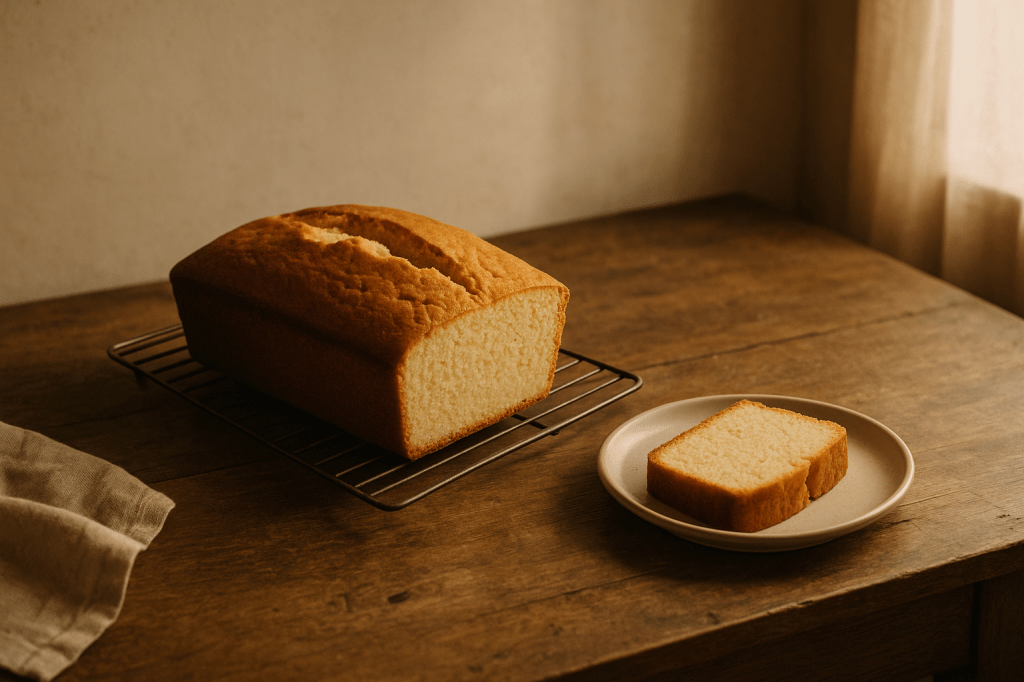
  • 🍰 Pound Cake: The Sweet Weight of Simplicity

    🍰 Pound Cake: The Sweet Weight of Simplicity

    Timeless comfort from almost nothing — serves 8–10

    🧾 Ingredients

    • 2 cups all-purpose flour
    • 2 cups granulated sugar
    • 1 cup butter (2 sticks, salted or unsalted)
    • 4 large eggs
    • ½ cup milk
    • 2 tsp vanilla extract
    • 1 tsp baking powder
    • ¼ tsp salt
    • Zest of 1 lemon (optional)

    Servings: 8–10 generous slices

    🍳 Instructions

    1. Preheat & Prepare

    Set oven to 350°F (175°C).

    Grease and lightly flour a loaf pan or bundt pan.

    (Use butter for this step if you want your kitchen to smell like nostalgia.)

    2. Cream the Base

    In a large bowl, beat the butter and sugar until pale, airy, and fluffy — about 4 minutes.

    This is where patience, air, and memory become part of the batter.

    3. Add the Eggs

    Add the eggs one at a time, mixing well after each.

    Watch the mixture turn a warm golden color — the shade of good memory.

    4. Blend the Dry Ingredients

    In a separate bowl, whisk together:

    • Flour
    • Baking powder
    • Salt

    5. Bring It Together

    Add the dry ingredients to the butter mixture gradually, alternating with milk and vanilla.

    Mix only until smooth — overmixing steals tenderness.

    6. Pour & Bake

    Pour the batter into your prepared pan and smooth the top.

    Bake for 50–60 minutes, until golden brown and a toothpick inserted into the center comes out clean.

    (If the top browns too quickly, tent loosely with foil.)

    7. Cool & Serve

    Let the cake rest 10 minutes before turning it out.

    Cool completely on a rack.

    Serve plain, dusted with powdered sugar, or crowned with fresh fruit — this cake never asks for more than what you already have.

    🕯️ Stretch It Further

    • Breakfast: Toast slices with butter and a sprinkle of cinnamon.
    • Dessert: Top with berries and whipped cream.
    • Gift: Wrap in parchment and twine — nothing says love like a homemade pound cake.
    • Freezer-Friendly: Wrap individual slices in foil or plastic wrap for easy storage. Keeps up to 3 months.

    💭 The Soul Behind It

    Pound cake is one of those recipes that has survived every storm — Depression, war, loss, and celebration alike.

    It was born from equality: a pound of each ingredient, no waste, no vanity.

    It’s proof that sometimes sweetness isn’t a luxury — it’s a memory baked into the bones of survival.

    Kyle J. Hayes

    kylehayesblog.com

    Please like, comment, and share

    Resources for Hard Times

    If you’re looking for practical help, food support, or community resources, you can visit the Salt, Ink & Soul Resources Page.

    👉 Resources for Hard Times

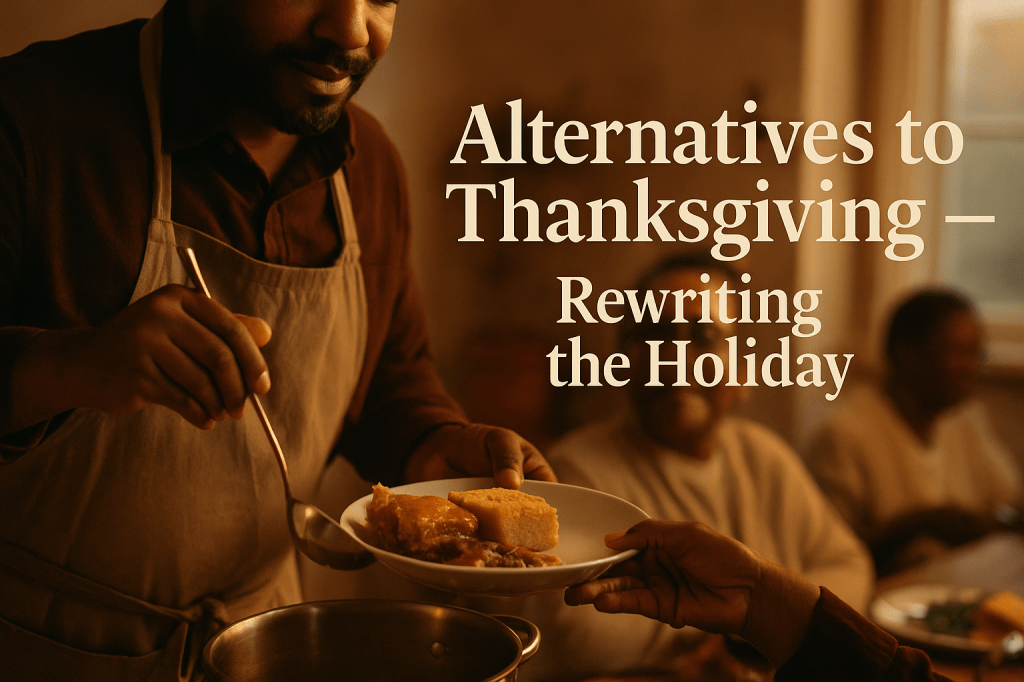
  • Alternatives to Thanksgiving — Rewriting the Holiday

    Alternatives to Thanksgiving — Rewriting the Holiday

    There comes a moment in late November when the air shifts not just in temperature but in expectation. The world begins rehearsing its yearly performance — the food, the family, the football, the familiar script repeated so often it feels carved into the country’s memory.

    And if you fit neatly into that script, it can feel warm, grounding, like returning to a language you somehow still remember fluently.

    But for others, the holiday arrives like an old story they no longer belong to.

    Most people don’t talk about those who feel the season coming like a weight. The people who look at the calendar and feel their chests tighten. The ones who know that the hardest holidays aren’t always the ones filled with chaos, but the ones filled with quiet.

    The kind of quiet that makes you hear yourself.

    Some people try to rewrite the holiday in small, quiet ways — making it about something more than the expected trinity of food, family, and football. They find their gratitude not at a crowded table, but standing in the fluorescent light of a food pantry, handing out turkeys and canned goods with a soft smile, hoping no one sees the ache behind it.

    For them, volunteering isn’t charity. It’s survival.

    A way of turning their loneliness into something useful, something human, something that means they didn’t spend the day hiding from the world.

    Because expecting yourself to shoulder a season of loneliness — to sit through a holiday full of painful memories — isn’t strength. It’s a self-inflicted exile.

    And exile is not a tradition worth keeping.

    The truth is this:

    The holiday season is one of the hardest times of year to be single, estranged, rebuilding, recovering, or simply alone.

    The world keeps offering images of togetherness, and it’s easy to forget that they’re curated, staged, and performed. That countless people sitting at those big tables are hurting too, just more quietly.

    But being alone does not mean you must be lonely.

    Humans are built for community. For congregating. For creating small pockets of belonging wherever we can find them. We weren’t designed for isolation — the world simply taught us how to perform it.

    So some people start the slow, brave work of rewriting the holiday.

    Not erasing it — rewriting it.

    It may mean opening your home to friends who don’t have anywhere else to be.

    It could mean joining a community meal where the only rule is kindness.

    It may mean spending the morning volunteering, feeding people who understand hunger in more ways than one.

    Maybe it means choosing a different ritual altogether — a long walk, a favorite movie, a personal tradition unburdened by expectation.

    It could look like sitting with a small plate you prepared for yourself, not out of sadness, but out of intention — honoring your own company instead of apologizing for it.

    It could look like surrounding yourself with people who understand the quiet parts of you.

    It could look like helping someone else survive the holiday so you don’t have to face your own reflection all day long.

    It might take courage.

    Let go of the script you were handed as a child.

    It might take admitting that the table you grew up sitting at wasn’t always a place of warmth but a place of wounds.

    Traditions are beautiful until they become burdens.

    Holidays are comforting until they become cages.

    And sometimes the bravest thing you can do is step outside of both.

    Rewriting the holiday doesn’t mean you’re rejecting the past.

    It means you’re learning to honor the present — your present — even if it looks nothing like what you were taught to expect.

    This year, if your table is empty, build another.

    If the memories are heavy, reshape them.

    If the day threatens to swallow you whole, step outside of it.

    Make something new.

    Make something honest.

    Make something that doesn’t hurt to hold.

    Because you don’t have to feel lonely just because you are alone.

    And you don’t have to disappear just because the world expects you to stay quiet.

    You can choose connection — even in small doses.

    You can choose a community — even if you have to build it from scratch.

    You can choose gratitude — even if it isn’t wrapped in tradition.

    Rewriting the holiday is not an act of rebellion.

    It’s an act of survival.

    An act of self-respect.

    An act of saying:

    I deserve a holiday that makes room for me.

    Sometimes that means sitting at a new table.

    Sometimes it means opening a door for someone else.

    Sometimes it means starting over.

    But always — always — it means choosing yourself.

    And that kind of choice?

    That is something to be grateful for.

    Kyle J. Hayes

    kylehayesblog.com

    Please like, comment, and share

    Resources for Hard Times

    If you’re looking for practical help, food support, or community resources, you can visit the Salt, Ink & Soul Resources Page.

    👉 Resources for Hard Times

  • Thanksgiving for One — A Seat for Yourself

    Thanksgiving for One — A Seat for Yourself

    There’s a certain script people expect when they think of Thanksgiving.

    It usually starts with food — the turkey, the stuffing, the pie cooling on the counter. Then it moves to the cast of characters: the family gathering in mismatched chairs, the friend who always brings too much dessert, the cousin who drifts in late but still leaves with leftovers. We imagine houses alive with noise, people dipping in and out of conversations, stories resurfacing like relics rediscovered once a year.

    And for many, that is the holiday.

    The crowd.

    The warmth.

    The familiar chaos.

    But that’s not everyone’s story.

    There’s another Thanksgiving that doesn’t make the commercials — the one reserved for the people who spend the day alone. Not necessarily by choice, not always by circumstance, but by the quiet gravity of life pulling them into a different kind of holiday.

    Sometimes there are invitations, yes.

    People say, “Come join us,” with genuine kindness.

    But the invitation is the easy part.

    It’s the arrival that carries the weight.

    It’s stepping into “someone else’s family,” hearing the whispers, the curious looks, the unfiltered questions.

    Who is he?

    Where’s his family?

    Why’s he here?

    It’s not always spoken, but you feel it — that subtle awareness that you’re a guest in a tradition built for someone else’s memories.

    As a result, many people skip the gatherings.

    They skip the polite smiles, the explanations, the feeling of being a footnote in someone else’s holiday.

    Instead, they think, ‘Maybe I’ll just go out to eat.

    But walk into a restaurant on Thanksgiving and you’ll find tables full of families who chose convenience over cooking — and even that can feel like too much. The laughter, the shared plates, the kids fidgeting in their seats. It’s a reminder of what isn’t yours, what isn’t here, what didn’t happen.

    So the quiet alternative becomes a night at home.

    A small meal — not the kind meant to impress, just something made with the intention of getting through the day with dignity. Maybe a favorite dish, something nostalgic enough to soothe the edges of the evening. The game plays in the background, filling the silence with the familiar noise of other people’s rituals.

    It’s not lonely at first.

    Not really.

    It’s just… quieter.

    You eat.

    You clean up.

    You sit with the softness of the night.

    You tell yourself it’s fine — that plenty of people do this.

    And then, after the last dish is rinsed, after the game ends and the commercials begin to repeat themselves, the house settles in a particular kind of stillness. The kind that feels bigger than the room itself.

    You could put on a movie.

    You could do a little work, because work doesn’t celebrate holidays.

    You could scroll through pictures of other people’s tables, telling yourself you’re just checking in.

    And then, without fail, a specific melody threads its way through the speakers — Mariah Carey’s voice, bright and impossibly cheerful, singing “All I Want for Christmas Is You.”

    And that’s when the real truth hits:

    Thanksgiving isn’t the end of something — it’s the beginning.

    It’s the opening note to a season built on closeness and connection, on gatherings and gifts and rituals that depend on “we” more than “I.” It’s the first moment you realize you’re stepping into a stretch of holidays that were never designed with solitude in mind.

    You hear that song, and some part of you — conscious or not — begins planning.

    How am I going to get through the next month?

    What do these holidays look like for me?

    What am I holding onto, and what am I grieving?

    These thoughts don’t make you weak.

    They make you human.

    There is a quiet courage in spending a holiday alone.

    Not everyone understands that.

    Not everyone has had to.

    There is dignity in creating your own table, even if it only seats one.

    There is meaning in making yourself a small meal, even if no one else sees it.

    There is strength in choosing to face the day on your own terms — whether with a football game, a favorite movie, or the gentle ritual of simply being kind to yourself.

    And there is no shame in being alone.

    There is no failure in a quiet holiday.

    There is no deficit in a table that doesn’t overflow.

    Sometimes the seat you offer yourself is the most honest one you’ll ever sit in.

    Thanksgiving, for one, is still Thanksgiving.

    It’s still a moment to breathe, to reflect, to acknowledge the complicated, fragile joy of making it through another year. It’s a chance to honor yourself — not as an afterthought, but as the whole intention.

    If your table only has one chair this year, let it be enough.

    Let your presence be enough.

    Let the night unfold in its own quiet way.

    And when that song plays — when it signals the next season approaching — remember this:

    You have survived harder things than a holiday.

    And you are still here.

    That counts for something.

    Sometimes that counts for everything.

    Kyle J. Hayes

    kylehayesblog.com

    Please like, comment, and share

    Resources for Hard Times

    If you’re looking for practical help, food support, or community resources, you can visit the Salt, Ink & Soul Resources Page.

    👉 Resources for Hard Times

  • Budget Thanksgiving — Making Enough 

    Budget Thanksgiving — Making Enough 

      There’s a moment each year — usually sometime in the second week of November — when people start looking at the grocery flyers a little differently.

    Not with excitement.

    Not with the old holiday anticipation.

    But with calculation.

    We used to joke about Thanksgiving being the one meal that knocked you into a food coma, the sacred tradition of overeating as if it were part of the liturgy. But these days, there are families out there just trying to get by — and they’re not thinking about turkey naps or stuffing round two. They’re thinking about the numbers. They’re thinking about the bill.

    They’re thinking, How do I make a holiday out of what I can barely make a Tuesday out of?

    And if you listen closely — not to the news, not to the politicians, but to the people — you’ll hear a quiet truth humming beneath everything:

    It’s not that we don’t want the feast.

    It’s that the money we have says something different.

    I’ve walked through enough store aisles to know that holiday displays can feel like a taunt when your pockets aren’t lined the same way they used to be. The mountain of canned cranberry sauce. The towers of boxed stuffing. The frozen turkeys, which appear to be sagging inside their plastic, as if exhausted from waiting for a family that can afford them.

    And behind those shelves, somewhere in line, is a parent calculating the cost of every side dish.

    Someone is silently deciding between a whole bird and a pack of legs.

    Someone choosing between dessert and a few extra days of groceries.

    There is a shame that creeps in when the holiday table doesn’t look like the commercials — a quiet ache, the kind you don’t talk about.

    But I want to tell you something that the world doesn’t say loud enough:

    You can still have a good Thanksgiving.

    Even when money is tight.

    Even when the table looks different.

    Even when the feast you imagined is scaled down into something far smaller, far simpler — far more honest.

    It might not knock you into a coma.

    It might not leave leftovers for three days.

    It might not impress anyone scrolling past your photos.

    But it can give you something else.

    Something quieter.

    Something deeper.

    Something people forget to be thankful for.

    It can give you presence.

    It can give you a connection.

    It can give you the kind of memory that doesn’t need gravy to feel full.

    I’ve eaten my fair share of big meals — the kind that leave you leaning back, hands on your stomach, laughing because there’s nothing left to do but submit to gravity. But I’ve also eaten the small ones, the humble plates made from what a household could scrape together. And here’s what I’ve learned watching families stretch a dollar and a dream across a table:

    The memories that stay with you aren’t always the ones built from abundance.

    Sometimes they’re carved from scarcity.

    Sometimes they’re shaped from the simple miracle of still being together.

    A roasted chicken instead of a turkey.

    Cornbread instead of rolls.

    Canned green beans dressed up with whatever you had in the pantry.

    A pie made with Cool Whip because heavy cream was too high this year.

    Small things.

    Humble things.

    Real things.

    People think a holiday is about the menu — but Thanksgiving, at its best, has always been about survival.

    About making it through another year.

    About holding close the people who made the hard days bearable.

    About honoring the hands that cooked, even when the fridge was nearly empty.

    There are families right now who are living that truth, whether they wanted to or not.

    So if this year your table is smaller…

    If the plates are fewer…

    If the meal is simpler…

    If the turkey is swapped for something that fits the math…

    Please know this:

    You still deserve Thanksgiving.

    Not the performance of it — the heart of it.

    There is dignity in doing the best you can with what you have.

    There is grace in making enough when resources are scarce.

    There is courage in deciding that gratitude doesn’t have to be extravagant to be real.

    When you sit down to your meal — whether it’s a feast or a handful of comfort foods — take a breath. Look around. Feel the moment. Let it be enough. Let your presence be enough.

    Because long after the leftovers are gone, long after the dishes are washed, you won’t remember the price of the turkey.

    You’ll remember who sat with you.

    You’ll remember who you held close.

    You’ll remember that you made something out of nearly nothing — and that, in times like these, is its own kind of victory.

    This year, let Thanksgiving be less about the coma and more about the connection.

    Less about excess and more about enough.

    Less about the cost of the meal and more about the worth of the moment.

    When money is tight, meaning becomes easier to see.

    Sometimes that’s the gift we didn’t know we needed.

    Kyle J. Hayes

    kylehayesblog.com

    Please like, comment, and share

    Related Reading:

    The Most Basic Bread

    Nothing Wasted – The Grace Of Leftovers

    Resources for Hard Times

    If you’re looking for practical help, food support, or community resources, you can visit the Salt, Ink & Soul Resources Page.

    👉 Resources for Hard Times