Tag: Survival Food

  • The Quiet Dignity of Beans

    The Quiet Dignity of Beans

    Salt, Ink & Soul — Humanity Through Food Series

    I live now in New Mexico — a place where beans are more than food.

    They’re a landscape.

    A rhythm.

    A quiet religion built into the daily life of the people who’ve been here long before asphalt and subdivisions.

    Out here, beans carry the weight of generations. They simmer slowly on back burners, folded into stews, stretched across cold evenings, made sacred by repetition and memory. People speak of them with a kind of reverence I’m still learning to understand — the way you might talk about a story your grandmother told you a hundred times, knowing the hundred-and-first will still matter.

    But that wasn’t my experience growing up.

    Where I came from, the sight of beans didn’t bring comfort.

    It filled my stomach with dread.

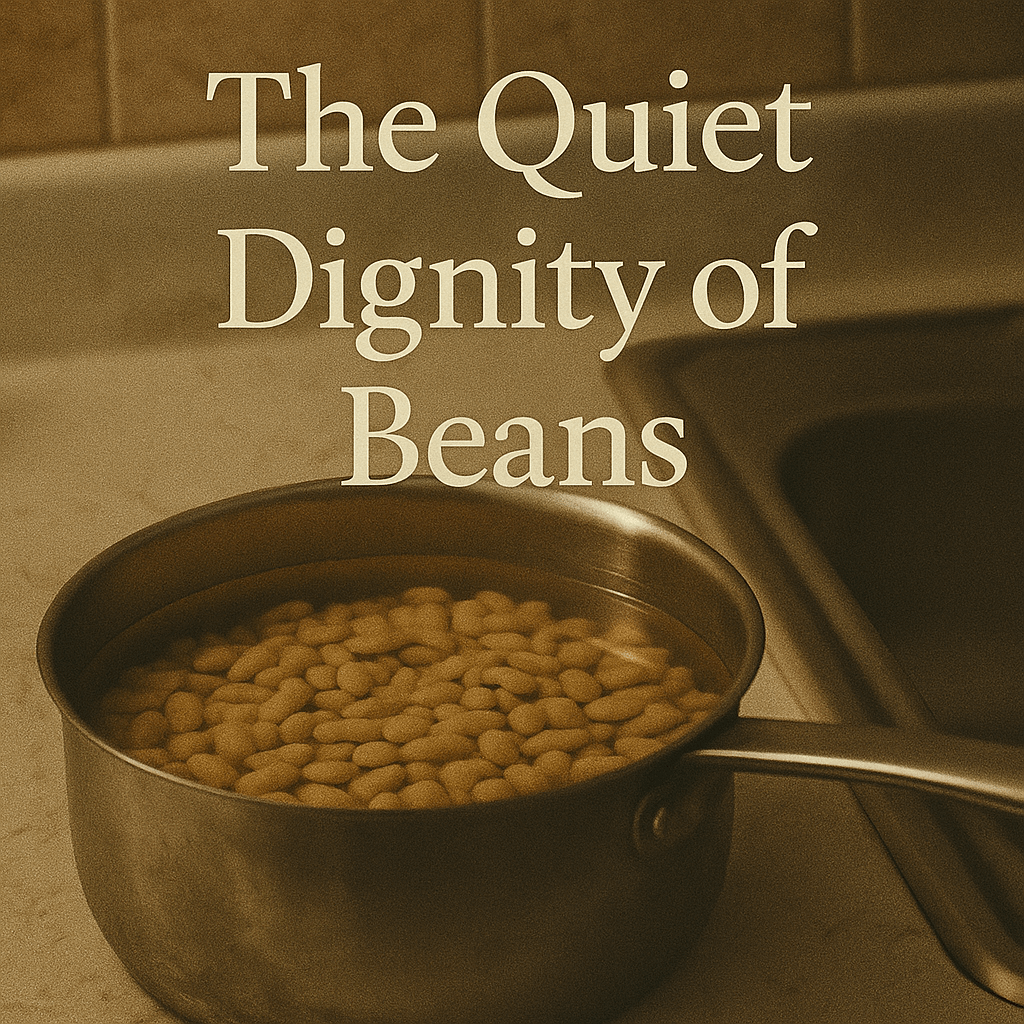
      I’ve written before about the sinking feeling that washed over me when I saw a pot of beans soaking in the sink. It was a kind of childhood math — unspoken but understood. Beans meant money was tight. Beans meant there were no extra groceries to choose from. Beans meant stretching, rationing, surviving.

    As kids, we formed a silent pact around it — not one spoken in words but in looks exchanged across the kitchen. We all felt it. That quiet disappointment disguised as appetite. Beans were never the meal we hoped for. They were the meal we needed.

    And the way we carried that memory into adulthood…

    That’s its own complicated story.

    One of my sisters swears she’s “allergic” to beans.

    A medical impossibility, the rest of us laugh at —

    not out of cruelty, but out of recognition.

    We know the truth.

    It’s not her body reacting — it’s the past.

    Invisible scars are funny that way —

    they flare up without warning,

    dictate tastes and habits,

    and live under the skin long after the hard years have passed.

    For each of us, beans became something to avoid —

    a symbol of the lean seasons we survived together.

    But here’s the truth buried under all that resistance:

    We didn’t like them…

    But they kept us alive.

    And we knew it.

    When I talk to others about this — about beans, scarcity, survival food — I’m surprised by how familiar the story feels.

    Almost everyone has a version of the same confession:

    “We didn’t like it. But we didn’t starve.”

    Peanut butter sandwiches.

    Canned soup.

    Government cheese.

    Rice dishes stretched thin.

    Leftovers reinvented until they became something else entirely.

    And, of course, beans.

    It’s strange how something so simple can carry so much emotional weight.

    A pot of beans meant another day we’d make it.

    Another day, we wouldn’t go to bed hungry.

    Another day, we’d stretch what we had until something better came along.

    Beans were the food that stood between us and the cliff.

    And now, all these years later, we still feel the echo of that grind.

      Moving to New Mexico forced me to reconsider everything I thought I knew about beans.

    Here, they aren’t a symbol of lack.

    They’re a symbol of identity.

    Of pride.

    Of cultural endurance.

    Of flavors perfected not out of necessity but out of intention.

    I’ve watched families here talk about beans the way some people talk about heirlooms — with respect, with memory, with joy. They’re part of feasts, gatherings, rituals. They hold meaning.

    It’s made me rethink what I grew up believing.

    Made me wonder if healing sometimes looks like learning to see an old wound through a new lens.

    Someone recently told me to try Navajo tacos.

    And maybe I will — perhaps that’s my first step into rewriting a relationship shaped by childhood scarcity.

    Maybe the world has been trying to teach me that beans are more than the fear I attached to them.

    I don’t know if my siblings feel that shift.

    I don’t know if they ever will.

    But I’m starting to.

    The Quiet Dignity of What Sustains Us

    The older I get, the more I realize this:

    There is a quiet dignity in the foods that kept us alive.

    Even the ones we claimed to resent.

    Even the ones that came with silent embarrassment.

    Even the ones we push away now, out of habit or history.

    Because survival has its own kind of grace —

    a soft, steady grace that doesn’t ask to be admired.

    It just asks to be acknowledged.

    Beans taught me that.

    They taught me resilience long before I had the language for it.

    They taught me how families stretch together.

    How siblings develop the same scars in different shapes.

    How a kitchen can hold both struggle and salvation at once.

      Beans may not have been our first choice. They may have carried more memories than flavor back then. But they fed us. They kept us standing. And in their own quiet way, they taught us how to survive when survival felt like the only thing we could afford.

      I wish I could end this with a great bean recipe—some treasured family dish or perfected method—but the truth is, I don’t have one. If you do, or if there’s a recipe that carried you through your own seasons of scraping by and making do, please share the link. I’d be grateful to learn from you.

    Kyle J. Hayes

    kylehayesblog.com

    Please like, comment, and share

    Resources for Hard Times

    If you’re looking for practical help, food support, or community resources, you can visit the Salt, Ink & Soul Resources Page.
    👉 Resources for Hard Times

  • 🍰 Pound Cake: The Sweet Weight of Simplicity

    🍰 Pound Cake: The Sweet Weight of Simplicity

    Timeless comfort from almost nothing — serves 8–10

    🧾 Ingredients

    • 2 cups all-purpose flour
    • 2 cups granulated sugar
    • 1 cup butter (2 sticks, salted or unsalted)
    • 4 large eggs
    • ½ cup milk
    • 2 tsp vanilla extract
    • 1 tsp baking powder
    • ¼ tsp salt
    • Zest of 1 lemon (optional)

    Servings: 8–10 generous slices

    🍳 Instructions

    1. Preheat & Prepare

    Set oven to 350°F (175°C).

    Grease and lightly flour a loaf pan or bundt pan.

    (Use butter for this step if you want your kitchen to smell like nostalgia.)

    2. Cream the Base

    In a large bowl, beat the butter and sugar until pale, airy, and fluffy — about 4 minutes.

    This is where patience, air, and memory become part of the batter.

    3. Add the Eggs

    Add the eggs one at a time, mixing well after each.

    Watch the mixture turn a warm golden color — the shade of good memory.

    4. Blend the Dry Ingredients

    In a separate bowl, whisk together:

    • Flour
    • Baking powder
    • Salt

    5. Bring It Together

    Add the dry ingredients to the butter mixture gradually, alternating with milk and vanilla.

    Mix only until smooth — overmixing steals tenderness.

    6. Pour & Bake

    Pour the batter into your prepared pan and smooth the top.

    Bake for 50–60 minutes, until golden brown and a toothpick inserted into the center comes out clean.

    (If the top browns too quickly, tent loosely with foil.)

    7. Cool & Serve

    Let the cake rest 10 minutes before turning it out.

    Cool completely on a rack.

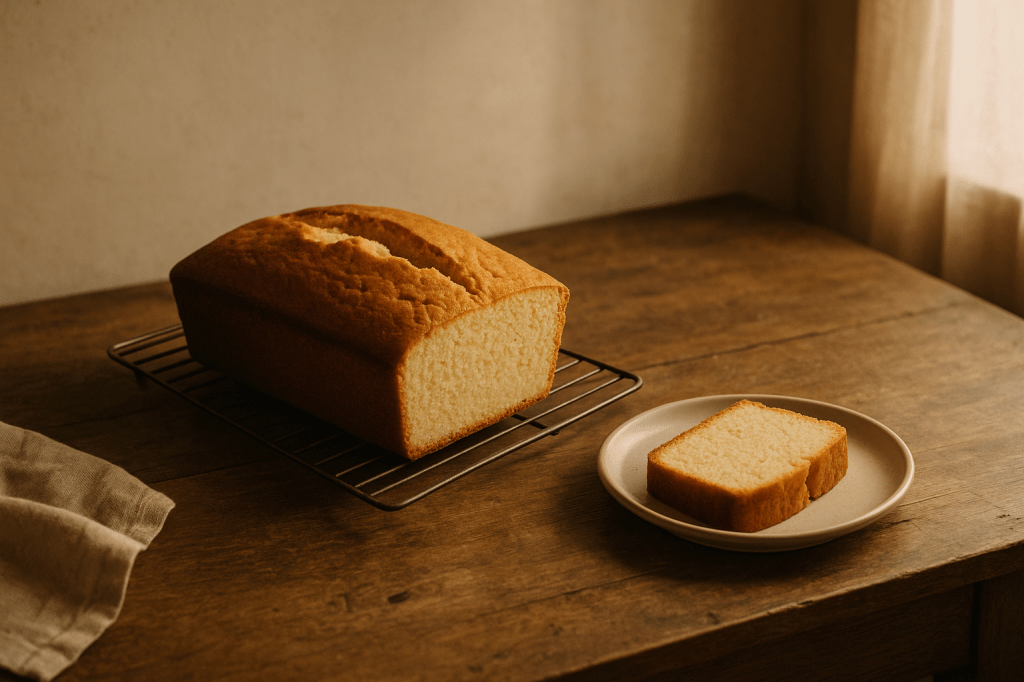
    Serve plain, dusted with powdered sugar, or crowned with fresh fruit — this cake never asks for more than what you already have.

    🕯️ Stretch It Further

    • Breakfast: Toast slices with butter and a sprinkle of cinnamon.
    • Dessert: Top with berries and whipped cream.
    • Gift: Wrap in parchment and twine — nothing says love like a homemade pound cake.
    • Freezer-Friendly: Wrap individual slices in foil or plastic wrap for easy storage. Keeps up to 3 months.

    💭 The Soul Behind It

    Pound cake is one of those recipes that has survived every storm — Depression, war, loss, and celebration alike.

    It was born from equality: a pound of each ingredient, no waste, no vanity.

    It’s proof that sometimes sweetness isn’t a luxury — it’s a memory baked into the bones of survival.

    Kyle J. Hayes

    kylehayesblog.com

    Please like, comment, and share

    Resources for Hard Times

    If you’re looking for practical help, food support, or community resources, you can visit the Salt, Ink & Soul Resources Page.
    👉 Resources for Hard Times

  • Nothing Wasted – The Grace of Leftovers

    Nothing Wasted – The Grace of Leftovers

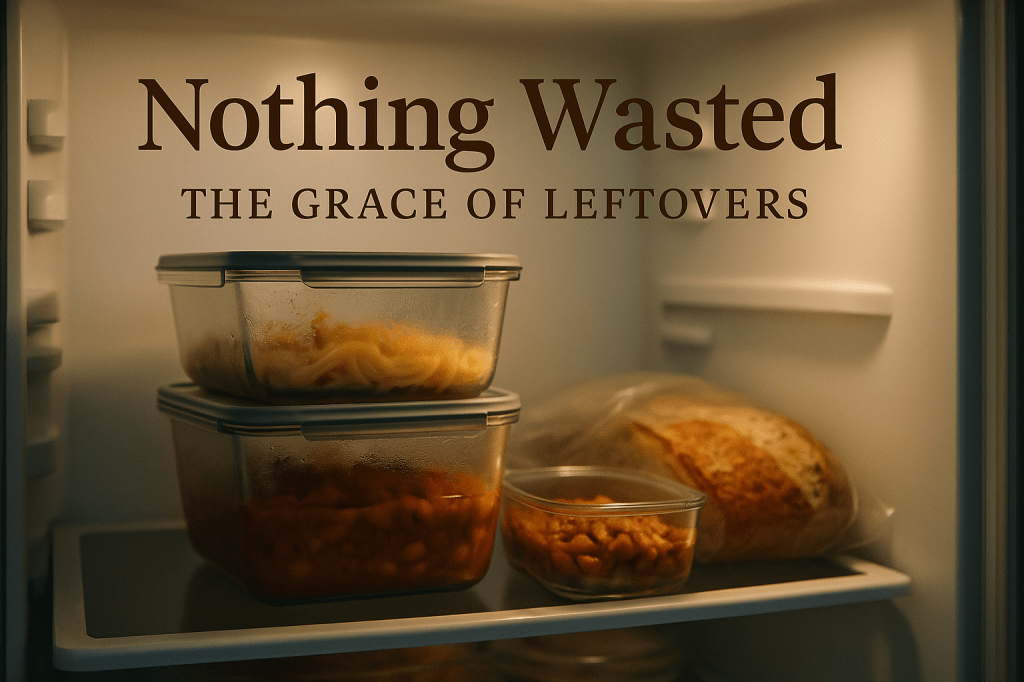
    I grew up in a house where tomorrow lived in the refrigerator—stacked in mismatched containers, labeled only by memory and love. We didn’t have much, so we learned to keep what we had. A pot cooled on the stove like a promise. A slice of bread wrapped in a paper towel felt like insurance against whatever the next day might bring.

    So when I hear people say they don’t eat leftovers—say it like a flex, like the world owes them a fresh performance every night—I don’t understand. Why throw away another lunch, another midnight snack, another chance to make something out of almost nothing? Where I’m from, waste isn’t just waste. It’s disrespect—to the hands that cooked, to the hours that earned the money, to the hunger we remember even when our plates are full.

    Leftovers carry a particular kind of grace. They’re proof that somebody planned ahead, that care was stretched across time. They’re the echo of yesterday’s effort, still singing. And yes—I still cook too much on purpose. Because there’s a relief in opening the door after a heavy day and finding your own kindness waiting for you in a glass dish.

    The world will tell you that food is a spectacle, a one-night show with a Michelin curtain call. But in the kitchens where I learned, food was a continuum. It traveled: pot to plate to container to skillet to lunchbox to after-school bowl. It got better with time, the way beans deepen and soups settle into themselves. The trick wasn’t reinvention for the sake of reinvention. It was respect.

    Here’s what I’ve learned about the second life of supper—the way a meal can keep feeding us if we let it.

    Second Lives (How I use Leftovers)

    Bread

    • Day 2: Toast with a swipe of butter and a little salt.
    • Day 3: Croutons (cube, oil, bake) or breadcrumbs (dry, blitz, jar).
    • Day 4: Bread pudding—milk, eggs, a handful of raisins; Sunday morning becomes gentler.

    Roast Chicken or Baked Thighs

    • Night after: Shred into tacos or quesadillas with onions and a squeeze of lime.
    • Lunch: Chicken salad with whatever’s around—celery, apple, a spoon of yogurt or mayo.
    • Final act: Simmer bones with onion ends and carrot stubs to create a stock that tastes like patience.

    Rice

    • Day after: Fried rice—egg, scallions, soy, any lonely vegetables.
    • Or fold into soup to make it stick to your ribs.
    • Or press into a pan with oil for a crispy rice cake topped with a soft egg.

    Beans

    • Next day: Blend half for a quick refried spread; reserve the other half whole.
    • Stretch: Chili with whatever ground meat (or none), or spoon over toast with hot sauce.
    • Last stop: Bean soup—stock, garlic, a heel of Parmesan if you’ve got it.

    Roasted Vegetables

    • Breakfast: Hash in a skillet with an egg on top.
    • Bowl life: Toss with greens and grains; finish with vinaigrette.
    • Soup move: Blitz with warm stock, then drizzle with olive oil and a sprinkle of pepper.

    Pasta & Sauce

    • Baked life: Mix with a spoon of ricotta or cottage cheese, top with breadcrumbs, and bake.
    • Pan-fry in a little olive oil until the edges crackle; suddenly, the old becomes new.

    Casseroles

    • Next day slice: Reheat in a skillet with a little butter for crisp corners and a better story.
    • Croquettes: Mash, bread, pan-fry—humble gold.

    Steak, Pork Chops, or Sausage (leftover bits)

    • Fried rice, breakfast hash, or quick tacos with pickled onions.
    • Tiny pieces become flavor—sprinkled into greens or beans like punctuation.

    The Scraps

    • Herb stems → chimichurri or stock.
    • Parmesan rinds → soup.
    • The last spoon of jam → vinaigrette with vinegar and oil.
    • Pickle brine → marinade for chicken, or a bracing splash in potato salad.

    The Quiet Rules (Because Respect Is Also Safety)

    Cool food within two hours. Store in shallow containers.

    Most cooked dishes: 3–4 days in the fridge; many soups and casseroles freeze up to 2 months.

    Reheat until steaming—not just warm, but honest. Label and date so that in the future you don’t have to guess.

    The Weeklong Buffet We Call Thanksgiving

    Thanksgiving is the high holy day of leftovers—the only time Americans brag about cold turkey like it’s a love language. The fridge becomes a geography: stuffed with hills, cranberry lakes, and green-bean valleys. We start with the classic sandwich—turkey, dressing, gravy, maybe that scandalous swipe of cranberry—and then we get clever:

    • Turkey pot pie with leftover vegetables and gravy, topped with a quick crust.
    • Stuffing waffles pressed in the iron, crowned with a runny egg.
    • Mashed potato pancakes—crisp outside, forgiving inside.
    • Bone broth that warms the house for days.

    Thanksgiving teaches what the year forgets: abundance is not a single meal but a stretch of days made tender by forethought.

    When people say they won’t eat leftovers, I hear a kind of amnesia. I hear a forgetting of the hands that peeled, stirred, salted, tasted. I hear a forgetting of the mile between hunger and relief. In my kitchen, we don’t forget. We reheat. We revive. We say thank you twice.

    Because leftovers aren’t the past. They’re the persistence of care.

    They are proof that enough can last, if we let it.

    And in a life that asks so much of us, there’s no virtue more radical than refusing to throw away what still has love to give.

    Kyle J. Hayes

    kylehayesblog.com

    Please like, comment, and share

    Resources for Hard Times

    If you’re looking for practical help, food support, or community resources, you can visit the Salt, Ink & Soul Resources Page.

    👉 Resources for Hard Times

  • The Weight of Enough – The Evolution of Survival Food

    The Weight of Enough – The Evolution of Survival Food

      I remember coming home from school, kicking off my shoes by the door, and walking into the kitchen to find a pot of beans soaking in the sink. That image never left me. It was more than just food preparation—it was a message written in silence. It said, We’re making it work. It said, We may not have much, but we have a plan.

    Back then, in houses filled with too many people and too few dollars, meals weren’t about individual plates or balanced portions. There wasn’t a “starch, meat, and vegetable” arrangement like you see on cooking shows now. There was one pot. One pan. One chance to stretch a few ingredients into something that felt like home.

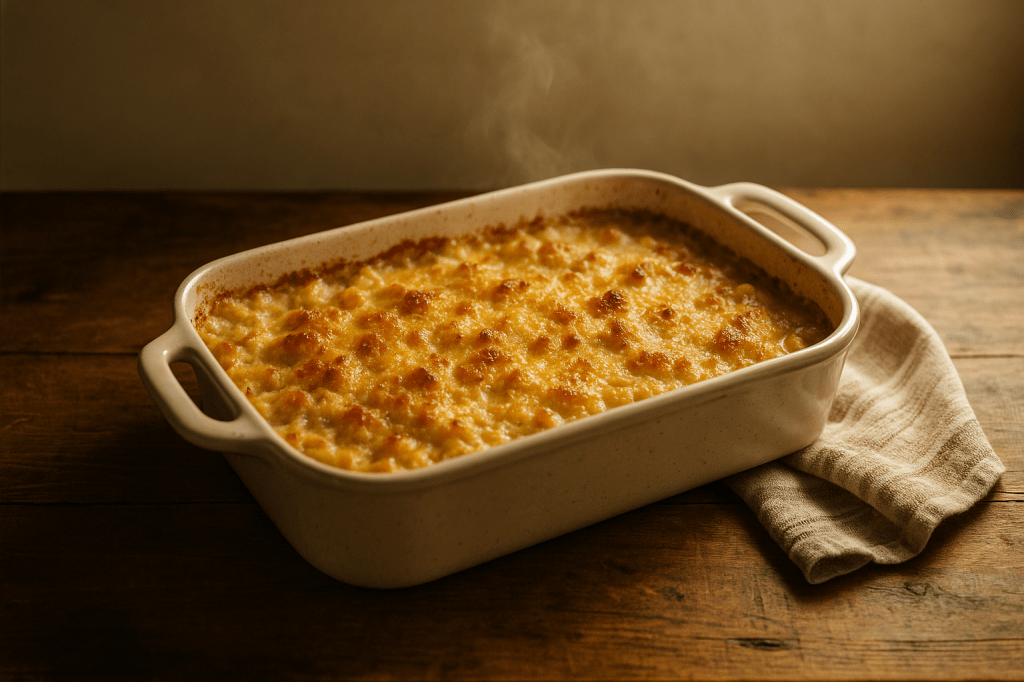
    Large families, tight budgets, and long days demanded creativity. You learned to make things that filled the space—both in the belly and in the heart. And that’s where casseroles came in. They were the unsung heroes of survival: layered, forgiving, endlessly adaptable. Casseroles didn’t judge you for being poor. They rewarded you for being resourceful.

    Everyone had their version. Some made them creamy with soup and cheese; others baked them dry and crisp on top. You could throw in whatever you had—no shame, no rules. Maybe that’s why I still love them. They remind me that abundance isn’t about what’s on the table—it’s about who’s gathered around it.

    Even now, I see casseroles for what they are: a working-class masterpiece. Budget-friendly, easy to make, and rich in the kind of flavor only struggle can season. They fed the tired, the hopeful, and the ones just trying to get through another week. They turned scarcity into comfort, and comfort into something close to gratitude.

    And among them all, one dish reigns supreme—The tuna casserole.

    There’s nothing glamorous about it. Just noodles, canned tuna, soup, and maybe a handful of frozen peas if you had them. But when it came out of the oven—bubbling, golden, smelling faintly of warmth and memory—it was enough. Enough to feed five. Enough to quiet the noise of hunger. Enough to make the world, for a few minutes, feel merciful.

    It wasn’t luxury that kept us going; it was the quiet faith that one can of tuna, a few noodles, and some love could be enough. Even now, it still is. For less than ten dollars, you can make a meal that hums with history—a dish that has fed generations without needing more than it asks for.

    That’s what I think about now, every time I pull a casserole from the oven. The weight of the pan in my hands feels heavier than it should. Maybe it’s not just the food—it’s the memory, the repetition of an act passed down from one generation to the next. Each time we stir, layer, and bake, we’re participating in something bigger than the recipe.

    We’re reminding ourselves that we come from people who made enough from almost nothing.

    And that, even in times like these, might be the most nourishing meal of all.

    This piece is part of The $10 Meals Collection—The recipes and reflections that sustained us when the world gave us little. Because food, at its best, has never been about wealth—it’s been about survival, love, and the quiet grace of making enough.

    Kyle J. Hayes

    kylehayesblog.com

    Please like, comment, and share

    Resources for Hard Times

    If you’re looking for practical help, food support, or community resources, you can visit the Salt, Ink & Soul Resources Page.

    👉 Resources for Hard Times