Salt, Ink & Soul — Humanity Through Food Series
There’s a certain hush that falls after Thanksgiving — not the fullness or fanfare of the holiday itself, but a softer, more settling quiet. The kind that wraps around a home like a warm blanket. The kind that whispers that the celebration may be over, but the comfort isn’t.
Because today is when the real magic begins.
Today is the day the leftovers come alive.
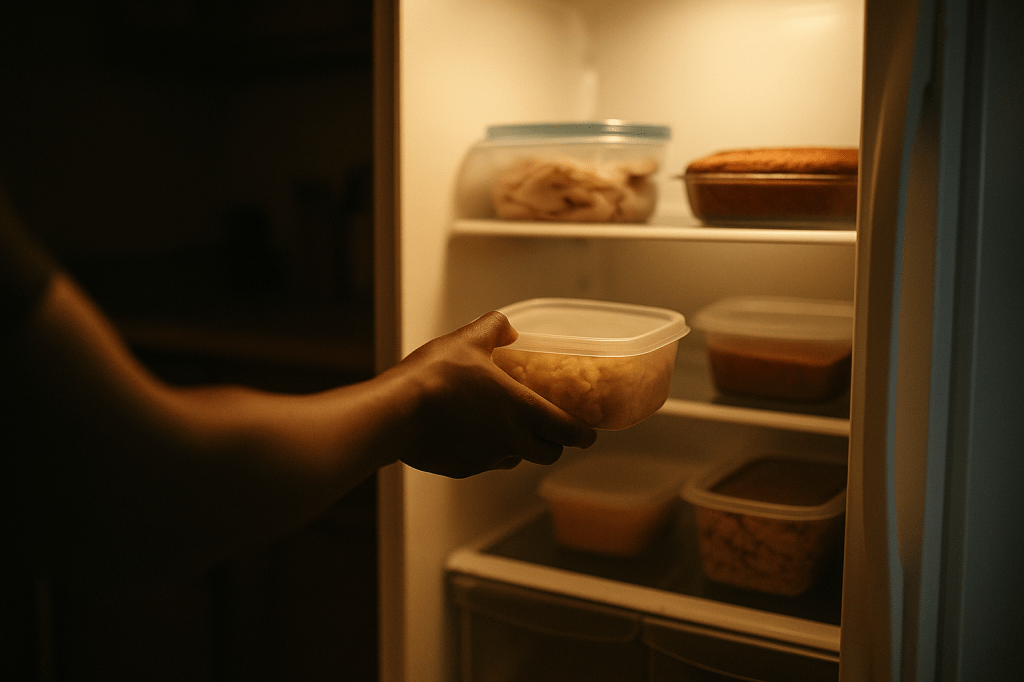
The fridge becomes its own little universe of possibility — containers lined like tiny promises. Dressing that deepens overnight, turkey that’s ready to reinvent itself into a dozen different meals, pound cake that turns into breakfast without anyone questioning a thing. Leftovers are the afterglow of a holiday well-lived, and maybe even better lived the day after.
For those of us raised to stretch meals like muscles, leftovers weren’t just “extra food.” They were reassurance. Security. A quiet kind of abundance that steadied you through the next few days. Maybe even next week.
Leftovers meant:
We’re okay. At least for now.
There’s a joy to leftovers that feels almost childlike — the thrill of opening the fridge and imagining what new creation you’ll craft from what remains.
Turkey and rolls?
That’s a sandwich ritual.
Dressing and gravy?
That’s comfort in a bowl.
Macaroni and cheese?
Somehow it gets better every time it’s reheated — nobody knows the science, but nobody questions it.
In a world obsessed with novelty, leftovers teach us a quieter truth:
There is beauty in returning to what you already have, in transforming what remains, in finding comfort in the familiar.
The feast is flashy.
The leftovers do the real work.
And then there’s the kind of generosity that only shows up after the plates are cleared — the people who send you home with more than you expected, more than you asked for, maybe even more than you felt worthy of receiving.
The friend who packs you a dessert “just in case.”
The auntie who fills your container until the lid strains.
The host who insists you take another tray, their eyes saying what words never do:
I want you fed.
I want you steady.
I want you to be cared for when you walk out that door.
That is its own kind of love.
A quiet, intentional love that doesn’t perform — it provides.
Sometimes the food you bring home is better than anything you ate at the table, not because of the taste, but because someone wanted you to have it.
Leftovers can be a love language, too.
If the holiday feast is the performance, the leftovers are the truth.
They reveal:
• what was made with abundance
• what was shared freely
• what was loved most
• what people wanted you to take with you
• and what gets better when it rests
Leftovers tell the story of a household — the real version. The version where people quietly look out for each other. The version where meals stretch because life requires it. The version where comfort doesn’t disappear once the guests go home.
Leftovers tell us that survival doesn’t always look heroic.
Sometimes it looks like enough food for tomorrow.
Sometimes it looks like mac and cheese after a long day.
Sometimes it looks like a pound cake eaten slowly because it feels like a blessing wrapped in foil.
Leftovers aren’t scraps.
They’re gifts.
Gifts of ease.
Gifts of warmth.
Gifts of a holiday that lingers.
Gifts from people who fed you in more ways than one.
They carry the flavor of yesterday into today.
They soften the week ahead.
They remind you that abundance doesn’t always roar —
sometimes it whispers from behind a refrigerator door, waiting for you to reach in and begin again.
Because leftovers aren’t just evidence of what you had.
They’re evidence of what still remains.
And sometimes?
That’s more than enough.
Kyle J. Hayes
kylehayesblog.com
Please like, comment, and share
Resources for Hard Times
If you’re looking for practical help, food support, or community resources, you can visit the Salt, Ink & Soul Resources Page.
 Salt,Ink, & Soul