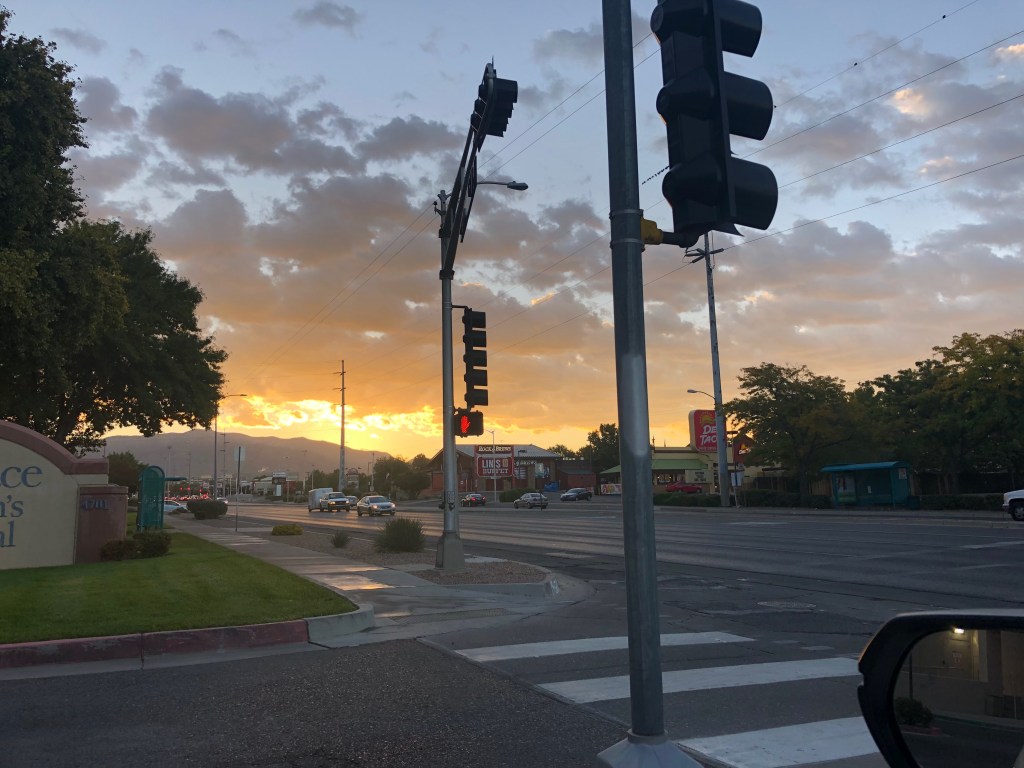
I do not go out as much as I should. I have learned to live with the quiet corners of my home, to accept the stillness as both refuge and weight. The city’s hum, with its restless people and anonymous noise, is sometimes too much—like standing in a crowded room where the air feels claimed before I can breathe it in. Out there, in the public world, I sometimes feel like I am trespassing on a story that was not written with me in mind.
And yet, some roads call to me.
I am from farm country, where the land stretches wide enough to hold every thought you’ve been avoiding. Out here, beauty is not a spectacle but a constant, a birthright of the horizon. The sky spills itself in all directions, unapologetic, while fields—golden in some seasons, green in others—move gently under the wind’s persuasion. You learn, if you grow up here, that beauty is not always something you chase. Sometimes it is something you stand still for.
But when the itch for movement comes, when the air in my lungs feels stale from sameness, I take to the road, not for the chatter of tourist shops or the curated charm of main streets, but for the wide‑open arteries that connect this land’s beating heart.
Once, the road took me to Santa Fe. The church stood there in quiet defiance of time, its walls holding centuries the way the land holds roots. I didn’t linger. I didn’t wander through galleries or sip coffee in some sunlit corner café. I came for the church, and once I had seen it—once I had my proof in the form of photographs—I left. It wasn’t a snub to the city. It was more like an instinct: I had come for one truth, and once it was in my hands, I needed the road again.
The next pull was Taos, where I saw the earthship homes—structures like prayers whispered into clay. They are born of the land and return to it, designed for self‑sufficiency, for a way of living that doesn’t ask the earth for more than it can give. I toured them, let my hands trace the walls, and wondered how many of us truly know how to live with the earth instead of on it.
On my way back, I stopped at the gorge. They call it breathtaking, but “breath‑stealing” is closer to the truth. One moment you are on solid ground, and the next the earth has opened its jaws before you, deep and indifferent. I felt my stomach fall, my body pull back. It was too much—too wide, too high, too close to the idea that we are small and fragile. That was the end of my trip. I let the road fold back into itself and carry me home.
There are other routes in New Mexico, I’m told. Places where the land tells its own version of scripture—mountains that seem older than time, desert plains that remember the tread of people who came long before us. I want to see them. Not for the itinerary or the postcard moment, but for the quiet it might stir in me. For the way the road, with all its curves and stretches, might teach me something about moving forward even when the destination is unclear.
The truth is, I am not searching for new places as much as I am searching for new ways to inhabit myself. Each mile is less about escape than about arrival—the slow unfolding of who I am when I am far from the rooms that have learned my silence too well.
So if you know the roads in New Mexico—roads that are not just scenic but soulful, roads where the wind speaks and the earth listens—I am listening too. Because the journey is never just the land you cross. It is the terrain you carry inside you, waiting to be mapped.
By Kyle J. Hayes
kylehayesblog.com
Please like, comment, and share
 Salt,Ink, & Soul
Leave a comment