Author: Kyle Hayes

  • U2’s The Joshua Tree: When Pop Music Reached for Something Higher

    U2’s The Joshua Tree: When Pop Music Reached for Something Higher

    It’s not supposed to feel this deep. It’s pop. It’s not supposed to carry this much weight, not supposed to stir this much longing. Pop is supposed to be light. Easy. Disposable. Something you hum along to in the car, something that moves through you without leaving a mark.

    No one told U2 that.

    Or maybe they knew, and they simply refused to obey the rules.

    Because The Joshua Tree isn’t just pop. It’s a landscape. It’s atmosphere. It is wide-open spaces and desert highways, rolling thunder, and quiet reckoning. It does what great music is supposed to do—it makes you feel and think, and it does both before you even realize it’s happening.

    And maybe that’s why this pop album hits harder than it has any right to.

    Something is aching in Where the Streets Have No Name. In the way, Bono sings like he’s searching for something just out of reach, something desperate in how the guitars shimmer and build.

    Then comes I Still Haven’t Found What I’m Looking For.

    Suddenly, the album no longer feels like pop.

    This is something else—something rooted in tradition, something older than the rock itself. This is gospel. The way the chords rise, and the choir sweeps in behind Bono’s voice is unmistakable. And not gospel in the sense of imitation, but gospel in spirit. This is the sound of yearning, the sound of faith wrapped in doubt, the sound of a man lifting his hands toward heaven even as his feet stay planted firmly on the ground.

    And that’s the brilliance of The Joshua Tree.

    Because it reflects the ’80s—the tension, the longing, the searching—it reflects America through outsiders’ eyes, seeing its promise and brokenness. It demonstrates the feelings people don’t always talk about—the spiritual exhaustion, the weight of time, the quiet, relentless ache of wanting more but not knowing exactly what more is.

    And that’s what makes The Joshua Tree great.

    Because it is pop, yes. But it’s also something more profound. Something truer.

    Something that reaches.

    And thank God nobody told them otherwise.

    By Kyle J. Hayes

    Please like, Comment, and subscribe

    #U2 #TheJoshuaTree #MusicAsResistance #AlbumReflection #RockHistory #EchoVerseNarratives

  • So It’s Me and Cake Again

    So It’s Me and Cake Again

    A Reflection on Pound Cake, Memory, and Soul

    There’s something quiet and personal about returning to a kitchen after a small failure. You remember the last time—how it crumbled, how you forgot the parchment, how it fell apart before it ever came together. But you also remember the taste, the intention, and the lesson. That’s where this began.

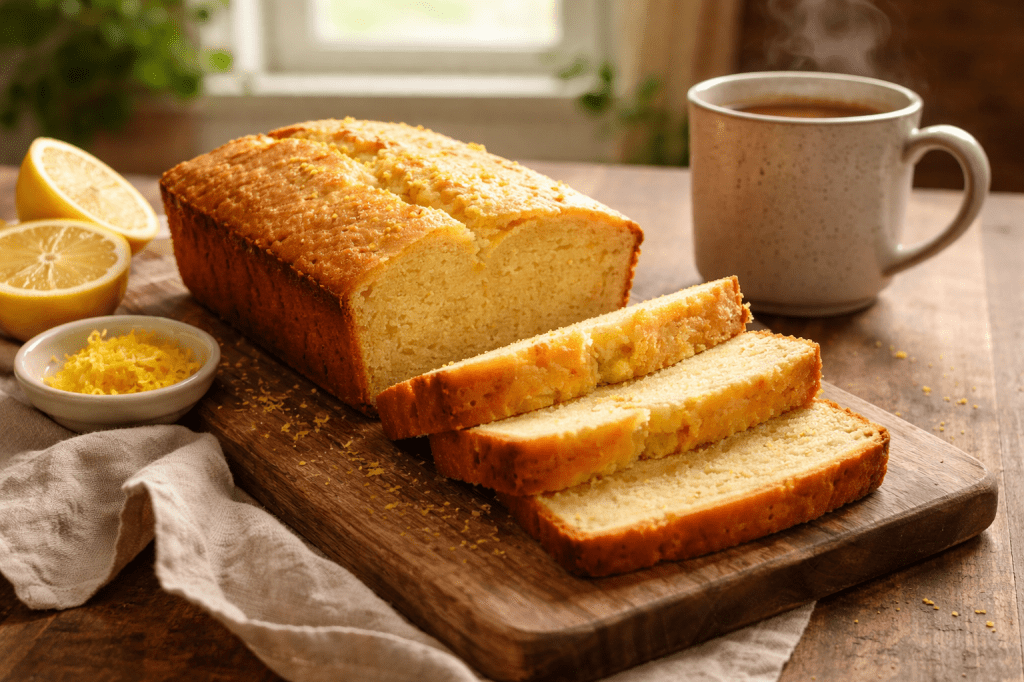
    So it’s me and cake again. But this time, I kept it simple: a pound cake, humble in name but rich in history. I didn’t chase complexity—I honored instinct. I moved with the memory of what went wrong last time and the hope that this time, it might go right. It’s not perfect. It’s just real.

    I made adjustments, measured the flour carefully, lined the pans, and whispered thanks to the ancestors. I didn’t use anything fancy—just what I had. And that, I imagine, is exactly how it began generations ago. Our people didn’t bake from abundance; they baked from necessity, love, and spirit—from what was on hand. And somehow, what they made was enough—sometimes more than enough.

    This time, I tasted the batter and had to pause. It was everything: smooth, sweet, gently spiced with nutmeg and cinnamon, lifted with a little lemon. It was the kind of batter that made you wonder why we even bother baking it at all. I almost didn’t—almost just sat at the counter with a spoon and a smile.

    But I finished it. I poured it into the pan, slid it into the oven, and let the scent remind me who I am.

    When it came out—cracked top, deep golden edges—I knew I’d done something right, not just in the measurements, but in the meaning. I had baked something that nodded back to the past while standing firm in the present. I made a cake with my hands, memory, and heart.

    It wasn’t about impressing anyone. It was about honoring where I come from—a kitchen without frills, a recipe born of survival, a dessert passed down not through written cards but through repetition, rhythm, and watching someone you love beat butter and sugar until it sang.

    That’s what soul food really is. It’s not the trending dishes on Instagram. It’s the small, sacred rituals in quiet kitchens. It’s using what you have and turning it into something worthy of memory. It’s the story inside the bite.

    So yes—it’s me and cake again. And this time, I came correct. Not because I had to prove anything but because I remembered what matters: presence, patience, and the power of making something from nothing.

    This cake?

    It’s more than dessert.

    It’s inheritance.

    It’s healing.

    It’s home.

    Want the recipe I used?

    Let me know in the comments or subscribe below.

    By Kyle J. Hayes

    Please Like, comment, and subscribe.

  • A Place to Sit Still: Birthday Reflections, Burgers, and Becoming Social Again

    A Place to Sit Still: Birthday Reflections, Burgers, and Becoming Social Again

    Last night, I went out.

    Not on the day of, my birthday had come and gone, as I’d hoped it would, quiet and unbothered.

    But I’ve learned that the people in my life now don’t take kindly to silence.

    They don’t take “I’m okay” at face value.

    They don’t let me disappear the way I used to.

    So, a few days later, they pulled me out—not with pressure, but with presence.

    Another group of close friends who’ve decided they’re going to keep me in the light,

    even when I’ve learned to find safety in the shade.

    It wasn’t a big thing.

    It never has to be.

    Just a dinner.

    An excuse to wear something better than the soft armor of sweats and a hoodie.

    A reason to put on real pants, brush off the nice watch, and step into the world looking like someone ready to be seen,

    even if he isn’t.

    We went to BJ’s Brewhouse.

    Not my spot—but close enough.

    A place I’ve been to before, one of the few I feel okay in.

    Large, yes. Public, yes.

    But somehow, it doesn’t feel like a spotlight.

    It feels like a corner where you can sit, breathe, eat, and maybe even laugh a little.

    One of the things I’ve always noticed—and quietly appreciated—is how BJ’s handles space.

    Most places cater to the groups.

    The couples.

    The table-for-fours and “Is anyone else joining you?” assumptions.

    But BJ’s?

    They’ve got single tables.

    Not shoved at the bar.

    Not wedged between a high chair and the kitchen swing doors.

    Actual tables—small, functional, intentional.

    They don’t ask why you’re alone.

    They just let you be.

    I can’t explain how rare that is.

    Because when you’re out alone, you don’t just carry solitude.

    You carry other people’s stares.

    The suspicion. The pity. The questions.

    BJ’s doesn’t give you any of that.

    They just give you a seat.

    And sometimes, that’s all a person really needs.

    The staff?

    Cheerful, engaging—yes.

    But never intrusive.

    The kind of servers who know when to smile and when to simply refill your water without breaking the spell of conversation.

    That matters more than people know.

    In Albuquerque, we have breweries like some places have churches—on every corner, every flavor, and every crowd.

    But BJ’s holds its own.

    I don’t drink much.

    Just a light beer to prime the taste buds,

    to keep the appetite sharp, not spoiled.

    Something to mark the occasion without blurring it.

    I ordered the jalapeño burger.

    Spice sharp enough to remind me I’m still alive.

    Messy enough to keep things grounded.

    A good burger doesn’t pretend.

    It tells the truth.

    And this one did.

    After that came the brownie.

    Chocolate. Dense. Almost obscene in its richness.

    One of those desserts that makes you pause halfway through—not because you’re full,

    but because you need a moment to respect it.

    It was indulgent.

    And it was perfect.

    We ate. We talked.

    I laughed more than I expected to.

    And in the low hum of that restaurant, surrounded by people who insisted I still belonged to the world,

    I felt something I hadn’t felt in a while:

    Comfort.

    Not the kind you fake for other people.

    The real kind.

    The kind that says you don’t have to perform here.

    My old spot closed a while ago.

    The place I used to go when I wanted to be alone but not lonely.

    The place where the servers knew me, and I knew the menu by heart.

    When that door shut for good, I stopped going out.

    But maybe—just maybe-I ‘ve found a new one.

    Not because it’s perfect.

    But it makes space for people like me.

    People who don’t always feel right in crowds.

    People who sometimes need a small table and a quiet corner to feel human again.

    It’s not just about the food.

    It never was.

    It’s about finding a place in the world where you can exist as you are—

    birthday or not.

    By Kyle Hayes

    Please Like, Comment and Subscribe

  • Anywhere but Nowhere: On Driving While Black in the Land of the Free

    Anywhere but Nowhere: On Driving While Black in the Land of the Free

    I own a nice vehicle.

    The kind that hugs the road like a whisper and hums like it knows where it’s going.

    It’s the kind of SUV that should be free.

    Built for long stretches of empty highway and distant horizons.

    But it sits mostly still.

    It idles in the garage.

    It moves through town and back,

    But not out there.

    Not far.

    Because while it can take me anywhere, I go nowhere,

    the country will not let me forget who I am while driving.

    I used to move without worry.

    Back when I was younger, maybe more foolish, perhaps just more free.

    Back when I’d take off cross-country with nothing but a map, a CD wallet, and a crooked smile.

    I didn’t think twice about what county I was in, or whose land I was rolling through.

    But age teaches you what experience doesn’t let you forget.

    It teaches you that being a Black man in a nice car is still a flag.

    Still a reason to be stopped.

    Still a reason to be questioned.

    Still a reason to be followed, harassed, or worse—disappeared.

    I’ve had the thoughts.

    You know the ones.

    What happens if I stop in the wrong place?

    What if I need gas in the wrong town?

    What if I pull over in the wrong stretch of highway with no shoulder or witnesses?

    What if I encounter a police officer who feels like proving a point?

    What if they plant something?

    What if I reach too fast?

    What if I say too little or too much?

    What if I’m told to get out of the car and don’t make it to the next sentence?

    These aren’t dramatic hypotheticals.

    These are possibilities.

    Probabilities, even.

    Because Black freedom in America has always come with asterisks.

    Because a license and registration don’t mean much when fear enters the room.

    Because we still live in a country where a Black man in a nice car is a contradiction that law enforcement wants to solve.

    And this fear isn’t new.

    It’s passed down.

    Inherited like a scar.

    In another era, we had something called the Negro Motorist Green Book.

    A quiet lifeline printed on pulp and ink.

    A book of safe places—if any such place ever existed.

    Gas stations where you wouldn’t be chased off with a shotgun.

    Hotels where you could sleep without looking over your shoulder.

    Restaurants where you’d be served a plate and not a stare.

    It was more than a travel guide.

    It was a Black atlas for survival.

    And now I find myself decades later, carrying the same questions in my gut.

    Wondering how far I can go before someone decides I’ve gone too far.

    Sometimes I wonder if it’s paranoia.

    If I’m being unreasonable.

    If I’ve let the headlines and hashtags shape my fear.

    But then I remember names.

    Not just George or Philando or Sandra.

    But names that never made the news.

    Names whispered in family kitchens.

    Stories told with sighs.

    Cousins who had “bad encounters.”

    Uncles who came home changed.

    It’s not paranoia if it keeps happening.

    It’s not irrational if the system was built this way.

    So I fly.

    I fly because in the sky, I have less chance of becoming another roadside ghost.

    I fly because TSA might be annoying but rarely ends in blood.

    I fly because the badge at the gate doesn’t come with a gun and a grudge.

    Still, the road calls me.

    Still, there’s something sacred about the open highway.

    Something spiritual about Black movement—unfettered, unapologetic, unbothered.

    That may be why I downloaded a new app today.

    A modern Green Book.

    A map of safe stops, safe places, safe Black-owned spaces.

    It may be enough.

    Maybe not.

    But I want to believe again.

    I want to believe that freedom can exist beyond my driveway.

    Because a car that can go anywhere

    deserves a country where that promise is true.

    And so do I.

    By Kyle Hayes

    Please like, comment, and share

    #DrivingWhileBlack #ModernGreenBook #BlackMobility #FreedomAndFear #BlackVoicesMatter

  • The Echo I Didn’t Expect: Kendrick, Taylor, and the Sound Between the Lines

    The Echo I Didn’t Expect: Kendrick, Taylor, and the Sound Between the Lines

    First, let me say this plainly: I am a Kendrick Lamar fan.

    Not the surface kind.

    Not the playlist kind.

    The kind who listens to the whole album, in order,

    Who waits for the videos.

    Who digs through lyrics like scripture, pausing, rewinding, sitting with bars like they were written for my memory alone.

    His music has never been just music to me.

    It’s been diagnosis.

    It’s been a protest.

    It’s been a mirror, cracked and shaking, but still reflecting something I needed to see.

    So when the Great Rap War of 2024 came like thunder,

    I stayed close.

    Not just for the spectacle, but for the weight.

    Because when Kendrick Lamar enters a war of words, it’s never just a diss.

    It’s a dissection.

    One night, long after the storm passed and the silence settled, I chased ghosts on YouTube.

    The way one does when sleep won’t come, and the truth is still humming in the walls.

    And there I stumbled across something unexpected:

    A page by Anthony Aiken Jr. (youtube.com/@AnthonyAikenJr).

    What he offered wasn’t commentary—it was archaeology.

    He unearthed not just Kendrick’s lyrics but their architecture, the cultural echoes, and one thing I never saw coming:

    Taylor Swift.

    Let me confess: I had never made that connection.

    In my world, Taylor Swift lived somewhere else.

    Somewhere, polished, pink, and distant from the cracked pavement where Kendrick built his kingdom.

    But Aiken pulled threads I hadn’t noticed.

    Lebron. Kendrick. Taylor.

    At first, it felt strange.

    Then it started to feel inevitable.

    So I did what I always do when I’m unsure,

    I listened.

    I started with a song Aiken mentioned: “Lavender Haze.”

    And I’ll be honest, I did not expect what I heard.

    What I expected was gloss.

    What I got was atmosphere.

    What I expected was pop.

    What I got was texture.

    Buried in the haze was a name I recognized, Sounwave.

    The sonic architect behind so much of Kendrick’s world.

    And there, floating above the fog of synth and softness, was Sam Dew,

    his voice cutting through like a whisper you didn’t know you needed until it arrived.

    In that moment, Taylor Swift wasn’t just Taylor Swift.

    She was something else.

    She was connected.

    It’s easy to draw lines between artists when the culture insists on fences.

    When the industry tells us who belongs to which genre, who speaks for what struggle, and who owns which sound.

    But music doesn’t obey boundaries.

    It bleeds.

    And if Kendrick taught me anything, it’s to listen deeper.

    Not just for bars.

    But for buried intention.

    So I kept listening.

    And I will keep listening.

    Not because I’m suddenly a Swiftie,

    but because I now know she is a lyricist.

    And if I missed this, what else have I missed?

    There’s a lesson in all this: something about staying open,

    about not letting genre, fame, or image keep you from recognizing truth when it sings.

    Because somewhere between Mr. Morale and Midnights,

    between “Not Like Us” and “Lavender Haze,”

    It is a space I didn’t know I needed,

    a space where craft speaks louder than category.

    So I’ll start again.

    Just like I do with every Kendrick album.

    Because meaning isn’t always found on the first listen.

    Sometimes it waits for you in the haze.

    By Kyle J. Hayes

    Please like, Comment, and subscribe

  • Can’t Slow Down: Lionel Richie and the Memory That Belongs to Me

    Can’t Slow Down: Lionel Richie and the Memory That Belongs to Me

    I did, in fact, listen to Can’t Slow Down again.

    But the truth is, I didn’t need to.

    The moment the first notes played, it was less about sound and more about memory.

    Because there are albums that remind you of a time,

    and then there are albums that are the time.

    This one didn’t gently carry me back.

    It yanked me past the clock, past the calendar, into that unmistakable, synth-saturated moment called the mid-80s, when emotion was worn loud and love songs had teeth.

    There’s a song on this album called “Hello.”

    And yes, Adele has a version by that name.

    A beautiful one. A powerful one.

    But this one is mine.

    And if I show you an image and say it comes from the video  “Hello”, and you say that’s not in Adele’s video?

    I will question our friendship.

    Because there are things rooted so deeply in your coming-of-age soundtrack that they become more than a preference—they become part of your cultural fingerprint.

    And this album, “Can’t Slow Down,” is precisely that.

    Yes, the songs were hits.

    Big ones.

    Songs you couldn’t escape on the radio or cassette decks.

    Songs that filled up living rooms during cleaning day, family road trips, school dances, and Sunday evenings when the sunlight started slipping through the curtains just right.

    But they were more than that.

    They were messages.

    Love letters.

    Reassurances and pleas.

    They were melodies that believed in emotion without apology.

    This was the era before irony became cool, when men could sing about heartbreak without covering it up with jokes or detachment.

    Lionel Richie didn’t sing to impress you—he sang like he needed you to understand.

    What I remembered when I hit play wasn’t just the lyrics or the beat.

    It was the emotional tone.

    The warmth.

    The earnestness.

    The cinematic drama that lives in songs like “Penny Lover” and “Stuck on You.”

    The way “All Night Long” somehow made up an African-sounding chant with such conviction, we all just went with it, laughing, dancing, never stopping to question the lyrics because the rhythm was the language.

    It was the soundtrack to a specific kind of Black joy—joy that knew pain but didn’t center it.

    Joy that was layered. Smooth.

    Polished but deeply human.

    Listening now, I understand why this album is among the 100 greatest albums of all time.

    Not just because of the production.

    Not just because of the hits.

    But because it meant something.

    And it still does.

    This album lives in the part of my memory that refuses to fade—where music and memory blur, where emotions return in stereo.

    It’s the kind of album that made the world stop for a second so you could feel.

    And that’s rare.

    That’s sacred.

    So no, I didn’t need to listen to it again.

    But I’m glad I did.

    Because some records don’t just belong in music history.

    They belong to us.

    To who we were.

    To who we needed to be at the time.

    And that makes them timeless.

    By Kyle J. Hayes

    Please like, comment, and share

    #LionelRichie #CantSlowDown #MusicAndMemory #BlackVoicesMatter #SoulMusic

  • I’m Learning

    I’m Learning

    As I’ve said before—and as most of my close friends know—I’m just now beginning to like my birthday.

    That might sound small. But to me, it’s seismic.

    You spend enough years pretending your day of birth is just another day, and eventually, you believe it.

    You teach yourself not to expect anything; over time, even the presence of joy feels like an intrusion.

    A noise in a quiet room you worked hard to make still.

    But now, because of the stubborn kindness of those around me, it’s changing.

    Slowly.

    Quietly.

    Almost against my will.

    They’ve made my birthday a project.

    Not a celebration, but a mission.

    To make me smile. 

    And I won’t lie—something about that type of caring, unsolicited but insistent, humbles me.

    Still, no amount of cake or candles wipes away the long memory of absence.

    There’s still the question of what was missing.

    And maybe worse, those who never cared enough to say they were wrong.

    A friend told me something today that I can’t get out of my head.

    She said, “Sometimes we don’t get an apology. That’s just reality. That’s why we have faith. God said, ‘Vengeance is mine.’ He will make it right.”

    I nodded.

    But the part of me that’s been carrying silence for decades didn’t just nod.

    It stirred.

    Because she’s right.

    We don’t always get the apology.

    We don’t always get the closure.

    Some of us are walking around with unfinished stories tattooed on our backs.

    We carry them into every conversation, every argument, every strained holiday dinner, hoping—just once—someone might say, “I’m sorry.”

    But they don’t.

    And the truth is…

    Maybe they never will.

    So I’ve been praying.

    I pray for guidance.

    Not for patience—not anymore.

    I used to pray for patience until I realized  God has a sense of humor.

    A disturbing one.

    Because when you ask for patience, God doesn’t hand you peace.

    He hands you people.

    Situations.

    Moments designed to strip you raw.

    I asked for patience and was placed in a line behind an elderly woman who was handwriting a check and logging it in her journal.

    I asked for patience and got coworkers who don’t do their treatments or charting.

    I asked for patience, and God reminded me I still have so far to go.

    So now I pray for guidance.

    Because I know right from wrong.

    But I don’t always know how to move through it.

    Because doing the right thing doesn’t come with applause.

    It comes with silence. With resistance.

    Biting your tongue so hard it leaves marks.

    Smiling at people you know would sell you out for less than you’re worth.

    Standing still while someone else gets away with what you could never do.

    So yes—I smile.

    Because I’ve learned that’s easier for other people.

    And on some days, it’s easier for me, too.

    But it’s not just a smile.

    It’s a shield.

    A sermon.

    A small declaration of war.

    Because inside that smile is the tension between “I’m trying” and “Don’t push me.”

    Because even though I’m praying for guidance,

    Even though I believe God fights my battles,

    Even though I believe vengeance isn’t mine to seek,

    I also think that some people walk too close to the edge—

    And that if I weren’t actively praying,

    I’d push them.

    Into traffic.

    Into silence.

    Into the reflection, they keep avoiding.

    So I breathe.

    I pray.

    I eat the cake.

    I take the hugs I never asked for.

    I thank the people who won’t let me hate this day.

    And when someone asks how I’m doing,

    I say, “Fair.”

    Because I am.

    And I thank God for the strength to keep from doing what I want to do.

    Even if He knows exactly how close I get.

    By Kyle J. Hayes

    Please like, comment, and subscribe.

  • The Gift I Never Asked For (Except One)

    The Gift I Never Asked For (Except One)

    My birthday is tomorrow.

    I don’t dread it, but I don’t celebrate it either—not in the way most people do, not in the way I’ve learned people expect.

    That probably says something about me.

    I imagine it always has.

    I didn’t grow up with the kind of birthdays that get remembered in photo albums.

    There were no decorated cakes, no noisy gatherings, no traditions that wrapped the day in joy.

    What I remember is silence.

    Birthdays went like any other day—quiet, functional, uncelebrated.

    Maybe someone said something in passing.

    Maybe not.

    It wasn’t cruel. Just… normal.

    We weren’t a family that hugged often.

    We weren’t loud with our affection.

    And because of that, I grew up with the kind of relationship to my birthday that you might have to a train passing in the distance: you hear it, you recognize it, but you don’t stop to wave.

    It wasn’t until I got married that birthdays began to take shape.

    My ex-wife refused to let the day go unnoticed.

    She planned parties like she was fighting for my soul.

    Decorations, dinners, full schedules.

    And no matter how uncomfortable it made me feel, she insisted.

    She believed birthdays should be celebrated with loud joy and wide arms, and she took it personally if mine wasn’t.

    To her, celebrating me was an act of love.

    It was like learning a new language I hadn’t asked to speak.

    And even after we separated, that kind of love followed me.

    I’m single again, but I’ve somehow surrounded myself with people who continue that mission.

    My coworkers—kind, relentless, hilarious—have made it their business to celebrate me whether I like it or not.

    They’ve done everything from surprise cupcakes to group lunches to awkwardly sincere birthday cards taped to my monitor.

    They’ve forced hugs, knowing I didn’t grow up with them.

    They’ve insisted on gifts, even after I said I didn’t want anything.

    And still, I smile.

    I say thank you.

    I stand there, arms stiff, trying to remember that this is what care looks like.

    And yet, for all my stoicism, I do make one request.

    Every year, since I’ve known them, without fail:

    Chantilly cake.

    That’s the line I allow myself to cross.

    The one indulgence I name without shame.

    A soft, sweet wedge of joy—light, delicate, touched by berries and memory.

    Not because I need it.

    But because I love it.

    They know that.

    They remember.

    And every year, without asking, they make sure I get it.

    I still say I don’t need anything when people ask what I want.

    It’s not deflection. It’s conditioning.

    When you’ve learned to expect little, asking for nothing becomes your native tongue.

    They always push back:

    “It’s not about what you need.”

    And I nod. I thank them. I accept their kindness as I’ve learned to accept compliments: carefully, quietly.

    Because I still don’t know how to explain that the desire to give is a gift enough.

    That is just the act of remembering, planning, and wanting me to feel loved—that’s the part that undoes me.

    What I’ve learned is this:

    The gift isn’t the gift.

    The gift is that they care enough not to listen to my resistance.

    The gift is the cake, they must be tired of eating every year,

    the smile behind the joke I didn’t know I needed,

    the group hug I’m still learning to stand in.

    Because deep down, there’s a part of me still believes I should be content with nothing.

    And these people—my coworkers and my friends—refuse to let me get away with that lie.

    So yes, I’ll smile.

    I’ll eat the cake.

    I’ll accept the hugs, even if I stiffen slightly.

    And I’ll be grateful.

    Because there’s a quiet joy in being cared for on your own terms—and a deeper, more humbling joy in being cared for beyond them.

    That could be what a birthday really is.

    Not a celebration of age, or survival, or candles.

    But a small, yearly protest by the people around you:

    “You matter. Even when you pretend not to.”

    And maybe—just maybe-I ‘m learning to believe them.

    By Kyle J. Hayes

    Please like, comment, and subscribe.

  • This May Sound Like I’m Angry

    This May Sound Like I’m Angry

    This may sound like I’m angry.

    That’s because I am.

    I’m angry about food.

    But not just food.

    I’m angry about what gets buried with it.

    What we let slip through our fingers.

    What we protect so fiercely that we never get to pass it on.

    Some recipes in families are so tied to memory, and they might as well be spiritual.

    Not written in cookbooks, not on notecards, but in gestures.

    In pinches, pours, and stirs done just so, the things you only learn by being in the room.

    But those rooms are empty now.

    We call it tradition, secrecy, and the selfish need to be the one who gets all the oohs and ahhs at the family gathering.

    To be the keeper of the sacred gumbo, the only one who knows how the sweet potatoes get that crust just right.

    We hoard recipes like treasure, and I get it—maybe it’s the only thing some of us ever had to call our own.

    But it’s not treasure if it dies with you.

    That’s not legacy. That’s vanity.

    And the loss is deeper than ingredients.

    Every time someone passes and their recipe goes with them, we don’t just lose a dish.

    We lose a moment.

    A whole damn lifetime of Sundays.

    Of back-porch stories.

    Of laughing so hard over The Red Kool-Aid and potato salad, you forget how hard life has been for a second.

    Healing as it’s passed hand to hand with every spoonful.

    You know what it’s like to taste a memory?

    To close your eyes and feel the presence of someone who’s been gone for a decade, just because their dinner rolls hit your tongue the right way?

    We lost that.

    Because someone wanted to be special.

    Because someone needed to be seen more than they needed to share.

    And then life happened.

    People fell out.

    Phones stopped ringing.

    The kitchen got quiet.

    And just like that, the recipe is gone.

    And all the meals it ever touched, all the stories it ever summoned—gone, too.

    So yes—hell yes I’m mad.

    Because these aren’t just dishes.

    They’re time machines.

    They’re inheritance.

    They’re how a little Black boy in the Midwest learns about a cousin he never met, not through a photograph, but through how his mama seasons her Greens.

    And we’re letting them vanish.

    We call food “soul” and starve our legacy because we’re too proud, wounded, or petty to pass it on.

    We forget that food was how our ancestors hid love in plain sight.

    That in a world where everything could be taken—freedom, names, land—the ability to make a damn good meal was the one thing they couldn’t steal.

    That’s what we throw away whenever we let a recipe die with a grudge.

    You want to be special?

    Be the one who teaches.

    Be the one who says, “Come on. I’ll show you.”

    Be the one who writes it down—not to post online, but to slip into the hands of the next generation.

    To say:

    This is yours now.

    This is where we come from.

    This is how we survived.

    Because the pot of greens is more than flavor.

    The macaroni isn’t just texture.

    The peach cobbler is not just a dessert.

    It’s home.

    It’s a ritual.

    It’s a reminder of who we were, even when the world tried to make us forget.

    So yes—I’m angry.

    Because we’ve buried too much already.

    I’m tired of funerals where we cry over both the person and the food we’ll never taste again.

    I’m tired of silence being passed off as tradition.

    I’m tired of watching people wait until it’s too late to care.

    If we want our culture to live, we must do more than eat it.

    We have to honor it, share it, teach it, and protect it—not like a secret but like the gospel it is.

    Because in the end, a guarded recipe dies in the dark.

    But a shared one?

    That’s how we stay alive.

    By Kyle J. Hayes

    Please Like, Comment, and Subscribe

  • “What We Remember, We Keep-Alive”

    “What We Remember, We Keep-Alive”

    I had been working on the newest book in my Culinary Crossroads series, where Jamaal was supposed to return home—to the States and the old South.

    I thought it would be simple.

    A return to where it all began.

    A pilgrimage from the polished kitchens of Manila to the front porches, fields, and kitchens that shaped so many of us long before we ever touched a passport.

    I thought I was writing about food.

    But the deeper I dug, the more I realized that it was never just food.

    It was survival.

    It was remembrance.

    It was resistance disguised as Sunday dinner.

    I read everything I could find.

    The recipes were there, sure.

    But what kept catching me, snagging me like thorns on an old fence line, were the traditions.

    Not just what we ate but how we ate.

    Why we seasoned the way we did.

    Why were our celebrations, mourning, and rituals around food and music crafted in ways no cookbook could fully explain?

    It started long before we were “we” in any way we would recognize now—

    on the plantations,

    where bits and pieces of fading memories were passed down by those brought here, enslaved, stolen, stripped, but not erased.

    They blended what they remembered with what little they had.

    Cornmeal. Greens. Off-cuts and castoffs.

    They made necessity taste like something more than survival.

    They made it taste like home.

    And over generations, through sheer will and stubborn brilliance, we built something uniquely ours.

    Not just in the food but in the music,

    the way we buried our dead,

    the way we married our loved ones,

    and the way we danced when the sun went down and the cotton fields emptied.

    These traditions aren’t static.

    They are not museum pieces under glass.

    They are living and breathing things—regional and even tribal, depending on where your people ended up.

    That phrase kept echoing in my mind:

    “Where your people from.”

    The old folks would ask you that when they met you.

    After you named whatever city you lived in now—Detroit, Chicago, Kansas City—they’d look deeper, waiting for the real answer.

    They were talking about the South.

    Not the city, but the state.

    The county.

    The plantation.

    The place that owned your ancestors.

    It was a question about roots.

    (Writing that even now feels like swallowing glass.)

    The place that owned your ancestors.

    So many years later, and it’s still hard to say.

    Still hard to look at without flinching.

    And then came the “Great Migration,” or as some called it, “The Great Exodus.”

    We left with almost nothing.

    No land. No wealth. No easy road.

    But we took what mattered.

    We carried our recipes.

    We carried our songs.

    We carried the parts of ourselves that they could not steal, whip out of us, or erase.

    And for decades, it sustained us.

    Soul Food. Soul Music.

    Names born not in marketing rooms but in living rooms, storefront churches, and kitchens where steam and sorrow rose together.

    And now?

    Now, the word “Soul” feels almost quaint.

    Almost forgotten.

    Funny, isn’t it?

    What slavery couldn’t kill, freedom quietly erased.

    In chasing new beginnings, we risk losing the old songs.

    The taste of real cornbread.

    The sound of a mother’s hum in the kitchen.

    The wisdom tucked into the folds of a handwritten recipe card.

    As I write Jamaal’s story, I realize I’m writing my own.

    Our own.

    The story of a people who carried more than pain.

    We carried genius.

    We carried grace.

    We carried soul.

    And it’s on us—not the history books, not the tourists looking for “authenticity”—to remember what we made from nothing.

    And to keep making it while we still can.

    Before the last song fades.

    Before the last plate is cleared.

    Before the last story goes untold.

    By Kyle Hayes

    Please Like, comment, and subscribe.

    #BlackVoices #MemoryAndLegacy #WeAreOurAncestorsDreams #StorytellingMatters