Yes, I understand what I previously wrote about pumpkin spice.
I stand by it.
I have watched fall arrive in stores with all the subtlety of a marching band. Pumpkin-spice coffee. Pumpkin-spice cereal. Pumpkin-spice cookies. Pumpkin-spice things that, quite frankly, never asked to be pumpkin-spiced.
I noticed it. I commented on it. I may have even mocked it a little.
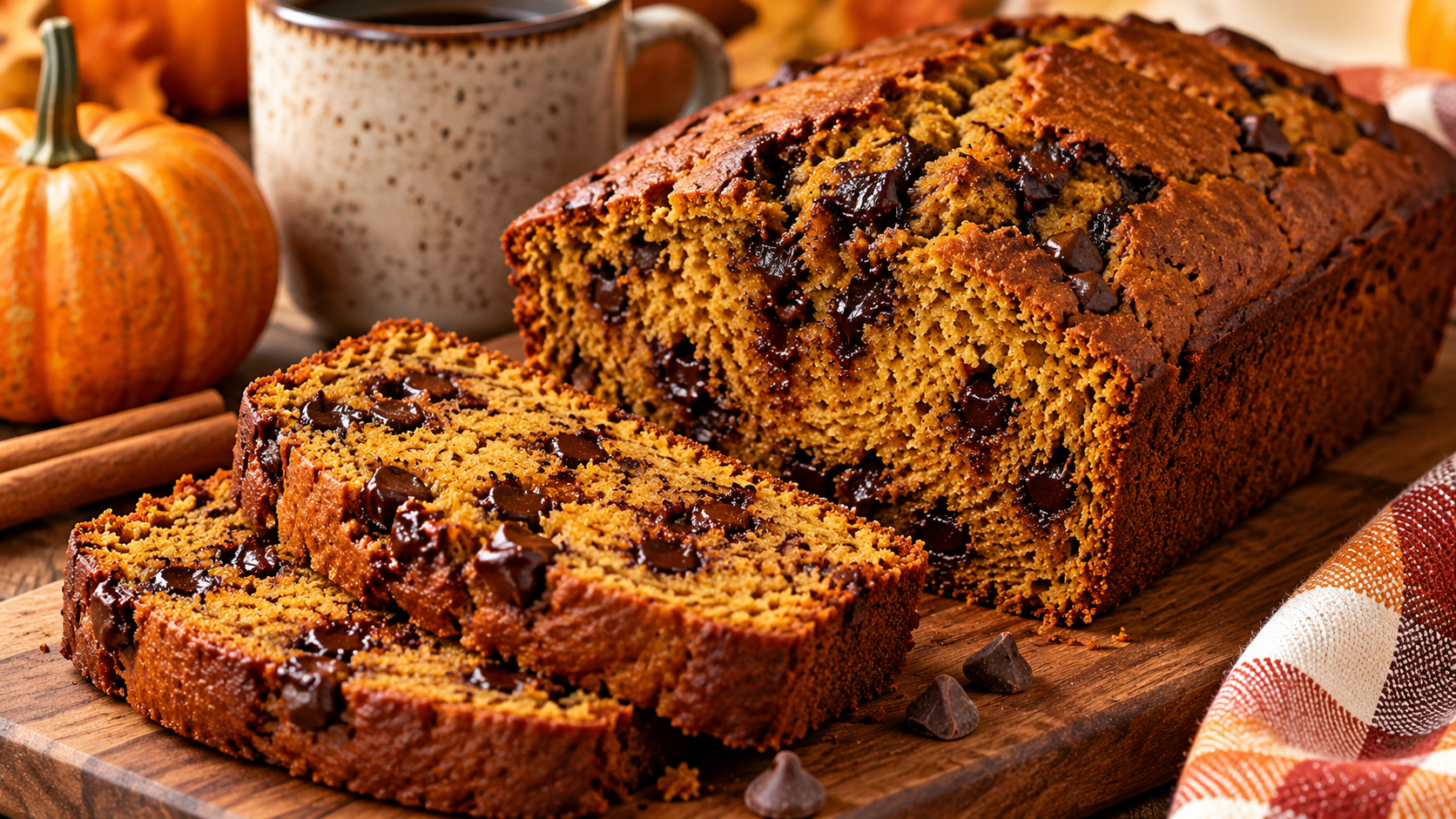
Then I made the mistake of staring at all those pictures.
Apparently, if you look at pumpkin long enough, pumpkin looks back.
Because somewhere between laughing at the annual pumpkin-spice invasion and going about my business, I started craving pumpkin bread.
So here we are.
At least I can defend myself a little: this version is sugar-free.
I used Brown Sugar Swerve and monk fruit for the sweetness, then added Lakanto monk fruit and erythritol-sweetened chocolate chips because pumpkin bread and chocolate seemed like a perfectly reasonable compromise between resisting the pumpkin-spice onslaught and surrendering to it completely.
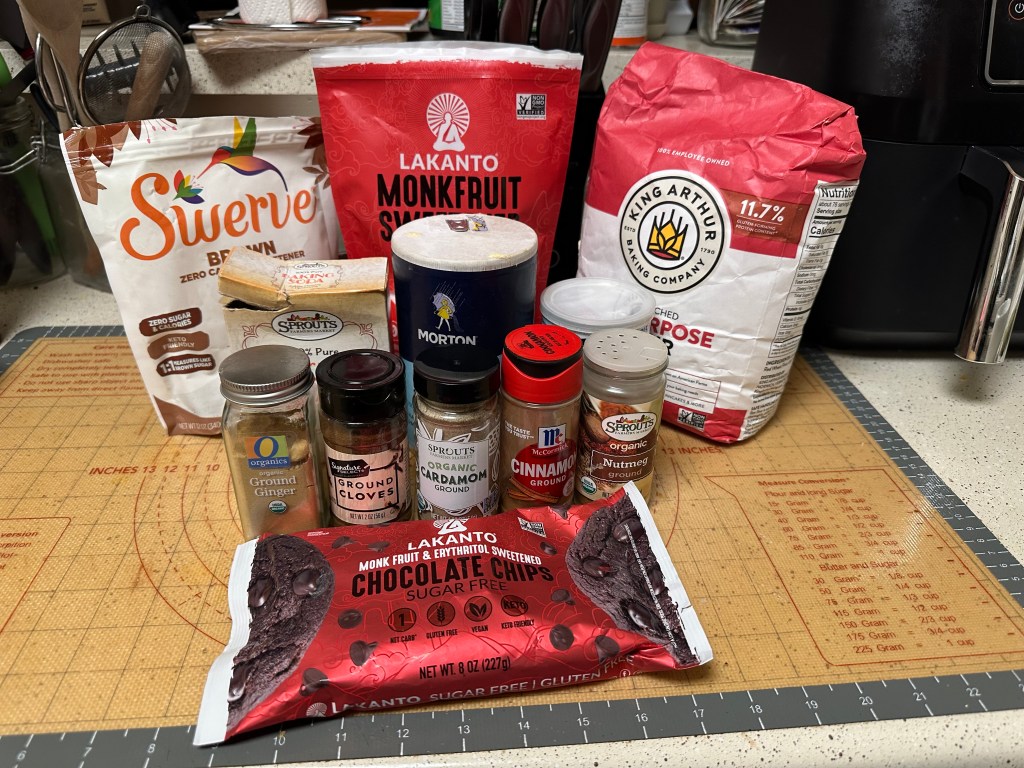
Most of what went into today’s pumpkin bread. Some other ingredients apparently missed picture day.
And about those chocolate chips: yes, I gave you a measurement in the recipe.
Consider that a suggestion.
If your hand slips and a few more find their way into the bowl—or quite a few more, like mine did—I see no reason to correct it.
One other change I wanted to make.
Cardamom.
It isn’t necessarily the first spice people think of when they think about pumpkin bread, but I wanted something sitting quietly behind the cinnamon, nutmeg, ginger, and cloves. Not enough to announce itself. Just enough to make you stop for a second and wonder what you’re tasting.
A quarter teaspoon was enough.
Then the loaf went into the oven.
And that was pretty much the end of my resistance.
Some smells don’t need a calendar.
Pumpkin, cinnamon, nutmeg, ginger, cloves, cardamom, and chocolate warming together in an oven will tell you fall has arrived before you ever look outside.
The smell began moving through the kitchen and into the rest of the house, and suddenly all the jokes I had made about pumpkin spice seemed considerably less important.
Sometimes life makes you eat your words.
Apparently mine come with chocolate chips.
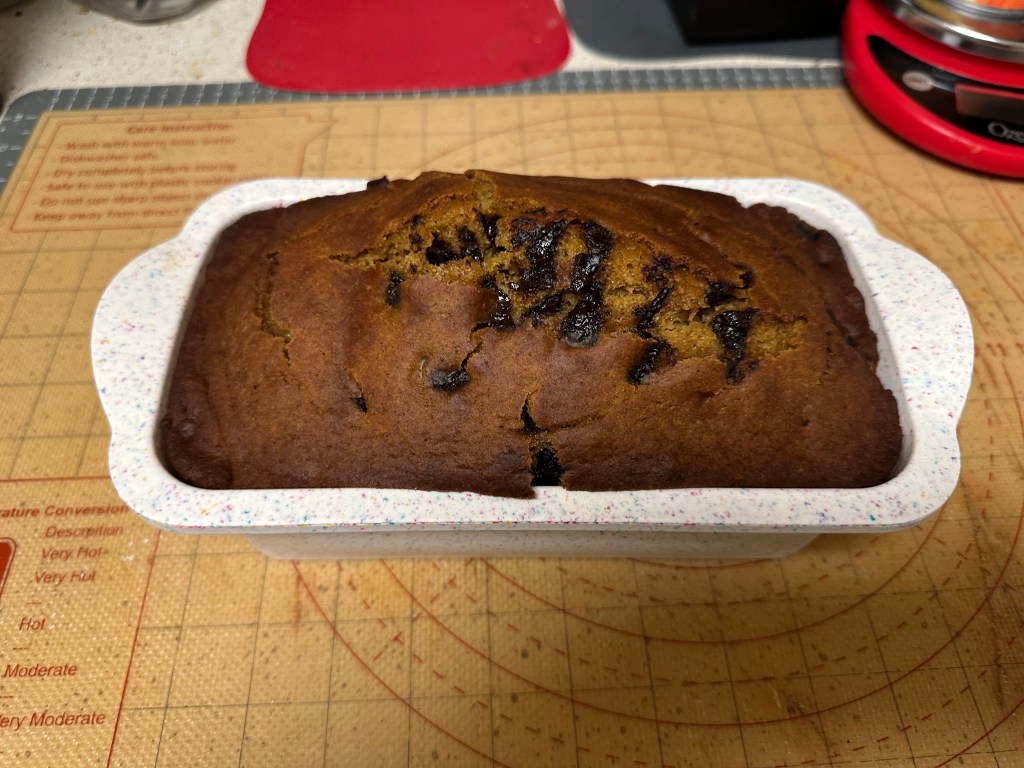
Apparently resistance was futile. Sugar-free pumpkin chocolate chip bread, fresh from the oven—and yes, I added more chocolate chips than the recipe called for.
Sugar-Free Pumpkin Chocolate Chip Bread
Makes: 1 loaf
Pan: 9 × 5-inch loaf pan
Oven: 350°F
Prep time: About 15 minutes
Bake time: Approximately 50–60 minutes
Ingredients
- 1¾ cups (210 g) all-purpose flour
- 1 teaspoon baking soda
- ½ teaspoon baking powder
- ½ teaspoon salt
- 2 teaspoons ground cinnamon
- ½ teaspoon ground nutmeg
- ¼ teaspoon ground ginger
- ¼ teaspoon ground cardamom
- ⅛ teaspoon ground cloves
- 2 large eggs
- 1 cup 100% pumpkin purée — not pumpkin pie filling
- ½ cup vegetable or canola oil
- ½ cup Brown Sugar Swerve
- ⅓ cup granulated monk fruit sweetener — a 1:1 sugar replacement
- ⅓ cup whole milk
- 2 teaspoons vanilla extract
- ½ cup Lakanto Monk Fruit & Erythritol Sweetened Chocolate Chips, or more to taste
Instructions
1. Prepare the oven and pan.
Preheat the oven to 350°F. Lightly grease a 9 × 5-inch loaf pan or line it with parchment paper, leaving a little parchment extending over the sides to make removing the loaf easier.
2. Combine the dry ingredients.
In a medium bowl, whisk together the flour, baking soda, baking powder, salt, cinnamon, nutmeg, ginger, cardamom, and cloves.
The cardamom is intentionally subtle. At ¼ teaspoon, it adds a warm, slightly floral note behind the traditional fall spices without taking over the bread.
3. Combine the wet ingredients.
In a large bowl, lightly beat the eggs.
Add the pumpkin purée, oil, Brown Sugar Swerve, monk fruit sweetener, milk, and vanilla. Whisk until thoroughly combined.
4. Make the batter.
Add the dry ingredients to the pumpkin mixture.
Using a spatula, gently fold everything together just until you no longer see obvious streaks of flour. Don’t overmix. A few small lumps are perfectly fine.
5. Add the chocolate.
Fold approximately ⅓ cup of the chocolate chips into the batter, reserving the remainder for the top.
Or don’t.
As I said earlier, the ½ cup measurement is a suggestion. If you decide your pumpkin bread requires more chocolate, you won’t get an argument from me.
6. Fill the pan.
Transfer the batter to the prepared loaf pan and gently spread it into an even layer.
Scatter the remaining chocolate chips over the top—or however many happen to remain after your interpretation of Step 5.
7. Bake.
Bake for approximately 50–60 minutes, beginning to check the loaf at the 50-minute mark.
Insert a toothpick into the center of the bread, being careful not to mistake a melted chocolate chip for underbaked batter.
The toothpick should come out with a few moist crumbs but no wet batter.
If the top browns too quickly while the center still needs time, loosely tent the loaf with aluminum foil and continue baking.
8. Cool.
Let the pumpkin bread cool in the pan for about 15 minutes.
Remove it from the pan and transfer it to a wire rack to finish cooling.
For the cleanest slices and best texture, let the loaf cool substantially before cutting it.
Whether you actually possess that kind of patience after smelling it bake for an hour is another matter.
Salt, Ink & Soul Kitchen Note
What I like most about this bread may be what you notice least.
The cardamom doesn’t announce itself. It sits behind the cinnamon, nutmeg, ginger, and cloves, adding another layer to something familiar.
Then there is the chocolate.
The Lakanto chocolate chips give the bread little pockets of chocolate while staying true to the recipe’s sugar-free direction. Brown Sugar Swerve and monk fruit provide the sweetness, while pumpkin and oil help keep the crumb soft and moist.
But maybe my favorite part of this recipe is simply how I ended up making it.
I fully intended to stand my ground against the pumpkin-spice invasion.
Instead, I ended up in my kitchen with pumpkin purée, five different spices, a bag of chocolate chips, and a loaf pan.
There may be a lesson in there somewhere about being careful what you make fun of.
Or maybe the lesson is simpler.
Sometimes fall wins.
And sometimes that’s perfectly fine.
Storage
Allow the loaf to cool completely before storing.
Keep it tightly wrapped or in an airtight container at room temperature for about 3 days, or refrigerate it for up to 1 week.
You can also wrap individual slices and freeze them for up to 3 months. Let them thaw at room temperature or gently warm them before serving.
A slightly warm slice with coffee or hot tea is probably all this needs.
Although, considering what happened with the chocolate chips, I’m probably not the person who should be telling anybody when enough is enough.
Please like, comment, and share
Resources for Hard Times
If you’re looking for practical help, food support, or community resources, you can visit the Salt, Ink & Soul Resources Page.