
Category: Reflections

  • The Neighborhood Mom

    The Neighborhood Mom

    For T.S. — my sister, and the Neighborhood Mom to so many.

    Every neighborhood had her.

    Not appointed.

    Not elected.

    Not funded.

    But known.

    She didn’t live in the biggest house. Most of the time, it was the opposite. Paint tired. Couch worn thin. The kitchen light was buzzing like it had something to say. The kind of home that didn’t look like much from the sidewalk — but felt like oxygen once you stepped inside.

    We didn’t call her a social worker.

    We didn’t call her a guardian.

    We didn’t call her a saint.

    We just knew: if things got bad, you could go there.

    I remember walking into a house like that once and being startled — not by silence, but by the opposite. Children everywhere. Some on the floor. Some on couches. Some are half-asleep with homework still open. Shoes by the door that didn’t all belong to the same family. A pot on the stove that seemed to stretch itself every night to feed one more mouth than it should have been able to handle.

    It looked chaotic if you didn’t understand it.

    But if you stayed long enough, you saw the pattern.

    You saw the safety.

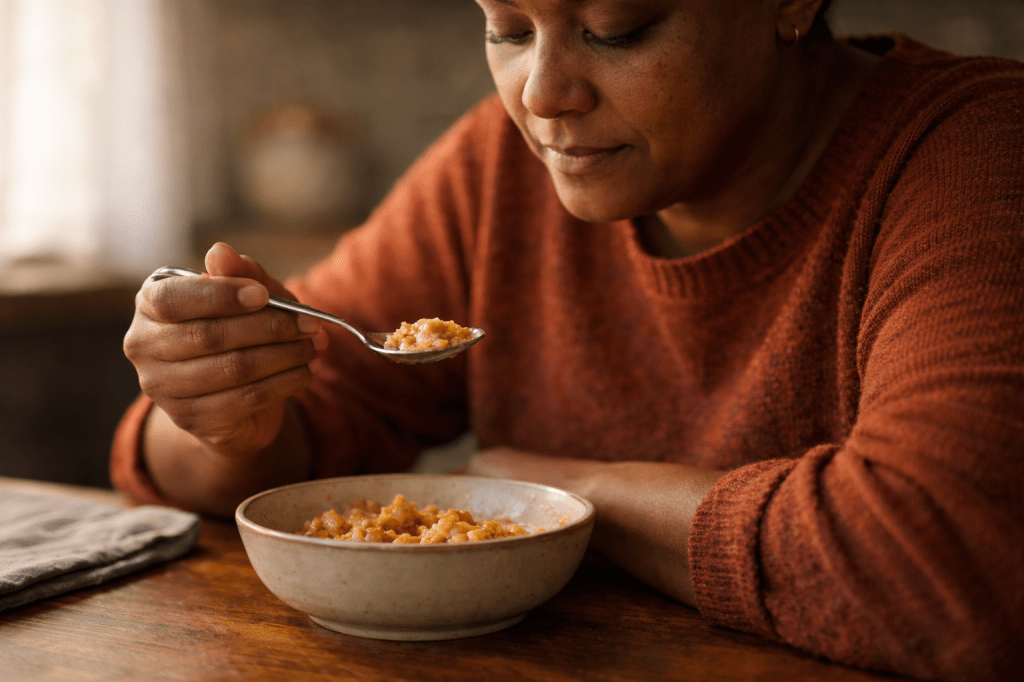
    She wasn’t rich. Sometimes she was barely holding her own household together. Bills late. Refrigerator thinner than she would admit. You could tell by the way she portioned things that she knew how to stretch. How to make a little feel like enough. How to season scarcity until it didn’t taste like embarrassment.

    How she fed so many on so little is still a mystery to me.

    But she did.

    Plates appeared. Clean shirts appeared. Towels were shared. Soap was rationed but never withheld. And at night — no matter how crowded it was — there was always a space cleared for someone who didn’t have one.

    Some of those children came because home was loud in the wrong way.

    Some came because home was silent in the wrong way.

    Some came because there was no home at all.

    She didn’t interrogate the reason.

    She made space.

    In neighborhoods where systems were underfunded and futures were over-policed, women like her were infrastructure. They were the unofficial institutions. The gap-fillers. The quiet counterweights to chaos.

    You could write a thousand policy papers about community stabilization and still miss the fact that sometimes it was one woman’s kitchen table doing the heavy lifting.

    She didn’t have a nonprofit.

    She had a heart that wouldn’t let her turn children away.

    And that kind of heart is not soft.

    It is disciplined.

    Because compassion without discipline collapses under pressure. But she kept showing up. Every day. Every week. Every time a new pair of eyes looked at her from the doorway with that question in them:

    Can I stay?

    And she almost always said yes.

    What we didn’t understand as children was the cost.

    We didn’t see the arithmetic she was doing in her head.

    We didn’t hear the sighs she swallowed.

    We didn’t know how tired she was.

    We only saw the outcome:

    We were clean.

    We were fed.

    We were safe.

    And in neighborhoods where safety was not guaranteed, that was no small thing.

    It’s easy to celebrate the visible heroes — the ones with microphones, the ones whose names are etched in textbooks. But communities are often held together by people whose names never leave the block.

    The neighborhood mom.

    She was not perfect. She had her rules. Her voice could rise when it needed to. She knew who was lying before the lie finished forming. She demanded respect not because she craved control, but because order was the only way love could function in a crowded house.

    That house was not just a shelter.

    It was a rehearsal.

    It taught children what stability felt like, even if only for a season. It modeled what adulthood could look like when responsibility wasn’t optional. It showed that care is not about abundance. It’s about commitment.

    I think about her sometimes when conversations turn to “community breakdown” or “youth crisis.” People talk about statistics. Funding gaps. Cultural decline.

    And you can measure many things.

    But you can’t easily measure the woman who refuses to let children sleep outside.

    You can’t quantify the moral gravity of a person who says, “You can stay here,” when she barely has enough for herself.

    That is not charity.

    That is architecture.

    She built invisible scaffolding around young lives until they were strong enough to stand on their own.

    And maybe the most powerful part is this:

    She did not do it for applause.

    She did not do it for legacy.

    She did it because her heart would not let her do otherwise.

    There are people whose goodness is not strategic.

    It is instinctive.

    The neighborhood mom was one of them.

    As adults, we sometimes look back and realize something uncomfortable:

    We survived partly because of someone else’s quiet sacrifice.

    Because somewhere along the way, a woman with too little decided to stretch herself further.

    And now the question isn’t just about honoring her.

    It’s about becoming her in whatever way we can.

    Not necessarily by opening our homes to a dozen children — though some still do.

    But by asking:

    Where is the open space in my life?

    What safety do I need to provide?

    How can I make “a little” feel like enough for someone else?

    In a world obsessed with visibility, the neighborhood mom practiced invisible greatness.

    She did not trend.

    She endured.

    Kyle J. Hayes

    kylehayesblog.com

    Please like, comment, and share

    Resources for Hard Times

    If you’re looking for practical help, food support, or community resources, you can visit the Salt, Ink & Soul Resources Page.
    👉 Resources for Hard Times

  • Who Gets to Be an Expert?

    Who Gets to Be an Expert?

    Somewhere along the way, the word expert got dressed up.

    It put on a clean apron and started speaking in polished sentences. It learned how to name every acid, every cut, and every technique, the way some people learn scripture—precise, rehearsed, confident. It started arriving with credentials. With ratings. With a camera angle. With a voice that sounds like it already knows it’s right.

    And I’m not here to mock skill. Skill is real. Craft matters. Discipline matters. There’s beauty in someone who has spent years learning a thing until their hands don’t have to think about it anymore.

    But I’ve been watching how authority gets handed out.

    Who gets to hold it?

    Who gets ignored?

    Because I know cooks whose food will stop you mid-bite—not because you’re analyzing anything, not because you’re performing appreciation the way you were taught to, but because something inside you goes quiet for a second.

    Not silence like politeness.

    Silence like recognition.

    That’s the kind of moment I trust.

    My own belief is simple, even if it’s heavy: the people who get to determine who is an expert are the ones who eat and feel that all-encompassing satisfaction and gratitude. The ones who take a spoonful or a bite, and it stops them—not because they’re dissecting ingredients, but because it has touched their soul. Their spirit. Those parts that make us truly us.

    It satisfied their hunger.

    And it blessed their spirit.

    To me, those are the ones who get to decide.

    Not the loudest voice in the room.

    Not the person with the best lighting.

    Not the one who can turn dinner into a performance review.

    The ones at the table.

    Because food, at its honest center, is not a debate. It’s a communion. It’s a small, daily miracle that too many people are forced to negotiate with—money, time, fatigue, scarcity, stress—all of it pressing down like weather. And then someone makes something anyway. Something warm. Something that holds.

    If a meal can do that—if it can steady a person, if it can return them to themselves, if it can make their shoulders drop in relief—what are we really supposed to call the one who made it?

    An amateur?

    A “home cook,” said the way people say less than?

    We live in a world that mistakes visibility for validity. If you can describe what you did in the right vocabulary, you’re treated like an expert. If you can plate it like a magazine cover, you’re treated like an expert. If you can turn the meal into content, into a brand, into a series—then the world hands you the title and nods as if that settles the matter.

    But plenty of the best food I’ve ever encountered wouldn’t survive that kind of spotlight.

    It wasn’t made to impress strangers.

    It was made to take care of somebody.

    And that kind of care has its own standards.

    The best cooks I know aren’t always chasing innovation. Sometimes they’re chasing enough. Sometimes they’re chasing right. Sometimes they’re trying to make sure the child who didn’t eat at school gets something in their belly before bedtime. Sometimes they’re trying to make Sunday feel like Sunday, even when the week has been cruel.

    That’s not romantic. That’s real.

    And if you want to talk about expertise, you have to talk about repetition. The kind that doesn’t look glamorous but builds a person into someone you can trust.

    There is expertise in making the same dish fifty times until you understand its moods.

    Until you know the difference between heat and impatience.

    Until you can tell, by smell alone, when something is about to cross the line.

    There is expertise in cooking with what you have and still making it taste like dignity.

    There is expertise in a kitchen where nobody measures, but nothing is careless.

    And for us—especially in Black kitchens—this is not new.

    Our culture has always carried genius in ordinary containers. We didn’t always have the luxury of experimentation for fun. We had to make the function taste like joy. We had to turn “not much” into “enough” and sometimes into a feast, not because we were trying to impress, but because we were trying to remain human under conditions that kept insisting we were disposable.

    That’s expertise.

    Not the kind that needs to announce itself.

    The kind that survives.

    So when I ask who gets to be an expert, I’m not asking for a title to hand out. I’m asking a quieter question:

    Who do we trust?

    Do we trust the person with the cleanest story, the best branding, the most followers?

    Or do we trust the one whose food has carried people through real life?

    I think about the moment a person tastes something, and their eyes shift—not wide for show, not performative, just… softened. Like the body recognizes safety. Like the spirit exhales. Like something inside them says, I remember this. Even if they’ve never had this exact dish before.

    That’s the moment I mean.

    That moment is a kind of witness.

    And witnesses matter.

    Because food is not only fuel. It’s memory. It’s mood. It’s belonging. It’s how we tell people, in the simplest language we have, I see you.

    If the world wants to measure expertise by technique alone, it will keep missing the point.

    Technique can be learned.

    But the ability to feed someone in a way that makes them feel held?

    That takes attention.

    That takes empathy.

    That takes a kind of spiritual accuracy that can’t be faked.

    And yes, I know—people will say this is sentimental. Too soft. Too unscientific.

    But I don’t trust a world that treats satisfaction like something shallow. I don’t trust a world that turns eating into analysis and forgets that the body is not a machine. The body is a living story, carrying stress and grief and history. Sometimes the most skilled thing you can do is make a meal that lets somebody come home to themselves for a moment.

    So here’s where I land:

    The expert is not always the one who explains the food best.

    The expert is the one who makes you stop mid-bite—not to evaluate, but to feel grateful. The one who satisfies hunger and blesses the spirit. The one whose food doesn’t just taste good, but makes you feel less alone inside your own life.

    And the people who know that—the people who have felt that—those are the ones who get to decide.

    Not because they’re critics.

    Because they’re human.

    Because they are the reason cooking matters at all.

    And if the world never hands that cook a title, the table still will.

    Quietly.

    In the only way that counts.

    Kyle J. Hayes

    kylehayesblog.com

    Please like, comment, and share

    Resources for Hard Times

    If you’re looking for practical help, food support, or community resources, you can visit the Salt, Ink & Soul Resources Page.
    👉 Resources for Hard Times

  • On February 14, and the Myth of Being Chosen

    On February 14, and the Myth of Being Chosen

    Tomorrow, the world will bloom red.

    Restaurants will fill.

    Phones will glow.

    Flowers will be delivered with little folded cards that say what some of us wish had been said years ago.

    And if you are coupled, I hope it feels warm. I hope it feels earned. I hope the love beside you is steady and kind.

    But if you are alone tomorrow, I want to say something gently:

    Being single is not a verdict.

    February 14 has a way of turning solitude into suspicion. As if love were a draft and some of us simply weren’t picked. As if being chosen by another person were the highest confirmation of our worth.

    It isn’t.

    Some of us are in the middle of becoming.

    Some of us are healing.

    Some of us are learning how not to confuse intensity for intimacy.

    Some of us are finally strong enough to wait for something healthy.

    And waiting is not a weakness.

    There is a quieter love that doesn’t trend.

    The love of cooking a meal for yourself and sitting down without distraction.

    The love of calling your mother.

    The love of forgiving your younger self.

    The love of walking away from what almost fit.

    We don’t talk about that love enough.

    We celebrate spectacle. The bouquet. The dinner reservation. The filtered photos.

    But real love — the kind that lasts — is patient. It is disciplined. It is often invisible before it is public.

    And sometimes, the bravest thing a person can do is refuse to rush into something just to silence the loneliness.

    If tomorrow feels light and joyful for you, hold it with gratitude.

    If it feels heavy, hold yourself with the same tenderness you would offer someone you care about.

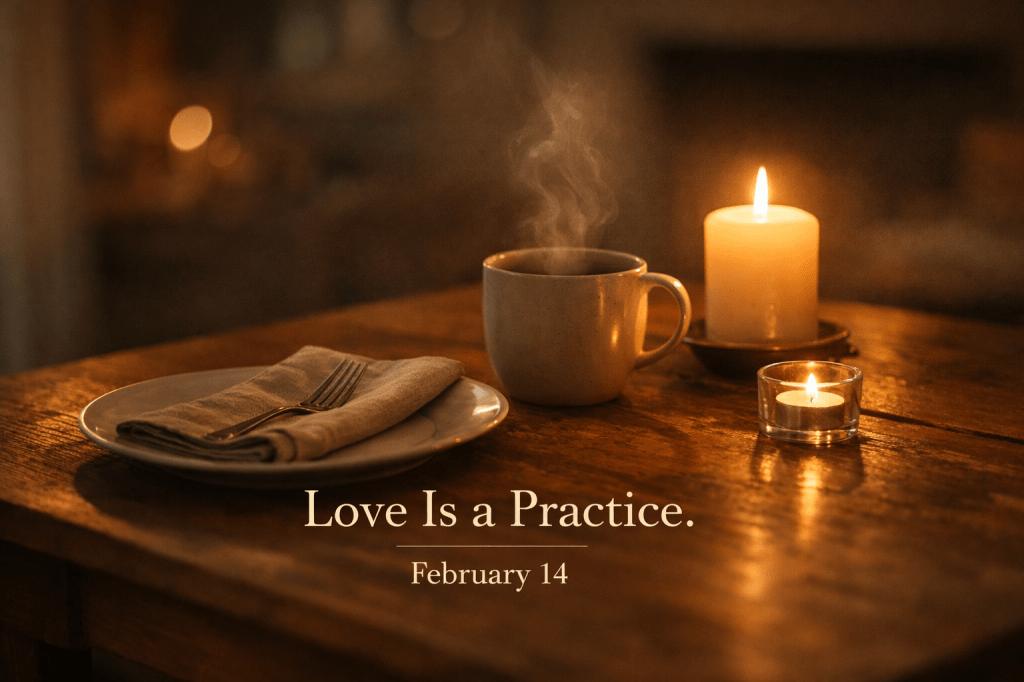
    Love is not a holiday.

    It is a practice.

    And no matter your relationship status, you are not behind. You are not unfinished. You are not unchosen.

    You are becoming.

    And that is enough.

    Kyle J. Hayes

    kylehayesblog.com

    Please like, comment, and share

    Resources for Hard Times

    If you’re looking for practical help, food support, or community resources, you can visit the Salt, Ink & Soul Resources Page.
    👉 Resources for Hard Times

  • What We Mean When We Say “Our Culture”

    What We Mean When We Say “Our Culture”

    The word culture gets used carelessly now.

    It gets flattened into playlists and palettes. Into slang that travels faster than its meaning. Into food that’s photographed better than it’s remembered. People say culture when they mean style. Or vibe. Or whatever is popular long enough to be profitable.

    But that’s not what we mean.

    When we say “our culture,” we’re not talking about trends.

    We’re talking about what stayed.

    Our culture is not defined by how visible it is, but by how much pressure it survived. It is the set of practices that held when everything else was designed to break. The habits that outlived laws. The knowledge that didn’t need permission to be passed down.

    I learned that before I could explain it.

    I learned it in kitchens where nobody measured anything, but nothing was wasted. In the way elders cooked like they were remembering something with their hands, in the discipline of knowing when enough was enough—when to add heat, when to lower it, when to let something rest.

    That restraint is culture.

    It’s the same restraint you hear in certain sentences. The kind that don’t rush to impress. That leaves space on purpose. You hear it in Baldwin’s insistence that language must tell the truth even when it makes people uncomfortable.

    Before history was written, it traveled by sound.

    It moved through voices that carried grief without explanation and joy without apology. Through spirituals that mapped escape. Through blues that name loss, without begging for sympathy. Through singers like Billie Holiday, who could hold an entire history in a pause.

    Nina Simone understood this: that art wasn’t decoration.

    It was testimony.

    That wasn’t entertainment.

    That was record-keeping.

    And the cooks were doing it too.

    Our food was never just about flavor. It was about continuity. About making sure people ate, yes—but also about making sure they remembered who they were while doing it. Recipes weren’t written down because they didn’t need to be. They lived in repetition. In watching. In correction offered gently. In knowing when something tasted right without explaining why.

    That’s why recipes function as records.

    A dish tells you where a people were. What they had access to. What they were denied. What they salvaged anyway. It tells you how they thought about care—who was fed first, how far food was expected to stretch, how sweetness showed up even when conditions said it shouldn’t.

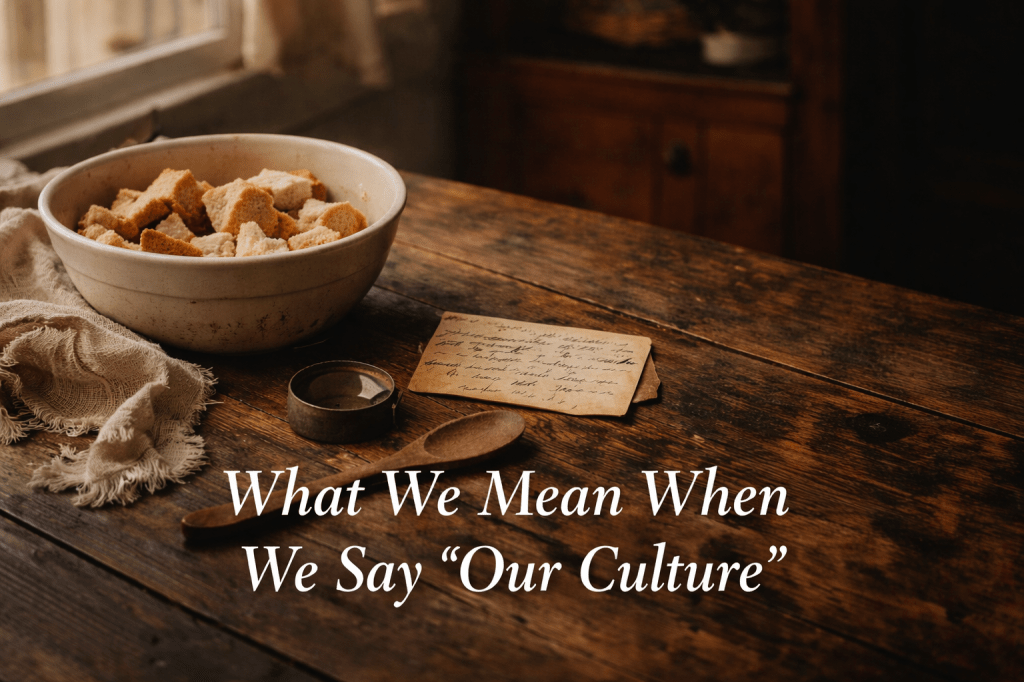
    Bread pudding exists because waste was not an option.

    Lemon sauce exists because joy was still necessary.

    Neither of those things happened by accident.

    This is what makes our culture specific.

    Not borrowed.

    Not interchangeable.

    Not a costume someone can put on without carrying the weight.

    Our culture was shaped by constraint and refined by care. It learned to be precise because excess wasn’t available. It learned to be expressive because silence was dangerous. It learned to be communal because survival required it.

    That’s why defining it matters.

    Not to build gates.

    But to keep the record straight.

    Because erasure rarely announces itself. It arrives as minimization. As everybody struggled. As to why keep bringing it up? As we’re all the same now. It arrives by disconnecting culture from origin and selling the leftovers as novelty.

    But culture isn’t a vibe.

    It’s a system.

    A system of survival practices passed hand to hand. Voice to ear. Pan to plate. Sentence to sentence.

    And when we say our culture, what we mean is this:

    We kept something alive when it wasn’t supposed to survive.

    We carried memory without archives.

    We built beauty without resources.

    We made care look ordinary so it wouldn’t be taken from us.

    Writers did it with language.

    Musicians did it with sound.

    Artists did it with vision.

    Cooks did it with repetition.

    All of them answered the same question:

    How do you tell the truth without disappearing?

    So when I write about food, I’m not being nostalgic. I’m being precise. I’m pointing to one of the most reliable records we have. An archive you can eat. A history that still feeds people.

    That’s our culture.

    Not because it’s popular.

    But because it held.

    Kyle J. Hayes

    kylehayesblog.com

    Please like, comment, and share

    Resources for Hard Times

    If you’re looking for practical help, food support, or community resources, you can visit the Salt, Ink & Soul Resources Page.

    👉 Resources for Hard Times

  • What Would He Think of the Dream Now?

    What Would He Think of the Dream Now?

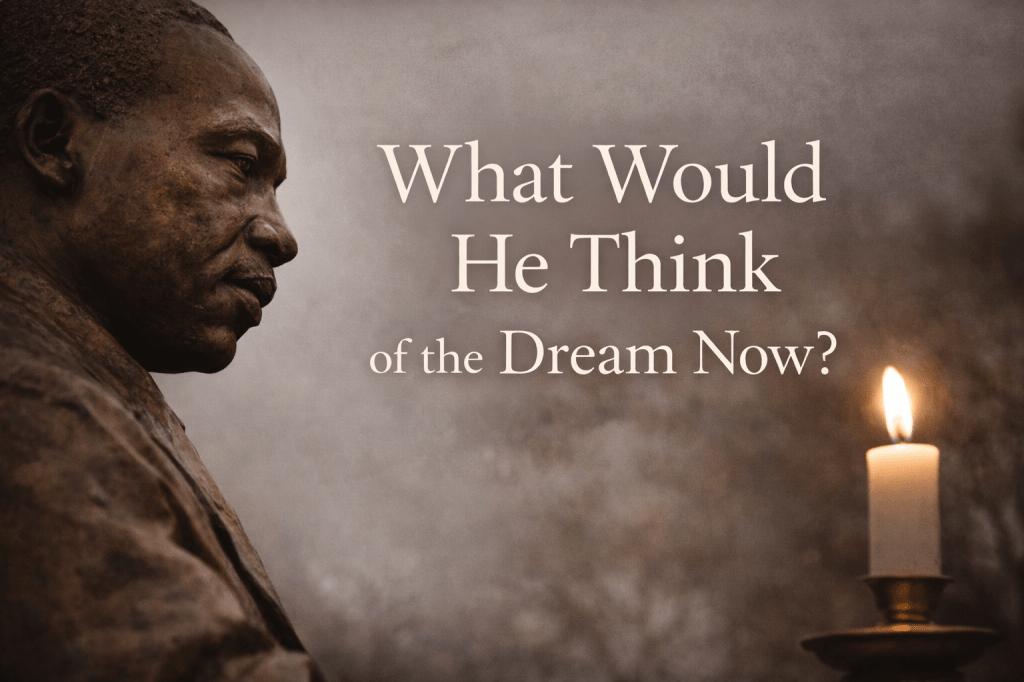
    Today, we celebrate the birthday of a man who gave so much of himself that there was nothing left to take.

    A man who understood—long before the rest of us were ready to admit it—that speaking the truth in a country built on denial comes with a cost. A man who seemed to know, on some level, where the road he was walking would end, and chose to walk it anyway.

    As I look around today, I find myself wondering what he would think.

    Not in a ceremonial way.

    Not in a quote-for-the-day way.

    But honestly.

    Would he still have the same dream?

    Would he look at his people—their survival, their brilliance, their contradictions, their victories, and their wounds—and feel pride? Relief? Concern? All of it braided together?

    Would he believe the dream survived him?

    Or would he recognize it for what it has always been: unfinished work.

    What many people forget—or choose not to remember—is that his vision was never narrow. He did not fight for a single group at the expense of others. He fought for all who were crushed beneath unfair systems: Black and white, poor and working, seen and ignored. He stood against injustice itself, not just the version that wore familiar faces.

    That kind of fight costs more than slogans admit.

    As I sat wondering what to write today, I found myself at a loss. Not because there was nothing to say, but because the weight of the man and the moment does not lend itself easily to neat paragraphs. So I went back and learned again.

    I learned again about the discipline of nonviolence—not the softened version we like to remember, but the demanding one. The kind that requires you to absorb blows without letting your spirit turn brittle. The kind that asks you to restrain your hand even when your body is screaming to defend itself.

    That kind of restraint does not come naturally.

    It has to be practiced.

    I learned again how often he was arrested. How frequently he was removed from the streets not because he was wrong, but because he was effective. How some of his most enduring words were written while confined—stripped of movement, forced into stillness.

    Something is sobering about that.

    A reminder that confinement has never stopped truth from finding its way onto paper. That history’s sharpest insights are often written by people who were told to sit down and be quiet.

    And while others preached more aggressive paths—paths that made sense, paths that spoke directly to rage—he held to peace. Not because he was unfamiliar with anger, but because he understood what it could become if left unguided.

    That choice cost him credibility with some. It cost him patience with others. It cost him comfort. And eventually, it cost him his life.

    Which brings me back to the question I can’t quite put down:

    What would he think now?

    Would he be encouraged by the doors that have opened?

    Would he be troubled by the ones that quietly closed behind us?

    Would he recognize progress—and still point out how uneven it remains?

    I don’t believe he would be surprised by our divisions. He knew human nature too well for that. And I don’t think he would be shocked by our impatience either. When you’ve waited generations for justice, patience becomes a complicated request.

    But he would ask us something uncomfortable.

     Are you angry?

    But what are you building with that anger?

     Have you suffered?

    But have you learned how to keep your suffering from hardening your heart?

    Because the dream was never about perfection.

    It was about direction.

    About bending the arc—not snapping it in half. About insisting on dignity even when the world refuses to recognize it. About believing that the measure of a society is not how loudly it celebrates its heroes, but how faithfully it carries their work forward when they are gone.

    Today, we celebrate his birth. But birthdays are not only about candles and remembrance. They are about legacy—about what continues because someone once chose courage over safety.

    So the better question isn’t what he would think of us.

    The question is what we think of ourselves in light of what he gave.

    Are we still committed to fairness when it is inconvenient?

    Are we still willing to restrain ourselves from becoming what we oppose?

    Are we still able to imagine a future that extends beyond our own survival?

    Nonviolence, at its core, was never passive.

    It was active care.

    Care for the soul of a people.

    Care for the future they would have to live in.

    Care for the possibility that justice, pursued without hatred, might actually last.

    That kind of care is exhausting.

    And maybe that is why his life still speaks.

    Because it reminds us that change does not come from comfort. That the work is never finished. That the dream was not a destination, but a responsibility handed forward.

    Today, on his birthday, we are not asked to rehearse his words or turn his life into a symbol we can safely admire from a distance. We are asked something more complex and more honest: to sit with the cost of what he chose, to recognize that nonviolence was not comfort but discipline, not silence but intention.

    To consider whether we are still willing to be shaped by a dream that demands more than applause.

    A dream like that does not survive on remembrance alone. It survives only if someone, somewhere, decides—quietly and without cameras—to carry it forward.

    Kyle J. Hayes

    kylehayesblog.com

    Please like, comment, and share

    Resources for Hard Times

    If you’re looking for practical help, food support, or community resources, you can visit the Salt, Ink & Soul Resources Page.

    👉 Resources for Hard Times

  • Learning to Trust What Feeds You

    Learning to Trust What Feeds You

    The new year barely clears its throat, and already the world is handing you a clipboard.

    New body. New habits. New mindset. New you.

    It’s a familiar ritual—bright, loud, and strangely impatient. As if the calendar turning over means you’re supposed to turn over, too. As if January is a starting gun, and anyone who isn’t sprinting is already behind.

    But a lot of us don’t enter January refreshed.

    We enter it used up.

    The holidays don’t just end—they leave residue. The social obligations, the family history that shows up like an uninvited guest, the spending, the traveling, the remembering. Even the good moments can be exhausting in a way nobody warns you about. By the time the lights come down, you can feel your body asking for something simple: quiet, steadiness, a little less demand.

    And then—here comes the new year, leaning in close, insisting you should want more.

    Maybe you do.

    But before you chase the next big thing, it’s worth asking a gentler question.

    What actually sustains you—when no one is watching?

    Not what looks impressive.

    Not what sells.

    Not what earns applause.

    What keeps you whole?

    Discernment, Not Discipline

    Discipline gets talked about like it’s salvation. Like if you just tighten your grip hard enough, you can force your life into the shape you think it should be.

    But discernment is different.

    Discernment isn’t about forcing. It’s about noticing. It’s about remembering what your body already knows, but your brain keeps ignoring. It’s about telling the truth—not the motivational-poster truth, but the quiet truth that shows up on an ordinary Tuesday when the house is still, and nobody is clapping for you.

    Because here’s what I’ve learned, and it took me longer than it should have:

    A lot of us don’t abandon what works because it stopped working.

    We abandoned it because it stopped being exciting.

    Or because it stopped being new.

    Or because someone on a screen told us there’s a better way—cleaner, faster, more optimized, more expensive.

    We forget the old phrase that has kept more people alive than any wellness trend ever has:

    If it’s not broke, don’t fix it.

    The Temptation of the “Better”

    We live in a culture that treats contentment like a lack of ambition.

    If you find something that steadies you—one routine, one meal, one quiet practice—there’s always a voice hovering nearby saying, Yes, but have you tried this instead?

    It’s a strange form of disrespect, really. Not just to your body, but also to your memory. To the part of you that already did the hard work of learning what helps.

    The best example I can give is food.

    Some meals don’t photograph well. They aren’t built for attention. They’re built for survival and softness. They show up like a hand on your back.

    A pot of beans.

    A bowl of soup.

    Greens cooked low and slow.

    Rice that knows how to hold up for a whole day.

    They don’t announce themselves.

    They just do their job.

    They feed you.

    And there’s wisdom in that. A quiet kind of intelligence. The kind that doesn’t need a new label every January.

    What Feeds You Might Not Impress Anyone

    This is the part people forget: nourishment isn’t always glamorous.

    Sometimes what feeds you is repetitive.

    It might even look “small” from the outside.

    A nightly walk.

    A glass of water before coffee.

    A morning that starts without your phone.

    A playlist you return to like a familiar porch light.

    A person who doesn’t demand a version of you that’s louder than you feel.

    These things don’t earn trophies.

    But they keep you from unraveling.

    And maybe—just maybe—that is the point.

    Because what’s the use of the “better” version of you if it costs you the steadiness you already had?

    Stop Outsourcing the Answer

    Early January is full of experts.

    Everybody is selling a method. A blueprint. A plan. Some of it is useful. Some of it is noise dressed up as concern. But almost all of it carries the same quiet assumption:

    You don’t know what you need.

    So they’ll tell you.

    But your body is older than your calendar.

    It remembers what worked in the hard seasons. It remembers which routines kept you from breaking. It remembers the difference between being “motivated” and being well.

    The question is whether you’ll honor that memory—or override it again because you think you’re supposed to be someone new by now.

    This post isn’t an argument against growth.

    It’s a recalibration.

    A reminder that growth doesn’t have to be loud, and it doesn’t have to start with punishment.

    Sometimes growth begins with respect.

    Respect for what’s already working.

    Respect for the rhythms that steady you.

    Respect for the plain, honest things that keep you fed.

    Stimulation vs. Sustenance

    There’s a difference between what stimulates you and what sustains you.

    Stimulation is quick. Loud. Addictive. It feels like progress because it spikes your attention and gives you the illusion of motion.

    Sustenance is slower.

    It settles. It grounds. It doesn’t demand that you become someone else to deserve it.

    And in a world that rewards constant reinvention, choosing sustenance can feel almost rebellious.

    To keep what works.

    To return to what’s familiar.

    To say, gently but firmly: I’m not abandoning myself this year.

    A Softer New Year Promise

    If you want a new year promise, let it be this:

    Not that you’ll become perfect.

    Not that you’ll grind harder.

    Not that you’ll reinvent yourself on a schedule.

    Let it be that you’ll pay attention.

    That you’ll notice what actually feeds you.

    That you’ll trust what has carried you.

    That you’ll stop treating steadiness like a failure of imagination.

    Because there is nothing wrong with returning to what works.

    There is nothing weak about choosing the thing that makes your shoulders drop, and your breath deepen.

    There is a kind of wisdom in repetition. A holiness in the familiar.

    And if you can learn to trust what feeds you—really trust it—this year won’t need to be dramatic to be different.

    It will be different because you will be listening.

    And for the first time in a long time, you won’t be chasing “better” at the expense of being well.

    Kyle J. Hayes

    kylehayesblog.com

    Please like, comment, and share

    Resources for Hard Times

    If you’re looking for practical help, food support, or community resources, you can visit the Salt, Ink & Soul Resources Page.

    👉 Resources for Hard Times

  • A Quiet Thank You at Year’s End

    A Quiet Thank You at Year’s End

    There are twenty of you here—readers who chose to subscribe, to return, and to spend time with this blog over the past year. That number may look small from the outside, but it doesn’t feel small to me. It means that twenty people, in a world that’s moving faster every day, chose to slow down and read words without being in a hurry.

    This year, Salt, Ink & Soul became a place I didn’t fully understand until I was already inside it. A place where food could carry memory without needing to justify itself. Where children’s stories could sit beside reflections on grief, resilience, and the quiet weight of being human. Where the idea of “enough” could be asked gently, without demanding an answer right away.

    Some of you read every post.

    Some of you arrive when a title catches something familiar.

    Some of you read quietly, without ever commenting or leaving a trace.

    All of that is welcome here.

    What I’ve learned this year is that writing doesn’t have to shout to be heard. It only has to be honest. Showing up—again and again—even when the words come slowly, even when the questions remain unfinished, has felt like its own kind of discipline. And knowing readers are willing to sit with that uncertainty has meant more than I can adequately say.

    If you’re reading this as a subscriber, thank you for choosing to stay. Thank you for trusting this space enough to let it arrive in your inbox. Your presence—steady, patient, unassuming—has helped shape what this place is becoming.

    And if you’re reading this for the first time, know this: this is a quiet corner. A place for stories about food, memory, children, and the small moments that often get overlooked. You’re welcome here, whether you pass through once or decide to stay awhile.

    As the year turns, I don’t have grand promises. What I do have is intention. I’ll keep writing. I’ll keep paying attention. I’ll keep trying to make this space feel warm, thoughtful, and human—a place where reflection can breathe.

    Thank you for being here at the beginning. Thank you for reading slowly. Thank you for taking the time to read words written with care.

    If there’s a story you’re still waiting for, or a question you carry quietly, I hope you’ll continue to walk through this space with me. There will be more stories ahead, more moments to sit with, more chances to pause together—and I’m grateful for every reader who chooses to return.

    With gratitude and hope

    Kyle Hayes

    Salt, Ink & Soul

    If you’d like to spend more time with these themes, my books explore food, memory, resilience, and emotional truth in greater depth.

    Explore the books here → Felix collections or on Amazon

  • If You’re Going to Be Something, Be the Best

    If You’re Going to Be Something, Be the Best

    When I was young, my mother used to say things that felt like knives wrapped in wisdom. Sharp. Precise. And always cutting a little too close to the bone.

    “If you’re going to be something,” she said once, “be the best. If you’re going to be a thief, be the best thief.”

    I remember sitting there, seething—convinced she was calling me a failure in advance, like she saw a mugshot waiting in my future. I was a dramatic child, sure. But I also heard the world louder than most, and in her tone I thought I heard the echo of disappointment.

    It took years—decades, really—for me to understand that she wasn’t predicting my downfall.

    She was warning me about mediocrity.

    About sleepwalking through life.

    About the quiet tragedy of wasting whatever small fire was burning inside me.

    Craft, Seen and Unseen

    My Uncle Michael understood this before I did.

    He was the janitor at my elementary school—a man whose name most kids probably never knew. But I knew him. I knew the way his shirts were always pressed, his shoes always were always shined, the faint smell of Pine-Sol that followed him like a badge of honor.

    He wasn’t just cleaning floors.

    He was restoring order to chaos, one hallway at a time.

    That school gleamed. The floors reflected the ceiling lights like calm water. Even as a kid, I could tell that he took pride in what most people never noticed.

    Years later, I heard he started his own cleaning company. Built something from nothing. Took what the world might have dismissed and made it into a craft.

    That’s the word that sticks with me now.

    Craft.

    Learning to Show Up

    I didn’t realize it at the time, but when I sat alone in my room scribbling stories, I was chasing the same truth my uncle had already mastered.

    The art of showing up.

    The quiet dignity of repetition.

    The beauty of care.

    I thought I was just escaping—drawing worlds because the real one felt too heavy. But now I see it.

    Every sentence was me learning how to hold a broom, so to speak.

    Every paragraph, another hallway swept clean of doubt.

    My mother’s words echo differently now.

    If you’re going to be something—be all the way in.

    Don’t just stand at the doorway of your own potential, waiting for someone else to invite you through.

    Keep Showing Up

    Because the world will always give you a reason to stop.

    It’ll whisper that you’re too late.

    Too tired.

    Too small.

    Too unimportant.

    But the work—your work—doesn’t care about any of that.

    It only asks that you keep showing up.

    So this is what I tell myself now:

    If you’re going to be something, be the best.

    If you’re going to write, write until your fingers hurt and your heart feels seen.

    If you’re going to clean, make the floor shine like truth.

    If you’re going to live, live like the world is watching—even when it’s not.

    Somewhere between my mother’s harsh tone and my uncle’s quiet excellence, I found my own reflection.

    And maybe that’s what this whole life is about—not becoming what they wanted you to be, but becoming what they were trying to show you all along.

    Not perfection.

    Just presence.

    Just care.

    Just the craft.

    Kyle J. Hayes

    kylehayesblog.com

    Please like, comment, and share

    Resources for Hard Times

    If you’re looking for practical help, food support, or community resources, you can visit the Salt, Ink & Soul Resources Page.

    👉 Resources for Hard Times

    Want to Go Deeper?

    If you’d like to spend more time with these themes, my books explore food, memory, resilience, and emotional truth in greater depth.

    👉 [Explore the books here →] Felix book collection

  • I Wonder How

    I Wonder How

    The snow fell in slow spirals outside the dimly lit bar, where three men sat around the same scarred oak table they had claimed for nearly a decade.

    Every Christmas Eve, without fail, they gathered—not for family, not for faith, but for the impossible question that kept them human.

    “How does he do it?” the artist said, brushing paint flecks from his fingers as if they were stardust. “How does one being deliver joy to billions in one night?”

    The engineer chuckled, swirling the ice in his glass. “You mean how he could do it. There’s a difference between wonder and logistics.”

    The physicist adjusted his glasses, his eyes reflecting the amber light of the bar’s tiny bulbs. “Or perhaps you mean: how could we ever understand it?”

    They clinked glasses.

    Tradition began.

    The Artist’s Theory: The Magic of Belief

    The artist leaned forward, voice low and fervent.

    “You’re both missing the point. Santa doesn’t deliver gifts because of physics or mechanics—he delivers because he exists where belief still lives. Each child who imagines him gives him form, and that collective imagination becomes his sleigh, his speed, his magic.”

    The engineer rolled his eyes. “So you’re saying it’s powered by… dreams?”

    “Not dreams—faith,” the artist replied. “Not in a man, but in what he represents. Every painted card, every glowing ornament, every whispered wish is an act of creation. The laws of art and emotion are stronger than any law of thermodynamics.”

    The physicist tilted his head, intrigued despite himself.

    “You’re saying belief collapses probability into existence—like a kind of human-driven wave function.”

    The artist smiled. “Exactly. Magic isn’t the opposite of science. It’s the poetry of it.”

    For a moment, all three sat silent, letting that notion settle like dust on candlelight—the idea that wonder itself could move matter.

    The Engineer’s Theory: The Machinery of Miracles

    The engineer cracked his knuckles and set his glass down.

    “Alright, my turn. No offense to your ‘poetry,’ but the only way to deliver that many packages is through an automated system on an impossible scale.”

    He began sketching on a napkin—tiny sleighs branching from one great mothership like snowflakes from a storm cloud.

    “Imagine a global delivery network built centuries ahead of its time. Millions of drones, each guided by data—weather patterns, children’s locations, behavioral algorithms. The sleigh’s just a symbol. The real Santa is an entire system of precision.”

    The artist frowned. “That sounds cold. Heartless.”

    “Not heartless,” the engineer said softly. “Efficient. The greatest gift humanity ever built wasn’t the sleigh—it was coordination. Santa isn’t one man. He’s the sum of our capacity to create order out of chaos.”

    The physicist smiled faintly. “A machine of goodwill.”

    “Exactly,” the engineer said. “A machine that runs not on gears or wires—but on intention. Every parent who wraps a present, every neighbor who donates a coat, they’re all nodes in the network. Each act of kindness becomes an operation in a vast machine that never stops working.”

    For a moment, even the artist nodded.

    There was something beautiful in the practicality of it—the poetry of precision.

    The Physicist’s Theory: The Paradox of Time

    When it was his turn, the physicist spoke with the quiet certainty of someone who had seen equations that could unmake worlds.

    “You’re both right,” he said. “But you’re both limited by the assumption that time moves forward.”

    He drew three lines on his coaster.

    “One moment, he’s in New York. Next, Tokyo. But what if time isn’t linear for him? What if his sleigh doesn’t move through time, but across it—like a needle weaving through a tapestry?”

    The engineer raised an eyebrow. “A temporal loop?”

    “Exactly,” said the physicist. “He delivers gifts in a single eternal instant—a quantum superposition of giving. To us, it appears as one night. To him, it’s… forever.”

    The artist whispered, “That’s lonely.”

    The physicist nodded, staring into his untouched drink.

    “Perhaps. To bring joy to every child, he must live in the stretch between seconds, never aging, never resting. An immortal bound by kindness—not by choice, but by consequence.”

    They sat with that thought.

    The bar’s jazz faded into silence.

    Snow pressed against the windows like quiet applause.

    The Farewell

    Eventually, the clock struck midnight. The bartender flipped the Closed sign, and the three men stood.

    Outside, the world glowed soft and white.

    The artist pulled his coat close. “You think he’s out there now?”

    The engineer shrugged. “If he is, he’s right on schedule.”

    The physicist smiled faintly. “Or maybe he’s always been.”

    They stood together for a heartbeat longer—three fragments of human thought, bound by ritual, mystery, and the stubborn need to believe.

    The artist extended his hand. “Same time next year?”

    The engineer clasped it. “Same bar.”

    The physicist joined them, a slight grin forming.

    “Same question.”

    They parted in three directions—into the falling snow, into the hum of unseen machinery, into the quiet folds of time—each carrying a piece of wonder they couldn’t prove, yet refused to let die.

    And somewhere, in that eternal instant between belief and logic, a sleigh bell rang once—clear and bright.

    Merry Christmas

    Kyle J. Hayes

    kylehayesblog.com

    Please like, comment, and share

    Resources for Hard Times

    If you’re looking for practical help, food support, or community resources, you can visit the Salt, Ink & Soul Resources Page.
    👉 Resources for Hard Times

  • Don’t Answer Too Fast

    Don’t Answer Too Fast

    This reflection was written in response to the passing of Lamar Wilson.

    When a man dies, the world rushes to explain him.

    We build stories quickly—causes, warnings, neat conclusions—because uncertainty makes us uncomfortable. But the truth is simpler and harder to sit with: the only person who can fully name the reasons someone leaves this life is the person who left it. Everyone else is guessing in the dark.

    Still, the darkness teaches us things if we’re willing to look.

    There is a place where it’s just you.

    No audience.

    No applause.

    No performance.

    Just you, alone with your thoughts, listening to them pace the room.

    That place is where the real battle lives.

    Some people look like they have everything. Visibility. Momentum. Laughter. A life that seems full from the outside. But sometimes, all of that is scaffolding for a private war. Sometimes success isn’t peace—it’s camouflage.

    Especially for Black men.

    We are taught early how dangerous honesty can be. How pain is read as weakness. How softness is punished. How exhaustion is moral failure. The world prefers us sharp or silent—never tender, never unsure.

    So we learn to armor ourselves. We learn how to smile through weight. How to carry pressure without complaint. How to translate suffering into something palatable.

    And then we pass that lesson to each other.

    “You good?”

    It’s a small question, almost polite. A check-in that lasts no longer than a breath. We ask it in passing—at work, in hallways, in group chats, at cookouts. And the answer is almost always the same.

    “I’m good.”

    Sometimes it’s true.

    Often it’s not.

    “I’m good” keeps things moving. It protects the room. It spares everyone the discomfort of slowing down. It’s the answer you give when you don’t know how much space your truth would be allowed to take.

    Because telling the truth can feel dangerous.

    There is a particular loneliness in being surrounded by people who know your face but not your fight in being visible and unseen at the same time. In realizing that the strength as it’s been taught to you requires a kind of daily self-erasure.

    This is the quiet violence no one names.

    Not sirens.

    Not headlines.

    Just the steady pressure of swallowing yourself because the world has never been kind to men who admit they are drowning.

    And so the battle stays private. Fought every day. From the moment you wake up to the moment sleep finally loosens its grip. A war without witnesses. A war without language.

    What if we stopped answering too fast?

    What if, instead of reflex, we allowed the question to linger long enough for honesty to find its footing?

    “No. I’m not good.”

    That sentence is not weak. It is a risk.

    It is opening a door without knowing who will stay. It is admitting you are human in a world that has asked you to be indestructible. It is naming pain without packaging it as motivation, humor, or grit.

    And it is a beginning.

    Not a solution.

    Not a cure.

    A beginning.

    Because once the truth is spoken, the battle is no longer invisible. It becomes something that can be shared, witnessed, and held. And being witnessed—truly witnessed—is not nothing. It is not a platitude. It is a form of care.

    We won’t save everyone by asking better questions. We won’t fix despair with the right words. This isn’t about heroics.

    It’s about presence.

    So we could change the ritual. Maybe we should

    “How are you really holding up?”

    And then we stay quiet long enough for the answer to breathe.

    No fixing.

    No rushing.

    No telling someone how strong they are.

    Just staying.

    If you’re reading this and you have been answering too fast—if you have been saying “I’m good” when you’re not—please hear this clearly:

    You do not have to fight the entire war alone.

    Say it once.

    To one person.

    To someone safe.

    “No. I’m not good.”

    That sentence will not solve everything. But it can keep you here long enough for something else to begin.

    And if someone says it to you—if a brother finally lets the truth slip—don’t reach for wisdom. Don’t reach for advice.

    Reach for presence.

    “I’m here.”

    “I’m listening.”

    “You don’t have to carry this by yourself.”

    We don’t need perfect answers.

    We need rooms where the truth can survive being spoken.

    The battle is real.

    And it is daily.

    But it should not be silent.

    And it should not be solitary.

    Kyle J. Hayes

    kylehayesblog.com

    Please like, comment, and share

    Resources

    If this reflection brings up more than you expected, and you’re in the U.S., you can call or text 988 to reach the Suicide & Crisis Lifeline. If you’re elsewhere, local crisis resources are available in many countries. You don’t have to hold everything alone.