Tag: blackculture

  • Who Gets to Be an Expert?

    Who Gets to Be an Expert?

    Somewhere along the way, the word expert got dressed up.

    It put on a clean apron and started speaking in polished sentences. It learned how to name every acid, every cut, and every technique, the way some people learn scripture—precise, rehearsed, confident. It started arriving with credentials. With ratings. With a camera angle. With a voice that sounds like it already knows it’s right.

    And I’m not here to mock skill. Skill is real. Craft matters. Discipline matters. There’s beauty in someone who has spent years learning a thing until their hands don’t have to think about it anymore.

    But I’ve been watching how authority gets handed out.

    Who gets to hold it?

    Who gets ignored?

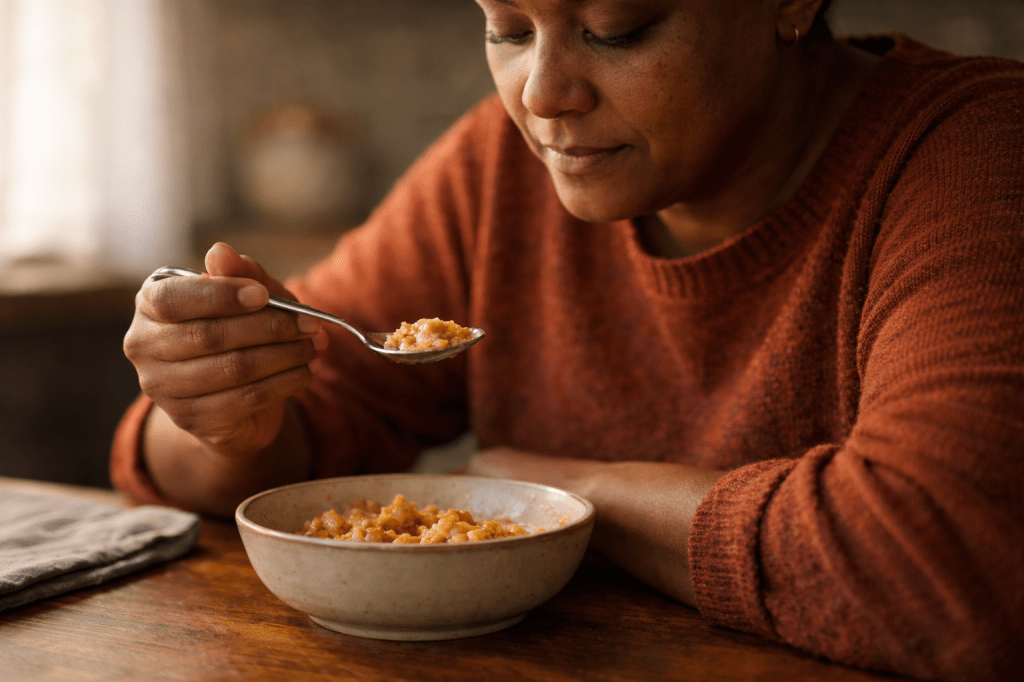
    Because I know cooks whose food will stop you mid-bite—not because you’re analyzing anything, not because you’re performing appreciation the way you were taught to, but because something inside you goes quiet for a second.

    Not silence like politeness.

    Silence like recognition.

    That’s the kind of moment I trust.

    My own belief is simple, even if it’s heavy: the people who get to determine who is an expert are the ones who eat and feel that all-encompassing satisfaction and gratitude. The ones who take a spoonful or a bite, and it stops them—not because they’re dissecting ingredients, but because it has touched their soul. Their spirit. Those parts that make us truly us.

    It satisfied their hunger.

    And it blessed their spirit.

    To me, those are the ones who get to decide.

    Not the loudest voice in the room.

    Not the person with the best lighting.

    Not the one who can turn dinner into a performance review.

    The ones at the table.

    Because food, at its honest center, is not a debate. It’s a communion. It’s a small, daily miracle that too many people are forced to negotiate with—money, time, fatigue, scarcity, stress—all of it pressing down like weather. And then someone makes something anyway. Something warm. Something that holds.

    If a meal can do that—if it can steady a person, if it can return them to themselves, if it can make their shoulders drop in relief—what are we really supposed to call the one who made it?

    An amateur?

    A “home cook,” said the way people say less than?

    We live in a world that mistakes visibility for validity. If you can describe what you did in the right vocabulary, you’re treated like an expert. If you can plate it like a magazine cover, you’re treated like an expert. If you can turn the meal into content, into a brand, into a series—then the world hands you the title and nods as if that settles the matter.

    But plenty of the best food I’ve ever encountered wouldn’t survive that kind of spotlight.

    It wasn’t made to impress strangers.

    It was made to take care of somebody.

    And that kind of care has its own standards.

    The best cooks I know aren’t always chasing innovation. Sometimes they’re chasing enough. Sometimes they’re chasing right. Sometimes they’re trying to make sure the child who didn’t eat at school gets something in their belly before bedtime. Sometimes they’re trying to make Sunday feel like Sunday, even when the week has been cruel.

    That’s not romantic. That’s real.

    And if you want to talk about expertise, you have to talk about repetition. The kind that doesn’t look glamorous but builds a person into someone you can trust.

    There is expertise in making the same dish fifty times until you understand its moods.

    Until you know the difference between heat and impatience.

    Until you can tell, by smell alone, when something is about to cross the line.

    There is expertise in cooking with what you have and still making it taste like dignity.

    There is expertise in a kitchen where nobody measures, but nothing is careless.

    And for us—especially in Black kitchens—this is not new.

    Our culture has always carried genius in ordinary containers. We didn’t always have the luxury of experimentation for fun. We had to make the function taste like joy. We had to turn “not much” into “enough” and sometimes into a feast, not because we were trying to impress, but because we were trying to remain human under conditions that kept insisting we were disposable.

    That’s expertise.

    Not the kind that needs to announce itself.

    The kind that survives.

    So when I ask who gets to be an expert, I’m not asking for a title to hand out. I’m asking a quieter question:

    Who do we trust?

    Do we trust the person with the cleanest story, the best branding, the most followers?

    Or do we trust the one whose food has carried people through real life?

    I think about the moment a person tastes something, and their eyes shift—not wide for show, not performative, just… softened. Like the body recognizes safety. Like the spirit exhales. Like something inside them says, I remember this. Even if they’ve never had this exact dish before.

    That’s the moment I mean.

    That moment is a kind of witness.

    And witnesses matter.

    Because food is not only fuel. It’s memory. It’s mood. It’s belonging. It’s how we tell people, in the simplest language we have, I see you.

    If the world wants to measure expertise by technique alone, it will keep missing the point.

    Technique can be learned.

    But the ability to feed someone in a way that makes them feel held?

    That takes attention.

    That takes empathy.

    That takes a kind of spiritual accuracy that can’t be faked.

    And yes, I know—people will say this is sentimental. Too soft. Too unscientific.

    But I don’t trust a world that treats satisfaction like something shallow. I don’t trust a world that turns eating into analysis and forgets that the body is not a machine. The body is a living story, carrying stress and grief and history. Sometimes the most skilled thing you can do is make a meal that lets somebody come home to themselves for a moment.

    So here’s where I land:

    The expert is not always the one who explains the food best.

    The expert is the one who makes you stop mid-bite—not to evaluate, but to feel grateful. The one who satisfies hunger and blesses the spirit. The one whose food doesn’t just taste good, but makes you feel less alone inside your own life.

    And the people who know that—the people who have felt that—those are the ones who get to decide.

    Not because they’re critics.

    Because they’re human.

    Because they are the reason cooking matters at all.

    And if the world never hands that cook a title, the table still will.

    Quietly.

    In the only way that counts.

    Kyle J. Hayes

    kylehayesblog.com

    Please like, comment, and share

    Resources for Hard Times

    If you’re looking for practical help, food support, or community resources, you can visit the Salt, Ink & Soul Resources Page.
    👉 Resources for Hard Times

  • What We Mean When We Say “Our Culture”

    What We Mean When We Say “Our Culture”

    The word culture gets used carelessly now.

    It gets flattened into playlists and palettes. Into slang that travels faster than its meaning. Into food that’s photographed better than it’s remembered. People say culture when they mean style. Or vibe. Or whatever is popular long enough to be profitable.

    But that’s not what we mean.

    When we say “our culture,” we’re not talking about trends.

    We’re talking about what stayed.

    Our culture is not defined by how visible it is, but by how much pressure it survived. It is the set of practices that held when everything else was designed to break. The habits that outlived laws. The knowledge that didn’t need permission to be passed down.

    I learned that before I could explain it.

    I learned it in kitchens where nobody measured anything, but nothing was wasted. In the way elders cooked like they were remembering something with their hands, in the discipline of knowing when enough was enough—when to add heat, when to lower it, when to let something rest.

    That restraint is culture.

    It’s the same restraint you hear in certain sentences. The kind that don’t rush to impress. That leaves space on purpose. You hear it in Baldwin’s insistence that language must tell the truth even when it makes people uncomfortable.

    Before history was written, it traveled by sound.

    It moved through voices that carried grief without explanation and joy without apology. Through spirituals that mapped escape. Through blues that name loss, without begging for sympathy. Through singers like Billie Holiday, who could hold an entire history in a pause.

    Nina Simone understood this: that art wasn’t decoration.

    It was testimony.

    That wasn’t entertainment.

    That was record-keeping.

    And the cooks were doing it too.

    Our food was never just about flavor. It was about continuity. About making sure people ate, yes—but also about making sure they remembered who they were while doing it. Recipes weren’t written down because they didn’t need to be. They lived in repetition. In watching. In correction offered gently. In knowing when something tasted right without explaining why.

    That’s why recipes function as records.

    A dish tells you where a people were. What they had access to. What they were denied. What they salvaged anyway. It tells you how they thought about care—who was fed first, how far food was expected to stretch, how sweetness showed up even when conditions said it shouldn’t.

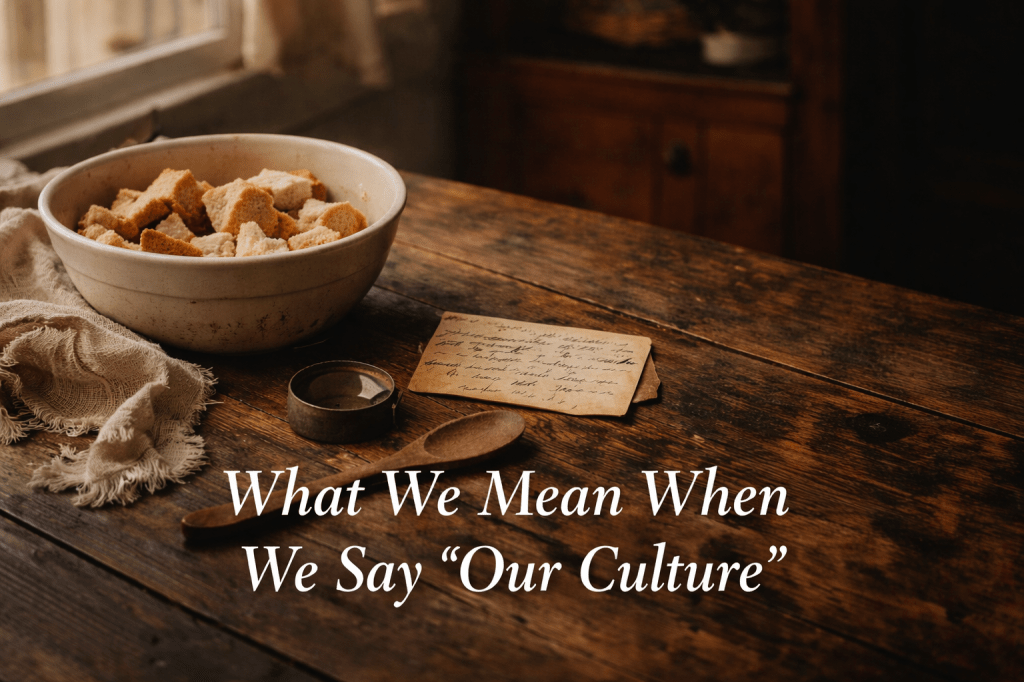
    Bread pudding exists because waste was not an option.

    Lemon sauce exists because joy was still necessary.

    Neither of those things happened by accident.

    This is what makes our culture specific.

    Not borrowed.

    Not interchangeable.

    Not a costume someone can put on without carrying the weight.

    Our culture was shaped by constraint and refined by care. It learned to be precise because excess wasn’t available. It learned to be expressive because silence was dangerous. It learned to be communal because survival required it.

    That’s why defining it matters.

    Not to build gates.

    But to keep the record straight.

    Because erasure rarely announces itself. It arrives as minimization. As everybody struggled. As to why keep bringing it up? As we’re all the same now. It arrives by disconnecting culture from origin and selling the leftovers as novelty.

    But culture isn’t a vibe.

    It’s a system.

    A system of survival practices passed hand to hand. Voice to ear. Pan to plate. Sentence to sentence.

    And when we say our culture, what we mean is this:

    We kept something alive when it wasn’t supposed to survive.

    We carried memory without archives.

    We built beauty without resources.

    We made care look ordinary so it wouldn’t be taken from us.

    Writers did it with language.

    Musicians did it with sound.

    Artists did it with vision.

    Cooks did it with repetition.

    All of them answered the same question:

    How do you tell the truth without disappearing?

    So when I write about food, I’m not being nostalgic. I’m being precise. I’m pointing to one of the most reliable records we have. An archive you can eat. A history that still feeds people.

    That’s our culture.

    Not because it’s popular.

    But because it held.

    Kyle J. Hayes

    kylehayesblog.com

    Please like, comment, and share

    Resources for Hard Times

    If you’re looking for practical help, food support, or community resources, you can visit the Salt, Ink & Soul Resources Page.

    👉 Resources for Hard Times

  • This May Sound Like I’m Angry

    This May Sound Like I’m Angry

    This may sound like I’m angry.

    That’s because I am.

    I’m angry about food.

    But not just food.

    I’m angry about what gets buried with it.

    What we let slip through our fingers.

    What we protect so fiercely that we never get to pass it on.

    Some recipes in families are so tied to memory, and they might as well be spiritual.

    Not written in cookbooks, not on notecards, but in gestures.

    In pinches, pours, and stirs done just so, the things you only learn by being in the room.

    But those rooms are empty now.

    We call it tradition, secrecy, and the selfish need to be the one who gets all the oohs and ahhs at the family gathering.

    To be the keeper of the sacred gumbo, the only one who knows how the sweet potatoes get that crust just right.

    We hoard recipes like treasure, and I get it—maybe it’s the only thing some of us ever had to call our own.

    But it’s not treasure if it dies with you.

    That’s not legacy. That’s vanity.

    And the loss is deeper than ingredients.

    Every time someone passes and their recipe goes with them, we don’t just lose a dish.

    We lose a moment.

    A whole damn lifetime of Sundays.

    Of back-porch stories.

    Of laughing so hard over The Red Kool-Aid and potato salad, you forget how hard life has been for a second.

    Healing as it’s passed hand to hand with every spoonful.

    You know what it’s like to taste a memory?

    To close your eyes and feel the presence of someone who’s been gone for a decade, just because their dinner rolls hit your tongue the right way?

    We lost that.

    Because someone wanted to be special.

    Because someone needed to be seen more than they needed to share.

    And then life happened.

    People fell out.

    Phones stopped ringing.

    The kitchen got quiet.

    And just like that, the recipe is gone.

    And all the meals it ever touched, all the stories it ever summoned—gone, too.

    So yes—hell yes I’m mad.

    Because these aren’t just dishes.

    They’re time machines.

    They’re inheritance.

    They’re how a little Black boy in the Midwest learns about a cousin he never met, not through a photograph, but through how his mama seasons her Greens.

    And we’re letting them vanish.

    We call food “soul” and starve our legacy because we’re too proud, wounded, or petty to pass it on.

    We forget that food was how our ancestors hid love in plain sight.

    That in a world where everything could be taken—freedom, names, land—the ability to make a damn good meal was the one thing they couldn’t steal.

    That’s what we throw away whenever we let a recipe die with a grudge.

    You want to be special?

    Be the one who teaches.

    Be the one who says, “Come on. I’ll show you.”

    Be the one who writes it down—not to post online, but to slip into the hands of the next generation.

    To say:

    This is yours now.

    This is where we come from.

    This is how we survived.

    Because the pot of greens is more than flavor.

    The macaroni isn’t just texture.

    The peach cobbler is not just a dessert.

    It’s home.

    It’s a ritual.

    It’s a reminder of who we were, even when the world tried to make us forget.

    So yes—I’m angry.

    Because we’ve buried too much already.

    I’m tired of funerals where we cry over both the person and the food we’ll never taste again.

    I’m tired of silence being passed off as tradition.

    I’m tired of watching people wait until it’s too late to care.

    If we want our culture to live, we must do more than eat it.

    We have to honor it, share it, teach it, and protect it—not like a secret but like the gospel it is.

    Because in the end, a guarded recipe dies in the dark.

    But a shared one?

    That’s how we stay alive.

    By Kyle J. Hayes

    Please Like, Comment, and Subscribe