Tag: cooking

  • The Last Ingredient House

    The Last Ingredient House

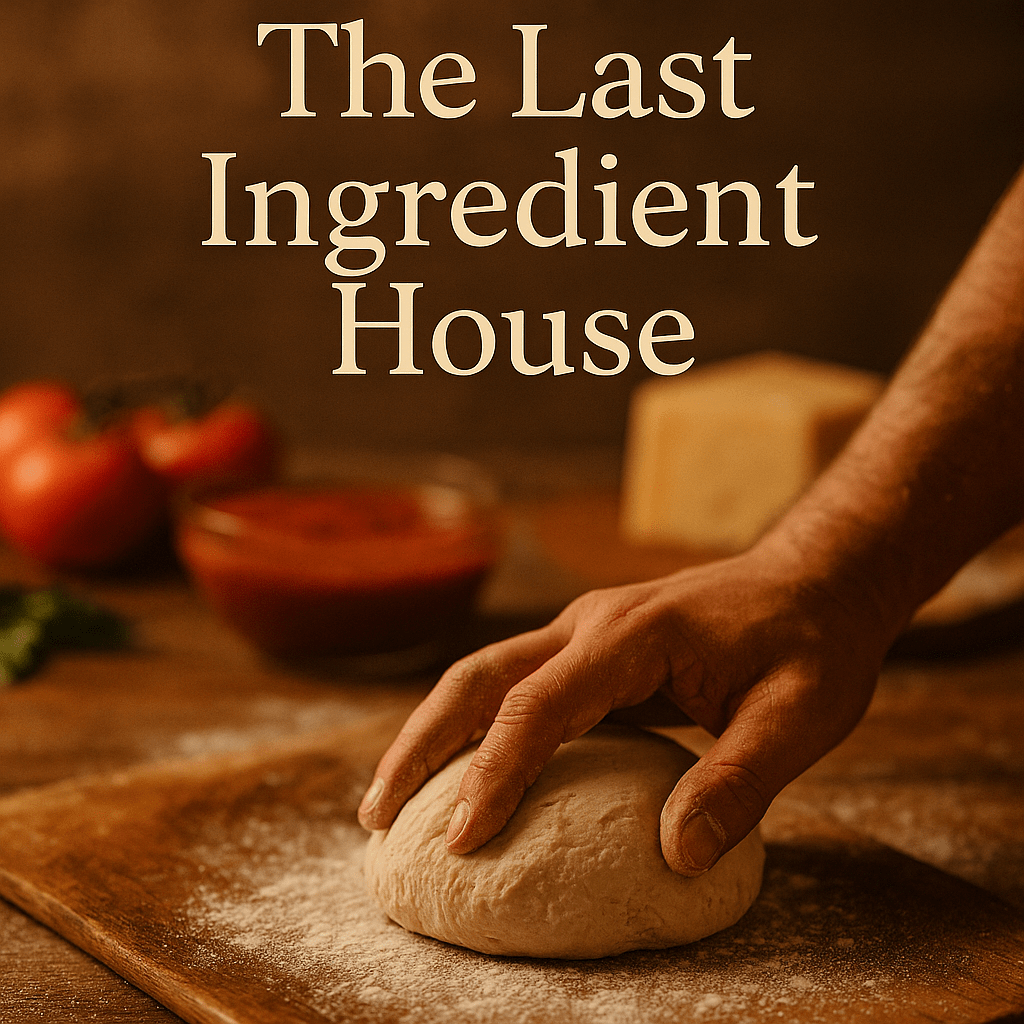
    I was just running in for a couple of things — Mozzarella cheese, maybe some crushed tomatoes. The kind of trip you make when you’ve already decided the night’s ritual: I was going to make pizza. And by making pizza, I mean the whole thing — crust proofed over two days, sauce coaxed slowly from garlic, basil, and crushed tomatoes, Cheese grated by hand until my knuckles risked losing skin.

    At the register, the cashier noticed the haul — the Cheese, the flour, the good olive oil — and smiled.

    “Making pizza?” she asked.

    “Yes,” I said. And just like that, a conversation bloomed.

    She told me she came from what she called an ingredient house. A house where the kitchen was a kind of altar — stocked with the quiet assurance that if company came calling at the last minute, her mother could turn out a beautiful meal without panic. Beans soaking on the stove, onions already sweating in cast iron, a roast pulled from the freezer because it had been waiting for just such a night.

    I nodded, letting the phrase roll around in my mind: ingredient house.

    My own home growing up was… not quite that. We had food, sure — plenty of it — but a lot of it came sealed in boxes with microwave instructions printed in cheerful fonts. Frozen lasagna, instant potatoes, and cans of soup you could doctor up if you felt ambitious. There was love in those meals, but also an efficiency, a shorthand. Meals that required only heat or water, not intuition.

    The Age of Premade Fresh

    Now, we live in a time where you don’t even need to own salt. Walk into any grocery store and you’re surrounded by the new altar — pre-marinated proteins, ready-to-bake pizzas, trays of vegetables already washed, chopped, and glistening under plastic. Fresh, yes. But fresh in a way that requires no relationship, no waiting, no patience.

    And then there’s DoorDash — the pandemic’s golden child. The savior we thanked when we could not leave our homes, when fear of each other turned kitchens into bunkers. Now it lingers, reshaping our sense of effort. You don’t even have to boil the water anymore. You just scroll, tap, and wait for a stranger to leave your dinner at the door like a sacrament.

    What We Lose

    Standing there at the checkout, I realized I wasn’t just buying Cheese. I was buying memory. I was buying slowness. I was buying back the hours required to knead dough, to wait for it to rise, to smell the kitchen change as it bakes.

    I thought about her ingredient house — the kind of place where a pantry wasn’t just storage but possibility. And I wondered what we lose when we give that up. When dinner stops being a verb and becomes an algorithm.

    There is something quietly radical about knowing how to feed yourself from scratch. About putting your hands in dough, trusting yeast to do its slow, invisible work, and showing up for it when it’s ready. Something stubborn and beautiful about refusing the constant seduction of “just heat and serve.”

    What’s Next?

    Sometimes I wonder what comes after this. If premade fresh is today’s answer, what’s tomorrow’s? Meals that make themselves while you scroll? Nutrition is delivered intravenously, so you don’t have to chew. Or maybe a return to ingredient houses — not as nostalgia but as rebellion.

    Maybe that’s why I make pizza this way. Because there’s a small act of resistance in it. In a world of frictionless consumption, I choose friction. I choose to slice garlic thin enough to smell on my fingertips hours later. I choose to shred Cheese until my hands ache. I choose to wait for the dough to rise because I want the reminder that some things — the best things — cannot be rushed.

    And maybe, if I keep doing this, my home becomes the ingredient house I didn’t grow up in. A house where you can pull a meal out of thin air, not because it’s convenient, but because you’ve kept faith with the slow, stubborn art of feeding people well.

    By Kyle J. Hayes

    kylehayesblog.com

    Please like, comment, and share

    Please click here for my Pizza Crust and Sauce Recipe.
  • Grams Not Guesses

    Grams Not Guesses

    So I wanted to cook,

    Not to become a chef. Not to impress anyone.

    I wanted to cook because I loved sweets. I loved good food.

    That pure, unsophisticated craving for something warm, buttery, something you pull out of the oven and burn your tongue on because you just couldn’t wait.

    But there’s a difference between loving food and understanding it.

    Between throwing ingredients together and crafting something worth remembering.

    Everyone wants to skip straight to the fun part. The stirring. The sizzling. The magic.

    But before you set up your mise en place, before the measuring cups hit the counter or the oven light flickers on, there’s one thing I recommend you do first:

    Learn the damn metric system.

    I know, I know.

    Growing up in America, we treated the metric system like some kind of foreign threat—a decimal-based conspiracy from the cold bureaucrats of Europe and Asia.

    Why use grams and milliliters when you could fumble through cups, tablespoons, ounces, and whatever a pint actually is?

    We were proud of our confusion.

    We turned inconsistency into tradition.

    But if you want to cook—and I mean really cook—you’ve got to let that go.

    Because the metric system isn’t about politics.

    It’s about precision.

    A gram is a gram.

    It doesn’t change depending on the weather, your mood, or how aggressively you packed that cup of flour.

    And that level of consistency is everything.

    Ever wonder why that cake turns out dry even though you swear you followed the recipe?

    Why did the sauce split, the bread collapsed, or the texture didn’t feel right?

    It’s probably because you were measuring like a cowboy.

    So here’s what you do.

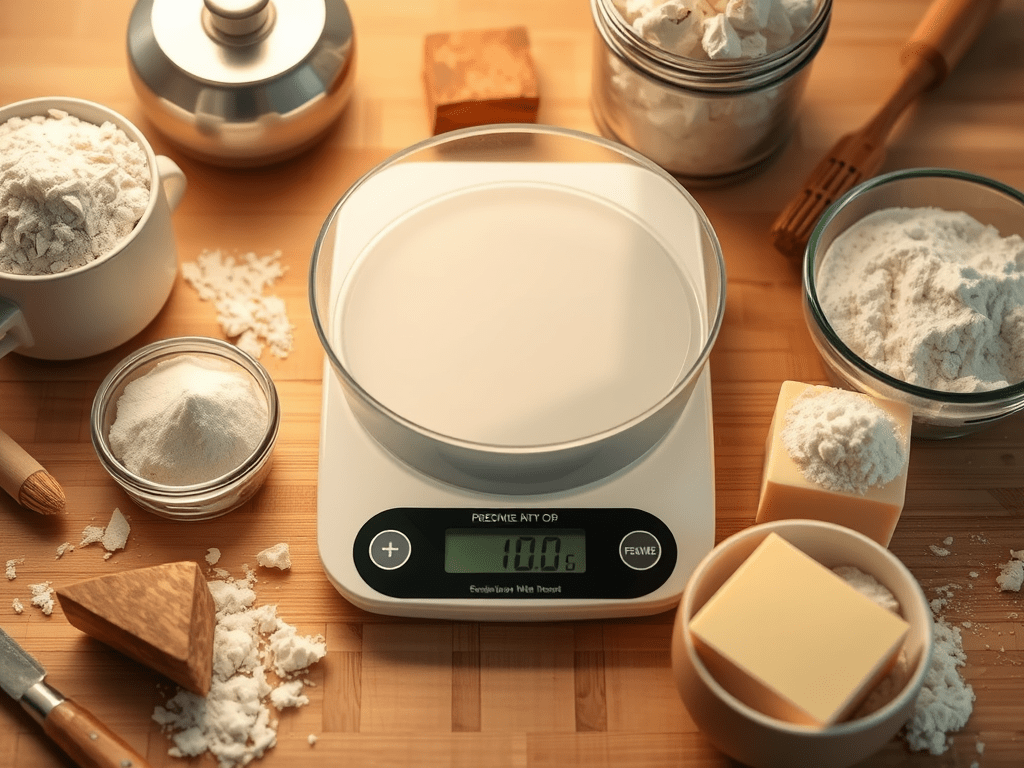
    Go out and buy a digital scale.

    Not the fancy kind. Just a solid, reliable one.

    Get yourself a digital thermometer while you’re at it.

    Knowing the internal temperature of your roast matters more than what the recipe says 45 minutes in the oven should look like.

    These two tools—simple and affordable—will change the way you cook.

    Not because they make you smarter.

    But because they force you to slow down and pay attention.

    And that’s what cooking really is.

    It’s not chaos. It’s not improvisation.

    It’s control disguised as creativity.

    The freedom to riff, to invent, to push boundaries?

    That comes later.

    First, you need discipline.

    A foundation. A system.

    And it starts with knowing how much 200 grams of flour actually feels like.

    It starts with temperature, timing, and respect for the numbers.

    So yeah, you want to make sweets?

    Great.

    Start with the scale.

    Get your metrics straight.

    Because food is a lot like life.

    It’s better when you stop guessing.

    By Kyle Hayes

    Please Like, comment, and subscribe.

  • Homecook, Not Hero

    Homecook, Not Hero

    By Kyle J. Hayes

    I didn’t go to the Culinary Institute of America.

    Never wore crisp whites in some Michelin-starred kitchen, never barked orders across a brigade.

    I didn’t stage in Paris, and no, I never took a sabbatical to harvest sea salt in Portugal or study fermentation under a Zen monk in Kyoto.

    I’m a home cook. First and foremost.

    And that matters.

    Not because it’s lesser.

    But because it’s real.

    My kitchen is not a theater. It’s a workspace.

    It’s where dinner is made after work, mistakes burn on the pan, and the dog waits, hoping something edible hits the floor.

    I’ve taken a few classes in person. Enough to know that ego and sharp blades are a bad combination.

    But most of my knowledge? Most of what I’ve learned about food—about cooking, technique, flavor, and fire—came from TV cooking shows and late-night dives into YouTube videos and blogs written by people who probably never wore a toque.

    And because I’m naturally stubborn, many of those lessons came the hard way.

    The painful way.

    Sliced fingers. Burnt sauces. Broken emulsions.

    Learning, not by reading, but by failing.

    And if you’re here—reading this—you probably want to learn, too.

    Let me do something I wish more people did when I was starting out.

    Let me save you a little pain.

    Start with the Knife

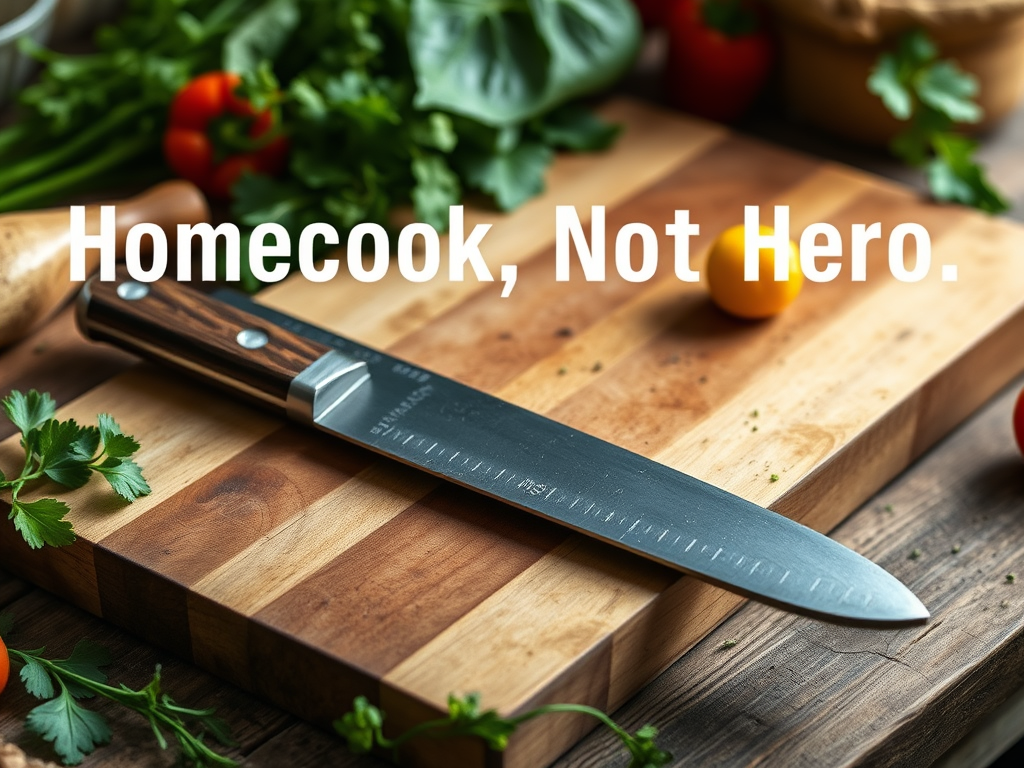
    Get yourself a real chef’s knife.

    Not the overpriced artisan steel you see on Instagram, not the flashy blades that look like they were forged by elves and come with a custom leather sheath. And definitely not the 27-piece Ginzu set some guy in a too-tight polo is selling on an infomercial.

    No.

    What you need is one good knife.

    Something balanced.

    Something you can resharpen, not throw away.

    It doesn’t have to be expensive. It just has to be honest.

    This knife?

    It will be your best friend—and your most significant threat.

    Treat it with respect.

    Learn to Use It

    Don’t worry about speed.

    You’re not auditioning for Top Chef.

    You’re trying to get through dinner without losing a finger.

    Use the internet.

    Watch the pros. Pause, rewind, practice.

    Learn the claw grip, how to hold the blade, how to rock it, not slam it.

    And each time you come away without injury, count it as a win.

    Because cutting yourself doesn’t mean you’re bold or brave.

    It just means you weren’t paying attention.

    Cooking is about focus.

    Precision.

    Rhythm.

    Knife skills aren’t just for looking cool—they’re about control,

    About respecting the ingredients and yourself.

    The Real Education

    In the age we live in, everything you need to know is out there.

    A click away.

    Want to learn how to break down a chicken?

    Roast bone marrow? Build a stock? It’s all waiting for you.

    You don’t need a degree.

    You need curiosity and maybe a willingness to be humbled.

    Cooking is one of the few things that can still remind you daily that you’re not as smart as you think.

    But if you pay attention, listen, and try again and again…

    You get better.

    So, no, I’m not classically trained.

    But I’m trained just the same.

    By the repetition that slowly teaches you how to get it right, burnt toast and cold pan oil, overcooked rice, and underseasoned chicken.

    And if you’re just starting out—welcome.

    Get the knife.

    Keep it sharp.

    And remember: every scar has a story, but it doesn’t have to be yours.

    Please like, comment and subscribe

  • What Happened to the Food Network?

    What Happened to the Food Network?

    By Kyle J. Hayes

    This has been on my mind for quite some time now.

    I didn’t want to write it. Honestly, I didn’t.

    Because this is something I loved. I still do, somewhere deep beneath the mess it’s become.

    There was a time—not that long ago—when the Food Network was sacred ground.

    A place where you learned, and recipes weren’t just entertainment—they were an invitation.

    An onion wasn’t a punchline or a mystery basket twist. It was the start of something real.

    You’d sit down, flip it on, and suddenly, you’d be guided through the slow, patient beauty of roasting a chicken or building a béchamel.

    The chefs were teachers.

    The food was possible.

    It wasn’t about flash or drama or who could sculpt the tallest cake while blindfolded in a wind tunnel.

    It was about cooking.

    It was about learning to feed yourself and the people you love.

    And now?

    Now, it’s wall-to-wall competitions.

    Cupcakes and sabotage.

    Holiday-themed cage matches.

    The kind of shows where you never see how anything is made—just the fast-forwarded montage of panic, plating, and dramatic cuts to commercial.

    And somewhere in all of this noise, the food got lost.

    Don’t get me wrong—Guy Fieri has his lane. And he’s damn good at it.

    Diners, Drive-Ins, and Dives have become the eternal rerun of American comfort food. It’s cotton candy television. You know precisely what you’re getting—grease, cheese pulls, and one man losing his mind over chili dogs in sunglasses.

    But when that’s the backbone of your programming?

    When every show is a variation of a bake-off, cook-off, or kitchen showdown, what are you actually feeding people?

    We Used to Cook

    This is where I get personal.

    Because I learned to cook by watching the Food Network.

    I mean, really cook.

    Not sprinkle herbs on a plate and call it rustic.

    I mean, stand in the kitchen, follow the steps, make mistakes, burn the garlic, and try again.

    Dinner parties came back—not because we suddenly became gourmet, but because the shows made it seem doable.

    There was something radical about it—the idea that good food didn’t have to come from a restaurant.

    You could make risotto or bake a roast and have people over, sit down, and just be human together.

    It was empowering.

    It gave people ownership of their kitchens again.

    But then the Network changed.

    Because they didn’t want you cooking at home.

    They didn’t want you making pasta with your grandmother’s rolling pin or searing steaks in a cast iron pan you inherited.

    They wanted you to watch.

    And when you were done watching, they wanted you to go out—to one of the restaurants owned by the judges, the hosts, the celebrity chefs.

    Make no mistake—this was never about the love of food.

    Not anymore.

    This is about building brands, selling tickets, and spinning off frozen meals with a famous face on the box.

    The Food Network doesn’t teach you how to cook anymore.

    It teaches you how to consume.

    What We’ve Lost

    And look, I get it.

    Entertainment wins. Drama sells.

    People love a good showdown, a time crunch, a last-minute twist.

    But for those of us who still believe food is more than that—who believe it’s culture, memory, and connection—we’re left flipping channels, wondering where the real food went.

    And maybe it’s still out there.

    It could be on YouTube channels, in cookbooks, or in the weekend classes in the back of indie bookstores.

    Maybe it’s in our kitchens, waiting for us to come back.

    All I know is this:

    There was a time when the Food Network made us better cooks.

    And now, it just wants to make us better customers.

    And I miss the food.

    I miss the quiet.

    I miss the why.

    Please Like, Comment, and subscribe