Tag: emotional honesty

  • What’s a fear you’ve overcome — and how did you do it?

    What’s a fear you’ve overcome — and how did you do it?

    Daily writing prompt
    What’s a fear you’ve overcome — and how did you do it?

    The fear I had to overcome was the fear of truly expressing myself.

    Not writing.

    I could write.

    I had always known there were words somewhere inside me, moving around in the dark, waiting for a place to go. But expression is different from writing. Expression asks more of you. Expression does not let you hide behind cleverness or distance. It asks you to bring the real thing forward.

    The feeling.

    The thought.

    The wound.

    The part of yourself you learned to protect because the world had already shown you what it could do with anything soft.

    I grew up being teased for anything and everything. That kind of thing does not leave you all at once. People like to pretend childhood cruelty is small because children are small, but that is not true. Small hands can still leave fingerprints. Small voices can still become the echoes a person carries into adulthood.

    After a while, you learn to hold yourself back.

    You learn to measure every word before it leaves your mouth. You learn to hide enthusiasm. You learn to make yourself less visible. You learn that being seen can feel dangerous.

    So the idea of putting myself on paper, my feelings, my thoughts, my pain, my emotions, and then placing it online where anyone could read it, was terrifying.

    It felt almost unnatural.

    Like standing in the middle of a room and taking off the armor I had spent years building.

    And yet, I did it.

    Not all at once.

    Not bravely in the way people imagine bravery.

    I did it one piece at a time.

    A sentence.

    A paragraph.

    A post.

    A confession softened by craft.

    A truth placed carefully enough that I could survive seeing it outside my body.

    The more I wrote, the more something inside me began to loosen. Not disappear. Not healed completely. But loosen. Writing became a way to take what had been trapped inside me and give it shape. Once it had shape, it was no longer just pain. It was testimony. It was a memory. It was language. It was something I could hold, examine, revise, and understand.

    And the more I did it, the better I felt.

    The better I got.

    That matters too.

    Because fear wants you to believe that expression will destroy you. It tells you that if people see the real thing, they will laugh. They will turn away. They will misunderstand. They will prove every old voice right.

    And sometimes people may not understand.

    But sometimes they do.

    Sometimes someone leaves a comment that lets you know your words reached a place in them they had not been able to name. Sometimes someone tells you that what you wrote helped them. Sometimes they do not say it loudly, but you can feel it. They saw themselves in your story. They realized they were not the only ones who had carried that kind of ache.

    That changes something.

    Because then the writing is not only about me.

    It becomes a bridge.

    A small one, maybe.

    But still a bridge.

    One person telling the truth from one side of loneliness, and another person hearing it from the other.

    That is how I overcame the fear.

    Not by becoming fearless.

    I do not think that is how fear works.

    I overcame it by learning that the fear did not get the final vote. I overcame it by writing anyway. By sharing anyway. By letting the work prove to me that vulnerability does not always lead to humiliation. Sometimes it leads to a connection. Sometimes it leads to healing. Sometimes it becomes the very thing that helps someone else survive their own silence.

    And in helping them, I help myself.

    That may be the part I did not expect.

    Every time someone responds and says, in some way, I know this feeling too, I am reminded that I am not alone either. The pain I thought was only mine was never only mine. The fear I thought made me strange was part of being human. The loneliness I carried had echoes in other people.

    Writing taught me that.

    Or maybe sharing did.

    Private writing can save you in one way. But public honesty can save you in the long run. It can turn the locked room into a doorway.

    I still feel the fear sometimes.

    I still know what it costs to tell the truth.

    But I also know what silence costs.

    And I have paid enough for that.

    So I keep writing.

    I keep placing pieces of myself on the page.

    Not because it is easy.

    Because somewhere, someone may need the words.

    And maybe I need them too.

    Kyle J. Hayes

    kylehayesblog.com

    Please like, comment, and share

    Resources for Hard Times

    If you’re looking for practical help, food support, or community resources, you can visit the Salt, Ink & Soul Resources Page.
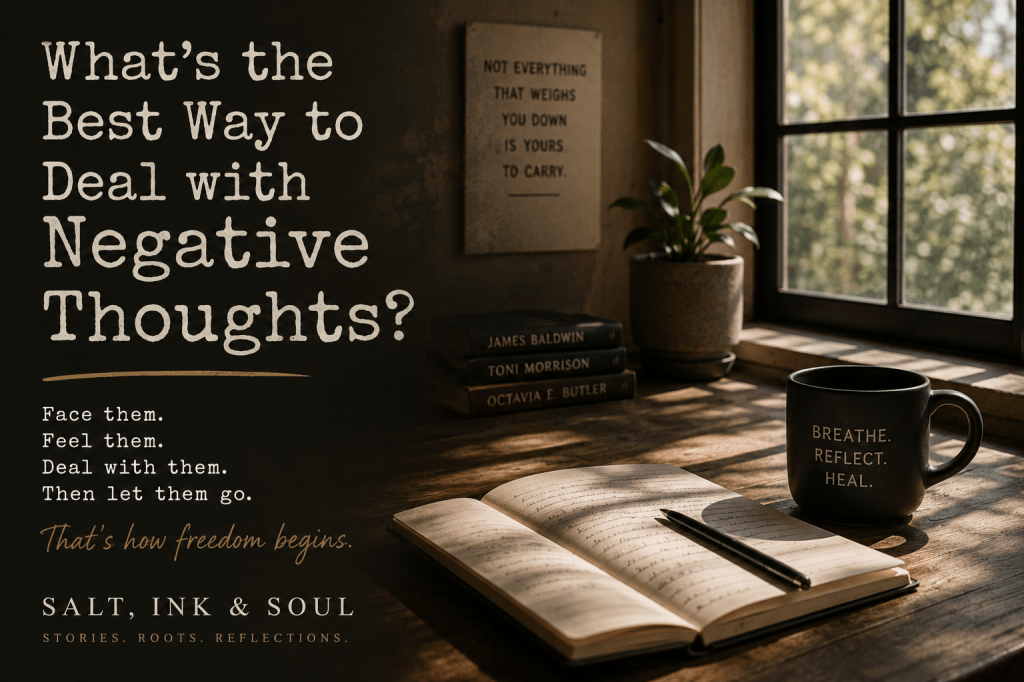
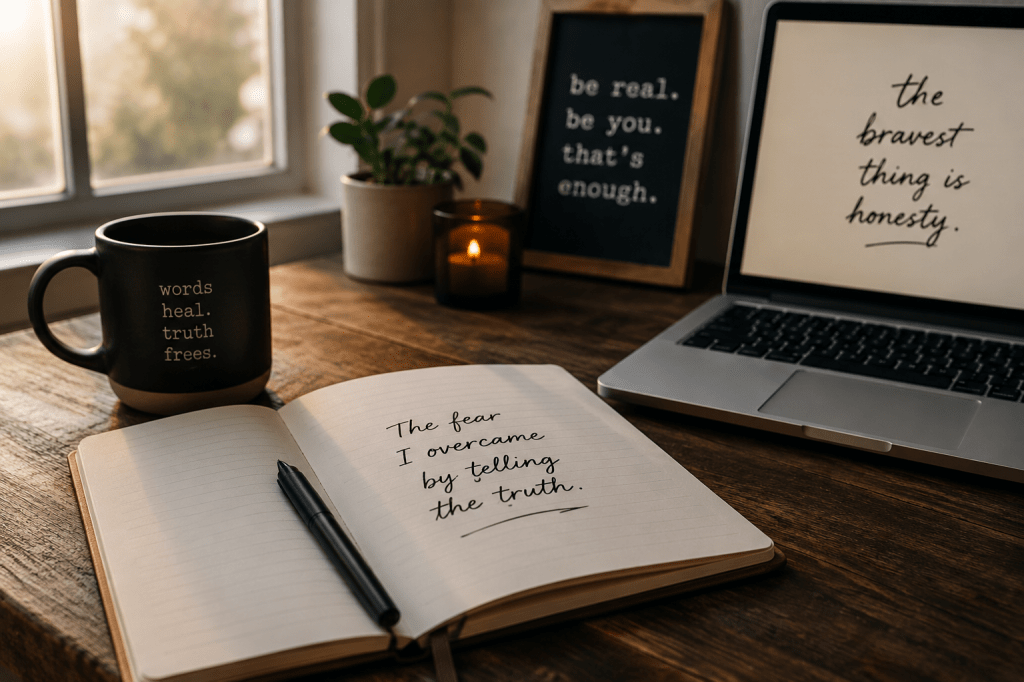
    👉 Resources for Hard Times

  • Do you believe in soulmates?

    Do you believe in soulmates?

    Daily writing prompt
    Do you believe in soulmates? Why or why not?

    I want to.

    That is the honest answer.

    Not the polished one. Not the answer dressed up for people who need certainty. Not the answer that pretends I have made peace with everything the world has shown me.

    I want to believe in soulmates.

    I want to believe there is someone out there whose spirit recognizes yours before language has to explain anything. Someone who sees the strange shape of your silence and does not run from it. Someone who understands the parts of you that came from pain, not because they enjoy the wound, but because they know healing does not happen when a person is asked to hide what hurt them.

    I want to believe in the kind of love that feels less like discovery and more like return.

    Like arriving somewhere your soul had been walking toward before your body knew the road.

    But the world has a way of making belief expensive.

    The world keeps showing me something else.

    That people leave.

    That promises can be made sincerely and still break under the weight of ordinary life.

    That chemistry is not destiny.

    That wanting someone deeply does not mean they are meant for you.

    That longing can dress itself up as fate if you are lonely enough.

    And that is the part that bothers me.

    Because I would love for soulmates to be true.

    I would love for there to be some sacred architecture beneath all this confusion. Some quiet design. Some person placed in the world with a heart shaped closely enough to mine that, when we finally found each other, the ache would make sense.

    But reality is rarely that gentle.

    In reality, love is not a fairytale.

    It is not guaranteed.

    It does not arrive because you have suffered enough to deserve it. It does not guarantee a reward for endurance. It does not always find the people who are ready for it. It does not always stay with the people who would have honored it.

    And maybe that is why the idea of soulmates hurts.

    Not because it is childish.

    Because it is beautiful.

    And beautiful things are painful when the world keeps refusing to confirm them.

    There is a sadness in wanting to believe something your experience keeps disproving. A private kind of grief. The kind you do not always say out loud because people will either mock you for being too romantic or scold you for being too bitter.

    But I do not think it is bitter to tell the truth.

    I think it is human.

    I think most of us carry some version of this question.

    Is there someone made for me?

    Or am I supposed to keep becoming whole without waiting for anyone to recognize the pieces?

    Maybe the truth is that soulmates do not exist the way we were taught to imagine them. Maybe no one is born as the missing half of us. Maybe no one comes fully equipped to understand, heal, rescue, and complete another person.

    Maybe that is too much to place on any human being.

    Maybe it is unfair.

    But still.

    Still, I understand the wanting.

    I understand wanting one person whose presence makes the room feel less hostile. One person who sees you without turning you into a project. One person who chooses you without needing you to become easier to love.

    That desire is not foolish.

    It is tender.

    It is proof that some part of us still believes connection should be deeper than convenience. That love should be more than timing, attraction, shared interests, and fear of being alone.

    But if I am honest, I do not know if I believe in soulmates anymore.

    I believe in compatibility.

    I believe in effort.

    I believe in kindness repeated over time.

    I believe in people choosing each other after the first spell wears off.

    I believe in friendship as the spine of love.

    I believe in patience.

    I believe in the quiet work of learning someone honestly, not the fantasy version, not the convenient version, but the real person standing there with their history, habits, wounds, and weather.

    Maybe that is less magical.

    But maybe it is more merciful.

    Because if soulmates are not real, then love is not about finding the one person the universe assigned to you.

    It is about finding someone willing to build something true.

    And being willing to build it too.

    Still, I will not pretend the loss of the fairytale does not make me sad.

    It does.

    There is a grief in outgrowing certain hopes.

    There is a loneliness in realizing the world may not be arranged around our deepest desires.

    But maybe there is also freedom there.

    A hard freedom.

    The freedom to stop waiting for fate to prove we are lovable.

    The freedom to know that love, if it comes, will not be less meaningful because it was not written in the stars.

    Maybe it will matter more because two people, with every reason to be selfish, distracted, afraid, and wounded, chose tenderness anyway.

    Not because destiny forced them.

    Because they decided.

    And maybe that is the closest thing we get.

    Not soulmates as a fairytale.

    Not one perfect person made to complete us.

    But two imperfect people choosing, again and again, not to make the world harder for each other.

    I wish I believed in soulmates.

    I truly do.

    But maybe what I believe in now is quieter.

    Less certain.

    Less romantic in the old way.

    I believe in the ache that makes us hope for them.

    I believe in the sadness that comes when we doubt they exist.

    I believe in the courage it takes to keep a soft place inside yourself, even after the world keeps showing you reasons to harden.

    And maybe that softness is the soul’s real mate.

    The part of us that still wants love to be true.

    Even when we are no longer sure the fairytale is

    Kyle J. Hayes

    kylehayesblog.com

    Please like, comment, and share

    Resources for Hard Times

    If you’re looking for practical help, food support, or community resources, you can visit the Salt, Ink & Soul Resources Page.

    👉 Resources for Hard Times

  • Trying to Be Useful

    Trying to Be Useful

    Hello all,

    I have always been what some people call book smart.

    I know things.

    Some useful.

    Some not.

    Some filed away in the crowded rooms of my mind for reasons even I do not fully understand.

    I can remember fragments of history.

    A line from a song.

    The meaning behind a movement.

    The reason something happened long before I was born, and why it still has its hand around the present.

    For much of my life, knowledge has been a tool.

    It gave shape to things that hurt.

    It gave language to silence.

    It gave me something to hold when the world felt too large and too indifferent.

    But lately, I have been reminded of something humbling.

    There are moments when knowledge is not enough.

    I have another friend battling a terrible illness, and I find myself standing in that helpless place where the mind keeps reaching for answers and comes back with empty hands.

    I know the power of prayer.

    I believe in prayer.

    I believe in the quiet force of it.

    I believe there are rooms we cannot enter, battles we cannot fight directly, pain we cannot remove, and still our prayers can travel where our hands cannot.

    But I would be lying if I said prayer has quieted all of me.

    Because there is another part of me that wants to do more.

    That part of me wants a list.

    A plan.

    A solution.

    A way to fix what is breaking.

    A way to step into the storm and make myself useful.

    And that is where the ache begins.

    I am used to figuring things out. I am used to turning problems over, studying the corners, looking for the door everyone else missed. I am used to believing that if I sit with something long enough, I can find a path.

    But illness does not always offer a path.

    Sometimes illness is a locked room.

    Sometimes love stands outside of it with no key.

    That is a hard thing for a person like me to admit.

    Because when someone you care about is suffering, being still can feel like failure. Waiting can feel like abandonment. Saying “I am praying for you” can feel small, even when it is not.

    And maybe that is the difficulty.

    Not that prayer is weak.

    But that love is restless.

    Love wants hands.

    Love wants legs.

    Love wants to carry groceries, pay bills, sit in hospital rooms, answer phones, make soup, raise money, hold silence, and somehow bargain with the universe for more time.

    Love does not like standing helpless.

    And yet, so much of being human is learning how to stand in places where we cannot control the outcome.

    That may be one of the hardest lessons of adulthood. Not responsibility. Not discipline. Not survival. But the knowledge that you can love someone deeply and still not be able to save them from what they are facing.

    There is a particular kind of pain in that.

    It strips away the illusion that intelligence is protection. It reminds you that all the books, all the facts, all the carefully stored knowledge in the world cannot always tell you what to do when someone you love is hurting.

    And maybe that is why I have felt useless lately.

    Not because I am useless.

    But because the tools I usually trust do not seem large enough for the moment.

    Still, I am trying to remember that usefulness does not always look like rescue.

    Sometimes usefulness is presence.

    Sometimes it is a phone call.

    A message.

    A prayer whispered when no one is watching.

    A meal was dropped off without needing credit.

    A donation.

    A shared link.

    A ride.

    A quiet check-in that does not demand a response.

    A willingness to keep showing up after the first wave of concern has passed.

    Sometimes, usefulness is not solving the pain.

    Sometimes it refuses to let someone feel alone inside it.

    I am thinking about that now.

    I am praying.

    I am listening.

    I am looking for what can be done.

    Maybe that is where I begin.

    Not with the grand gesture.

    Not with the perfect answer.

    Not with the fantasy that I can fix what illness has broken.

    But with what I have.

    My prayers.

    My words.

    My books.

    My small platform.

    My willingness to ask others to care with me.

    Maybe that is nothing.

    Maybe, in a world that often teaches us to look away from suffering because it makes us uncomfortable, choosing to stay near is already an act of love.

    I do not yet know exactly what to do.

    That is the honest truth.

    But I know I do not want to do nothing.

    So I will keep praying.

    I will keep thinking.

    I will keep looking for the things my hands can do.

    And maybe that is what care becomes when we are out of answers.

    A prayer first.

    Then a step.

    Then another.

    Kyle J. Hayes

    kylehayesblog.com

    If this found you at the right time,

    Feel free to like, comment, or share it with someone who might need it too.

    Resources for Hard Times

    If you’re looking for practical help, food support, or community resources, you can visit the Salt, Ink & Soul Resources Page.

    👉 Resources for Hard Times

  • Light the Candle Anyway

    Light the Candle Anyway

    I like Christmas.

    I like the lights strung too tightly across porches, the decorations that appear overnight as if the neighborhood agreed on a quiet truce with darkness. I like the music—some of it at least—and the movies most of all. The old ones. The ones that arrive every year like familiar witnesses, reminding you that time keeps moving whether you’re ready or not.

    I genuinely like these things.

    All of them.

    And still, something is missing.

    There’s supposed to be a warmth that comes with this season, a fullness that settles somewhere in the chest, a feeling people speak about as if it’s inevitable—like snowfall or sunrise. But for me, that space feels hollow. Not empty exactly. More like a room that remembers being lived in, but hasn’t been occupied in a long time.

    I’ve noticed that absence more acutely as the years pass. Christmas doesn’t hurt.

    It just… echoes.

    The Space Between

    For a long time, I responded to that hollowness by quietly opting out.

    No decorations.

    No tree.

    No deliberate effort to invite the season inside my walls.

    Not out of bitterness—just a kind of emotional economy. Why set a place at the table for a feeling that might not show up?

    But this year, something shifted.

    Not dramatically. Not with a revelation or a promise to feel differently. Just a small, stubborn thought that kept returning, dressed up as a borrowed line from a movie I’ve carried with me for decades:

    If I build it, it will come.

    So this year, I’m decorating.

    Not because I suddenly feel festive.

    Not because joy has arrived early and knocked politely.

    But because sometimes hope isn’t about how you feel—it’s about what you do anyway.

    Choosing Hope Without Demanding Joy

    There’s an unspoken rule around the holidays: you’re supposed to feel something specific.

    Gratitude.

    Warmth.

    Cheer.

    A sense of completion.

    And if you don’t, it can feel like a personal failure—like you missed a memo everyone else received.

    But Christmas Eve, if you really look at it, isn’t about arrival.

    It’s about waiting.

    It’s the night before. The space between. The moment when nothing has happened yet, and that’s precisely the point. Christmas Eve doesn’t ask you to open gifts, sing loudly, or prove anything.

    It asks you to sit with anticipation—however fractured that anticipation might be.

    For some people, that anticipation is joyful.

    For others, it’s complicated.

    For many, it’s heavy with memory, absence, and unfinished grief.

    And still, the night remains.

    The Candle

    That’s where the Candle comes in.

    Lighting a candle isn’t a declaration of happiness. It isn’t a performance of belief or a promise that everything is fine. It’s an acknowledgment of darkness—and a refusal to let it have the final word.

    A candle doesn’t banish the night.

    It simply says:

    I’m still here.

    The Quiet Work of Building Something First

    I haven’t decorated my home in years. Not because I hate the season, but because I didn’t want to confront the gap between what Christmas is supposed to feel like and what it actually feels like inside me.

    Decorating means effort.

    It means intention.

    It means admitting you want something to happen—even if you’re not sure it will.

    This year, I’m doing it anyway.

    Not as a ritual of joy, but as an act of survival.

    I’m hanging lights not because my heart is full, but because it isn’t. I’m placing decorations not to summon nostalgia, but to acknowledge that I’m still capable of making space. Still willing to try. Still open enough to say, maybe.

    Maybe warmth doesn’t arrive on its own.

    Maybe it needs scaffolding.

    Maybe it needs permission.

    Or maybe it never comes at all—and the effort still matters.

    Because the real loss isn’t failing to feel the right thing.

    It’s giving up on the possibility of feeling anything.

    Holding Space

    Christmas Eve doesn’t need you to be joyful.

    It needs you to be present.

    It needs you to recognize that choosing hope doesn’t always look like celebration. Sometimes it looks like lighting a candle in a room that feels too quiet and letting that small flame testify on your behalf.

    Sometimes hope is understated.

    Sometimes it’s tired.

    Sometimes it shows up without confidence.

    But it shows up.

    And tonight, that’s enough.

    If your heart feels full, celebrate.

    If it feels heavy, you’re not broken.

    If it feels hollow, you’re not alone.

    Light the Candle anyway.

    Not because you’re sure something will come—but because the act itself is a declaration:

    I am still willing to make room.

    And on Christmas Eve, that may be the most honest form of hope there is.

    Kyle J. Hayes

    kylehayesblog.com

    Please like, comment, and share

    Resources for Hard Times

    If you’re looking for practical help, food support, or community resources, you can visit the Salt, Ink & Soul Resources Page.

    👉 Resources for Hard Times

  • Don’t Answer Too Fast

    Don’t Answer Too Fast

    This reflection was written in response to the passing of Lamar Wilson.

    When a man dies, the world rushes to explain him.

    We build stories quickly—causes, warnings, neat conclusions—because uncertainty makes us uncomfortable. But the truth is simpler and harder to sit with: the only person who can fully name the reasons someone leaves this life is the person who left it. Everyone else is guessing in the dark.

    Still, the darkness teaches us things if we’re willing to look.

    There is a place where it’s just you.

    No audience.

    No applause.

    No performance.

    Just you, alone with your thoughts, listening to them pace the room.

    That place is where the real battle lives.

    Some people look like they have everything. Visibility. Momentum. Laughter. A life that seems full from the outside. But sometimes, all of that is scaffolding for a private war. Sometimes success isn’t peace—it’s camouflage.

    Especially for Black men.

    We are taught early how dangerous honesty can be. How pain is read as weakness. How softness is punished. How exhaustion is moral failure. The world prefers us sharp or silent—never tender, never unsure.

    So we learn to armor ourselves. We learn how to smile through weight. How to carry pressure without complaint. How to translate suffering into something palatable.

    And then we pass that lesson to each other.

    “You good?”

    It’s a small question, almost polite. A check-in that lasts no longer than a breath. We ask it in passing—at work, in hallways, in group chats, at cookouts. And the answer is almost always the same.

    “I’m good.”

    Sometimes it’s true.

    Often it’s not.

    “I’m good” keeps things moving. It protects the room. It spares everyone the discomfort of slowing down. It’s the answer you give when you don’t know how much space your truth would be allowed to take.

    Because telling the truth can feel dangerous.

    There is a particular loneliness in being surrounded by people who know your face but not your fight in being visible and unseen at the same time. In realizing that the strength as it’s been taught to you requires a kind of daily self-erasure.

    This is the quiet violence no one names.

    Not sirens.

    Not headlines.

    Just the steady pressure of swallowing yourself because the world has never been kind to men who admit they are drowning.

    And so the battle stays private. Fought every day. From the moment you wake up to the moment sleep finally loosens its grip. A war without witnesses. A war without language.

    What if we stopped answering too fast?

    What if, instead of reflex, we allowed the question to linger long enough for honesty to find its footing?

    “No. I’m not good.”

    That sentence is not weak. It is a risk.

    It is opening a door without knowing who will stay. It is admitting you are human in a world that has asked you to be indestructible. It is naming pain without packaging it as motivation, humor, or grit.

    And it is a beginning.

    Not a solution.

    Not a cure.

    A beginning.

    Because once the truth is spoken, the battle is no longer invisible. It becomes something that can be shared, witnessed, and held. And being witnessed—truly witnessed—is not nothing. It is not a platitude. It is a form of care.

    We won’t save everyone by asking better questions. We won’t fix despair with the right words. This isn’t about heroics.

    It’s about presence.

    So we could change the ritual. Maybe we should

    “How are you really holding up?”

    And then we stay quiet long enough for the answer to breathe.

    No fixing.

    No rushing.

    No telling someone how strong they are.

    Just staying.

    If you’re reading this and you have been answering too fast—if you have been saying “I’m good” when you’re not—please hear this clearly:

    You do not have to fight the entire war alone.

    Say it once.

    To one person.

    To someone safe.

    “No. I’m not good.”

    That sentence will not solve everything. But it can keep you here long enough for something else to begin.

    And if someone says it to you—if a brother finally lets the truth slip—don’t reach for wisdom. Don’t reach for advice.

    Reach for presence.

    “I’m here.”

    “I’m listening.”

    “You don’t have to carry this by yourself.”

    We don’t need perfect answers.

    We need rooms where the truth can survive being spoken.

    The battle is real.

    And it is daily.

    But it should not be silent.

    And it should not be solitary.

    Kyle J. Hayes

    kylehayesblog.com

    Please like, comment, and share

    Resources

    If this reflection brings up more than you expected, and you’re in the U.S., you can call or text 988 to reach the Suicide & Crisis Lifeline. If you’re elsewhere, local crisis resources are available in many countries. You don’t have to hold everything alone.