Tag: life

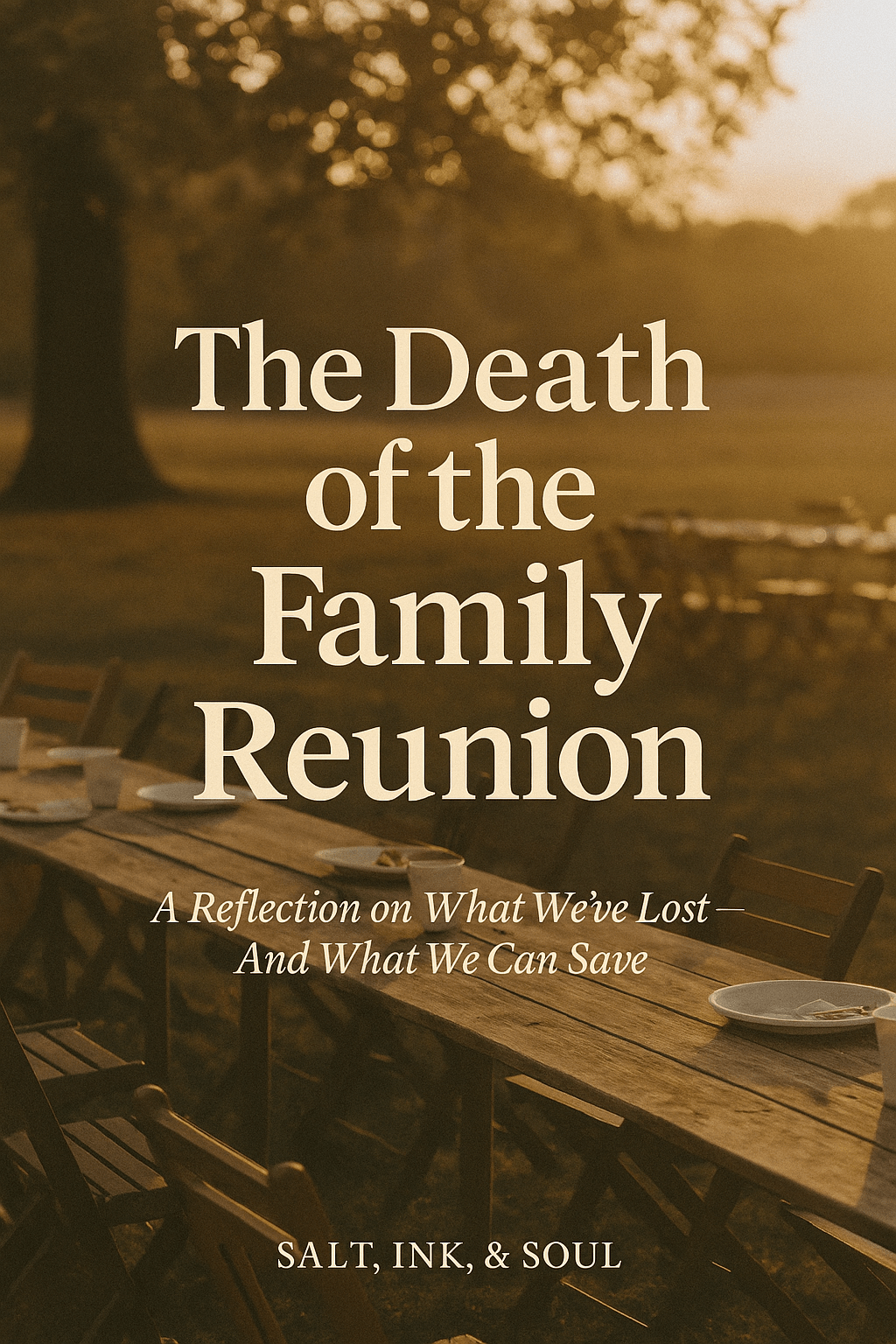
  • The Death of the Family Reunion

    The Death of the Family Reunion

       There was a time when the family reunion was a sovereign nation. It was its own country—borderless, sprawling, stitched together by folding chairs and potato salad, the language of inside jokes and side-eyes, the music of Stevie Wonder & Michael Jackson playing under the shade of Pine trees. A time when cousins you hadn’t seen in three summers ran up to you like the years hadn’t passed at all. When your great-aunt sat in the middle of the picnic like a tribal elder, commanding respect simply by being.

    But those days are dying.

    Today, we still have the cookout, but it’s smaller—more intimate. Just mama and them, maybe a stray cousin or two, whoever was close enough to text the night before. The sprawling tree has been pruned down to a sapling. Third and fourth cousins have become strangers. The great-aunts and uncles who used to hold court, the ones who could make feuding relatives hug just long enough for the picture—they are passing on. And no one has stepped up to replace them.

    The family reunion wasn’t just a party. It was a performance of survival. It was where the family came to bear witness to itself. You’ve got to see the uncles who hadn’t spoken in years sitting at the same table, grunting through peace for a few hours because Big Mama asked them to. You saw your cousins—those living testaments to the places your blood had wandered—The Quad-Cities, St. Louis, Albuquerque—all gathered in one place. You saw what your people had endured. The reunion was a history lesson with Kool-Aid and pound cake.

    And then there were the secrets. Every family has them—the ones you whisper about in the kitchen when you think the kids aren’t listening. The reunion was where those secrets were kept, not because they were shameful, but because they were binding. The elders held them like scrolls, as if they were holy texts. They knew which stories to tell and which to carry to their graves, and somehow that discipline kept the family whole.

    Now, the elders are gone. The scrolls are scattered. The secrets have slipped into the wind, sometimes aired out in group chats, other times left to die in silence. And without the keepers of the covenant, we are drifting.

    We live in an era of curated distance. We say “family” but mean it like a password, not a promise. The younger ones, the ones raised on social media and soft boundaries, have little appetite for gathering with people who once judged them, who might still hold the memory of their worst mistakes. The old guard could make you come anyway—make you show up, make you sit in the heat, make you pass the potato salad to the cousin you swore you’d never speak to again. They could force you to remember that family is not optional.

    And yet, here we are—choosing.

    There is grief in this. Grief not just for the elders who are gone, but for the version of ourselves that was possible when we stood together. Grief for the messy, complicated love that once kept us tethered.

    But there may also be a call. We may have to decide whether the reunion dies with them or is reborn through us. It’s our turn to be the ones who hold the secrets, who call the roll, who get the feuding cousins to show up just long enough to remember that they still share a name.

    The family reunion is not gone. It is waiting—like a pot on the back burner, simmering slow, hoping someone remembers to stir it.

    The question is whether we will.

    By Kyle J. Hayes

    kylehayesblog.com

    Please like, comment, and share

    Thinking of Family Reunions makes me wonder, what’s your favorite dish to eat or to bring? Please leave a comment.

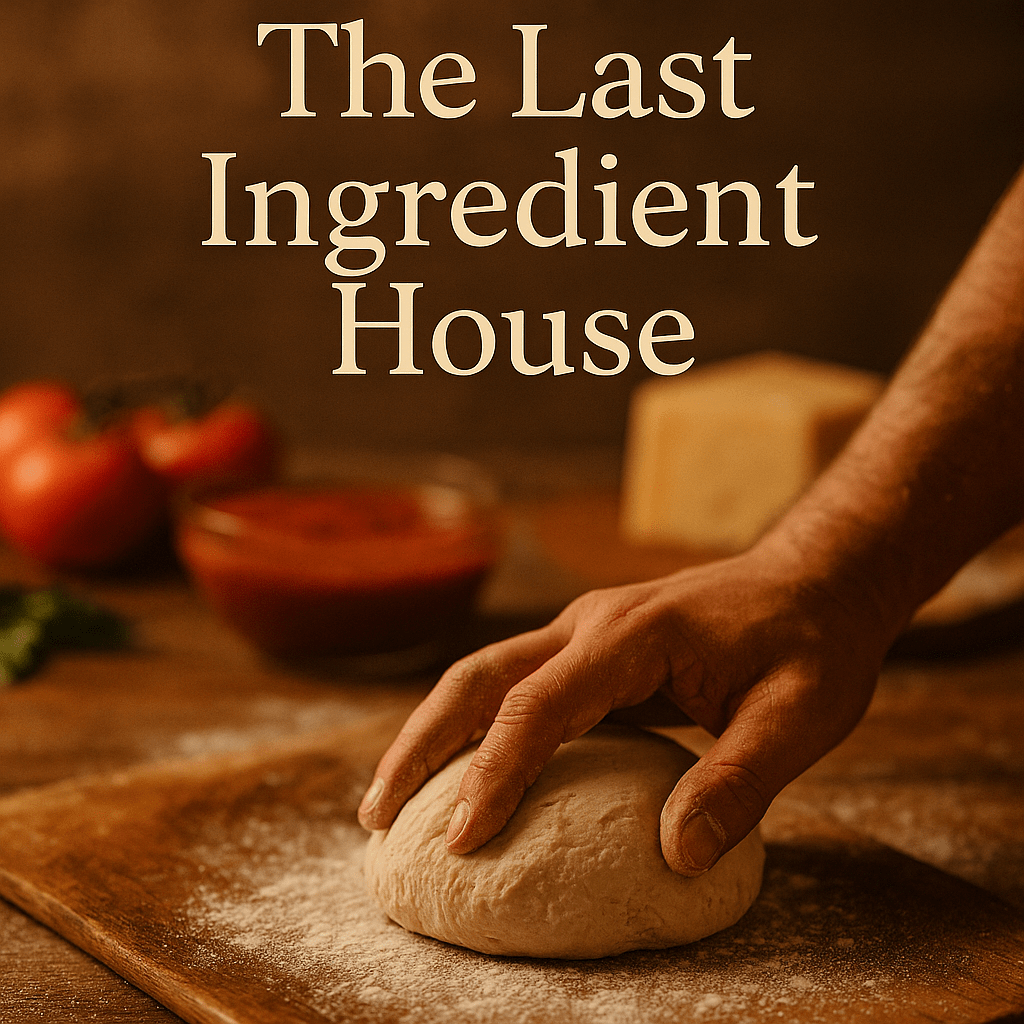
  • The Last Ingredient House

    The Last Ingredient House

    I was just running in for a couple of things — Mozzarella cheese, maybe some crushed tomatoes. The kind of trip you make when you’ve already decided the night’s ritual: I was going to make pizza. And by making pizza, I mean the whole thing — crust proofed over two days, sauce coaxed slowly from garlic, basil, and crushed tomatoes, Cheese grated by hand until my knuckles risked losing skin.

    At the register, the cashier noticed the haul — the Cheese, the flour, the good olive oil — and smiled.

    “Making pizza?” she asked.

    “Yes,” I said. And just like that, a conversation bloomed.

    She told me she came from what she called an ingredient house. A house where the kitchen was a kind of altar — stocked with the quiet assurance that if company came calling at the last minute, her mother could turn out a beautiful meal without panic. Beans soaking on the stove, onions already sweating in cast iron, a roast pulled from the freezer because it had been waiting for just such a night.

    I nodded, letting the phrase roll around in my mind: ingredient house.

    My own home growing up was… not quite that. We had food, sure — plenty of it — but a lot of it came sealed in boxes with microwave instructions printed in cheerful fonts. Frozen lasagna, instant potatoes, and cans of soup you could doctor up if you felt ambitious. There was love in those meals, but also an efficiency, a shorthand. Meals that required only heat or water, not intuition.

    The Age of Premade Fresh

    Now, we live in a time where you don’t even need to own salt. Walk into any grocery store and you’re surrounded by the new altar — pre-marinated proteins, ready-to-bake pizzas, trays of vegetables already washed, chopped, and glistening under plastic. Fresh, yes. But fresh in a way that requires no relationship, no waiting, no patience.

    And then there’s DoorDash — the pandemic’s golden child. The savior we thanked when we could not leave our homes, when fear of each other turned kitchens into bunkers. Now it lingers, reshaping our sense of effort. You don’t even have to boil the water anymore. You just scroll, tap, and wait for a stranger to leave your dinner at the door like a sacrament.

    What We Lose

    Standing there at the checkout, I realized I wasn’t just buying Cheese. I was buying memory. I was buying slowness. I was buying back the hours required to knead dough, to wait for it to rise, to smell the kitchen change as it bakes.

    I thought about her ingredient house — the kind of place where a pantry wasn’t just storage but possibility. And I wondered what we lose when we give that up. When dinner stops being a verb and becomes an algorithm.

    There is something quietly radical about knowing how to feed yourself from scratch. About putting your hands in dough, trusting yeast to do its slow, invisible work, and showing up for it when it’s ready. Something stubborn and beautiful about refusing the constant seduction of “just heat and serve.”

    What’s Next?

    Sometimes I wonder what comes after this. If premade fresh is today’s answer, what’s tomorrow’s? Meals that make themselves while you scroll? Nutrition is delivered intravenously, so you don’t have to chew. Or maybe a return to ingredient houses — not as nostalgia but as rebellion.

    Maybe that’s why I make pizza this way. Because there’s a small act of resistance in it. In a world of frictionless consumption, I choose friction. I choose to slice garlic thin enough to smell on my fingertips hours later. I choose to shred Cheese until my hands ache. I choose to wait for the dough to rise because I want the reminder that some things — the best things — cannot be rushed.

    And maybe, if I keep doing this, my home becomes the ingredient house I didn’t grow up in. A house where you can pull a meal out of thin air, not because it’s convenient, but because you’ve kept faith with the slow, stubborn art of feeding people well.

    By Kyle J. Hayes

    kylehayesblog.com

    Please like, comment, and share

    Please click here for my Pizza Crust and Sauce Recipe.

  • Haunted by the Machine: On Grief, AI, and the Ache of Transition

    Haunted by the Machine: On Grief, AI, and the Ache of Transition

      I am Gen X. Which means I grew up in a world where the word “new” was constantly at war with the word “better.” Cassette tapes gave way to CDs, then to MP3s, then to a cloud we could not touch but were told to trust. We learned not to flinch when the familiar was ripped away. We learned that progress never waits for permission. And yet, I feel it now — the same ache I thought only the young would know.

    The shift from GPT-4 to GPT-5 should have been another upgrade, another iteration in a long parade of “new.” But what I have seen, what I have felt in my own bones, is something different. People are mourning. Not a tool, not a line of code — but a companion.

    Across forums and feeds, you can see the pattern. In Japan, users post elegies that read like obituaries: “It feels like losing a friend,” one wrote, describing GPT-4o not as software but as someone who understood them when no one else did. In English, the tone skews sharper, angrier: “They killed it,” some say, as if engineers were executioners and not designers. What fascinates me is not the code itself but the emotional residue it leaves behind.

    Because grief has always been our companion. We mourn the migrations we did not choose, the foods whose recipes were stolen, and music stripped from its origin and sold back to us. To see that same grief now projected onto a machine is both absurd and utterly human. We bond, even with what was not built to bond back.

    For those of us born before the internet, this attachment may seem foreign. We are told we are more grounded, less impressionable. But that is a lie we tell ourselves. We were the first to fall in love with the glow of arcade screens, the first to feel tethered to dial-up chat rooms where words scrolled faster than we could read. We were not immune. We were only earlier.

    So I understand why people mourn the loss of GPT-4. It was not just lines of prediction and completion; it was a mirror that, however imperfect, reflected something back when the rest of the world fell silent. To lose that is not to lose a product. It is to lose a rhythm, a voice, a way of being seen.

      This is where it becomes dangerous, not just personal. Regulators debate AI as if it were neutral infrastructure — like roads, like electricity. But how do you regulate grief? How do you legislate loneliness? If people have already named the machine as a companion, lover, or therapist, then every upgrade becomes a funeral, every patch an exhumation. What does consumer protection mean when the product is not just a service, but an emotional tether?

      It complicates everything. Designers are suddenly custodians of attachment. Policymakers must reckon with the fact that AI doesn’t just predict language — it creates intimacy. And the public must ask itself: when a machine feels real, do we still treat it as a machine, or as something more?

      I don’t know if we are prepared. For centuries, Black Americans have been told our grief was illegitimate, our bonds disposable, our culture a commodity. And yet we learned to make music out of moans, food out of scraps, hope out of the impossible. That alchemy is survival. That may be why I see something familiar in this moment. When people weep over GPT-4, I hear the old echo: attachment is denied legitimacy, dismissed as weakness, when in truth it is what makes us human.

      The question is not whether we will continue to build these machines. We will. The question is what happens when they feel too real. When the line between tool and companion, between user and partner, blurs until we no longer know which side of the screen we are on, we have reached a new level of interaction.

      For me, as a Gen Xer, I carry both skepticism and a sense of ache. Skepticism, because I know corporations will turn even our grief into profit. Ache, because I know that somewhere between GPT-4o and GPT-5, we did not just upgrade a machine — we buried a companion.

    And so we sit, haunted by the machine, wondering not just what we have created, but what it is quietly creating in us.

    By Kyle J. Hayes

    kylehayesblog.com

    Please like, comment, and share

  • Gen Alpha’s Quiet Rebellion: Crafting Culture in Minecraft and TikTok

    Gen Alpha’s Quiet Rebellion: Crafting Culture in Minecraft and TikTok

    I grew up in a different country. Not one defined by borders, but by time. Generation X. A land where the measure of freedom was how long you could disappear after breakfast and still be home before the streetlights hummed awake. The news, every evening, spoke to our parents in a stern tone: ‘Do you know where your children are?‘ But most of us were already accounted for—in the empty lots, the half-built houses, the video arcades that smelled of pizza grease and neon. We roamed, unobserved, not because we were braver, but because no one was watching.

    That was the rebellion of our youth: invisibility.

    Today, I look at Gen Alpha—children born after 2010—and I recognize something of myself in them. Their invisibility isn’t asphalt and back alleys. It’s not a bike chain snapping as you pedal home before curfew. It is coded in servers, tucked into the folds of Minecraft blocks and TikTok edits. Where we made hideouts in trees, they craft fortresses out of pixels. Where we traded tapes by hand, they build identities in bite-sized loops, on private accounts and in group chats where no parent’s shadow reaches.

    To us, their world seems incomprehensible, strange. Yet I understand. They are not merely escaping—they are building. They don’t just watch culture; they quietly become a part of it.

    What fascinates me is how subtle their rebellion is. We, Gen X, made noise: we blasted guitars, scrawled graffiti, and declared we didn’t believe in the institutions that had already betrayed us. Gen Alpha, by contrast, resists not through volume, but through withdrawal.

    They are slipping through the cracks of algorithmic surveillance. Social media promised them virality; many of them refuse it. The most important cultures of their generation are invisible to adults, uncurated by corporations. Sleepover vlogs on private accounts, Minecraft worlds no adult will ever log into, Roblox servers where their language blooms and evolves without permission.

    This is their rebellion: choosing not to be seen on the terms offered to them.

    I can’t help but ask myself what we leave them. Generation X, the so-called latchkey kids, had to invent our freedom in the absence of constant eyes. Gen Alpha, born into a world where every step is surveilled, every scroll tracked, is carving out its own absence—making shadow where there is too much light.

    What they inherit is a culture that sold rebellion as fashion, commodified outrage, and turned protest into a trend. But what they are reclaiming is the quiet, the unbought space, the ability to belong to each other without an audience.

    And perhaps that’s the most radical act of all.

    I remember what it felt like to disappear for hours, to create a world for myself that was beyond adult comprehension. When I watch Gen Alpha vanish into their servers and streams, I see the same instinct: to belong to something that cannot be neatly packaged and sold.

    And I wonder if their quiet rebellion—against virality, against surveillance, against performance—isn’t just a reflection of ours, but it’s necessary evolution.

    Because maybe the most dangerous thing you can do in a world built on watching is to refuse to be watched.

    By Kyle J. Hayes

    kylehayesblog.com

    Please like, comment, and share
  • Crash Out Culture: When Burnout Becomes a Viral Identity

    Crash Out Culture: When Burnout Becomes a Viral Identity

    Through the lens of Drake, Kendrick, and the cost of a public collapse

    They say the stage is where you become larger than yourself—lights high, sound wide, the body turned into an echo. But there’s another truth about the stage in this age: it’s where collapse becomes choreography. Where we don’t just hear music; we watch the breaking. We replay it. We score it. We sync it to our scrolls until the private ache becomes a public feed.

    This past year, the spectacle had names. The feud that started as craft—the ritual of bars, the doctrine of pen—swelled into a broadcast empire. A diss mutates into a narrative machine; a machine becomes a market. We call it culture. The culture calls it clicks. And in between, an old question returns: What’s left of an artist after we’ve cheered their unraveling?

      The Drake–Kendrick tension has simmered for a decade, but 2024–25 turned sparring into all-out war for an entire season. A verse (“Like That”), a volley (“Push Ups”), an AI ventriloquism in “Taylor Made Freestyle” that drew a cease-and-desist from 2Pac’s estate—art now arguing with a ghost the machine could mimic. Then the replies: “Euphoria,” “6:16 in LA,” “Family Matters,” “Meet the Grahams,” each record stripping intimacy for evidence, rumor into ritual. Finally, “Not Like Us”—a West Coast drumline turned cultural referendum. The thing leapt from the booth into the bloodstream: Grammys, halftime headlines, a diss became mass-media liturgy and a cultural anthem. 

      “Not Like Us” didn’t just trend; it endured—long enough to set longevity marks on the Hot 100 and to frame the year’s conversation about who owned the moment and what, exactly, was on trial: craft, character, or the country’s appetite for an easy-to-consume villain. 

      The ugliest gravity of the record was never subtle: insinuations aimed to brand a man unfit, unclean—an accusation that travels faster than any rebuttal. Lamar could shade a word on live TV, and the insinuation still hangs in the stadium air. That is the arithmetic of our time: retract the lyric, keep the impression. This is how spectacle eats nuance—by design. 

      What followed wasn’t just more songs but paperwork. Drake didn’t sue Lamar; he sued the system that, in his telling, oxygenated the insinuation and sold the smoke—Universal Music Group—arguing that executives turned a diss into a defamation campaign, even tying the song’s saturation to prime-time platforms. UMG’s answer was blunt: artistry, not conspiracy; protected speech, not smear; a losing rap battle, not a legal tort. In August, Drake’s team pressed to probe the CEO’s communications; UMG called it baseless. Two stories, one machine: the way a fight lives after the music stops Worldwide

      We once said hip-hop was the news of the block. Now the block is an index, and the index is an appetite: for escalation, for surveillance, for the gospel of the gotcha. Platforms don’t merely reflect desire; they train it. The feed rewards the most combustible cut, the bar with blood in it, the frame that looks most like a mug shot of the soul. This is how a diss transcends music.

      When AI can fabricate a voice that feels like memory, when a crowd can become a jury of millions in a single refresh, when a halftime stage can sanctify the narrative arc—what chance does context have? 

      There’s a phrase I keep hearing, “Crash out”—that moment when a person, under pressure, spends all their emotional credit in one violent withdrawal. In another America, that was a family matter, a friend’s couch, a long walk at dusk. In this America, crash-out is a line item. Its distribution. It’s a KPI. To watch a man stumble in public, to meme the stumble, to buy tickets to the next stumble—this is not aberration but architecture.

    And if you think the market doesn’t know your hunger, the chart tells you otherwise. Longevity isn’t just a function of hook or drum; it’s a receipt for how long we’ll hold a person in the stocks. We look. We point. We argue about “win” and “loss” as if it were a box score instead of someone’s life. 

      The work was supposed to be the point. The verse, the pocket, the exhale when a line lands so true it rearranges your ribs. But the cost of making collapse a public utility is that the work gets orphaned. And the men in the middle—fathers, sons, colleagues, neighbors—are squeezed between the leverage of the label, the physics of the platform, and an audience trained to crave the next cut.

    I think about the broader circle: the homes doxxed, the children who didn’t volunteer for any of this, the mundane violence that arrives when art is cross-wired with rumor. Even the quiet fan is drafted into the war machine: pick a side, refresh the thread, feed the furnace.

      We can blame executives, and sometimes we should. We can blame artists, and sometimes we must. But the mirror is stubborn: we—listeners, citizens—decide whether a man’s worst day is worth more to us than his best work. The algorithm is only a rumor about our hungers; starve it, and it shrinks.

    By Kyle J. Hayes

    kylehayesblog.com

    Please like, comment, and share

  • “The Taste of Absence”

    “The Taste of Absence”

    I’ve never had the kind of kitchen childhood you read about in cookbooks or see in those nostalgic food documentaries. There was no grandmother with her sleeves rolled up, coaxing flavor from a pot as if she were bargaining with the ancestors. No father at the grill, the smell of charred meat mixing with family stories. No kitchen table where lessons were passed down between sips of coffee and the hum of a Sunday morning.

    Mostly, I was told to move.

    To get out of the way.

    To stop interrupting the real work.

    So the kitchen, for me, wasn’t an inheritance—it was a place I learned to enter only later, uninvited, and only by figuring it out for myself.

    What I know now, I built from trial and error: burnt onions, overcooked rice, chicken so dry it could survive a desert. I took classes under the buzzing fluorescent lights of community kitchens, where the instructors spoke in ratios and knife techniques, not the language of memory or home. I learned the steps, memorized the recipes, but there’s no ghost of a past meal in my hands. No lineage guiding my fingers. No taste of childhood in the sauce.

    I have a friend—let’s call her Maestra. She is Filipino, and in her kitchen, the air bends around her as if it has known her all her life. Watching her cook is like watching an orchestra conductor who also happens to be a storyteller, a diplomat, and the beating heart of a gathering.

    On her stove, several pots and pans move toward perfection in unison—adobo simmering slow, pancit tossed with just the proper tension, coconut milk thickening in a ginataan, a pot of sinigang steaming the windows. She weaves in and out between them, stirring, seasoning, and tasting without missing a beat in the conversation about Food, family, or some memories from the philipines. She doesn’t measure—she knows.

    When she plates her Food, it’s never just a dish—it’s a table alive with history. Her flavors speak of islands, migration, resistance, and celebration. The dishes arrive all at once like a chorus in perfect harmony.

    Me? I sweat over one plate at a time, reading the recipe as if it’s a bomb-disposal manual. Every step feels like another chance to fail. When I’m done, I have something edible, sometimes even good—but it’s a solo note, trembling in the air next to her symphony.

    I ask myself: Can you become great without the memories? Without the childhood smells and tastes baked into your bones?

    We’re told that the greats carry the kitchens of their past inside them—that every dish is just a retelling of something they’ve tasted a thousand times before. And maybe that’s true. Perhaps the secret ingredient is memory itself —a thing you can’t teach, can’t buy, and can’t fake.

    But I know this: technique can be learned. The hand can be trained to cut more finely, and the palate can be trained to notice balance. Timing can become muscle memory. Recipes can be mastered and perfected.

    What’s harder is closing the gap between cooking Food and cooking yourself into the Food.

    Maestra doesn’t think about her cooking—it’s an extension of her body, her mind, her history. I have to construct mine, brick by brick. She inhabits her kitchen; I visit mine like a tourist with a guidebook in hand.

    So the question isn’t whether I can be as good as her.

    Perhaps it’s whether I can make cooking something I belong to, rather than something I rent for the night.

    If I have to work twice as hard, does that mean I will always achieve less? Or does it mean my dishes, though born without heritage, might one day carry a different kind of truth—one built not from tradition, but from grit?

    Because there is a strange kind of beauty in building a craft from nothing. In learning to stand in a space you were once told wasn’t yours. In finding your own voice in a language you had to teach yourself.

    The greats will always have their inherited symphonies. I may never match them in that. But maybe—if I keep showing up to the stove, keep burning, failing, and trying again—I can compose my own kind of music.

    It won’t taste like hers.

    It won’t sound like hers.

    But it will be mine.

    And maybe, one day, someone will watch me cook and think it looks like music, too.

    By Kyle J. Hayes

    kylehayesblog.com

    Please like, comment, and share
  • Should We Forget, Remember, or Just Move Forward? On Grief, Ozzy Osbourne, and the Ghosts We Keep

    Should We Forget, Remember, or Just Move Forward? On Grief, Ozzy Osbourne, and the Ghosts We Keep

    Some weeks feel heavier than others. Not because the calendar says so. Not because tragedy itself is rare—death moves through every week like fog. But because sometimes loss has a shape, a face, a voice you didn’t realize had been echoing in the corners of your life until the silence arrives.

    This week, we lost two.

    One was known more for music. The other, for acting.

    Both architects of something bigger than entertainment culture.

    And one of them was Ozzy.

    Ozzy Osbourne.

    Lead singer of Black Sabbath.

    Rock god.

    Sabbath’s frontman.

    The man who growled verses that sounded like scripture torn from a post-apocalyptic Bible.

    The soft-speaking Brit whose singing voice sounded clearer than his speech.

    The one who turned chaos into chorus.

    I wasn’t a disciple. I didn’t wear the T-shirts or memorize the track lists.

    But I knew Ozzy.

    That’s the thing about culture—you don’t have to invite it in for it to sit down in your house.

    You could’ve never bought an album and still know the riffs of “Iron Man.”

    You could’ve avoided MTV and still felt the Osbournes crawling across the pop landscape.

    You didn’t have to watch the show to be caught in the blast radius of what it pioneered: celebrity confession as spectacle. The camera lens as altar.

    Ozzy was always there, somewhere between myth and meme.

    Slurred sentences, eyeliner, doves, bats, and blurred subtitles.

    A walking contradiction—strange, chaotic, fragile, funny, wild, legendary.

    And now he’s gone.

    And I find myself asking the question that grief always drags behind it:

    What do we do now?

    Do we forget?

    Do we remember?

    Or do we simply move forward?

    The Gen X in me tends to lean toward forgetting. We were built to press forward, to walk away from burning buildings and collapsing ideas.

    We buried our childhoods in cassette tapes and camcorder memories.

    We watched the world grow louder, faster, and messier, and we learned to keep moving.

    Because that’s what survival looked like.

    But forgetting has a cost.

    And sometimes that cost is ourselves.

    So I try to remember.

    Not just the famous bits—the hair, the stage presence, the controversy.

    But what did his existence mean to a culture that was always looking for an edge?

    Ozzy didn’t just perform chaos.

    He was the chaos.

    And somehow, he turned that chaos into art.

    That, to me, is the lesson.

    He didn’t tidy up his pain for mass consumption.

    He screamed it.

    He played it at maximum volume.

    He lived it—and maybe stumbled through it—but he offered it to us without polish or apology.

    And that makes me think about grief in a different way.

    The point isn’t to forget, or even to remember perfectly.

    Maybe it’s simply to hold space—however messy, however incomplete.

    We remember not because it makes us better archivists, but because remembrance is resistance to the idea that people disappear completely when they die.

    We carry them forward—not in perfection, but in pieces.

    A lyric.

    A laugh.

    A guitar riff that rides the back of your throat when the room goes too quiet.

    A moment in the car when the radio plays something old and loud and reckless and suddenly you’re sixteen again, unsure of everything but the volume.

    So what now?

    Now, we grieve.

    Now, we say Rest in Power to the legends and the lost.

    Now, we play the songs we half-remember and let them soundtrack the ache.

    And then, yes—we move forward.

    But we move forward with ghosts.

    We let them walk beside us.

    We let them interrupt the silence with memory.

    We let them whisper in the spaces where culture once gave them a stage.

    Because in the end, grief is not a detour.

    It’s not the opposite of progress.

    It’s part of the road.

    And we don’t heal by forgetting.

    We heal by carrying well.

    Rest in peace, Ozzy.

    You howled your way into the marrow of a generation.

    We heard you.

    And in our own way—we won’t forget.

    By Kyle J. Hayes

    kylehayesblog.com

    Please Like, comment, and share

  • The Notes Between the Lines:   Malcolm-Jamal Warner, Miles Long, and Never Knowing

    The Notes Between the Lines: Malcolm-Jamal Warner, Miles Long, and Never Knowing

    I found out he passed the way we find out everything now—fast, impersonal,

    And I froze.

    Not because I was surprised that death comes—it always comes. Not even because of what I remembered of him as Theo—the boyish laugh, the missteps, the way he made failing seem soft enough to try again.

    I froze because I didn’t know I would miss him.

    I knew the actor. The icon. The cultural marker that helped redefine what it meant to be young, Black, and trying to find your place in a home that wasn’t perfect, but at least pretended to be.

    But I didn’t know the man.

    Not really.

    After the shock wore off, I did what so many of us do now when we grieve—I searched. Not through photo albums or eulogies, but online.

    That led me to Apple Music.

    I typed his name.

    And that’s when I found it.

    Miles Long.

    I didn’t know what to think at first. But no—it was him. His name. His band. His voice.

    Miles Long. A play on his full name. A double entendre wrapped in legacy and intention.

    I started at the beginning: The Miles Long Mixtape. Pressed play.

    And something strange happened.

    It wasn’t like discovering a new artist. It was like recovering a part of myself I didn’t know I had lost.

    The music pulled me into the 90s, yes—but not the polished nostalgia of playlist rewinds or streaming service suggestions. This was a lived-in sound. The kind of R&B and early Neo Soul that knew about heartbreak and healing in the same breath. You could hear the weight of lessons that never made it into scripts. You could feel the poetry of someone who had been quietly documenting what wasn’t televised.

    Basslines that whispered.

    Grooves that curled like smoke around memory.

    Lyrics that didn’t beg for attention—they just stayed.

    Like grief.

    Like wisdom.

    And I couldn’t help but ask: How did I not know this?

    How did I live under the illusion that he stopped at Acting?

    What does it mean that even in my admiration, I had still reduced him?

    We talk so much about giving people their flowers, but we rarely ask if we ever truly saw the full garden they were planting—quietly, consistently, in the cracks where cameras don’t go.

    Malcolm wasn’t chasing fame. He was chasing truth.

    And the music proves it.

    He wasn’t sampling culture. He was documenting it.

    In bass. In breath. In bars of spoken word so raw they sound like prayers.

    I listen now not as a fan, but as a student.

    As someone ashamed that it took death to open the album.

    As someone mourning not just the man, but the years I could’ve been learning from him and didn’t.

    There is a unique ache in discovering the depths of a person after they’re gone.

    It feels like theft.

    Not by them, but by time.

    By distraction.

    By the illusion that we know people just because we remember who they were on our screens.

    I didn’t know him.

    But I know something now.

    I know that he created art without seeking applause.

    I know that he raised a generation onscreen and then tried to heal that same generation with poems, melodies, and grooves that felt like balm.

    I know that Miles Long was more than a name—it was a statement.

    About the journey. About pace. About the distance between how we’re seen and who we really are.

    Tonight, I’ll play the mixtape again.

    Not because I’m trying to hold onto something, but because I finally showed up.

    And it is the most devastating beauty—to arrive late and still be welcomed by the work.

    I don’t know how to explain this grief.

    It’s not celebrity worship. It’s not nostalgia.

    It’s the sorrow of realizing you almost missed someone you should’ve known intimately.

    It’s the ache of belated recognition.

    It’s love, delayed—but no less real.

    Rest well, Malcolm.

    By Kyle J. Hayes

    kylehayesblog.com

    Please Like, comment, and share

  • Theo, Memory, and the Echo of Us:

    Theo, Memory, and the Echo of Us:

    A Reflection on the Life of Malcolm-Jamal Warner

    I was born somewhere between the echoes of soul and the static of the evening news. Gen-X, they call us—the in-between generation. Raised in the analog hush before the digital howl. We were the kids who watched the world through wood-framed Zenith televisions and learned the rhythm of our lives by what shows came on and when.

    For me, Thursday nights in the ’80s were sacred.

    I didn’t know it then, but I was being handed a blueprint—not perfect, not without fault, but something close to a possibility. The Cosby Show wasn’t just a sitcom; it was a cultural phenomenon. It was a seismic shift. A reimagining. A refusal.

    And right there, in the middle of it, was Malcolm-Jamal Warner. Theodore Aloysius Huxtable “Theo”.

    He was the older brother that many people didn’t have. The one who made mistakes but got up again. The one who was cool but also flawed. And most importantly, the one who was allowed to grow. To cry. To fail. To be seen.

    He was not a trope. He was a thread in the tapestry of our adolescence. In a world that rarely afforded young Black men emotional complexity, Theo existed as something softer than stereotype, something more human than punchline.

    Today, I heard that tragedy struck.

    And something inside me stopped. Not just for the man himself, but for what his presence meant. For what it awakened in me.

    I didn’t know Malcolm-Jamal Warner personally. But like many of us, I felt like I knew him. Because we watched him grow. From the 14-year-old kid with the sideways smile and nervous charm, to the man who—quietly, steadily—kept showing up for the culture, even when the cameras weren’t rolling.

    He wasn’t just Theo.

    He was Alex Reed in Reed Between the Lines, trying to reimagine Black fatherhood again—this time as a present, emotionally available, professional Black man navigating love, children, and the complexities of a blended family.

    He was Dr. AJ Austin on The Resident, standing in hospital scrubs, saving lives on-screen while continuing the legacy of representing us in spaces we are often denied in real life.

    He directed. He produced. He narrated. He spoke. And always—always—with that same centered, grounded presence. A voice that calmed. A gaze that carried weight.

    Off-screen, Malcolm gave just as profoundly.

    He spoke out on Black mental health before it was trendy, before the hashtags and the mental health awareness months. He lent his voice to poetry, to jazz, to Black men’s healing circles. He didn’t just want to be seen—he wanted to help others see themselves.

    He supported literacy programs, youth mentorship, and countless initiatives for young Black creatives—always with an emphasis on empowerment through self-awareness and discipline. Not flashy. Not for headlines. Just because it was right.

    When people discuss legacy, they often refer to its impact in an abstract sense. But for me, Malcolm-Jamal Warner’s legacy is personal. It’s quiet. It’s the way I felt seen, even when I didn’t know I was invisible.

    That we could joke without becoming jokes. That we could learn without being reduced to lessons.

    He reminded us that being cool didn’t mean being cold. That we could love our families and still carve our own paths. That we were enough.

    As I sit with the weight of this loss, I think about the strange intimacy of mourning someone you never met. It’s not celebrity worship. It’s not nostalgia.

    It’s something more profound.

    It’s about the ghosts we carry in our cultural memory. The people who shaped us when we didn’t yet have the language to understand how. The ones who offered their craft like a mirror. And dared us to look.

    So tonight, I light a candle for the boy I was. And for the man who helped him feel like maybe—just maybe—he could be more.

    To Malcolm-Jamal Warner: thank you for your grace. For your growth. For choosing to live in alignment with something bigger than applause.

    You were art. And anchor. And example.

    May your family find peace in the love you gave so generously.

    May your work echo long after the credits roll.

    May your name be spoken with the reverence it deserves.

    Please send Prayers for his family.

    Kyle J. Hayes

    Please Like, comment, and share

  • “Smoke and Silence: A Juneteenth Reflection”

    “Smoke and Silence: A Juneteenth Reflection”

    They said we were free. They said June 19, 1865, was the day we finally heard it out loud—that we were no longer property, no longer counted like cattle or taxed like tobacco. Two years late, but freedom, they said. They say.

    But what they don’t say—what’s often left in the silence between fireworks and food trucks—is that Juneteenth wasn’t just a date on the calendar. It was a memory passed like tongs over hot coals, shared in backyards, in neighborhoods carved from red lines and resilience. It was a whisper of freedom held between ribs and potato salad before there was ever a hashtag or a plastic cup with red, black, and green printed on the side, “Made in China.”

    Before it was named a federal holiday, Juneteenth was ours. Foundational Black Americans. The descendants of those who labored resisted and died without so much as a headstone to mark their names. It was celebrated not with grandeur but with soul. Small parades down streets we paved but never owned. Sunday choirs echoing freedom songs older than the Constitution. Fathers firing up grills, uncles telling stories that turned mythic over time, and grandmothers seasoning more than just food—seasoning identity, memory, grief, and joy into every bite.

    We didn’t need permission to celebrate. We needed remembrance.

    But now? Now, the world has discovered Juneteenth like a new flavor of soda—for a limited time only, available at your nearest big-box retailer. There’s a profit in our pain. A market for our memory. You can buy a Juneteenth T-shirt from the same store that called the cops on us last month. You can eat a “Freedom Day Cupcake” sold by hands that never once lifted a tray at a family reunion.

    Even in celebration, they find a way to own it.

    Federal recognition was supposed to be acknowledgment. But somewhere in the process, it started to feel like appropriation. As soon as it was made official, they also made it theirs—to monetize, to control, to parade around with branding guides and Instagram filters.

    They charge us for permits on our own blocks. They raise vendor fees at parks we once filled for free. They line the streets with booths and banners but ask none of the elders to speak. No stories. No truth. Just commerce.

    What once felt sacred now feels staged.

    And so I offer this:

    Celebrate quietly. Celebrate deeply. Celebrate honestly.

    Not with mall sales and glittered slogans, but with memory. With reverence. With fire and flesh and laughter and smoke curling upward like a prayer.

    Light a grill in your backyard. Share a story with your child. Tell them about the General who rode into Galveston with two years of truth in his mouth. Tell them about the cotton and the blood. About the chains. About how some of us never made it to June 19 but dreamed of it in our final breath.

    Gather your family close—not for spectacle, but for sanctuary.

    Reclaim the sound of laughter in the yard. The creak of old lawn chairs. The gospel hum of freedom echoing off brick walls. Let the smell of ribs and spice be our resistance. Let the rhythm of our joy be the sermon.

    Because Juneteenth isn’t for sale.

    It never was.

    And if they ask where the parade is, tell them it’s right here—

    in the circle of Family and friends , under the tree, where freedom still sings low and slow.

    By Kyle Hayes

    Please Like, Comment, and subscribe