Tag: love

  • Theo, Memory, and the Echo of Us:

    Theo, Memory, and the Echo of Us:

    A Reflection on the Life of Malcolm-Jamal Warner

    I was born somewhere between the echoes of soul and the static of the evening news. Gen-X, they call us—the in-between generation. Raised in the analog hush before the digital howl. We were the kids who watched the world through wood-framed Zenith televisions and learned the rhythm of our lives by what shows came on and when.

    For me, Thursday nights in the ’80s were sacred.

    I didn’t know it then, but I was being handed a blueprint—not perfect, not without fault, but something close to a possibility. The Cosby Show wasn’t just a sitcom; it was a cultural phenomenon. It was a seismic shift. A reimagining. A refusal.

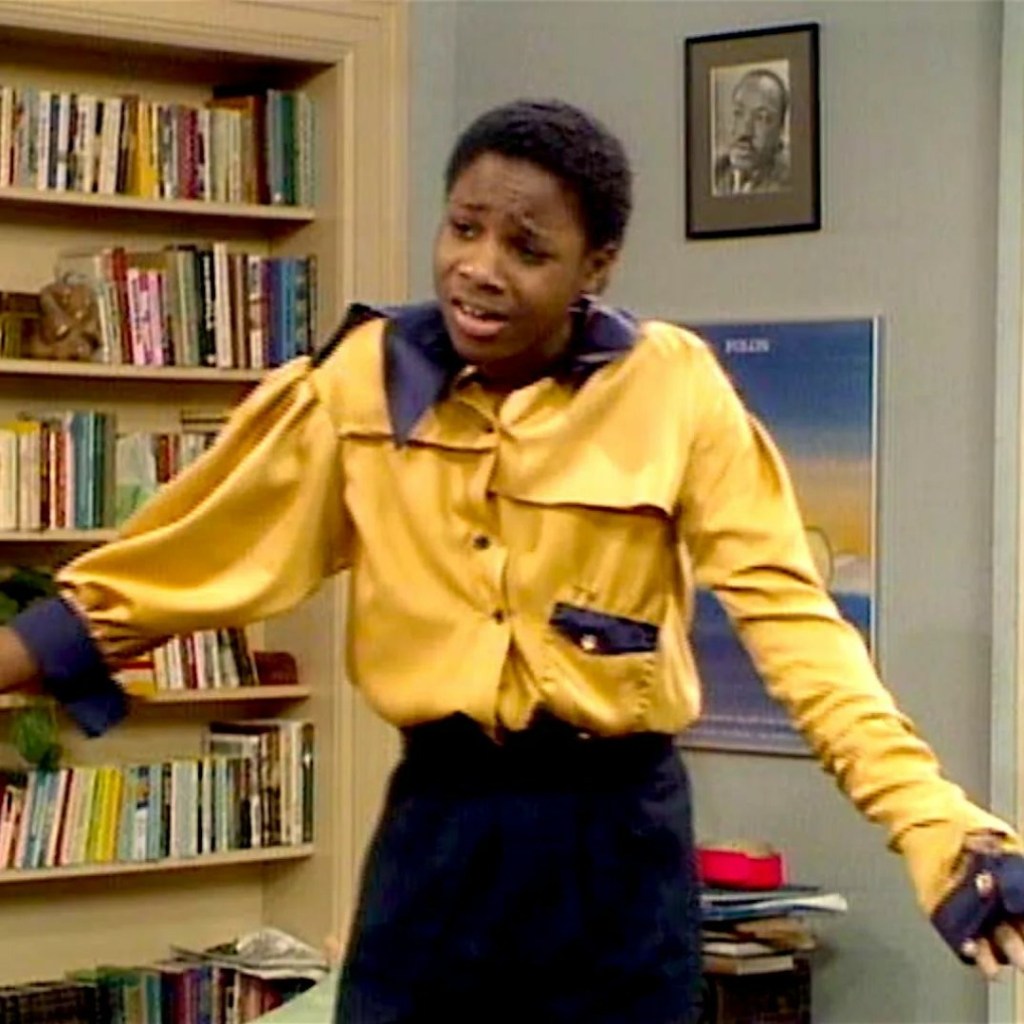
    And right there, in the middle of it, was Malcolm-Jamal Warner. Theodore Aloysius Huxtable “Theo”.

    He was the older brother that many people didn’t have. The one who made mistakes but got up again. The one who was cool but also flawed. And most importantly, the one who was allowed to grow. To cry. To fail. To be seen.

    He was not a trope. He was a thread in the tapestry of our adolescence. In a world that rarely afforded young Black men emotional complexity, Theo existed as something softer than stereotype, something more human than punchline.

    Today, I heard that tragedy struck.

    And something inside me stopped. Not just for the man himself, but for what his presence meant. For what it awakened in me.

    I didn’t know Malcolm-Jamal Warner personally. But like many of us, I felt like I knew him. Because we watched him grow. From the 14-year-old kid with the sideways smile and nervous charm, to the man who—quietly, steadily—kept showing up for the culture, even when the cameras weren’t rolling.

    He wasn’t just Theo.

    He was Alex Reed in Reed Between the Lines, trying to reimagine Black fatherhood again—this time as a present, emotionally available, professional Black man navigating love, children, and the complexities of a blended family.

    He was Dr. AJ Austin on The Resident, standing in hospital scrubs, saving lives on-screen while continuing the legacy of representing us in spaces we are often denied in real life.

    He directed. He produced. He narrated. He spoke. And always—always—with that same centered, grounded presence. A voice that calmed. A gaze that carried weight.

    Off-screen, Malcolm gave just as profoundly.

    He spoke out on Black mental health before it was trendy, before the hashtags and the mental health awareness months. He lent his voice to poetry, to jazz, to Black men’s healing circles. He didn’t just want to be seen—he wanted to help others see themselves.

    He supported literacy programs, youth mentorship, and countless initiatives for young Black creatives—always with an emphasis on empowerment through self-awareness and discipline. Not flashy. Not for headlines. Just because it was right.

    When people discuss legacy, they often refer to its impact in an abstract sense. But for me, Malcolm-Jamal Warner’s legacy is personal. It’s quiet. It’s the way I felt seen, even when I didn’t know I was invisible.

    That we could joke without becoming jokes. That we could learn without being reduced to lessons.

    He reminded us that being cool didn’t mean being cold. That we could love our families and still carve our own paths. That we were enough.

    As I sit with the weight of this loss, I think about the strange intimacy of mourning someone you never met. It’s not celebrity worship. It’s not nostalgia.

    It’s something more profound.

    It’s about the ghosts we carry in our cultural memory. The people who shaped us when we didn’t yet have the language to understand how. The ones who offered their craft like a mirror. And dared us to look.

    So tonight, I light a candle for the boy I was. And for the man who helped him feel like maybe—just maybe—he could be more.

    To Malcolm-Jamal Warner: thank you for your grace. For your growth. For choosing to live in alignment with something bigger than applause.

    You were art. And anchor. And example.

    May your family find peace in the love you gave so generously.

    May your work echo long after the credits roll.

    May your name be spoken with the reverence it deserves.

    Please send Prayers for his family.

    Kyle J. Hayes

    Please Like, comment, and share

  • “Smoke and Silence: A Juneteenth Reflection”

    “Smoke and Silence: A Juneteenth Reflection”

    They said we were free. They said June 19, 1865, was the day we finally heard it out loud—that we were no longer property, no longer counted like cattle or taxed like tobacco. Two years late, but freedom, they said. They say.

    But what they don’t say—what’s often left in the silence between fireworks and food trucks—is that Juneteenth wasn’t just a date on the calendar. It was a memory passed like tongs over hot coals, shared in backyards, in neighborhoods carved from red lines and resilience. It was a whisper of freedom held between ribs and potato salad before there was ever a hashtag or a plastic cup with red, black, and green printed on the side, “Made in China.”

    Before it was named a federal holiday, Juneteenth was ours. Foundational Black Americans. The descendants of those who labored resisted and died without so much as a headstone to mark their names. It was celebrated not with grandeur but with soul. Small parades down streets we paved but never owned. Sunday choirs echoing freedom songs older than the Constitution. Fathers firing up grills, uncles telling stories that turned mythic over time, and grandmothers seasoning more than just food—seasoning identity, memory, grief, and joy into every bite.

    We didn’t need permission to celebrate. We needed remembrance.

    But now? Now, the world has discovered Juneteenth like a new flavor of soda—for a limited time only, available at your nearest big-box retailer. There’s a profit in our pain. A market for our memory. You can buy a Juneteenth T-shirt from the same store that called the cops on us last month. You can eat a “Freedom Day Cupcake” sold by hands that never once lifted a tray at a family reunion.

    Even in celebration, they find a way to own it.

    Federal recognition was supposed to be acknowledgment. But somewhere in the process, it started to feel like appropriation. As soon as it was made official, they also made it theirs—to monetize, to control, to parade around with branding guides and Instagram filters.

    They charge us for permits on our own blocks. They raise vendor fees at parks we once filled for free. They line the streets with booths and banners but ask none of the elders to speak. No stories. No truth. Just commerce.

    What once felt sacred now feels staged.

    And so I offer this:

    Celebrate quietly. Celebrate deeply. Celebrate honestly.

    Not with mall sales and glittered slogans, but with memory. With reverence. With fire and flesh and laughter and smoke curling upward like a prayer.

    Light a grill in your backyard. Share a story with your child. Tell them about the General who rode into Galveston with two years of truth in his mouth. Tell them about the cotton and the blood. About the chains. About how some of us never made it to June 19 but dreamed of it in our final breath.

    Gather your family close—not for spectacle, but for sanctuary.

    Reclaim the sound of laughter in the yard. The creak of old lawn chairs. The gospel hum of freedom echoing off brick walls. Let the smell of ribs and spice be our resistance. Let the rhythm of our joy be the sermon.

    Because Juneteenth isn’t for sale.

    It never was.

    And if they ask where the parade is, tell them it’s right here—

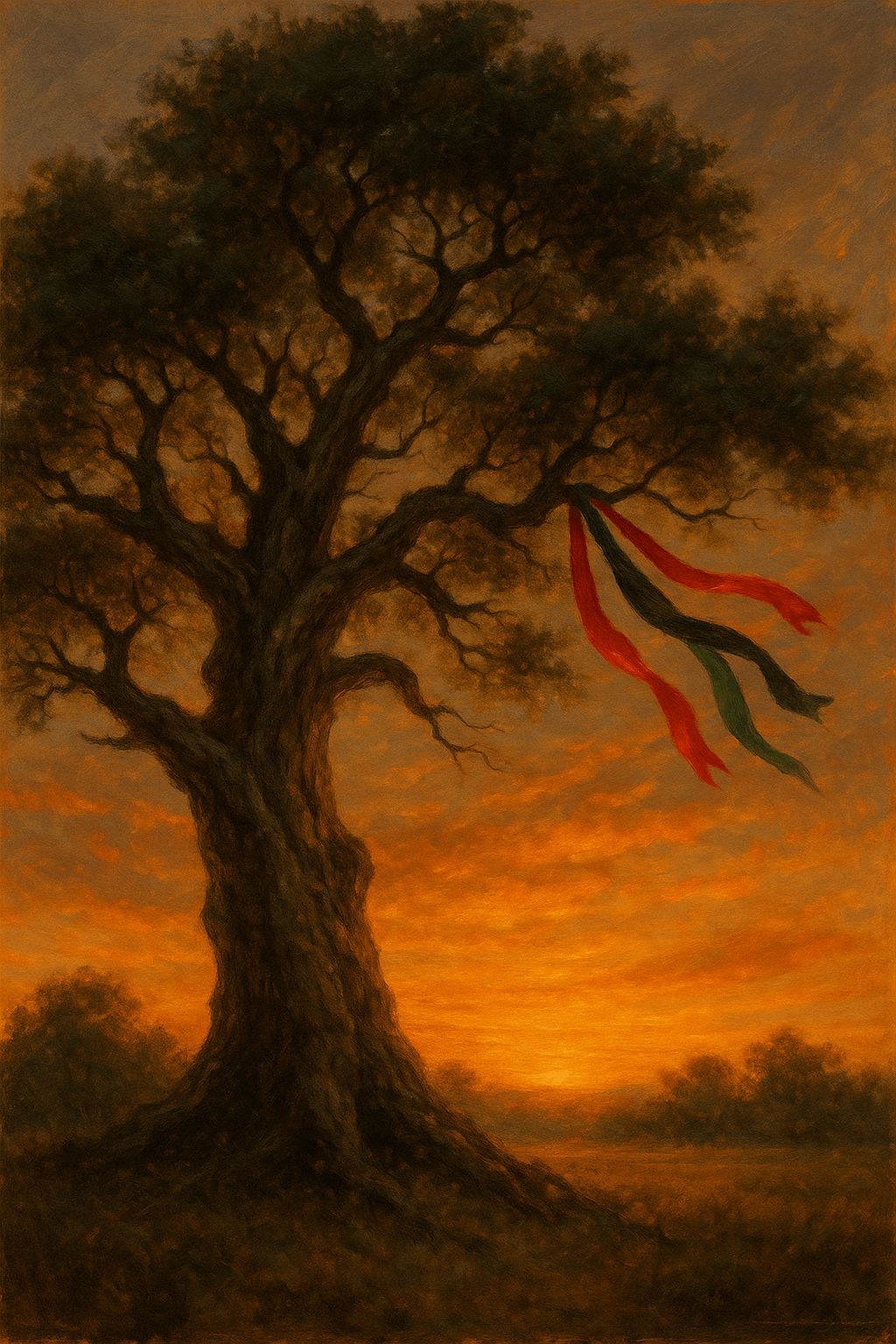
    in the circle of Family and friends , under the tree, where freedom still sings low and slow.

    By Kyle Hayes

    Please Like, Comment, and subscribe

  • “The Weight Beneath the Mask: On Patience, Rage, and the Quiet War for Empathy”

    “The Weight Beneath the Mask: On Patience, Rage, and the Quiet War for Empathy”

    Every morning, before the sun gets up and the world begins to call itself civilized again, I sit with myself. I try to be better than I was the day before. That’s the promise I’ve made, not to the world, but to the little boy I used to be—the one who deserved more tenderness than he received. The one who saw too much too early and still had the nerve to keep dreaming.

    I learn patience.

    I try to learn empathy.

    And most days, it feels like trying to catch rain in a sieve.

    Being a Foundational Black American in this country is to walk a tightrope stretched across a minefield. You must smile with your teeth clenched, laugh without humor, and nod when what you really want to do is roar.

    I try to treat everyone equally.

    That’s the goal, isn’t it? That’s the thing we’re taught to believe in. Equality. Fairness. The golden rule and the silver-tongued lies that follow it. But some days, it feels like I’m trying to hug a fist. Some days, the evidence of this country’s contempt for my existence is not anecdotal—it’s algorithmic. Baked into news cycles, comment sections, and the careful silence of the people who walk past injustice without blinking.

    You hear it. You feel it.

    There is discomfort in their voice when you speak with authority.

    The glance at your hands when you’re simply reaching for your ID.

    The way your masculinity is questioned when you don’t perform it on their terms, and criminalized when you do.

    Empathy feels dangerous some days.

    Softness feels like an invitation to be taken advantage of. And still, I reach for it. Not because I believe I’ll be met with it in return, but because I know what happens when you let anger do all the talking. You lose the part of yourself that still believes in healing.

    But let me say this plainly, because it needs to be said:

    Empathy is not weakness.

    It is resistance in its most refined form. It is the choice to keep your humanity intact when the world insists on stripping it from you.

    Still, I struggle.

    I struggle not to let the bitterness set in.

    I struggle to hold my tongue when my dignity is disregarded.

    I struggle not to internalize the weight of microaggressions—those paper cuts that don’t bleed but never quite heal either.

    And underneath it all is a rage most people don’t want to acknowledge.

    Not because it isn’t real. But if they acknowledged it, they’d have to admit they helped cause it.

    What would they think, these coworkers and strangers and casual acquaintances,

    if they knew what it takes for me to walk through the world as calmly as I do?

    What would they feel if they could feel the heat I have to suppress just to make them comfortable?

    What if they knew that beneath this patience is a warrior holding his sword with the blade facing inward?

    We are not angry without reason.

    We are angry because we are still here, and still treated like ghosts.

    We are angry because we know what our fathers swallowed.

    Because we watched our mothers turn crumbs into miracles.

    Because we are still expected to smile while being slowly erased.

    And yet…

    We rise early. We go to work. We raise children. We love.

    We choose empathy when anger would be easier.

    We wear the mask, not because we are afraid, but because we know the cost of taking it off.

    Some mornings I fail.

    I lose my temper. I withdraw. I despair.

    But most mornings, I try again.

    Because the work isn’t just surviving.

    The work is staying human in a world that profits off your dehumanization.

    And so, I practice patience.

    Not because the world deserves it.

    But because I do.

    By Kyle Hayes

    Please like, comment, and subscribe.

  • “The Disappearance and the Dreamers: A Return to Small Town America”

    “The Disappearance and the Dreamers: A Return to Small Town America”

    I could start this in a few ways.

    I could tell you about the beauty of small-town America—how it smells like earth after rain, how it feels like old denim, soft at the edges and worn in all the right places. I could paint a picture of local parades, gas stations where they know your name, and corner stores that sold glass-bottle soda as if they were dealing in gold. I could start there.

    Or I could tell you about the slow death.

    About how it creeps in not with a scream, but with silence. A corner shop goes dark. The comic book store fades into memory. That one spot that always had a single cook and a single delivery guy—hollowed out by time, or worse, by convenience. We didn’t even get to say goodbye. One day it was there, and the next… it was nowhere to be found.

    That’s how I found it, this town that raised me. A shell and a fight. Graying at the temples but still kicking. Still trying.

    I returned home with a chip on my shoulder and an axe to grind. My past visits had been disappointments—full of quiet judgment and half-empty shelves. I began to see the town as Lucy holding the football. I, the fool, forever falling for a nostalgia that never delivered.

    But then I noticed it.

    Not a rebirth exactly. More like resistance. Quiet. Stubborn. And beautiful.

    A locally brewed beer sitting proudly on a shelf next to Budweiser, daring you to taste something made here. A sushi place—yes, sushi—in a town where raw fish used to be called bait with a laugh. A barista pulling espresso in a repurposed mechanic shop, poetry on the walls, and indie jazz in the air. It didn’t look like the town I left, but it was trying to feel like the one I loved.

    The resistance is no longer being led by factory foremen or overtime heroes. It’s the dreamers.

    The artists. The comics shop rebels. The coffee shop philosophers. The chefs, brewers, and boutique owners who aren’t just surviving small-town America—they’re redefining it.

    I keep thinking about that comic book store.

    The one where I spent more time than I did money, though God knows I wanted to spend more. That store helped shape the person I am. Not because of what I bought, but because of what I learned.

    Inside those walls, you weren’t just reading stories—you were being trained in how to dream.

    You met other kids who knew backstories you didn’t, who taught you how a single issue could reframe an entire arc. You learned how to imagine better. To think in color. To expect the impossible and call it plot development.

    Sure, comics still exist. There are still conventions. Online communities. But they don’t replace the bike ride to the store on release day.

    They don’t replace the smell of fresh ink. The thrill of a new issue in your hands. Or seeing the store owner, and knowing him, not as an employee, but as a keeper of stories.

    That’s what we’re losing.

    Not just the stores.

    But there is humanity in the transaction.

    I was prepared to write a eulogy.

    To mourn the death of small-town America.

    But what I found instead… was a kind of defiance.

    Maybe it’s not dying. It could be changing. Perhaps the overgrown trees and cracked sidewalks aren’t signs of decay, but rather Mother Nature is taking her seat at the town hall meeting. Maybe she’s in on the plan.

    And maybe—just maybe—the artists are saving it.

    Not by keeping it the same, but by daring to imagine it differently.

    In this era, I don’t need to fly to the Quad Cities for a box of Lagomarcino’s. It’s a click away. That’s the gift and the curse. Accessibility without presence.

    However, some places still require in-person visits.

    Not for the product, but for the chance. Because on one of those visits, you might notice something new. A new mural. A new flavor. A new owner with an old soul and a dream too stubborn to die.

    So go. Walk the street you used to know.

    The one who forgot your name and then remembered it.

    The one still fighting, in ways you didn’t expect.

    The death of small-town America may still be in progress.

    But so is its reinvention.

    And I’d bet everything on the dreamers.

    By Kyle Hayes

    Please like, Comment, and subscribe.

  • “Sugar, Memory & Mercy at Largomarcino’s”

    “Sugar, Memory & Mercy at Largomarcino’s”

    A man who’s tasted disappointment in the places that once defined him learns to guard his nostalgia like a brittle heirloom. After Happy Joe’s went corporate cold, I flew home to Albuquerque, full of disappointment and regret. But the Quad Cities still keeps a few sanctuaries, and chief among them is Largomarcino’s—the century-old candy counter where sugar still gets its hands dirty.

    Walk through the front door, and you feel the floorboards remember you, even if the staff doesn’t. The glass cases shimmer with rows of turtles, truffles, and creams—each one lined up like choirboys who secretly spike the hymn wine after service. Behind the marble counter, brass soda taps glint under amber pendant lamps that refuse to be updated. The air smells like vanilla bean and sweet cream spiked with a quiet note of fryer oil drifting in from the lunch nook in the back. It is, mercifully, the same as it ever was.

    I once brought a girl here on a first date, sure that the scent of caramelizing sugar and the soft clink of long-handled soda spoons would say things my teenage vocabulary couldn’t. We shared a sundae, so overloaded it listed starboard. She laughed; I tried to look like the kind of man who casually knows about old-school candy parlors. Truth? I just needed to show her a place that felt like honesty in a world already hustling counterfeit cool. Largomarcino’s obliged. That date briefly made me king of a realm where chocolate crowns are handed out freely, and the only recession is the one your dentist warns you about later.

    On this recent visit, I half-expected the specter that haunts old favorites: the new logo, the laminated menu, the weary cashier whose corporate smile never quite reaches the eyes. Instead, I found the latest generation Largos still behind the counter, still calling regulars by name, still Loading chocolate into various little boxes. The soda fountain stools squeaked the same protest when I sat down, the way old friends groan but scoot over to make room.

    Lunch was a club sandwich—no reinvention, no aioli, just Midwestern humility between slices of white bread—followed by Diet Coke (Yes, I see the irony). I picked handfuls of candy bars and orange-covered chocolate for the friends back in Albuquerque who have heard me sing this place’s praises like late-night gospel. I bought a bag of Bourbon caramel bites for myself, just in case hunger struck early and I regretted it later.

    Is it worth the eventual dental bill? Absolutely. Is it worth the added miles on the treadmill? Hell yes. But more than that, Largomarcino’s is worth the faith it restores—that somewhere, beyond the safe neon glow of fast-casual chains, flavor, and family can still stubbornly share a roof.

    I carried my haul out into the Midwest humidity, sugar sweat already forming on my brow, and realized something simple: places like this don’t just sell candy. They sell mercy. A soft reprieve from processed sameness, a reminder that craft and care can outlast the quarterly report. You taste it in the snap of a dark chocolate almond bark and in the carbonic tickle of a handmade phosphate. You taste the persistence of people who keep stirring copper kettles because machines can temper chocolate, but they can’t temper the soul.

    I will keep coming back as long as there is a back to go to. And suppose the world ever swallows Largomarcino’s the way it swallowed Happy Joe’s. In that case, I’ll tuck the bourbon bites in my pocket, let them melt down to sticky echoes, and remember how good it felt to stand in a room where sugar, memory, and mercy still mingled, still mattered, and still refused to sell out.

    By Kyle Hayes

    Please Like, Comment, and subscribe

  • “When Special Ain’t Special Anymore”

    “When Special Ain’t Special Anymore”

    We all have those sacred little spots from home — the places you carry with you long after you’ve left, even if they’ve forgotten your name. Places that stitched themselves into your identity not with grand gestures but with greasy napkins, familiar neon signs, and food that tasted like it was made just for you. Not because it was fancy. Not because it was famous. But because it was yours.

    I hesitate to call Albuquerque my hometown. I live here. I breathe here. I’ve found my people here. It’s where the aroma of green chile clings to the air the way morning dew does in other places. It’s one of the few towns where saying “Christmas” doesn’t summon tinsel and ornaments — it brings red and green chile poured over everything from burritos to cheeseburgers like edible stained glass. That’s home, too. But not the only one.

    You see, I grew up in the Quad Cities — a borderland of sorts in the Midwest where blue-collar sweat runs thicker than politics and where local business meant something before the world corporatized your sense of taste. It wasn’t glitzy. It wasn’t Instagrammable. But it had a soul.

    There, we had our pizza joints. Sure, we had the big chains — Domino’s, Pizza Hut, Little Caesars, all the familiar mascots of American mediocrity. But we also had Happy Joe’s. Not a chain. Not a franchise in the traditional sense. It was ours. And to this day, the best pizza I’ve ever eaten — the only one I compare all others to — was their Taco Pizza.

    Now, when I say taco pizza, I don’t mean some limp pie scattered with taco seasoning and sadness. I mean crunch and spice and shredded lettuce that somehow made sense on a pizza. I mean pizza that didn’t just feed you — it made you feel like you were in on a secret. And try as I might here in Albuquerque, I can’t find one that hits the same way. I’ve made my own, come close, even thought I had it once — but nah. It’s not the same. And you can’t show people a picture to explain it. Taco pizza is like faith — you either grew up believing in it or you didn’t.

    I recently went back to the Quad Cities. Just a visit. A pilgrimage, really. And, of course, like any prodigal son trying to recapture the taste of memory, I made a beeline for Happy Joe’s. But something was off. The restaurant was nearly empty. No smell of oregano clinging to the ceiling tiles. No laughter echoed from the game room. And when the pizza came — it looked the same. But it didn’t feel the same.

    It turns out that the place had been sold before the founder passed away. Sold. As in: acquired, folded into the machinery, sanitized for profit. The sauce still had spice. The crust still crisped. But the soul? Gone. I sat in that booth, chewing nostalgia like stale bread, realizing what I already knew: the places we love change. And sometimes, they don’t take us with them.

    But not all is lost.

    There’s still Lagomarcino’s — another one of those rare places that refuses to become generic. Still family-run. Still wrapped in its own history, like a gift, it doesn’t have to be opened to be appreciated. Still local. Still proud. It’s so good It deserves its own post. Its own reverence.

    What I’ve learned — what I keep learning, usually the hard way — is that we carry our special places like we carry scars, not because they hurt now, but because they mattered. They shaped us. And when they change or disappear, it’s not just the food we mourn. It’s the kid we were. The world that made sense. The version of home we thought would always be there.

    And so I write. Because writing is how I preserve what can’t be frozen, franchised, or flavored in bulk. It’s how I remember. Not just the food — but what it meant to be fed.

    By Kyle Hayes

    Please Like, comment, and subscribe

  • Where Are the Heroes?

    Where Are the Heroes?

    A Meditation on What We’ve Lost

    I don’t know when it started. Maybe it was gradual and subtle, like a dimming light you don’t notice until the room is too dark to read by. But one day, I looked around at the screens that raised our children and couldn’t find the heroes.

    I began to notice it with The Boys. It is a show about heroes—but not really. It is a world where the ones with power are most corrupted by it. Where valor is theater, morality is performance, and saviors are mostly just men in costume pretending not to be monsters.

    Then came Spider-Man: No Way Home. A young man with a heart too big for his world, Peter Parker chooses to save even the villains and believes in redemption when the world screams for retribution. In doing so, he loses everything: his aunt, friends, and identity.

    He chooses to be good—and the price is silence, exile, and anonymity.

    Then there’s Invincible, which doesn’t even pretend to be kind. A coming-of-age wrapped in trauma and blood. Where the father figure is a god-turned-murderer, and the son is taught that the universe does not care about kindness. Where hope feels like a joke told too late at a funeral.

    They tell us these shows are for adults like Family GuyFuturamaand The Simpsons. But they don’t say this: these shows raise children too. And in their worlds, good is outdated. Noble is naive. Heroism is a mask we wear until it no longer serves us.

    When I was young, our heroes were loud. They didn’t ask for nuance. They exploded onto the screen with muscles and missions: Rambo, Chuck Norris, Axel Foley, John McClane. They weren’t perfect, but they were good.

    They stood for something.

    Even in their flaws, they modeled something to reach for. Courage. Loyalty. Sacrifice.

    The soldiers we looked up to weren’t broken men with body counts and vendettas. The cops weren’t corrupt antiheroes buried in procedural nihilism. They were flawed, certainly, but they fought for what was right. And they usually won.

    Now we give our children John Wick—a grieving assassin. Mr. Nobody—a retired government killer with nothing to lose. Deadpool—a mercenary with jokes sharper than his morals.

    They are cool. They are dangerous. But they are not heroes.

    Maybe that’s the lesson. Being a hero doesn’t guarantee success. That goodness is impractical. That mercy gets you killed.

    Evil lived in Sinners (and yes, it was beautiful in its own right). The vampires survived. The message buried beneath symbolism and song is that light doesn’t always win.

    And maybe that’s true. But what do we do with truth when it wounds the spirit?

    What happens to a child raised on stories where every savior falls? What happens to a generation who watches the world through screens that whisper: no one is coming to help you. Everyone is broken. Do what you must.

    I know someone will say, “Heroes still exist. Look to real life.” And yes, there are firefighters, soldiers, teachers, nurses, and parents. But these heroes are buried beneath algorithms, drowned in the noise. Their stories don’t stream on prime time, and their morals aren’t trending.

    And while they live, they are rarely seen.

    But the most painful betrayal comes not from stories in which heroes fall but from stories in which heroes are rewritten.

    Marvel took perhaps the greatest heroic sacrifice in modern cinema—the death of Tony Stark, Iron Man, in Avengers: Endgame. A moment that defined selflessness, courage, and the idea that doing the right thing often costs everything.

    And now, they are planning to bring him back—Robert Downey Jr.—not as Iron Man, not as the man who saved the universe, but as Doctor Doom.

    From savior to villain. From selfless to sinister.

    They will say it’s storytelling. They will say it’s a multiverse. They will say it’s fiction.

    But they are really erasing memory, replacing the legacy of heroism with the ambiguity of moral inversion. In doing so, they are telling a new story to a generation already unsure of what good looks like.

    What hope do we have if Iron Man can be undone and his sacrifice rewritten?

    So, I write this not just as a lament but as a question:

    What does it mean to raise children in a world with no heroes?

    What do we ask of the imagination when every tale ends in blood? What do we feed the soul when victory is reserved only for those who betray the light?

    Because I still believe in the power of a story. I still believe in the need for something to reach for.

    I fear we are telling our sons and daughters that goodness is outdated, honor is inconvenient, and heroism is a lie the world no longer has room for.

    And if that is the case, then we have failed.

    Not just to inspire. But to believe.

    By Kyle J. Hayes

    Please Like, comment, and subscribe.

  • U2’s The Joshua Tree: When Pop Music Reached for Something Higher

    U2’s The Joshua Tree: When Pop Music Reached for Something Higher

    It’s not supposed to feel this deep. It’s pop. It’s not supposed to carry this much weight, not supposed to stir this much longing. Pop is supposed to be light. Easy. Disposable. Something you hum along to in the car, something that moves through you without leaving a mark.

    No one told U2 that.

    Or maybe they knew, and they simply refused to obey the rules.

    Because The Joshua Tree isn’t just pop. It’s a landscape. It’s atmosphere. It is wide-open spaces and desert highways, rolling thunder, and quiet reckoning. It does what great music is supposed to do—it makes you feel and think, and it does both before you even realize it’s happening.

    And maybe that’s why this pop album hits harder than it has any right to.

    Something is aching in Where the Streets Have No Name. In the way, Bono sings like he’s searching for something just out of reach, something desperate in how the guitars shimmer and build.

    Then comes I Still Haven’t Found What I’m Looking For.

    Suddenly, the album no longer feels like pop.

    This is something else—something rooted in tradition, something older than the rock itself. This is gospel. The way the chords rise, and the choir sweeps in behind Bono’s voice is unmistakable. And not gospel in the sense of imitation, but gospel in spirit. This is the sound of yearning, the sound of faith wrapped in doubt, the sound of a man lifting his hands toward heaven even as his feet stay planted firmly on the ground.

    And that’s the brilliance of The Joshua Tree.

    Because it reflects the ’80s—the tension, the longing, the searching—it reflects America through outsiders’ eyes, seeing its promise and brokenness. It demonstrates the feelings people don’t always talk about—the spiritual exhaustion, the weight of time, the quiet, relentless ache of wanting more but not knowing exactly what more is.

    And that’s what makes The Joshua Tree great.

    Because it is pop, yes. But it’s also something more profound. Something truer.

    Something that reaches.

    And thank God nobody told them otherwise.

    By Kyle J. Hayes

    Please like, Comment, and subscribe

    #U2 #TheJoshuaTree #MusicAsResistance #AlbumReflection #RockHistory #EchoVerseNarratives

  • “What We Remember, We Keep-Alive”

    “What We Remember, We Keep-Alive”

    I had been working on the newest book in my Culinary Crossroads series, where Jamaal was supposed to return home—to the States and the old South.

    I thought it would be simple.

    A return to where it all began.

    A pilgrimage from the polished kitchens of Manila to the front porches, fields, and kitchens that shaped so many of us long before we ever touched a passport.

    I thought I was writing about food.

    But the deeper I dug, the more I realized that it was never just food.

    It was survival.

    It was remembrance.

    It was resistance disguised as Sunday dinner.

    I read everything I could find.

    The recipes were there, sure.

    But what kept catching me, snagging me like thorns on an old fence line, were the traditions.

    Not just what we ate but how we ate.

    Why we seasoned the way we did.

    Why were our celebrations, mourning, and rituals around food and music crafted in ways no cookbook could fully explain?

    It started long before we were “we” in any way we would recognize now—

    on the plantations,

    where bits and pieces of fading memories were passed down by those brought here, enslaved, stolen, stripped, but not erased.

    They blended what they remembered with what little they had.

    Cornmeal. Greens. Off-cuts and castoffs.

    They made necessity taste like something more than survival.

    They made it taste like home.

    And over generations, through sheer will and stubborn brilliance, we built something uniquely ours.

    Not just in the food but in the music,

    the way we buried our dead,

    the way we married our loved ones,

    and the way we danced when the sun went down and the cotton fields emptied.

    These traditions aren’t static.

    They are not museum pieces under glass.

    They are living and breathing things—regional and even tribal, depending on where your people ended up.

    That phrase kept echoing in my mind:

    “Where your people from.”

    The old folks would ask you that when they met you.

    After you named whatever city you lived in now—Detroit, Chicago, Kansas City—they’d look deeper, waiting for the real answer.

    They were talking about the South.

    Not the city, but the state.

    The county.

    The plantation.

    The place that owned your ancestors.

    It was a question about roots.

    (Writing that even now feels like swallowing glass.)

    The place that owned your ancestors.

    So many years later, and it’s still hard to say.

    Still hard to look at without flinching.

    And then came the “Great Migration,” or as some called it, “The Great Exodus.”

    We left with almost nothing.

    No land. No wealth. No easy road.

    But we took what mattered.

    We carried our recipes.

    We carried our songs.

    We carried the parts of ourselves that they could not steal, whip out of us, or erase.

    And for decades, it sustained us.

    Soul Food. Soul Music.

    Names born not in marketing rooms but in living rooms, storefront churches, and kitchens where steam and sorrow rose together.

    And now?

    Now, the word “Soul” feels almost quaint.

    Almost forgotten.

    Funny, isn’t it?

    What slavery couldn’t kill, freedom quietly erased.

    In chasing new beginnings, we risk losing the old songs.

    The taste of real cornbread.

    The sound of a mother’s hum in the kitchen.

    The wisdom tucked into the folds of a handwritten recipe card.

    As I write Jamaal’s story, I realize I’m writing my own.

    Our own.

    The story of a people who carried more than pain.

    We carried genius.

    We carried grace.

    We carried soul.

    And it’s on us—not the history books, not the tourists looking for “authenticity”—to remember what we made from nothing.

    And to keep making it while we still can.

    Before the last song fades.

    Before the last plate is cleared.

    Before the last story goes untold.

    By Kyle Hayes

    Please Like, comment, and subscribe.

    #BlackVoices #MemoryAndLegacy #WeAreOurAncestorsDreams #StorytellingMatters

  • What’s Going On: The Sound of a Man, a Moment, and a Movement

    What’s Going On: The Sound of a Man, a Moment, and a Movement

    Some albums are flawless—technically perfect—masterpieces of production, arrangement, and execution. And yet, something is missing—some intangible element that separates great from transcendent.

    I don’t know what that something is.

    But What’s Going On has it.

    It’s there in the first few seconds before Marvin Gaye even starts to sing. A murmur of voices, street-corner conversation fading in and out, a saxophone moaning in the distance. It doesn’t feel like the start of an album—it feels like stepping into something already in motion. Something real. Something urgent.

    Because Marvin wasn’t just making music anymore.

    His marriage was unraveling. The woman he built duets with, Tammi Terrell, was gone—taken by a brain tumor at 24, her voice silenced before it had the chance to live its full measure. His brother had come home from Vietnam, but Marvin had already been there in spirit—receiving letter after letter, each painting a picture more brutal than the last. He saw America burning in protest, drowning in war, divided by race, suffocated by injustice, and the weight of it all pressed down on him.

    And so, he did what only the great ones do. He put it all into the music.

    This album is not just a collection of songs. It is a prayer, a lament, and a call to action. It refines the messages of the ’60s—love, peace, resistance, revolution—into something pure and undeniable.

    A Different Kind of Protest

    Other protest music of the time was raw, defiant, and urgent. It called for fists in the air and battle lines to be drawn. But Marvin took another path.

    What’s Going On does not shout—it weeps. It does not rage—it pleads. It does not accuse—it begs America to look itself in the mirror and reckon with what it sees.

    “Mother, mother / There’s too many of you crying.”

    “Brother, brother, brother / There’s far too many of you dying.”

    These are not slogans. These are not rallying cries. These are wounds, laid bare over melodies so lush, so deeply felt, that you almost forget you are being confronted.

    A Vision That Was Almost Lost

    And what makes this album even more remarkable is that it rarely existed.

    Motown didn’t want this. Berry Gordy thought it was too political, too risky, too different. But Marvin fought for it. He refused to back down and kept singing about love and romance while the world fell apart. He believed in this music so much that he was willing to walk away from everything if it meant it would never be heard.

    And thank God he fought.

    Because this album still matters.

    The war may have changed, but the battlefield remains. The poverty, the racism, the injustice, the disregard for human life—it’s all still here. And Marvin’s voice, decades later, still asks the same question:

    What’s going on?

    This is what separates technically perfect albums from the ones that live forever.

    What’s Going On is not just music.

    It is soul.

    It is history.

    It is Marvin Gaye—raw, vulnerable, broken, and unfiltered—pouring himself into something bigger than sound, bigger than sales, bigger than time itself.

    It is, simply put, greatness.

    By Kyle Hayes

    Please like, comment, and subscribe.