Tag: Salt Ink & Soul

  • How Do You Deal With Uncertainty?

    How Do You Deal With Uncertainty?

    I try to make sure I am doing the right thing.

    That may sound too simple for a question about uncertainty. We tend to think uncertainty requires some complicated philosophy. A system. A way of seeing around corners and knowing what waits for us before we get there.

    I don’t have one.

    Most of the time, I cannot know what is going to happen. I cannot know how someone will respond to a decision I make. I cannot know whether a choice will work out the way I hope. Age has not given me the ability to predict the future.

    But it has made me more interested in something else.

    Being able to live with myself afterward.

    So when I am uncertain, I try to ask a simpler question:

    Am I doing the right thing?

    Not the easiest thing.

    Not the thing that benefits me the most.

    Not even the thing I particularly want to do.

    The right thing.

    I think most of us know the difference more often than we pretend we do.

    That is where uncertainty can become complicated.

    Sometimes what we call uncertainty isn’t really uncertainty at all. Sometimes we know exactly what the right thing is.

    We just don’t want to do it.

    If doing the right thing was easy, everyone would do it.

    Because doing the right thing can cost you something.

    It can mean admitting you were wrong when your pride would rather defend you.

    It can mean telling the truth when a lie would make life easier.

    It can mean keeping your word when breaking it would be more convenient.

    It can mean walking away from something you desperately want because you know having it would require becoming someone you don’t want to be.

    There are moments when the wrong thing comes dressed in very reasonable clothing.

    It whispers that nobody will know.

    That everyone does it.

    That you deserve this one exception.

    That you’ve already sacrificed enough.

    And perhaps that is where character lives—not in the moments when right and wrong are obvious and doing right costs us nothing, but in those quiet places where we could choose differently and probably get away with it.

    I have learned that doing the right thing does not guarantee a good outcome.

    That is important.

    You can be honest and still lose.

    You can be kind and still be misunderstood.

    You can make the responsible decision and still wonder afterward whether you made a mistake.

    Doing right is not some bargain we make with the universe where good behavior guarantees good results.

    Life doesn’t work that way.

    Sometimes you do the right thing, and it hurts.

    Sometimes nobody thanks you.

    Sometimes nobody even knows.

    But there is a particular kind of peace in knowing that when the moment came, you did what you believed was right.

    Maybe that is how I deal with uncertainty.

    I don’t try to eliminate it.

    I couldn’t if I wanted to.

    I simply try to make certain of the part that belongs to me.

    My choices.

    My intentions.

    My willingness to do what I know is right, even when I would rather do something else.

    The rest belongs to tomorrow.

    And tomorrow has never asked my permission before arriving.

    So I try to meet it with a clear conscience.

    For me, that is enough.

    Kyle J. Hayes

    kylehayesblog.com

    Please like, comment, and share

    Resources for Hard Times

    If you’re looking for practical help, food support, or community resources, you can visit the Salt, Ink & Soul Resources Page.
    👉 Resources for Hard Times

  • It’s Too Hot to Cook, But We Still Have to Eat

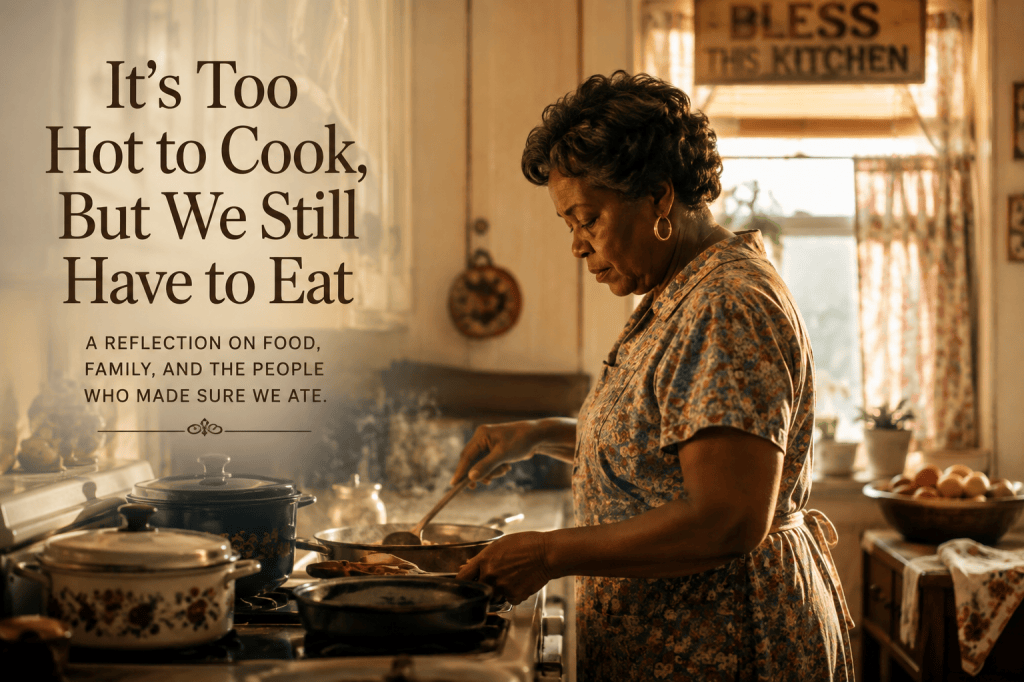
    It’s Too Hot to Cook, But We Still Have to Eat

    It has been hot here in New Mexico.

    Not simply summer hot, where you expect the afternoon to be uncomfortable and learn to live with it. This has been the kind of heat that makes you reconsider ordinary decisions.

    Like cooking dinner.

    There is something almost absurd about standing in a kitchen on a hundred-degree day and deciding that what the house really needs is a 400-degree oven.

    You walk into the kitchen.

    You look at the stove.

    You think about what you planned to cook.

    And suddenly, a sandwich sounds pretty good.

    There is nothing wrong with that.

    A good sandwich, some chips, maybe a salad or some cold fruit can feel almost perfect when the heat outside seems determined to follow you into the house.

    But you can only eat that way for so many days.

    Eventually, you want something cooked.

    Something hot.

    Something that feels like dinner.

    And hunger, unlike the rest of us, has never been particularly impressed by the weather.

    We still have to eat.

    So after thinking about it for a while, I finally bought an air fryer.

    I had resisted getting one.

    I’ve lived long enough to watch plenty of kitchen appliances arrive with promises that they were about to revolutionize the way we eat. Some of them eventually found permanent homes in cabinets, sitting beside other machines that had once promised to change breakfast forever.

    But this time, the heat made a better argument than any commercial could.

    An air fryer is small. It cooks quickly. Most importantly right now, I can make dinner without turning the kitchen—and eventually the rest of the house—into an extension of the desert outside.

    So I’ve been using it.

    And I like it.

    I know not everyone has one.

    That is worth saying.

    Because conversations about food have a way of becoming conversations about privilege without anyone noticing.

    We assume everybody has the same kitchen.

    The same appliances.

    The same grocery budget.

    The same amount of time.

    The same energy when the day is over.

    They don’t.

    Food writing sometimes forgets that.

    Cooking can become theater.

    Beautiful kitchens. Expensive cookware. Perfect ingredients arranged across countertops. Recipes requiring twenty ingredients, three pans, and an afternoon nobody seems to have to work through.

    There is nothing inherently wrong with any of that.

    Cooking can be art.

    It can be recreation.

    It can be something we do simply because creating something beautiful with our hands gives us pleasure.

    I understand that.

    I love cooking.

    But cooking has another purpose that existed long before anybody photographed a dinner plate.

    Somebody has to eat.

    And somewhere tonight, somebody will come home tired from work, stand in front of a refrigerator, and try to figure out what can be made with what is inside.

    Somebody else will look at a grocery bill and quietly put something back.

    Someone will be feeding children who do not care that the person making dinner has had a difficult day.

    And somebody will be standing in a hot kitchen wondering what they can cook without making an already uncomfortable home even hotter.

    They are cooking too.

    Maybe that is cooking in its most honest form.

    It doesn’t matter that you worked late.

    It doesn’t matter that you’re tired.

    It doesn’t matter that groceries cost more than you expected.

    And it certainly doesn’t matter that it is a hundred degrees outside.

    Eventually, someone still has to answer one of the most ordinary questions in family life:

    What are we going to eat?

    It is such a simple question.

    But those words can conceal an extraordinary amount of labor.

    Because somebody has usually been thinking about the answer long before anyone asks.

    They checked the refrigerator.

    They know what is left.

    They remember what everybody ate yesterday.

    They know what needs to be used before it spoils.

    They know what the family likes and what somebody will complain about.

    They have considered the weather.

    They have considered the money.

    And perhaps most importantly, they have considered how tired they are.

    Then, somehow, food appears.

    We rarely call this extraordinary.

    Maybe because it happens too often.

    Care has a way of becoming invisible when it becomes dependable.

    Dinner appears.

    People eat.

    The dishes are washed.

    Tomorrow comes.

    And eventually the question returns.

    What are we going to eat?

    Families have been answering that question under conditions far more difficult than mine for generations.

    Before air conditioning cooled our kitchens, people still cooked through the summer.

    Before refrigerators kept everything safely cold, people found ways to preserve food.

    Before supermarkets offered strawberries in winter and nearly anything else we wanted regardless of season, people learned to make meals from what grew nearby, what could be preserved, what could be stretched, and what could be shared.

    Somewhere inside that history are countless people whose names will never appear in a cookbook.

    Mothers.

    Fathers.

    Grandmothers.

    Grandfathers.

    Aunts.

    Uncles.

    Older brothers and sisters.

    Neighbors.

    People who stood in kitchens while everyone else waited somewhere cooler.

    I remember some of this from my own childhood.

    When food was being prepared, we children were often chased out of the kitchen.

    We didn’t belong in there underfoot while somebody was trying to cook. There were hot pans, sharp knives, grease popping on the stove, cabinet doors opening and closing, and grown folks trying to finish a meal.

    So we were sent somewhere else.

    Go play.

    Go sit down.

    Get out of this kitchen.

    At the time, I don’t remember thinking very deeply about it.

    I was a child.

    The kitchen was simply where the food came from.

    Only later do you begin to understand what was happening in the room after you were chased out.

    Someone kept track of what was cooking, what needed stirring, what was almost done, and what still needed another few minutes.

    Then, when everything was ready, the rest of us came back.

    I remember something else too.

    My grandmother would bring my grandfather his food before she sat down and joined the rest of us.

    That was simply how things were in her kitchen.

    And in so many other kitchens.

    As a child, I didn’t question it.

    Children inherit rituals long before they understand them. We watch how the adults move around one another and assume this is simply how the world works.

    Grandpa sat.

    Grandma brought his plate.

    Then eventually she sat down too.

    I know people may look at that differently now.

    Some may see an old expectation placed upon women. Others may recognize a particular language of marriage, family, and care from another generation.

    Maybe both things can be true.

    I don’t need to turn my grandmother’s kitchen into an argument.

    I only need to remember what I saw.

    Because what stays with me now isn’t simply that she brought my grandfather his food.

    It is that she brought his food before she sat down herself.

    There is a difference.

    As children, we tend to remember the meal from the chair.

    Someone else remembers that same meal from their feet.

    We remember what was on the plate.

    We remember whether we liked it.

    We remember asking for seconds.

    We remember the conversations around the table.

    The grown folks talking about things we weren’t supposed to understand while we quietly listened anyway.

    Maybe that is one of the strange things about getting older.

    You begin revisiting childhood memories from the perspective of the adults who were standing just outside the frame.

    You finally notice what their hands were doing while yours were empty.

    We remember the food.

    Sometimes I wonder whether we remember the heat.

    We remember fried chicken.

    Greens.

    Beans that seemed to cook all afternoon.

    Cornbread pulled hot from an oven.

    We remember smells that could travel through an entire house and tell us what was coming before we ever saw the plate.

    We remember sitting down.

    We remember eating.

    We remember asking for seconds.

    Memory is generous to the person being fed.

    It can erase the sweat from the person doing the feeding.

    There was labor inside those meals.

    There was time.

    There was planning.

    Sometimes there was sacrifice.

    And sometimes there was simply someone who would have preferred to sit down but remained standing a little longer because the people they loved needed to eat.

    I didn’t understand any of that when I was a child.

    I only knew that eventually we would be called back into the kitchen. There would be food on the table, my grandfather would have his plate, and my grandmother would finally take her seat.

    Back then, I thought that was simply dinner.

    Kyle J. Hayes

    kylehayesblog.com

    Please like, comment, and share

    Resources for Hard Times

    If you’re looking for practical help, food support, or community resources, you can visit the Salt, Ink & Soul Resources Page.

    👉 Resources for Hard Times

  • The Weight of Enough – The Evolution of Survival Food

    The Weight of Enough – The Evolution of Survival Food

      I remember coming home from school, kicking off my shoes by the door, and walking into the kitchen to find a pot of beans soaking in the sink. That image never left me. It was more than just food preparation—it was a message written in silence. It said, We’re making it work. It said, We may not have much, but we have a plan.

    Back then, in houses filled with too many people and too few dollars, meals weren’t about individual plates or balanced portions. There wasn’t a “starch, meat, and vegetable” arrangement like you see on cooking shows now. There was one pot. One pan. One chance to stretch a few ingredients into something that felt like home.

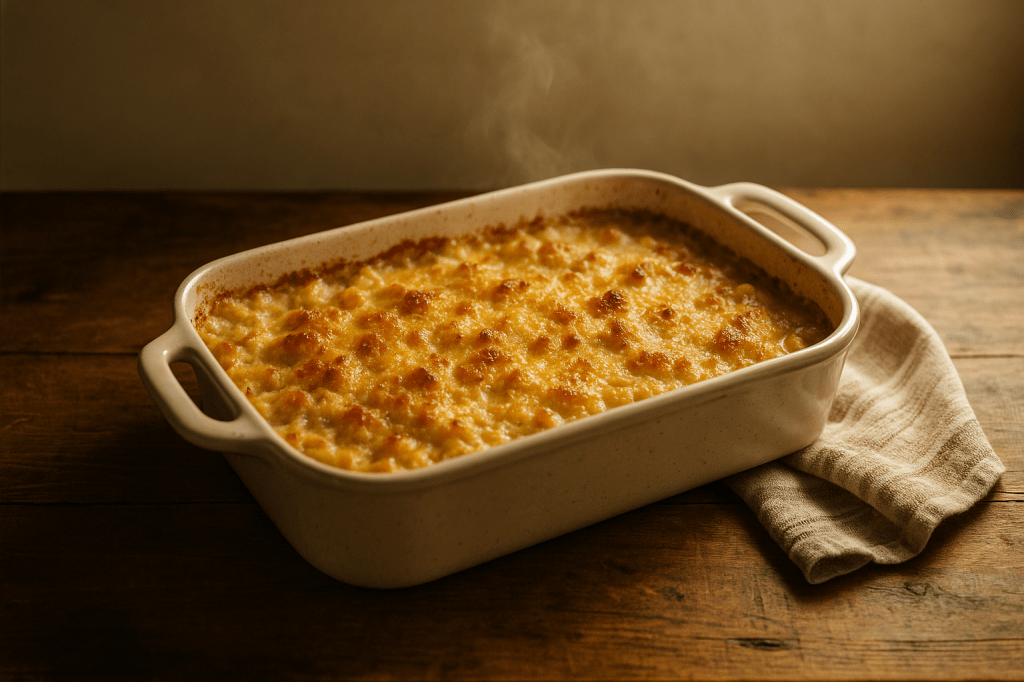
    Large families, tight budgets, and long days demanded creativity. You learned to make things that filled the space—both in the belly and in the heart. And that’s where casseroles came in. They were the unsung heroes of survival: layered, forgiving, endlessly adaptable. Casseroles didn’t judge you for being poor. They rewarded you for being resourceful.

    Everyone had their version. Some made them creamy with soup and cheese; others baked them dry and crisp on top. You could throw in whatever you had—no shame, no rules. Maybe that’s why I still love them. They remind me that abundance isn’t about what’s on the table—it’s about who’s gathered around it.

    Even now, I see casseroles for what they are: a working-class masterpiece. Budget-friendly, easy to make, and rich in the kind of flavor only struggle can season. They fed the tired, the hopeful, and the ones just trying to get through another week. They turned scarcity into comfort, and comfort into something close to gratitude.

    And among them all, one dish reigns supreme—The tuna casserole.

    There’s nothing glamorous about it. Just noodles, canned tuna, soup, and maybe a handful of frozen peas if you had them. But when it came out of the oven—bubbling, golden, smelling faintly of warmth and memory—it was enough. Enough to feed five. Enough to quiet the noise of hunger. Enough to make the world, for a few minutes, feel merciful.

    It wasn’t luxury that kept us going; it was the quiet faith that one can of tuna, a few noodles, and some love could be enough. Even now, it still is. For less than ten dollars, you can make a meal that hums with history—a dish that has fed generations without needing more than it asks for.

    That’s what I think about now, every time I pull a casserole from the oven. The weight of the pan in my hands feels heavier than it should. Maybe it’s not just the food—it’s the memory, the repetition of an act passed down from one generation to the next. Each time we stir, layer, and bake, we’re participating in something bigger than the recipe.

    We’re reminding ourselves that we come from people who made enough from almost nothing.

    And that, even in times like these, might be the most nourishing meal of all.

    This piece is part of The $10 Meals Collection—The recipes and reflections that sustained us when the world gave us little. Because food, at its best, has never been about wealth—it’s been about survival, love, and the quiet grace of making enough.

    Kyle J. Hayes

    kylehayesblog.com

    Please like, comment, and share

    Resources for Hard Times

    If you’re looking for practical help, food support, or community resources, you can visit the Salt, Ink & Soul Resources Page.

    👉 Resources for Hard Times

  • Bread, Memory, and the Price of Enough

    Bread, Memory, and the Price of Enough

    There were five of us—three girls and two boys—and we were poor. The kind of poor that leaves fingerprints on your adulthood. Back when “food stamps” weren’t digital cards but booklets you tore from and handed to the cashier like confessions. We weren’t the only ones, though it sometimes felt that way. Poverty has a way of isolating you, even when the whole block is living on the same prayer.

    Back then, families were closer. Sunday dinners were sacred, not just for the food but for the ritual of it. You could smell a neighborhood coming alive—collard greens wilting slowly on one stove, beans softening on another, cornbread baking somewhere down the street. These weren’t meals for show. They were meals that stuck to your ribs—food that held you up when money couldn’t. The kind of food that whispered, You’ll make it another week.

    Now, everything feels fragile. Groceries cost more than rent used to. People work two jobs and still stand in lines that stretch around food banks. The price of “enough” keeps climbing, and somehow, we’re supposed to just keep smiling through it.

      And with this government shutdown—when paychecks stop, and benefits are frozen—it’s hard not to feel that same hollow echo in the stomach that so many of us grew up with. You start to realize how close the edge really is, and how many are already there.

    We have celebrity chefs and cooking competitions, but fewer people know how to create something from almost nothing. Food has become entertainment instead of education. We scroll past videos of perfectly plated dishes while families debate whether to buy milk or gas. Somewhere between delivery apps and drive-thrus, we forgot how to feed ourselves.

    Maybe the answer isn’t some new system or trend. Perhaps it’s about remembering what our grandparents knew—the art of stretching a dollar, of savoring time itself, and learning to make the basics again. Bread. Beans. Rice. The things that built us.

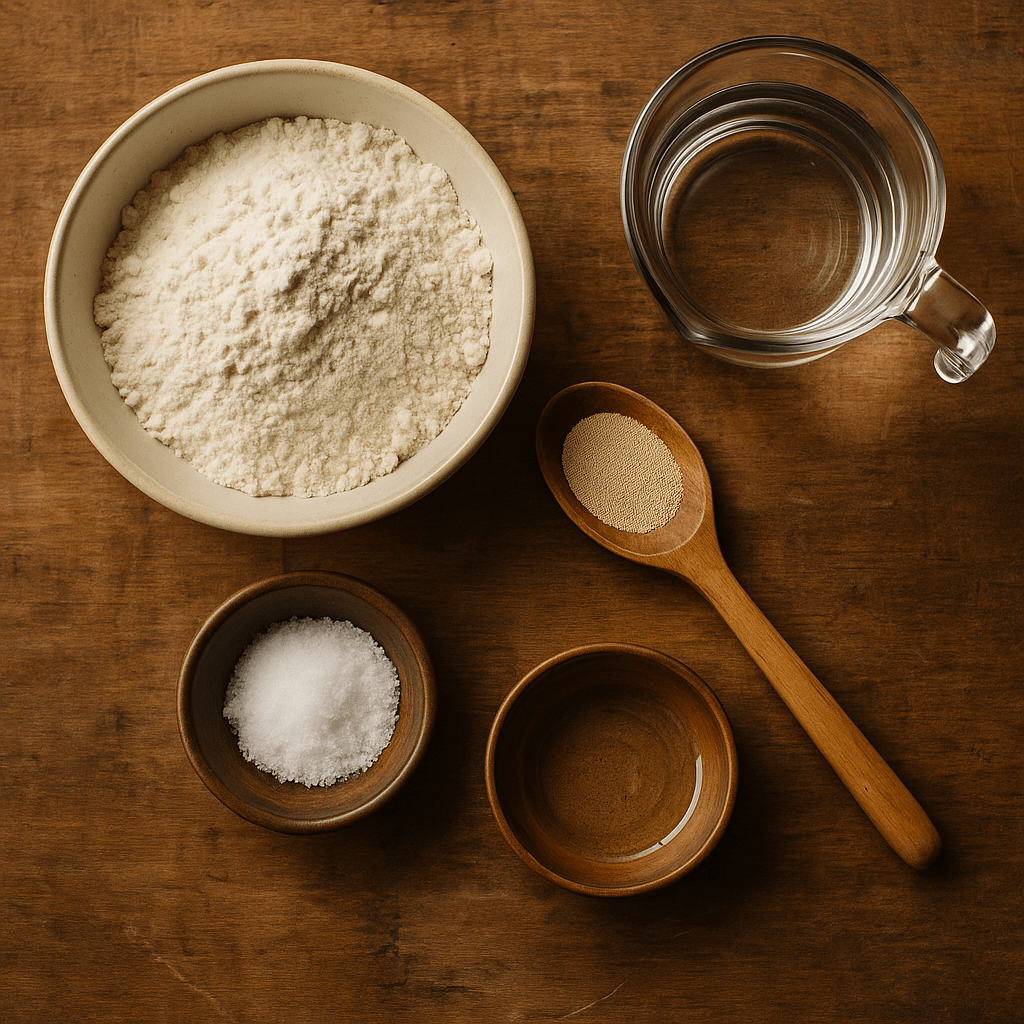
    Because bread isn’t just flour, salt, yeast, and water, it’s patience. It’s a skill born from necessity. It’s history kneaded into muscle memory. Once you have the supplies, it’s cheaper than store-bought—and better for you, body and spirit alike. I’ve found that unfortified flour—the kind left untouched by additives—makes a difference. It’s raw, honest, and stripped down to its true essence.

    That’s what we need more of now.

    Less enrichment, more essence.

    Less spectacle, more survival.

    Learning to make the basics again might not fix everything, but it’s a start—a quiet way of reclaiming control in a world that continually raises the price of dignity. Because the table, when it’s full of simple food and shared stories, still has a kind of wealth that can’t be counted.

    And maybe that’s what it really means to eat something that sticks to your ribs.

    If you want to start anywhere, start with bread. The most basic bread is humble—just flour, salt, yeast, and water: no milk, no butter, no sugar. You stir, you wait, you fold. You give it time to rise, and it teaches you patience in return. Baked until golden and stiff on the outside, soft and honest on the inside. Tear it apart while it’s still warm, and you’ll understand why people around the world have made it for centuries. It’s not about luxury—it’s about survival, about care, about transforming the simplest things into something that sustains.

      And in moments like this—when uncertainty feels like the new normal—maybe that kind of bread, bare and honest, isn’t just food. Perhaps it’s a reminder that we’ve been here before and we made it through.

    Kyle J. Hayes

    kylehayesblog.com

    Please like, comment, and share

    Note from the Author:

    If this reflection stirred something in you — that quiet urge to create, to remember, to feed — you can start where I did: with bread.

    I’ve shared the simplest recipe I know, one that costs little and teaches much.

    👉 The Most Basic Bread Recipe

    Four ingredients. A little patience.

    And a reminder that even in hard times, we can still make enough.

    Resources for Hard Times

    If you’re looking for practical help, food support, or community resources, you can visit the Salt, Ink & Soul Resources Page.
    👉 Resources for Hard Times

  • The Most Basic Bread

    The Most Basic Bread

    (Flour. Salt. Yeast. Water. Nothing else.)

    Ingredients

    • 3 cups (375g) unfortified all-purpose or bread flour
    • 1 teaspoon fine sea salt
    • ½ teaspoon active dry yeast
    • 1¼ cups (300ml) warm water (around 105–110°F / 40°C)

    Instructions

    1. Mix the Basics
    2. In a large bowl, combine the flour, salt, and yeast. Pour in the warm water and stir with a spoon or your hands until it forms a shaggy, sticky dough. Don’t overthink it—just bring it together.
    3. Rest and Wait
    4. Cover the bowl with a damp cloth or plastic wrap. Let it sit at room temperature for 12–18 hours. Time is your secret ingredient here—patience transforms the dough into something alive.
    5. Shape and Rest Again
    6. When the dough has doubled in size and is dotted with bubbles, scrape it onto a floured surface. Gently fold it over a few times, shaping it into a round loaf. Place it on parchment paper or a lightly floured towel, cover again, and let it rest for 1–2 more hours.
    7. Preheat and Bake
    8. Place a heavy pot with a lid (like a Dutch oven) into your oven and preheat to 450°F (230°C). When hot, carefully place your dough inside, cover, and bake for 30 minutes. Remove the lid and bake for an additional 10–15 minutes, until the crust turns a deep golden brown and becomes hard.
    9. Cool and Remember
    10. Let it cool before slicing—if you can resist the temptation. The crust will crackle, the inside will steam. Tear off a piece, hold it warm in your hands, and remember that this is what survival tastes like.

    Notes

    • If you only have instant yeast, reduce to ¼ teaspoon.
    • Whole wheat or rye flour can replace up to one-third of the white flour for more depth.
    • The flavor deepens overnight, just like the memory of meals that once held families together.

    This bread doesn’t ask for luxury—just time, trust, and a little hunger to remind you what’s real.

    Resources for Hard Times

    If you’re looking for practical help, food support, or community resources, you can visit the Salt, Ink & Soul Resources Page.
    👉 Resources for Hard Times

  • The Body’s Revolt  

    The Body’s Revolt  

    Today, the rebellion didn’t come from outside. It rose in my own chest—cough first, then that raw-edged scrape across the throat, the slow ache that spreads like a rumor to joints and fingers. My body filed a complaint in every language it knew: fatigue, pressure, heat. It felt less like illness and more like a verdict. Maybe this is what happens when you dare the air to touch you after years of letting walls do the holding. Perhaps some older part of me—the cautious archivist, the keeper of soft corners—finally stood up and said, Sit down.

    I am home. Not the heroic threshold of a parking lot or a panoramic windshield, but the quiet geography of a kitchen table. The Green Tea with Lemon & Honey steeped too long. Honey pools at the rim of a jar like a promise I don’t believe in yet. A pile of tissues sag with the weight of their job. The notebook lies shut under the pen I’d placed there with good intentions, the cover warm from the light but stubborn in its silence. The window stays closed, the sunlight pressing its face against the glass—proof enough, I tell myself, that the air out there can’t be trusted. The room hums softly with my own confinement, the kind of silence that sounds like waiting for permission to move.

    This is not the scene we celebrate. No triumphant shot of road and horizon. No clean moral in which discomfort becomes courage becomes motion. Instead: the stall. The human stutter. The gulp of disappointment that tastes like metal and old plans. I keep waiting for the narrative to break in my favor, for the part where resolve conquers symptoms, where I lace up shoes and walk straight into the weather. But the boots sit obediently near the door, a small sermon on readiness I haven’t earned.

    It would be easier to call this a cold and let it pass without comment. But the body keeps secrets only when we ask it to. Today, mine is talkative. It says: You have learned to love the museum of control. Measured light, predictable temperature, the still life of comforts arranged just so. It says: Maybe cowardice is the name we give the tenderness we don’t yet know how to carry. That one stings. Not because it’s cruel, but because it might be true.

    I take a sip of tea and the heat climbs my throat, then lowers a rope into the hurt. I pretend that counts as bravery. I inventory the tools: steam, citrus, ginger, honey, patience. Each one is a small citizen in the fragile republic of the body. Each one is voting for me to stay. I listen for the old voice—Everything you need is here—and hear its new clause: …for now. There’s mercy in that ellipsis. There’s also a dare.

    People talk about transformation like it’s a door you stride through, a hinge that swings, a sky that opens. Sometimes it’s closer to the slow rotation of a dimmer switch. Sometimes change is a cough you stop resisting, a nap you refuse to shame, a page you agree to leave blank until your hands remember how to hold a line without shaking. I want to be the version of myself who chooses outside as a reflex, not as an achievement. Today I am not him. Today I am a person sitting at a table, watching light lose its patience across the floorboards, trying not to mistake stillness for surrender.

    There’s a particular disappointment that comes from failing your own promise. It arrives with the officiousness of a hall monitor: Weren’t you the one who said— Yes. I was. I am. I will be again. But today the body votes no, and the mind—traitor or guardian, I can’t tell—counts the ballots twice. That, too, is information. Maybe growth isn’t the victory lap; maybe it’s the audit.

    I catch myself reaching for explanations —little alibis to hand the reader on my way past: allergies, the season, the stress that’s stacked up, and finally, asking for rent. But the truth is plainer. Stepping into the world costs something, and my pockets are light today. The shame isn’t that I don’t have the fare; it’s that I keep checking the same empty pockets and pretending I’m surprised.

    So this is what I can offer: witness. The ordinary, unbeautiful courage of not pretending. No conquest narrative, no panoramic proof. Just the still life of a day that didn’t go. Steam thinning above a cup. The honey’s slow gold. A pen that will write again when it’s ready and not a minute earlier. 

      Failure, I am learning, is a translator. It renders ambition into a tongue the body can understand. It says: You want to move? Then rest as if you mean it. It says: You want the world? Then take this room seriously. Practice gentleness here until your hands remember how to carry it outside. It says: Cowardice is a story; try another draft.

    If there’s a lesson in the ache—beyond fluids and sleep and the quiet arithmetic of recovery—it might be this: I don’t have to be the hero of my own day to be its honest historian. The page will forgive me for showing up without a conclusion. The sun, which has shifted now to the other end of the room, will rise again with or without my approval. Some mornings, it will find me on a trailhead with lungs like bright bells. Others, it will find me measuring ginger and watching dust fall through its light like notes on a staff.

    I look at the shoes by the door. I do not put them on. I look at the pen on the notebook. I do not force the line. I lift the cup and let the heat speak through me. The body is still lobbying its case. I am still listening. Between shame and mercy is a small table where I can sit for as long as it takes. The world will wait. The door is not going anywhere. Neither am I—until I am.

    Maybe tomorrow the hinge swings. Next week, the sky opens. Or I could learn to honor the days that don’t move, the ones that teach me how to carry silence without dropping it. If that sounds like cowardice to someone with stronger lungs, so be it. I know what it costs to breathe.

    When the tea is gone and the light snuffs itself along the baseboards, I open the notebook just enough to hear the paper sigh. No sentences come, but the page no longer feels like a closed fist. It feels like a palm.

    That will have to count for progress tonight. And if it doesn’t, I will learn to count differently.

    Kyle J. Hayes

    kylehayesblog.com

    Please like, comment, and share

  • When the Sky Empties: Remembering the Ground We Stand On

    When the Sky Empties: Remembering the Ground We Stand On

    When the last balloon disappears beyond the Sandias and the roar of burners fades into quiet, the city feels different. The sky, so alive just yesterday, now stretches bare and endless — as if catching its breath after carrying so much wonder. The fields that once pulsed with color and laughter have returned to stillness, the smell of dust and fried dough lingering in the cool morning air. Vendors pack their tents, families drive home, and the wind takes its time moving through what’s left — paper cups, flattened grass, and the memory of joy.

    I live here in Albuquerque, where Native American culture isn’t a festival you visit — it’s a pulse that moves through every day. You see it in the food — fry bread sizzling beside green chile stew — in the jewelry stands where turquoise catches sunlight like captured sky, and in the murals where ancestors watch from painted adobe walls. You hear it in languages that exist nowhere else, carried in song and conversation. This is the place where the Gathering of Nations fills the air each spring, where drums thunder and dancers move like prayers made visible — a spotlight on cultures that never stopped burning, even when the world looked away.

    So when Indigenous Peoples’ Day arrives, it doesn’t feel like an isolated moment — it feels like recognition of what’s always been. It’s a day that reminds us this land isn’t borrowed or bought; it’s lived in, sung to, and remembered. It honors those who first called these mesas home, who understood the sacredness of the earth beneath their feet long before any balloon lifted toward the sky.

    The irony isn’t lost on me — how one day we fill the heavens with color, and the next we honor those who’ve always found meaning in the ground. Maybe that’s the lesson of this timing: that flight and foundation were never intended to be separate things. The balloons rise because the land allows them to. The beauty of the sky depends on the reverence of the soil.

    Standing in the empty field, I feel both awe and humility. The footprints, the dust, the faint hum of the Rio Grande nearby — it all feels alive, like the land is reminding us that celebration doesn’t end when the sky clears. It just changes form.

    Maybe the trick isn’t to choose between the two — not flight or foundation — but to remember that we rise best when we know what we’re rising from.

    As the sun warms the quiet city, I watch one last balloon drifting alone, far to the east — small, defiant, and free. And I think of next year, when the sky will once again bloom with color, and the land will hold us steady beneath it all.

    Because here, in Albuquerque, both sky and soil have stories. And we honor them best when we remember we belong to both.

    Kyle J. Hayes

    kylehayesblog.com

    Please like, comment, and share

  • Night Glow: A Fire for the People

    Night Glow: A Fire for the People

    There are moments in life that feel less like events and more like rituals — moments not designed for necessity, not crafted for competition, but for nothing more than the simple wonder of being alive together. The Night Glow at the Balloon Fiesta is one of those moments.

    It is not about the chase, or the science of wind, or the mechanics of lift. It is not even about the sky. This one belongs to the ground. To the people. To us.

    If you’ve never been, go. Find yourself in the crowd as the sun slips beneath the Sandias, as the night takes its place in the sky. The balloons stay tethered, their great bodies still and waiting, while the pilots prepare their burners. Then it happens — one flame, then another, and suddenly the field becomes a cathedral of fire and color. Sometimes the burners roar in unison, turning the night into daylight for a breath. Sometimes it is a dance, coordinated bursts that ripple across the horizon like notes of a song too big for words.

    The sound of the burners is guttural, alive — a rush that shakes you in your chest. Around you, there is laughter. Children dart through the grass with glow sticks in their hands. Families huddle together, necks tilted back, faces painted in red and orange light. Strangers turn into companions, caught in the same breathless silence when the balloons flare together, and the park glows as though the earth itself has caught fire.

    It feels ancient in its way. Humanity has been gathering around flame for as long as we’ve been here — caves, camps, hearths, bonfires. Fire has always been the place we return to, the place we make our myths and find our meaning. The Night Glow is no different. It is our modern bonfire, our ritual of light against the dark, a spectacle that reminds us that not everything we do needs to point forward. Some things, like this, simply point inward.

    You don’t think about this when you’re there. You’re too busy taking it in — the heat that flashes across your face, the squeals of the children, the cameras held up like prayer offerings. But later, as you walk to your car and join the crawl of taillights trying to leave Balloon Fiesta Park, you feel it settling in. You carry it with you. And one day, maybe weeks later, maybe years, something will spark it again — a flame in a grill, a child’s laugh at dusk — and you’ll remember. The glow, the crowd, the sound. And you’ll smile, because you were there, part of it.

    The balloons will always belong to the sky. But the glow — the glow belongs to us.

    Kyle J. Hayes

    kylehayesblog.com

    Please like, comment, and share

  • The Land of Entrapment

    The Land of Entrapment

      I was raised in the Quad-Cities — an area that, to this day, feels suspended in amber. It isn’t just the winters that freeze you to the bone, when the wind whips across the Mississippi and leaves your face raw. It’s the people, the rhythm of life, the way the place still breathes as though the 1980s never ended.

    Factories were our backbone then: John Deere, International Harvester, Caterpillar, The Rock Island Arsenal, and ALCOA. Their names were more than brands; they were birthrights. People clocked in and out not just for paychecks but for identity. Houses were bought once and held onto for a lifetime, just like jobs. Men retired in the same overalls they wore when they started, women retired in the same churches and kitchens that shaped them. It was a life that promised stability. Predictability. A bubble.

    But bubbles keep things in as much as they keep things out.

    I had seen time move differently elsewhere — places that reinvented themselves, cities that shifted, people who didn’t cling so tightly to sameness. And once you see that, once you know the world isn’t fixed in place, it’s impossible to believe that standing still is survival.

      I left Iowa more than once. The first time, it was the military that pulled me out — not a choice so much as a summons. Later, work carried me away. And yet, I came back, each time.

    Coming back felt inevitable, like the bubble had its own gravitational pull. But deep down, I knew I couldn’t keep circling the same orbit. There’s a difference between leaving because the world demanded it and going because you chose to.

    That’s what Albuquerque was for me: a choice.

      On paper, the decision made sense.

    No hurricanes to rip through your home. No earthquakes to split the ground. No volcanoes threatening fire. No endless rain to drown the days. It wasn’t Phoenix, where the heat presses against your chest like a punishment. It wasn’t the overcrowded sprawl of the West Coast. It was manageable. It was human-sized.

    And yes — the racial makeup mattered. I wanted a place where diversity wasn’t a buzzword, where the face of the city itself carried the mark of many histories, not just one.

      When I arrived, I heard the jokes: The Land of Entrapment. Come on vacation, leave on probation. They were said with a smirk, half-warning, half-truth. Albuquerque has its shadows. Addiction, poverty, violence — scars on a city that has seen too much. But to stop there, to see only the flaws, is to miss the marrow of the place.

      I didn’t know I liked landscapes until I saw the Sandias burn pink at sunset, watermelon hues spilling across the horizon like the desert itself was blushing. I didn’t know I needed vast skies until I stood beneath them, their sheer immensity forcing me to recognize how small I was — and how alive.

      Then the culture. The way Catholic feast days blur into Pueblo ceremonies, how murals tell stories, how music leaks from church doors and lowriders in the same breath. The way traditions survive here is not as nostalgia but as living practices, stitched into daily life.

    And the food.

      If the Midwest were pot roast and casseroles, Albuquerque is chile — unapologetic, fiery, alive. Chile roasters appear outside grocery stores in September, flames licking metal drums, smoke curling into the crisp air until the entire city smells like memory. Red or green isn’t a question of preference; it’s a declaration of identity. Enchiladas stacked high and smothered, tamales at Christmas, burritos at the Balloon Fiesta — food here doesn’t just fill you, it binds you.

    I’ve said before that I wasn’t raised on green chile chicken enchiladas. I was raised on soul food, or as most people now know it, “Southern Cuisine”. That food was survival dressed as a celebration. It was what you ate to remember who you were.

      But Albuquerque taught me to make room for new rituals. When I’m sick, I still crave soul food, but I’ve learned to crave enchiladas too. I’ve learned that “red or green?” comes as naturally now as “sweet or unsweetened?” once did. I’ve learned that my hands, though clumsy, can roll tortillas and fold tamales.

      Food, I’ve realized, doesn’t erase what you came from. It layers it.

    Iowa was entrapment too — but of a different kind. Entrapment of sameness, of repetition, of a rhythm so predictable it could suffocate.

    Albuquerque’s entrapment is something else. It seduces. It draws you in with Chile smoke in the fall, with the way the mountains change color by the hour, with a culture that makes you feel like you’re walking through both past and present at once.

      People warn you about it: The Land of Entrapment. But I’ve started to hear it differently, not as a warning, but as an invitation.

      Because here’s the truth: I don’t want to leave.

    What began as a practical choice has become something more intimate, something stitched into me. Albuquerque caught me — with its flaws, its grit, its beauty, its food — and I don’t feel trapped. I feel claimed.

    That could be what home is. Not where you start, not even where you end. But where you finally stop running, because you no longer want to.

    By Kyle J. Hayes

    kylehayesblog.com

    Please like, comment, and share

  • Should We Forget, Remember, or Just Move Forward? On Grief, Ozzy Osbourne, and the Ghosts We Keep

    Should We Forget, Remember, or Just Move Forward? On Grief, Ozzy Osbourne, and the Ghosts We Keep

    Some weeks feel heavier than others. Not because the calendar says so. Not because tragedy itself is rare—death moves through every week like fog. But because sometimes loss has a shape, a face, a voice you didn’t realize had been echoing in the corners of your life until the silence arrives.

    This week, we lost two.

    One was known more for music. The other, for acting.

    Both architects of something bigger than entertainment culture.

    And one of them was Ozzy.

    Ozzy Osbourne.

    Lead singer of Black Sabbath.

    Rock god.

    Sabbath’s frontman.

    The man who growled verses that sounded like scripture torn from a post-apocalyptic Bible.

    The soft-speaking Brit whose singing voice sounded clearer than his speech.

    The one who turned chaos into chorus.

    I wasn’t a disciple. I didn’t wear the T-shirts or memorize the track lists.

    But I knew Ozzy.

    That’s the thing about culture—you don’t have to invite it in for it to sit down in your house.

    You could’ve never bought an album and still know the riffs of “Iron Man.”

    You could’ve avoided MTV and still felt the Osbournes crawling across the pop landscape.

    You didn’t have to watch the show to be caught in the blast radius of what it pioneered: celebrity confession as spectacle. The camera lens as altar.

    Ozzy was always there, somewhere between myth and meme.

    Slurred sentences, eyeliner, doves, bats, and blurred subtitles.

    A walking contradiction—strange, chaotic, fragile, funny, wild, legendary.

    And now he’s gone.

    And I find myself asking the question that grief always drags behind it:

    What do we do now?

    Do we forget?

    Do we remember?

    Or do we simply move forward?

    The Gen X in me tends to lean toward forgetting. We were built to press forward, to walk away from burning buildings and collapsing ideas.

    We buried our childhoods in cassette tapes and camcorder memories.

    We watched the world grow louder, faster, and messier, and we learned to keep moving.

    Because that’s what survival looked like.

    But forgetting has a cost.

    And sometimes that cost is ourselves.

    So I try to remember.

    Not just the famous bits—the hair, the stage presence, the controversy.

    But what did his existence mean to a culture that was always looking for an edge?

    Ozzy didn’t just perform chaos.

    He was the chaos.

    And somehow, he turned that chaos into art.

    That, to me, is the lesson.

    He didn’t tidy up his pain for mass consumption.

    He screamed it.

    He played it at maximum volume.

    He lived it—and maybe stumbled through it—but he offered it to us without polish or apology.

    And that makes me think about grief in a different way.

    The point isn’t to forget, or even to remember perfectly.

    Maybe it’s simply to hold space—however messy, however incomplete.

    We remember not because it makes us better archivists, but because remembrance is resistance to the idea that people disappear completely when they die.

    We carry them forward—not in perfection, but in pieces.

    A lyric.

    A laugh.

    A guitar riff that rides the back of your throat when the room goes too quiet.

    A moment in the car when the radio plays something old and loud and reckless and suddenly you’re sixteen again, unsure of everything but the volume.

    So what now?

    Now, we grieve.

    Now, we say Rest in Power to the legends and the lost.

    Now, we play the songs we half-remember and let them soundtrack the ache.

    And then, yes—we move forward.

    But we move forward with ghosts.

    We let them walk beside us.

    We let them interrupt the silence with memory.

    We let them whisper in the spaces where culture once gave them a stage.

    Because in the end, grief is not a detour.

    It’s not the opposite of progress.

    It’s part of the road.

    And we don’t heal by forgetting.

    We heal by carrying well.

    Rest in peace, Ozzy.

    You howled your way into the marrow of a generation.

    We heard you.

    And in our own way—we won’t forget.

    By Kyle J. Hayes

    kylehayesblog.com

    Please Like, comment, and share