Tag: SaltInkAndSoul

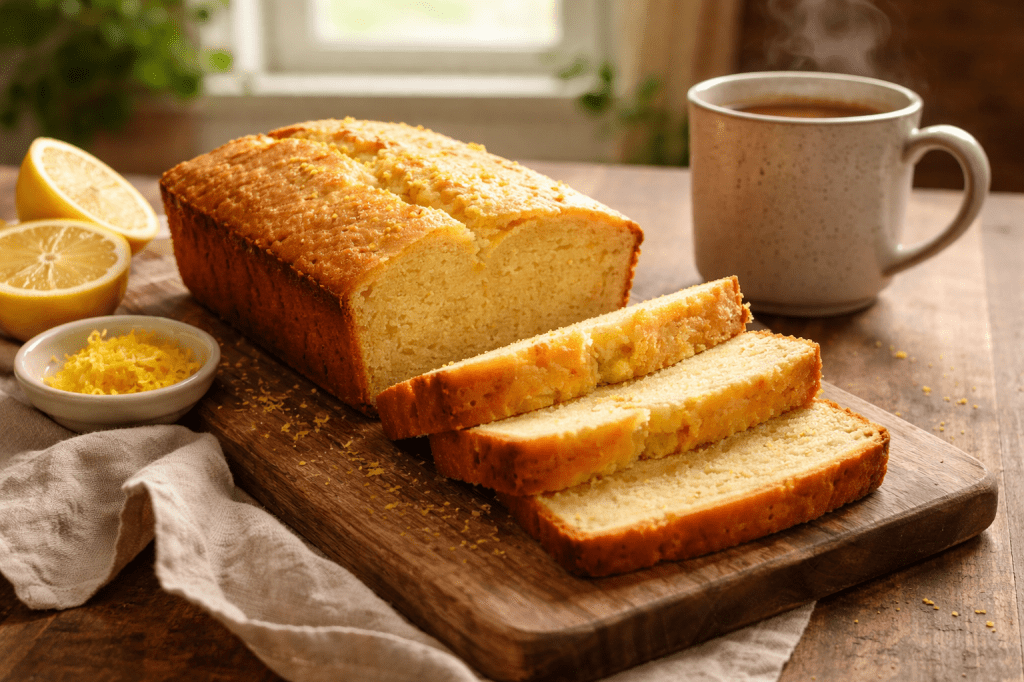
  • Keto Lemon Pound Cake

    Keto Lemon Pound Cake

    Bright enough to cut through heaviness. Gentle enough for a quiet morning.

    By now, some of you probably know something about me: I have a sweet tooth.

    Not the loud kind that storms the kitchen cabinets or demands dessert after every meal. Mine is quieter than that. It waits. Patiently. Somewhere in the background of the day. It shows up when the work is done, when the house is still, when a cup of coffee is warming your hands, and the world finally slows down enough for you to notice yourself again.

    For a long time, I thought discipline meant denial. Just stop wanting sweet things. Just remove them entirely.

    But life has a way of teaching softer lessons than that.

    Not every hunger is meant to be silenced. Some are meant to be understood. Adjusted. Given a place that doesn’t undo the rest of the life you’re trying to build.

    That’s part of why so many keto desserts show up in my kitchen. They aren’t about indulgence the way desserts used to be. They’re about balance. A small act of kindness toward yourself without abandoning the discipline you worked hard to build.

    This lemon pound cake is one of those small compromises with myself.

    Bright with lemon. Rich with butter. Just sweet enough to sit beside a Sunday morning cup of coffee while the day wakes up slowly.

    Trust me.

    It works.

    Ingredients

    • 2½ cups almond flour
    • Almond flour replaces traditional flour, creating a tender crumb with a slightly nutty flavor.
    • 1 cup erythritol
    • A low-carb sweetener that behaves like sugar in baking without the carb load.
    • 1 teaspoon baking powder
    • Helps the cake rise and stay light despite the absence of gluten.
    • ½ teaspoon salt
    • The quiet ingredient that makes everything else taste more like itself.
    • 1 cup unsalted butter, softened
    • This is still a pound cake. Butter gives it richness and moisture.
    • 4 large eggs
    • Eggs build the structure of the cake while adding richness.
    • Zest from 2 lemons
    • This is where the cake gets its lemon personality.
    • ¼ cup fresh lemon juice
    • Bright acidity that balances the richness of the butter.
    • 1 teaspoon vanilla extract
    • A soft background note that rounds out the flavor.
    • ¼ cup unsweetened almond milk
    • Loosens the batter slightly without adding unnecessary carbs.

    Instructions

    1. Preheat and Prepare

    Preheat your oven to 350°F (175°C).

    Grease a 9×5-inch loaf pan and lightly dust it with almond flour so the cake releases easily later.

    A small step. But it saves a lot of regret.

    2. Mix the Dry Ingredients

    In a medium bowl, whisk together:

    • almond flour
    • erythritol
    • baking powder
    • salt

    Mixing these first ensures the rise and sweetness are evenly distributed.

    3. Cream the Butter and Eggs

    In a separate bowl, cream the softened butter until it becomes light and fluffy.

    This step builds air into the batter, which helps create a better texture.

    Add the eggs one at a time, mixing well after each addition.

    Then stir in:

    • lemon zest
    • lemon juice
    • vanilla extract

    At this point, the batter begins to smell like sunlight.

    4. Combine the Batter

    Gently fold the dry ingredients into the wet mixture.

    Do this slowly. Almond flour doesn’t respond well to aggressive mixing.

    Once combined, stir in the almond milk until the batter becomes smooth and pourable.

    5. Bake

    Pour the batter into the prepared loaf pan and smooth the top.

    Bake for 45–50 minutes, or until:

    • The top is golden
    • A toothpick inserted in the center comes out clean

    Your kitchen will smell bright and warm long before the timer ends.

    6. Cool

    Allow the cake to cool in the pan for 15 minutes.

    Then transfer it to a wire rack to cool completely.

    Patience here keeps the crumb intact.

    Optional Keto Lemon Glaze

    If you’d like an extra touch of lemon:

    Ingredients

    • ½ cup powdered erythritol
    • 1–2 tablespoons lemon juice

    Whisk together until smooth and drizzle over the cooled cake.

    It’s not necessary.

    But sometimes a little brightness on top feels right.

    Notes from the Kitchen

    • Store covered at room temperature for 2 days or refrigerate up to 5 days.
    • The flavor deepens the next day slightly.
    • A lightly toasted slice with coffee in the morning feels surprisingly indulgent for something this simple.

    Sometimes discipline isn’t about saying no.

    Sometimes it’s about learning how to say yes — just a little differently.

    And sometimes that difference looks like a slice of lemon pound cake beside a quiet cup of coffee.

    If you’re wondering what that cup of coffee might look like, I wrote something about that once.

    You can read it here:

    The Quest for The Perfect Cup of Coffee

    Kyle J. Hayes

    kylehayesblog.com

    Please like, comment, and share

    Resources for Hard Times

    If you’re looking for practical help, food support, or community resources, you can visit the Salt, Ink & Soul Resources Page.

    👉 Resources for Hard Times

  • Grilled Peaches with Vanilla Ice Cream

    Grilled Peaches with Vanilla Ice Cream

    A simple dessert for warm evenings

    Some meals try to impress.

    They arrive loudly. Layered. Overbuilt. Asking to be admired before they’re even tasted.

    But not every meal is meant for that.

    Some are quieter.

    Earlier in the evening, the table held something warm and steady. A casserole—rich, comforting, the kind of dish that asks only to be shared. Nothing delicate about it. Just food that does what it’s supposed to do.

    Beside it sat something different. Crisp cucumber. Lime. Fresh herbs. A small bowl of brightness that cut through the weight of everything else. A reminder that balance matters.

    And now, at the end of it all, something softer.

    Something warm again—but lighter this time.

    Something sweet, but not heavy.

    A peach, placed on heat, and given just enough time to become something more than it was.

    This is how the meal closes.

    Grilled Peaches with Vanilla Ice Cream

    Serves

    4

    Ingredients

    • 4 ripe peaches
    • 2 tablespoons butter, melted
    • 2 tablespoons brown sugar
    • ½ teaspoon cinnamon
    • 1 teaspoon vanilla extract
    • 4 scoops vanilla ice cream

    Optional finish

    • drizzle of honey
    • toasted chopped pecans
    • fresh mint leaves

    Instructions

    1. Prepare the peaches

    Cut the peaches in half and remove the pits.

    Brush the cut sides lightly with melted butter.

    Not too much. Just enough to help them along.

    2. Heat the grill

    Preheat a grill or grill pan to medium heat.

    Place the peaches cut-side down.

    Let them cook for 3–4 minutes, until grill marks appear and the fruit begins to soften.

    Turn and cook another 2 minutes.

    You’re not trying to break them down.

    Just warm them. Wake them up.

    3. Add the sweetness

    Mix together:

    • brown sugar
    • cinnamon
    • vanilla

    While the peaches are still warm, sprinkle the mixture over them.

    It will melt slightly into the surface.

    Nothing forced. Just enough.

    4. Serve

    Place the peaches in a bowl.

    Add a scoop of vanilla ice cream beside them.

    Let it melt slowly into the fruit.

    That becomes the sauce.

    Finish, if you like, with:

    • a drizzle of honey
    • a few toasted pecans
    • or a little fresh mint

    Serve This As a Complete Table

    This dessert was never meant to stand alone.

    It belongs at the end of a table built on contrast.

    Together, they create something balanced.

    Not heavy.

    Not complicated.

    Just complete.

    Kyle J. Hayes

    kylehayesblog.com

    If this found you at the right time,

    Feel free to like, comment, or share it with someone who might need it too.

    Resources for Hard Times

    If you’re looking for practical help, food support, or community resources, you can visit the Salt, Ink & Soul Resources Page.

    👉 Resources for Hard Times

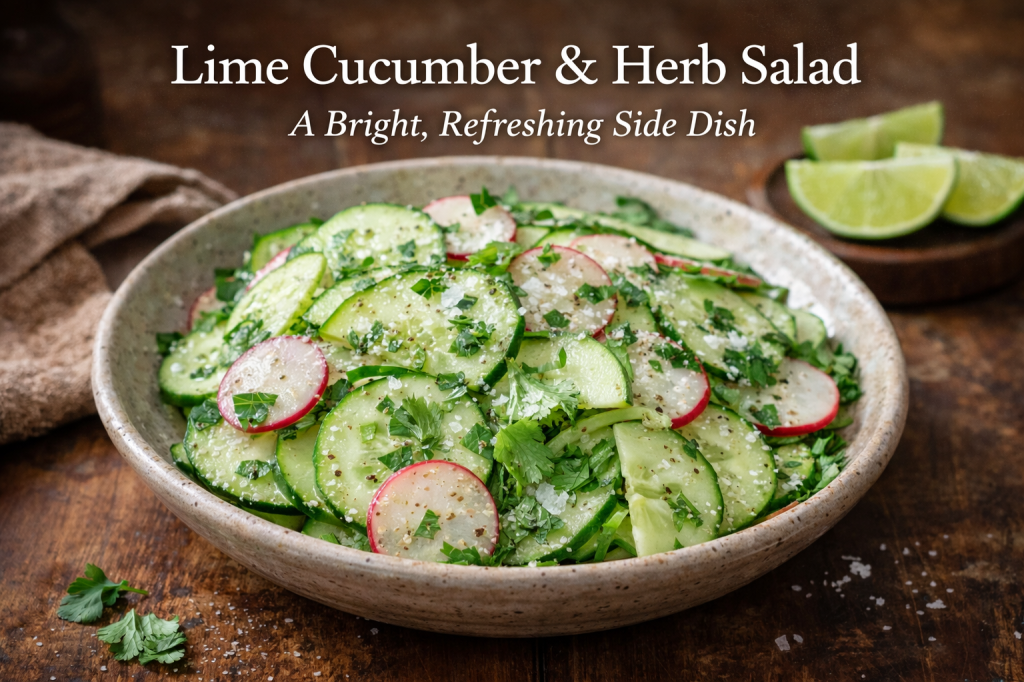
  • Lime Cucumber & Herb Salad

    Lime Cucumber & Herb Salad

    A bright, cooling counterpoint to a rich meal.

    Some meals need contrast.

    When the table holds something warm, rich, and comforting—like a bubbling casserole layered with cheese and spices—there should be something nearby that feels like opening a window.

    Something crisp.

    Something bright.

    Something that reminds your palate what fresh tastes like.

    This Lime Cucumber & Herb Salad is exactly that.

    Thin slices of cucumber. Peppery radish. Fresh cilantro. Lime juice that wakes everything up. Olive oil to soften the edges. And just a pinch of flaky sea salt, sitting on the vegetables like tiny sparks of flavor.

    It’s simple food.

    But sometimes the simplest things are what make a meal feel complete.

    Ingredients

    • 2 large cucumbers, thinly sliced
    • 4–5 radishes, thinly sliced
    • ¼ cup fresh cilantro, roughly chopped
    • Juice of 1 fresh lime
    • 2 tablespoons olive oil
    • ½ teaspoon flaky sea salt (such as Maldon)
    • ¼ teaspoon freshly cracked black pepper

    Instructions

    1. Prepare the vegetables

    Thinly slice the cucumbers and radishes.

    Place them in a large bowl where they have room to move. Salads like this benefit from space.

    2. Add the herbs

    Scatter the chopped cilantro over the vegetables.

    The scent alone should already feel like the start of something fresh.

    3. Dress the salad

    Drizzle the lime juice and olive oil over the mixture.

    Toss gently so every slice picks up a little brightness and a little richness.

    4. Season

    Sprinkle the flaky sea salt and cracked black pepper over the salad.

    Toss lightly again.

    That flaky salt resting on the cucumber is one of those small kitchen pleasures that feels almost unfairly good.

    5. Let it rest briefly

    Allow the salad to sit for 5–10 minutes before serving.

    The salt will draw a little moisture from the cucumbers, and the lime will mingle with it to create a light, natural dressing.

    Patience rewards simple food.

    To Serve

    Serve cold beside a warm dish like Keto Chicken Ranch Casserole.

    The crisp cucumbers and sharp lime will cut through the richness and reset the palate between bites.

    The result is balance.

    Warm and cool.

    Rich and bright.

    Comfort and freshness sharing the same table.

    A Short Reflection

    Not every dish on a table needs to be the star.

    Some exist simply to make the others shine.

    This salad does exactly that.

    And sometimes that quiet role is the one that makes the meal feel whole.

    Kyle J. Hayes

    kylehayesblog.com

    Please like, comment, and share

    Resources for Hard Times

    If you’re looking for practical help, food support, or community resources, you can visit the Salt, Ink & Soul Resources Page.

    👉 Resources for Hard Times

  • Keto Chicken Ranch Casserole

    Keto Chicken Ranch Casserole

    A casserole for the nights when something warm and steady feels necessary.

    Some meals impress people.

    And then some meals hold people together.

    Casseroles have always belonged to that second category. They aren’t delicate food. They aren’t trying to prove anything. They’re the kind of dish that fills the house with the smell of onions softening in butter and spices warming slowly in a pan. The kind of meal that tells you—before the first bite—that tonight you’re going to be alright.

    This Keto Chicken Ranch Casserole leans low-carb, but the spirit of the dish remains the same: layers of tortillas, a slow-built sauce, and enough cheese to bring everything together into something comforting and unapologetically generous.

    The kind of food you make when people are coming over.

    Or when they aren’t.

    Sometimes you cook like this simply because you deserve something warm.

    Ingredients

    • 1 store-bought rotisserie chicken, meat removed and shredded (about 3 cups)
    • 1 cup chicken broth
    • 2 tablespoons butter
    • ½ small onion, diced
    • 1 medium red bell pepper, diced
    • 1 tablespoon chili powder
    • 1 teaspoon cumin
    • 1 teaspoon garlic salt
    • 4 oz can chopped green chile
    • 6 oz tomato salsa
    • ½ cup heavy cream
    • ⅓ cup sour cream
    • 16 oz grated jack cheese
    • 6–7 low-carb or homemade tortillas

    (This casserole makes about 12 servings with approximately 356 calories per serving.)

    Instructions

    1. Prepare the chicken

    Remove the meat from the rotisserie chicken and shred or chop it into bite-sized pieces. Set aside about 3 cups of meat for the casserole.

    If you have a little extra, save it for sandwiches or tomorrow’s lunch.

    2. Build the base

    Melt 2 tablespoons of butter in a skillet over medium-low heat.

    Add the diced onion and bell pepper and cook slowly until softened, about 5 minutes.

    The kitchen will begin to smell like dinner.

    3. Wake up the spices

    Add the chili powder, cumin, and garlic salt.

    Stir them into the vegetables and cook for about 3 minutes, allowing the spices to bloom in the butter.

    This is where the dish’s depth begins.

    4. Deglaze the pan

    Pour in the chicken broth, stirring and scraping the bottom of the pan to incorporate all the flavor into the sauce.

    5. Build the sauce

    Add:

    • heavy cream
    • chopped green chile
    • salsa

    Stir well.

    Cover and let the sauce simmer gently for 15 minutes, stirring occasionally.

    Good sauces take their time.

    6. Thicken the mixture

    Carefully remove 1½ cups of the hot mixture and blend it until smooth.

    Return the blended mixture to the pan and stir until the sauce thickens.

    7. Add the chicken

    Stir in the sour cream, then add the shredded rotisserie chicken.

    Mix until the chicken is fully coated in the sauce.

    At this point, the casserole filling should look rich, creamy, and deeply seasoned.

    8. Prepare the casserole

    Preheat the oven to 350°F (175°C).

    Spread a small amount of the chicken mixture in the bottom of a 9×13 baking dish.

    Place the tortillas across the bottom, tearing pieces as needed to fill the gaps.

    9. Build the layers

    Add:

    • half of the chicken mixture
    • half of the shredded jack cheese

    Repeat with:

    • tortillas
    • remaining chicken mixture
    • remaining cheese

    Layering like this turns simple ingredients into something that feels almost ceremonial.

    10. Bake

    Bake at 350°F for 30 minutes, until the cheese is melted and bubbling.

    Remove from the oven and let it rest 10 minutes before serving.

    Casseroles need a moment to gather themselves.

    To Serve

    Spoon generous portions onto plates.

    If you like, add a little extra sour cream on top.

    Sit down.

    Take a breath.

    Eat slowly.

    Meals like this were never meant to be rushed.

    A Short Reflection

    Some dishes exist because someone long ago needed to stretch what they had.

    Chicken. Tortillas. Cheese. A sauce built more on patience than luxury.

    And somewhere along the way, that act of stretching became comfort.

    That’s the quiet truth about casseroles.

    They are not glamorous foods.

    They are care disguised as dinner.

    And sometimes that’s the most honest kind of cooking there is.

    Kyle J. Hayes

    kylehayesblog.com

    Please like, comment, and share

    Resources for Hard Times

    If you’re looking for practical help, food support, or community resources, you can visit the Salt, Ink & Soul Resources Page.
    👉 Resources for Hard Times

  • A Quiet Beginning to the Week

    A Quiet Beginning to the Week

    Monday mornings have a reputation.

    They’re supposed to arrive with urgency. With lists already waiting. With alarms that sound less like invitations and more like instructions. Somewhere along the way, we decided the beginning of a week should feel like stepping onto a moving train.

    But the truth is, not every Monday begins that way.

    Some Mondays begin quietly.

    The house is still. The light comes slowly through the window. Coffee warms the room before anything else has a chance to speak. For a few minutes, the world feels almost suspended—like the week hasn’t quite decided what it wants from you yet.

    I’ve come to appreciate those moments more than I used to.

    When I was younger, I thought the beginning of a week meant proving something. Proving you were working hard enough. Moving fast enough. Getting somewhere important. The world has a way of convincing us that motion is the same thing as progress.

    But life teaches different lessons if you pay attention long enough.

    It teaches that most of the meaningful parts of living happen in ordinary moments that no one applauds. The first cup of coffee in a quiet kitchen. The familiar rhythm of preparing something simple to eat. The small acts of care that keep a household moving forward.

    None of it looks impressive from the outside.

    But it matters.

    In a world that rewards noise and speed, gentleness can start to feel like a forgotten language. Yet it’s often the gentlest things that steady us the most. A calm voice. A patient moment. A small kindness offered without expectation.

    Even toward ourselves.

    Monday mornings are a good place to practice that kind of kindness.

    Not every week has to begin with pressure. Not every day needs to be measured against a list of accomplishments before it has even begun. Sometimes the best way to start is to arrive in the moment you’re in.

    Make the coffee.

    Open the window.

    Let the day begin at the pace it needs.

    The week will unfold the way weeks always do—one hour at a time, one small decision at a time, one quiet act of care after another.

    And somewhere inside those ordinary moments, the real work of living continues.

    So if today begins slowly, that’s alright.

    If you find yourself easing into the day instead of charging into it, that’s alright too.

    Sometimes the kindest way to start a week is to start gently.

    Kyle J. Hayes

    kylehayesblog.com

    Please like, comment, and share

    Resources for Hard Times

    If you’re looking for practical help, food support, or community resources, you can visit the Salt, Ink & Soul Resources Page.
    👉 Resources for Hard Times

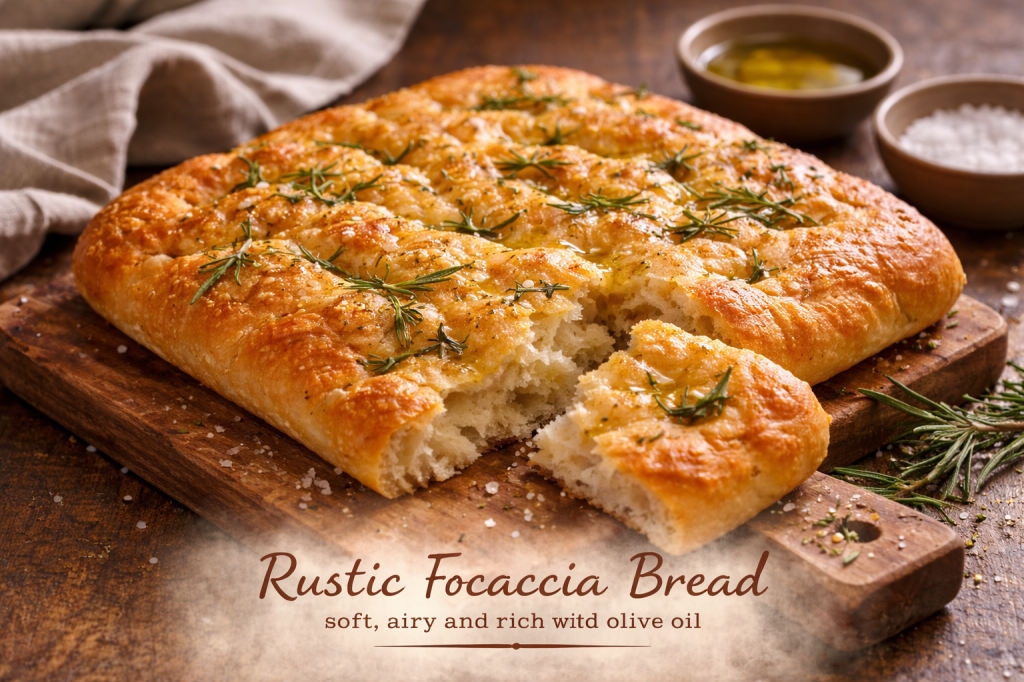
  • Rustic Focaccia Bread

    Rustic Focaccia Bread

    A warm loaf meant for tearing, dipping, and sharing.

    There’s something about bread coming out of the oven that changes the mood of a kitchen.

    The smell alone is enough to make people wander in from other rooms. Someone leans against the counter. Someone else tears off a corner before it has properly cooled.

    Focaccia has always been one of the more forgiving breads. It doesn’t ask for perfection. No elaborate shaping. No delicate scoring. Just Flour, Water, Yeast, olive oil, and a few dimples pressed into the dough with your fingertips.

    It’s the kind of bread that feels alive while you’re making it.

    This particular loaf pairs beautifully with a bright tomato salad or with the Tuscan chicken we shared earlier this week. Something about olive oil, tomatoes, and warm bread feels like it belongs on the same table.

    Simple ingredients.

    A hot oven.

    And a loaf of bread that’s meant to be torn apart while it’s still warm.

    Rustic Focaccia Bread

    Yield: 1 large focaccia or 2 small

    Prep Time: 50 minutes

    Cook Time: 6–10 minutes

    Ingredients

    Plain Flour — 400 g

    The bread’s foundation creates a soft interior and crisp edges.

    Warm Water — 320 ml

    Warm Water helps activate the Yeast and bring the dough together.

    Salt — 8 g

    Salt strengthens the dough and deepens the flavor.

    Sugar — 8 g

    Just enough to help the Yeast begin its work.

    Instant Yeast — 7 g (1 sachet)

    The quiet engine that lifts the dough.

    Olive Oil — 3 tablespoons (for greasing the pan)

    Creates the crisp, golden underside that makes focaccia so satisfying.

    Olive Oil — 3 tablespoons (for topping)

    Focaccia loves olive oil. Don’t be shy.

    Sea Salt — to taste

    Optional toppings

    • Fresh herbs (rosemary or thyme work beautifully)

    • Garlic granules

    Method

    1. Preheat the oven.

    Preheat your oven to 250°C (482°F).

    A hot oven is what gives focaccia its golden crust.

    2. Activate the Yeast

    In a food processor, combine:

    • warm Water
    • sugar
    • instant Yeast

    Pulse briefly until the Yeast and sugar dissolve.

    3. Form the Dough

    Add the Flour and salt to the food processor.

    Pulse until the mixture comes together into a rough dough ball.

    It doesn’t need to be perfectly smooth at this stage.

    4. First Rise

    Transfer the dough to a large bowl.

    Fold the dough over itself 3–4 times to tighten it into a compact shape.

    Cover and allow it to rise for 15 minutes.

    5. Prepare the Pan

    Pour 3 tablespoons of olive oil into a baking tray and spread it evenly to grease the surface.

    Place the dough into the tray and gently stretch it toward the edges.

    Cover and let the dough rise for another 10 minutes.

    6. Add Toppings

    Drizzle the remaining 3 tablespoons of olive oil across the surface of the dough.

    Sprinkle with:

    • sea salt
    • herbs (if using)
    • garlic granules (optional)

    Using your fingertips, press dimples across the surface of the dough.

    Those little pockets will catch the olive oil while it bakes.

    7. Final Rise

    Allow the dough to rest for 10–15 minutes.

    You’ll see it soften and puff slightly.

    8. Bake

    Place the tray into the hot oven and bake for 6–10 minutes, until the focaccia turns golden.

    The edges should be crisp while the center remains soft.

    Notes From My Kitchen

    Focaccia is best eaten warm.

    Tear it apart, dip it in the olive oil that collects in the dimples, and don’t worry too much about neat slices.

    It’s the kind of bread that belongs beside simple food.

    A plate of tomatoes.

    A pan of Tuscan chicken.

    Or just a small dish of olive oil and a quiet moment in the kitchen.

    Sometimes the simplest bread is exactly the one you need.

    Kyle J. Hayes

    kylehayesblog.com

    Please like, comment, and share

    Resources for Hard Times

    If you’re looking for practical help, food support, or community resources, you can visit the Salt, Ink & Soul Resources Page.
    👉 Resources for Hard Times

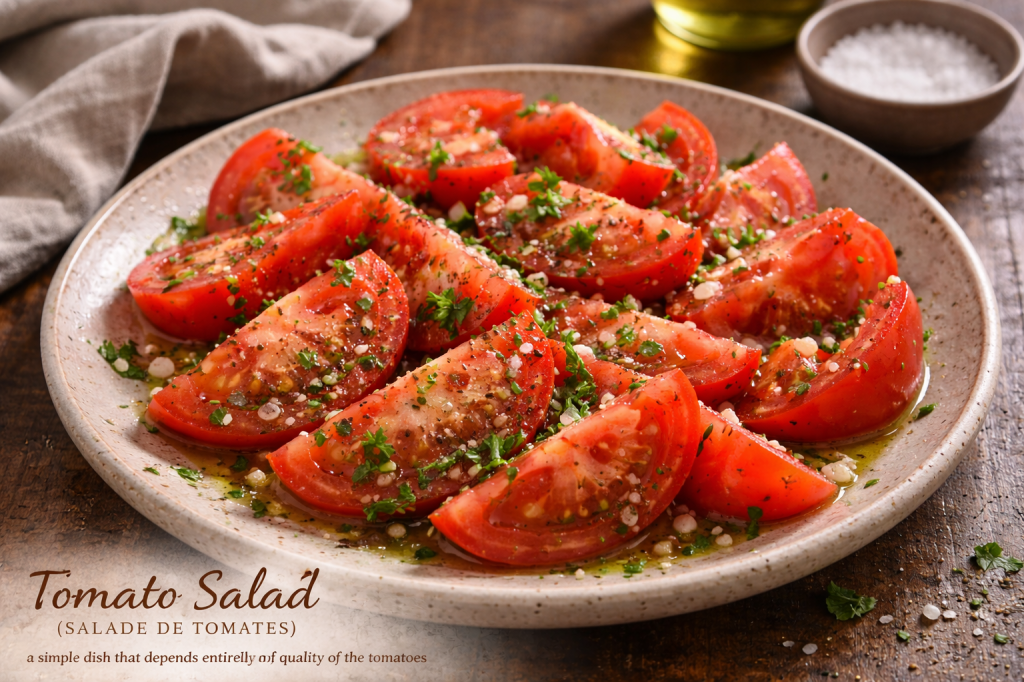
  • Tomato Salad 

    Tomato Salad 

    A bright, simple dish for warm days.

    You may ask why a salad.

    Fair question.

    Here in New Mexico, the seasons don’t really announce themselves politely. One week, the mornings still carry a little chill, the next the sun is leaning hard against the windows, and suddenly the last thing you want to do is fire up the oven and turn the house into a brick kiln. When that shift happens, a lot of us start cooking differently. We look for meals that don’t demand heat, or patience, or a sweaty kitchen. Food that’s lighter, quicker, but still delivers the flavor you’re after.

    That’s where a dish like this comes in.

    A bright tomato salad. Nothing complicated. Just good tomatoes, a little salt, olive oil, maybe a sharp whisper of shallot and vinegar. The kind of thing that reminds you that sometimes the best meals are the ones that barely require cooking at all.

    Tomorrow I’ll be posting a recipe for focaccia that goes perfectly with this — something warm to tear apart and drag through the tomato juices — and of course it pairs beautifully with the Tuscan chicken we shared earlier this week.

    Not bad for a plate of tomatoes.

    Tomato Salad 

    Serves: 4

    Ingredients

    Ripe Tomatoes — 4–6, sliced into wedges or thick slices

    This dish lives and dies by the tomatoes. Choose the ripest ones you can find.

    Shallot — 1 small, very finely minced

    A gentler cousin to the onion, adding sharpness without overpowering the tomatoes.

    Extra-Virgin Olive Oil — 2–3 tablespoons

    Good olive oil turns the tomato juices into a dressing.

    Red Wine Vinegar — 1 tablespoon

    Just enough acidity to brighten everything.

    Coarse Sea Salt — to taste

    Salt wakes the tomatoes up and draws out their natural juices.

    Freshly Ground Black Pepper

    Fresh Flat-Leaf Parsley — small handful, chopped

    Method

    1. Arrange the Tomatoes

    Lay the sliced tomatoes across a wide plate or shallow bowl.

    Give them space so their juices have somewhere to collect.

    2. Salt and Let Them Rest

    Season the tomatoes generously with sea salt.

    Let them sit for 5–10 minutes.

    During this time, the salt draws out the tomato juices, creating the beginnings of a natural dressing.

    3. Add the Shallot

    Scatter the minced shallot across the tomatoes.

    It will soften slightly as it mingles with the juices.

    4. Build the Dressing

    Add the red wine vinegar.

    Drizzle the olive oil across the salad.

    Season lightly with freshly ground black pepper.

    5. Finish

    Sprinkle the chopped parsley over the top.

    Just before serving, spoon some of the tomato juices from the bottom of the plate back over the tomatoes.

    Those juices are the best part.

    Notes From the Kitchen

    This dish rises and falls entirely on the quality of the tomatoes.

    If they are ripe, warm from the sun, and full of flavor, this salad will taste like something far greater than the sum of its parts.

    If they are not…

    No amount of olive oil will save them.

    So wait for the right tomatoes.

    They are worth it.

    Tomorrow I’ll share the rustic focaccia that belongs beside a plate of tomatoes like this — perfect for soaking up the last of that olive oil and tomato juice.

    Kyle J. Hayes

    kylehayesblog.com

    Please like, comment, and share

    Resources for Hard Times

    If you’re looking for practical help, food support, or community resources, you can visit the Salt, Ink & Soul Resources Page.

    👉 Resources for Hard Times

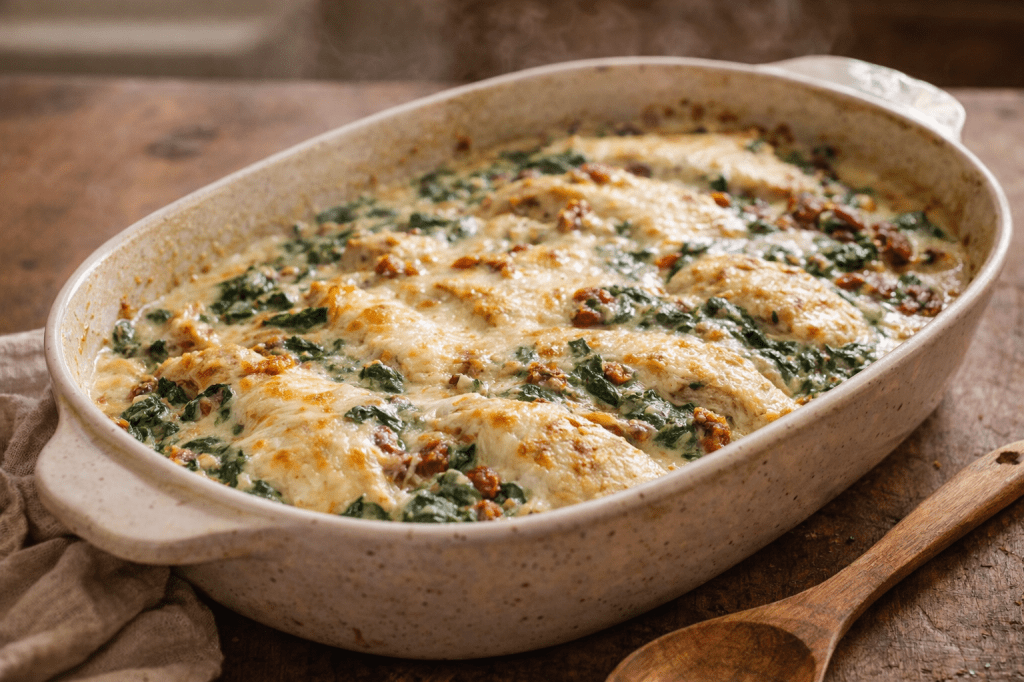
  • Creamy Tuscan Garlic Chicken Casserole (Keto)

    Creamy Tuscan Garlic Chicken Casserole (Keto)

    A warm, quiet kind of comfort from the oven.

    Some meals feel like they belong to a particular moment.

    A long day.

    A tired evening.

    A kitchen that’s quieter than it was earlier.

    This is the kind of dish that fits there.

    Chicken, garlic, cream, Spinach — simple ingredients that don’t ask for much attention but still manage to come together into something deeply comforting. The garlic wakes everything up. The Parmesan deepens the flavor. The sun-dried tomatoes bring just enough brightness to cut through the richness of the Cream.

    And because the ingredients stay low in carbohydrates, the whole dish fits comfortably within a keto way of eating.

    Nothing complicated.

    Just a casserole that comes out of the oven bubbling gently around the edges while the kitchen fills with the smell of garlic and Cream.

    Sometimes that’s exactly the kind of dinner the day calls for.

    Creamy Tuscan Garlic Chicken Casserole

    Keto • Low Carb

    Servings: 4

    Ingredients

    Chicken Breasts — 4, cooked and sliced

    The heart of the dish. Leftover roasted or grilled chicken works beautifully here.

    Fresh Spinach — 2 cups

    Spinach wilts quickly, adding a soft, earthy balance to the Cream.

    Sun-Dried Tomatoes — ½ cup, chopped.

    A small burst of sweetness and acidity that keeps the sauce from feeling too heavy.

    Heavy Cream — 2 cups

    This becomes the body of the sauce — rich, smooth, and deeply comforting.

    Parmesan Cheese — 1 cup, grated

    Sharp, salty, and full of flavor. Parmesan gives the sauce its depth.

    Garlic — 4 cloves, minced

    Garlic is the quiet backbone of this dish.

    Salt and Freshly Ground Black Pepper — to taste

    Optional but recommended:

    1 cup shredded mozzarella for topping — adds a golden finish when baked.

    Instructions

    1. Preheat the oven.

    Preheat your oven to 375°F (190°C).

    Lightly grease a casserole dish and set it aside.

    2. Sauté the Garlic and Spinach

    In a skillet over medium heat, sauté the minced garlic for about 30 seconds, just until fragrant.

    Add the Spinach and cook until it wilts and softens.

    3. Build the Cream Sauce

    Pour the heavy Cream into the skillet and stir gently.

    Add the grated Parmesan and simmer the mixture slowly until the sauce begins to thicken.

    Season with salt and freshly ground black pepper.

    The sauce should feel rich but still pourable.

    4. Assemble the Casserole

    Arrange the sliced chicken evenly across the bottom of the casserole dish.

    Scatter the chopped sun-dried tomatoes over the chicken.

    Pour the warm cream sauce over everything, allowing it to settle into the spaces between the chicken pieces.

    If using mozzarella, sprinkle it across the top.

    5. Bake

    Place the casserole in the oven and bake for 25–30 minutes, until the sauce is bubbling gently around the edges and the top begins to turn lightly golden.

    Let it rest for a few minutes before serving.

    Notes From the Kitchen

    This is one of those dishes that reheats beautifully the next day.

    The sauce thickens slightly overnight, and the flavors settle into one another, making the second serving feel even better than the first.

    A few simple additions work nicely if you feel like changing it up:

    • sautéed mushrooms

    • roasted cauliflower

    • a small pinch of red pepper flakes

    But the truth is, it doesn’t really need much.

    Chicken.

    Garlic.

    Cream.

    A quiet dinner that asks very little from you and still manages to feel like comfort.

    Later this week, I’ll share the simple tomato salad and rustic focaccia that often accompany this dish on my table.

    Kyle J. Hayes

    kylehayesblog.com

    Please like, comment, and share

    Resources for Hard Times

    If you’re looking for practical help, food support, or community resources, you can visit the Salt, Ink & Soul Resources Page.

    👉 Resources for Hard Times

  • When the Neighborhood Song Finds You Again

    When the Neighborhood Song Finds You Again

    There are nights when adulthood feels heavier than it should.

    No catastrophe.

    No crisis that would make the evening news.

    Just the quiet pressure that settles in your chest after years of carrying things you rarely speak about. Bills. Expectations. The slow arithmetic of responsibility. The strange loneliness that can exist even when you’re surrounded by people.

    People like to say, ” Just talk to someone.

    And sometimes that’s good advice.

    But the truth adults rarely admit is that it isn’t always that simple.

    Sometimes you don’t know how to explain what you’re feeling. Sometimes the words are tangled. Sometimes the weight is vague—more like weather than injury. A fog rolling in without asking permission.

    Tonight was one of those nights for me.

    The kind where the mind circles the same questions again and again. Where the quiet in the house feels louder than usual. Where you sit with yourself and realize that being an adult often means being the one expected to have answers—even when you feel like the smallest person in the room.

    So I did something simple.

    I opened YouTube.

    Not looking for wisdom. Not looking for motivation or productivity advice or someone promising to unlock the secret to success in ten easy steps.

    Just something gentle.

    And somehow I landed on a channel filled with old episodes of Mr. Rogers’ Neighborhood.

    The moment the music started, something happened that I didn’t expect.

    That piano.

    That calm rhythm.

    That familiar invitation into a living room that somehow always felt safe.

    “It’s a beautiful day in the neighborhood…”

    Before I knew it, I was smiling.

    Not the polite smile adults wear in public. The real kind. The one that sneaks up on you when a memory taps you on the shoulder.

    I started singing along.

    And somewhere between the first line and the moment he changed his shoes, something inside me loosened. The stress that had been sitting in my chest all evening dissolved like sugar in warm coffee.

    Just like that.

    No lecture.

    No complicated explanation.

    No grand philosophy.

    Just a man speaking calmly about learning to ride a bicycle.

    About the moment when a child moves from three wheels to two.

    About wobbling.

    About trying again.

    About how growing up sometimes means doing things that feel a little scary at first.

    And there I was.

    A grown man sitting in his living room, smiling like a kid again.

    It made me wonder about something.

    How is it that someone who passed away in 2003 can still reach through time and calm the nervous system of a stranger sitting alone decades later?

    How can a quiet voice, a soft sweater, and a steady presence still quiet the storms adulthood sometimes builds inside us?

    The answer may be simpler than we think.

    He wasn’t trying to impress anyone.

    He wasn’t trying to dominate the room or prove how intelligent he was or convince the world he had all the answers.

    He was doing something far rarer.

    He was making space.

    Space for children to feel understood.

    Space for feelings to exist without being rushed away.

    Space for gentleness in a world that often rewards noise.

    And maybe—though we rarely admit it—adults need that space just as much as children do.

    Maybe the part of us that once sat cross-legged in front of a television, listening carefully to a man who spoke slowly and kindly, never actually disappears.

    It just gets buried.

    Under bills.

    Under expectations.

    Under the quiet belief that growing up means we should already know how to carry the weight.

    But every once in a while, something reminds us.

    A song.

    A memory.

    A familiar voice from another time.

    And suddenly the armor loosens.

    You remember what it felt like to be small, curious, and hopeful about the world. You remember that kindness isn’t weakness. That patience isn’t outdated. That gentleness—real gentleness—is one of the strongest things a human being can offer another.

    Watching that episode tonight made me think of something simple.

    Maybe the world needs more people like him.

    People who slow things down rather than speed them up.

    People who speak softly instead of shouting.

    People who remind us that it’s okay to feel what we feel.

    Especially when the world gets heavy.

    I could write more about this tonight.

    About kindness.

    About childhood.

    About how strange and beautiful it is that a simple television show can still calm an adult heart decades later.

    But the truth is…

    There’s another episode waiting.

    And for a little while longer, I’d like to sit here and watch the show.

    Kyle J. Hayes

    kylehayesblog.com

    Please like, comment, and share

    Resources for Hard Times

    If you’re looking for practical help, food support, or community resources, you can visit the Salt, Ink & Soul Resources Page.

    👉 Resources for Hard Times

  • The Lessons I Wish Someone Had Taught Me Sooner

    The Lessons I Wish Someone Had Taught Me Sooner

    There’s a certain kind of teaching that doesn’t happen at a chalkboard.

    It happens later in the quiet. When you’re old enough to look back at the boy you were and realize he didn’t need tougher lessons—he needed better language for what he was already carrying. He needed someone to name the weight, not just tell him to lift it. He needed instructions that didn’t feel like shame.

    I write children’s stories, and if you look closely, there’s a lesson tucked inside each one like a warm note in a pocket. People sometimes think that’s cute. Sometimes it is. But it’s also a confession.

    Because the truth is: I’m not only writing for children.

    I’m writing for the younger version of me.

    I’m writing for the boy who kept hearing “you’ll learn the hard way” like it was a rite of passage. Like pain was a badge you earned. Like wasted time was the price of admission. Like you had to bleed to be considered real.

    And maybe that’s the oldest lie we tell boys—that the only education that counts is the kind that bruises.

    I grew up in a world that didn’t always teach feelings the way it taught survival. It taught stamina. It taught silence. It taught the art of looking fine. It taught you how to swallow your own questions whole so nobody would see you chewing.

    And then, later—when you’re old enough to know you’ve been living with a hunger you couldn’t name—you realize what you were missing wasn’t toughness.

    It was guidance.

    The kind that says: Here’s how to be human without hardening into a weapon.

    So I started writing the lessons I wish had been offered to me without the threat attached.

    Not sermons. Not lectures. Just small stories.

    A fox who checks on his friends.

    A quiet day that gives permission to rest.

    A soup that doesn’t look fancy but still warms the room.

    A cloud that doesn’t stay forever but leaves growth behind.

    These aren’t just plots.

    They’re repairs.

    They’re me trying to do something with what I’ve learned, instead of letting it sit inside me as regret.

    Because I’ve learned the hard way. I’ve paid for the information for years. With missteps. With stubborn pride. With the kind of loneliness that doesn’t announce itself—it just rearranges your life until you forget what joy used to sound like.

    There’s a particular kind of waste that hurts the most—not wasted money or missed chances, but wasted time becoming. The years you spend thinking you’re broken, or behind, or unworthy of gentleness. The years you spend trying to earn what should have been given freely: permission to grow.

    That’s why the lessons keep showing up in my stories.

    Not because I believe children are empty and need to be filled, but because children are already full—full of questions, full of fear, full of hope they don’t yet know how to protect. And too often they inherit a world that tells them their softness is a flaw.

    So I write to tell them the opposite.

    I write to tell them that kindness is not weakness. That asking for help is not failure. That being unseen isn’t proof you don’t matter. That the quiet parts of you deserve a home.

    That you can be strong without being cruel.

    That you can become a good man without becoming a hard one.

    And I write to tell the adults reading over their shoulders something too: it’s not too late to offer yourself the lesson you never got. It’s not too late to sit beside the younger version of yourself and say, I see what you went through. You didn’t deserve to go through it alone.

    People sometimes assume empathy is just a personality trait, like eye color. But I think empathy is often the leftover heat from a life that could have gone colder. It’s what happens when you’ve been hurt and decide—quietly, stubbornly—that you don’t want to hand that hurt forward.

    That’s what my stories are.

    My refusal to hand it forward.

    I don’t write because I’m better than anyone. I write because I know what it costs when we don’t have maps. I know what it costs when boys are told that confusion is weakness and tenderness is something to outgrow.

    I know how easy it is to turn “learned the hard way” into an identity instead of a warning.

    I’m trying to offer a different inheritance.

    Not perfection. Not a shortcut around life. Life will still be life—wild, unfair, beautiful, sometimes brutal. But maybe we can spare someone a few needless miles. Maybe we can keep a kid from mistaking pain for a teacher and loneliness for a personality.

    We can help them spend less time surviving and more time becoming.

    That’s the hope under every story I write: that someone—somewhere—will feel seen sooner than I did. That they’ll recognize themselves in a gentle fox or a patient cloud and understand, without being told too bluntly, that they’re allowed to be human.

    And if that happens, even once, then none of this is wasted.

    Not the stories.

    Not the lessons.

    Not even the hard way.

    Maybe that’s what these stories really are — small lanterns placed along the path I once had to walk in the dark.

    If someone younger finds one of them sooner than I did, then the years it took me to learn those lessons won’t have been wasted.

    Kyle J. Hayes

    kylehayesblog.com

    Please like, comment, and share

    Resources for Hard Times

    If you’re looking for practical help, food support, or community resources, you can visit the Salt, Ink & Soul Resources Page.

    👉 Resources for Hard Times

    Links