
Tag: self-reflection

  • The Kind of Friend I Want to Be

    The Kind of Friend I Want to Be

    This is a personal reflection, written with a few particular people in mind. People whose friendship, patience, and understanding have meant more to me than I have ever known how to express.

    But I have come to believe that sometimes the most personal things we write are the very things someone else needs to read.

    Perhaps you will recognize a little of yourself in these words. Perhaps they will remind you of someone who has stood beside you, or someone whose kindness you have not yet found the words to acknowledge.

    Or perhaps they will simply give you a reason to look inward, as writing this has done for me.

    Whatever you take from it, I hope you find something here worth carrying with you.

    Things have not always been easy.

    I don’t say that to complain or to make my struggles seem greater than anyone else’s. Life wears on all of us, sometimes in ways we don’t recognize until we look back and wonder how we became the person standing where we are.

    I have had my share of those moments.

    Times when I knew I wasn’t at my best. Times when the weight of living made me less patient, less understanding, and perhaps less approachable than I’d like to believe.

    And I know something else about myself.

    I am not always an easy person to be friends with.

    I don’t say that with pride. Nor do I offer it as an excuse. It is simply a truth I have come to recognize about myself.

    I can be stubborn. I can retreat into my own thoughts, sometimes staying there longer than I should. I tend to carry things quietly, believing that if I can work through them on my own, there is no reason to trouble anyone else.

    Sometimes I expect understanding without remembering that the people around me may need that same understanding in return.

    I know these things about myself.

    And I am trying to do better.

    I have come to understand that recognizing our shortcomings is only the beginning. Knowing where we fall short means very little if we are unwilling to do the work of becoming better.

    But change is not always a straight road. Sometimes we take a few steps forward, only to discover an old habit has walked beside us the entire time.

    And through all of this, some people have remained.

    People I am fortunate enough to call friends.

    I have thought a great deal about that word.

    Friend.

    We use it so casually these days. We call people friends because we work together, share a meal, exchange a few laughs, or happen to occupy the same spaces in life.

    Nothing wrong with those connections. Some of the best friendships begin in exactly those ordinary ways.

    But I have come to believe friendship becomes more meaningful when ordinary moments give way to difficult ones.

    When someone sees the parts of you that are not particularly pleasant and still recognizes the person underneath.

    When they understand that your silence isn’t necessarily indifference, that your distance isn’t always rejection, and that sometimes the things you struggle to explain are the very things weighing most heavily on you.

    I don’t take that kind of understanding lightly.

    Some people in my life have offered me kindness when I probably wasn’t making it easy for them.

    People who have extended patience when I was struggling to find some of my own.

    People who made room for me, even when I didn’t know how to make room for myself.

    And perhaps what means the most is that so much of what they have done has been quiet.

    No grand gestures. No declarations of loyalty. No expectation that I would somehow repay them.

    Just ordinary acts of human kindness.

    A conversation. A little patience. A moment of understanding. The willingness to see me as more than whatever mood, difficulty, or circumstance I happened to be carrying that day.

    Those things matter.

    They matter more than I may have known how to express.

    I have never believed that friendship requires us to overlook everything about one another. Understanding isn’t the same as excusing bad behavior, and caring about someone doesn’t mean accepting every difficult thing they bring into your life.

    Real friendship should leave room for honesty.

    It should leave room for someone to tell you when you are wrong, when you have been unfair, or when you need to look a little more closely at yourself.

    It should also leave room for growth.

    I am grateful for the people who have given me that room.

    Because something is humbling about realizing that the people who care about you are not unaware of your imperfections.

    They see them.

    And while they may not always understand you, they have been willing to try.

    I think that is what I have been trying to find the words to acknowledge.

    Not that these people have somehow saved me from myself. That would place on them a responsibility that was never theirs to carry.

    But that their friendship has reminded me of something I sometimes forget.

    We do not become better people entirely on our own.

    Sometimes it takes another person’s patience to make us recognize where we have been impatient.

    Sometimes another person’s kindness reminds us how little kindness we’ve shown ourselves or others.

    And sometimes, simply knowing that someone considers you worth understanding makes you want to become more worthy of the effort.

    Some things we are never required to say thank you for.

    But I have never believed that gratitude should be reserved for obligations.

    Sometimes, thank you is simply a way of telling someone that what they have done hasn’t gone unnoticed.

    So, to those I am fortunate enough to call my friends, I want to say thank you.

    Thank you for your patience.

    Thank you for the conversations, the laughter, and the moments of understanding.

    Thank you for seeing more in me than the difficult parts of my personality.

    Thank you for letting me be human, while reminding me, sometimes without a word, that being human also means accepting responsibility for how we treat one another.

    And thank you for the kindness I may not have acknowledged when you offered it.

    I hope you know I never took it for granted.

    I am still learning.

    At this point in my life, I suspect I will always be learning something about myself. Some lessons have come easily. Others have required years of making the same mistakes before I finally understood what needed to change.

    But one lesson has become increasingly clear.

    I want to be the kind of friend I have been fortunate enough to have.

    I want to offer patience without making someone feel they have to earn it.

    I want to listen without always feeling the need to respond.

    I want to recognize when someone is struggling, even when they cannot find the words to explain why.

    I want to be someone who makes room for another person’s imperfections without forgetting that I have plenty of my own.

    And when I fall short, as I surely will, I want to have enough humility to acknowledge it and enough character to try again.

    Because friendship should not be measured only by how much understanding we receive.

    It should also be measured by how much we are willing to give.

    I cannot promise that I will always get it right.

    I cannot promise there won’t be days when I retreat into myself, when my stubbornness gets the better of me, or when I struggle to say plainly what I should have said.

    But I can promise to keep trying.

    And perhaps that is where becoming a better person truly begins.

    Not in pretending we have finally overcome every fault, but in recognizing the people who have shown us grace and choosing to extend that same grace to others.

    I have been fortunate in the people I call friends.

    More fortunate, perhaps, than I have always deserved.

    And if there is one thing I hope they understand, it is this:

    Your friendship has not simply made my life better.

    It has made me want to be better.

    And for that, I am grateful.

    Kyle J. Hayes

    kylehayesblog.com

    If something here speaks to you, please like, comment, and share.

    Support Salt, Ink & Soul

    The stories, recipes, and reflections continue beyond the page. Visit the Salt, Ink & Soul Store to explore merchandise inspired by Food. Memory. Meaning.

    👉 Visit the Salt, Ink & Soul Store

    Resources for Hard Times

    For practical help, food support, or community resources, visit the Salt, Ink & Soul Resources Page.
    👉 Resources for Hard Times

  • Another Brick in the Wall

    Another Brick in the Wall

    I was out getting my steps in this morning when a song from Pink Floyd’s The Wall came through my headphones.

    I cannot even remember what playlist I had been listening to.

    I remember stopping it.

    Some albums you listen to; others wait for you.

    I had heard The Wall many times before. I had watched the movie many times before. When I was a teenager, people used to joke that you had to be under the influence of one substance or another to truly understand it.

    Maybe we had that backward.

    Maybe you just had to live long enough.

    So I stopped the playlist and started the album from the beginning.

    And somewhere along my walk, I understood the wall differently.

    Not as this strange, theatrical thing belonging to somebody else’s tortured imagination.

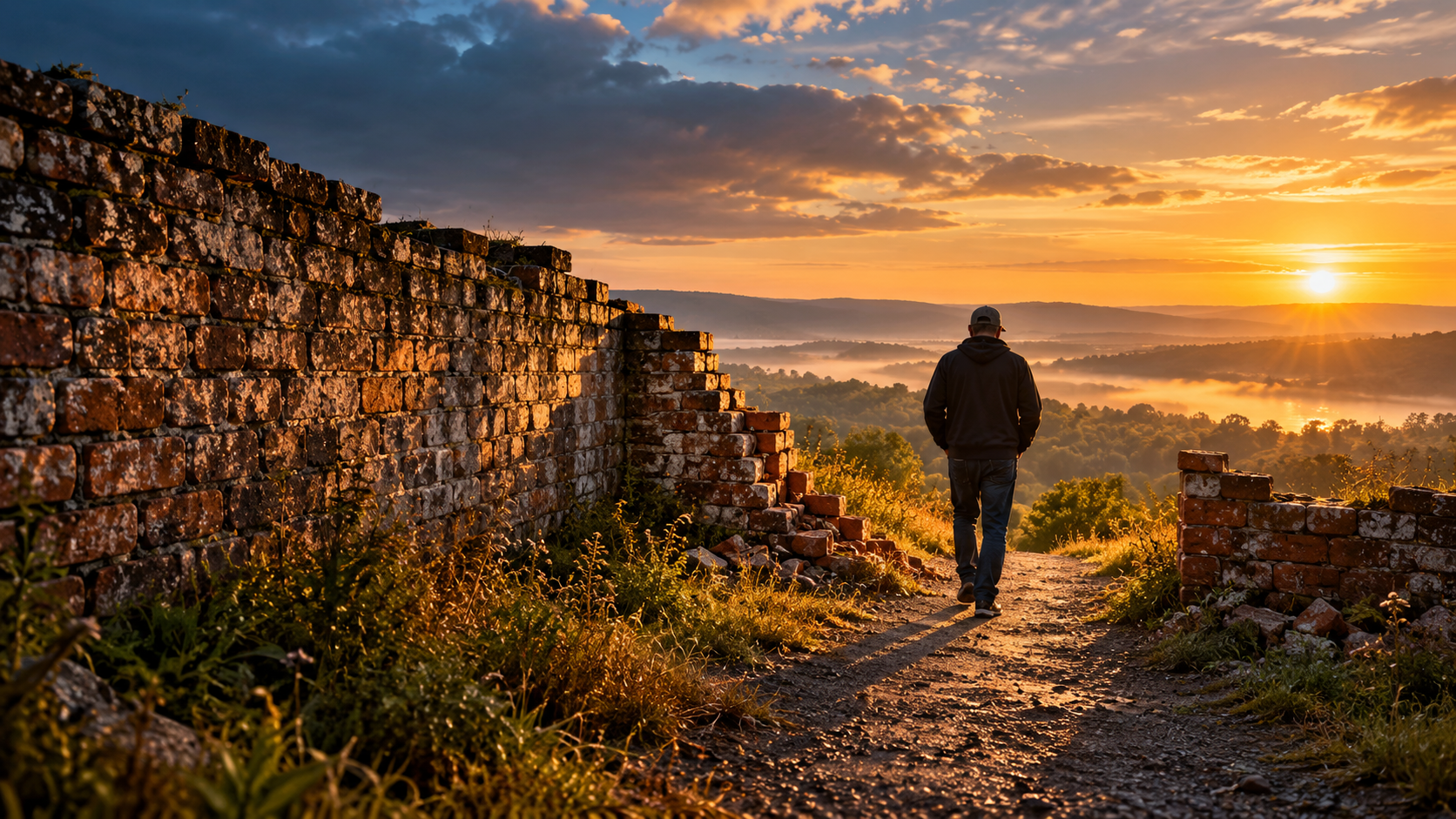
    I understood the bricks.

    Your mother hurts you.

    A brick.

    Someone you love betrays you.

    Another brick.

    Someone humiliates you.

    Another.

    You trust somebody who teaches you that perhaps you shouldn’t.

    Another.

    You are frightened, disappointed, rejected, abandoned, embarrassed. You learn that showing pain sometimes invites more pain, so you decide you won’t show it anymore.

    Brick.

    Mortar.

    Brick.

    Mortar.

    Eventually, what started as protection begins to look like architecture.

    And there you are, standing behind something you built yourself.

    Safe.

    Maybe.

    But alone.

    That was the part I understood this morning in a way I don’t think I could have understood as a teenager.

    Because I have built walls of my own.

    For years, when something bothered me, I often wouldn’t say anything. If I was hurt, I kept it to myself. If I was angry, I swallowed it. If somebody crossed a line, I sometimes moved it and convinced myself that keeping quiet meant I was handling it.

    I thought silence was control.

    It wasn’t.

    It was storage.

    And storage eventually reaches capacity.

    Sometimes everything I had refused to say came out at once. Anger became rage. Something that might have deserved a sentence received an explosion instead.

    Then came the embarrassment.

    The regret.

    The knowledge that whatever legitimate reason I had for being angry was now buried beneath the way I had expressed it.

    So what did I do?

    I added another brick.

    I became quieter.

    More guarded.

    More determined not to let it happen again.

    Which meant I returned to the very thing that helped create the problem in the first place.

    Silence.

    That is the cruelty of some walls. They convince us that the cure for what is hurting us is simply more wall.

    I eventually began talking to someone.

    Even now, it feels strange to admit that I needed another person to teach me something that sounds almost ridiculously simple:

    You are allowed to say you are angry.

    Not scream it.

    Not throw it.

    Not make another person afraid of it.

    Just say it.

    “I am very angry about what happened.”

    “That bothered me.”

    “What you said hurt me.”

    “I don’t like the way you treated me.”

    Simple sentences.

    I spent years carrying entire storms because I never learned to announce that it was raining.

    There is a difference between feeling anger and surrendering yourself to it. There is a difference between expressing pain and weaponizing it. Learning the first may help prevent the second.

    That is part of what I heard differently in The Wall this morning.

    I heard a person building protection around wound after wound until there was almost nowhere left for the wounded person to go. And when everything finally burst through, I heard something familiar—not an excuse for cruelty or destruction, but the terrible sound of emotions with nowhere healthy to live.

    Maybe that is one of the dangers of emotional walls.

    We imagine that the wall keeps everything outside.

    But it keeps things inside, too.

    The anger stays.

    The grief stays.

    The humiliation stays.

    The conversations we never had stay.

    The sentences we swallowed stay.

    And eventually we may discover that we haven’t built a fortress at all.

    We’ve built a pressure cooker.

    I am still learning this.

    I still get angry.

    I still get hurt.

    I still have moments when the old instinct tells me to say nothing, swallow it, keep moving, not make trouble, and not let anybody see that they got to you.

    I am not perfect.

    But I haven’t had one of those episodes in a long time.

    That matters to me.

    Not because I believe I have arrived somewhere, but because I know how far I have walked.

    And maybe healing sometimes looks less dramatic than we imagine.

    Maybe sometimes healing is simply catching yourself before you reach for another brick.

    Maybe it is saying, “That hurt me,” while the hurt is still small enough to name.

    Maybe it’s letting someone trustworthy stand beside you while you figure out why you started building the wall in the first place.

    And maybe strength isn’t proving that nobody can get through.

    Maybe strength is realizing that you need a door.

    This morning, I started my walk trying to get my steps in.

    Somewhere along the way, I found myself thinking about all the bricks I have carried.

    Some were handed to me.

    Some I picked up myself.

    Some probably saved me when I didn’t yet know another way to protect myself.

    I don’t hate the person who built them.

    He was doing what he knew how to do.

    But I know something now that he didn’t.

    I don’t have to keep building.

    One day at a time, I can learn to put the bricks down.

    And perhaps that is what growing older sometimes gives us.

    Not the chance to go back and live without wounds.

    The chance to finally understand what we built around them.

    And the courage to leave an opening.

    Kyle J. Hayes

    kylehayesblog.com

    Please like, comment, and share

    Resources for Hard Times

    If you’re looking for practical help, food support, or community resources, you can visit the Salt, Ink & Soul Resources Page.

    👉 Resources for Hard Times

  • Becoming Careful About What Enters the Soul

    Becoming Careful About What Enters the Soul

    Years ago, for reasons I could not fully explain, I found myself moving in the opposite direction of everyone around me.

    People were talking about The Sopranos. They loved it.

    I tried.

    More than once.

    I could appreciate the acting. I could see the craftsmanship. I understood why people were drawn to it.

    But I never enjoyed it.

    Then came The Wire.

    Again, I tried.

    Everyone said it was brilliant. Everyone said it was important. Everyone said I simply needed to give it another chance.

    I did.

    Several times.

    Yet something in me remained unmoved.

    Then came Breaking Bad.

    The same story.

    The same recommendations.

    The same praise.

    And the same feeling that this was not for me.

    At the time, I thought perhaps I was missing something.

    Maybe I was.

    But as the years passed, I began to realize I was not rejecting great storytelling.

    I was becoming sensitive to what those stories required me to sit with,

    so many of them invited me to spend hours living inside darkness.

    Crime, violence, manipulation, corruption, and Greed.

    The slow collapse of the human spirit.

    The older I became, the less interested I was in making those places my home, even temporarily.

    What surprised me most was that the change did not stop there.

    Movies I once enjoyed began losing their appeal.

    Military films.

    Action movies.

    Stories built around guns, revenge, and destruction.

    Eventually I found myself turning away from anything that seemed determined to convince me that darkness was depth.

    Then I began noticing something else.

    Many stories no longer seemed interested in heroes.

    Even stories that claimed to be about heroes often spent most of their time glorifying villains.

    The villain was smarter.

    The villain was more interesting.

    The villain got the best lines.

    The villain became the person audiences secretly admired.

    Goodness became boring.

    Decency became weakness.

    Kindness became naïveté.

    And somewhere along the way, I realized I was growing tired.

    Not physically.

    Spiritually.

    I began asking myself a simple question.

    What am I feeding my mind?

    We understand this concept when it comes to food.

    No one is surprised when a person feels different after changing their diet.

    Yet we often act as though the soul can consume endless negativity without consequence.

    Hour after hour.

    Day after day.

    Year after year.

    Violence.

    Conflict.

    Anger.

    Fear.

    Contempt.

    Cynicism.

    Then we wonder why peace feels so difficult to find.

    So I started making changes.

    Not dramatic changes.

    Just intentional ones.

    I became more selective about what I watched.

    More selective about what I listened to.

    More selective about the conversations I participated in.

    I began paying attention to the words I spoke.

    I tried to spend less time discussing people and more time understanding them.

    Less time dwelling on problems and more time looking for solutions.

    Less time feeding outrage and more time feeding gratitude.

    Something changed.

    Not overnight.

    But slowly.

    Quietly.

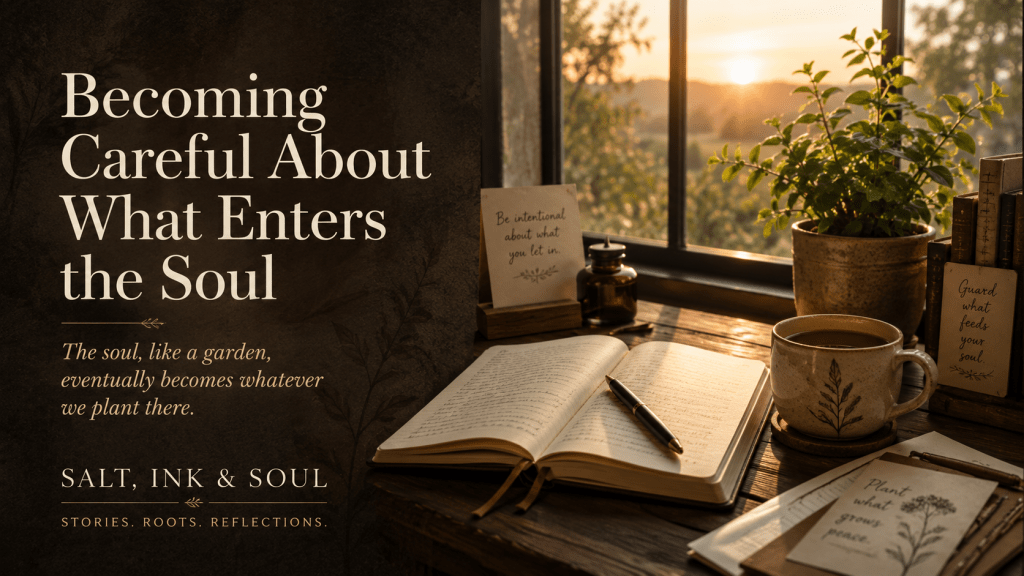
    The way sunrise arrives.

    You do not notice it all at once.

    Then suddenly the darkness is no longer where it was.

    Kyle J. Hayes

    kylehayesblog.com

    Please like, comment, and share

    Resources for Hard Times

    If you’re looking for practical help, food support, or community resources, you can visit the Salt, Ink & Soul Resources Page.
    👉 Resources for Hard Times

  • Is a Little Chaos Actually Good for Us?

    Is a Little Chaos Actually Good for Us?

    I think a little chaos can be good for us.

    Not the kind that destroys everything and leaves people wounded trying to gather pieces of themselves from the floor.

    But the kind that interrupts comfort.

    The kind that knocks on the door and says, Are you sure this is the best you can do?

    I am someone who likes consistency; it’s comfortable

    I like knowing what works.

    I understand the old saying, “If it’s not broke, don’t fix it.”

    There is wisdom in that. Not everything needs to be touched. Not everything needs to be changed just for the sake of change. Some things are steady because they have earned the right to be steady.

    But sometimes something can work and still not be as good as it could be.

    Sometimes something can be fine and still be slow and inefficient.

    and still holding us back in ways we do not notice, because we have grown comfortable with its shape.

    That is where chaos has its place.

    Chaos reveals things.

    Problems reveal things.

    A disruption can show us where the weak spots are. It can show us what we have been avoiding, what we have outgrown, what we have been calling peace when it was really just familiarity.

    I do not always like that in the moment.

    Most growth does not feel like growth while it is happening.

    Sometimes it feels like frustration.

    Sometimes it feels like an inconvenience.

    Sometimes it feels like being forced to learn something you would not have chosen to learn on your own.

    But afterward, when the dust settles, you can look back and realize the chaos did not come only to disturb you.

    Sometimes it came to sharpen you.

    Sometimes it came to make you more honest.

    Sometimes it came to show you that the way you had always done something was not the only way.

    And maybe not even the best way.

    There is a kind of growth that only comes when life refuses to let us stay too comfortable.

    A little chaos can make us pay attention.

    It can make us adjust.

    It can make us build better systems, ask better questions, and stop confusing survival with success.

    Kyle J. Hayes

    kylehayesblog.com

    Please like, comment, and share

    Resources for Hard Times

    If you’re looking for practical help, food support, or community resources, you can visit the Salt, Ink & Soul Resources Page.

    👉 Resources for Hard Times

  • What’s the Best Way to Deal with Negative Thoughts?

    What’s the Best Way to Deal with Negative Thoughts?

    The best way to deal with negative thoughts is not to pretend they are not there.

    I know that because I have tried.

    I have tried to push them down.

    Tried to laugh them off.

    I tried to tell myself I was fine when I knew I wasn’t 

    It worked for a while.

    Until it didn’t.

    It could be anything: a word, a look, clutter, anything 

    A moment that should not have mattered as much as it did.

    And suddenly all those buried thoughts, all that hurt, all that anger, all that disappointment came rushing out at once. Sometimes toward someone who did not deserve to receive what I had refused to deal with.

    That is the danger of burying things.

    They do not stay buried.

    Negative thoughts are not always the enemy. Sometimes they are messengers. Sometimes they are telling us there is something we have not faced, something we have not grieved, something we have not forgiven, something we have been carrying too long without admitting how heavy it has become.

    The first step is to deal with them.

    Not while you are in the middle of the fire.

    Not while your emotions are loud and your judgment is clouded.

    But when you can sit with yourself honestly.

    When you can ask, Why did that hurt me? Why did that thought come back? What am I afraid of? What am I still holding onto?

    There is strength in being able to sit alone with your thoughts.

    But there is also wisdom in knowing when not to sit with them alone forever.

    There is nothing wrong with talking to someone.

    For me, it took A counselor.

    Someone safe enough to hear you without making you feel small.

    I know sometimes that sounds like a lot. Especially when you are used to keeping things to yourself. Especially when silence has become a kind of armor. But silence can also become a prison if we never let anything out.

    Negative thoughts are like poison when they stay trapped inside you.

    They change you

    They make love feel suspicious.

    They make peace feel temporary.

    So the best way I know to deal with negative thoughts is to stop pretending they are harmless just because no one else can see them.

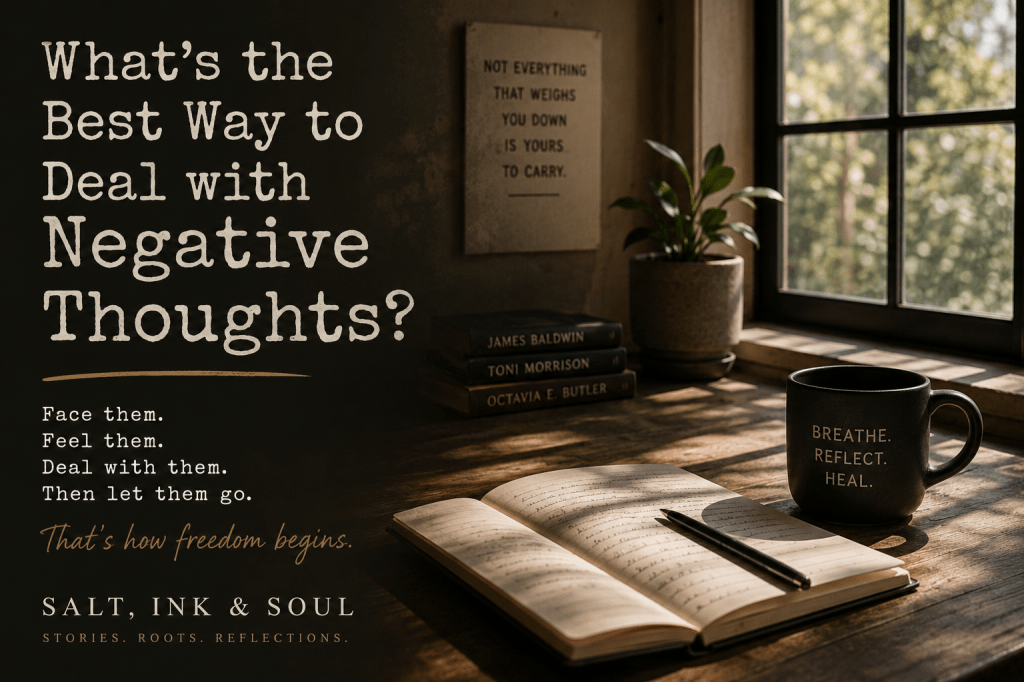
    Name them.

    Sit with them.

    Let the emotion pass long enough for you to think clearly.

    Then deal with what is underneath.

    And when it becomes too heavy, talk to someone.

    That is not a weakness.

    That is maintenance of the soul.

    Kyle J. Hayes

    kylehayesblog.com

    Please like, comment, and share

    Resources for Hard Times

    If you’re looking for practical help, food support, or community resources, you can visit the Salt, Ink & Soul Resources Page.
    👉 Resources for Hard Times

  • What is something you wish you could tell your 20-year-old self?

    What is something you wish you could tell your 20-year-old self?

    I would tell him to come home to himself sooner.

    Not home as a place.

    Home as a knowing.

    Home is that quiet room inside you where your own voice still lives before the world teaches you to mistrust it.

    I would tell my 20-year-old self to stop spending so much of his life auditioning for people who were never going to choose him, honestly. Stop bending yourself into shapes that do not fit your spirit. Stop mistaking acceptance for love. Stop confusing attention with belonging.

    Because there is a difference.

    And learning that difference can cost you years.

    At twenty, you think being liked will save you.

    You think if you become easier, funnier, quieter, louder, more agreeable, more useful, more available, more whatever the room seems to require, then maybe people will keep you around. Maybe they will see you. Maybe they will decide you are worth knowing.

    But some people do not dislike you for failing to become enough.

    Some people were never interested in getting to know you at all.

    They were interested in what you could provide.

    Your time.

    Your loyalty.

    Your attention.

    Your silence.

    Your willingness to shrink yourself so they would not have to make room.

    That is a hard lesson.

    But it is a freeing one.

    I would tell him this: do not waste your best years trying to become acceptable to people who benefit from you not knowing your worth.

    Spend that time discovering who you are.

    Not who you perform.

    Not who you pretend to be when you are afraid of being left out.

    Not who you become when loneliness starts negotiating against your dignity.

    Who you are.

    What you love.

    What you believe.

    What brings you peace?

    What kind of man do you want to become when no one is clapping?

    What kind of life feels honest when nobody is watching?

    I would tell him that solitude is not always punishment. Sometimes it is protection. Sometimes being alone is the first place where you can finally hear yourself without all the borrowed voices talking over you.

    There is grief in realizing how much time you gave away.

    Time you could have used to grow.

    To read.

    To think.

    To build.

    To heal.

    To understand your own mind.

    To become comfortable in your own skin.

    To stop asking strangers, friends, lovers, and crowds for permission to exist.

    But I would not speak to him cruelly.

    He was doing the best he could with what he knew.

    He wanted a connection.

    He wanted to matter.

    He wanted to be loved in a world that often teaches people to earn what should have been given freely.

    So I would not shame him for trying.

    I recommend telling him to try differently.

    Try choosing yourself.

    Try telling the truth sooner.

    Try leaving when the room keeps requiring your disappearance.

    Try noticing who only loves you when you are convenient.

    Try paying attention to the people who make you feel peaceful rather than desperate.

    Try building a life that does not depend on approval from people who have not even learned to approve of themselves.

    Because one day, you will understand something that a twenty-year-old could not yet know.

    The goal was never to become the kind of person everyone liked.

    The goal was to become someone you could live with.

    Someone you could respect.

    Someone whose reflection did not look like a stranger assembled from other people’s expectations.

    I would tell him that self-discovery is not selfish.

    It is necessary.

    You cannot build a true life out of borrowed pieces. You cannot keep abandoning yourself and call it love. You cannot keep giving your time to people who leave you with less of yourself and expect peace to grow there.

    So I would tell my 20-year-old self:

    Come back to you.

    Earlier.

    Stay with you.

    Longer.

    Learn yourself before trying to be chosen.

    Because the people meant for your life should not require you to disappear before they can accept you.

    And the time you spend becoming yourself is never wasted.

    Kyle J. Hayes

    kylehayesblog.com

    Please like, comment, and share

    Resources for Hard Times

    If you’re looking for practical help, food support, or community resources, you can visit the Salt, Ink & Soul Resources Page.

    👉 Resources for Hard Times

  • Another Year, Still Becoming

    Another Year, Still Becoming

    There is something strange about a birthday when you are no longer young enough to believe that time is endless, but not yet old enough to stop asking what can still be made from what remains.

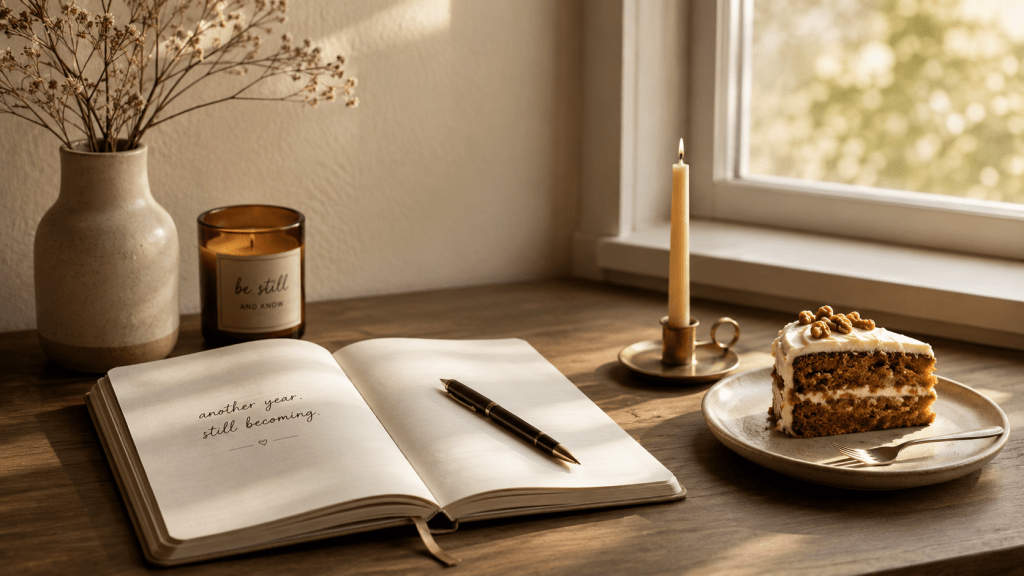
    Another year has gone by.

    Usually, those words pass through me with a familiar feeling. A small accounting. A quiet glance backward. A brief pause before returning to the ordinary rhythm of the days. But this year feels different. Not louder. Not grander. Not wrapped in some sudden revelation or clean transformation.

    Just different.

    Quieter.

    Closer to the truth.

    I have been slowly becoming the person I once hoped I might be. Not in the polished way people talk about change when they want it to sound easy. Not in the clean language of motivation, where every wound becomes a lesson, and every loss becomes fuel. Real becoming is messier than that. It does not always arrive with applause. Sometimes it looks like sitting alone with a thought you used to run from. Sometimes it looks like writing one honest sentence and feeling your chest tighten because the page now knows something you were trying not to admit.

    For a long time, I carried things instead of naming them.

    Pain. Sorrow. Anger. Disappointment. The old ache of being misunderstood. The quiet exhaustion of trying to explain yourself to people who had already decided who you were.

    I kept too much inside.

    That is a dangerous kind of storage. The body becomes a basement. The mind becomes a locked room. The heart becomes a pantry full of old things nobody has touched, but everybody can smell. You think you are protecting yourself by not opening the door. But silence does not preserve pain. It ferments it.

    People say writing helps.

    I had heard that for years.

    Write it down. Get it out. Put it on the page.

    It sounded too simple to be true. Too soft. Too neat. The kind of advice people offer when they do not know what else to say. But this year, I learned there is a difference between hearing something and finally understanding it in your bones.

    Writing does help.

    Not because the page fixes everything. It does not. The page is not a miracle worker. It will not reach backward and undo what happened. It will not make childhood kinder, grief lighter, or disappointment less sharp. But the page gives the pain a place to stand outside of you.

    That matters.

    There are things I have written that no one will ever see. Things too private for public life. Things that belong only to me and the silence that held me while I wrote them. And maybe that is the point. Not everything has to be published to be powerful. Not every wound has to become content. Not every confession needs an audience.

    Some writing is not for the world.

    Some writing is how you survive yourself.

    This year, I learned how to write without holding back. Or at least, I began to learn. I started putting down the things I had been carrying in secret. The thoughts that came in the dark. The old sorrows with familiar faces. The questions that do not have clean answers.

    And somehow, in putting them down, I left some of them behind.

    Not all.

    I know better than that now.

    Healing is not a dramatic exit. It is not the door slamming shut behind pain while you walk into the sunlight reborn. Sometimes healing is smaller than that. Sometimes it is realizing that a memory no longer controls the whole room. Sometimes it is noticing you can speak of something that once broke you without breaking again. Sometimes it is simply waking up and discovering that yesterday’s sorrow did not take all of today.

    There are pains I have left behind.

    There are sorrows I no longer feed.

    I can now look at old versions of myself with compassion instead of shame.

    That is no small thing.

    We live in a world that loves measurement. Numbers. Milestones. Income. Followers. Weight lost. Books sold. Goals achieved. Proof, proof, proof. We are told to become better, but usually in ways that can be photographed, posted, monetized, or turned into a lesson for strangers.

    But some of the most important growth is invisible.

    No one claps when you stop hating yourself in one small area.

    No one sends flowers when you choose patience instead of anger.

    No one gives you a certificate for writing the truth in a private notebook and choosing not to drown in it.

    Still, these things count.

    They may be the only things that truly count.

    I still have goals. I still want to write better. I still want my work to reach people. I still want the sentences to carry more truth, more weight, more tenderness. I still want to build something that lasts beyond me, something my descendants might one day hold and say, He was here. He tried to tell the truth. He tried to leave a light on.

    But my goals feel different now.

    Less like a punishment.

    Less like a whip.

    Less like a scoreboard I use against myself.

    My current goal is simple.

    To be better.

    A better writer.

    A better person.

    That sounds plain, almost too plain. But there is depth in plain things. A pot of beans. A clean table. A quiet morning. A sentence that does not lie. The older I get, the more I trust what does not need decoration.

    To be better does not mean to become perfect.

    I am not interested in that kind of performance.

    Perfect people are usually hiding something. Or selling something. Or both.

    To be better means to be more honest than I was. More patient. More disciplined. More willing to listen. More willing to admit when I am wrong. More willing to soften without becoming weak. More willing to stand firm without becoming cruel.

    It means learning that strength is not always volume.

    It means understanding that manhood is not the absence of tenderness.

    It means knowing that pain may have shaped me, but it does not have to govern me.

    And it means accepting that none of this happens overnight.

    There is a kindness in that realization. A mercy. We are not finished products. We are not machines waiting for the correct program. We are living things. We grow unevenly. We bend toward light when we can. We carry damage in our rings like old trees. Some seasons produce fruit. Some seasons only teach the roots to hold.

    This year, I think I learned something about roots.

    I learned that private work matters.

    The unseen work matters.

    The quiet effort made when no one is watching matters.

    The sentence was written and deleted. The memory faced and survived. The apology is considered. The old anger questioned. The small promise kept. The day endured without giving up on yourself.

    These are not small things.

    They are the architecture of becoming.

    So this birthday does not feel like a celebration in the usual sense. I do not need noise. I do not need spectacles. I do not need the day to prove my worth through attention.

    What I want is quieter.

    A good meal.

    A little music.

    A clean room.

    A page.

    A moment to look at the man I was, the man I am, and the man I am still trying to become.

    And maybe that is enough.

    Maybe another year is not just a reminder that time is passing.

    Maybe it is also evidence.

    Evidence that I stayed.

    Evidence that I changed.

    Evidence that some part of me, even in the worst seasons, kept reaching toward the life I had not yet learned how to live.

    I am still becoming.

    Not quickly.

    Not perfectly.

    But honestly.

    And this year, that feels like a gift.

    Kyle J. Hayes

    kylehayesblog.com

    Please like, comment, and share

    Resources for Hard Times

    If you’re looking for practical help, food support, or community resources, you can visit the Salt, Ink & Soul Resources Page.

    👉 Resources for Hard Times