Tag: soul food

  • Baked Macaroni & Cheese

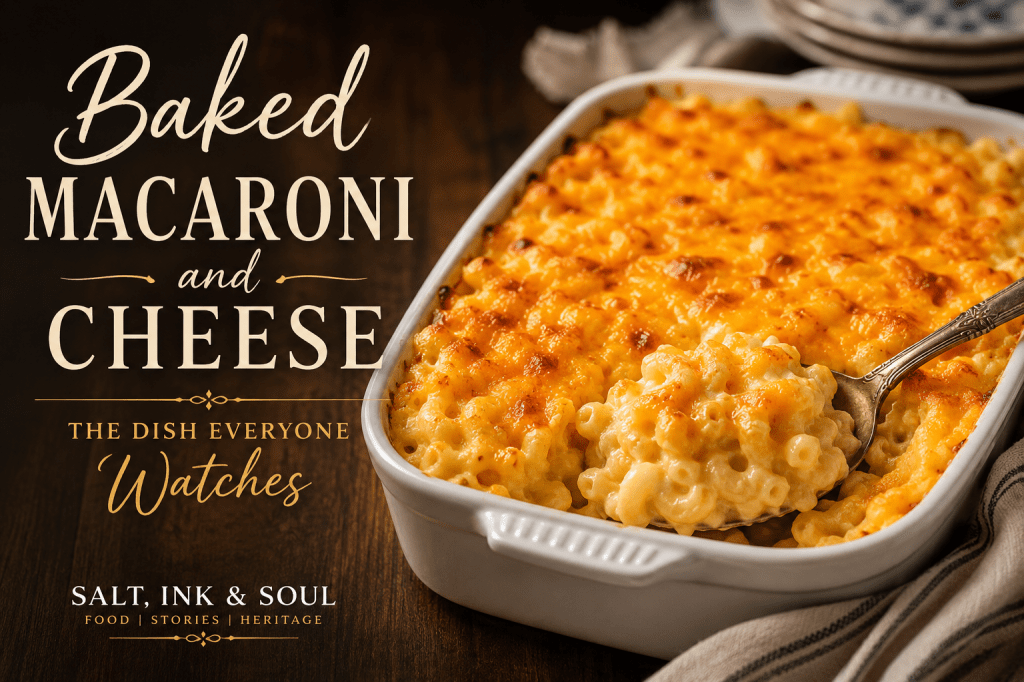
    Baked Macaroni & Cheese

    The Dish Everyone Watches

    Macaroni and cheese is one of those dishes that arrives at the table with expectations.

    In fact, when an important occasion is coming, one of the first questions people ask is, “Who’s making the Mac and Cheese?”

    Not whether there will be macaroni and cheese.

    Everyone already knows it is going to be there.

    The real question is who is bringing it.

    Because the moment a name is attached to that baking dish, the pressure is on.

    Families have standards.

    Church gatherings have standards.

    Cookouts, reunions, holidays, and Juneteenth celebrations all have standards.

    People might politely sample the potato salad. They might take a small spoonful of the greens. But when the macaroni and cheese arrives, everyone is paying attention.

    And everyone has an opinion.

    Too dry.

    Too runny.

    Not enough cheese.

    Too much cheese.

    Though if we’re being honest, I have never once heard anyone complain about too much cheese.

    Baked macaroni and cheese is more than a side dish. It is a tradition. A dish that appears at holidays, family reunions, church dinners, and celebrations. It is one of those recipes passed from kitchen to kitchen, often without measurements, guided more by memory than instruction.

    This version is rich, creamy, and baked until the top turns golden and beautiful.

    The way it should be.

    Ingredients

    For the Pasta

    • 450 g elbow macaroni
    • 15 g salt, for the pasta water

    For the Cheese Sauce

    • 60 g unsalted butter
    • 60 g all-purpose flour
    • 950 ml whole milk, warmed
    • 240 ml heavy cream
    • 5 g onion powder
    • 5 g garlic powder
    • 3 g smoked paprika
    • 5 g fine sea salt
    • 3 g freshly ground black pepper

    For the Cheese

    • 225 g sharp cheddar cheese, freshly grated
    • 225 g mild cheddar cheese, freshly grated
    • 170 g Monterey Jack cheese, freshly grated
    • 115 g mozzarella cheese, freshly grated

    For the Topping

    • 85 g sharp cheddar cheese, grated

    Directions

    1. Prepare the Pasta

    Bring a large pot of water to a boil and season it generously with salt.

    Cook the macaroni until just shy of al dente, about one to two minutes less than the package directions.

    Drain well and set aside.

    The pasta still has work to do in the oven.

    2. Make the Cheese Sauce

    Preheat your oven to 190Β°C.

    In a large saucepan, melt the butter over medium heat.

    Whisk in the flour and cook for about 2 minutes, stirring constantly. The mixture should smell slightly nutty but remain pale in color.

    Slowly pour in the warm milk and cream, whisking continuously until smooth.

    Add the onion powder, garlic powder, smoked paprika, salt, and black pepper.

    Continue stirring until the sauce thickens enough to coat the back of a spoon.

    3. Add the Cheese

    Reduce the heat to low.

    Reserve the topping cheese and add the remaining cheeses to the sauce, a handful at a time.

    Stir until completely melted and smooth.

    Take a moment here.

    A good cheese sauce deserves a little admiration.

    4. Bring It Together

    Add the cooked macaroni to the cheese sauce and stir gently until every piece is coated.

    Transfer the mixture to a lightly greased 23 x 33 cm baking dish.

    Sprinkle the reserved cheddar evenly across the top.

    5. Bake

    Bake uncovered for 25 to 30 minutes, or until the top is golden brown and bubbling around the edges.

    Allow the macaroni and cheese to rest for 10 minutes before serving.

    Patience is difficult here.

    Try anyway.

    Serving Suggestions

    Serve alongside:

    Or simply place it in the middle of the table and watch people gather around it.

    That tends to happen.

    Serves

    8–10

    From the Kitchen

    Every family seems to have a macaroni and cheese recipe.

    Some are written down.

    Some live only in memory.

    A pinch of this.

    A handful of that.

    Instructions measured by sight rather than by spoons.

    Maybe that is part of why dishes like this matter.

    They are more than food.

    They are evidence.

    Evidence that somebody showed up for the gathering.

    Evidence that somebody wanted everyone fed.

    Evidence that love sometimes arrives in a baking dish, golden on top and still warm from the oven.

    And if there are no leftovers, consider that a compliment.

    Kyle J. Hayes

    kylehayesblog.com

    Please like, comment, and share

    Resources for Hard Times

    If you’re looking for practical help, food support, or community resources, you can visit the Salt, Ink & Soul Resources Page.
    πŸ‘‰Β Resources for Hard Times

  • Peach BBQ Chicken

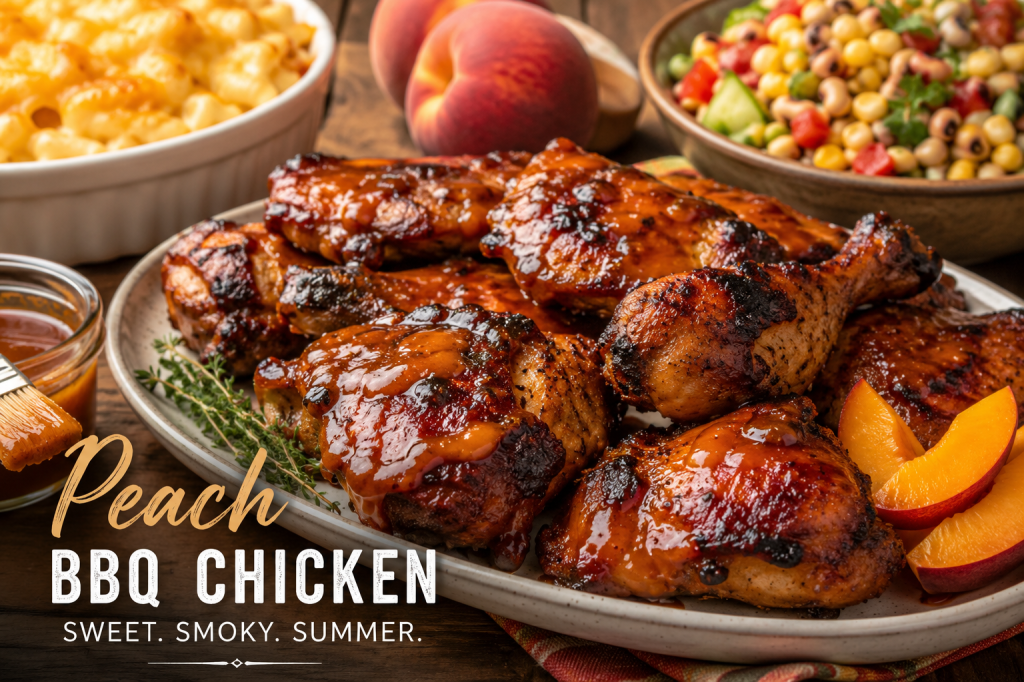
    Peach BBQ Chicken

    Some foods seem to know exactly when they are supposed to arrive.

    Peaches are one of them.

    For most of the year, they are simply another fruit sitting quietly in the produce section. Then summer arrives, and suddenly they become something else entirely. Sweeter. Juicier. Full of sunshine and possibility.

    Around Juneteenth, peaches begin appearing in markets across much of the country. Their arrival feels like a reminder that summer has finally settled in.

    Not rushed.

    Not hurried.

    Just here.

    This recipe brings together that sweetness with a little vinegar, a little garlic, and enough heat to keep things interesting. The result is a sticky barbecue glaze that clings to chicken and caramelizes beautifully over the grill.

    The peaches bring sweetness.

    The hot sauce brings attitude.

    The smoke does the rest.

    Serves

    4 to 6

    Ingredients

    For the Chicken

    • 2 pounds chicken thighs or drumsticks
    • 1 tablespoon olive oil
    • 1 teaspoon kosher salt
    • 1 teaspoon black pepper
    • 1 teaspoon smoked paprika
    • Β½ teaspoon garlic powder

    For Cleaning the Chicken

    • Β½ cup white vinegar
    • Β½ lemon

    For the Peach BBQ Glaze

    • 1 cup peach preserves
    • ΒΌ cup apple cider vinegar
    • 2 tablespoons hot sauce
    • 2 cloves garlic, finely minced
    • Β½ teaspoon black pepper
    • Pinch of salt

    Directions

    1. Clean the Chicken

    Begin by washing the chicken under cool running water.

    Place the chicken in a large bowl and add the Vinegar. Squeeze the juice from half a lemon over the chicken, then use the lemon itself to gently rub and scrub the chicken pieces.

    Rinse thoroughly under cool water and pat dry with paper towels.

    This step was common in many kitchens long before recipes ever found their way online. It is one of those habits passed from one generation to another, a small ritual before the cooking begins.

    2. Season the Chicken

    Drizzle the chicken with olive oil and season evenly with the salt, pepper, smoked paprika, and garlic powder.

    Allow the chicken to rest for about 20 minutes while you prepare the glaze.

    3. Make the Peach Glaze

    In a small saucepan, combine the peach preserves, apple cider vinegar, hot sauce, Garlic, black pepper, and salt.

    Bring the mixture to a gentle simmer over medium-low heat.

    Cook for 5 to 7 minutes, stirring occasionally, until smooth and slightly thickened.

    Remove from the heat and set aside.

    4. Cook the Chicken

    Preheat a grill to medium heat.

    Place the chicken on the grill and cook, turning occasionally, until nearly cooked through, about 25 to 30 minutes.

    If cooking indoors, roast the chicken at 400Β°F for 35 to 40 minutes.

    5. Glaze and Finish

    During the final 10 minutes of cooking, brush the chicken generously with the peach glaze.

    Turn and brush several times, allowing the glaze to build into layers.

    As the sugars caramelize, the chicken will develop a beautiful shine and a little char around the edges.

    That is where the magic happens.

    6. Rest and Serve

    Transfer the chicken to a platter and allow it to rest for a few minutes before serving.

    Reserve a little extra glaze for the table.

    Nobody ever complains about extra sauce.

    What to Serve With It

    For a Juneteenth table, I like to serve this chicken alongside a pan of baked macaroni and cheese and a Summer Garden Salad filled with black-eyed peas, sweet corn, tomatoes, cucumbers, and fresh herbs.

    The combination works because each dish brings something different.

    The chicken is sweet, smoky, and just a little spicy.

    The macaroni and cheese is rich and comforting.

    The salad adds brightness, freshness, and a reminder that summer gardens are beginning to wake up.

    Together, they create the kind of meal that encourages people to linger at the table a little longer.

    To go back for seconds.

    To tell one more story before the sun goes down.

    From the Kitchen

    Food has a way of marking the seasons.

    Peaches arrive.

    Gardens begin producing more than we can eat.

    Families gather around tables that seem to grow larger with every chair that gets pulled up.

    This meal reminds me that celebration does not always require extravagance.

    Sometimes it is chicken glazed with peaches and heat.

    A bubbling dish of macaroni and cheese.

    A bowl of vegetables gathered from the season.

    And the people sitting around the table.

    The food matters.

    But the company matters more.

    The meal ends.

    The memories stay.

    Kyle J. Hayes

    kylehayesblog.com

    Please like, comment, and share

    Resources for Hard Times

    If you’re looking for practical help, food support, or community resources, you can visit the Salt, Ink & Soul Resources Page.

    πŸ‘‰Β Resources for Hard Times

  • The Land of Entrapment

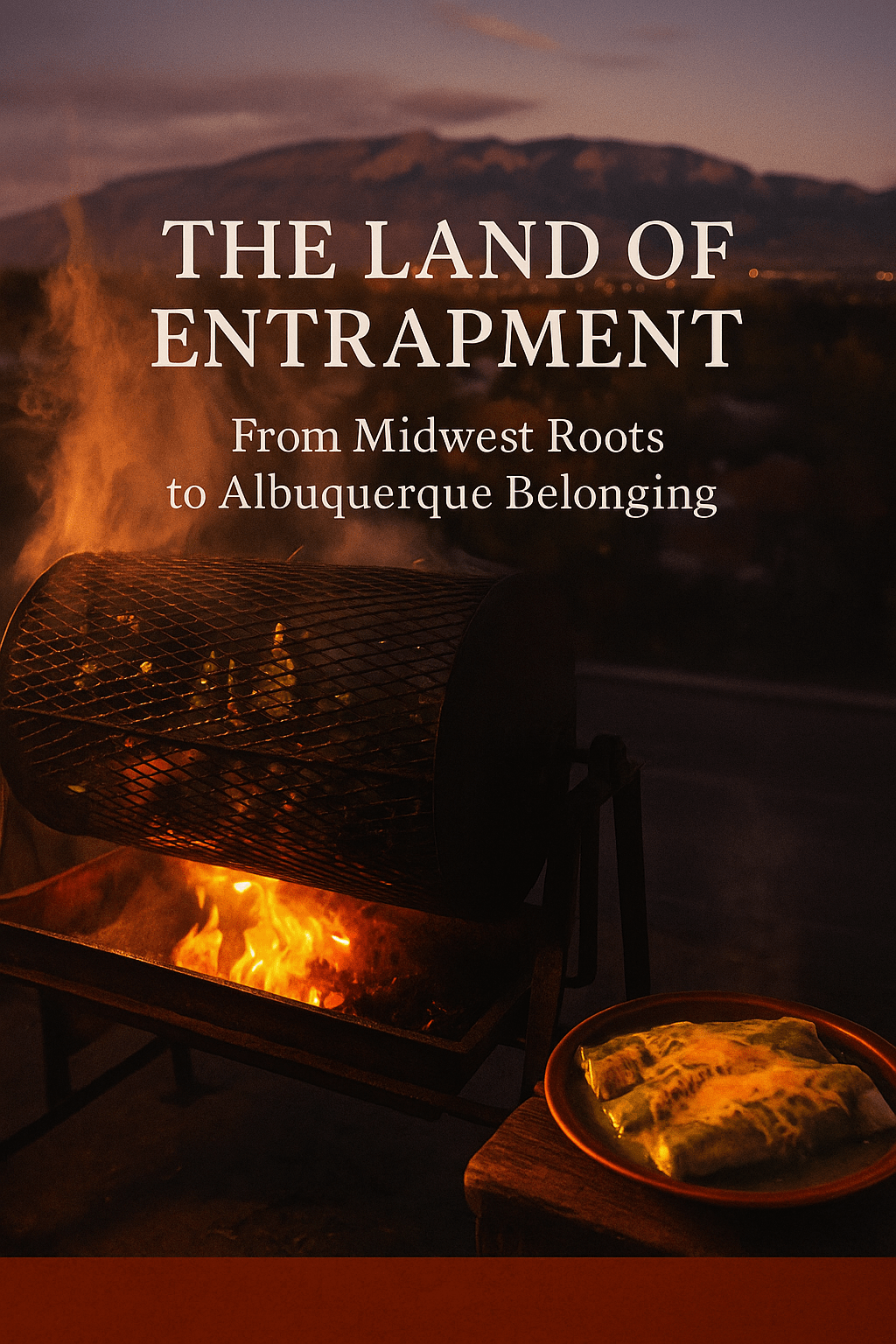
    The Land of Entrapment

      I was raised in the Quad-Cities β€” an area that, to this day, feels suspended in amber. It isn’t just the winters that freeze you to the bone, when the wind whips across the Mississippi and leaves your face raw. It’s the people, the rhythm of life, the way the place still breathes as though the 1980s never ended.

    Factories were our backbone then: John Deere, International Harvester, Caterpillar, The Rock Island Arsenal, and ALCOA. Their names were more than brands; they were birthrights. People clocked in and out not just for paychecks but for identity. Houses were bought once and held onto for a lifetime, just like jobs. Men retired in the same overalls they wore when they started, women retired in the same churches and kitchens that shaped them. It was a life that promised stability. Predictability. A bubble.

    But bubbles keep things in as much as they keep things out.

    I had seen time move differently elsewhere β€” places that reinvented themselves, cities that shifted, people who didn’t cling so tightly to sameness. And once you see that, once you know the world isn’t fixed in place, it’s impossible to believe that standing still is survival.

      I left Iowa more than once. The first time, it was the military that pulled me out β€” not a choice so much as a summons. Later, work carried me away. And yet, I came back, each time.

    Coming back felt inevitable, like the bubble had its own gravitational pull. But deep down, I knew I couldn’t keep circling the same orbit. There’s a difference between leaving because the world demanded it and going because you chose to.

    That’s what Albuquerque was for me: a choice.

      On paper, the decision made sense.

    No hurricanes to rip through your home. No earthquakes to split the ground. No volcanoes threatening fire. No endless rain to drown the days. It wasn’t Phoenix, where the heat presses against your chest like a punishment. It wasn’t the overcrowded sprawl of the West Coast. It was manageable. It was human-sized.

    And yes β€” the racial makeup mattered. I wanted a place where diversity wasn’t a buzzword, where the face of the city itself carried the mark of many histories, not just one.

      When I arrived, I heard the jokes: The Land of Entrapment. Come on vacation, leave on probation. They were said with a smirk, half-warning, half-truth. Albuquerque has its shadows. Addiction, poverty, violence β€” scars on a city that has seen too much. But to stop there, to see only the flaws, is to miss the marrow of the place.

      I didn’t know I liked landscapes until I saw the Sandias burn pink at sunset, watermelon hues spilling across the horizon like the desert itself was blushing. I didn’t know I needed vast skies until I stood beneath them, their sheer immensity forcing me to recognize how small I was β€” and how alive.

      Then the culture. The way Catholic feast days blur into Pueblo ceremonies, how murals tell stories, how music leaks from church doors and lowriders in the same breath. The way traditions survive here is not as nostalgia but as living practices, stitched into daily life.

    And the food.

      If the Midwest were pot roast and casseroles, Albuquerque is chile β€” unapologetic, fiery, alive. Chile roasters appear outside grocery stores in September, flames licking metal drums, smoke curling into the crisp air until the entire city smells like memory. Red or green isn’t a question of preference; it’s a declaration of identity. Enchiladas stacked high and smothered, tamales at Christmas, burritos at the Balloon Fiesta β€” food here doesn’t just fill you, it binds you.

    I’ve said before that I wasn’t raised on green chile chicken enchiladas. I was raised on soul food, or as most people now know it, “Southern Cuisine”. That food was survival dressed as a celebration. It was what you ate to remember who you were.

      But Albuquerque taught me to make room for new rituals. When I’m sick, I still crave soul food, but I’ve learned to crave enchiladas too. I’ve learned that “red or green?” comes as naturally now as “sweet or unsweetened?” once did. I’ve learned that my hands, though clumsy, can roll tortillas and fold tamales.

      Food, I’ve realized, doesn’t erase what you came from. It layers it.

    Iowa was entrapment too β€” but of a different kind. Entrapment of sameness, of repetition, of a rhythm so predictable it could suffocate.

    Albuquerque’s entrapment is something else. It seduces. It draws you in with Chile smoke in the fall, with the way the mountains change color by the hour, with a culture that makes you feel like you’re walking through both past and present at once.

      People warn you about it: The Land of Entrapment. But I’ve started to hear it differently, not as a warning, but as an invitation.

      Because here’s the truth: I don’t want to leave.

    What began as a practical choice has become something more intimate, something stitched into me. Albuquerque caught me β€” with its flaws, its grit, its beauty, its food β€” and I don’t feel trapped. I feel claimed.

    That could be what home is. Not where you start, not even where you end. But where you finally stop running, because you no longer want to.

    By Kyle J. Hayes

    kylehayesblog.com

    Please like, comment, and share

  • The Taste of Home, The Taste of Here

    The Taste of Home, The Taste of Here

      There are nights when homesickness sneaks up on me. Not the kind that makes you want to book a ticket and run back, but the quieter version β€” the one that comes when you’re alone in your apartment in Albuquerque and your body aches for food that no one here makes.

      I wasn’t raised on green chile chicken enchiladas. My comfort food wasn’t rolled tortillas smothered in chile sauce, or tamales wrapped in husks and steamed until the masa gives way to tenderness. I was raised on soul food β€” though these days they like to call it “Southern cuisine,” as if renaming it erases where it really came from.

      I grew up on collard greens cooked until they surrendered, cornbread golden and crumbly, fried chicken with skin that cracked when you bit into it, mac and cheese that clung to your fork like it loved you. Those weren’t just meals; they were testimonies, proof of survival passed down on plates.

    And yet, here I am in New Mexico, learning to find comfort in different flavors.

      When someone offers me tamales now, I don’t hesitate. I ask, “Red or green?” without thinking. At the Balloon Fiesta, I know when I show up, to get in line for a breakfast burrito and a hot coffee to fight the predawn chill.

      I’ve even attempted green chile chicken enchiladas in my own kitchen. I call them “passable,” and that’s being generous. They’re edible, sure, but I know enough to know they don’t hold a candle to the ones made by someone whose hands were taught by generations. Still, they’ve become a ritual. A way of saying to myself: You belong here enough to try.

      Still, when I’m sick, I don’t crave green chile. I crave the food of my childhood. Fried chicken. Collard greens. Sweet potatoes baked down until they bordered on candy. Food that came from a time and a place that shaped me before I even knew it.

      That’s the thing about food β€” it doesn’t just fill you. It remembers for you. It pulls you back through time, reminds you who held the spoon, who stood at the stove, who called you in from outside when the plates were ready.

      No matter how far you travel, those cravings remain like old ghosts.

    But here’s the surprise: when the homesickness hits hardest, it’s not because I want to return to where I grew up. It’s because I want to return here, to New Mexico.

      That’s the contradiction I live with now. I miss home, yes, but home is no longer the place I left behind. It’s this desert with its endless skies and its Chile smoke drifting outside grocery stores in the fall. It’s the quiet of mornings when the Sandias catch fire with the sunrise. It’s the ritual of learning to love food I didn’t grow up on.

      When I’m away too long, I don’t miss the streets of my childhood. I miss the taste of green chile folded into eggs, the tamales shared at Christmas, the balloon-lit sky at dawn. I miss this place.

      Maybe that’s what it means to belong somewhere new. Not to erase what you came from, but to layer it. To carry collards and cornbread in one hand and green chile enchiladas in the other. To know that your soul food still holds you, but so does this food you had to learn.

    The older I get, the more I realize home isn’t fixed. It shifts. It stretches. It welcomes and demands at the same time. And if you let it, it changes you β€” until homesickness no longer means going back.

    It means going forward.

    By Kyle J. Hayes

    kylehayesblog.com

    Please like, comment, and share