Tag: survival

  • What Could Have Been

    What Could Have Been

    Thoughts on the life I escaped.

    Maybe escaped is too much. There was no dramatic chase. No single door kicked open. No heroic music swelling in the background while a man heads to the southwest with all his wounds packed neatly in the trunk.

    It was quieter than that.

    It was the kind of escape that happens after years of feeling the walls move closer and closer until one day you realize the room has been shrinking around you. Not because anyone touched the walls. Not because anyone admitted what was happening. But because the life around you had already decided its limits for you, and if you were not careful, you would mistake those limits for destiny.

    I come from the Quad Cities.

    I say that with no hatred.

    A place can wound you and still feed you. A place can raise you and still not have room for you to become. A place can know your name and still never know what lives inside you.

    That is the complicated truth of home.

    People from the outside sometimes imagine the Midwest as simple. Quiet. Polite. Decent. Hardworking. Neighborly. They imagine front porches, snow shovels, church fish fries, factory shifts, Friday night bars, and grocery stores where everybody knows somebody’s cousin.

    And some of that is true.

    But truth is rarely clean.

    The Midwest has a way of hiding its knives in soft cloth.

    The racism was not always loud.

    That was part of the trouble.

    It did not always come wearing a hood or shouting from the street. It came smiling. It came with a handshake. It came with a joke you were supposed to laugh at if you wanted to keep the peace. It came in the silence after you spoke too well. It came in the promotion you were never quite right for. It came in the form of people making you feel grateful for being tolerated.

    Polite racism is a special kind of poison.

    It asks you to pretend you have not been poisoned.

    It asks you to be reasonable. Professional. Mature. Understanding. It asks you to bow your head and call it patience. It asks you to keep working, keep smiling, keep proving, keep swallowing. And because jobs are few and far between, because opportunity is treated like a chair in a crowded room, once you get a seat, you are expected to sit there and be thankful, no matter how hard the wood cuts into you.

    That is how a life gets built smaller than the soul.

    One concession at a time.

    You get a job and keep it.

    Good or not.

    Fair or not.

    Respectful or not.

    You keep it because there may not be another one waiting. You keep it because rent does not care about dignity. Groceries do not care about dreams. The light bill does not lower itself because your spirit is tired. So you learn the mathematics of survival. You calculate the insult against the paycheck. You measure humiliation against health insurance. You teach yourself to be quiet because quiet pays on Friday.

    And then one day, the quiet becomes you.

    That is the thing I fear most when I think about what might have been.

    Not poverty.

    Not struggle.

    Not even failure.

    I fear becoming quiet.

    I fear being a man who learned to live without asking what living was supposed to mean.

    There is a version of me who stayed.

    I can see him sometimes.

    He is not a bad man. That may be the saddest part. He is not foolish. He is not weak. He is not lazy. He is smart. Maybe too smart for the room and too tired to do anything about it.

    He works because work is what men are told to do. He buys the house he can afford because that is what responsibility looks like from the outside. He keeps his head down. He takes the jokes. He lets certain comments pass through him like winter air through an old window.

    He tells himself this is adulthood.

    He tells himself everybody compromises.

    He tells himself dreams are for people with softer lives.

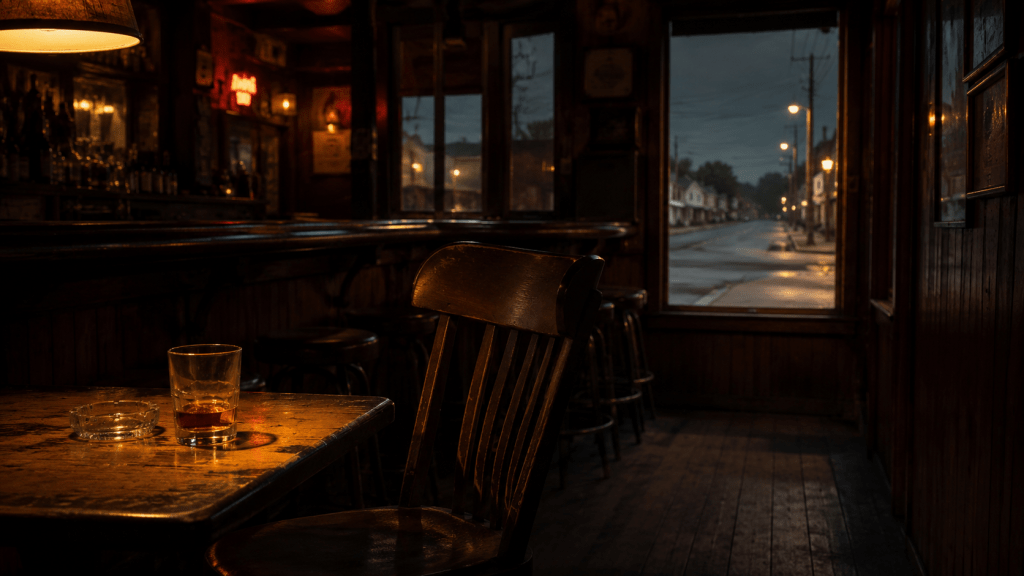
    And every evening, maybe he ends up in some corner bar where the same songs from the eighties keep playing like time got drunk and forgot to leave.

    Maybe Springsteen comes through the speakers, singing about glory days, and everybody smiles because they know the words. They know the rhythm. They know the ache, even if they would never call it grief.

    But I never wanted to become that man.

    The man sitting under the dim light, nursing a drink, telling the same stories about who he used to be because the present has become too small to speak of. The man who once had promise, once had fire, once had some bright and dangerous thing inside him, but somewhere along the way learned to trade becoming for remembering.

    That was the life I feared.

    Not the bar itself.

    Not the music.

    Not even nostalgia, because memory can be holy when handled with care.

    What I feared was getting trapped there. Becoming fluent in the language of almost.

    Almost left.

    Almost wrote.

    Almost tried.

    Almost became.

    A man with intelligence enough to know the cage had a lock, but not enough courage left to reach for the door.

    Which is to say, a man dying of recognition in a room too small for his questions.

    That is no life.

    Not because bars are bad.

    Not because familiar music is bad.

    Not because staying in your hometown is a failure.

    Some people stay and build beautiful lives. Some people remain and become pillars. There are people whose roots run deep enough to turn the soil around them into fertile ground.

    But for me, staying would have been a kind of burial.

    I know that now.

    The Quad Cities are not ignorant. That is one of the lies people tell about places like that. People are educated there. People read. People think. People work hard. People earn degrees. But a degree is not the key if every door in the city is already full of people waiting for the same narrow opening.

    I have seen baggers at local stores with college degrees.

    That image stays with me.

    Not because honest work is shameful. There is dignity in all work done with care. But there is something brutal about a place where education does not always become movement. Where intelligence gets folded into survival. Where ambition learns to speak softly because there is nowhere for it to go. The local economy can make a person feel ridiculous for wanting more than what is available.

    You learn to lower your voice around your own dreams.

    You stop saying certain things out loud.

    Writing would have been one of those things.

    Writing, in that life, would have sounded absurd. Not because writing is absurd, but because harsh places train people to distrust anything that does not immediately pay the bills. Art becomes suspicious. Expression becomes indulgence. A man saying he wants to write sounds like a man saying he wants to starve beautifully.

    So the dream would have been crushed.

    Not all at once.

    Crushed slowly.

    Under overtime.

    Under politeness.

    Under fatigue.

    Under the need to be practical.

    Under the look people give you when you reveal some secret part of yourself, and they do not know whether to laugh or feel sorry for you.

    I might have stopped writing before I ever truly began.

    That thought troubles me.

    Because now I know what writing has become for me.

    It is not a hobby.

    It is not decoration.

    It is not some charming little side project meant to make me feel interesting.

    Writing is the place where I tell the truth before the world edits it. It is where I gather the broken pieces and make them speak. It is where I take what hurt me and refuse to let it die without meaning.

    But in the life I escaped, meaning might have had to wait.

    And wait.

    And wait.

    Until one day, it forgot my name.

    That is what small lives can do when they are not chosen freely. They do not always destroy you by violence. Sometimes they destroy you by routine. You wake up. You work. You endure. You pay. You sleep. You repeat. You become reliable. You become respected in the acceptable ways. You become the kind of man people point to and say, “He’s doing all right,” while something sacred inside you sits in the dark, starving.

    I could have become that man.

    That is why I do not speak of leaving lightly.

    Leaving was not only about geography.

    Leaving was disobedience.

    It was a refusal to let the place that shaped me become the place that sealed me shut. It was me saying, perhaps before I even had the language, that survival was not enough if survival required the death of everything tender, strange, creative, and true inside me.

    New Mexico did not make me from nothing.

    I brought myself here.

    I brought the scars, the questions, the intelligence, the anger, the hunger, the ache. I brought the boy who read because books were doors. I brought the man who wanted more but did not always believe more was allowed. I brought the Midwestern discipline, the working-class suspicion of easy promises, the memory of what it means to keep going when nothing romantic is happening.

    But New Mexico gave me room.

    And room can feel like grace when you come from a place where every dream had to crouch.

    Here, the sky does not crouch.

    The land stretches out like it is daring you to unclench. The mountains do not ask you to justify your existence. The light falls on everything with a kind of ancient indifference that somehow feels merciful. You can be small here without being erased. You can be quiet without disappearing. You can be alone without being trapped.

    And somehow, in that space, the writing came.

    The life that might have been still visits me sometimes.

    I see the house I could have bought because it was affordable, not because it held my future. I see the job I would have kept because leaving felt too dangerous. I see the polite insults swallowed whole. I see the younger men at the bar becoming older men at the same bar, telling the same stories under the same neon signs while the same songs play and the years pass without asking permission.

    I see myself there.

    And I feel grief.

    Not superiority.

    Grief.

    Because there are many brilliant people trapped in lives too narrow for them. Many gifted people never leave because leaving requires money, courage, timing, madness, or some combination of all four. There are many dreams buried under good sense. Many books have never been written. Many songs have never been sung. Many meals were never made. Many paintings were never painted. Many selves never met.

    The world calls that reality.

    Sometimes it is.

    But sometimes, reality is just a cage everybody’s gotten used to.

    I do not want to romanticize leaving. It costs. It takes things from you. It makes you a stranger. It removes the comfort of being easily understood. It teaches you that reinvention is not clean. There are lonely nights in new places. There are moments when the old life, for all its limits, looks warm simply because it is known.

    But I would rather be lonely in the direction of becoming than comfortable in the direction of disappearance.

    That is the truth I keep returning to.

    If I had stayed, maybe I would have been fine.

    That is the haunting part.

    Fine is a dangerous word.

    Fine can hide a thousand funerals.

    Fine can mean the bills are paid, but the soul has gone quiet. Fine can mean nobody worries about you because you have learned to maintain stability. Fine can mean the dream died so politely that even you forgot to mourn it.

    I did not want to be fine.

    I wanted to be alive.

    Not loud.

    Not famous.

    Not untouched by pain.

    Alive.

    Aware of my own mind. Responsible for my own becoming. Free enough to write badly until I wrote honestly. Free enough to tell the truth. Free enough to sit with the anger and ask whether it was protecting me or imprisoning me. Free enough to discover that I was more than the smartest man in a room I had outgrown.

    That is what New Mexico gave me.

    Or helped me claim.

    A life where writing became possible.

    A life where the old bitterness began to lose its authority.

    A life where the boy who once dreamed in silence could finally put words on the page and let them breathe.

    And maybe that is why New Mexico feels less like a place I moved to and more like the land that let me become. Because I know the life I might have stayed long enough to inherit. I know the man I might have become. And I know, with a gratitude I still cannot fully explain, that I was given room before the dream went quiet.

    I do not hate the place I came from.

    I carry it.

    The Quad Cities are in me. The Midwest is in me. The gray winters. The modest houses. The factory logic. The polite cruelty. The educated frustration. The bars with old songs playing. The people are doing their best with what the place allows. The aching knowledge that intelligence does not always become freedom.

    All of it is in me.

    But it is not over me.

    Not anymore.

    And maybe that is what escape really means.

    Not that you outrun the past.

    But that you live long enough, and choose bravely enough, to stop letting the past decide the size of your future.

    There is a life I did not stay long enough to become.

    I mourn him sometimes.

    I honor him, too.

    Because he reminds me of what was at stake.

    He reminds me that every page I write is not merely a page. It is evidence.

    Evidence that the dream survived the harshness.

    Evidence that the man did not bow his head forever.

    Evidence that the corner bar did not become the whole world.

    Evidence that I left.

    Kyle J. Hayes

    kylehayesblog.com

    Please like, comment, and share

    Resources for Hard Times

    If you’re looking for practical help, food support, or community resources, you can visit the Salt, Ink & Soul Resources Page.
    👉 Resources for Hard Times

  • The Quiet Reckoning of Leftovers

    The Quiet Reckoning of Leftovers

    Salt, Ink & Soul — Humanity Through Food Series

    There’s a certain hush that falls after Thanksgiving — not the fullness or fanfare of the holiday itself, but a softer, more settling quiet. The kind that wraps around a home like a warm blanket. The kind that whispers that the celebration may be over, but the comfort isn’t.

    Because today is when the real magic begins.

    Today is the day the leftovers come alive.

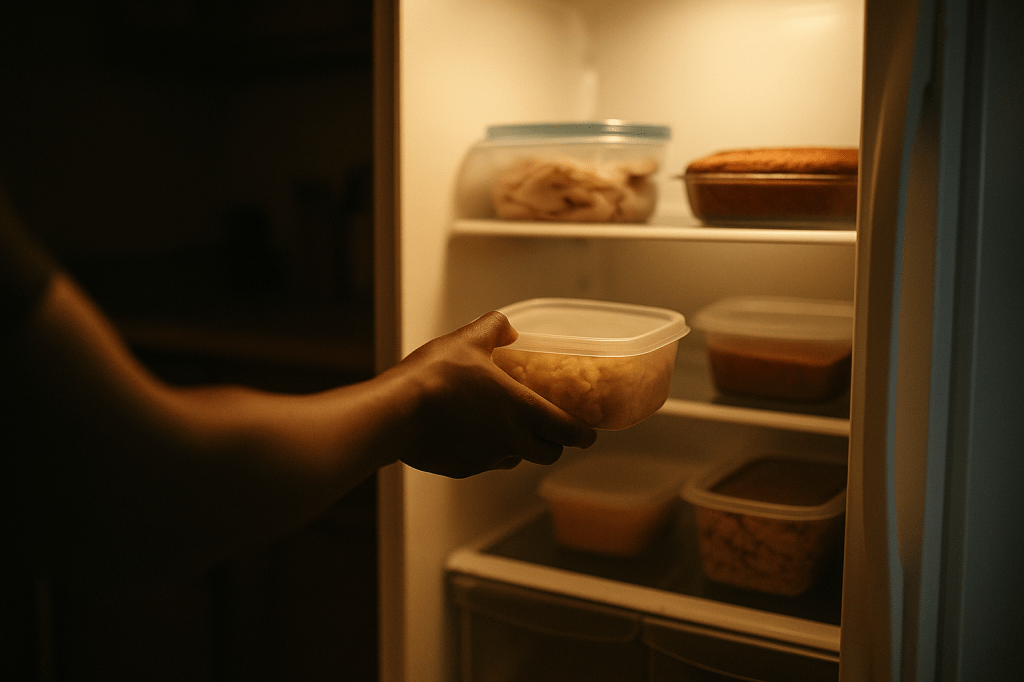
    The fridge becomes its own little universe of possibility — containers lined like tiny promises. Dressing that deepens overnight, turkey that’s ready to reinvent itself into a dozen different meals, pound cake that turns into breakfast without anyone questioning a thing. Leftovers are the afterglow of a holiday well-lived, and maybe even better lived the day after.

    For those of us raised to stretch meals like muscles, leftovers weren’t just “extra food.” They were reassurance. Security. A quiet kind of abundance that steadied you through the next few days. Maybe even next week.

    Leftovers meant:

    We’re okay. At least for now.

      There’s a joy to leftovers that feels almost childlike — the thrill of opening the fridge and imagining what new creation you’ll craft from what remains.

    Turkey and rolls?

    That’s a sandwich ritual.

    Dressing and gravy?

    That’s comfort in a bowl.

    Macaroni and cheese?

    Somehow it gets better every time it’s reheated — nobody knows the science, but nobody questions it.

    In a world obsessed with novelty, leftovers teach us a quieter truth:

    There is beauty in returning to what you already have, in transforming what remains, in finding comfort in the familiar.

    The feast is flashy.

    The leftovers do the real work.

      And then there’s the kind of generosity that only shows up after the plates are cleared — the people who send you home with more than you expected, more than you asked for, maybe even more than you felt worthy of receiving.

    The friend who packs you a dessert “just in case.”

    The auntie who fills your container until the lid strains.

    The host who insists you take another tray, their eyes saying what words never do:

    I want you fed.

    I want you steady.

    I want you to be cared for when you walk out that door.

    That is its own kind of love.

    A quiet, intentional love that doesn’t perform — it provides.

    Sometimes the food you bring home is better than anything you ate at the table, not because of the taste, but because someone wanted you to have it.

    Leftovers can be a love language, too.

      If the holiday feast is the performance, the leftovers are the truth.

    They reveal:

    • what was made with abundance

    • what was shared freely

    • what was loved most

    • what people wanted you to take with you

    • and what gets better when it rests

    Leftovers tell the story of a household — the real version. The version where people quietly look out for each other. The version where meals stretch because life requires it. The version where comfort doesn’t disappear once the guests go home.

    Leftovers tell us that survival doesn’t always look heroic.

    Sometimes it looks like enough food for tomorrow.

    Sometimes it looks like mac and cheese after a long day.

    Sometimes it looks like a pound cake eaten slowly because it feels like a blessing wrapped in foil.

      Leftovers aren’t scraps.

    They’re gifts.

    Gifts of ease.

    Gifts of warmth.

    Gifts of a holiday that lingers.

    Gifts from people who fed you in more ways than one.

    They carry the flavor of yesterday into today.

    They soften the week ahead.

    They remind you that abundance doesn’t always roar —

    sometimes it whispers from behind a refrigerator door, waiting for you to reach in and begin again.

    Because leftovers aren’t just evidence of what you had.

    They’re evidence of what still remains.

    And sometimes?

    That’s more than enough.

    Kyle J. Hayes

    kylehayesblog.com

    Please like, comment, and share

    Resources for Hard Times

    If you’re looking for practical help, food support, or community resources, you can visit the Salt, Ink & Soul Resources Page.
    👉 Resources for Hard Times

  • A Love Letter to Potlucks, Church Basements, and Aluminum Trays

    A Love Letter to Potlucks, Church Basements, and Aluminum Trays

    Salt, Ink & Soul — Humanity Through Food Series

    There’s a special kind of magic that happens when a community decides—quietly, without fuss—that everyone needs to be fed.

    Not in some grand, official sense.

    Not with grants or committees or agendas.

    Just fed.

    Fed the old-fashioned way:

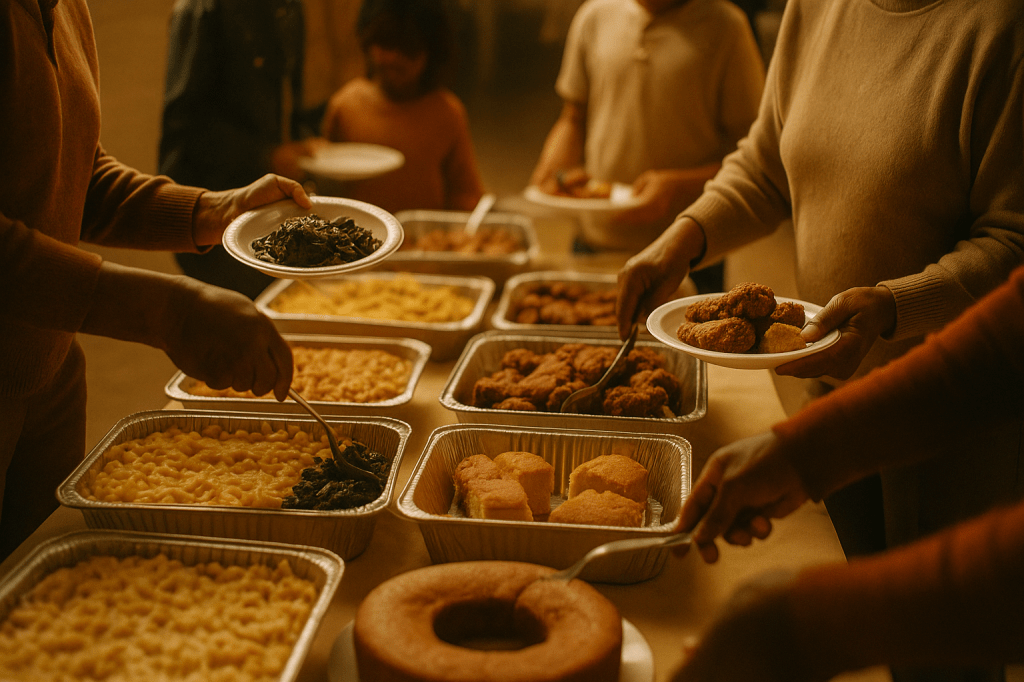
    On a folding table in a warm room that smells like memory, grief, pride, and somebody’s auntie’s best Fried Chicken.

    I’ve always had a soft spot for potlucks. Maybe it’s because people bring their best selves to those tables—literally. Every dish arrives covered in foil and hope, carried by someone who has spent the whole morning stirring and tasting and adjusting because they wanted to show what they could do. Not to brag. But to share.

    A potluck is a quiet confession:

    This is the dish I trust to speak for me.

    And there’s something beautiful about the way people place their food on the table and then pretend not to watch. They hover from a distance—not out of ego, but out of longing. Waiting for that smile. That small nod. That moment when someone tastes their dish and closes their eyes, just for a heartbeat, because something familiar touched them.

    You can’t buy that moment.

    You can only feed it.

    Church basements have their own flavor of truth.

    The ceilings are low. The chairs wobble. The lighting flickers. But none of that matters, because the food—the real food—is honest. Greens cooked down until they surrendered. Cakes that lean to the left but taste like heaven. Macaroni and cheese that could heal almost anything.

    People don’t come to impress in those spaces.

    They come to belong.

    They come to be held by the warmth of a room that has seen everything: baptisms, funerals, heartbreak, and survival. And in every season of life, the table stays set.

    Long before the world used terms like mutual aid, this was it.

    This was the safety net.

    This was how communities kept each other alive.

    No one asked, “What can I bring?”

    They asked, “Who needs to eat?”

    And somehow the table always balanced itself—one person bringing meat, another bringing bread, someone else bringing something sweet, and a few saints making sure the greens showed up so the ancestors wouldn’t fuss.

    It wasn’t organized.

    It was instinctual.

    Care doesn’t need a sign-up sheet.

    It just needs a kitchen.

    I think about those aluminum trays—the ones that bend if you hold them wrong. They don’t look like much, but they’ve carried entire histories. Weddings. Funerals. Reunions. Wednesday nights where people just needed a reason not to be alone.

    Aluminum trays are our generation’s scarred cast-iron skillets: humble, overlooked, essential.

    And they remind me of something I fear we’re losing in our digital, curated world:

    We were feeding each other long before we were performing for each other.

    A potluck isn’t content.

    It’s a community.

    It’s generosity without ceremony.

    It’s survival disguised as Sunday comfort.

    That’s probably why I love them so much.

    Because in a culture obsessed with individualism, a potluck is a rebellion.

    It says: We do this together.

    It says: Come as you are, and bring whatever you can.

    It says: There is room for you at this table, even if life hasn’t been kind, even if you feel small, even if all you could manage today was paper plates.

    Food has always been the language that makes room for the parts of us we don’t know how to name.

    So here’s my love letter—

    to the potlucks, the church basements, the community centers, the too-small living rooms, the aluminum trays carried in trembling hands.

    To the people who show up with their best dishes and their quiet hopes.

    To those who feed others before feeding themselves.

    To the tables that held us long before we had the words for what we were carrying.

    May we never forget how to gather like this.

    May we always remember that survival was never meant to be a solo act.

    And may we keep spreading these tables—wherever we can, with whatever we have—so no one has to face the world hungry, unseen, or alone.

    Kyle J. Hayes

    kylehayesblog.com

    Please like, comment, and share

    Resources for Hard Times

    If you’re looking for practical help, food support, or community resources, you can visit the Salt, Ink & Soul Resources Page.
    👉 Resources for Hard Times

  • A Veterans Day Reflection

    A Veterans Day Reflection

    Lately, this space has been about doing what I can — small things, quiet things. Writing about food that costs less but still feeds fully. Reminding people that hard times have come before, and somehow, we made it. Trying to turn memory into a map, so maybe others can find their way through their own lean seasons.

    But today, I want to turn that attention outward — toward a different kind of endurance. Toward a group of people who also know what it means to do what they can — and often, far more. The ones who gave years, limbs, sanity, and sometimes everything, in the name of something larger than themselves.

    We set aside a day for them — Veterans Day — meant to honor those who served this country and, in too many cases, came home carrying its invisible weight. We say “thank you for your service,” and we mean it, most of us. But I keep wondering if that’s all we’ve learned to say.

    You don’t have to look far to see the contradiction: a country that never stops telling itself that it leaves no one behind, and yet, at almost every intersection, you can see someone it did. Veterans sleeping under bridges. Holding cardboard signs. Waiting at food pantries. People who once trained to survive in the most hostile places on earth are now fighting to survive at home.

    Yes, there are programs. Yes, there are benefits. But if you’ve ever stood in line at the VA or talked to someone navigating that system, you know the difference between what exists and what works.

    I’m not here to offer solutions. I don’t have them. I don’t know how to fix the machinery of a government that can spend billions on war but seems to run out of compassion on the return trip. What I know are smaller things — human things. I know how to say thank you. I know how to feed someone. I know how to remember.

    And maybe that’s something, even if it isn’t enough.

    When I write about food, I’m really writing about survival — about how we keep going when everything feels stripped bare. And in a way, that’s what veterans know better than anyone. They know how to keep moving through the noise. How to turn discipline into a ritual. How to make meaning in the middle of chaos. They’ve done it for us, even when we didn’t deserve it.

    The stories I tell, about stretching enough to feed a family — they’re small, domestic wars of endurance. Theirs were louder, bloodier, lonelier. But the lesson is the same: survival costs something, and someone always pays.

    I think about the phrase “thank you for your service.”

    How tidy it sounds. How quick. It fits easily into conversation, into tweets, into holiday speeches. But behind that politeness are pieces of people scattered across decades — the ones who never came back, and the ones who did, but not completely.

    I don’t have parades or medals to give.

    I have words — small, imperfect ones, but offered with weight.

    To every man and woman who served — thank you. For your strength, your sacrifice, your impossible patience. For doing what many couldn’t or wouldn’t.

    And to those still fighting their own wars at home — for housing, for healthcare, for peace of mind — I see you. I don’t have answers, but I have recognition. I have gratitude. And I have the conviction that we can do more, that we must do more, for a country that still calls itself free.

    So today, I’ll do what I can — remember, write, feed whoever I can reach.

    Because service shouldn’t end when the war does.

    Kyle J. Hayes

    kylehayesblog.com

    Please like, comment, and share

    Resources for Hard Times

    If you’re looking for practical help, food support, or community resources, you can visit the Salt, Ink & Soul Resources Page.

    👉 Resources for Hard Times

  • Bread, Memory, and the Price of Enough

    Bread, Memory, and the Price of Enough

    There were five of us—three girls and two boys—and we were poor. The kind of poor that leaves fingerprints on your adulthood. Back when “food stamps” weren’t digital cards but booklets you tore from and handed to the cashier like confessions. We weren’t the only ones, though it sometimes felt that way. Poverty has a way of isolating you, even when the whole block is living on the same prayer.

    Back then, families were closer. Sunday dinners were sacred, not just for the food but for the ritual of it. You could smell a neighborhood coming alive—collard greens wilting slowly on one stove, beans softening on another, cornbread baking somewhere down the street. These weren’t meals for show. They were meals that stuck to your ribs—food that held you up when money couldn’t. The kind of food that whispered, You’ll make it another week.

    Now, everything feels fragile. Groceries cost more than rent used to. People work two jobs and still stand in lines that stretch around food banks. The price of “enough” keeps climbing, and somehow, we’re supposed to just keep smiling through it.

      And with this government shutdown—when paychecks stop, and benefits are frozen—it’s hard not to feel that same hollow echo in the stomach that so many of us grew up with. You start to realize how close the edge really is, and how many are already there.

    We have celebrity chefs and cooking competitions, but fewer people know how to create something from almost nothing. Food has become entertainment instead of education. We scroll past videos of perfectly plated dishes while families debate whether to buy milk or gas. Somewhere between delivery apps and drive-thrus, we forgot how to feed ourselves.

    Maybe the answer isn’t some new system or trend. Perhaps it’s about remembering what our grandparents knew—the art of stretching a dollar, of savoring time itself, and learning to make the basics again. Bread. Beans. Rice. The things that built us.

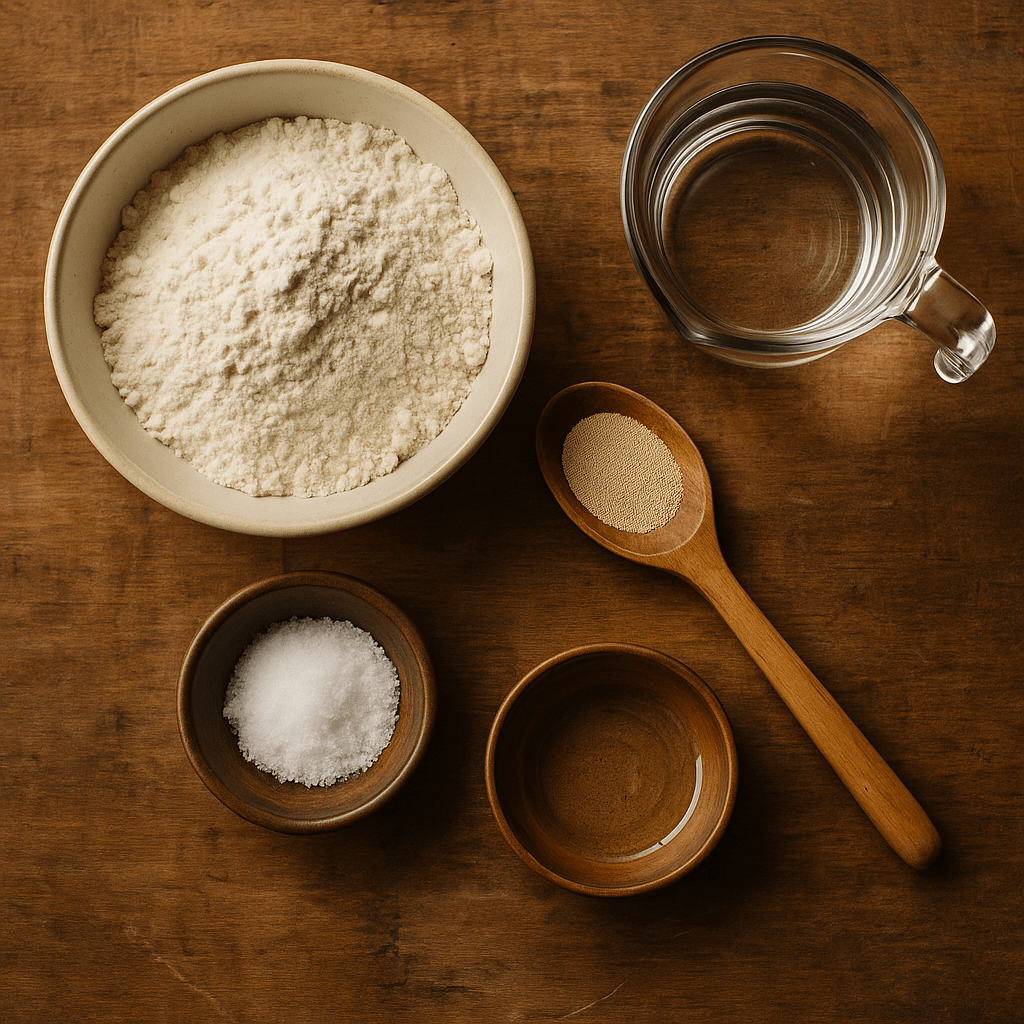
    Because bread isn’t just flour, salt, yeast, and water, it’s patience. It’s a skill born from necessity. It’s history kneaded into muscle memory. Once you have the supplies, it’s cheaper than store-bought—and better for you, body and spirit alike. I’ve found that unfortified flour—the kind left untouched by additives—makes a difference. It’s raw, honest, and stripped down to its true essence.

    That’s what we need more of now.

    Less enrichment, more essence.

    Less spectacle, more survival.

    Learning to make the basics again might not fix everything, but it’s a start—a quiet way of reclaiming control in a world that continually raises the price of dignity. Because the table, when it’s full of simple food and shared stories, still has a kind of wealth that can’t be counted.

    And maybe that’s what it really means to eat something that sticks to your ribs.

    If you want to start anywhere, start with bread. The most basic bread is humble—just flour, salt, yeast, and water: no milk, no butter, no sugar. You stir, you wait, you fold. You give it time to rise, and it teaches you patience in return. Baked until golden and stiff on the outside, soft and honest on the inside. Tear it apart while it’s still warm, and you’ll understand why people around the world have made it for centuries. It’s not about luxury—it’s about survival, about care, about transforming the simplest things into something that sustains.

      And in moments like this—when uncertainty feels like the new normal—maybe that kind of bread, bare and honest, isn’t just food. Perhaps it’s a reminder that we’ve been here before and we made it through.

    Kyle J. Hayes

    kylehayesblog.com

    Please like, comment, and share

    Note from the Author:

    If this reflection stirred something in you — that quiet urge to create, to remember, to feed — you can start where I did: with bread.

    I’ve shared the simplest recipe I know, one that costs little and teaches much.

    👉 The Most Basic Bread Recipe

    Four ingredients. A little patience.

    And a reminder that even in hard times, we can still make enough.

    Resources for Hard Times

    If you’re looking for practical help, food support, or community resources, you can visit the Salt, Ink & Soul Resources Page.

    👉 Resources for Hard Times

  • The Most Basic Bread

    The Most Basic Bread

    (Flour. Salt. Yeast. Water. Nothing else.)

    Ingredients

    • 3 cups (375g) unfortified all-purpose or bread flour
    • 1 teaspoon fine sea salt
    • ½ teaspoon active dry yeast
    • 1¼ cups (300ml) warm water (around 105–110°F / 40°C)

    Instructions

    1. Mix the Basics
    2. In a large bowl, combine the flour, salt, and yeast. Pour in the warm water and stir with a spoon or your hands until it forms a shaggy, sticky dough. Don’t overthink it—just bring it together.
    3. Rest and Wait
    4. Cover the bowl with a damp cloth or plastic wrap. Let it sit at room temperature for 12–18 hours. Time is your secret ingredient here—patience transforms the dough into something alive.
    5. Shape and Rest Again
    6. When the dough has doubled in size and is dotted with bubbles, scrape it onto a floured surface. Gently fold it over a few times, shaping it into a round loaf. Place it on parchment paper or a lightly floured towel, cover again, and let it rest for 1–2 more hours.
    7. Preheat and Bake
    8. Place a heavy pot with a lid (like a Dutch oven) into your oven and preheat to 450°F (230°C). When hot, carefully place your dough inside, cover, and bake for 30 minutes. Remove the lid and bake for an additional 10–15 minutes, until the crust turns a deep golden brown and becomes hard.
    9. Cool and Remember
    10. Let it cool before slicing—if you can resist the temptation. The crust will crackle, the inside will steam. Tear off a piece, hold it warm in your hands, and remember that this is what survival tastes like.

    Notes

    • If you only have instant yeast, reduce to ¼ teaspoon.
    • Whole wheat or rye flour can replace up to one-third of the white flour for more depth.
    • The flavor deepens overnight, just like the memory of meals that once held families together.

    This bread doesn’t ask for luxury—just time, trust, and a little hunger to remind you what’s real.

    Resources for Hard Times

    If you’re looking for practical help, food support, or community resources, you can visit the Salt, Ink & Soul Resources Page.

    👉 Resources for Hard Times