
Subscribe to continue reading
Subscribe to get access to the rest of this post and other subscriber-only content.

Subscribe to get access to the rest of this post and other subscriber-only content.
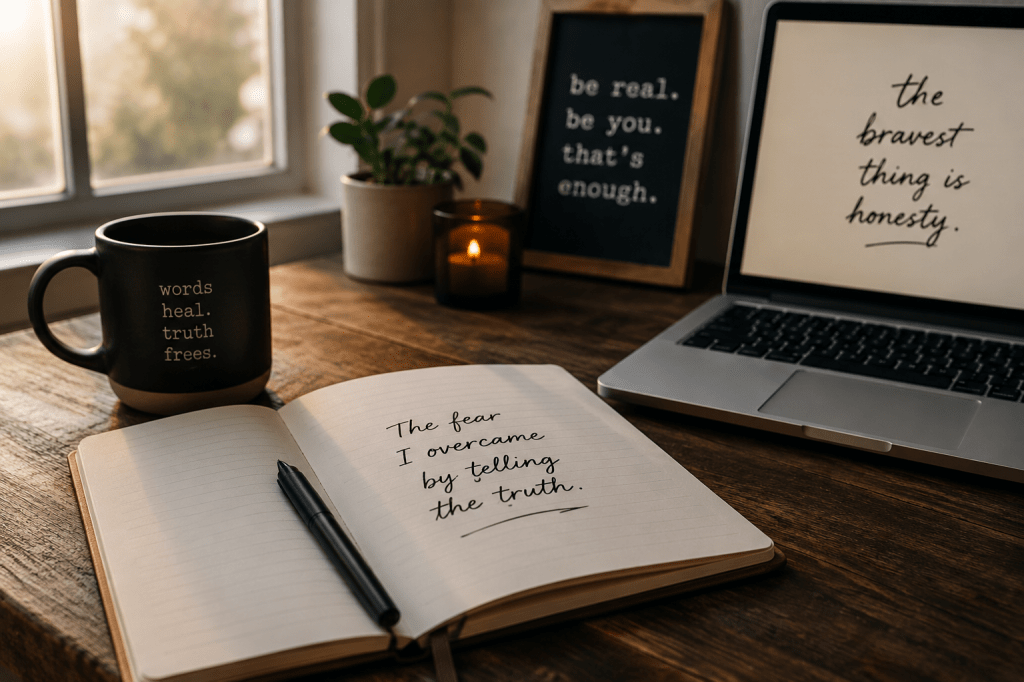
The fear I had to overcome was the fear of truly expressing myself.
Not writing.
I could write.
I had always known there were words somewhere inside me, moving around in the dark, waiting for a place to go. But expression is different from writing. Expression asks more of you. Expression does not let you hide behind cleverness or distance. It asks you to bring the real thing forward.
The feeling.
The thought.
The wound.
The part of yourself you learned to protect because the world had already shown you what it could do with anything soft.
I grew up being teased for anything and everything. That kind of thing does not leave you all at once. People like to pretend childhood cruelty is small because children are small, but that is not true. Small hands can still leave fingerprints. Small voices can still become the echoes a person carries into adulthood.
After a while, you learn to hold yourself back.
You learn to measure every word before it leaves your mouth. You learn to hide enthusiasm. You learn to make yourself less visible. You learn that being seen can feel dangerous.
So the idea of putting myself on paper, my feelings, my thoughts, my pain, my emotions, and then placing it online where anyone could read it, was terrifying.
It felt almost unnatural.
Like standing in the middle of a room and taking off the armor I had spent years building.
And yet, I did it.
Not all at once.
Not bravely in the way people imagine bravery.
I did it one piece at a time.
A sentence.
A paragraph.
A post.
A confession softened by craft.
A truth placed carefully enough that I could survive seeing it outside my body.
The more I wrote, the more something inside me began to loosen. Not disappear. Not healed completely. But loosen. Writing became a way to take what had been trapped inside me and give it shape. Once it had shape, it was no longer just pain. It was testimony. It was a memory. It was language. It was something I could hold, examine, revise, and understand.
And the more I did it, the better I felt.
The better I got.
That matters too.
Because fear wants you to believe that expression will destroy you. It tells you that if people see the real thing, they will laugh. They will turn away. They will misunderstand. They will prove every old voice right.
And sometimes people may not understand.
But sometimes they do.
Sometimes someone leaves a comment that lets you know your words reached a place in them they had not been able to name. Sometimes someone tells you that what you wrote helped them. Sometimes they do not say it loudly, but you can feel it. They saw themselves in your story. They realized they were not the only ones who had carried that kind of ache.
That changes something.
Because then the writing is not only about me.
It becomes a bridge.
A small one, maybe.
But still a bridge.
One person telling the truth from one side of loneliness, and another person hearing it from the other.
That is how I overcame the fear.
Not by becoming fearless.
I do not think that is how fear works.
I overcame it by learning that the fear did not get the final vote. I overcame it by writing anyway. By sharing anyway. By letting the work prove to me that vulnerability does not always lead to humiliation. Sometimes it leads to a connection. Sometimes it leads to healing. Sometimes it becomes the very thing that helps someone else survive their own silence.
And in helping them, I help myself.
That may be the part I did not expect.
Every time someone responds and says, in some way, I know this feeling too, I am reminded that I am not alone either. The pain I thought was only mine was never only mine. The fear I thought made me strange was part of being human. The loneliness I carried had echoes in other people.
Writing taught me that.
Or maybe sharing did.
Private writing can save you in one way. But public honesty can save you in the long run. It can turn the locked room into a doorway.
I still feel the fear sometimes.
I still know what it costs to tell the truth.
But I also know what silence costs.
And I have paid enough for that.
So I keep writing.
I keep placing pieces of myself on the page.
Not because it is easy.
Because somewhere, someone may need the words.
And maybe I need them too.
Please like, comment, and share
If you’re looking for practical help, food support, or community resources, you can visit the Salt, Ink & Soul Resources Page.
There’s a kind of fear that doesn’t arrive all at once. It doesn’t kick down the door. It seeps in, like humidity through cracked paint or smoke through the seams of a closed window. The kind that makes a home in your chest, building slowly and silently. That’s the kind of fear I’ve had about writing.
Because writing—real writing—isn’t just performance. It’s not what you show them. It’s what leaks out in the spaces you don’t control. In the metaphors you didn’t mean to use. The slip of a memory. The softness in a sentence when you swore you were being strong. That’s the terror. That somehow, on a blank page, people will see you—unasked, unfiltered, unprepared.
And I’ve been dodging that kind of exposure for a long time.
You grow up learning to hide parts of yourself. In some neighborhoods, vulnerability is just another way to get hit—emotionally, spiritually, or with something less metaphorical. So you learn. You get good at it. You make armor out of silence and humor out of pain. You laugh loud enough to drown out the parts of yourself you don’t want heard.
For me, it started early—ridiculed for being soft. For caring. For feeling things too deeply. Every time I let something slip, there was a consequence. Sometimes it was teasing. Sometimes it was loneliness. Over time, the message became clear: protect yourself.
So I did. I built walls with intention. Not just to keep people out, but to keep something in—me.
Lately, though, I’ve started letting people in. Not the whole crowd. Just a few. Just enough. You find someone you trust—maybe a friend who knows the shape of your silence—and you let them see a little more. A crack. A draft of warmth. Not a storm.
But still, I worry.
Because once the dam is broken, who controls the flood?
That’s the thing about pain: it’s obedient until it isn’t.
So I let it out in trickles. A sentence here. A sigh there. I’ve convinced myself that’s safer. That if the moment goes sideways, I can slam the valve shut and pretend like I never said anything at all.
I’m curious if that’s preservation or cowardice. Or both.
Sometimes, the isolation feels like a weighted blanket that won’t get off my chest. You carry the weight of your untold stories like overdue bills, knowing the interest is accumulating. You pretend you’re just private. But privacy, in excess, becomes starvation.
You tell yourself you’re protecting yourself—but at what cost?
When no one knows your whole name, who will mourn you properly?
That’s the mess of it. Writing—this act of storytelling—isn’t always about catharsis. Sometimes it’s confrontation. Sometimes it’s putting a mirror to your own face and realizing you’ve spent years looking away. The stories we don’t tell are often the ones we most need to understand.
I write now not because I want to be known, but because I’m starting to believe that parts of me are worth knowing.
And if someone out there reads this and recognizes their own mask, their own silence, their own slow-burning rage and resignation—maybe we’ve both done something that matters.
I don’t have answers. Just questions for the future.
What happens when you open too much?
What happens when you never open at all?
Maybe the trick isn’t to dam the flood or drown in it—maybe it’s to learn to wade.
Even if it means revealing that you bleed just like everyone else.
Kyle J. Hayes
kylehayesblog.com
Please like, comment, and share
If you’re looking for practical help, food support, or community resources, you can visit the Salt, Ink & Soul Resources Page.


