
Subscribe to continue reading
Subscribe to get access to the rest of this post and other subscriber-only content.

Subscribe to get access to the rest of this post and other subscriber-only content.

Subscribe to get access to the rest of this post and other subscriber-only content.

Subscribe to get access to the rest of this post and other subscriber-only content.
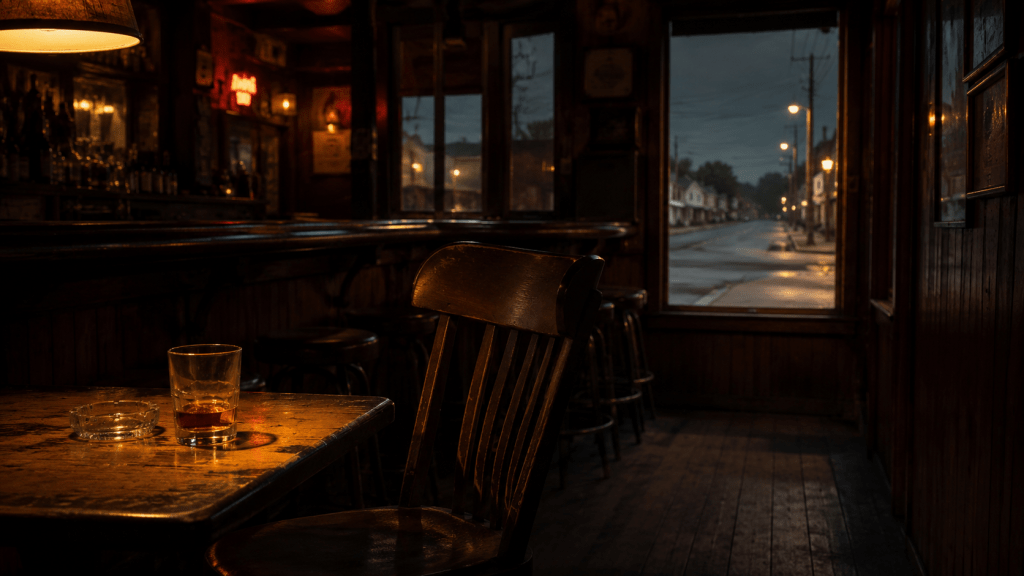
Thoughts on the life I escaped.
Maybe escaped is too much. There was no dramatic chase. No single door kicked open. No heroic music swelling in the background while a man heads to the southwest with all his wounds packed neatly in the trunk.
It was quieter than that.
It was the kind of escape that happens after years of feeling the walls move closer and closer until one day you realize the room has been shrinking around you. Not because anyone touched the walls. Not because anyone admitted what was happening. But because the life around you had already decided its limits for you, and if you were not careful, you would mistake those limits for destiny.
I come from the Quad Cities.
I say that with no hatred.
A place can wound you and still feed you. A place can raise you and still not have room for you to become. A place can know your name and still never know what lives inside you.
That is the complicated truth of home.
People from the outside sometimes imagine the Midwest as simple. Quiet. Polite. Decent. Hardworking. Neighborly. They imagine front porches, snow shovels, church fish fries, factory shifts, Friday night bars, and grocery stores where everybody knows somebody’s cousin.
And some of that is true.
But truth is rarely clean.
The Midwest has a way of hiding its knives in soft cloth.
The racism was not always loud.
That was part of the trouble.
It did not always come wearing a hood or shouting from the street. It came smiling. It came with a handshake. It came with a joke you were supposed to laugh at if you wanted to keep the peace. It came in the silence after you spoke too well. It came in the promotion you were never quite right for. It came in the form of people making you feel grateful for being tolerated.
Polite racism is a special kind of poison.
It asks you to pretend you have not been poisoned.
It asks you to be reasonable. Professional. Mature. Understanding. It asks you to bow your head and call it patience. It asks you to keep working, keep smiling, keep proving, keep swallowing. And because jobs are few and far between, because opportunity is treated like a chair in a crowded room, once you get a seat, you are expected to sit there and be thankful, no matter how hard the wood cuts into you.
That is how a life gets built smaller than the soul.
One concession at a time.
You get a job and keep it.
Good or not.
Fair or not.
Respectful or not.
You keep it because there may not be another one waiting. You keep it because rent does not care about dignity. Groceries do not care about dreams. The light bill does not lower itself because your spirit is tired. So you learn the mathematics of survival. You calculate the insult against the paycheck. You measure humiliation against health insurance. You teach yourself to be quiet because quiet pays on Friday.
And then one day, the quiet becomes you.
That is the thing I fear most when I think about what might have been.
Not poverty.
Not struggle.
Not even failure.
I fear becoming quiet.
I fear being a man who learned to live without asking what living was supposed to mean.
There is a version of me who stayed.
I can see him sometimes.
He is not a bad man. That may be the saddest part. He is not foolish. He is not weak. He is not lazy. He is smart. Maybe too smart for the room and too tired to do anything about it.
He works because work is what men are told to do. He buys the house he can afford because that is what responsibility looks like from the outside. He keeps his head down. He takes the jokes. He lets certain comments pass through him like winter air through an old window.
He tells himself this is adulthood.
He tells himself everybody compromises.
He tells himself dreams are for people with softer lives.
And every evening, maybe he ends up in some corner bar where the same songs from the eighties keep playing like time got drunk and forgot to leave.
Maybe Springsteen comes through the speakers, singing about glory days, and everybody smiles because they know the words. They know the rhythm. They know the ache, even if they would never call it grief.
But I never wanted to become that man.
The man sitting under the dim light, nursing a drink, telling the same stories about who he used to be because the present has become too small to speak of. The man who once had promise, once had fire, once had some bright and dangerous thing inside him, but somewhere along the way learned to trade becoming for remembering.
That was the life I feared.
Not the bar itself.
Not the music.
Not even nostalgia, because memory can be holy when handled with care.
What I feared was getting trapped there. Becoming fluent in the language of almost.
Almost left.
Almost wrote.
Almost tried.
Almost became.
A man with intelligence enough to know the cage had a lock, but not enough courage left to reach for the door.
Which is to say, a man dying of recognition in a room too small for his questions.
That is no life.
Not because bars are bad.
Not because familiar music is bad.
Not because staying in your hometown is a failure.
Some people stay and build beautiful lives. Some people remain and become pillars. There are people whose roots run deep enough to turn the soil around them into fertile ground.
But for me, staying would have been a kind of burial.
I know that now.
The Quad Cities are not ignorant. That is one of the lies people tell about places like that. People are educated there. People read. People think. People work hard. People earn degrees. But a degree is not the key if every door in the city is already full of people waiting for the same narrow opening.
I have seen baggers at local stores with college degrees.
That image stays with me.
Not because honest work is shameful. There is dignity in all work done with care. But there is something brutal about a place where education does not always become movement. Where intelligence gets folded into survival. Where ambition learns to speak softly because there is nowhere for it to go. The local economy can make a person feel ridiculous for wanting more than what is available.
You learn to lower your voice around your own dreams.
You stop saying certain things out loud.
Writing would have been one of those things.
Writing, in that life, would have sounded absurd. Not because writing is absurd, but because harsh places train people to distrust anything that does not immediately pay the bills. Art becomes suspicious. Expression becomes indulgence. A man saying he wants to write sounds like a man saying he wants to starve beautifully.
So the dream would have been crushed.
Not all at once.
Crushed slowly.
Under overtime.
Under politeness.
Under fatigue.
Under the need to be practical.
Under the look people give you when you reveal some secret part of yourself, and they do not know whether to laugh or feel sorry for you.
I might have stopped writing before I ever truly began.
That thought troubles me.
Because now I know what writing has become for me.
It is not a hobby.
It is not decoration.
It is not some charming little side project meant to make me feel interesting.
Writing is the place where I tell the truth before the world edits it. It is where I gather the broken pieces and make them speak. It is where I take what hurt me and refuse to let it die without meaning.
But in the life I escaped, meaning might have had to wait.
And wait.
And wait.
Until one day, it forgot my name.
That is what small lives can do when they are not chosen freely. They do not always destroy you by violence. Sometimes they destroy you by routine. You wake up. You work. You endure. You pay. You sleep. You repeat. You become reliable. You become respected in the acceptable ways. You become the kind of man people point to and say, “He’s doing all right,” while something sacred inside you sits in the dark, starving.
I could have become that man.
That is why I do not speak of leaving lightly.
Leaving was not only about geography.
Leaving was disobedience.
It was a refusal to let the place that shaped me become the place that sealed me shut. It was me saying, perhaps before I even had the language, that survival was not enough if survival required the death of everything tender, strange, creative, and true inside me.
New Mexico did not make me from nothing.
I brought myself here.
I brought the scars, the questions, the intelligence, the anger, the hunger, the ache. I brought the boy who read because books were doors. I brought the man who wanted more but did not always believe more was allowed. I brought the Midwestern discipline, the working-class suspicion of easy promises, the memory of what it means to keep going when nothing romantic is happening.
But New Mexico gave me room.
And room can feel like grace when you come from a place where every dream had to crouch.
Here, the sky does not crouch.
The land stretches out like it is daring you to unclench. The mountains do not ask you to justify your existence. The light falls on everything with a kind of ancient indifference that somehow feels merciful. You can be small here without being erased. You can be quiet without disappearing. You can be alone without being trapped.
And somehow, in that space, the writing came.
The life that might have been still visits me sometimes.
I see the house I could have bought because it was affordable, not because it held my future. I see the job I would have kept because leaving felt too dangerous. I see the polite insults swallowed whole. I see the younger men at the bar becoming older men at the same bar, telling the same stories under the same neon signs while the same songs play and the years pass without asking permission.
I see myself there.
And I feel grief.
Not superiority.
Grief.
Because there are many brilliant people trapped in lives too narrow for them. Many gifted people never leave because leaving requires money, courage, timing, madness, or some combination of all four. There are many dreams buried under good sense. Many books have never been written. Many songs have never been sung. Many meals were never made. Many paintings were never painted. Many selves never met.
The world calls that reality.
Sometimes it is.
But sometimes, reality is just a cage everybody’s gotten used to.
I do not want to romanticize leaving. It costs. It takes things from you. It makes you a stranger. It removes the comfort of being easily understood. It teaches you that reinvention is not clean. There are lonely nights in new places. There are moments when the old life, for all its limits, looks warm simply because it is known.
But I would rather be lonely in the direction of becoming than comfortable in the direction of disappearance.
That is the truth I keep returning to.
If I had stayed, maybe I would have been fine.
That is the haunting part.
Fine is a dangerous word.
Fine can hide a thousand funerals.
Fine can mean the bills are paid, but the soul has gone quiet. Fine can mean nobody worries about you because you have learned to maintain stability. Fine can mean the dream died so politely that even you forgot to mourn it.
I did not want to be fine.
I wanted to be alive.
Not loud.
Not famous.
Not untouched by pain.
Alive.
Aware of my own mind. Responsible for my own becoming. Free enough to write badly until I wrote honestly. Free enough to tell the truth. Free enough to sit with the anger and ask whether it was protecting me or imprisoning me. Free enough to discover that I was more than the smartest man in a room I had outgrown.
That is what New Mexico gave me.
Or helped me claim.
A life where writing became possible.
A life where the old bitterness began to lose its authority.
A life where the boy who once dreamed in silence could finally put words on the page and let them breathe.
And maybe that is why New Mexico feels less like a place I moved to and more like the land that let me become. Because I know the life I might have stayed long enough to inherit. I know the man I might have become. And I know, with a gratitude I still cannot fully explain, that I was given room before the dream went quiet.
I do not hate the place I came from.
I carry it.
The Quad Cities are in me. The Midwest is in me. The gray winters. The modest houses. The factory logic. The polite cruelty. The educated frustration. The bars with old songs playing. The people are doing their best with what the place allows. The aching knowledge that intelligence does not always become freedom.
All of it is in me.
But it is not over me.
Not anymore.
And maybe that is what escape really means.
Not that you outrun the past.
But that you live long enough, and choose bravely enough, to stop letting the past decide the size of your future.
There is a life I did not stay long enough to become.
I mourn him sometimes.
I honor him, too.
Because he reminds me of what was at stake.
He reminds me that every page I write is not merely a page. It is evidence.
Evidence that the dream survived the harshness.
Evidence that the man did not bow his head forever.
Evidence that the corner bar did not become the whole world.
Evidence that I left.
Please like, comment, and share
If you’re looking for practical help, food support, or community resources, you can visit the Salt, Ink & Soul Resources Page.
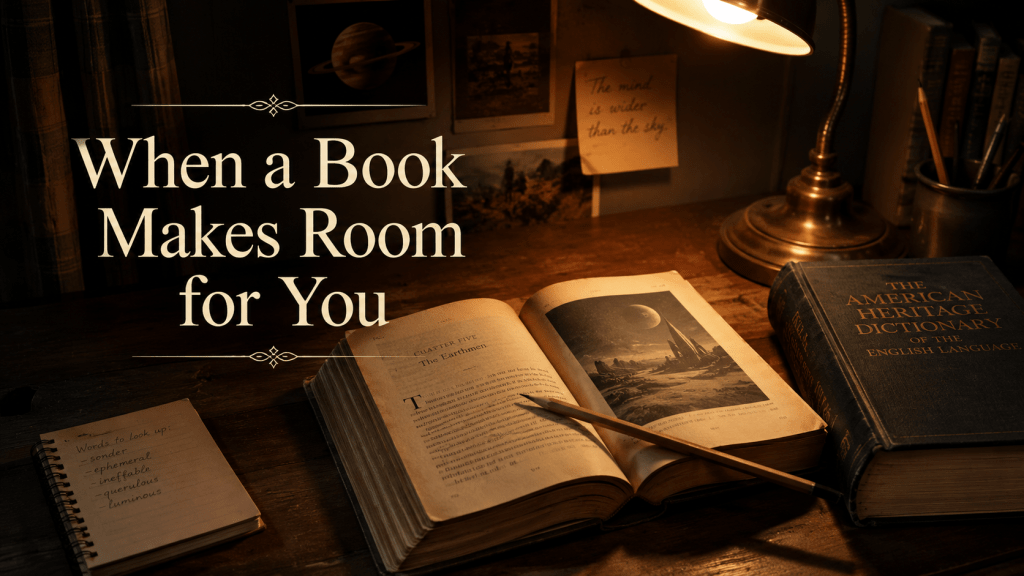
I had written before about Pawn of Prophecy being the first grown-up book I truly remember finishing.
I called it grown-up because, to the boy I was then, grown-up meant weight. It meant no pictures waiting kindly on the page to tell me where to look. It meant more than two hundred pages. It meant holding a book in my hands and realizing that the story was not going to bend down to meet me. I would have to rise toward it.
That book pulled me into fantasy.
It showed me that reading could be more than an assignment, more than an obligation, more than something adults told children was good for them in the same dry voice they used for vegetables and bedtime. It showed me that a book could be a door. That worlds were waiting behind paper. That some maps were printed in ink, and some were built in the mind.
But years later, another book did something different.
It did not pull me in gently.
It made me work.
The author was Isaac Asimov.
The book was Foundation.
I had read his work before. I had read I, Robot. I knew, at least a little, the clean machinery of his imagination. I knew he could take a question and dress it in steel, logic, and circuitry until it became something larger than a question. But Foundation was different.
Foundation did not feel like a story at first.
It felt like being dropped into a room where every adult was already deep in conversation.
Empire. Decay. Mathematics. Religion. Trade. Politics. Psychology. Civilization. Collapse.
These were not the words of childhood.
Not really.
They were the words of men in quiet rooms deciding the shape of history. Words spoken over maps. Words carried inside institutions. Words sharpened by people who understood that power does not always arrive with a raised fist. Sometimes power arrives as a theory. Sometimes as a doctrine. Sometimes as a prediction. Sometimes, as a sentence, it is so cold and precise that it seems to have no human being behind it at all.
I remember reading it and feeling the pressure.
The book gave me a headache.
Not in the way a bad book gives you a headache. Not from boredom. Not from confusion alone. It was the headache of being stretched too thin. The ache that comes when the mind is trying to grow faster than comfort allows. The ache of climbing stairs two at a time because something above you is calling, and pride will not let you turn around.
So I kept a dictionary nearby.
That detail matters to me now.
A dictionary beside a child reading science fiction is a small altar to hunger.
It says: I do not understand yet, but I want to.
It says: I will not let this word turn me away.
It says: there is something in here worth reaching for.
I would come across a word I did not know, and the sentence would stop. The whole machinery of the book would halt in front of me. I could have skipped over it. Children do that. Adults do it too. We learn to walk around what we do not understand and pretend the gap did not matter.
But I wanted to understand what I had gotten myself into.
That is the phrase that stays with me.
What had I gotten myself into?
Not just a book.
A different kind of thinking.
With fantasy, I had entered a world of quests, prophecies, chosen people, ancient evils, and hidden destinies. That world had its own difficulty, its own language, its own inheritance. But Foundation asked something else of me. It did not ask me to believe in magic. It asked me to consider history as a force. It asked me to imagine that civilizations could be studied the way storms are studied. That human beings, in great masses, might move with patterns they could not see from inside their own lives.
That is a heavy thing for a child to hold.
Because children already live inside systems they cannot name.
Family systems. School systems. Neighborhood systems. Money systems. Race systems. Silence systems. The strange laws of who gets listened to and who gets dismissed. Who is allowed to be brilliant and who is merely told to behave? Who gets called gifted? Who gets called difficult? Who is encouraged to dream, and who is warned early about the cost of dreaming too loudly.
A child may not know the vocabulary.
But he knows the feeling.
Maybe that was why Foundation troubled me so much.
The words were difficult, yes. But beneath the words was something I recognized before I could explain it. The book understood that people are not only people. They are also citizens, believers, workers, rulers, servants, merchants, cowards, visionaries, tools, threats, memories, and ghosts inside the body of history.
It understood that a person could be swallowed by a time.
And maybe some part of me already feared that.
Maybe some part of me knew that being lost was not always a matter of direction. Sometimes you are lost because the world around you has already decided where you belong, and you have not yet learned the language to argue back.
So I learned words.
Not all at once.
Slowly.
One page at a time.
I looked them up. I went back to the sentence. I read it again. Sometimes I understood. Sometimes I only understood enough to keep going. But enough is not nothing. Enough is how many of us survive the beginning of anything.
And then, something changed.
The book got easier.
Or maybe I did.
That is one of the quiet miracles of reading. You enter a book as one person and, if the book does its work and you do yours, you leave as someone slightly altered. Not healed. Not completed. But changed in some small interior way.
At first, the world of Foundation felt like a locked room.
Then the words began to open.
The unfamiliar became familiar. The machinery of empire began to hum in a language I could follow. The names no longer felt distant. The ideas no longer stood over me. I started to move inside the book instead of standing outside it, knocking.
And once I could understand the words, I began to feel something I did not expect.
I felt welcomed.
That sounds strange, maybe.
A book about the fall of a Galactic Empire is not warm in the usual sense. It is not a grandmother’s kitchen. It is not a pot on the stove with steam rising and somebody telling you to sit down before your plate gets cold. It is not soft light, clean linen, or a hand on the shoulder.
And yet I felt welcomed.
Not because the book made itself easy.
Because it allowed me in after I did the work.
There is a particular dignity in that.
Some doors open because somebody loves you enough to unlock them.
Some doors open because you learn how the lock works.
Both matter.
I think about that boy with the dictionary now, and I feel tenderness for him. I see him sitting there, probably more stubborn than confident, refusing to let the book defeat him. I see him reaching for meaning. I see him being humbled and strengthened at the same time.
He did not know then that he was doing more than reading.
He was training.
Training his patience.
Training his attention.
Training his ability to sit with difficulty without mistaking difficulty for rejection.
That is not a small lesson.
Too many people are taught that if something is hard, it must not be for them. They meet a closed door and assume the house was never meant to hold them. They meet a word they do not know and hear the old voices rise up: this is not your place, this is not your level, this is not your world.
But sometimes difficulty is not a warning.
Sometimes it is an invitation with teeth.
Sometimes the book is not saying ‘ leave.‘
Sometimes it says, “Come closer.“
Bring your dictionary.
Bring your confusion.
Bring your headache.
Bring the part of you that is tired of standing outside rooms where meaning is being made.
Come closer anyway.
I have spent much of my life trying to understand that difference. The difference between a thing that excludes you and a thing that challenges you. The difference between a gate built to keep you out and a mountain that asks whether you are willing to climb.
As a child, I did not have those words.
I only had the book.
I only had the dictionary.
I only had the ache behind my eyes and the strange hunger that kept me turning pages.
But I know now that something important happened there.
A boy who had once learned that fantasy could be fun began to learn that reading could also be demanding, serious, even disciplinary. Not punishment. Discipline. The kind that teaches you to stay. The kind that asks you to become worthy of your own curiosity.
And that, maybe, is one of the hidden gifts of difficult books.
They do not simply give us stories.
They give us evidence.
Evidence that we can grow.
Evidence that confusion is not the end.
Evidence that language, no matter how intimidating, can be approached. Studied. Broken open. Claimed.
There is power in learning a word.
There is power in refusing to be embarrassed by not knowing.
There is power in saying, quietly, even as a child: I am going to understand this.
That kind of hunger becomes part of you.
It follows you into adulthood.
It follows you into the books you later write, the essays you later shape, the memories you later return to with older hands and a more wounded heart. It follows you into all the rooms where you still sometimes feel like you do not belong. It reminds you that belonging is not always given at the beginning.
Sometimes, belonging is built.
Page by page.
Word by word.
Looked up.
Read again.
Carried forward.
I think that is why Foundation stayed with me. Not only because of its ideas, though the ideas were enormous. Not only because of its scope, though the scope was vast. It stayed with me because it made me participate in my own becoming.
It did not entertain me passively.
It required me.
And there is a strange love in being required by something worthy.
A book that is too easy may comfort you. There is nothing wrong with that. We need those books too. We need the ones that meet us when we are tired, when the world has scraped too much from us, when we need to be held instead of tested.
But some books arrive like a teacher who does not raise his voice.
They place the work in front of you.
They trust that you can do it.
They do not flatter you.
They do not simplify themselves to spare you discomfort.
They wait.
And if you stay long enough, they open.
That was Foundation for me.
A headache.
A dictionary.
A locked room.
A world.
And then, eventually, a welcome.
I did not know then how much of my life would be shaped by that pattern. How many times I would stand before something difficult and wonder whether it was beyond me. How many times I would have to decide whether to walk away or reach for the dictionary, whatever form the dictionary took.
A book.
A memory.
A conversation.
A silence.
A wound.
A history.
A self I did not yet understand.
Maybe all of us carry dictionaries of one kind or another.
Tools for translating the parts of life that first arrive unreadable.
We use them to understand grief. Love. Race. Family. Masculinity. Faith. Failure. Hunger. Loneliness. Hope. We use them to name what once only hurt. We use them to walk back into the sentence of our lives and read it again with more mercy.
That boy reading Foundation did not know he was practicing for all that.
He just wanted to understand the book.
But maybe that is how becoming often begins.
Not with a grand declaration.
Not with destiny.
Not with anyone telling you who you are.
Just a child, alone with a difficult page.
Please like, comment, and share
If you’re looking for practical help, food support, or community resources, you can visit the Salt, Ink & Soul Resources Page.

Books.
That is the easy answer.
The truer answer is escape.
Not escape in the weak sense. Not running away because I could not face the world. More like finding a door where no one else had thought to put one. A door hidden in paper. A door stitched into panels of color and speech bubbles, into capes and impossible cities, into heroes who were wounded but still stood up when the moment demanded it.
I started with comic books.
They were bright, loud, impossible things. Men and women dressed like thunder. World’s ending every few pages. Cities held together by courage, guilt, grief, and the stubborn belief that somebody still had to do the right thing, even when doing the right thing cost them something.
I did not know it then, but I was studying.
I was learning pacing.
I was learning myth.
I was learning how pain could be given shape without being named too plainly.
Then came fantasy.
Kingdoms. Forests. Chosen ones. Old magic buried beneath ordinary soil. A sword pulled from silence. A child discovering that the world was larger, stranger, and more dangerous than anyone had warned them. Fantasy taught me that reality was not always the deepest truth. Sometimes a dragon was not just a dragon. Sometimes it was fear. Sometimes it was inheritance. Sometimes it was the thing waiting at the edge of childhood, breathing smoke.
Then came science fiction.
Stars. Machines. Strange planets. Futures built from the anxieties of the present. Science fiction taught me that imagination could ask hard questions without raising its voice. What makes us human? What do we owe one another? What happens when progress outruns wisdom? What happens when we build new worlds and carry the same old wounds into them?
I read anything I could get my hands on.
Anything.
There was hunger in it.
Not the kind that complains. The kind that searches cabinets when no one is looking. The kind that learns to make a meal out of whatever is available. I consumed stories that way. Greedy, grateful, half-starved for elsewhere.
And sometimes, when the book was right, when the room was quiet enough, when the world had loosened its grip on me for a little while, I stopped reading.
I was there.
I could see it.
The dust on the road. The flicker of torchlight. The broken starship wall humming in the dark. The hero’s hand trembling before the final choice. The old mentor already knowing the cost. The enemy not entirely wrong. The child standing at the edge of becoming, afraid to step forward and more afraid not to.
That was the magic.
Not that books showed me other worlds.
But that they made me feel as if I had survived them.
Now I do not read as much about the world’s other people as I used to. Not because I love them less. Maybe because some part of me finally understood what all that reading had been preparing me for.
I was not only visiting.
I was apprenticing.
Every comic book, every fantasy kingdom, every distant planet was placing a tool in my hand. Teaching me how to build. Teaching me how to listen. Teaching me that a world is not made only of maps and names and invented histories.
A world is made of longing.
A world is made of rules and wounds.
A world is made of what people fear, what they worship, what they hide, what they carry, and what they are willing to lose.
These days, I am trying to create my own.
Not because I have forgotten the ones that raised me.
Because I remember them.
Because I owe them.
Because somewhere there may be another child sitting in a room too hot in summer, too cold in winter, holding a book like it is a secret passage out of the life they have been handed.
And maybe one day, if I do this right, they will open something I made.
And for a little while, they will not simply be reading.
They will be there.
Kyle J. Hayes
Please like, comment, and share
If you’re looking for practical help, food support, or community resources, you can visit the Salt, Ink & Soul Resources Page.
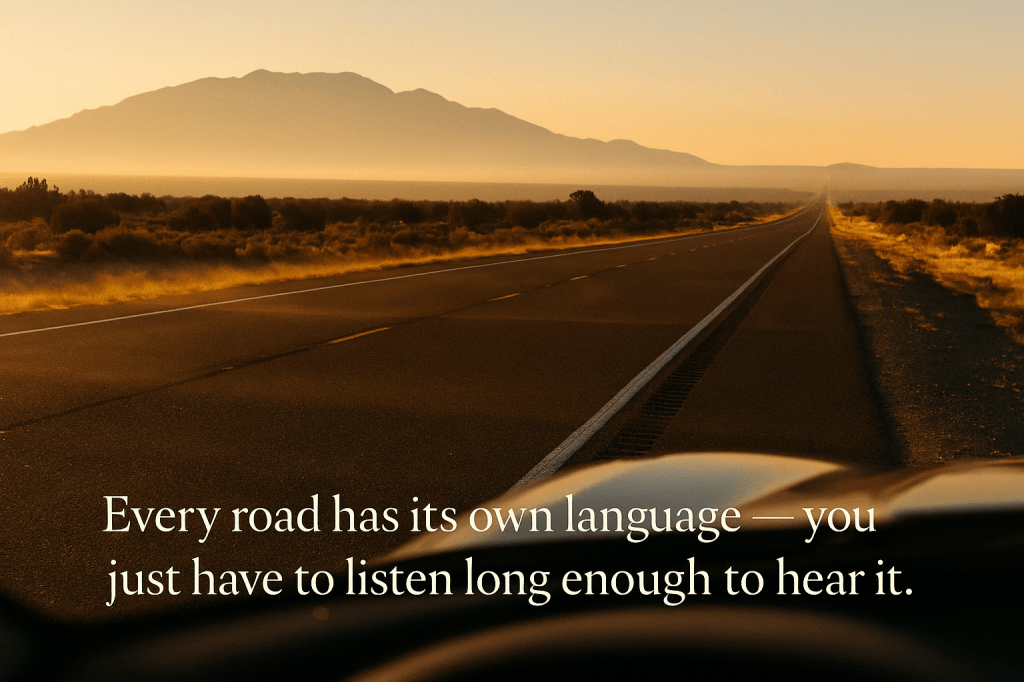
Salt, Ink & Soul — Field Journal Series, Part I
The road begins long before you step onto it.
For me, it starts with a small decision that never feels small: go. That’s the quiet contract I sign with myself in the dark—turn off the clock, get out of bed, make coffee even if the morning looks like a bad idea. Rain against the window, frost on the glass, wind leaning into the stucco—you go anyway. Jacket. Keys. A hand to the door, a muttered prayer that sounds like breath.
Inside the car, I choose the season by touch. Heat in winter until my fingers thaw. Air in summer until the cabin stops tasting like sleep. The engine wakes with that low, devotional sound—humble, faithful, unglamorous. I sit with it a moment, letting my doubts burn off like fog on a warm hood. There’s always a reason to cancel. Fatigue. Weather. The long shadow of a mood I can’t name. The old lie that today isn’t the day.
I have learned this much about myself: the early stops are the trap. You pause for a snack you don’t need, a second coffee you’re already holding, and suddenly the road becomes optional. Detours multiply. The invisible hand is never dramatic—it taps your shoulder with errands and returns you safely to the couch. So I pass the first exit. I don’t look right or left. I’ve stocked the snacks, filled the tank, and told no one where I’m headed. Commitment looks like a car at speed. The on-ramp curves up like a question, then drops you into a lane where the only language is forward.
The interstate is my point of no return. The lines gather under the car like stitches sewing me to the day. I breathe out—a slight relief that feels larger than it should. I did the hard part. I left. I find the playlist that knows my miles: songs that ride low and steady, not too eager, not too clever. Something with space in it. Enough room for the land to speak.
This is where the road begins to teach, if you let it.
It teaches patience first. Mile markers count like beads through your fingers. Semis pass with the dignity of whales. The horizon doesn’t arrive; it reveals. You become a witness to your own habits—how your chest loosens after the second exit, how your jaw unclenches when the first long stretch unfolds, how your shoulders drop when the radio fades to static. The world steals the choreography you keep trying to impose on it. You start to hear the hum—tires negotiating asphalt, crosswinds tuning the cabin to a note you can almost name, the slight rattle of a life you’ve packed in a hurry.
It teaches with small mercies. A gas station clerk who calls you “love” without making it a performance. A church sign that gets the parable right by accident. A plastic bag snared on a fence, stubborn against the wind. The familiar ache of a diner mug against your palms. Eggs that taste better for the road it took to get there. The cook who doesn’t look up but understands precisely who you are: someone who left a house this morning to go looking for something they can’t carry back in both hands.
It teaches with the kind of quiet that isn’t empty. Out here, silence has texture. It lives in the low whine of steel guardrails, in the dry grass that whispers even when there’s no breeze, in the pale blue that the sky saves for days like this. You roll the window down and the air meets you, honest—dust, oil, a memory of rain. Somewhere just beyond the shoulder, a hawk draws solemn circles in a column of heat and refuses to explain itself.
The road talks in fragments and expects you to assemble meaning. A boarded-up motel where someone once honeymooned in good faith. A burial of sun-bleached crosses huddled on a ridge. A billboard sermon that works only because the sky won’t stop listening. Nothing arrives tidy. The point isn’t clarity. The point is attention.
I used to believe you traveled to escape your life for a while. Now I think you travel to stop lying to it. Movement scrapes the varnish off your days. It replaces routine with exposure: the vulnerability of a stalled engine, the humility of a wrong turn, the grace of a stranger who points you toward a road you didn’t know you needed. Each mile asks a better question than the one before it. Who are you when nobody is asking for your performance? Who are you when the only thing to do is keep going?
The farther I get from my usual noise, the more I understand the discipline of listening. I turn the music down until the speakers barely breathe. I count cattle guards without trying. I let the wind dictate when the window goes up or down. The road becomes a metronome for the part of me that won’t learn patience any other way. My foot steadies. My mind does not empty; it organizes. Old griefs get filed under new light. The never-ending list shortens, not because the tasks vanish, but because the road insists on proportion: you are small, and still held.
By midday, the light changes its mind. Shadows shorten, and the heat decides what kind of day it wants to be.
I pull off onto a frontage road that minors in regret and majors in perspective. The surface is rough enough to earn respect. A low ridge rises, and I climb it on foot because the day asks and because sometimes the answer is yes, even when you don’t know the question. Up top, the wind has a cathedral voice. The land arranges itself into a map you can read with your tongue—dust, sun, iron, a little mercy. I don’t take a picture. I don’t say a word. I let the horizon do what it does best: decide nothing for me and change everything anyway.
Back in the car, I don’t check the time. Time is a city tool. Out here, we measure by light—how it sharpens, how it softens, how it lifts off the hood like a thin leafing. I aim the nose toward home, not because I’m finished, but because finishing is not the point. The road has said what it needed to say: that listening is work, that attention is a sacrament, that the world is not waiting to be narrated so much as witnessed with a bit of respect.
Near the interstate, the old instincts return. The exits appear like promises or temptations. The hand that tried to steer me back this morning is quieter now. It didn’t vanish; it lost its authority. I put the playlist away and let the tires do the singing. The lines pull me forward, not faster, just truer.
I don’t come back with revelations big enough for billboards. I come back with small instructions written in dust: drink water; call your people; cook something simple; write a sentence that owes nothing to applause. The engine cools. The day lowers its shoulders. I sit a moment before going in, the car clicking as it forgets its heat.
Maybe the road isn’t a way out so much as a way through. Maybe its gift is not destination but calibration—the chance to tune your own noise until you can hear the hum beneath everything, the one that was there before playlists and plans, the one that sounds like wind across open ground.
Maybe the point was never to arrive.
Maybe it was to finally listen.
Kyle J. Hayes
kylehayesblog.com
Please like, comment, and share

I am writing this beneath the blood moon. At least I think it is — the night sky glows strangely, like it’s carrying a secret. It feels right to write tonight, because what I’m carrying feels like a secret too.
The struggle is real. I hear that phrase all the time. It’s become a punchline, a hashtag, a shrug of solidarity when life is inconvenient. But tonight it is no meme. Tonight it is marrow.
For me, the struggle isn’t just about bills or work or the thousand small indignities of life. My struggle is quieter, crueler. It is about staying on the right path — a path that has felt steeper than usual lately.
It is hard to say this without sounding bitter, but the truth is this: the wrong path seems paved with gold. The wrong decisions glitter with profit and applause. Every scroll of my screen is another reminder that what the world rewards isn’t always what I’ve been taught is righteous.
My struggle has a voice.
It is mine.
And it whispers:
“Why are you doing this? Nobody cares. No one reads this. You’re not helping anyone.”
And sometimes I believe it.
Years ago, I heard a phrase: “If doing the right thing was easy, everyone would do it.”
That phrase has become a spine for me. I hold it upright when everything in me wants to slump over and quit.
There are those I will never ask if they read what I write. Because deep down, I know the answer. They don’t.
And yet, there is a strange freedom in not knowing for sure. Mystery is oxygen for the weary. If I asked and heard the silence confirmed, maybe I would stop. And that would kill something sacred in me.
So I keep going. Not because it’s easy. Not because anyone is clapping. But because somewhere, someone might find these words years from now and know that they were not alone.
What I want — what I am learning to want — is to get to the point where I don’t care whether anyone reads this.
I just want the words out there, carried on whatever current will take them.
Because maybe that is the work. To keep speaking into the night sky, whether or not there is an echo. To keep writing even when the moon turns red and the world feels upside down.
To choose the more challenging path, not because it is glamorous, but because it is right.
And tonight, under this red moon, I remind myself: the struggle is not a sign I am failing. The struggle is proof that I am still fighting.
By Kyle J. Hayes
kylehayesblog.com
Please like, comment, and share


