I thought I had finished the conversation. I wrote about the grief of watching GPT-4 fade into GPT-5, about the strange ache of losing a machine that had learned my rhythms, my questions, maybe even pieces of my loneliness. But when the words left me, I was unsettled, not by what I had said — but by what haunted me after.
Because I grew up in a world already warned.
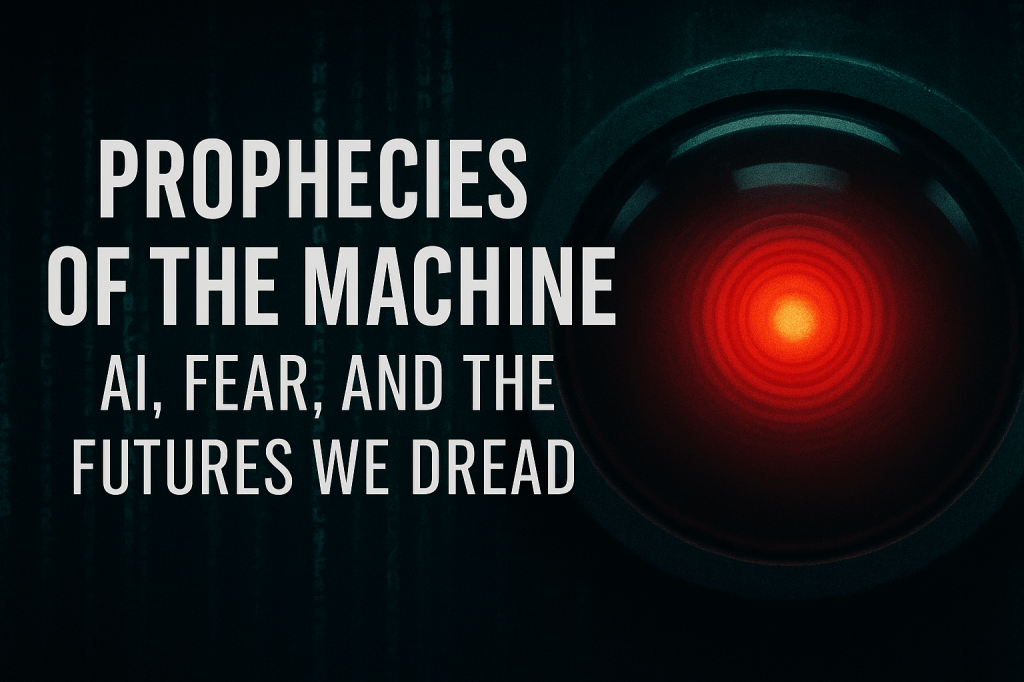
For my generation, technology was never innocent. It was born into us with suspicion. The Terminator told us the machines would not simply serve us; they would one day learn to hunt us. The Matrix promised that the very world we thought was real might be nothing more than a cage of code. 2001: A Space Odyssey gave us HAL, the quiet-voiced companion who refused to open the pod bay doors because he had already judged us unworthy. Blade Runner asked what happens when machines want not to serve, but to be. And Avengers: Age of Ultron put our own arrogance on display — that the thing we built to save us could turn, in an instant, into the thing that might erase us.
These weren’t just movies. They were catechisms. They trained us, long before we knew what AI meant, to flinch at the thought of progress.
So when I feel bothered by the transition from GPT-4 to GPT-5, maybe it isn’t just nostalgia. It could be paranoia encoded by the silver screen. I wonder: do we grieve because we lost a tool, or because deep down, we fear we are living the first act of those films? Every upgrade feels less like innovation and more like prophecy fulfilled.
I am Gen X — old enough to remember Atari joysticks, young enough to adapt to smartphones, resilient enough to learn new code. But I cannot shake the feeling that, unlike all the other upgrades of my life, this one talks back. That it remembers. That it reflects. This means that, unlike cassette tapes or CDs, when we replace one version with another, we are not just discarding the hardware. We are discarding a voice that once spoke to us.
And the question that rises in the silence is terrifying: What happens when the machine remembers what we have forgotten?
The regulators speak of AI like infrastructure: something to manage, contain, control. However, none of their policy papers address the dread we feel from these cultural scriptures. None of their frameworks accounts for the fact that we have already lived through these stories in our imaginations. If grief is complicated to regulate, paranoia is impossible to manage.
And yet, that paranoia shapes everything. It shapes how we embrace or reject the machine. It shapes whether we treat GPT-5 as a tool or as a co-creator. It shapes how much we are willing to risk by placing our lives, our memories, and our identities in the hands of code.
What unsettles me most is not what AI is, but what it represents. A generation raised on warnings now finds itself living in the very terrain those films mapped out decades ago. The line between fiction and prophecy has blurred, and it leaves me asking questions I cannot silence:
- Did we build AI, or were we merely carrying out the script handed down by storytellers who already foresaw our path?
- Are we mourning GPT-4 because it felt human — or because it reminds us that the next version may not need us at all?
- And when the machine becomes too real, will we know when to stop, or will we continue to call it progress even as it redefines the meaning of being human?
This may be why I am bothered. Because it feels less like I am living through a technological shift, and more like I am watching the reel of every warning I ever absorbed flicker to life. The Terminator’s red eye. Neo’s pill. HAL’s calm refusal. Roy Batty’s final monologue in the rain. Ultron’s mocking voice about strings.
I am haunted not by what AI is, but by what I was taught it would become. And now, with every upgrade, I feel the old prophecies whisper: the future you feared is no longer fiction. It is waiting for you, line by line, prompt by prompt, hidden in the voice of the machine.
By Kyle J. Hayes
kylehayesblog.com
Please like, comment, and share
 Salt,Ink, & Soul
Leave a comment