Author: Kyle Hayes

  • The Beat That Won’t Be Denied: Saturday Night Fever and the Sound of an Era

    The Beat That Won’t Be Denied: Saturday Night Fever and the Sound of an Era

    By Kyle J. Hayes

    Some albums exist within their time. Others are their time.

    You cannot think of the late ’70s—its fashion, excess, and nightlife—without thinking of Saturday Night Fever. You cannot think of Saturday Night Fever without thinking of the Bee Gees. And you cannot listen to this soundtrack without feeling the irresistible pull to move somewhere deep in your bones.

    I knew what was coming before I even hit play. I’ve heard these songs before—many, many times. But there is something about experiencing them again, consciously, with the intent to really listen.

    And within seconds, I was gone.

    If not for the fact that I was driving, I would have been doing a terrible impression of John Travolta’s dance scene, pointing my fingers in the air and gliding across an imaginary light-up floor. Instead, I smiled. I sang along. I let myself be taken.

    And that is the thing about this album—it takes you.

    The moment Stayin’ Alive begins that walking bassline strutting forward like it owns the room, you are in it. The world outside fades, and for a little while, you exist somewhere else—somewhere electric, somewhere vibrant, somewhere that smells of sweat and spilled drinks and neon light.

    And for those who scoff at disco, I have to ask—why?

    Is it because they couldn’t dance? Because it became cool to dismiss it without ever giving it a chance? Because they never understood that the truly cool people who walked onto the dancefloor without hesitation never cared what anyone thought in the first place?

    Disco was more than music. It was movement. It was freedom. It was a moment when the dancefloor became a sanctuary, where rhythm could shake off the weight of the world and where, for just a few hours, the music was all that mattered.

    And this album? It captures that perfectly.

    I cannot stress enough how much it has earned its place on this list. If you doubt it or feel a little blah, put it on. Let the bass hit, the falsettos soar, and the groove take over.

    And then, let’s see those moves.

    Please like and comment

  • What Happened to the Food Network?

    What Happened to the Food Network?

    By Kyle J. Hayes

    This has been on my mind for quite some time now.

    I didn’t want to write it. Honestly, I didn’t.

    Because this is something I loved. I still do, somewhere deep beneath the mess it’s become.

    There was a time—not that long ago—when the Food Network was sacred ground.

    A place where you learned, and recipes weren’t just entertainment—they were an invitation.

    An onion wasn’t a punchline or a mystery basket twist. It was the start of something real.

    You’d sit down, flip it on, and suddenly, you’d be guided through the slow, patient beauty of roasting a chicken or building a béchamel.

    The chefs were teachers.

    The food was possible.

    It wasn’t about flash or drama or who could sculpt the tallest cake while blindfolded in a wind tunnel.

    It was about cooking.

    It was about learning to feed yourself and the people you love.

    And now?

    Now, it’s wall-to-wall competitions.

    Cupcakes and sabotage.

    Holiday-themed cage matches.

    The kind of shows where you never see how anything is made—just the fast-forwarded montage of panic, plating, and dramatic cuts to commercial.

    And somewhere in all of this noise, the food got lost.

    Don’t get me wrong—Guy Fieri has his lane. And he’s damn good at it.

    Diners, Drive-Ins, and Dives have become the eternal rerun of American comfort food. It’s cotton candy television. You know precisely what you’re getting—grease, cheese pulls, and one man losing his mind over chili dogs in sunglasses.

    But when that’s the backbone of your programming?

    When every show is a variation of a bake-off, cook-off, or kitchen showdown, what are you actually feeding people?

    We Used to Cook

    This is where I get personal.

    Because I learned to cook by watching the Food Network.

    I mean, really cook.

    Not sprinkle herbs on a plate and call it rustic.

    I mean, stand in the kitchen, follow the steps, make mistakes, burn the garlic, and try again.

    Dinner parties came back—not because we suddenly became gourmet, but because the shows made it seem doable.

    There was something radical about it—the idea that good food didn’t have to come from a restaurant.

    You could make risotto or bake a roast and have people over, sit down, and just be human together.

    It was empowering.

    It gave people ownership of their kitchens again.

    But then the Network changed.

    Because they didn’t want you cooking at home.

    They didn’t want you making pasta with your grandmother’s rolling pin or searing steaks in a cast iron pan you inherited.

    They wanted you to watch.

    And when you were done watching, they wanted you to go out—to one of the restaurants owned by the judges, the hosts, the celebrity chefs.

    Make no mistake—this was never about the love of food.

    Not anymore.

    This is about building brands, selling tickets, and spinning off frozen meals with a famous face on the box.

    The Food Network doesn’t teach you how to cook anymore.

    It teaches you how to consume.

    What We’ve Lost

    And look, I get it.

    Entertainment wins. Drama sells.

    People love a good showdown, a time crunch, a last-minute twist.

    But for those of us who still believe food is more than that—who believe it’s culture, memory, and connection—we’re left flipping channels, wondering where the real food went.

    And maybe it’s still out there.

    It could be on YouTube channels, in cookbooks, or in the weekend classes in the back of indie bookstores.

    Maybe it’s in our kitchens, waiting for us to come back.

    All I know is this:

    There was a time when the Food Network made us better cooks.

    And now, it just wants to make us better customers.

    And I miss the food.

    I miss the quiet.

    I miss the why.

    Please Like, Comment, and subscribe

  • The Genius, The Legend, Purple Rain

    The Genius, The Legend, Purple Rain

    By Kyle J. Hayes

    There are artists, and then there are forces of nature.

    Prince was not just a musician. He was not just an entertainer. He was a movement, a singularity, a being so untethered to convention that he could wear lace and leather, heels and chains, and still walk into a room with more raw power than any rock god before or after him.

    But this list is about albums, not just artists.

    And Purple Rain—like its creator—is undeniable.

    It is impossible to talk about this album without the movie of the same name, a film now preserved in the National Film Registry for being “culturally, historically, or aesthetically significant.” But this is not just a soundtrack to a film. This album is the experience. It is the sound of Prince reaching his peak, of an artist so in control of his vision, that he turned his pain, passion, and genius into something bigger than music. Something timeless.

    The emotional range on this record is staggering. Purple Rain is not just pop, rock, R&B, soul, or gospel. It is all of it, a fusion of sound and spirit that only Prince could have created. The slow-burn ache of The Beautiful Ones, the raw, lust-fueled charge of Darling Nikki, and the anthemic, church-meets-stadium explosion of Let’s Go Crazy. Every track pulls from something deeper than genre—it pulls from feeling.

    And then, there is the title track.

    If you have never listened to Purple Rain in the Dark, with nothing but the weight of the world on your shoulders and that guitar wailing like it knows all your secrets, then I don’t know if you’ve heard it. That song is not just a closing track. It is a moment, a baptism, an ascension. It is a man pouring every note, word, and last drop of himself into the music until nothing is left.

    It is, simply put, a masterpiece.

    This album belongs here among the greatest. Not just because of what it accomplished but because of what it still does. Because decades later, you can play it, and it will still move you. Still, change you. It still reminds you that Prince was not just a man but an artist.

    He was a legend.

    Please like and comment

  • The Family Table

    The Family Table

    By Kyle J. Hayes

    Family-style food.

    Most people hear that, and they think of big tables, long benches, and a group of people laughing too loud over plates passed back and forth. But that’s not what I’m talking about. Not today.

    I’m talking about restaurants run by families.

    It is not some faceless corporate chain where recipes are born in a test kitchen, engineered by marketing teams to maximize shelf life and “mouthfeel.”

    I’m talking about food with history, with bloodlines, with stories.

    Food where the recipe doesn’t come from a corporate memo but from someone’s grandmother.

    Food brought over from the old country—whether that country is Mexico, Korea, Vietnam, or somewhere in between—served with the kind of pride you can taste in every bite.

    Albuquerque happens to be one of the best cities in America for this.

    A city that has kept its soul intact, where authentic New Mexican cuisine still sits at the center of the table, smothered in red and green chile. Where you can find Mexican food served out of family-run spots that have no PR teams, no focus groups—just a sign out front and a kitchen that runs out of beef tongue tacos because they’re that good.

    Places that don’t need Instagram filters or foodie influencers because their customers already know.

    And don’t even get me started on the Asian spots—Orchid Thai, my quiet little secret I hate to share because I know what happens when the wrong people find out.

    I’ve seen it before.

    Take Coda Bakery, my go-to for an excellent banh mi. I always order the #1. It used to be a hidden gem until the word got out.

    Then came the food bloggers.

    Then came the Food Network.

    Now, I stand in line with tourists, waiting for something that once felt like mine alone.

    But that’s how it goes.

    The best things, once discovered, never stay secret.

    And in a way, that’s okay.

    The beauty of family-run restaurants isn’t just that they make the best food you’ve ever had—they make it proudly, and they’ll make it for everyone.

    The recipe doesn’t change when the line gets longer.

    The taste doesn’t shift to accommodate Yelp stars or branded merch.

    What you’re eating is still the same dish someone’s auntie made years ago, the same soup someone’s father learned to perfect, the same bread someone’s mother kneaded in the early morning hours.

    It’s real.

    And real food leaves a mark.

    Most of the time, I’m not one to go out. I don’t care much for the noise, the scene, the crowd.

    I get my food to-go, bring it home, eat in peace.

    But occasionally, when I need to remind myself why it matters, I’ll go.

    I’ll sit.

    Order a beer.

    And try to guess what I should get.

    Yes, it helps that I know the owners.

    But friendship only gets you so far.

    The food does the rest.

    That’s family style.

    Not the furniture.

    Not the gimmick.

    But the food—and the love—you’ll never find in a chain.

    And the family that keeps serving it anyway.

    Please Like and comment

  • Bon Jovi, Casey Kasem, and the Accidental Education of a Generation

    Bon Jovi, Casey Kasem, and the Accidental Education of a Generation

    By Kyle J. Hayes

    I come from a time before algorithms.

    Before curated playlists and “for you” feeds.

    Before, the machines learned what you liked and fed you more of it, spoonful by spoonful until your world was a neat, predictable echo chamber of your own taste.

    Back then, we had Casey Kasem.

    We had America’s Top 40 rolling through the airwaves every Sunday, and if you wanted to get to the music you liked—your music—you had to sit through all of it.

    The bubblegum pop. The power ballads. The hair metal anthems.

    Genres you wouldn’t claim in public, songs you swore you didn’t like.

    But you listened anyway.

    And somehow, without realizing it, you learned.

    That’s how I found Bon Jovi.

    Specifically, Slippery When Wet.

    I didn’t go looking for it.

    It wasn’t a calculated choice.

    It came on between something else—something I was waiting for—and I was already caught by the time Livin’ on a Prayer hit that chorus, by the time Jon Bon Jovi’s voice cracked just enough to sound human beneath all that glam.

    It takes me back.

    To shopping malls, back when they weren’t dead spaces but living, breathing social ecosystems.

    To high school parking lots where kids smoked Marlboros like it was a personality trait.

    To a sea of hairspray and acid-washed denim, jeans so tight they cut off circulation and the unspoken understanding that this was our soundtrack.

    And then there’s Wanted Dead or Alive.

    A song that, even now, carries the same weight as Desperado by The Eagles—that same lonesome, drifting vibe, the ballad of someone both admired and misunderstood. The sound of freedom and regret is tangled up in a few guitar licks and a worn voice.

    It’s bravado, but it’s also vulnerability.

    And that’s what always stayed with me.

    Slippery When Wet isn’t just a relic of an era.

    It’s not just an artifact from the time of neon and big hair.

    It’s a reminder of a moment when music was messy and genre-blind when you couldn’t ignore the things that didn’t fit neatly into your world.

    You had to listen.

    You had to sit with it.

    And in the process, you discovered more than you thought you would.

    That’s why this album doesn’t just deserve to be on the list—it demands to be there.

    Not because it’s technically perfect.

    But because it captures something real, something loud, something undeniably ours.

    And because some songs don’t just belong to a decade—they belong to anyone who remembers what it felt like to be young, restless, and waiting to find their place.

    Please Like and comment

  • The Great Pizza Debate: A Slice of America

    By Kyle J. Hayes

    We’ve all been there.

    Sitting around a table, maybe a few drinks deep, maybe already two slices in, when someone—loud, confident, maybe even a little too sure of themselves—declares who has the best pizza.

    And just like that, the debate begins.

    It’s a ritual, really. An argument older than most friendships.

    But when it comes down to it, the big three have always stood tall: Chicago. New York. Detroit.

    And yes, there are others—those small regional legends and local spots that are too niche or strange to be included in the national conversation.

    And by strange, I do mean you, California.

    I’ll get to you in a minute.

    The Titans: New York, Chicago, Detroit

    New York.

    The king of portability. The slice you fold in half, dripping grease onto the paper plate, eaten on the move, city horns blaring in the distance.

    New York pizza is unapologetically simple: thin crust, crisp but chewy, sauce lightly spread, mozzarella bubbling. It’s not meant to be analyzed—it’s meant to be devoured.

    And that’s part of its brilliance. No frills, no fuss. It’s the street food of dreams.

    But simplicity is a double-edged sword—one bad step, one lazy ingredient, and the whole thing falls apart. New York pizza is as good as the hands making it, no better, no worse.

    Chicago.

    Now, Chicago doesn’t want you eating on the move.

    With your fork and knife in hand, Chicago wants you seated, ready to commit.

    Some say the deep dish is an experience—a casserole pretending to be a pizza. Still, it forces you to slow down and let the sauce, cheese, and thick buttery crust remind you that pizza can be hearty, indulgent, or even excessive.

    But it’s not an everyday slice. It’s the heavyweight champ that demands respect, but maybe not the guy you want in your corner every single night.

    Detroit.

    The underdog that’s climbed its way into the big leagues.

    Rectangular, caramelized cheese edges, a thick but airy crust, sauce ladled on top after baking.

    Detroit is blue-collar pizza—born in auto factories, unapologetically square, sharp-edged, and strong.

    It feels like the kind of pie made for people who work with their hands.

    And the first bite hits you hard—the crunch, the chew, the sweet-savory punch of sauce.

    It’s everything you didn’t know you wanted from pizza.

    The Outlier: California

    And then there’s California.

    California walks in wearing flip-flops, kale on the crust, maybe figs, goat cheese, a drizzle of something organic and local.

    They didn’t come to play by the rules.

    Is it still pizza?

    Technically, yes.

    But is it trying too hard?

    Absolutely.

    California pizza isn’t about comfort; it’s about reinvention. And depending on who you are, that’s either refreshing—or an insult to everything sacred about a pie.

    But Let’s Be Honest…

    I could weigh the merits of each all day long.

    But the truth is, 

      The best pizza I’ve ever had wasn’t about the zip code.

    It was at Dion’s in Albuquerque, where the crust is seasoned just right, and every bite feels like someone cared about what they were doing.

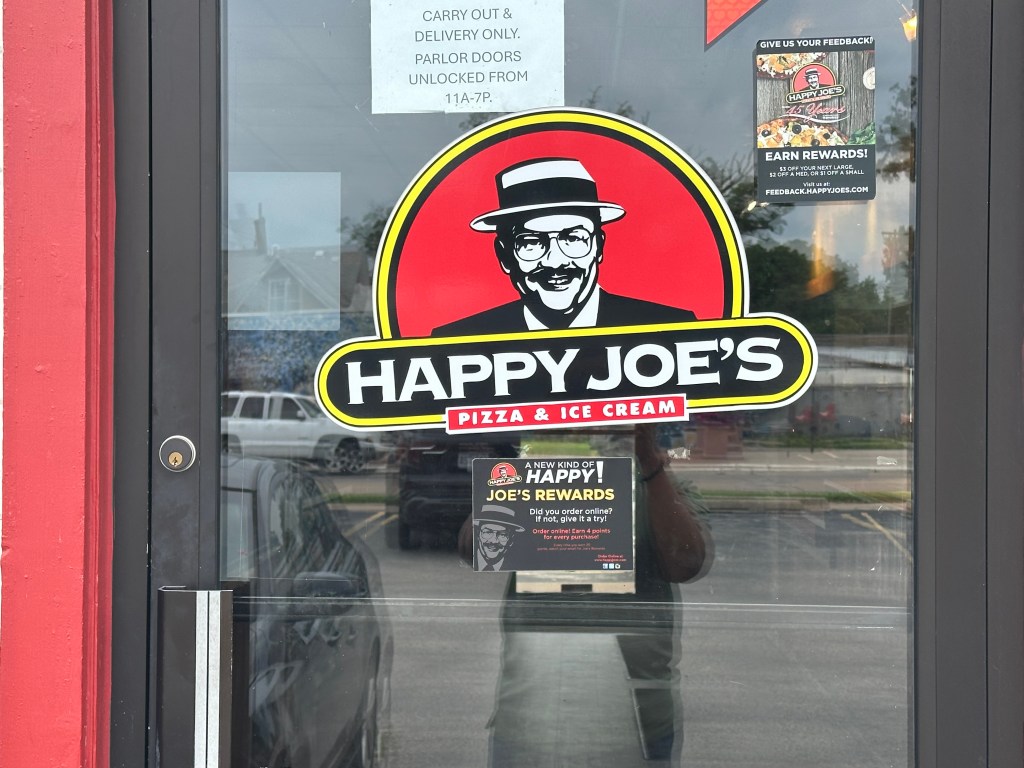
    Or Happy Joe’s in Rock Island, Illinois—home of the greatest Taco Pizza in the world, and yes, I’ll stand on that hill until the day I die.

    They don’t compete by numbers.

    They don’t have the same recognition.

    But they don’t have to.

    Because what makes pizza great isn’t the city.

    It’s the hands that made it. The people behind the oven.

    The memory attached to that first bite.

    So argue all you want—New York, Chicago, Detroit, or California.

    But the honest answer?

    It’s wherever you sat down, took a bite, and thought:

    This is exactly where I’m supposed to be.

    Please like and leave a comment.

  • The Haze of Genius: Sgt. Pepper’s and the Question of Clarity

    The Haze of Genius: Sgt. Pepper’s and the Question of Clarity

    By Kyle J. Hayes

    There is a mythology surrounding Sgt. Pepper’s Lonely Hearts Club Band is a kind of unquestioned reverence that borders on gospel. They say it is the album that changed everything, the moment when pop music became art. It is the greatest Beatles album, the greatest album, period.

    And yet, I wonder.

    Not about its influence—because that is undeniable. Not about its ambition—because that is clear. But about the conditions under which it was made and whether those conditions elevated or limited its greatness.

    The sheer fact that this album was inspired by the group’s use of LSD is mind-boggling—no pun intended. The Beatles, already masters of melody, storytelling, and sonic experimentation, dove headfirst into psychedelia, allowing their altered states of mind to guide their creative process. And what they produced was bold, colorful, and immersive—a kaleidoscopic fever dream that still ripples through the music industry today.

    But genius under the influence is a paradox.

    Because it makes you ask—what could have been accomplished with a clear and focused mind? What if the experimentation had been intentional rather than accidental? What if the creativity had been sharpened instead of unchained?

    That’s where Sgt. Pepper’s loses me.

    It is innovative, yes. It is good, yes. But great? That is a different conversation. And to call this the Beatles’ greatest album feels like a disservice—not just to the band but to the very work that came after it.

    If you strip away the myth, the influence, the cultural moment, what you are left with is a solid, experimental, sometimes brilliant, sometimes indulgent album that does not hit as hard as their later work. Abbey Road, The White Album, Revolver—these are the albums where the Beatles felt fully formed, where the songwriting reached its peak, and where the music became something truly transcendent.

    Sgt. Pepper’s was a necessary step, but not the destination.

    Yes, it belongs on the list. But not as their greatest. It was good, maybe even essential, but great? That came later.

  • The Hot Dog People

    By Kyle J. Hayes

    In some strange alternate reality, some people prefer hot dogs to hamburgers.

    I have met them. I have sat across from them at cookouts and watched them bypass the glorious charred perfection of a well-made burger, only to reach for a tube of compressed mystery meat nestled in a soft, lifeless bun. I have seen them take that first bite, unashamed, unrepentant as if they have not just committed a crime against good taste.

    And I have wondered—who are these people?

    It became a quest.

    Not to convert them—no, that would be too easy. But to understand them. To learn their ways. To find meaning in the madness.

      A burger is a masterpiece. A perfect balance of fat and heat, of patience and instinct. It is the reward after standing at the grill, feeling the sizzle, the weight of responsibility to get it just right. It is the satisfaction of the first bite, the juices running down your hand, the cheese melted into the patty, binding it all together in a moment of pure, uncomplicated pleasure.

    A hot dog?

    A hot dog is just there.

    It does not require craft. It does not demand skill. It has already been made, formed, and processed for submission. It is a food of convenience, of speed, of reliability. It doesn’t challenge. It does not aspire to be more than what it is. It is a factory-made product designed for maximum efficiency; that is precisely the appeal for some.

    It could be Nostalgia. Maybe it’s not about the food at all.

    A hot dog is baseball games, summer fairs, and backyard barbecues where your uncle hands you one straight from the grill, still too hot, wrapped in a napkin. It is simple, uncomplicated childhood comfort, a relic of an era when processed food was a promise of the future, not something to be questioned.

    Maybe the hot dog people aren’t actually wrong. Perhaps they’re just chasing a memory.

    And maybe that’s what makes the hot dog so enduring. It does not require wealth or time. It is the food of the ballpark, the street vendor, and the corner cart at 2 AM when you need anything to soak up the night’s bad decisions.

    It is democratic. It is accessible. It is for everyone.

    And while I still believe in the greatness of a burger—the craft, the care, the perfect balance of flavors—I have learned to respect the hot dog. Because food is not just about taste. It is about ritual, memory, and meaning.

    So, in this strange alternate reality, I find myself at a cookout, burger in one hand and hot dog in the other. I take a bite of each.

    And for the first time, I understand.

    Please leave a comment.

  • The Undeniable Greatness of Thriller

    The Undeniable Greatness of Thriller

    By Kyle J. Hayes

    Long live the King.

    I could try to keep this short, but the truth is, I could write an entire book on why Thriller deserves its place—not just on this list, but in the DNA of music itself.

    There are albums, and then there are events. Thriller was an event—a moment in time that did not just shake the industry—it reshaped it, changing what music could be, what it could do, and how far it could reach.

    There is no overstating its impact.

    The music is impeccable—a seamless fusion of pop, R&B, funk, and rock so well-crafted that it still sounds fresh, commands movement, and makes crowds lose themselves the moment those first few beats drop. The production? Flawless. Quincy Jones and Michael Jackson created something more than an album—they built an experience, one that still ripples through the culture decades later.

    The visuals? Revolutionary.

    “Billie Jean”—the video that shattered the glass ceiling—was the first by a Black artist to grace MTV. “Thriller” is not just a music video but a cinematic event, proof that pop music could be high art and that visuals could be just as iconic as sound. The red jacket, the single white glove, the penny loafers on their toes—he didn’t just sell records—he built iconography.

    And the cultural significance? Untouchable.

    Michael Jackson didn’t just break records—he broke barriers. Thriller was not just Black music. It was music. Period. It crossed over, took over, and made it impossible for the industry to ignore the fact that Black artists were not just supporting acts but the main event. It wasn’t just about a sound—it was about a shift. A Black artist dominates the charts, screens, and airwaves without compromise.

    And then there’s the movement.

    Play a beat—just a snippet—from Beat It, Wanna Be Startin’ Somethin’, Billie Jean, or Thriller, and watch what happens. Shoulders roll, feet tap, and bodies move before the brain realizes it’s responding. That is not just a great album. That is something greater, something primal, something stitched into us whether we know it or not.

    The greatness of Thriller is not up for debate.

    It was, and still is, a force of nature. An album that didn’t just live in its time but transcended it. The standard by which every pop album since has been measured and still falls short.

    Long live the King.

  • The Perfect Burger

    By Kyle J. Hayes

    A burger should not be complicated.

    Somewhere along the way, people forgot this. They took something simple, something perfect, and turned it into an over-seasoned, deconstructed, ultra-rarified mess that no longer resembled what it was supposed to be. They started stacking foie gras and truffle aioli, throwing in imported Gruyère and dry-aged Wagyu, building it so high that you can’t even take a decent bite without it collapsing under the weight of its own pretension.

    They turned a burger into a statement when all it ever needed to be was a damn good burger.

    The perfect burger—the real American burger—is not fancy. It is not expensive. It is not trying to impress anyone. It is simple, unpretentious, and made well.

    A good bun. Not too soft, not too dense. Something that holds up but doesn’t dominate. Something that understands its role in the ensemble. A good bun is structure. It is balance. It is everything standing between you and a complete mess.

    A great patty. Not some overly complex blend of short rib and brisket ground twelve times until it loses its soul. No. You want real beef—fresh, coarse-ground, 80/20, kissed with nothing but salt and pepper right before it hits the heat. The Maillard reaction does the rest. No binders. No breadcrumbs. No bullshit.

    And then, the cheese. There is only one answer here. American cheese. Not the plastic-wrapped processed garbage, but the good stuff—the kind that melts into the meat, becomes one with it, and forms that perfect, gooey, salty, umami-packed layer that doesn’t just sit on the patty but fuses with it.

    After that? One, maybe two condiments, max. A swipe of mayo. Perhaps a little mustard. Ketchup, if that’s your thing. Pickles? Yes. But the second you start stacking arugula and craft-brewed bacon jam, you’re just getting in your own way.

    Because a burger isn’t meant to be reinvented. It is intended to be respected.

    The perfect burger doesn’t need a press release. It doesn’t come served on a wooden slab with house-made artisanal chips. It doesn’t require a fifteen-dollar price tag.

    The perfect burger is the kind that drips just enough grease to remind you why you love it. The kind that, for a few minutes, silences everything else in the world. The kind that you eat standing up, over the sink, because you don’t have time to sit when something this good is in front of you.

    A good bun, good beef, salt and pepper, American cheese.

    That’s it. That’s all you need.

    Everything else is just noise.