Author: Kyle Hayes

  • Don’t Answer Too Fast

    Don’t Answer Too Fast

    This reflection was written in response to the passing of Lamar Wilson.

    When a man dies, the world rushes to explain him.

    We build stories quickly—causes, warnings, neat conclusions—because uncertainty makes us uncomfortable. But the truth is simpler and harder to sit with: the only person who can fully name the reasons someone leaves this life is the person who left it. Everyone else is guessing in the dark.

    Still, the darkness teaches us things if we’re willing to look.

    There is a place where it’s just you.

    No audience.

    No applause.

    No performance.

    Just you, alone with your thoughts, listening to them pace the room.

    That place is where the real battle lives.

    Some people look like they have everything. Visibility. Momentum. Laughter. A life that seems full from the outside. But sometimes, all of that is scaffolding for a private war. Sometimes success isn’t peace—it’s camouflage.

    Especially for Black men.

    We are taught early how dangerous honesty can be. How pain is read as weakness. How softness is punished. How exhaustion is moral failure. The world prefers us sharp or silent—never tender, never unsure.

    So we learn to armor ourselves. We learn how to smile through weight. How to carry pressure without complaint. How to translate suffering into something palatable.

    And then we pass that lesson to each other.

    “You good?”

    It’s a small question, almost polite. A check-in that lasts no longer than a breath. We ask it in passing—at work, in hallways, in group chats, at cookouts. And the answer is almost always the same.

    “I’m good.”

    Sometimes it’s true.

    Often it’s not.

    “I’m good” keeps things moving. It protects the room. It spares everyone the discomfort of slowing down. It’s the answer you give when you don’t know how much space your truth would be allowed to take.

    Because telling the truth can feel dangerous.

    There is a particular loneliness in being surrounded by people who know your face but not your fight in being visible and unseen at the same time. In realizing that the strength as it’s been taught to you requires a kind of daily self-erasure.

    This is the quiet violence no one names.

    Not sirens.

    Not headlines.

    Just the steady pressure of swallowing yourself because the world has never been kind to men who admit they are drowning.

    And so the battle stays private. Fought every day. From the moment you wake up to the moment sleep finally loosens its grip. A war without witnesses. A war without language.

    What if we stopped answering too fast?

    What if, instead of reflex, we allowed the question to linger long enough for honesty to find its footing?

    “No. I’m not good.”

    That sentence is not weak. It is a risk.

    It is opening a door without knowing who will stay. It is admitting you are human in a world that has asked you to be indestructible. It is naming pain without packaging it as motivation, humor, or grit.

    And it is a beginning.

    Not a solution.

    Not a cure.

    A beginning.

    Because once the truth is spoken, the battle is no longer invisible. It becomes something that can be shared, witnessed, and held. And being witnessed—truly witnessed—is not nothing. It is not a platitude. It is a form of care.

    We won’t save everyone by asking better questions. We won’t fix despair with the right words. This isn’t about heroics.

    It’s about presence.

    So we could change the ritual. Maybe we should

    “How are you really holding up?”

    And then we stay quiet long enough for the answer to breathe.

    No fixing.

    No rushing.

    No telling someone how strong they are.

    Just staying.

    If you’re reading this and you have been answering too fast—if you have been saying “I’m good” when you’re not—please hear this clearly:

    You do not have to fight the entire war alone.

    Say it once.

    To one person.

    To someone safe.

    “No. I’m not good.”

    That sentence will not solve everything. But it can keep you here long enough for something else to begin.

    And if someone says it to you—if a brother finally lets the truth slip—don’t reach for wisdom. Don’t reach for advice.

    Reach for presence.

    “I’m here.”

    “I’m listening.”

    “You don’t have to carry this by yourself.”

    We don’t need perfect answers.

    We need rooms where the truth can survive being spoken.

    The battle is real.

    And it is daily.

    But it should not be silent.

    And it should not be solitary.

    Kyle J. Hayes

    kylehayesblog.com

    Please like, comment, and share

    Resources

    If this reflection brings up more than you expected, and you’re in the U.S., you can call or text 988 to reach the Suicide & Crisis Lifeline. If you’re elsewhere, local crisis resources are available in many countries. You don’t have to hold everything alone.

  • The Great Whispering Woods Winter Swap

    The Great Whispering Woods Winter Swap

    Winter arrived quietly in the Whispering Woods, sprinkling soft snow across the treetops and giving the air a crisp, gentle hush. It was the kind of morning when every breath looked like a tiny cloud, and every sound felt a little more magical.

    Felix the Fox trotted into the clearing with a sparkle in his eye.

    “Today feels special,” he said, his tail giving a hopeful swish.

    And he was right—because today was the very first Winter Swap, a new tradition the friends had decided to create together.

    The Winter Swap was simple:

    Each creature would share something meaningful—not something bought, but something made or given from the heart.

    Piper the Bluebird fluttered down from her branch, her feathers puffed against the cold.

    “I’ll go first,” she said softly. “My gifts aren’t things you can hold… but you can feel them.”

    Then she opened her wings and sang a melody warm enough to melt the frost. Her song wrapped around the friends like a cozy scarf, lifting noses, chins, and hearts.

    Maple the Rabbit closed her eyes, letting the music settle into her like a hug.

    “That was beautiful,” she whispered. “My turn!”

    Maple rummaged through her little winter pouch and pulled out a bundle of treats—dried berries, honey-squash crisps, and her famous cedar-sprout clusters.

    “These are my best snacks,” she said shyly. “I saved them for today because special moments deserve special things.”

    Bramble the Bear Cub stepped forward next, holding something behind his back.

    “I made these,” he said proudly, revealing soft, leaf-patterned mittens woven from forest fibers. “Each pair has a different leaf, so you always remember where you belong.”

    Felix slipped one mitten on and pressed it to his cheek.

    “They feel like the whole forest is holding my hand,” he said.

    The friends waited for Felix next, but he only smiled gently.

    “I don’t have anything to give that you can keep,” he said. “But I have time. And warmth. And I can stay with each of you as long as you need company today.”

    Maple hopped closer.

    “Felix… that is a gift.”

    Piper nodded.

    “Sometimes the best gifts aren’t things we hold. They’re moments we share.”

    Bramble wrapped his new mittens around his paws and beamed.

    “Gifts that come from who we are,” he said softly, “are the ones that last the longest.”

    The snow fell lightly as the friends gathered in a circle. There were no ribbons, no boxes, no fancy wrappings.

    But there was music to warm the air.

    There were snacks to fill their bellies.

    There were handmade mittens to protect their paws.

    And there was a fox offering time, presence, and a heart open as the winter sky.

    As the day faded into evening, a peaceful stillness settled over the woods. The Winter Swap had given each of them something different—something beautiful.

    Not a single gift had come from a store.

    Every gift had come from someone’s kindness.

    Felix looked around at his friends, his chest glowing like a lantern in the snow.

    “I guess winter isn’t just cold,” he said. “It’s a season for sharing warmth in our own way.”

    And everyone agreed.

    That night, as the stars gathered like tiny candles above them, the creatures of the Whispering Woods learned a gentle truth:

    Everyone has something valuable to offer—

    and the best gifts aren’t bought… they’re shared.

    Kyle J. Hayes

    kylehayesblog.com

    Please like, comment, and share

    Read More Felix Stories.

    👉 Felix Collections

  • The Quiet Alchemy of Stretching What Remains

    The Quiet Alchemy of Stretching What Remains

    There’s a quiet kind of magic in taking what’s left and turning it into something warm and sustaining. A half-used onion. A lone sausage link. A handful of cabbage that has more to give than anyone expects. This dish honors that ceremony — the alchemy of making enough from what remains.

    As the skillet warms and the ingredients soften, they remind us that transformation often begins in places we overlook. This simple meal is proof that “enough” is not a limitation; it is a beginning.

    Sausage & Cabbage Skillet for Two

    Ingredients

    • 1 tablespoon butter or olive oil
    • 6–8 ounces smoked sausage (leftover links welcome), sliced
    • ½ medium onion, sliced thin
    • 2 cloves garlic, minced
    • 4 cups shredded cabbage (or the last half of a head)
    • Salt and black pepper, to taste
    • ¼ teaspoon smoked paprika (optional, but adds depth)
    • 1 tablespoon Dijon mustard (optional, for brightness)
    • 1–2 tablespoons chicken broth or water, if needed
    • Red pepper flakes (optional, for heat)

    Instructions

    1. Begin with what remains.

    Heat the butter or oil in a large skillet over medium heat.

    Add the sliced sausage and let it brown gently, releasing its smoky scent — a reminder that even small things can carry big flavor.

    2. Build the foundation.

    Add the sliced onion and cook until it softens, turning translucent around the edges.

    Stir in the garlic and let it bloom for 30 seconds.

    This is where the kitchen starts to smell like memory — familiar, grounding, almost ancestral.

    3. Let the cabbage transform.

    Add the cabbage to the skillet.

    Season with salt, pepper, smoked paprika, and red pepper flakes for warmth, if you want.

    The cabbage will seem abundant at first, towering over the pan, but it will yield.

    It always does — softening, sweetening, becoming more than what it appeared.

    4. Stretch it gently.

    If the skillet runs dry, splash in chicken broth or water.

    Cover for 3–4 minutes to let the cabbage steam and tenderize, then uncover and stir.

    Add Dijon mustard if you want brightness — a spark of character in a humble dish.

    5. Taste for enough.

    Adjust seasoning.

    Let the flavors settle into one another, each one offering what it can.

    Serve warm, straight from the pan, honoring the quiet work that made it possible.

    Notes & Reflections

    This meal isn’t meant to be perfect.

    It’s meant to be possible.

    A dish sewn from scraps and softened edges, from small acts of culinary courage.

    It echoes the wisdom passed down through generations who learned how to turn shortage into sustenance and leftovers into legacy.

    They understood something we often forget:

    Enough is a sacred word.

    A reminder that abundance is not always required for nourishment —

    Sometimes, it only takes what we already have.

    Kyle J. Hayes

    kylehayesblog.com

    Please like, comment, and share

    Resources for Hard Times

    If you’re looking for practical help, food support, or community resources, you can visit the Salt, Ink & Soul Resources Page.


    👉 Resources for Hard Times

  • The Ceremony of Making Something Out of Nothing

    The Ceremony of Making Something Out of Nothing

    There’s a particular kind of magic that never makes it into cookbooks.

    Not the magic of white tablecloths and tasting menus, not the magic of perfect knife cuts and gleaming copper pots. I’m talking about the quiet, stubborn miracle that happens when the fridge holds more air than food, the cabinets echo, and there’s still a meal on the table by nightfall.

    Making something out of nothing.

    For a lot of people, that’s just a phrase. For others, it’s a lifestyle. A survival skill. A family tradition passed down without ceremony, like the dented pot nobody throws away because “it still works.”

    I once heard someone say that the true food of a people isn’t what’s served at the holidays or in the fancy restaurants—it’s what the poor eat. That’s where the real story lives. In the cuts of meat no one wanted, the vegetables that were cheap and plentiful, the flour that had to stretch further than it ever should have been asked to stretch. In those kitchens, creativity wasn’t a hobby; it was the only way the lights stayed on, and the children went to bed with something warm in their bellies.

    You can look at a culture’s poverty and see suffering, and you wouldn’t be wrong. But if you look again—closer, slower—you’ll see something else, too: genius.

    The Alchemy of Leftovers

    Think about barbecue for a moment.

    We talk about it now like it’s a celebration food—weekends, tailgates, festivals with smoke curling into the sky and people lining up for ribs. But the roots of it are not glamorous. Barbecue was born out of necessity. Taking the toughest, least desirable cuts of meat—the ones that needed hours of slow heat and coaxing—and turning them into something tender, something worthy of licking your fingers for. Smoke as both flavor and forgiveness, covering the sin of scarcity.

    The same story stretches into stews. All over the world, in every direction you point, there is some version of a pot where vegetables, bones, scraps, and whatever else was on hand were coaxed into something that could feed a family. The names change with languages and borders, but the spirit is the same: water, heat, time, patience, and the belief that “this has to be enough, so I will make it enough.”

    And then there’s bread.

    Bread might be the most universal testimony of all. Flour, water, salt, and a little fat if you have it. Maybe yeast, maybe a starter handed down from someone’s grandmother or captured wild from the air. That’s it. The meagerest of ingredients. You stir, knead, rest, wait, bake. If you’ve ever torn into a crusty loaf that came from a small, cramped kitchen, you know how much better it can taste than the factory-perfect slices lined up under plastic in the grocery store. There’s something in that handmade loaf that can’t be written on a nutrition label: intention.

    The factories can make bread.

    The people in cramped kitchens make meaning.

    The Hidden Ceremony

    When you grow up making something out of nothing, it doesn’t feel like a ceremony. It feels like stress.

    It feels like staring into a pantry with three things in it and thinking, How am I supposed to feed everybody with this? It feels like doing quiet math in your head while your stomach growls, calculating how far a pound of ground meat can go if you bulk it with rice, beans, or noodles. It feels like shame when you compare your table to someone else’s, when their plates look like abundance, and yours look like problem-solving.

    No one hands you a script and says:

    “Welcome. Tonight’s ritual is called Stretching the Groceries Until Payday.

    The dress code is whatever’s clean. The incense will be the smell of onions hitting hot oil, because that’s how you make almost anything taste like you tried.”

    But if you step back for a moment and look at it from a different angle, you start to see how sacred it really is.

    The chopping of onions and celery, the rinsing of beans, the sizzling of the cheapest cut of meat in the only pan that hasn’t lost its handle—that’s choreography. The tasting and adjusting, adding a pinch more salt or a splash of vinegar until it tastes “like something”—that’s liturgy. The ladling of portions, making sure everyone gets some, even if you quietly take a little less—that’s communion.

    You may not call it that.

    Call it dinner.

    But there’s a ceremony going on anyway.

    Beyond Just Getting By

    There’s a narrative that follows people who live like this: You’re surviving. You’re scraping by. You’re doing what you have to do.

    All of that can be true.

    But I want to offer another truth: survival doesn’t happen by accident. It happens because people make it happen. Because they refused to surrender. Because they used creativity the way others use trust funds.

    Most people “make things work” in ways they never fully acknowledge. They fix broken days with duct tape and coffee. They stretch paychecks the way their grandparents stretched stew. They hold themselves together with jokes, playlists, and the last thin strand of patience. They assume this is normal, unremarkable, just what adults do.

    But making something out of nothing is not a small thing.

    It’s not “just getting by.”

    It’s a skill.

    It’s an art.

    It’s a kind of quiet heroism.

    There’s a difference between enduring and owning your resourcefulness. Enduring says, I had no choice. Owning it says, Look at what I did with so little. Look at what I can do again, on purpose.

    That shift—from shame to respect—is where survival becomes empowerment.

    The Story the Kitchen Tells About You

    When you look back over your life, you might remember the hard nights: the ones where the cabinets were almost empty, the ones where you ate the same thing three days in a row, the ones where you felt like failure was sitting at the table with you.

    But I hope you can also remember this:

    You were there.

    You showed up.

    You cooked anyway.

    Maybe you turned bruised fruit into cobbler.

    Maybe you turned half a bag of rice and a can of tomatoes into a meal.

    Maybe you turned nothing more than eggs, flour, and oil into flatbread that carried the weight of everything else you had.

    Each time you did that, you were building something bigger than a single meal. You were creating proof.

    Proof that you could face an empty fridge and not let despair win.

    Proof that your imagination could stand in for money you didn’t have.

    Proof that you could create comfort out of nearly thin air.

    If you can make a meal out of scraps, what else can you make?

    A day. A week. A life.

    If you can walk into a kitchen with almost nothing and walk out with a pot of soup, then somewhere inside you is the ability to walk into a season of your life that feels like a stripped-bare cupboard—and still walk out carrying something nourishing.

    The story the kitchen tells about you is not just that you were poor, or struggling, or “doing your best with what you had.”

    The story is that you were powerful long before anyone gave you the language for it.

    From Survival to Ceremony

    It’s easy to romanticize struggle from a distance. Easy to talk about “resilience” when you’re not staring down a disconnect notice or wondering how you’re going to stretch bus fare.

    This isn’t that.

    This is about honoring what you’ve already done—and what you might still be doing right now. It’s about taking a second look at the things you thought were just signs of your struggle and recognizing them as evidence of your genius.

    When you decide that making something out of nothing isn’t just a desperate reflex but a ceremony, the meaning changes.

    You season that pot, not just because salt makes things taste good, but because you refuse to let your life be unseasoned.

    You knead that dough not just to develop gluten, but because your hands remember they can transform a raw, powdery mess into something that rises.

    You stir that stew, not just to keep it from burning, but because you understand that careful, patient attention is part of what turns “barely enough” into “this really hit the spot.”

    That’s empowerment.

    Not a motivational quote on a wall.

    Not a stranger telling you to “grind harder.”

    Empowerment as a lived truth in your body:

    I have done this before. I can do it again. I can do it on purpose.

    You’re More Capable Than You Think

    You may not be standing in front of a stove right now. Maybe your “nothing” looks different—an empty bank account, a dwindling sense of hope, a dream that feels underfed.

    Even so, the ceremony still applies.

    You know how to stretch.

    You know how to improvise.

    You know how to season your life with the little joys and small luxuries you can afford—a slow walk, a favorite song, a battered book that’s been read too many times.

    You’ve been making something out of nothing for a long time.

    Most people will never fully see how much work that takes. They’ll eat the plate you set in front of them and say, “This is good,” without ever knowing what it cost you to make it possible.

    But you know.

    And I want you to hear this clearly:

    You are not defined by scarcity.

    You are defined by what you create in the face of it.

    The ceremony of making something out of nothing has always been yours.

    You’re more capable than you think.

    Kyle J. Hayes

    kylehayesblog.com

    Please like, comment, and share

    Resources for Hard Times

    If you’re looking for practical help, food support, or community resources, you can visit the Salt, Ink & Soul Resources Page.

    👉 Resources for Hard Times

  • Why Felix Always Checks on His Friends

    Why Felix Always Checks on His Friends

    In the soft morning light, Felix the Fox woke to a feeling he couldn’t quite name.

    It wasn’t a sound or a smell—just a tug on his heart, as if someone far away had whispered his name through the trees.

    Felix sat up and listened.

    The woods were doing what they always did: rustling their leaves like pages of a story, humming their deep, steady song. Yet beneath all of that, Felix sensed something else.

    A quiet.

    A quiet that didn’t feel quite right.

    He took a breath, wrapped his tail around himself for courage, and said aloud:

    “I think… someone might need me today.”

    So he set off through the forest, not rushing, not worrying—just walking with his ears open and his heart curious. Felix had learned something important: sometimes you don’t know who needs kindness until you go looking for them.

    Maple the Rabbit

    The first friend he found was Maple the Rabbit, sitting beside a stump, nose barely twitching.

    “Good morning,” Felix said softly. “Are you all right today?”

    Maple blinked. She hadn’t expected anyone to notice the heaviness in her hop.

    “I’m… just a little sad,” she whispered.

    Felix didn’t try to fix it.

    He simply sat beside her.

    Sometimes being near someone is its own kind of help.

    After a few quiet moments, Maple’s nose twitched again—this time with gratitude.

    Felix gave her a warm nod and continued down the path.

    Bramble the Bear Cub

    Next, he found Bramble the Bear Cub, trying to lift a large fallen branch blocking the trail. Bramble pushed and pushed, shoulders trembling.

    “That looks tough,” Felix said. “Would you like a paw?”

    Bramble nodded, embarrassed but relieved. Together, they nudged the branch aside. It didn’t take long.

    But the smile that returned to Bramble’s face lasted much longer.

    “You made it easier,” Bramble said.

    “You asked for help,” Felix replied. “That makes us a team.”

    Piper the Bluebird

    As he walked on, Felix felt that tug again—light and gentle, but full of meaning.

    Someone else was waiting.

    He reached the quiet meadow near the Stream of Mornings, where Piper the Bluebird perched on a low branch. Her wings drooped, and she wasn’t singing her usual bright songs.

    Felix sat beneath her tree.

    “You don’t have to sing today,” he said. “But I thought I’d check on you. Just in case your heart was feeling small.”

    Piper fluttered down, landing lightly on his shoulder.

    “It was,” she said. “But it feels a little bigger now.”

    Felix smiled—the soft, glowing kind that spreads through your whole chest.

    “That’s good,” he said. “Hearts aren’t meant to grow alone.”

    As the sun climbed higher, the woods felt warmer, fuller. Not because the air had changed, but because Felix had moved through it with care—

    noticing the quiet things that often go unseen.

    When he finally returned home, he curled up in his den and understood the feeling he’d had that morning.

    Kindness isn’t just something you give.

    It’s something you notice.

    A listening.

    A moment of paying attention.

    And the more you notice, the more you understand:

    Every creature—big or small, loud or quiet—carrys something inside that matters.

    That evening, as the stars blinked awake, Felix whispered into the gentle hush of the forest:

    “I check on my friends because we all shine a little brighter when someone sees us.”

    And far across the Whispering Woods, three friends—Maple, Bramble, and Piper—felt that truth like a warm lantern glowing inside them.

    It’s a small thing, checking on someone.

    But small things have a beautiful way of becoming big.

    And that is why Felix always checks on his friends.

    Kyle J. Hayes

    kylehayesblog.com

    Please like, comment, and share

    Read More Felix Stories.

    👉 Felix Collections

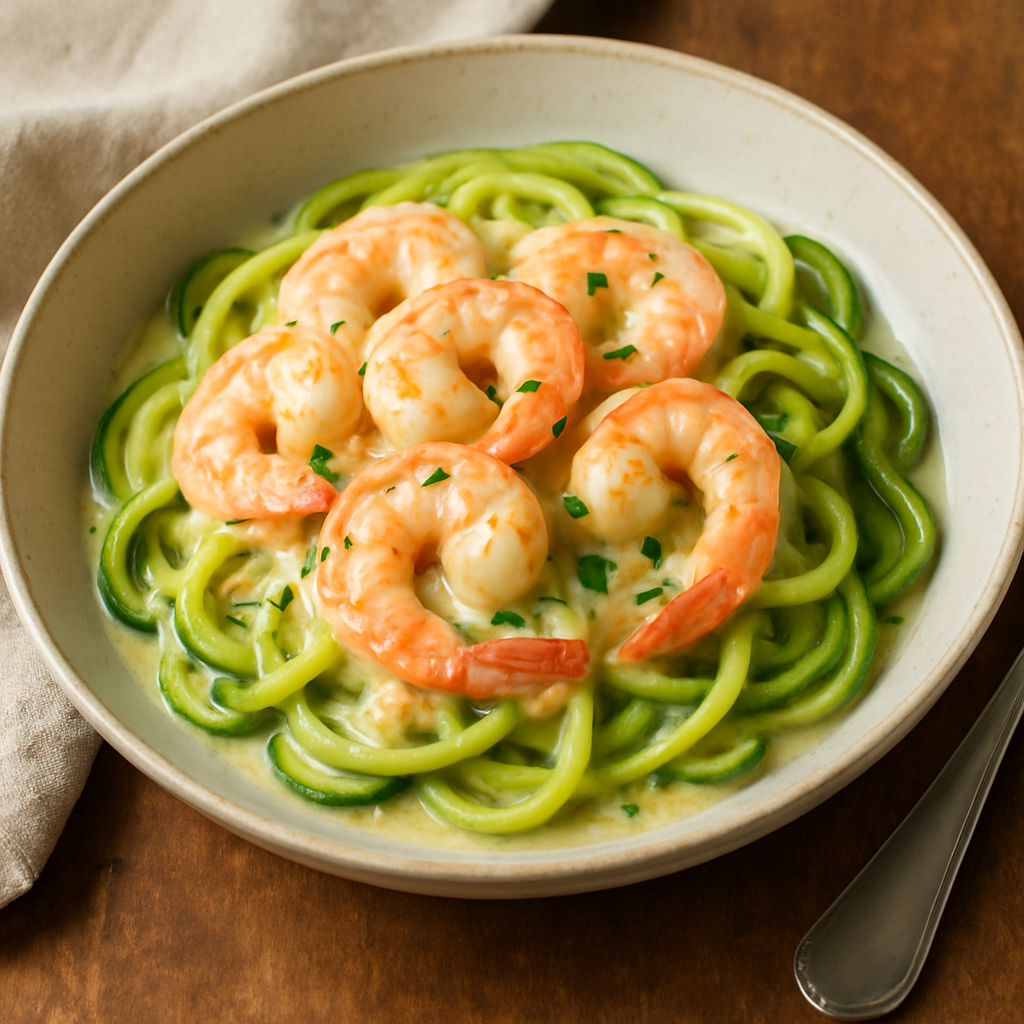
  • Creamy Garlic Shrimp over Zoodles

    Creamy Garlic Shrimp over Zoodles

    A quick, comforting, keto-friendly dish for two — perfect for the quiet December days between holiday meals.

    Intro

    There are nights in December when you don’t want another casserole, or another pan of leftovers — just something warm, gentle, and easy. This Creamy Garlic Shrimp over Zoodles is a small moment of calm on a plate: simple ingredients, soft flavors, and a little comfort you don’t have to think too hard about. Some meals aren’t meant to impress; they’re intended to steady you. This one does exactly that.

    🦐 Serves: 2

    Prep Time: 10 minutes

    Cook Time: 10 minutes

    Total Time: 20 minutes

    🧂 Ingredients

    For the Zoodles:

    • 2 medium zucchini, spiralized
    • 1 tbsp olive oil or butter
    • Salt and black pepper, to taste

    For the Garlic Shrimp:

    • 1 tbsp butter
    • 1 tbsp olive oil
    • 10–12 large shrimp (about 8 oz), peeled and deveined
    • 3 cloves garlic, minced
    • ½ cup heavy cream
    • ¼ cup grated Parmesan cheese
    • 1 tsp lemon juice
    • ¼ tsp crushed red pepper flakes (optional, for heat)
    • Salt and black pepper, to taste
    • 1 tbsp chopped parsley (optional, for garnish)

    👩🏽‍🍳 Instructions

    1. Prepare the Zoodles

    Heat 1 tbsp olive oil or butter in a large skillet over medium heat.

    Add spiralized zucchini, season lightly with salt and pepper, and sauté for 2–3 minutes, just until tender but not mushy.

    Transfer to a plate and set aside.

    (They’ll release some water — that’s fine; just drain before plating.)

    2. Cook the Shrimp

    In the same skillet, heat 1 tbsp butter + 1 tbsp olive oil over medium heat.

    Add the shrimp in a single layer, season with salt and pepper, and cook for 1–2 minutes per side until pink and opaque.

    Remove shrimp and set aside.

    3. Make the Creamy Garlic Sauce

    In the same skillet, add minced garlic and sauté for 30 seconds, just until fragrant.

    Pour in heavy cream and lemon juice, scraping up any browned bits with a wooden spoon.

    Lower the heat and stir in Parmesan cheese until melted and smooth.

    Add red pepper flakes if using.

    Simmer gently for 2–3 minutes until slightly thickened.

    4. Combine & Serve

    Return the shrimp to the skillet and coat them in the sauce.

    Toss in the zoodles, gently mixing to evenly coat everything.

    Cook for 1 more minute to warm through — avoid overcooking, or the zucchini will get soggy.

    5. Finish

    Garnish with fresh parsley and extra parmesan if desired.

    Serve immediately.

    🍽️ Approximate Nutrition (Per Serving)

    • Calories: 420
    • Net Carbs: 5g
    • Fat: 34g
    • Protein: 26g

    Kyle J. Hayes

    kylehayesblog.com

    Please like, comment, and share

    Resources for Hard Times

    If you’re looking for practical help, food support, or community resources, you can visit the Salt, Ink & Soul Resources Page.

    👉 Resources

  • The Kindness Hidden in a Pot of Soup

    The Kindness Hidden in a Pot of Soup

    Salt, Ink & Soul — Humanity Through Food Series

    Some foods impress, and foods that entertain, and foods that demand your attention with spice or technique or flair. And then there is soup. Soup doesn’t perform. It doesn’t shout for applause. It just shows up—quiet, warm, patient—and asks nothing from you except a moment to breathe.

    I’ve been thinking about that lately: the way soup holds a kind of kindness that almost feels ancient.

    When we were kids, a bowl of soup could fix almost anything.

    Cold hands from staying out far too long.

    A bruised knee.

    A disappointment you didn’t yet have words for.

    Your mother could ladle warmth into you faster than any doctor ever could. The steam rising from the bowl wasn’t just heat—it was shelter. It was a reminder that even if the world out there felt too sharp, too big, too cold, someone still wanted you warm.

    And what strikes me now, all these years later, is how that same kindness follows soup wherever it goes.

    Because the smile someone gives when they’re handed a bowl of soup—the real stuff, hot and fragrant and made with small care—is the same whether they’re nine years old coming in from the cold or a grown man standing outside a shelter on a hard December night. Soup doesn’t judge circumstance. It doesn’t sort people into deserving or not.

    It simply says: Here. Eat. You matter enough for this warmth.

    I’ve written before about my green chile chicken soup—how it’s one of the few dishes I make that feels almost ceremonial. Maybe it’s the Chile. Maybe it’s the slow simmer. Maybe it’s something about putting so much of yourself into a pot that you forget, until much later, just how much you made.

    This last time, the recipe made enough to feed an entire table. Or, in my case, one man for several days. I portioned it into bowls and froze them, little time capsules of comfort stacked in my freezer like quiet promises.

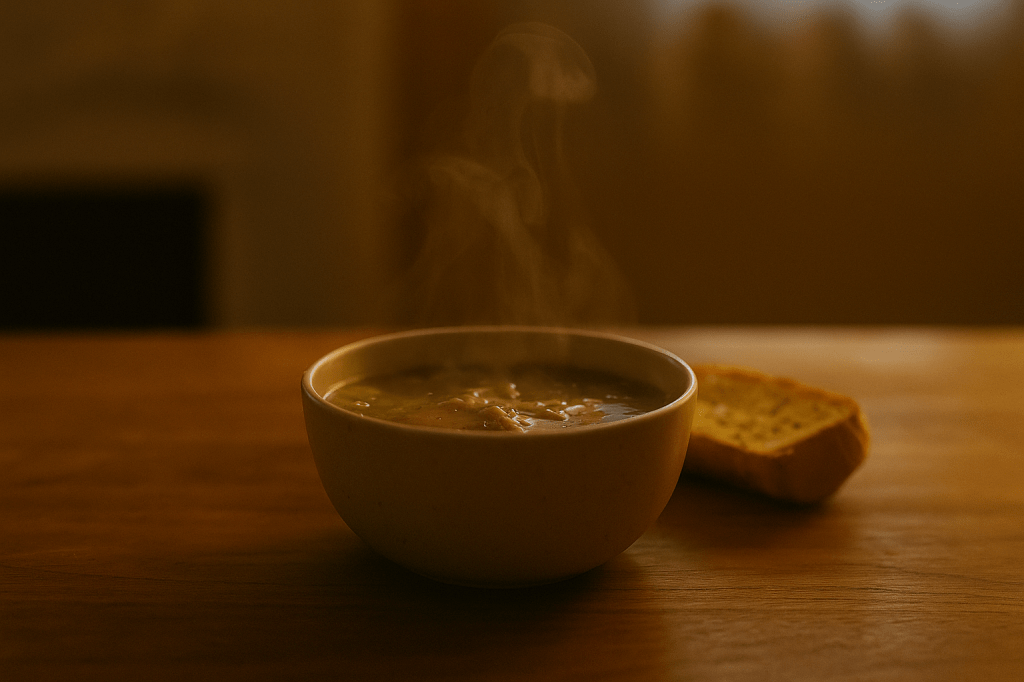
    Yesterday, I thawed one. But instead of rushing it, instead of taking the shortcut the microwave offers, I warmed it the slow way—in a pot, on low heat. Stirring occasionally. Letting the aroma rise up like a memory you didn’t realize you’d forgotten.

    Warming soup slowly feels like a kind of respect.

    A way of honoring the time it took to make it.

    A way of stepping back from the pace of everything else in life.

    When it was ready, I poured it into a bowl and paired it with garlic bread I’d tucked away in the freezer. Not fancy bread. Not homemade. But good enough—especially when its only job was to ensure that not a single drop of soup went uneaten.

    I’m generally not a fan of cold winters. The wind cuts too sharply. The days darken too early. The quiet feels heavier than I’d like to admit. But this soup—this simple bowl of warmth I made weeks ago and brought back to the stove—makes the season feel less like something to endure and more like something to move through gently.

    Soup does that.

    It softens hard days.

    It steadies you.

    It reminds you that survival doesn’t always have to be a battle—it can be as simple as letting something warm into your body and sitting still long enough to feel it.

    And maybe that’s why soup matters so much—not just to me, but to all of us.

    Because the ingredients may change. The hands that make it may differ. The kitchens may range from polished granite countertops to back-room burners in community centers. But the gift is the same:

    Here is warmth.

    Here is comfort.

    Here is something made with care, even if only for a moment.

    And in a world that asks so much of us, a simple bowl of soup can feel like an act of mercy.

    Kyle J. Hayes

    kylehayesblog.com

    Please like, comment, and share

    Resources for Hard Times

    If you’re looking for practical help, food support, or community resources, you can visit the Salt, Ink & Soul Resources Page.

    👉 Resources for Hard Times

    👉 Keto Green Chile Chicken Soup Recipe

    👉 Simple Garlic Chicken Soup Recipe

  • Salt, Ink & Soul Hot Chocolate Recipe

    Salt, Ink & Soul Hot Chocolate Recipe

    Simple. Comforting. Winter-warm.

    Ingredients

    • 2 cups whole milk (or oat/almond milk)
    • 2 tbsp unsweetened cocoa powder
    • 2 tbsp sugar (add more if you like it sweeter)
    • ¼ tsp vanilla extract
    • Pinch of salt
    • Optional:
      • 2 tbsp milk chocolate or semi-sweet chocolate chips
      • Cinnamon
      • Whipped cream
      • Marshmallows
      • A light dusting of cocoa on top

    Instructions

    1. Warm the Milk

    Warm the milk in a small saucepan over medium heat until it steams but does not boil.

    2. Mix the Cocoa + Sugar

    In a bowl, whisk the cocoa powder and Sugar with 2–3 tablespoons of warm milk to create a smooth paste.

    (This keeps it from clumping.)

    3. Combine

    Pour the cocoa paste into the warm milk. Whisk until fully dissolved.

    4. Add Vanilla + Salt

    Stir in the vanilla extract and a pinch of salt.

    (Yes — the salt matters. It deepens the chocolate flavor.)

    5. Optional Upgrade

    Add chocolate chips and stir until melted for a richer cup.

    6. Serve Warm

    Top with marshmallows, whipped cream, cinnamon, or drink it simply as it is.

    New Mexico Twist (Optional)

    • Add a tiny pinch of red chile powder for warmth.
    • Or grate in a little Mexican chocolate (Abuelita or Ibarra).

    Notes

    This recipe makes 2 cozy mugs — perfect for a winter movie night, a moment of stillness, or a slow Saturday morning.

    Kyle J. Hayes

    kylehayesblog.com

    Please like, comment, and share

    Resources for Hard Times

    If you’re looking for practical help, food support, or community resources, you can visit the Salt, Ink & Soul Resources Page.
    👉 Resources for Hard Times

  • Holding Warmth: A Winter Note on Hot Chocolate

    Holding Warmth: A Winter Note on Hot Chocolate

    Salt, Ink & Soul — Humanity Through Food Series

    I’ve written before about meals and movies and the strange way they become anchors—how a plate of fried chicken and mac and cheese can turn into a place you go, not just something you eat. But there’s another piece of winter I’ve skimmed past. Something quieter. Smaller. The kind of comfort that doesn’t shout, just shows up and waits for you.

    Hot chocolate.

    It sounds too simple to write about. A mug of warm milk and cocoa, maybe some sugar, maybe a few marshmallows if you’re feeling generous with yourself. It doesn’t have the complexity of a slow stew or the weight of a Sunday dinner. It’s not a full meal, not a feast, not a showpiece.

    But in the right moment, it’s everything.

      Because there are nights in winter when the cold doesn’t just sit on your skin—it finds its way into your chest. Nights when the wind outside feels personal, when the dark comes a little too early and stays a little too long. Nights when you’re not sure if you’re tired or lonely or just worn thin from carrying yourself through another year.

    On those nights, hot chocolate is less about flavor and more about permission.

    Permission to pause.

    Permission to slow down.

    Permission to hold something warm when you don’t quite know how to hold yourself.

    It doesn’t really matter how you make it.

    You may be the kind of person who pulls out a saucepan, warms the milk slowly, and whisks in cocoa, sugar, and a pinch of salt, like a small ceremony. Maybe you’re standing in the kitchen with the microwave humming, a torn packet in one hand and a spoon in the other, watching the powder dissolve into something richer than it has any right to be.

    Scratch-made or instant, cheap packet or gourmet—it almost doesn’t matter.

    Because what hot chocolate really gives you isn’t just taste.

    It’s a ritual.

      For me, there’s usually a screen involved.

    A movie.

    Usually a familiar one.

    The kind you return to in December, the way other people return to a family home.

    It could be a Christmas special you’ve seen every year since childhood.

    It could be a romantic comedy that has nothing to do with the holidays, but still feels like winter because of when you first watched it.

    Maybe it’s something you stumbled onto one rough December and never let go of because it carried you through a night you didn’t want to face alone.

    The details change, but the pattern remains the same.

    You queue up the movie.

    You make the hot chocolate.

    You sit.

    And somewhere in that simple routine—screen glowing, cocoa cooling, blanket pulled up just enough—the world outside gets a little quieter. The worries don’t vanish, but they lose their sharp edges. The ache doesn’t disappear, but it stops feeling like it’s trying to swallow you whole.

    You’re not fixed.

    But you’re held.

      We love to romanticize big gestures this time of year: grand gifts, huge gatherings, the perfect table arranged like a magazine spread. But most of us are kept alive by smaller, humbler things.

    A text from a friend.

    A song we forgot we needed.

    A mug of something warm between our hands on a night when the cold feels like too much.

    Hot chocolate is one of those small mercies.

    It doesn’t demand conversation. It doesn’t care if you’re dressed right, if your house is clean, if you’ve “made the most” of the season. It doesn’t ask you to perform joy.

    It just asks you to sit down, breathe, and let yourself be warmed.

    That’s probably why it’s worth writing about.

    In a year where everything feels loud—news, opinions, expectations—this little ritual stays soft. You don’t have to earn it. You don’t have to deserve it. You just have to be willing to stand in a kitchen for a few minutes and deliberately choose to be gentle with yourself.

      You choose a mug.

    You choose a movie.

    You choose not to rush.

    And for a little while, you remember what it feels like to be cared for, even if you’re the only one in the room.

    So no, hot chocolate isn’t complicated.

    It’s not fancy.

    It’s not the kind of thing people brag about making.

    But in the heart of winter, when the air is sharp and the nights are long, it becomes something more than a drink.

    It becomes a way of saying to yourself:

    You’re still here.

    You still deserve warmth.

    You can make a little of it with your own hands.

    And sometimes, on a cold Saturday night with a good movie playing and the wind pressing against the windows, that’s enough.

    Kyle J. Hayes

    kylehayesblog.com

    Please like, comment, and share

    Salt, Ink, & Soul Hot Chocolate recipe

    Resources for Hard Times

    If you’re looking for practical help, food support, or community resources, you can visit the Salt, Ink & Soul Resources Page.
    👉 Resources for Hard Times

  • When a Meal Becomes a Memory

    When a Meal Becomes a Memory

    Salt, Ink & Soul — Humanity Through Food Series

      Certain meals stop being food and start becoming something else.

    They begin as plates you throw together because you’re hungry, because it’s Sunday. After all, that’s what somebody’s mother or grandmother always made when the week finally exhaled. But somewhere along the way, without ceremony or announcement, that meal crosses a line. It stops being just dinner and turns into a place you go.

    You don’t just eat it.

    You return to it.

    We don’t talk about it out loud most of the time, but all of us have that one plate we reach for when we’re sad, or tired, or quietly unraveling. The one we lean on when we’re happy, too. The meal that shows up for birthdays and bad days, big news and no news. The one you make when you want to be alone with your thoughts, and the one you order when you don’t have it in you to talk about what you’re feeling, but you still need something that understands.

    Mine is simple. So simple it almost feels silly to admit.

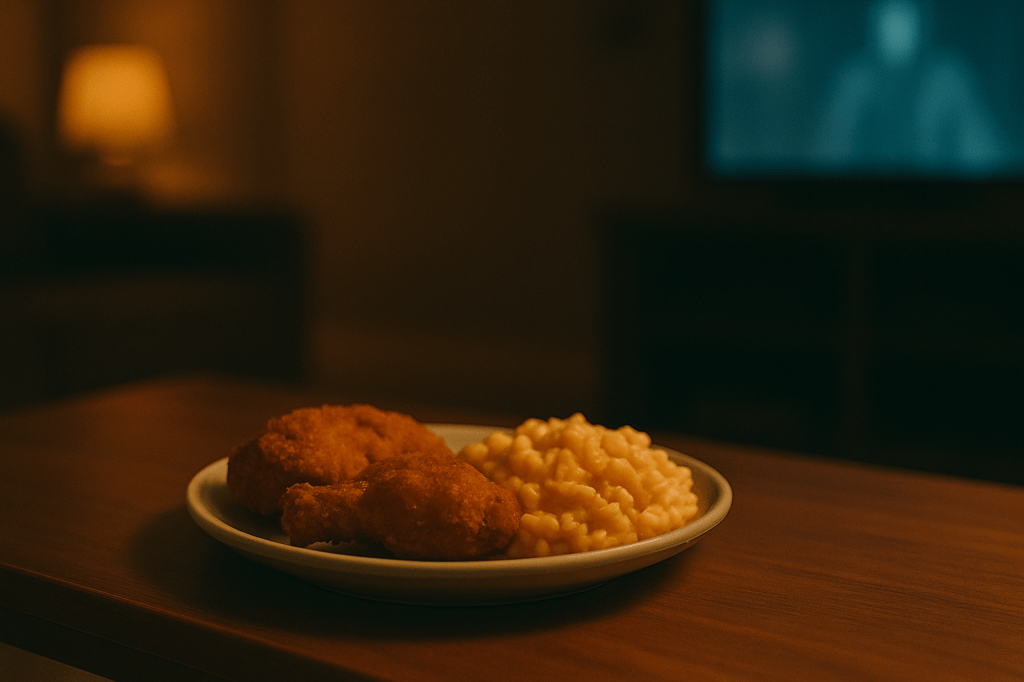
    Fried chicken and macaroni and cheese.

    That’s it.

    No fancy twist. No elevated version. Just what it is.

    From Sunday dinners to regular weekday meals, it has always been an all-purpose comfort for me. The kind of plate that doesn’t need a special occasion to make sense, but rises to meet any occasion anyway. I can’t tell you exactly when I started loving it this way. There wasn’t some cinematic moment where the camera zoomed in, and the music swelled. It just… settled in over time.

    Somewhere between childhood and now, that plate stopped being “fried chicken and mac and cheese” and became my meal. My anchor. My reset button.

      These days, it hits the hardest in December.

    Right now is the best time for it, because it’s wrapped up with another ritual: Christmas movies. The kind I’ve seen so many times I can mouth the lines before the actors say them, and yet it still doesn’t get old.

    For me, the centerpiece of that whole season is A Charlie Brown Christmas.

    I’ve watched it more times than I can count. I know when the music will swell, when the kids will dance on that small stage, when Charlie Brown will look around at the world and see something missing that nobody else wants to name. And yet, every time it comes on, it feels like I’m seeing it for the first time and coming home at the same time.

    There’s a rhythm to it now.

    I start the TV.

    I fix the plate—fried chicken, mac and cheese, nothing fancy, just right.

    I sit down and let both of them do what they do.

    The crunch of the chicken.

    The heavy, creamy weight of the mac.

    That soft, sad-sweet piano line drifting through the room.

    The screen glows. The fork moves. The world narrows down to a small circle of light, sound, and taste.

    And in that circle, I am okay.

      It’s not that the problems disappear. The bills don’t magically pay themselves because I put on a cartoon from the ’60s. The loneliness of December doesn’t evaporate because there’s cheese melting on my plate. The ghosts of old seasons, old arguments, old losses—they all still exist.

    But for the length of that special, with that plate in my lap, the sharp edges of life soften.

    The meal becomes more than calories.

    The movie becomes more than nostalgia.

    Together, they become a ritual—a small ceremony of survival.

    That’s the thing we don’t always say out loud: comfort isn’t always grand. Sometimes it’s just consistent. Sometimes it’s a plate you’ve had a hundred times and a story you know by heart showing up for you when you don’t have the words to ask for help.

    Fried chicken and mac and cheese aren’t heroic.

    Charlie Brown Christmas isn’t epic in scale.

    But somehow, when the house is quiet and the year feels heavier than you want to admit, they work together like a kind of emotional shorthand. The flavors tell your body, “You’ve been here before, and you made it through.” The movie tells your heart, “You’re not the only one who looks around and feels slightly out of place.”

      Over time, that combination becomes bigger than the sum of its parts.

    The meal calls up the memories: Sunday dinners, laughter from another room, people who were there and people who aren’t anymore. The movie folds around those memories like a blanket, wrapping the past and the present together in one long, uninterrupted feeling.

    That’s when a meal becomes a memory.

    Not because someone took a picture of it.

    Not because it landed on a holiday menu.

    But because you kept going back to it, again and again, until your life wrapped itself around it.

    You could take away the decorations, the gifts, the perfect tree, the curated seasonal playlists. And if I still had that plate and that movie, I’d still have something that felt like Christmas to me.

    It’s easy to dismiss these rituals as small, even trivial. Just comfort food. Just a cartoon. Just another December evening. But the older I get, the more I understand that these “justs” are the threads holding a lot of us together.

    Some people have big gatherings and full tables to mark this season. Others have a single plate and a glowing screen. Both are valid. Both are real. Both are ways of saying, “I’m still here. I’m still trying to feel something good.”

    So when I sit down with fried chicken, mac and cheese, and that familiar boy with the round head and heavy heart, I’m not just watching TV and eating dinner.

    I’m revisiting every version of myself that has ever needed that moment.

    Every year, I’ve made it this far.

    Every December, I’ve managed to carve out a little corner of warmth, even when the rest of the world felt cold.

    That’s the quiet power of a favorite meal in a favorite season: it doesn’t just fill you.

    It remembers you.

    It meets you where you are—sad, joyful, exhausted, hopeful, or somewhere tangled in between—and it says, “Come on. Sit down. We’ve been here before. We can do it again.”

    And in that way, a simple plate and a simple movie become something sacred.

    Kyle J. Hayes

    kylehayesblog.com

    Please like, comment, and share

    Resources for Hard Times

    If you’re looking for practical help, food support, or community resources, you can visit the Salt, Ink & Soul Resources Page.

    👉 Resources for Hard Times