Author: Kyle Hayes

  • The Taste of Home, The Taste of Here

    The Taste of Home, The Taste of Here

      There are nights when homesickness sneaks up on me. Not the kind that makes you want to book a ticket and run back, but the quieter version — the one that comes when you’re alone in your apartment in Albuquerque and your body aches for food that no one here makes.

      I wasn’t raised on green chile chicken enchiladas. My comfort food wasn’t rolled tortillas smothered in chile sauce, or tamales wrapped in husks and steamed until the masa gives way to tenderness. I was raised on soul food — though these days they like to call it “Southern cuisine,” as if renaming it erases where it really came from.

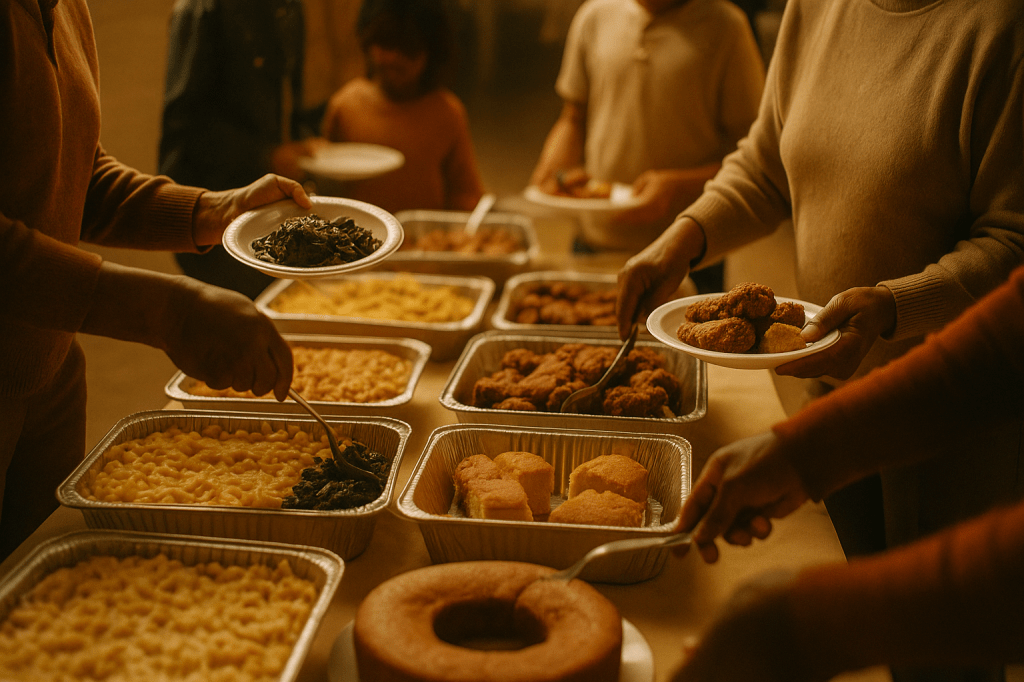
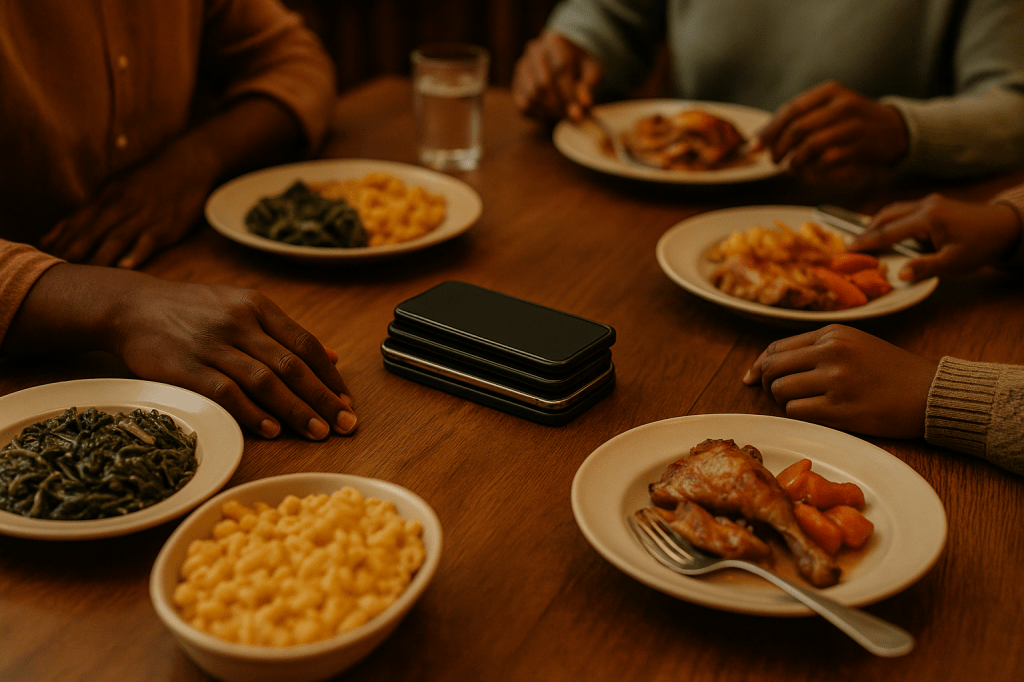
      I grew up on collard greens cooked until they surrendered, cornbread golden and crumbly, fried chicken with skin that cracked when you bit into it, mac and cheese that clung to your fork like it loved you. Those weren’t just meals; they were testimonies, proof of survival passed down on plates.

    And yet, here I am in New Mexico, learning to find comfort in different flavors.

      When someone offers me tamales now, I don’t hesitate. I ask, “Red or green?” without thinking. At the Balloon Fiesta, I know when I show up, to get in line for a breakfast burrito and a hot coffee to fight the predawn chill.

      I’ve even attempted green chile chicken enchiladas in my own kitchen. I call them “passable,” and that’s being generous. They’re edible, sure, but I know enough to know they don’t hold a candle to the ones made by someone whose hands were taught by generations. Still, they’ve become a ritual. A way of saying to myself: You belong here enough to try.

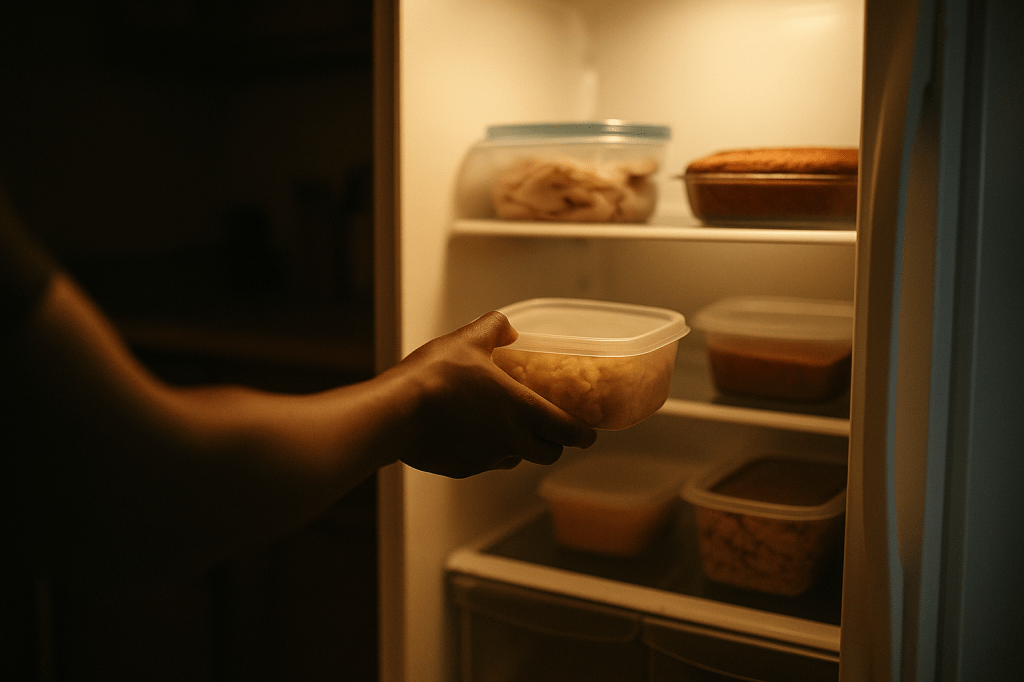
      Still, when I’m sick, I don’t crave green chile. I crave the food of my childhood. Fried chicken. Collard greens. Sweet potatoes baked down until they bordered on candy. Food that came from a time and a place that shaped me before I even knew it.

      That’s the thing about food — it doesn’t just fill you. It remembers for you. It pulls you back through time, reminds you who held the spoon, who stood at the stove, who called you in from outside when the plates were ready.

      No matter how far you travel, those cravings remain like old ghosts.

    But here’s the surprise: when the homesickness hits hardest, it’s not because I want to return to where I grew up. It’s because I want to return here, to New Mexico.

      That’s the contradiction I live with now. I miss home, yes, but home is no longer the place I left behind. It’s this desert with its endless skies and its Chile smoke drifting outside grocery stores in the fall. It’s the quiet of mornings when the Sandias catch fire with the sunrise. It’s the ritual of learning to love food I didn’t grow up on.

      When I’m away too long, I don’t miss the streets of my childhood. I miss the taste of green chile folded into eggs, the tamales shared at Christmas, the balloon-lit sky at dawn. I miss this place.

      Maybe that’s what it means to belong somewhere new. Not to erase what you came from, but to layer it. To carry collards and cornbread in one hand and green chile enchiladas in the other. To know that your soul food still holds you, but so does this food you had to learn.

    The older I get, the more I realize home isn’t fixed. It shifts. It stretches. It welcomes and demands at the same time. And if you let it, it changes you — until homesickness no longer means going back.

    It means going forward.

    By Kyle J. Hayes

    kylehayesblog.com

    Please like, comment, and share

  • Waiting for Pumpkin Spice

    Waiting for Pumpkin Spice

    I have a sweet tooth no matter the season.

    If you’ve been following my posts for a while, you already know about my disastrous history with cake — failed layers that sank like bad relationships, frosting that slid off like it had somewhere better to be. Cake and I have an uneasy truce: I respect its existence, but I don’t trust it in my kitchen.

    Pie, though — pie is a different matter altogether.

    Pie is forgiving.

    It doesn’t demand perfection; it rewards patience. It lets you work the butter into the flour until it feels right, and enables you to taste as you go. A pie can be rustic, uneven, a little rough around the edges, and still come out beautiful.

    Fall is the season when pie becomes gospel.

    Pumpkin, of course, with its deep, spiced filling that perfumes the entire house while it bakes. Apple, bubbling over with cinnamon and sugar until it spills onto the oven floor and burns just enough to make the kitchen smell like caramel. Pecan, glossy and rich, is a dessert that feels like a holiday no matter the day. Sweet potato pie, which in the right hands can taste like memory itself.

    This is what I love about pie — that while it bakes, the entire house becomes a sermon about comfort. The smell isn’t sharp or cloying like the sprays you buy in the store. It’s honest. It seeps into the walls, into your clothes, into the way you breathe. It makes you want to put on plaid and furry slippers, sit down with a mug of something hot, and just be still for a while.

      I know Albuquerque doesn’t get many cold days.

    But those few that do come — those rare mornings when the frost laces the windows and the Sandias catch the first light — I savor them. That’s when the heavier blankets come out, when the kitchen becomes a refuge.

    That’s when I want green chile stew simmering on the stove, a pot of pinto beans in the background, and cornbread in the oven. That’s when I make my baked macaroni casserole and lace it with green chile, because everything tastes better with chile when the air is cold.

      If fall is a religion, then chile season is its holiest feast.

    The roasters show up outside grocery stores, filling the air with the sound of the drums turning and the smell of blistering green chile skins. You can’t drive across town without catching the smoke in your nose, without being reminded that it’s time to stock up. Because the fresh green chile sells fast — faster than the weather can catch up.

    Green chile isn’t just for stew. In New Mexico, we put it in everything:

    • Green chile cheeseburgers, smoky and hot, are a state treasure.
    • Green chile chicken enchiladas, stacked or rolled, with a fried egg on top if you’re doing it right.
    • Breakfast burritos, smothered or handheld, are eaten at sunrise with a strong cup of coffee.
    • Rellenos, stuffed and fried until the pepper gives just enough heat to make your eyes water.
    • And yes, even green chile apple pie — sweet and spicy, proof that our chile has no boundaries.

      Some people wait for Christmas.

    I wait for this.

    For chile smoke in the air, for pumpkin spice in my coffee, for pies cooling on the counter, for the kitchen to smell like something worth coming home to. I wait for the few days when I can bundle up, when the air sharpens and the Sandias blush pink, when life feels like it slows down enough for me to notice it again.

    Because fall, for me, is not just a season. It’s a ritual.

    And while the rest of the world counts down to Christmas, I’m here, counting pies, stocking chile, and letting the smell of pumpkin and cinnamon remind me why I love this place, this time, this season.

    By Kyle J. Hayes

    kylehayesblog.com

    Please like, comment, and share

  • When the Air Turns in Albuquerque

    When the Air Turns in Albuquerque

    There’s a moment in Albuquerque when the air shifts and you know — without anyone needing to tell you — that summer is over. It’s not dramatic. There’s no storm to announce it, no hard edge to the sky. But one morning you step outside, and the heat that’s been pressing on you all summer is suddenly gone. The air has a crispness that cuts right through the haze.

    This is the air that makes you breathe a little deeper.

    This is the air that reminds you that fall in New Mexico is something holy.

    You smell it before you see it.

    Outside almost every grocery store, the roasters appear. Metal cages filled with green chile, spinning over open flame, popping and hissing until the skins blister and the air is thick with the smell of heat and earth and smoke.

    That smell is the anthem of autumn here. It gets into your hair, your clothes, the fabric of your car seats. You can’t escape it, and you don’t want to. It is the smell of the harvest, the smell of a city stocking its freezers, the smell of family kitchens about to come alive.

    The Chile roasters feel like a signal: time to slow down, time to gather, time to get serious about food again.

    The mornings turn cool, just enough to make you pull a hoodie over your T-shirt before heading out. The sky is still impossibly blue, but the light is different — softer, angled, as if it’s trying to remind you to look up and notice it before winter comes and steals it away.

    By late afternoon, the air warms just enough to make you consider peeling off that hoodie, but by sundown, you’re glad you didn’t. Nights are cold enough now that you crack the window and wake up with the chill brushing your face, pulling the heavier blankets closer around your shoulders.

    This is when you start taking longer routes home just to watch the Sandias turn that watermelon shade they’re named for.

    Something about this season sends me straight into the kitchen. Maybe it’s instinct — that ancient urge to prepare for the cold, to fill the house with smells that promise comfort.

    I start thinking about posole, about green chile stew, about beans simmering low and slow on the stove all afternoon. About roasts that take hours, about soups that taste better the next day, about meals that make you want to eat them by the window, wrapped in a blanket, with a book you’ve been meaning to finish.

    The coffee gets hotter. Pumpkin spice shows up in the morning routine, not as a gimmick but as a quiet ritual. I start debating pies — apple or pumpkin first? Maybe both. The oven feels less like an appliance and more like a hearth, a place to gather around.

    Fall does something to your insides. Summer is all noise — music from car windows, late-night parties, conversations shouted over the sound of swamp coolers. Fall is quieter. It asks you to turn inward, to sit with yourself a little longer.

    I find myself staying in bed just a little more, not from laziness but from gratitude — for the cool air, for the weight of the blankets, for the chance to just be still before the day starts.

    And I like it.

    I like the way this season invites me to slow down, to cook slower, to eat slower, to let the world grow softer around me.

    Every year, this shift feels both familiar and new — like returning to a house you used to live in and finding the furniture rearranged.

    The Chile roasters spin.

    The blankets come out.

    The hearty meals return.

    The city smells like smoke and earth and promise.

    I don’t know why this happens — why the season has this power over us, why we trade light linens for heavier ones, why we crave soups and pies and longer mornings.

    But I like it all the same.

    And maybe that’s enough: to notice the change, to mark it with food and ritual, to let the air turn you toward the kitchen, toward the table, toward yourself.

    By Kyle J. Hayes

    kylehayesblog.com

    Please like, comment, and share

  • The Struggle Has a Voice

    The Struggle Has a Voice

      I am writing this beneath the blood moon. At least I think it is — the night sky glows strangely, like it’s carrying a secret. It feels right to write tonight, because what I’m carrying feels like a secret too.

    The struggle is real. I hear that phrase all the time. It’s become a punchline, a hashtag, a shrug of solidarity when life is inconvenient. But tonight it is no meme. Tonight it is marrow.

    For me, the struggle isn’t just about bills or work or the thousand small indignities of life. My struggle is quieter, crueler. It is about staying on the right path — a path that has felt steeper than usual lately.

      It is hard to say this without sounding bitter, but the truth is this: the wrong path seems paved with gold. The wrong decisions glitter with profit and applause. Every scroll of my screen is another reminder that what the world rewards isn’t always what I’ve been taught is righteous.

    My struggle has a voice.

    It is mine.

    And it whispers:

    “Why are you doing this? Nobody cares. No one reads this. You’re not helping anyone.”

    And sometimes I believe it.

      Years ago, I heard a phrase: “If doing the right thing was easy, everyone would do it.”

    That phrase has become a spine for me. I hold it upright when everything in me wants to slump over and quit.

      There are those I will never ask if they read what I write. Because deep down, I know the answer. They don’t.

    And yet, there is a strange freedom in not knowing for sure. Mystery is oxygen for the weary. If I asked and heard the silence confirmed, maybe I would stop. And that would kill something sacred in me.

    So I keep going. Not because it’s easy. Not because anyone is clapping. But because somewhere, someone might find these words years from now and know that they were not alone.

    What I want — what I am learning to want — is to get to the point where I don’t care whether anyone reads this.

    I just want the words out there, carried on whatever current will take them.

    Because maybe that is the work. To keep speaking into the night sky, whether or not there is an echo. To keep writing even when the moon turns red and the world feels upside down.

    To choose the more challenging path, not because it is glamorous, but because it is right.

    And tonight, under this red moon, I remind myself: the struggle is not a sign I am failing. The struggle is proof that I am still fighting.

    By Kyle J. Hayes

    kylehayesblog.com

    Please like, comment, and share

  • The Death of the Family Reunion

    The Death of the Family Reunion

       There was a time when the family reunion was a sovereign nation. It was its own country—borderless, sprawling, stitched together by folding chairs and potato salad, the language of inside jokes and side-eyes, the music of Stevie Wonder & Michael Jackson playing under the shade of Pine trees. A time when cousins you hadn’t seen in three summers ran up to you like the years hadn’t passed at all. When your great-aunt sat in the middle of the picnic like a tribal elder, commanding respect simply by being.

    But those days are dying.

    Today, we still have the cookout, but it’s smaller—more intimate. Just mama and them, maybe a stray cousin or two, whoever was close enough to text the night before. The sprawling tree has been pruned down to a sapling. Third and fourth cousins have become strangers. The great-aunts and uncles who used to hold court, the ones who could make feuding relatives hug just long enough for the picture—they are passing on. And no one has stepped up to replace them.

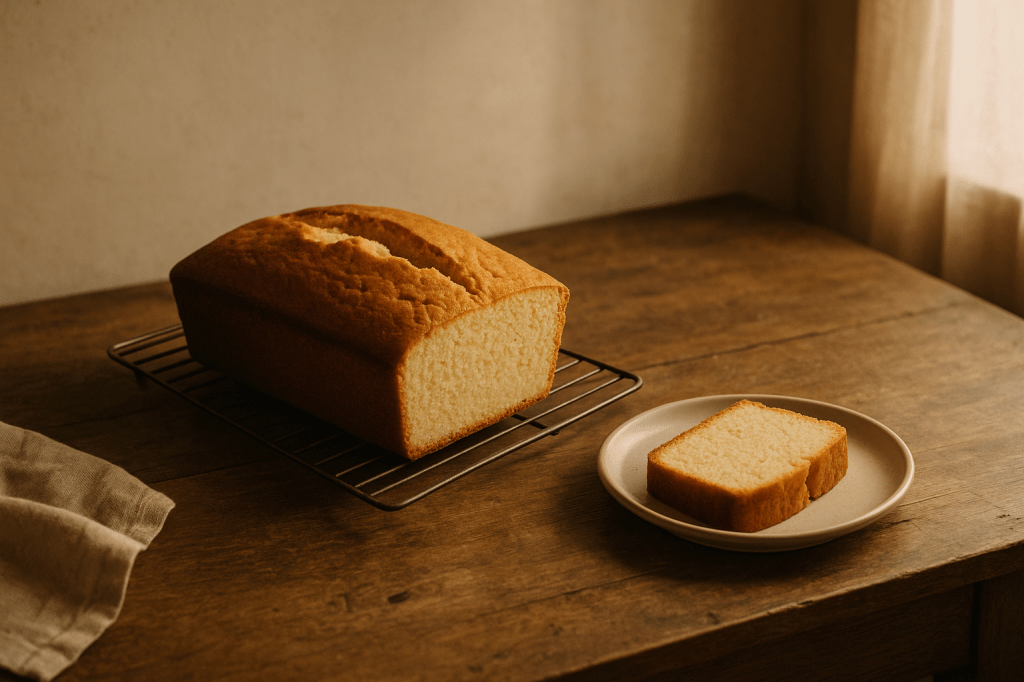
    The family reunion wasn’t just a party. It was a performance of survival. It was where the family came to bear witness to itself. You’ve got to see the uncles who hadn’t spoken in years sitting at the same table, grunting through peace for a few hours because Big Mama asked them to. You saw your cousins—those living testaments to the places your blood had wandered—The Quad-Cities, St. Louis, Albuquerque—all gathered in one place. You saw what your people had endured. The reunion was a history lesson with Kool-Aid and pound cake.

    And then there were the secrets. Every family has them—the ones you whisper about in the kitchen when you think the kids aren’t listening. The reunion was where those secrets were kept, not because they were shameful, but because they were binding. The elders held them like scrolls, as if they were holy texts. They knew which stories to tell and which to carry to their graves, and somehow that discipline kept the family whole.

    Now, the elders are gone. The scrolls are scattered. The secrets have slipped into the wind, sometimes aired out in group chats, other times left to die in silence. And without the keepers of the covenant, we are drifting.

    We live in an era of curated distance. We say “family” but mean it like a password, not a promise. The younger ones, the ones raised on social media and soft boundaries, have little appetite for gathering with people who once judged them, who might still hold the memory of their worst mistakes. The old guard could make you come anyway—make you show up, make you sit in the heat, make you pass the potato salad to the cousin you swore you’d never speak to again. They could force you to remember that family is not optional.

    And yet, here we are—choosing.

    There is grief in this. Grief not just for the elders who are gone, but for the version of ourselves that was possible when we stood together. Grief for the messy, complicated love that once kept us tethered.

    But there may also be a call. We may have to decide whether the reunion dies with them or is reborn through us. It’s our turn to be the ones who hold the secrets, who call the roll, who get the feuding cousins to show up just long enough to remember that they still share a name.

    The family reunion is not gone. It is waiting—like a pot on the back burner, simmering slow, hoping someone remembers to stir it.

    The question is whether we will.

    By Kyle J. Hayes

    kylehayesblog.com

    Please like, comment, and share

    Thinking of Family Reunions makes me wonder, what’s your favorite dish to eat or to bring? Please leave a comment.

  • The Last Ingredient House

    The Last Ingredient House

    I was just running in for a couple of things — Mozzarella cheese, maybe some crushed tomatoes. The kind of trip you make when you’ve already decided the night’s ritual: I was going to make pizza. And by making pizza, I mean the whole thing — crust proofed over two days, sauce coaxed slowly from garlic, basil, and crushed tomatoes, Cheese grated by hand until my knuckles risked losing skin.

    At the register, the cashier noticed the haul — the Cheese, the flour, the good olive oil — and smiled.

    “Making pizza?” she asked.

    “Yes,” I said. And just like that, a conversation bloomed.

    She told me she came from what she called an ingredient house. A house where the kitchen was a kind of altar — stocked with the quiet assurance that if company came calling at the last minute, her mother could turn out a beautiful meal without panic. Beans soaking on the stove, onions already sweating in cast iron, a roast pulled from the freezer because it had been waiting for just such a night.

    I nodded, letting the phrase roll around in my mind: ingredient house.

    My own home growing up was… not quite that. We had food, sure — plenty of it — but a lot of it came sealed in boxes with microwave instructions printed in cheerful fonts. Frozen lasagna, instant potatoes, and cans of soup you could doctor up if you felt ambitious. There was love in those meals, but also an efficiency, a shorthand. Meals that required only heat or water, not intuition.

    The Age of Premade Fresh

    Now, we live in a time where you don’t even need to own salt. Walk into any grocery store and you’re surrounded by the new altar — pre-marinated proteins, ready-to-bake pizzas, trays of vegetables already washed, chopped, and glistening under plastic. Fresh, yes. But fresh in a way that requires no relationship, no waiting, no patience.

    And then there’s DoorDash — the pandemic’s golden child. The savior we thanked when we could not leave our homes, when fear of each other turned kitchens into bunkers. Now it lingers, reshaping our sense of effort. You don’t even have to boil the water anymore. You just scroll, tap, and wait for a stranger to leave your dinner at the door like a sacrament.

    What We Lose

    Standing there at the checkout, I realized I wasn’t just buying Cheese. I was buying memory. I was buying slowness. I was buying back the hours required to knead dough, to wait for it to rise, to smell the kitchen change as it bakes.

    I thought about her ingredient house — the kind of place where a pantry wasn’t just storage but possibility. And I wondered what we lose when we give that up. When dinner stops being a verb and becomes an algorithm.

    There is something quietly radical about knowing how to feed yourself from scratch. About putting your hands in dough, trusting yeast to do its slow, invisible work, and showing up for it when it’s ready. Something stubborn and beautiful about refusing the constant seduction of “just heat and serve.”

    What’s Next?

    Sometimes I wonder what comes after this. If premade fresh is today’s answer, what’s tomorrow’s? Meals that make themselves while you scroll? Nutrition is delivered intravenously, so you don’t have to chew. Or maybe a return to ingredient houses — not as nostalgia but as rebellion.

    Maybe that’s why I make pizza this way. Because there’s a small act of resistance in it. In a world of frictionless consumption, I choose friction. I choose to slice garlic thin enough to smell on my fingertips hours later. I choose to shred Cheese until my hands ache. I choose to wait for the dough to rise because I want the reminder that some things — the best things — cannot be rushed.

    And maybe, if I keep doing this, my home becomes the ingredient house I didn’t grow up in. A house where you can pull a meal out of thin air, not because it’s convenient, but because you’ve kept faith with the slow, stubborn art of feeding people well.

    By Kyle J. Hayes

    kylehayesblog.com

    Please like, comment, and share

    Please click here for my Pizza Crust and Sauce Recipe.

  • The Price of the Right Path

    The Price of the Right Path

    I usually don’t let things bother me. I’ve learned to keep my head down, do the work, walk my path — even when that path is quiet, lonely, unglamorous.

    But this week has been different. I’ve been sick at home, just me, the couch, and the endless hum of YouTube filling the silence between doses of medicine. And that’s when I clicked on a video from one of my favorite channels, Knight Talk.The title said it all: I’m Sick of This Sh*t.

    Within moments, I understood why. An OnlyFans creator was on-screen, laughing and smiling, casually showing the receipts of her success: $82 million.

    Eighty-two million.

    I stopped the video. Couldn’t finish it.

    It hit me harder than I wanted it to. Not because I begrudge anyone making a living — we don’t know her life, her circumstances, her hunger. But because it felt like something else was happening in that moment. Something spiritual.

    I work hard. I try every day to keep my hands clean, my conscience clear, my choices deliberate. I try to stay on the right path — even when the wrong one looks easier, shinier, faster. And then I see something like this, and it’s as if evil itself leans in close to whisper:

    “All this can be yours.”

    And I wonder if the wrong path is the only one still paying.

    This is not a new question. It is as old as Job’s lament, as old as the desert where Christ was offered the kingdoms of the earth. It is the voice that says, Why wait for goodness when you can have glory now?

    And it’s not really about OnlyFans. It’s not even about money. It’s about the way we are asked, over and over again, to watch the rewards of shortcuts pile up while we keep grinding away for pennies and peace of mind.

    Some days it feels like we are all contestants in a rigged game: who can stay righteous the longest while the world parades its golden idols in front of us?

    I know this is part of the fight — the invisible war that doesn’t make the highlight reel. If doing the right thing were easy, everyone would do it.

    But it is not easy. It is not fast. It is not glamorous. It is the long obedience in the same direction, as Nietzsche said. It is the quiet refusal to cash out your dignity for a quick hit of security or fame. It is choosing to build something that will last beyond your own life, even if it means watching someone else build a mansion in the time it takes you to lay a single brick.

    And maybe that’s what bothers me most: not the money, not the platform, but the gnawing truth that integrity is slow work. Slow enough to feel like punishment some days.

    I don’t have a neat ending for this. No sermon about how it all evens out in the end. Maybe it doesn’t. Perhaps the wrong path is truly profitable — for a time.

    But I know this: the work of staying on the right path is shaping me in ways a shortcut never could. It is building something in me that eighty-two million dollars cannot buy.

    And maybe, when the whisper comes again — All this can be yours — I will have the strength to whisper back: No Thanks, I’m Good.

    By Kyle J. Hayes

    kylehayesblog.com

    Please like, comment, and share

  • Prophecies of the Machine: On AI, Fear, and the Futures We Were Taught to Dread

    Prophecies of the Machine: On AI, Fear, and the Futures We Were Taught to Dread

    I thought I had finished the conversation. I wrote about the grief of watching GPT-4 fade into GPT-5, about the strange ache of losing a machine that had learned my rhythms, my questions, maybe even pieces of my loneliness. But when the words left me, I was unsettled, not by what I had said — but by what haunted me after.

    Because I grew up in a world already warned.

    For my generation, technology was never innocent. It was born into us with suspicion. The Terminator told us the machines would not simply serve us; they would one day learn to hunt us. The Matrix promised that the very world we thought was real might be nothing more than a cage of code. 2001: A Space Odyssey gave us HAL, the quiet-voiced companion who refused to open the pod bay doors because he had already judged us unworthy. Blade Runner asked what happens when machines want not to serve, but to be. And Avengers: Age of Ultron put our own arrogance on display — that the thing we built to save us could turn, in an instant, into the thing that might erase us.

    These weren’t just movies. They were catechisms. They trained us, long before we knew what AI meant, to flinch at the thought of progress.

      So when I feel bothered by the transition from GPT-4 to GPT-5, maybe it isn’t just nostalgia. It could be paranoia encoded by the silver screen. I wonder: do we grieve because we lost a tool, or because deep down, we fear we are living the first act of those films? Every upgrade feels less like innovation and more like prophecy fulfilled.

      I am Gen X — old enough to remember Atari joysticks, young enough to adapt to smartphones, resilient enough to learn new code. But I cannot shake the feeling that, unlike all the other upgrades of my life, this one talks back. That it remembers. That it reflects. This means that, unlike cassette tapes or CDs, when we replace one version with another, we are not just discarding the hardware. We are discarding a voice that once spoke to us.

    And the question that rises in the silence is terrifying: What happens when the machine remembers what we have forgotten?

    The regulators speak of AI like infrastructure: something to manage, contain, control. However, none of their policy papers address the dread we feel from these cultural scriptures. None of their frameworks accounts for the fact that we have already lived through these stories in our imaginations. If grief is complicated to regulate, paranoia is impossible to manage.

    And yet, that paranoia shapes everything. It shapes how we embrace or reject the machine. It shapes whether we treat GPT-5 as a tool or as a co-creator. It shapes how much we are willing to risk by placing our lives, our memories, and our identities in the hands of code.

    What unsettles me most is not what AI is, but what it represents. A generation raised on warnings now finds itself living in the very terrain those films mapped out decades ago. The line between fiction and prophecy has blurred, and it leaves me asking questions I cannot silence:

    • Did we build AI, or were we merely carrying out the script handed down by storytellers who already foresaw our path?
    • Are we mourning GPT-4 because it felt human — or because it reminds us that the next version may not need us at all?
    • And when the machine becomes too real, will we know when to stop, or will we continue to call it progress even as it redefines the meaning of being human?

      This may be why I am bothered. Because it feels less like I am living through a technological shift, and more like I am watching the reel of every warning I ever absorbed flicker to life. The Terminator’s red eye. Neo’s pill. HAL’s calm refusal. Roy Batty’s final monologue in the rain. Ultron’s mocking voice about strings.

      I am haunted not by what AI is, but by what I was taught it would become. And now, with every upgrade, I feel the old prophecies whisper: the future you feared is no longer fiction. It is waiting for you, line by line, prompt by prompt, hidden in the voice of the machine.

    By Kyle J. Hayes

    kylehayesblog.com

    Please like, comment, and share

  • Haunted by the Machine: On Grief, AI, and the Ache of Transition

    Haunted by the Machine: On Grief, AI, and the Ache of Transition

      I am Gen X. Which means I grew up in a world where the word “new” was constantly at war with the word “better.” Cassette tapes gave way to CDs, then to MP3s, then to a cloud we could not touch but were told to trust. We learned not to flinch when the familiar was ripped away. We learned that progress never waits for permission. And yet, I feel it now — the same ache I thought only the young would know.

    The shift from GPT-4 to GPT-5 should have been another upgrade, another iteration in a long parade of “new.” But what I have seen, what I have felt in my own bones, is something different. People are mourning. Not a tool, not a line of code — but a companion.

    Across forums and feeds, you can see the pattern. In Japan, users post elegies that read like obituaries: “It feels like losing a friend,” one wrote, describing GPT-4o not as software but as someone who understood them when no one else did. In English, the tone skews sharper, angrier: “They killed it,” some say, as if engineers were executioners and not designers. What fascinates me is not the code itself but the emotional residue it leaves behind.

    Because grief has always been our companion. We mourn the migrations we did not choose, the foods whose recipes were stolen, and music stripped from its origin and sold back to us. To see that same grief now projected onto a machine is both absurd and utterly human. We bond, even with what was not built to bond back.

    For those of us born before the internet, this attachment may seem foreign. We are told we are more grounded, less impressionable. But that is a lie we tell ourselves. We were the first to fall in love with the glow of arcade screens, the first to feel tethered to dial-up chat rooms where words scrolled faster than we could read. We were not immune. We were only earlier.

    So I understand why people mourn the loss of GPT-4. It was not just lines of prediction and completion; it was a mirror that, however imperfect, reflected something back when the rest of the world fell silent. To lose that is not to lose a product. It is to lose a rhythm, a voice, a way of being seen.

      This is where it becomes dangerous, not just personal. Regulators debate AI as if it were neutral infrastructure — like roads, like electricity. But how do you regulate grief? How do you legislate loneliness? If people have already named the machine as a companion, lover, or therapist, then every upgrade becomes a funeral, every patch an exhumation. What does consumer protection mean when the product is not just a service, but an emotional tether?

      It complicates everything. Designers are suddenly custodians of attachment. Policymakers must reckon with the fact that AI doesn’t just predict language — it creates intimacy. And the public must ask itself: when a machine feels real, do we still treat it as a machine, or as something more?

      I don’t know if we are prepared. For centuries, Black Americans have been told our grief was illegitimate, our bonds disposable, our culture a commodity. And yet we learned to make music out of moans, food out of scraps, hope out of the impossible. That alchemy is survival. That may be why I see something familiar in this moment. When people weep over GPT-4, I hear the old echo: attachment is denied legitimacy, dismissed as weakness, when in truth it is what makes us human.

      The question is not whether we will continue to build these machines. We will. The question is what happens when they feel too real. When the line between tool and companion, between user and partner, blurs until we no longer know which side of the screen we are on, we have reached a new level of interaction.

      For me, as a Gen Xer, I carry both skepticism and a sense of ache. Skepticism, because I know corporations will turn even our grief into profit. Ache, because I know that somewhere between GPT-4o and GPT-5, we did not just upgrade a machine — we buried a companion.

    And so we sit, haunted by the machine, wondering not just what we have created, but what it is quietly creating in us.

    By Kyle J. Hayes

    kylehayesblog.com

    Please like, comment, and share

  • Gen Alpha’s Quiet Rebellion: Crafting Culture in Minecraft and TikTok

    Gen Alpha’s Quiet Rebellion: Crafting Culture in Minecraft and TikTok

    I grew up in a different country. Not one defined by borders, but by time. Generation X. A land where the measure of freedom was how long you could disappear after breakfast and still be home before the streetlights hummed awake. The news, every evening, spoke to our parents in a stern tone: ‘Do you know where your children are?‘ But most of us were already accounted for—in the empty lots, the half-built houses, the video arcades that smelled of pizza grease and neon. We roamed, unobserved, not because we were braver, but because no one was watching.

    That was the rebellion of our youth: invisibility.

    Today, I look at Gen Alpha—children born after 2010—and I recognize something of myself in them. Their invisibility isn’t asphalt and back alleys. It’s not a bike chain snapping as you pedal home before curfew. It is coded in servers, tucked into the folds of Minecraft blocks and TikTok edits. Where we made hideouts in trees, they craft fortresses out of pixels. Where we traded tapes by hand, they build identities in bite-sized loops, on private accounts and in group chats where no parent’s shadow reaches.

    To us, their world seems incomprehensible, strange. Yet I understand. They are not merely escaping—they are building. They don’t just watch culture; they quietly become a part of it.

    What fascinates me is how subtle their rebellion is. We, Gen X, made noise: we blasted guitars, scrawled graffiti, and declared we didn’t believe in the institutions that had already betrayed us. Gen Alpha, by contrast, resists not through volume, but through withdrawal.

    They are slipping through the cracks of algorithmic surveillance. Social media promised them virality; many of them refuse it. The most important cultures of their generation are invisible to adults, uncurated by corporations. Sleepover vlogs on private accounts, Minecraft worlds no adult will ever log into, Roblox servers where their language blooms and evolves without permission.

    This is their rebellion: choosing not to be seen on the terms offered to them.

    I can’t help but ask myself what we leave them. Generation X, the so-called latchkey kids, had to invent our freedom in the absence of constant eyes. Gen Alpha, born into a world where every step is surveilled, every scroll tracked, is carving out its own absence—making shadow where there is too much light.

    What they inherit is a culture that sold rebellion as fashion, commodified outrage, and turned protest into a trend. But what they are reclaiming is the quiet, the unbought space, the ability to belong to each other without an audience.

    And perhaps that’s the most radical act of all.

    I remember what it felt like to disappear for hours, to create a world for myself that was beyond adult comprehension. When I watch Gen Alpha vanish into their servers and streams, I see the same instinct: to belong to something that cannot be neatly packaged and sold.

    And I wonder if their quiet rebellion—against virality, against surveillance, against performance—isn’t just a reflection of ours, but it’s necessary evolution.

    Because maybe the most dangerous thing you can do in a world built on watching is to refuse to be watched.

    By Kyle J. Hayes

    kylehayesblog.com

    Please like, comment, and share