
Category: Reflections

  • The Sandwich Press Deserved Better

    The Sandwich Press Deserved Better

    Sometimes you just want a good sandwich.

    Not the sad one built over the sink with the refrigerator door hanging open. Not the emergency sandwich. Not the one made because hunger showed up, and standards quietly left the room.

    That sandwich has its place.

    It has saved many of us.

    But this was not that.

    I wanted bread. Warmth. A little crunch. Something that felt like lunch had bothered to put on a clean shirt.

    I had been thinking about a Caprese salad. Tomato. Mozzarella. Basil. Olive oil. Balsamic glaze. Simple ingredients. Dangerous in the wrong hands because there is nowhere to hide.

    But I did not want a salad.

    I wanted focaccia.

    I wanted the sandwich press, that forgotten little appliance sitting there like an unemployed line cook, to do something useful.

    So I made a Caprese Focaccia Press.

    Focaccia already knows what it is. Oil in the crumb. Salt on the skin. Soft, sturdy, ready for trouble. Press it, and it becomes better. Crisp outside. Warm inside. Mozzarella softening into the tomato. Basil is waking up. Pesto is getting loud in the best way. A small thread of balsamic pulls the whole thing together.

    That is the thing about a good sandwich.

    It is not just filling between bread.

    It is architecture.

    Pressure and tenderness.

    Restraint and appetite.

    This is not fancy food.

    It is not chef food.

    It is home food with better posture.

    Caprese Focaccia Press

    Ingredients

    Makes 1 large sandwich or 2 smaller servings

    • 1 piece of focaccia bread, about 15 x 20 cm, sliced in half horizontally
    • 100–125 g fresh mozzarella, sliced
    • 1 medium tomato, about 120–150 g, thinly sliced
    • 6–8 fresh basil leaves
    • 1–2 tablespoons pesto or 1 tablespoon olive oil
    • 1–2 teaspoons balsamic glaze
    • Pinch of salt
    • Pinch of black pepper
    • 1 teaspoon olive oil, optional, for brushing the outside of the bread

    Optional Additions

    • 15–20 g arugula
    • 2–3 slices prosciutto
    • 30–40 g roasted red peppers, drained and patted dry

    Method

    1. Prepare the tomato

    Slice the tomato thinly.

    Place the slices on a paper towel and gently pat them dry.

    This small step matters. It keeps the sandwich from becoming soggy.

    2. Prepare the focaccia

    Slice the focaccia horizontally in half to create a top and bottom piece.

    Spread 1–2 tablespoons of pesto on the inside of the bread.

    If using olive oil instead of pesto, drizzle about 1 tablespoon over the inside of the focaccia.

    3. Build the sandwich

    Layer the sliced mozzarella over the bottom half of the focaccia.

    Add the tomato slices.

    Season the tomato lightly with salt and black pepper.

    Add the fresh basil leaves.

    Drizzle 1–2 teaspoons of balsamic glaze over the filling.

    Use a light hand here.

    The goal is flavor, not a wet sandwich.

    Add any optional ingredients, if using.

    Close the sandwich with the top half of the focaccia.

    4. Brush the outside

    If the focaccia feels dry, lightly brush the outside with 1 teaspoon olive oil.

    You do not need much.

    Focaccia already carries oil in its bones.

    5. Press the sandwich

    Heat a sandwich press or panini press.

    Place the sandwich inside and press for 4–6 minutes, or until the outside is golden and crisp and the mozzarella has softened.

    If using a skillet, place the sandwich in the pan over medium heat. Press it down gently with another pan or a heavy spatula. Cook for 3–4 minutes per side, until crisp and warmed through.

    6. Rest and serve

    Let the sandwich rest for 1–2 minutes before cutting.

    This helps the cheese settle and keeps the filling from sliding out.

    Cut in half and serve warm.

    Notes From My Kitchen

    Pat the tomato dry.

    Do not overdo the balsamic glaze.

    Let the sandwich rest before cutting.

    Those are small things, but small things often decide whether a meal feels cared for.

    Kyle J. Hayes

    kylehayesblog.com

    Please like, comment, and share

    Resources for Hard Times

    If you’re looking for practical help, food support, or community resources, you can visit the Salt, Ink & Soul Resources Page.

    👉 Resources for Hard Times

  • Trying to Be Useful

    Trying to Be Useful

    Hello all,

    I have always been what some people call book smart.

    I know things.

    Some useful.

    Some not.

    Some filed away in the crowded rooms of my mind for reasons even I do not fully understand.

    I can remember fragments of history.

    A line from a song.

    The meaning behind a movement.

    The reason something happened long before I was born, and why it still has its hand around the present.

    For much of my life, knowledge has been a tool.

    It gave shape to things that hurt.

    It gave language to silence.

    It gave me something to hold when the world felt too large and too indifferent.

    But lately, I have been reminded of something humbling.

    There are moments when knowledge is not enough.

    I have another friend battling a terrible illness, and I find myself standing in that helpless place where the mind keeps reaching for answers and comes back with empty hands.

    I know the power of prayer.

    I believe in prayer.

    I believe in the quiet force of it.

    I believe there are rooms we cannot enter, battles we cannot fight directly, pain we cannot remove, and still our prayers can travel where our hands cannot.

    But I would be lying if I said prayer has quieted all of me.

    Because there is another part of me that wants to do more.

    That part of me wants a list.

    A plan.

    A solution.

    A way to fix what is breaking.

    A way to step into the storm and make myself useful.

    And that is where the ache begins.

    I am used to figuring things out. I am used to turning problems over, studying the corners, looking for the door everyone else missed. I am used to believing that if I sit with something long enough, I can find a path.

    But illness does not always offer a path.

    Sometimes illness is a locked room.

    Sometimes love stands outside of it with no key.

    That is a hard thing for a person like me to admit.

    Because when someone you care about is suffering, being still can feel like failure. Waiting can feel like abandonment. Saying “I am praying for you” can feel small, even when it is not.

    And maybe that is the difficulty.

    Not that prayer is weak.

    But that love is restless.

    Love wants hands.

    Love wants legs.

    Love wants to carry groceries, pay bills, sit in hospital rooms, answer phones, make soup, raise money, hold silence, and somehow bargain with the universe for more time.

    Love does not like standing helpless.

    And yet, so much of being human is learning how to stand in places where we cannot control the outcome.

    That may be one of the hardest lessons of adulthood. Not responsibility. Not discipline. Not survival. But the knowledge that you can love someone deeply and still not be able to save them from what they are facing.

    There is a particular kind of pain in that.

    It strips away the illusion that intelligence is protection. It reminds you that all the books, all the facts, all the carefully stored knowledge in the world cannot always tell you what to do when someone you love is hurting.

    And maybe that is why I have felt useless lately.

    Not because I am useless.

    But because the tools I usually trust do not seem large enough for the moment.

    Still, I am trying to remember that usefulness does not always look like rescue.

    Sometimes usefulness is presence.

    Sometimes it is a phone call.

    A message.

    A prayer whispered when no one is watching.

    A meal was dropped off without needing credit.

    A donation.

    A shared link.

    A ride.

    A quiet check-in that does not demand a response.

    A willingness to keep showing up after the first wave of concern has passed.

    Sometimes, usefulness is not solving the pain.

    Sometimes it refuses to let someone feel alone inside it.

    I am thinking about that now.

    I am praying.

    I am listening.

    I am looking for what can be done.

    Maybe that is where I begin.

    Not with the grand gesture.

    Not with the perfect answer.

    Not with the fantasy that I can fix what illness has broken.

    But with what I have.

    My prayers.

    My words.

    My books.

    My small platform.

    My willingness to ask others to care with me.

    Maybe that is nothing.

    Maybe, in a world that often teaches us to look away from suffering because it makes us uncomfortable, choosing to stay near is already an act of love.

    I do not yet know exactly what to do.

    That is the honest truth.

    But I know I do not want to do nothing.

    So I will keep praying.

    I will keep thinking.

    I will keep looking for the things my hands can do.

    And maybe that is what care becomes when we are out of answers.

    A prayer first.

    Then a step.

    Then another.

    Kyle J. Hayes

    kylehayesblog.com

    If this found you at the right time,

    Feel free to like, comment, or share it with someone who might need it too.

    Resources for Hard Times

    If you’re looking for practical help, food support, or community resources, you can visit the Salt, Ink & Soul Resources Page.
    👉 Resources for Hard Times

  • Time, Distance, and the Things We Call Family

    Time, Distance, and the Things We Call Family

    It doesn’t take much to realize how far we’ve drifted.

    Not in miles.

    Not even in years.

    In the quiet spaces

    where we used to sit together.

    We move now.

    We relocate.

    We begin again in other places.

    And somewhere in that movement, something else moves too.

    Something harder to name.

    The habit of being known.

    Our families are not always close.

    Sometimes that’s geography.

    Sometimes it isn’t.

    You can live down the street from someone

    and still feel like a stranger to them.

    So we tell ourselves the past was different.

    That families were closer.

    That people showed up more.

    But was it?

    Or do we remember what we need to?

    Memory softens things.

    It keeps the warmth.

    Let the rest fade.

    And maybe that’s how we survive.

    But it leaves us with a question—

    What do we really mean when we say family?

    Because family is supposed to be more than a relation.

    More than shared blood or a last name.

    It’s supposed to be the place

    where your existence isn’t negotiated.

    The room where you don’t have to prove your worth.

    The table where your presence is enough.

    It’s supposed to be a shelter.

    Not just from the world—

    But from the weight of it.

    A place you can arrive tired, uncertain, and undone…

    and still be received.

    Not fixed.

    Not judged.

    Received.

    It’s supposed to be people who remember you

    without holding you hostage to who you used to be.

    People who let you grow.

    Who makes room for who you’re becoming?

    People who don’t keep score.

    Who shows up with what they have—

    a meal, a call, a ride, a hand on your back—

    and remind you that you’re not alone.

    That’s what family is supposed to mean.

    But supposed to is a heavy phrase.

    Because for many,

    that wasn’t the truth.

    For some, family was distant.

    Or silence.

    Or something that looked like love

    but never felt like safety.

    And if we’re honest,

    people come and go.

    We accept that with friends.

    But is family really different?

    Sometimes it is.

    Sometimes it isn’t.

    People leave.

    Through distance.

    Through time.

    Through things we don’t always say out loud.

    And sometimes the ones who stay

    are the ones who choose to.

    Not because they have to.

    Because they want to.

    Friendship has done the work

    we were told only family could do.

    Showing up.

    Holding space.

    Staying.

    Which means maybe the question isn’t

    who we’re related to.

    It could be simpler than that.

    Who shows up?

    Who makes room?

    Who tells the truth gently.

    Who lets you be more than who you used to be?

    That might be family.

    And it might not always look the way we were taught it should.

    Time and distance don’t just pull people apart.

    They reveal things.

    Who was there out of habit.

    And who was there out of care?

    Who can survive the space

    and still come back with something human?

    And who only knew how to love you

    when you were close enough to reach.

    Family isn’t about perfection.

    Or permanence.

    Maybe it’s about home.

    The people who let you set something down.

    The people who don’t make you smaller to stay.

    The people who can sit with you

    after everything has shifted…

    and still recognize you.

    If you have that, hold it.

    If you didn’t,

    That absence isn’t your fault.

    And if you’re still looking—

    remember this:

    Family has always been more than blood.

    Kyle J. Hayes

    kylehayesblog.com

    If this found you at the right time,

    Feel free to like, comment, or share it with someone who might need it too.

    Resources for Hard Times

    If you’re looking for practical help, food support, or community resources, you can visit the Salt, Ink & Soul Resources Page.

    👉 Resources for Hard Times

  • The Table Still Matters

    The Table Still Matters

    I try not to say much on Sundays.

    But this has been sitting with me.

    Food costs more now.

    You feel it at the store.

    You feel it before you even decide what to cook.

    But the part that stays with me isn’t just the price.

    It’s what we’re slowly letting go of.

    Sunday used to mean something.

    Not because everything was easier.

    But because people made time anyway.

    Now we go out.

    We wait.

    We pay.

    We leave.

    And somewhere in that, something quieter disappears.

    So maybe… stay home.

    Cook what you can.

    Nothing complicated.

    Nothing perfect.

    Sit down with people who know you.

    People who don’t need a menu to understand you.

    The table doesn’t need much.

    Just a place.

    A little time.

    Someone willing to share it.

    That might still be enough.

    Kyle J. Hayes

    kylehayesblog.com

    If this found you at the right time,

    Feel free to like, comment, or share it with someone who might need it too.

    Resources for Hard Times

    If you’re looking for practical help, food support, or community resources, you can visit the Salt, Ink & Soul Resources Page.
    👉 Resources for Hard Times

  • Honey Butter Brown Sugar Detroit-Style Dessert Pizza

    Honey Butter Brown Sugar Detroit-Style Dessert Pizza

    A Different Kind of Ending

    There’s a moment at the end of a meal where you realize you don’t need more.

    Not more weight. Not more richness. Not something trying to outdo what came before it.

    Just something that settles in gently.

    Something warm. Slightly sweet. Familiar in a way that doesn’t ask for attention.

    This comes from the same place as the main dish.

    Same dough. At the same time. Same care.

    It just chooses a different direction.

    Ingredients

    Base

    Topping

    • 3 tablespoons unsalted butter
    • ¼ cup brown sugar
    • 1–2 tablespoons honey
    • Pinch of sea salt

       Method

    1. Bring the dough back

    Remove your overnight dough from the refrigerator about 2 hours before baking.

    Let it come to room temperature.

    Transfer it to your well-oiled 9×13 pan and gently stretch it toward the edges.

    If it resists, let it rest.

    Then come back to it.

    Let it rise until it looks soft. Slightly puffy. Ready.

    2. Prepare the butter

    Melt the butter gently over low heat.

    If you want to take it a step further, let it cook just long enough to turn lightly golden—until it smells slightly nutty.

    Not dark. Not burnt. Just deeper.

    3. Build the base

    Brush the dough generously with the melted butter.

    Sprinkle the brown sugar evenly across the surface.

    Not too much. Just enough to melt into the dough as it bakes.

    4. Bake

    Preheat your oven to 500°F (or as high as it will go).

    Bake for 12–15 minutes.

    You’re looking for:

    • A golden surface
    • Light caramelization
    • Edges that crisp slightly against the pan

    5. Finish

    As soon as it comes out of the oven:

    • Drizzle with honey
    • Add a small pinch of sea salt

    Let it rest for about 5 minutes.

    Then slice.

    This wasn’t the beginning.

    It started with something structured. Something that took time.

    Not Every Square Pizza Is Detroit Style 

    And somewhere in between, there was something that brought it back into balance.

    What Cuts Through the Richness 

    This is just where it settles.

    Kyle J. Hayes

    kylehayesblog.com

    If this found you at the right time,

    Feel free to like, comment, or share it with someone who might need it too.

    Resources for Hard Times

    If you’re looking for practical help, food support, or community resources, you can visit the Salt, Ink & Soul Resources Page.

    👉 Resources for Hard Times

  • Crisp Garden Salad with Lemon Shallot Vinaigrette

    Crisp Garden Salad with Lemon Shallot Vinaigrette

    A lighter, sharper version built to sit beside Detroit-style pizza

    Ingredients

    Salad

    • 1 head Boston lettuce, washed and torn into bite-size pieces
    • 3 red radishes (or watermelon/breakfast radish), very thinly sliced
    • 1 large or 2 medium carrots, peeled and coarsely grated
    • 1 apple (Granny Smith), cored and julienned
    • 3 tablespoons chopped fresh chives (or mix with parsley, mint, or basil)

    Lemon Shallot Vinaigrette

    • 3 tablespoons extra-virgin olive oil
    • 2 tablespoons fresh lemon juice
    • 1 tablespoon finely minced shallot (or a small amount of red onion)
    • 1 teaspoon Dijon mustard
    • ¾ teaspoon salt (adjust to taste)
    • ¼ teaspoon freshly ground black pepper

    Method

    1. Make the vinaigrette

    In a small bowl, whisk together:

    • Lemon juice
    • Shallot
    • Dijon mustard
    • Salt and pepper

    Then slowly whisk in the olive oil until lightly emulsified.

    Taste it.

    It should feel bright first—then settle.

    2. Prepare the salad

    In a large bowl, combine:

    • Lettuce
    • Radishes
    • Carrots
    • Apple
    • Chives or herbs

      If prepping ahead:

    • Toss apples lightly in lemon juice to prevent browning

    3. Dress just before serving

    Drizzle a small amount of vinaigrette over the salad and toss gently.

      Important:

    • Use less than you think you need
    • You can always add more
    • You can’t take it away

    4. Serve immediately

    Once dressed, the salad should be served right away.

    This isn’t a salad that waits.

    Notes From My Kitchen

    This wasn’t meant to stand on its own.

    It sits beside something richer. Something structured. Something that asked for time.

    If you haven’t seen it yet, the beginning starts here:

    Not Every Square Pizza Is Detroit Style 

    And after this—

    There’s something softer waiting.

    A different kind of ending. Built from the same foundation, but moving in another direction:

    → A Different Kind of Ending (Honey Butter Detroit-Style Dessert Pizza) (tomorrow)

    This is the middle of it.

    A meal that moves in parts.

    Not all at once. Not rushed.

    Just enough at a time to understand what’s in front of you

    before moving on to the next step.

    Kyle J. Hayes

    kylehayesblog.com

    If this found you at the right time,

    Feel free to like, comment, or share it with someone who might need it too.

    Resources for Hard Times

    If you’re looking for practical help, food support, or community resources, you can visit the Salt, Ink & Soul Resources Page.

    👉 Resources for Hard Times

  • When a Rap Battle Becomes a Reckoning

    When a Rap Battle Becomes a Reckoning

    Two years ago, we didn’t yet understand what we were watching.

    It looked small at first. Familiar. Another flare-up in a genre built on pressure and pride. Another moment where two men sharpened language into something meant to cut. We have seen that before. We have been taught to expect it. Hip-hop has always known how to turn conflict into rhythm, into spectacle, into something you can nod your head to even as it bruises.

    But this felt different.

    Not immediately. Not at the beginning.

    It took time.

    That is how earthquakes work. The ground does not announce itself all at once. It shifts quietly beneath you, rearranging things you thought were fixed, until one day you realize the landscape is not what it was.

    And by then, it’s already happened.

    I did not arrive at Kendrick Lamar through reverence.

    I arrived the way many of us do now—through fragments. Through what was handed to me. Through what was already popular enough to reach me without effort. After the 2022 Super Bowl, I began listening, but not studying. Sampling, not sitting. I knew the songs people knew. The ones already flattened into familiarity.

    But I did not yet understand the architecture.

    I did not yet understand that some artists do not make songs. They are building rooms. And those rooms are not always comfortable places to stand.

    By the time Mr. Morale & the Big Steppers arrived, I could feel something shifting, even if I didn’t yet have the language for it. That album did not ask to be liked. It asked to be endured. It asked you to sit with a contradiction. With confession. With the uncomfortable truth that growth does not always look like progress.

    And maybe that was the beginning of it for me.

    Not the battle.

    But the preparation.

    Because the truth is, what happened in 2024 did not begin in 2024.

    It began in 2013, when Kendrick stepped onto “Control” and did something that, at the time, felt like sport. He named names. He made ambition sound like confrontation. It was framed as competition, but competition has a memory. And memory, when left long enough, becomes something else.

    You could hear it if you went back.

    In Drake’s “The Language.”

    In Kendrick’s verses that refused to soften.

    In “King Kunta,” where the accusations didn’t need to be named outright to be understood.

    For years, it lived in that space hip-hop knows well—half-lit, half-spoken, never fully denied. A tension you could feel without being told.

    Until someone said it plainly.

    “Big three.”

    And another voice answered:

    No.

    When “Like That” dropped, something old finally exhaled.

    And what followed was not just music.

    It was an escalation.

    “Push Ups.”

    “Taylor Made Freestyle.”

    “Euphoria.”

    “6:16 in LA.”

    “Family Matters.”

    “Meet the Grahams.”

    “Not Like Us.”

    “The Heart Part 6.”

    A sequence that felt less like a back-and-forth and more like a dismantling. Not just of reputations, but of identity itself. Each record didn’t just respond. It reframed. It attempted to redefine the other man in public.

    And that is where it stopped being entertainment.

    Because when accusation enters the room—real accusation, heavy accusation, the kind that reaches beyond art and into life—you are no longer just listening. You are witnessing something that carries weight beyond rhythm.

    The music no longer existed in isolation.

    It spilled.

    Into headlines.

    Into conversations that had nothing to do with rap.

    Into people who had never followed either artist, but suddenly had an opinion.

    That is when you know something has changed.

    When the audience is no longer just fans, but witnesses.

    After it ended—or at least after it slowed—I went backward.

    Because that is what moments like this demand of you. They send you into the archive. They make you reconsider what you thought you understood.

    Lines sound different when you know where they were headed.

    Verses carry a weight they didn’t have before.

    “Control” becomes less of a spark and more of a blueprint.

    “King Kunta” sharpens.

    “First Person Shooter” stops sounding like a celebration and starts sounding like a miscalculation.

    You begin to understand that some conflicts are not sudden.

    They are patient.

    They wait.

    And then came what felt, to me, like the real shift.

    Not the songs.

    Not even the outcome.

    But what came after.

    The lawsuit.

    Because something about that moment felt like crossing a line that had always been there, even if we didn’t acknowledge it. Hip-hop has always existed in tension with power—economic power, corporate power, the machinery that turns art into product.

    But to see a rap battle move from the booth to the courtroom…

    That changes the feeling of it.

    It reminds you that this thing we love does not live outside of systems. It moves through them. It is shaped by them. And sometimes, it is constrained by them in ways we don’t fully see until moments like this pull the curtain back.

    It is one thing to win a record.

    It is another thing to contest what that record does once it leaves your hands.

    And still, Kendrick kept moving.

    The album.

    The Grammys.

    The Super Bowl.

    The tour.

    Each step is not just a continuation, but a widening.

    Because winning a battle is one thing.

    Turning that moment into something lasting—that is something else.

    By the time he stood on that stage, in front of the largest audience possible, it no longer felt like we were watching a rapper.

    It felt like we were watching a moment that had outgrown its origin.

    And what stayed with me was not the victory.

    It was the restraint.

    The decision to center the story over spectacle.

    To stand in the aftermath of noise and choose something deliberate.

    That is harder than it looks.

    Kendrick has said he is not our savior.

    And I understand that.

    Because we ask too much of people, we turn them into symbols. We expect them to carry our belongings. Our questions. Our contradictions. Our need to believe someone else has clarity we do not.

    That is not fair.

    But I find myself returning to that word anyway.

    Not as worship.

    Not as absolution.

    But as recognition.

    Because sometimes what saves you is not a person.

    It is a reminder.

    A reminder that language can still be sharp.

    That art can still demand something of you.

    That you are allowed—maybe even required—to think more deeply than what is handed to you at the surface.

    That is what this did for me.

    It pulled me out of passive listening.

    It made me go back.

    Made me sit longer.

    Made me hear not just what was said, but what was built beneath it.

    And in a time where so much is designed to be consumed quickly, forgotten easily…

    That feels rare.

    So when I look back now, I don’t just see a feud.

    I see an education.

    I see how something that started as competition has become more like an examination. Of artistry. Of ego. Of truth and performance and the space between them.

    I see how I entered through familiarity and stayed because something deeper kept calling me back.

    And I think about how often we miss that.

    How often do we stand at the beginning of something, thinking it is small, not realizing we are already inside something that will change how we understand the thing itself?

    Some moments are noise while they are happening.

    And history once they pass.

    This was both.

    And what it left behind, at least for me, is simple:

    I listen differently now.

    And sometimes, that is enough.

    Kyle J. Hayes

    kylehayesblog.com

    If this found you at the right time,

    Feel free to like, comment, or share it with someone who might need it too.

    Resources for Hard Times

    If you’re looking for practical help, food support, or community resources, you can visit the Salt, Ink & Soul Resources Page.
    👉 Resources for Hard Times

  • Cooking Without Panic

    Cooking Without Panic

    What Mise en Place Taught Me About Preparation, Presence, and Respect

    I’ve talked about this before.

    And I’m saying it again.

    Not because I enjoy repeating myself. But because some lessons don’t land the first time you hear them. They settle slowly. They wait for you to live long enough to recognize them when they show up again.

    The more I cook, the more I understand this:

    Preparation is not optional.

    It is the difference between peace and panic.

    And nothing reveals that truth faster than the day of a big meal.

    There’s a moment that comes. Always.

    Something is already on the stove. Heat is rising. Time has started moving in a way that doesn’t allow for hesitation. And then—you realize something is missing.

    Not something dramatic.

    Something small.

    Garlic. Butter. An onion you thought you had.

    Now you’re standing there, caught between what’s already begun and what you forgot to prepare. Keys in your hand. Mind racing. Trying to decide if you can leave without losing everything you’ve started.

    I’ve been there.

    More than I care to admit.

    And what I’ve learned is this—those moments don’t come from bad luck. They come from skipping the quiet work.

    When I first started cooking, everything I did lived in that space.

    Chaos.

    Not the kind people romanticize. Not the version that looks like passion from a distance. I mean the real kind. Drawers open. Utensils everywhere. Every pan is dirty. Knives in places they didn’t belong.

    I read recipes while I cooked.

    Not before.

    During.

    Steam in my face. Oil snapping at me like it had something to prove. Words like simmer and boil feel less like guidance and more like pressure.

    I was always catching up.

    And still… the food came out.

    Not great. Not something I would remember.

    But it fed me.

    And at that time, that mattered.

    Because cooking wasn’t about mastery. It was about survival, trying to become something more. It was effort. It was care. Even if it was scattered.

    A love letter written too fast. But still real.

    Then I learned something that didn’t look like much at first.

    Mise en place.

    Everything in its place.

    It sounded simple. Too simple, honestly. Like one of those things people say when they’ve already figured it out.

    But over time, I realized it wasn’t about control.

    It was about respect.

    You start by reading the recipe.

    All of it.

    Not just the parts you think you need.

    Because understanding what’s coming changes how you move.

    Then you gather.

    Everything.

    The obvious ingredients. The small ones. The things you assume you won’t forget—until you do.

    Because you will.

    Then you prepare.

    You chop before the heat starts. You measure while your mind is still clear. You take your time while time still belongs to you.

    And in doing that, something shifts.

    You’re no longer reacting.

    You’re deciding.

    Then you separate. You organize. You place.

    And what you begin to notice is that the space around you starts to feel different.

    Clearer.

    Quieter.

    More intentional.

    Because a cluttered space doesn’t just slow your hands.

    It scatters your thinking.

    And most of us, if we’re honest, didn’t learn how to move through life in an organized way.

    Some of us learned to move quickly.

    To adapt.

    To figure things out in motion because there wasn’t another option.

    So we bring that with us.

    Into the kitchen. Into our work. Into the way we handle pressure.

    That urgency.

    That feeling of being just a step behind.

    Mise en place doesn’t erase that.

    But it offers you another way.

    I recognized this before I understood it.

    In another role. Another environment.

    Setting things up the same way every time. Same tools. Same order. Same rhythm.

    Not because everything would go smoothly.

    But because it wouldn’t.

    Because when pressure rises, your thoughts don’t always arrive the way you need them to.

    But your preparation does.

    Your hands remember.

    The kitchen asks for the same thing.

    Now, when I know I’m about to cook something that matters—a meal that will stretch across days, or one meant to be shared—I don’t wait until the moment begins.

    I start the night before.

    I chop. I portion. I set things aside.

    I make sure everything I need is already there.

    No last-minute store runs.

    No 3-leaving a pot on the stove while I go searching for something I should have already had.

    No panic.

    Just movement.

    Steady. Intentional. Present.

    And the food reflects that.

    Not just in how it tastes.

    But in how it feels to make it.

    Because cooking, when you allow it to be, is a form of care.

    And care does not rush.

    I know people get tired of hearing this.

    They want the shortcut. The quicker way. The version that skips the preparation and still delivers the result.

    But it doesn’t work like that.

    Not in the kitchen.

    Not in anything that matters.

    There are things you can rush.

    Clarity is not one of them.

    Mise en place teaches you that.

    It teaches you that preparation is not wasted time.

    That slowing down is not falling behind.

    That respect—for the process, for what you’re working with, for yourself—changes the outcome in ways you can’t always measure, but you can always feel.

    And maybe that’s why I keep coming back to it.

    Because it’s not just about cooking.

    It’s about choosing not to live in constant reaction.

    It’s about creating space before things begin.

    It’s about giving yourself a chance to meet the moment with something steadier than panic.

    Everything in its place.

    Not because life is perfect.

    But because you’re learning how to move through it with intention.

    And sometimes…

    That’s enough to change everything.

    Kyle J. Hayes

    kylehayesblog.com

    If this found you at the right time,

    Feel free to like, comment, or share it with someone who might need it too.

    Resources for Hard Times

    If you’re looking for practical help, food support, or community resources, you can visit the Salt, Ink & Soul Resources Page.
    👉 Resources for Hard Times

  • A Quiet Beginning to the Week

    A Quiet Beginning to the Week

    Monday mornings have a reputation.

    They’re supposed to arrive with urgency. With lists already waiting. With alarms that sound less like invitations and more like instructions. Somewhere along the way, we decided the beginning of a week should feel like stepping onto a moving train.

    But the truth is, not every Monday begins that way.

    Some Mondays begin quietly.

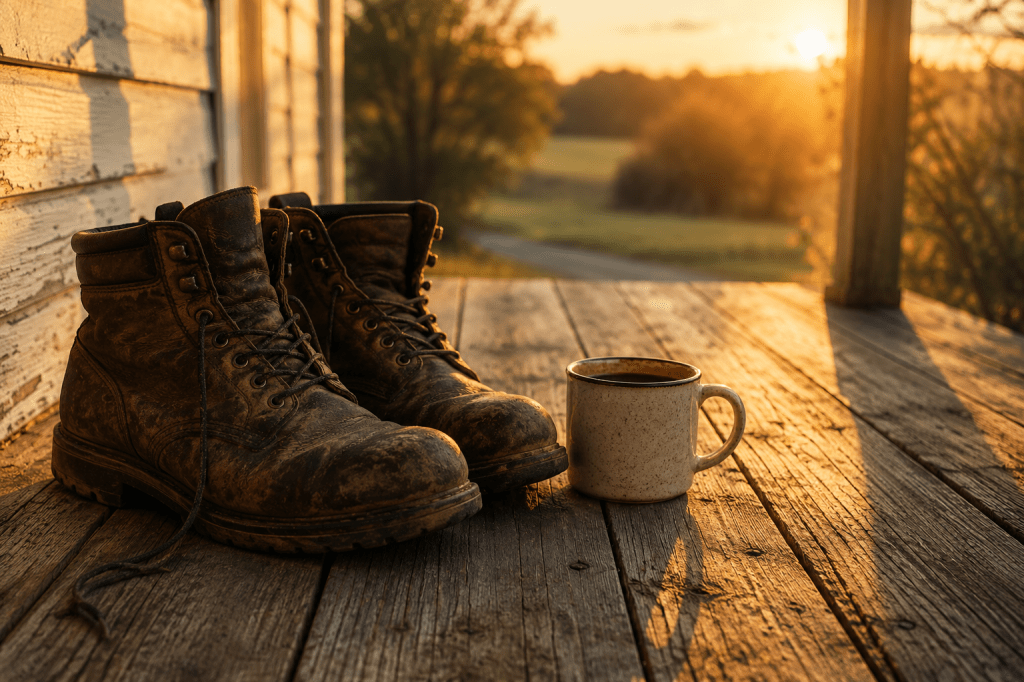
    The house is still. The light comes slowly through the window. Coffee warms the room before anything else has a chance to speak. For a few minutes, the world feels almost suspended—like the week hasn’t quite decided what it wants from you yet.

    I’ve come to appreciate those moments more than I used to.

    When I was younger, I thought the beginning of a week meant proving something. Proving you were working hard enough. Moving fast enough. Getting somewhere important. The world has a way of convincing us that motion is the same thing as progress.

    But life teaches different lessons if you pay attention long enough.

    It teaches that most of the meaningful parts of living happen in ordinary moments that no one applauds. The first cup of coffee in a quiet kitchen. The familiar rhythm of preparing something simple to eat. The small acts of care that keep a household moving forward.

    None of it looks impressive from the outside.

    But it matters.

    In a world that rewards noise and speed, gentleness can start to feel like a forgotten language. Yet it’s often the gentlest things that steady us the most. A calm voice. A patient moment. A small kindness offered without expectation.

    Even toward ourselves.

    Monday mornings are a good place to practice that kind of kindness.

    Not every week has to begin with pressure. Not every day needs to be measured against a list of accomplishments before it has even begun. Sometimes the best way to start is to arrive in the moment you’re in.

    Make the coffee.

    Open the window.

    Let the day begin at the pace it needs.

    The week will unfold the way weeks always do—one hour at a time, one small decision at a time, one quiet act of care after another.

    And somewhere inside those ordinary moments, the real work of living continues.

    So if today begins slowly, that’s alright.

    If you find yourself easing into the day instead of charging into it, that’s alright too.

    Sometimes the kindest way to start a week is to start gently.

    Kyle J. Hayes

    kylehayesblog.com

    Please like, comment, and share

    Resources for Hard Times

    If you’re looking for practical help, food support, or community resources, you can visit the Salt, Ink & Soul Resources Page.

    👉 Resources for Hard Times

  • When the Neighborhood Song Finds You Again

    When the Neighborhood Song Finds You Again

    There are nights when adulthood feels heavier than it should.

    No catastrophe.

    No crisis that would make the evening news.

    Just the quiet pressure that settles in your chest after years of carrying things you rarely speak about. Bills. Expectations. The slow arithmetic of responsibility. The strange loneliness that can exist even when you’re surrounded by people.

    People like to say, ” Just talk to someone.

    And sometimes that’s good advice.

    But the truth adults rarely admit is that it isn’t always that simple.

    Sometimes you don’t know how to explain what you’re feeling. Sometimes the words are tangled. Sometimes the weight is vague—more like weather than injury. A fog rolling in without asking permission.

    Tonight was one of those nights for me.

    The kind where the mind circles the same questions again and again. Where the quiet in the house feels louder than usual. Where you sit with yourself and realize that being an adult often means being the one expected to have answers—even when you feel like the smallest person in the room.

    So I did something simple.

    I opened YouTube.

    Not looking for wisdom. Not looking for motivation or productivity advice or someone promising to unlock the secret to success in ten easy steps.

    Just something gentle.

    And somehow I landed on a channel filled with old episodes of Mr. Rogers’ Neighborhood.

    The moment the music started, something happened that I didn’t expect.

    That piano.

    That calm rhythm.

    That familiar invitation into a living room that somehow always felt safe.

    “It’s a beautiful day in the neighborhood…”

    Before I knew it, I was smiling.

    Not the polite smile adults wear in public. The real kind. The one that sneaks up on you when a memory taps you on the shoulder.

    I started singing along.

    And somewhere between the first line and the moment he changed his shoes, something inside me loosened. The stress that had been sitting in my chest all evening dissolved like sugar in warm coffee.

    Just like that.

    No lecture.

    No complicated explanation.

    No grand philosophy.

    Just a man speaking calmly about learning to ride a bicycle.

    About the moment when a child moves from three wheels to two.

    About wobbling.

    About trying again.

    About how growing up sometimes means doing things that feel a little scary at first.

    And there I was.

    A grown man sitting in his living room, smiling like a kid again.

    It made me wonder about something.

    How is it that someone who passed away in 2003 can still reach through time and calm the nervous system of a stranger sitting alone decades later?

    How can a quiet voice, a soft sweater, and a steady presence still quiet the storms adulthood sometimes builds inside us?

    The answer may be simpler than we think.

    He wasn’t trying to impress anyone.

    He wasn’t trying to dominate the room or prove how intelligent he was or convince the world he had all the answers.

    He was doing something far rarer.

    He was making space.

    Space for children to feel understood.

    Space for feelings to exist without being rushed away.

    Space for gentleness in a world that often rewards noise.

    And maybe—though we rarely admit it—adults need that space just as much as children do.

    Maybe the part of us that once sat cross-legged in front of a television, listening carefully to a man who spoke slowly and kindly, never actually disappears.

    It just gets buried.

    Under bills.

    Under expectations.

    Under the quiet belief that growing up means we should already know how to carry the weight.

    But every once in a while, something reminds us.

    A song.

    A memory.

    A familiar voice from another time.

    And suddenly the armor loosens.

    You remember what it felt like to be small, curious, and hopeful about the world. You remember that kindness isn’t weakness. That patience isn’t outdated. That gentleness—real gentleness—is one of the strongest things a human being can offer another.

    Watching that episode tonight made me think of something simple.

    Maybe the world needs more people like him.

    People who slow things down rather than speed them up.

    People who speak softly instead of shouting.

    People who remind us that it’s okay to feel what we feel.

    Especially when the world gets heavy.

    I could write more about this tonight.

    About kindness.

    About childhood.

    About how strange and beautiful it is that a simple television show can still calm an adult heart decades later.

    But the truth is…

    There’s another episode waiting.

    And for a little while longer, I’d like to sit here and watch the show.

    Kyle J. Hayes

    kylehayesblog.com

    Please like, comment, and share

    Resources for Hard Times

    If you’re looking for practical help, food support, or community resources, you can visit the Salt, Ink & Soul Resources Page.

    👉 Resources for Hard Times