Category: Uncategorized

  • Sweet Potato Buttermilk Pancakes with Bourbon Maple Syrup

    Sweet Potato Buttermilk Pancakes with Bourbon Maple Syrup

    There’s a reason certain combinations survive long enough to become myth.

    Chicken and waffles did not rise because it was clever. It rose because it was honest.

    In Harlem, long after midnight, musicians stepped off stages with their shirts still damp and their bones still humming. They wanted fried chicken. They wanted waffles. They wanted both. At places like Wells Supper Club, someone understood that hunger does not neatly divide itself into categories. Dinner or breakfast. Savory or sweet. Survival or joy.

    So they were given both.

    That instinct — to refuse narrowing — runs deep in our kitchens.

    It lives in the sweet potato.

    A root carried across water it did not choose. Pressed into unfamiliar soil. It grew anyway. Fed families anyway. Quietly. Steadily. Without demanding recognition.

    Roast it long enough, and it deepens. The sugars darken. The flesh softens. What seemed simple reveals complexity.

    I love sweet potato pie.

    I love pancakes.

    And the older I get, the less patience I have for pretending I must choose one love over another.

    So, for the final recipe of Black History Month, I did what those musicians did, in my own way.

    I said yes to both.

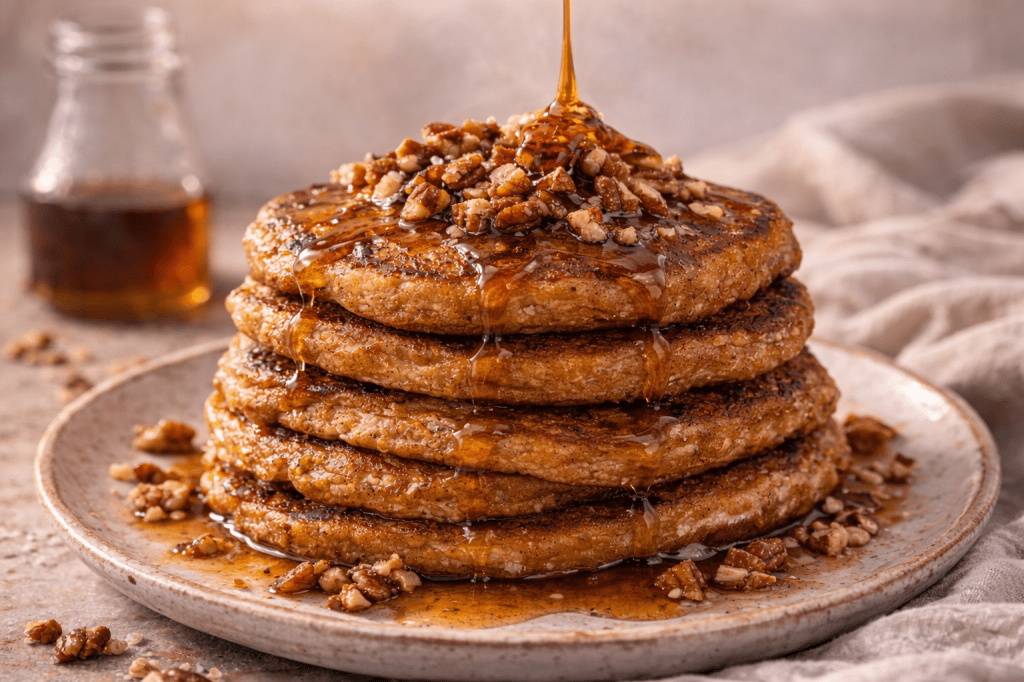
    Sweet Potato Buttermilk Pancakes with Bourbon Maple Syrup.

    Not as a gimmick.

    As a continuation.

    The pancakes are tender but grounded. The sweet potato gives them weight without heaviness. The buttermilk brings tang. Cinnamon and nutmeg whisper rather than shout. The syrup carries a faint burn at the edge — just enough to remind you that sweetness has always required something.

    This is not performance food.

    It is an inherited food.

    Black history is often spoken loudly in February. Speeches. Panels. Timelines. Names we should never forget.

    But history also lives in smaller places.

    In cast iron, warming slowly.

    In flour dusted across a wooden counter.

    In a root mashed by hand.

    Sometimes remembrance is not a declaration.

    Sometimes it is breakfast.

    Made with both hands.

    Served warm.

    Eaten without apology.

    🥞 Sweet Potato Buttermilk Pancakes with Bourbon Maple Syrup

    Ingredients

    Pancakes

    • 1 cup mashed roasted sweet potato (cooled)
    • 1 ¼ cups all-purpose flour
    • 1 tablespoon brown sugar
    • 1 teaspoon baking powder
    • ½ teaspoon baking soda
    • ½ teaspoon salt
    • ½ teaspoon cinnamon
    • ¼ teaspoon nutmeg
    • 1 cup buttermilk
    • 1 large egg
    • 2 tablespoons melted butter
    • ½ teaspoon vanilla extract

    Bourbon Maple Syrup

    • ½ cup pure maple syrup
    • 1 tablespoon unsalted butter
    • 1–2 teaspoons bourbon (optional)
    • Pinch of sea salt

    Method

    1. Roast the Sweet Potato

    Roast at 400°F until fork-tender and caramelized at the edges. Mash until smooth. Let cool fully before mixing.

    Depth matters.

    2. Combine the Dry Ingredients

    Whisk flour, brown sugar, baking powder, baking soda, salt, cinnamon, and nutmeg in a bowl.

    Keep it simple.

    3. Combine the Wet Ingredients

    In another bowl, mix sweet potato, buttermilk, egg, melted butter, and vanilla.

    Stir gently. No rushing.

    4. Bring Them Together

    Fold wet into dry. Do not overmix. Small lumps are welcome.

    Tenderness lives there.

    5. Cook

    Heat a lightly buttered skillet over medium heat.

    Pour ¼ cup batter per pancake.

    Cook until bubbles rise and edges set. Flip once. Finish until golden brown.

    Low heat rewards patience.

    6. Make the Syrup

    Warm the maple syrup and butter in a small saucepan. Remove from heat. Stir in bourbon and sea salt.

    The scent should rise before the steam fades.

    Serve With

    Toasted pecans.

    Soft butter.

    Strong coffee.

    Unhurried conversation.

    Kyle J. Hayes

    kylehayesblog.com

    Please like, comment, and share

    Resources for Hard Times

    If you’re looking for practical help, food support, or community resources, you can visit the Salt, Ink & Soul Resources Page.

    👉 Resources for Hard Times

  • The Neighborhood Mom

    The Neighborhood Mom

    For T.S. — my sister, and the Neighborhood Mom to so many.

    Every neighborhood had her.

    Not appointed.

    Not elected.

    Not funded.

    But known.

    She didn’t live in the biggest house. Most of the time, it was the opposite. Paint tired. Couch worn thin. The kitchen light was buzzing like it had something to say. The kind of home that didn’t look like much from the sidewalk — but felt like oxygen once you stepped inside.

    We didn’t call her a social worker.

    We didn’t call her a guardian.

    We didn’t call her a saint.

    We just knew: if things got bad, you could go there.

    I remember walking into a house like that once and being startled — not by silence, but by the opposite. Children everywhere. Some on the floor. Some on couches. Some are half-asleep with homework still open. Shoes by the door that didn’t all belong to the same family. A pot on the stove that seemed to stretch itself every night to feed one more mouth than it should have been able to handle.

    It looked chaotic if you didn’t understand it.

    But if you stayed long enough, you saw the pattern.

    You saw the safety.

    She wasn’t rich. Sometimes she was barely holding her own household together. Bills late. Refrigerator thinner than she would admit. You could tell by the way she portioned things that she knew how to stretch. How to make a little feel like enough. How to season scarcity until it didn’t taste like embarrassment.

    How she fed so many on so little is still a mystery to me.

    But she did.

    Plates appeared. Clean shirts appeared. Towels were shared. Soap was rationed but never withheld. And at night — no matter how crowded it was — there was always a space cleared for someone who didn’t have one.

    Some of those children came because home was loud in the wrong way.

    Some came because home was silent in the wrong way.

    Some came because there was no home at all.

    She didn’t interrogate the reason.

    She made space.

    In neighborhoods where systems were underfunded and futures were over-policed, women like her were infrastructure. They were the unofficial institutions. The gap-fillers. The quiet counterweights to chaos.

    You could write a thousand policy papers about community stabilization and still miss the fact that sometimes it was one woman’s kitchen table doing the heavy lifting.

    She didn’t have a nonprofit.

    She had a heart that wouldn’t let her turn children away.

    And that kind of heart is not soft.

    It is disciplined.

    Because compassion without discipline collapses under pressure. But she kept showing up. Every day. Every week. Every time a new pair of eyes looked at her from the doorway with that question in them:

    Can I stay?

    And she almost always said yes.

    What we didn’t understand as children was the cost.

    We didn’t see the arithmetic she was doing in her head.

    We didn’t hear the sighs she swallowed.

    We didn’t know how tired she was.

    We only saw the outcome:

    We were clean.

    We were fed.

    We were safe.

    And in neighborhoods where safety was not guaranteed, that was no small thing.

    It’s easy to celebrate the visible heroes — the ones with microphones, the ones whose names are etched in textbooks. But communities are often held together by people whose names never leave the block.

    The neighborhood mom.

    She was not perfect. She had her rules. Her voice could rise when it needed to. She knew who was lying before the lie finished forming. She demanded respect not because she craved control, but because order was the only way love could function in a crowded house.

    That house was not just a shelter.

    It was a rehearsal.

    It taught children what stability felt like, even if only for a season. It modeled what adulthood could look like when responsibility wasn’t optional. It showed that care is not about abundance. It’s about commitment.

    I think about her sometimes when conversations turn to “community breakdown” or “youth crisis.” People talk about statistics. Funding gaps. Cultural decline.

    And you can measure many things.

    But you can’t easily measure the woman who refuses to let children sleep outside.

    You can’t quantify the moral gravity of a person who says, “You can stay here,” when she barely has enough for herself.

    That is not charity.

    That is architecture.

    She built invisible scaffolding around young lives until they were strong enough to stand on their own.

    And maybe the most powerful part is this:

    She did not do it for applause.

    She did not do it for legacy.

    She did it because her heart would not let her do otherwise.

    There are people whose goodness is not strategic.

    It is instinctive.

    The neighborhood mom was one of them.

    As adults, we sometimes look back and realize something uncomfortable:

    We survived partly because of someone else’s quiet sacrifice.

    Because somewhere along the way, a woman with too little decided to stretch herself further.

    And now the question isn’t just about honoring her.

    It’s about becoming her in whatever way we can.

    Not necessarily by opening our homes to a dozen children — though some still do.

    But by asking:

    Where is the open space in my life?

    What safety do I need to provide?

    How can I make “a little” feel like enough for someone else?

    In a world obsessed with visibility, the neighborhood mom practiced invisible greatness.

    She did not trend.

    She endured.

    Kyle J. Hayes

    kylehayesblog.com

    Please like, comment, and share

    Resources for Hard Times

    If you’re looking for practical help, food support, or community resources, you can visit the Salt, Ink & Soul Resources Page.
    👉 Resources for Hard Times

  • Keto Chicken Alfredo

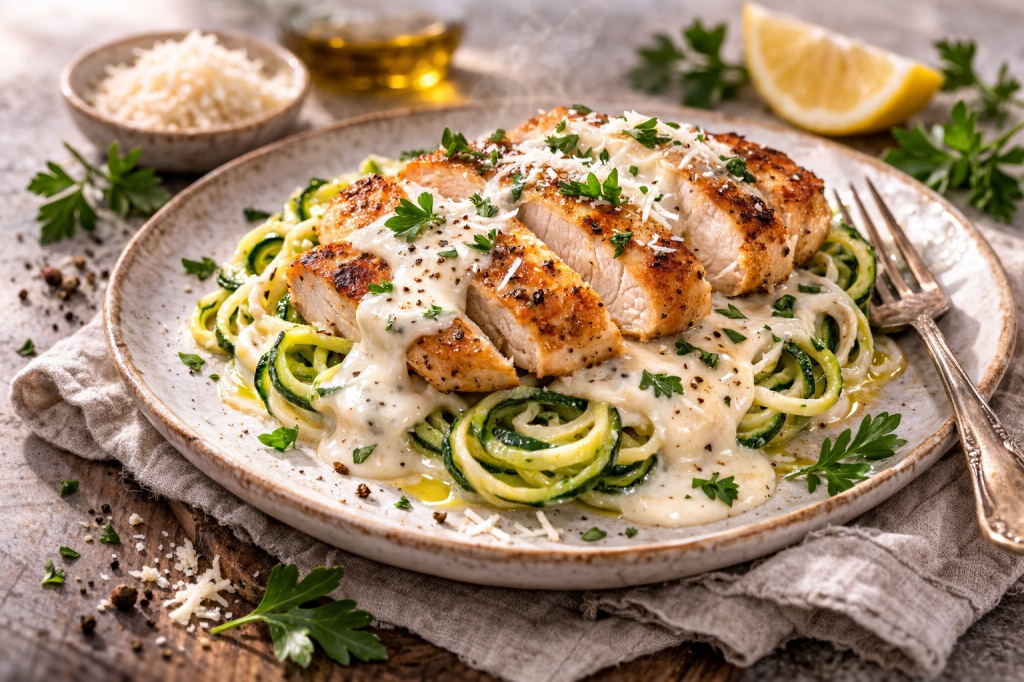
    Keto Chicken Alfredo

    Comfort without collapse

    Some people say keto is restrictive.

    I thought that too.

    When I first started, everything felt like subtraction. No pasta. No bread. No familiar weight on the plate. So I did what most of us do — I searched for substitutes. Some worked. Some didn’t. Some felt like pretending.

    But every now and then, something lands.

    This is one of those times.

    What I realized is this: Alfredo was never about the pasta. It was about the cream. The garlic. The Parmesan. The warmth. The fullness.

    Zucchini and spaghetti squash aren’t replacements.

    Their structure.

    This isn’t about restriction.

    It’s about learning what actually matters.

    Why This Version Works

    • Seasoned chicken, not plain protein
    • Real cream and real Parmesan
    • Vegetables that support instead of compete
    • Richness without excess

    Comfort stays.

    Heaviness doesn’t.

    Recipe Details

    Serves: 4

    Prep Time: 15 minutes

    Cook Time: 25 minutes

    Total Time: About 40 minutes

    Ingredients

    For the Chicken

    • 4 boneless, skinless chicken breasts
    • 1 tsp salt
    • 1 tsp black pepper
    • 2 tbsp olive oil

    For the Alfredo Sauce

    • 3 tbsp unsalted butter
    • 2 cloves garlic, minced
    • 1 cup heavy cream
    • 1 cup freshly grated Parmesan cheese
    • Salt and black pepper, to taste

    For the Base

    • 2 medium zucchinis, spiralized
    • or
    • 1 medium spaghetti squash

    Garnish

    • Chopped parsley
    • Additional grated Parmesan

    Instructions

    1. Cook the chicken

    Pat the chicken dry and season evenly with salt and pepper.

    Heat olive oil in a skillet over medium heat.

    Cook 5–7 minutes per side, depending on thickness, until golden and cooked through (internal temperature of 165°F).

    Do not overcook.

    Moisture is part of the experience.

    Remove and let rest before slicing.

    2. Build the sauce

    In a saucepan, melt butter over medium heat.

    Add garlic and cook just until fragrant — about 1 minute.

    Pour in the heavy cream and bring to a gentle simmer.

    Cook 4–5 minutes, until slightly thickened.

    Lower the heat and stir in Parmesan until smooth.

    Season to taste.

    The sauce should coat the back of a spoon.

    Don’t drown it.

    3. Prepare the base

    For zucchini:

    Sauté lightly in olive oil for 2–3 minutes until just tender. Do not overcook.

    For spaghetti squash:

    Roast at 400°F for 35–40 minutes. Scrape into strands.

    Both should hold their shape.

    4. Bring it together

    Slice the rested chicken.

    Plate the zucchini or squash.

    Lay the chicken over the top.

    Spoon the Alfredo sauce with intention.

    Finish with parsley and Parmesan.

    To Serve

    Serve hot.

    Serve simply.

    No need to explain that it’s keto.

    Let the plate speak.

    This is not food that apologizes.

    It’s food that adapts.

    And sometimes, that’s enough.

    Kyle J. Hayes

    kylehayesblog.com

    Please like, comment, and share

    Resources for Hard Times

    If you’re looking for practical help, food support, or community resources, you can visit the Salt, Ink & Soul Resources Page.
    👉 Resources for Hard Times

  • Who Gets to Be an Expert?

    Who Gets to Be an Expert?

    Somewhere along the way, the word expert got dressed up.

    It put on a clean apron and started speaking in polished sentences. It learned how to name every acid, every cut, and every technique, the way some people learn scripture—precise, rehearsed, confident. It started arriving with credentials. With ratings. With a camera angle. With a voice that sounds like it already knows it’s right.

    And I’m not here to mock skill. Skill is real. Craft matters. Discipline matters. There’s beauty in someone who has spent years learning a thing until their hands don’t have to think about it anymore.

    But I’ve been watching how authority gets handed out.

    Who gets to hold it?

    Who gets ignored?

    Because I know cooks whose food will stop you mid-bite—not because you’re analyzing anything, not because you’re performing appreciation the way you were taught to, but because something inside you goes quiet for a second.

    Not silence like politeness.

    Silence like recognition.

    That’s the kind of moment I trust.

    My own belief is simple, even if it’s heavy: the people who get to determine who is an expert are the ones who eat and feel that all-encompassing satisfaction and gratitude. The ones who take a spoonful or a bite, and it stops them—not because they’re dissecting ingredients, but because it has touched their soul. Their spirit. Those parts that make us truly us.

    It satisfied their hunger.

    And it blessed their spirit.

    To me, those are the ones who get to decide.

    Not the loudest voice in the room.

    Not the person with the best lighting.

    Not the one who can turn dinner into a performance review.

    The ones at the table.

    Because food, at its honest center, is not a debate. It’s a communion. It’s a small, daily miracle that too many people are forced to negotiate with—money, time, fatigue, scarcity, stress—all of it pressing down like weather. And then someone makes something anyway. Something warm. Something that holds.

    If a meal can do that—if it can steady a person, if it can return them to themselves, if it can make their shoulders drop in relief—what are we really supposed to call the one who made it?

    An amateur?

    A “home cook,” said the way people say less than?

    We live in a world that mistakes visibility for validity. If you can describe what you did in the right vocabulary, you’re treated like an expert. If you can plate it like a magazine cover, you’re treated like an expert. If you can turn the meal into content, into a brand, into a series—then the world hands you the title and nods as if that settles the matter.

    But plenty of the best food I’ve ever encountered wouldn’t survive that kind of spotlight.

    It wasn’t made to impress strangers.

    It was made to take care of somebody.

    And that kind of care has its own standards.

    The best cooks I know aren’t always chasing innovation. Sometimes they’re chasing enough. Sometimes they’re chasing right. Sometimes they’re trying to make sure the child who didn’t eat at school gets something in their belly before bedtime. Sometimes they’re trying to make Sunday feel like Sunday, even when the week has been cruel.

    That’s not romantic. That’s real.

    And if you want to talk about expertise, you have to talk about repetition. The kind that doesn’t look glamorous but builds a person into someone you can trust.

    There is expertise in making the same dish fifty times until you understand its moods.

    Until you know the difference between heat and impatience.

    Until you can tell, by smell alone, when something is about to cross the line.

    There is expertise in cooking with what you have and still making it taste like dignity.

    There is expertise in a kitchen where nobody measures, but nothing is careless.

    And for us—especially in Black kitchens—this is not new.

    Our culture has always carried genius in ordinary containers. We didn’t always have the luxury of experimentation for fun. We had to make the function taste like joy. We had to turn “not much” into “enough” and sometimes into a feast, not because we were trying to impress, but because we were trying to remain human under conditions that kept insisting we were disposable.

    That’s expertise.

    Not the kind that needs to announce itself.

    The kind that survives.

    So when I ask who gets to be an expert, I’m not asking for a title to hand out. I’m asking a quieter question:

    Who do we trust?

    Do we trust the person with the cleanest story, the best branding, the most followers?

    Or do we trust the one whose food has carried people through real life?

    I think about the moment a person tastes something, and their eyes shift—not wide for show, not performative, just… softened. Like the body recognizes safety. Like the spirit exhales. Like something inside them says, I remember this. Even if they’ve never had this exact dish before.

    That’s the moment I mean.

    That moment is a kind of witness.

    And witnesses matter.

    Because food is not only fuel. It’s memory. It’s mood. It’s belonging. It’s how we tell people, in the simplest language we have, I see you.

    If the world wants to measure expertise by technique alone, it will keep missing the point.

    Technique can be learned.

    But the ability to feed someone in a way that makes them feel held?

    That takes attention.

    That takes empathy.

    That takes a kind of spiritual accuracy that can’t be faked.

    And yes, I know—people will say this is sentimental. Too soft. Too unscientific.

    But I don’t trust a world that treats satisfaction like something shallow. I don’t trust a world that turns eating into analysis and forgets that the body is not a machine. The body is a living story, carrying stress and grief and history. Sometimes the most skilled thing you can do is make a meal that lets somebody come home to themselves for a moment.

    So here’s where I land:

    The expert is not always the one who explains the food best.

    The expert is the one who makes you stop mid-bite—not to evaluate, but to feel grateful. The one who satisfies hunger and blesses the spirit. The one whose food doesn’t just taste good, but makes you feel less alone inside your own life.

    And the people who know that—the people who have felt that—those are the ones who get to decide.

    Not because they’re critics.

    Because they’re human.

    Because they are the reason cooking matters at all.

    And if the world never hands that cook a title, the table still will.

    Quietly.

    In the only way that counts.

    Kyle J. Hayes

    kylehayesblog.com

    Please like, comment, and share

    Resources for Hard Times

    If you’re looking for practical help, food support, or community resources, you can visit the Salt, Ink & Soul Resources Page.

    👉 Resources for Hard Times

  • Blueberry Tea Cake (Keto)

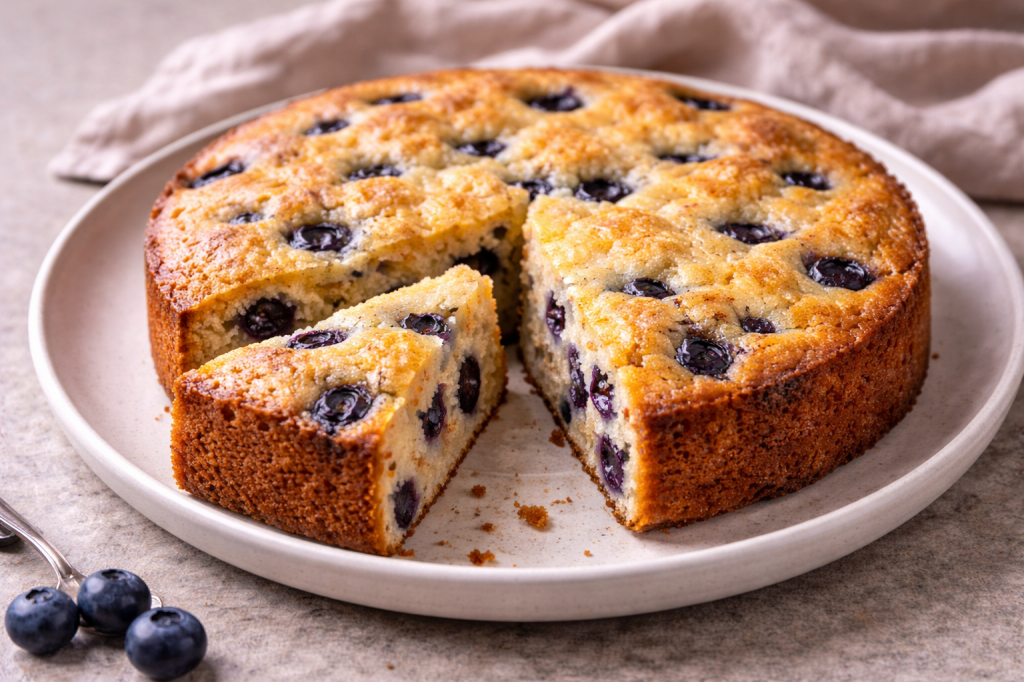
    Blueberry Tea Cake (Keto)

    A quiet answer to a loud craving

    I love sweets.

    They are my weakness.

    If I don’t have something close by to answer that craving, I will go to the store and buy far more than I need. Not because I’m hungry — because I’m reaching. Reaching for comfort. For reward. For something easy.

    So I’ve learned to keep something like this around.

    A cake that satisfies without unraveling discipline. Something measured. Something made with intention. Something that understands restraint.

    Tea cake has always lived in the in-between — not quite dessert, not quite breakfast. Something you slice in the afternoon when the house is quiet. Something that doesn’t need frosting to feel complete.

    This version keeps that spirit. It trades flour for almond flour. Sugar for monkfruit. It leans into blueberries and a touch of lemon for brightness. It isn’t trying to be indulgent. It’s trying to be enough.

    Sweet. Light. Steady.

    Why This Version Works

    • Low carb without tasting compromised
    • Almond flour keeps it tender
    • Blueberries bring natural sweetness and contrast
    • Lemon zest lifts everything quietly

    This is not a cake that shouts.

    It waits.

    Recipe Details

    Serves: 8

    Prep Time: 10 minutes

    Bake Time: 25–30 minutes

    Total Time: About 40 minutes

    Ingredients

    • 2 cups almond flour
    • ¾ cup monkfruit sweetener
    • 1 tsp baking powder
    • Pinch of salt
    • ½ cup unsalted butter, melted
    • 3 large eggs
    • 1 tsp vanilla extract
    • ½ cup unsweetened almond milk
    • 1 cup blueberries (fresh or frozen)
    • 1 tbsp lemon zest (optional, but recommended)

    Instructions

    1. Prepare the oven

    Preheat oven to 350°F (175°C).

    Grease or line an 8-inch cake pan.

    2. Combine the dry ingredients

    In a bowl, whisk together:

    • almond flour
    • monkfruit sweetener
    • baking powder
    • salt

    Set aside.

    3. Mix the wet ingredients

    In a separate bowl, whisk:

    • melted butter
    • eggs
    • vanilla
    • almond milk

    The mixture should look smooth and cohesive.

    4. Bring it together

    Add the wet ingredients to the dry.

    Stir gently until just combined.

    Do not overmix.

    Tenderness lives in restraint.

    5. Fold in the blueberries

    Gently fold in the blueberries and lemon zest.

    Move slowly. Keep the batter light.

    6. Bake

    Pour the batter into the prepared pan and smooth the top.

    Bake for 25–30 minutes, or until the top is lightly golden and a toothpick inserted in the center comes out clean.

    7. Rest

    Let the cake cool in the pan for 10 minutes before transferring to a wire rack.

    Cooling allows the structure to settle.

    To Serve

    Slice simply.

    Serve plain, or with a spoonful of lightly sweetened whipped cream.

    Keep it modest.

    This isn’t cake for spectacle.

    It’s cake for steadiness.

    Notes

    • Frozen blueberries work well — do not thaw first
    • If the top browns too quickly, tent loosely with foil
    • Stores covered at room temperature for 2 days or refrigerated up to 5 days

    Kyle J. Hayes

    kylehayesblog.com

    Please like, comment, and share

    Resources for Hard Times

    If you’re looking for practical help, food support, or community resources, you can visit the Salt, Ink & Soul Resources Page.
    👉 Resources for Hard Times

  • The Weight of Staying

    The Weight of Staying

    Kofi lived in the low, breathing cradle of a Southern town where the sun didn’t just rise—it pressed.

    It leaned into the red dirt and the wooden porches, into the backs of people who worked outside because that’s what their lives required.

    The town wasn’t large. It didn’t need to be.

    Every face carried history.

    Every house leaned a little with age, like it had listened to too many stories and decided to rest into them.

    The land itself felt watched over, not owned—held carefully, as something fragile and sacred is.

    Kofi spent his days moving through open fields and fence lines, helping his family tend what little they had: a few animals, a garden, the kind of labor that teaches a boy where his strength ends and his patience must begin.

    He learned the rhythm of the place—the slow insistence of heat, the way time stretched instead of rushed.

    His father was a quiet man.

    Not the kind who filled rooms with speeches, but the kind whose words stayed with you because they were never wasted.

    “To live right,” his father told him once, leaning against a fence post worn smooth by generations of hands, “is to stand straight even when nobody’s watching.

    Especially then.”

    One afternoon, a stranger came into town.

    He arrived in a clean truck that looked too new for the road it traveled, carrying papers instead of tools. He spoke of opportunity. Of development. Of progress.

    He pointed at maps and lines drawn where lives already existed.

    He talked about money the way some people talk about salvation.

    The town gathered.

    Some listened closely.

    Some crossed their arms.

    Everyone felt the weight of the moment, even if they didn’t yet know how to name it.

    The land he wanted wasn’t empty. It was layered—with memories, with loss, with people who had already been moved once before in stories their grandparents told quietly.

    Kofi stood at the edge of the crowd, absorbing more than anyone realized.

    The stranger noticed him.

    Later, away from the others, the man crouched down and handed Kofi something small and shining.

    A token.

    A promise wrapped in metal.

    “Just tell them it’s good,” the man said softly. “They’ll listen to you.”

    Kofi felt the pull of it—the way temptation doesn’t shout but suggests.

    The way it pretends to be harmless.

    He remembered his father’s voice.

    Calm.

    Certain.

    Unbending.

    When the moment came, Kofi stepped forward.

    His hands trembled, but his feet held.

    “This land,” he said, his voice carrying farther than he expected, “isn’t just dirt. It’s where our people learned how to stay. It’s where they buried what they lost and planted what they hoped for.

    You can’t sell something that’s still holding us up.”

    The town grew quiet.

    Not shocked.

    Not dramatic.

    Just still—like something important had been named out loud.

    The stranger gathered his papers.

    He left the same way he came, promises evaporating in the heat.

    Kofi didn’t feel proud the way stories sometimes pretend you should.

    He felt steady.

    Anchored.

    As if he had chosen to belong rather than to escape.

    That evening, his father sat beside him without speaking for a long while.

    Then he nodded once.

    Integrity, Kofi learned, wasn’t loud.

    It didn’t glitter.

    It didn’t offer shortcuts.

    It was the decision to stay rooted when leaving looked easier.

    To speak truth even when silence offered comfort.

    And as Kofi grew, the town grew with him—not richer, not shinier—but intact.

    Still standing.

    Kyle J. Hayes

    kylehayesblog.com

    Please like, comment, and share

    Resources for Hard Times

    If you’re looking for practical help, food support, or community resources, you can visit the Salt, Ink & Soul Resources Page.
    👉 Resources for Hard Times

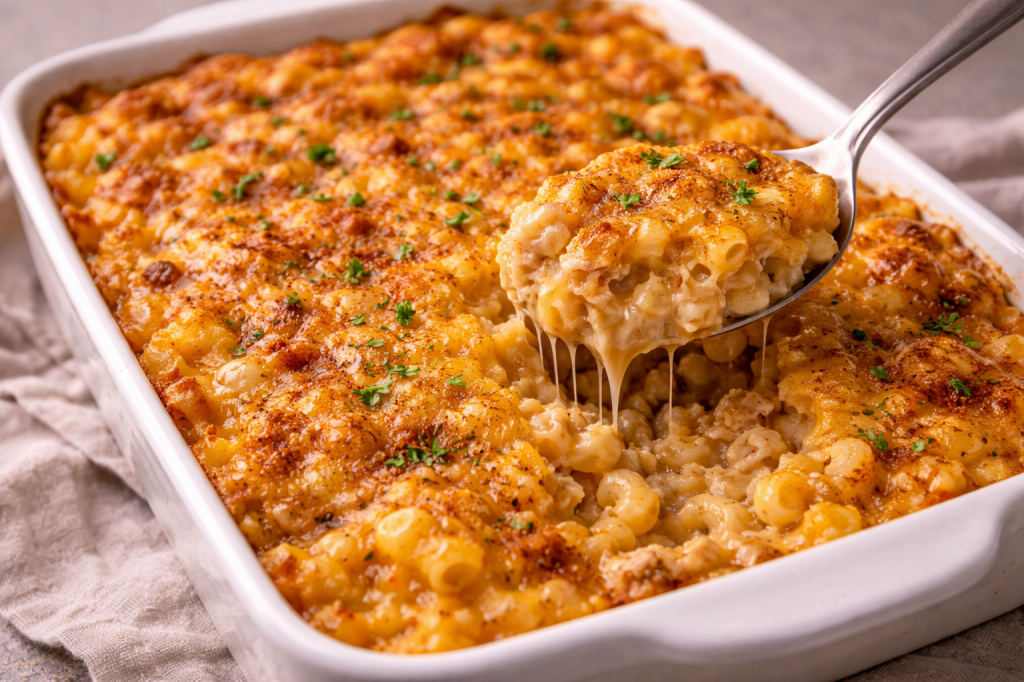
  • Chicken Mac and Cheese Casserole

    Chicken Mac and Cheese Casserole

    A dish that understands gathering

    Some meals feel like Sunday even when it isn’t.

    Chicken and macaroni baked together is one of them.

    It sits somewhere between stretch and celebration — practical enough for a weeknight, rich enough for company. This isn’t the neon orange shortcut version. This is layered. Seasoned. Baked until the edges tell the truth.

    It’s the kind of dish that doesn’t ask who’s coming.

    It just makes room.

    Why This Version Works

    • Seasoned chicken — not plain filler
    • Real cheese, layered
    • Baked, not just stirred
    • Creamy but structured

    This is casserole as care.

    Recipe Details

    Serves: 6–8

    Prep Time: 20 minutes

    Cook Time: 35–40 minutes

    Total Time: About 1 hour

    Ingredients

    For the Chicken

    • 2 cups cooked chicken, shredded or diced
    • (Rotisserie works, but season it again)
    • ½ tsp garlic powder
    • ½ tsp onion powder
    • ½ tsp smoked paprika
    • ¼ tsp black pepper
    • Pinch cayenne (optional)

    For the Mac Base

    • 12 oz elbow macaroni
    • 3 tbsp butter
    • 3 tbsp flour
    • 2 cups whole milk
    • ½ cup heavy cream
    • 1 tsp Dijon mustard (optional but right)
    • ½ tsp salt
    • ½ tsp black pepper
    • ½ tsp smoked paprika

    The Cheese

    • 2 cups sharp cheddar, shredded
    • 1 cup Monterey Jack or Colby, shredded
    • ½ cup mozzarella (for stretch)

    Topping (Optional but Encouraged)

    • ½ cup shredded cheddar
    • ¼ cup crushed butter crackers or seasoned breadcrumbs
    • 1 tbsp melted butter

    Instructions

    1. Boil the pasta

    Cook macaroni in salted water until just shy of al dente.

    Drain. Set aside.

    2. Season the chicken

    Toss cooked chicken with garlic powder, onion powder, smoked paprika, pepper, and cayenne.

    It shouldn’t taste like an afterthought.

    3. Build the sauce

    In a large saucepan:

    Melt butter over medium heat.

    Whisk in the flour and cook for 1–2 minutes, until lightly golden.

    Slowly whisk in milk and cream.

    Cook until thickened — about 4–5 minutes.

    Stir in:

    • salt
    • pepper
    • smoked paprika
    • Dijon

    Lower heat. Add cheddar and Monterey Jack.

    Stir until smooth and fully melted.

    4. Bring it together

    Fold pasta and seasoned chicken into the cheese sauce.

    Taste. Adjust salt if needed.

    It should taste complete before it hits the oven.

    5. Assemble

    Preheat oven to 375°F.

    Lightly grease a 9×13 baking dish.

    Pour the mixture into the dish.

    Top with mozzarella and extra cheddar.

    If using topping:

    Mix crushed crackers with melted butter and sprinkle lightly.

    6. Bake

    Bake uncovered for 30–40 minutes, until bubbly and golden at the edges.

    Let rest 10 minutes before serving.

    Resting matters. It settles everything.

    To Serve

    Serve with:

    • Collard greens
    • Green beans
    • Or just a quiet kitchen and people who came hungry

    Notes

    • Add sautéed onions or bell peppers for depth
    • For extra richness, add 4 oz cream cheese to the sauce
    • This reheats beautifully

    This is not fast food.

    It’s food that remembers why we gather.

    Kyle J. Hayes

    kylehayesblog.com

    Please like, comment, and share

    Resources for Hard Times

    If you’re looking for practical help, food support, or community resources, you can visit the Salt, Ink & Soul Resources Page.
    👉 Resources for Hard Times

  • I Cook. I Am Not a Chef.

    I Cook. I Am Not a Chef.

    I Cook.

    I say that carefully, almost defensively, the way someone says I write but refuses the title that would make it sound like a performance. I cook, but I am not a chef. Not because I lack skill, but because I reject what that word has come to mean—at least in the way it’s been packaged, televised, plated, and praised.

    Turn on a screen or scroll long enough and you’ll find yourself staring at a meal made by someone with a coat, a pedigree, and an accent—something arranged with tweezers, built from ingredients you have to Google, let alone locate. The lighting is perfect. The language around it is reverent. The price is astronomical.

    And somewhere in the middle of all that spectacle, a quiet question tries to form:

    Does this feed anyone?

    Not the ego. That’s already been fed.

    Not the reputation. That’s the point.

    I mean the body. The soul. The tired person who’s been chewed up by the world and needs something warm, steady, and honest to bring them back to themselves.

    What Food Is Supposed to Do

    Food is meant to do two things at once.

    It should send you out into the world strong, grounded, nourished, capable of standing upright in whatever waits for you. And it should welcome you home, comforting you after the world has taken its cut.

    A good meal says, Sit down. You made it. You’re safe here for a moment.

    Too much of what passes for “great food” today does neither.

    Some of these five-star, white-tablecloth experiences leave you not with fullness, but with confusion. You spend the first five minutes asking how you’re supposed to eat it. The next five are asking what it even is. And the last few wondering, was that it?

    A smear.

    A foam.

    A reduction of something that once had a spine.

    You leave with a taste and a question mark. No warmth. No grounding. No sense that your body was actually consulted in the process.

    When Difficulty Gets Mistaken for Care

    Then come the reviews.

    Long, florid essays written by people who seem less interested in being fed than in proving they understood the meal. As if complexity itself were nourishment. As if difficulty were virtue. As if decoding were the same thing as being cared for.

    Sometimes I suspect those reviews exist not to describe the food, but to inflate it—to stretch a small experience into something larger than it was. To reassure the diner, the chef, and the culture that the emperor’s plate is, in fact, wearing clothes.

    About That Word “Chef”

    Maybe the problem starts with the word chef itself.

    At its root, a chef is a person trained in traditional French cooking. That’s not an insult. It’s a definition. But definitions matter—especially when they quietly turn into hierarchies.

    And here’s where I say the thing that makes people uncomfortable:

    I do not believe the French know how to cook.

    Not in the way that matters to me.

    They drown everything in sauce, then congratulate themselves for having learned how to drown properly. Technique over instinct. Presentation on nutrition. Control over generosity. The dish becomes a demonstration rather than an offering.

    The sauce isn’t always there to enhance. Sometimes it’s there to hide—to obscure the fact that without it, the food has nothing to say.

    What troubles me more is how that tradition looks down on everything that didn’t come from Europe—especially the cuisines built without academies, without written rules, without approval. The foods made by people who cooked because they had to. People who turned scraps into sustenance. Who learned flavor not from textbooks, but from hunger, memory, and survival.

    The Truth Told by Bread

    Ironically, the best thing to come out of France isn’t a sauce at all.

    It’s bread.

    The baguette.

    The food of the poor.

    Flour. Water. Yeast. Time. Crisp crust. Soft interior. No performance. No confusion. No question about what it is or what it’s for.

    You tear it.

    You eat it.

    You’re fed.

    Perfect in its simplicity.

    And that tells the truth the rest of the cuisine tries to avoid.

    The Lineage I Claim

    The true food of any people comes from those who make something out of nothing. From those who cook not to impress, but to sustain. From kitchens where the question isn’t Is this innovative? But will this carry us through the night?

    That’s the lineage I claim.

    I cook food meant to hold you together. Food that understands fatigue. Food that doesn’t need a narrator. Food that respects the eater enough not to turn them into an audience.

    When I cook, I’m not trying to challenge you.

    I’m trying to care for you.

    I want the meal to say, You don’t have to think so hard right now. I want it to meet you where you are—hungry, worn down, hopeful, human.

    Good food doesn’t leave you with questions.

    It leaves you with strength.

    It leaves you with comfort.

    It leaves you ready to go back out into the world—or prepared to rest from it.

    So no, I’m not a chef.

    Cooking is an act of hospitality, not hierarchy. An offering, not a performance. A quiet declaration that survival deserves pleasure—and pleasure doesn’t need permission.

    And if that means my food will never be plated with tweezers or praised in paragraphs, so be it.

    The people I cook for don’t need convincing.

    They just need to be fed.

    Kyle J. Hayes

    kylehayesblog.com

    Please like, comment, and share

    Resources for Hard Times

    If you’re looking for practical help, food support, or community resources, you can visit the Salt, Ink & Soul Resources Page.
    👉 Resources for Hard Times

  • On February 14, and the Myth of Being Chosen

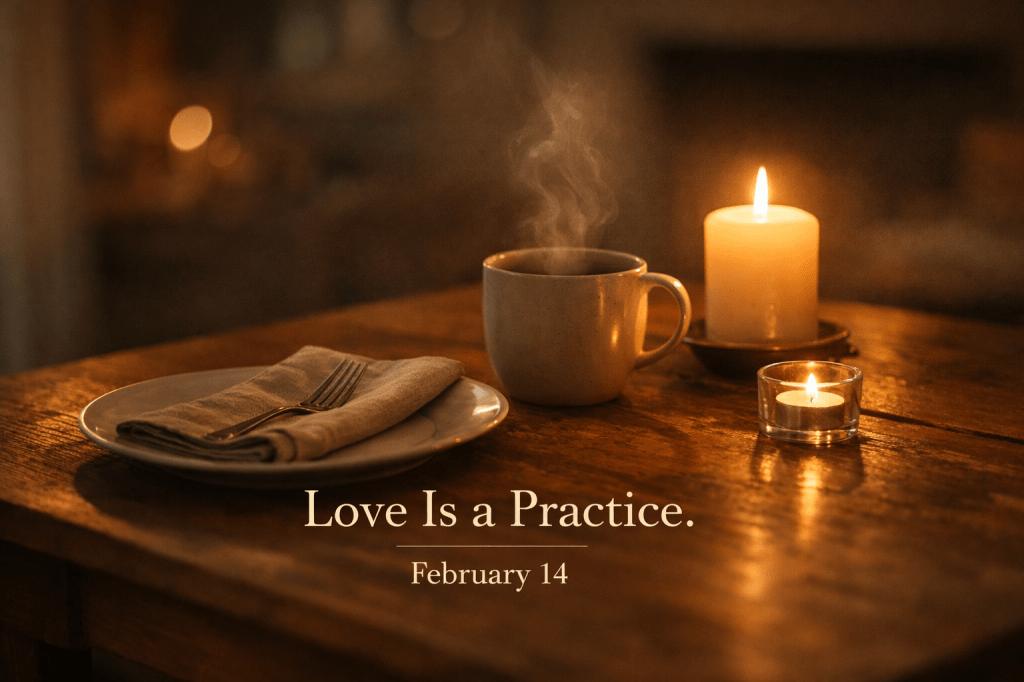
    On February 14, and the Myth of Being Chosen

    Tomorrow, the world will bloom red.

    Restaurants will fill.

    Phones will glow.

    Flowers will be delivered with little folded cards that say what some of us wish had been said years ago.

    And if you are coupled, I hope it feels warm. I hope it feels earned. I hope the love beside you is steady and kind.

    But if you are alone tomorrow, I want to say something gently:

    Being single is not a verdict.

    February 14 has a way of turning solitude into suspicion. As if love were a draft and some of us simply weren’t picked. As if being chosen by another person were the highest confirmation of our worth.

    It isn’t.

    Some of us are in the middle of becoming.

    Some of us are healing.

    Some of us are learning how not to confuse intensity for intimacy.

    Some of us are finally strong enough to wait for something healthy.

    And waiting is not a weakness.

    There is a quieter love that doesn’t trend.

    The love of cooking a meal for yourself and sitting down without distraction.

    The love of calling your mother.

    The love of forgiving your younger self.

    The love of walking away from what almost fit.

    We don’t talk about that love enough.

    We celebrate spectacle. The bouquet. The dinner reservation. The filtered photos.

    But real love — the kind that lasts — is patient. It is disciplined. It is often invisible before it is public.

    And sometimes, the bravest thing a person can do is refuse to rush into something just to silence the loneliness.

    If tomorrow feels light and joyful for you, hold it with gratitude.

    If it feels heavy, hold yourself with the same tenderness you would offer someone you care about.

    Love is not a holiday.

    It is a practice.

    And no matter your relationship status, you are not behind. You are not unfinished. You are not unchosen.

    You are becoming.

    And that is enough.

    Kyle J. Hayes

    kylehayesblog.com

    Please like, comment, and share

    Resources for Hard Times

    If you’re looking for practical help, food support, or community resources, you can visit the Salt, Ink & Soul Resources Page.

    👉 Resources for Hard Times

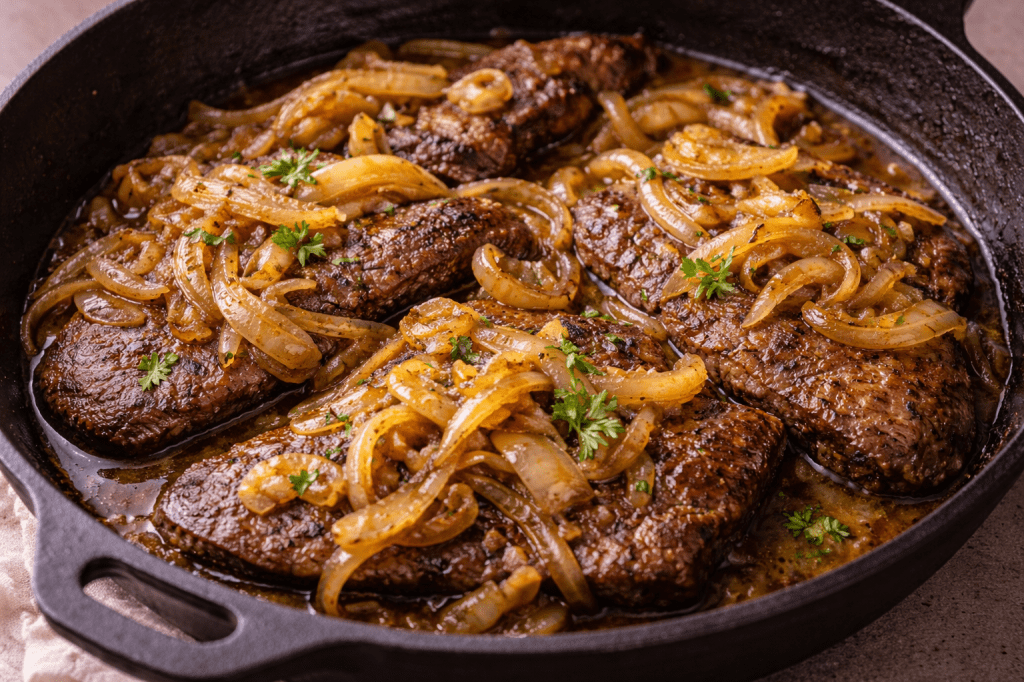
  • Liver and Onions 

    Liver and Onions 

    Like most children, I hated liver.

    Everything about it — the look, the smell, the taste. You were always told it was good for you, the way adults say things when they know you won’t enjoy them. My mother made liver and onions every now and then, and like most people we knew, she cooked it well done, like every other meat. By the time it hit the plate, it resembled shoe leather. You ate it fast so you wouldn’t taste it, swallowing memory along with obligation.

    That stayed with me.

    So when people later talked about how good liver could be, I assumed they were either lying or nostalgic. Then someone whose opinion I respected told me something simple: your taste buds change. So I tried it again. I don’t know if it was age or skill, but what I tasted wasn’t what I remembered. This recipe is for anyone still traumatized by that first version. Try it. You might like it.

    Why This Version Works for me 

    • Liver cooked tender, not punished
    • Onions are slow and sweet, not rushed
    • Respect for the ingredient — and the eater

    Recipe Details

    Serves: 2–3

    Prep Time: 15 minutes

    Cook Time: 20 minutes

    Total Time: About 35 minutes

    Ingredients

    Liver

    • 1 lb beef liver, sliced
    • 1 cup milk (for soaking)
    • Salt and black pepper, to taste
    • ½ tsp garlic powder
    • ½ tsp onion powder
    • ½ tsp smoked paprika
    • ¼ tsp cayenne pepper (optional)
    • ½ cup all-purpose flour (for dredging)

    Onions

    • 2 large yellow onions, thinly sliced
    • 2 tbsp butter
    • 1 tbsp oil
    • Pinch of salt

    For Cooking

    • 2 tbsp oil
    • 1 tbsp butter

    Instructions

    1. Soak the liver

    Place liver slices in a bowl and cover with milk.

    Soak for 20–30 minutes, then drain and pat dry.

    This softens the flavor and changes everything.

    2. Season and dredge

    Season the liver lightly with:

    • salt
    • black pepper
    • garlic powder
    • onion powder
    • smoked paprika
    • cayenne (if using)

    Dredge lightly in flour. Shake off excess.

    3. Cook the onions

    Heat butter and oil in a skillet over medium heat.

    Add onions with a pinch of salt.

    Cook slowly, stirring occasionally, until soft, golden, and lightly sweet — about 10–12 minutes.

    Remove and set aside.

    4. Cook the liver

    In the same skillet, add oil and butter if needed.

    Cook liver slices over medium-high heat, about 2–3 minutes per side.

    You want a good sear and a tender center — not overcooked.

    5. Bring it together

    Return onions to the skillet.

    Gently toss with the liver and let everything warm together for 1–2 minutes.

    Taste and adjust seasoning.

    Serve

    Serve hot with:

    • mashed potatoes
    • rice
    • or a piece of cornbread to catch what’s left in the pan. (see recipe)

    This is food that asks you to slow down — just a little.

    Notes

    • Overcooking is what ruins liver. Stop before you think you should.
    • Milk soak matters. Don’t skip it.
    • This dish is about restraint, not force.

    Kyle J. Hayes

    kylehayesblog.com

    Please like, comment, and share

    Resources for Hard Times

    If you’re looking for practical help, food support, or community resources, you can visit the Salt, Ink & Soul Resources Page.

    👉 Resources for Hard Times