Tag: family

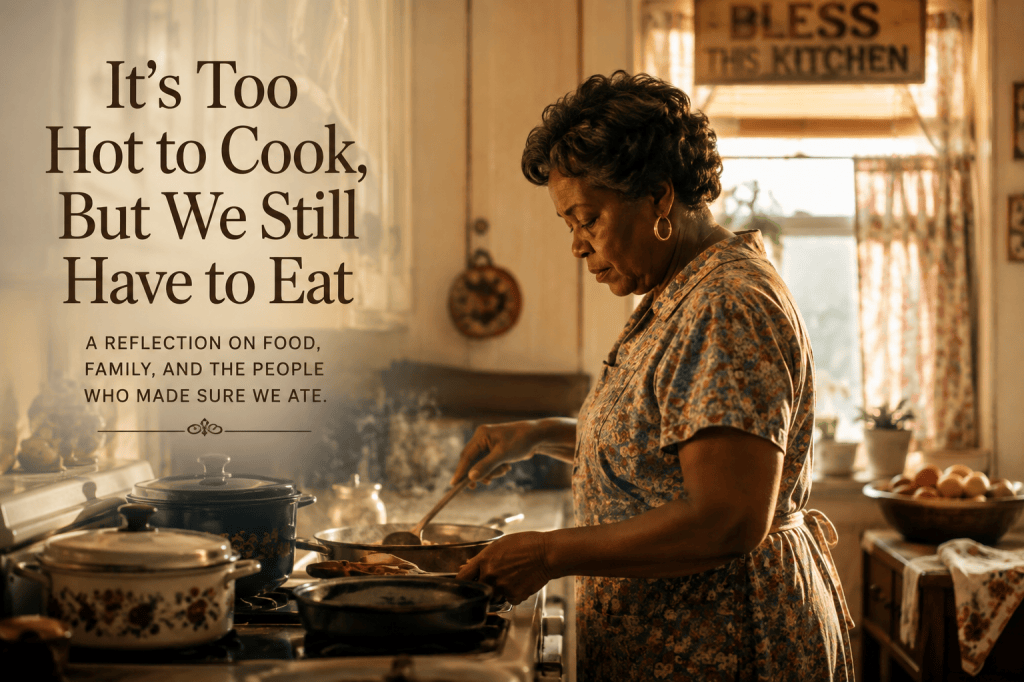
  • The Family Table Is Still Waiting

    The Family Table Is Still Waiting

    There is a particular kind of loneliness that doesn’t arrive when you’re by yourself.

    It arrives when the room is full.

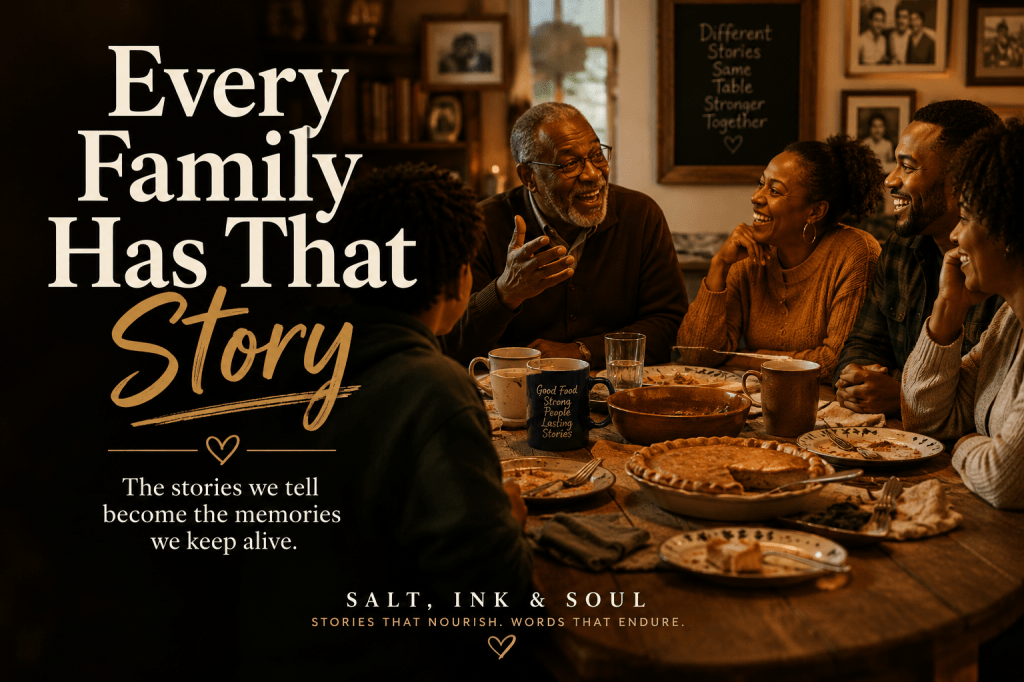
    The plates are set. Glasses gather little rings of water on the table. Someone reaches for the salt without asking. Someone else laughs at a story you’ve all heard before, yet somehow it still earns another smile.

    And still…

    Something feels absent.

    Not because the chairs are empty.

    Because our attention is.

    I’ve watched it happen more times than I care to admit. Friends. Family. Holidays. Birthdays. A table filled with people I genuinely wanted to see.

    Then the food arrives.

    Almost instinctively, hands reach for phones before forks. Plates are turned toward the light. Someone asks everyone to wait while they find the right angle. Steam rises, curls into the air, and quietly disappears while filters are chosen and captions are written.

    “I’ll be just a second.”

    “Don’t eat yet.”

    “I haven’t posted it.”

    It’s become so ordinary that we rarely question it anymore.

    The meal is here.

    The people are here.

    Yet we’re busy proving it to everyone who isn’t.

    I’m not writing this as a complaint about technology. Some of my favorite conversations have happened because of it. I’ve stayed close to people who live hundreds of miles away. I’ve shared recipes with strangers who now feel like neighbors. This very blog exists because of a screen.

    Technology isn’t the enemy.

    Forgetfulness is.

    Somewhere along the way, we began forgetting what the table was for.

    Growing up, our table wasn’t remarkable. It wasn’t made from expensive wood, and nobody would’ve mistaken our dinners for something from a magazine.

    But that table had a way of telling the truth.

    You could tell who’d had a hard day before anyone said a word. You noticed who was quieter than usual. If someone pushed food around their plate instead of eating, someone would eventually ask, “You alright?”

    Not because they had studied body language.

    Because they were paying attention.

    That’s what the table did.

    It slowed us down just enough to notice one another.

    It was never really about the food.

    The fried chicken, the greens, the spaghetti, the macaroni—they were invitations. Reasons to gather. The meal gave everyone something to do with their hands while their hearts slowly caught up.

    Looking back, I couldn’t tell you exactly what every Sunday dinner tasted like.

    But I remember who sat beside me.

    I remember the laughter that made sweet tea come out somebody’s nose.

    I remember conversations that started over cornbread and somehow became lessons about life.

    I remember discovering that people rarely tell you the most important things right away. They tell you after the plates have been cleared. After dessert. After everyone has settled into the comfort of simply being together.

    Those moments didn’t happen because someone planned them.

    They happened because nobody was trying to be somewhere else.

    Today, we carry with us everywhere.

    A notification from work.

    A headline from across the world.

    A video someone says we have to watch.

    A message that feels urgent until tomorrow reminds us it wasn’t.

    Little by little, our attention leaves the room before we ever do.

    We call it staying connected.

    Sometimes I wonder if we’ve confused being connected with being present.

    They’re not the same thing.

    Presence asks something more of us.

    It asks us to look into someone’s eyes long enough to notice what they aren’t saying.

    To hear the hesitation before the words.

    To recognize that a quiet “I’m fine” can carry the weight of an entire year.

    No photograph captures that.

    No caption can.

    I’ve been thinking lately about a small act of rebellion.

    Nothing dramatic.

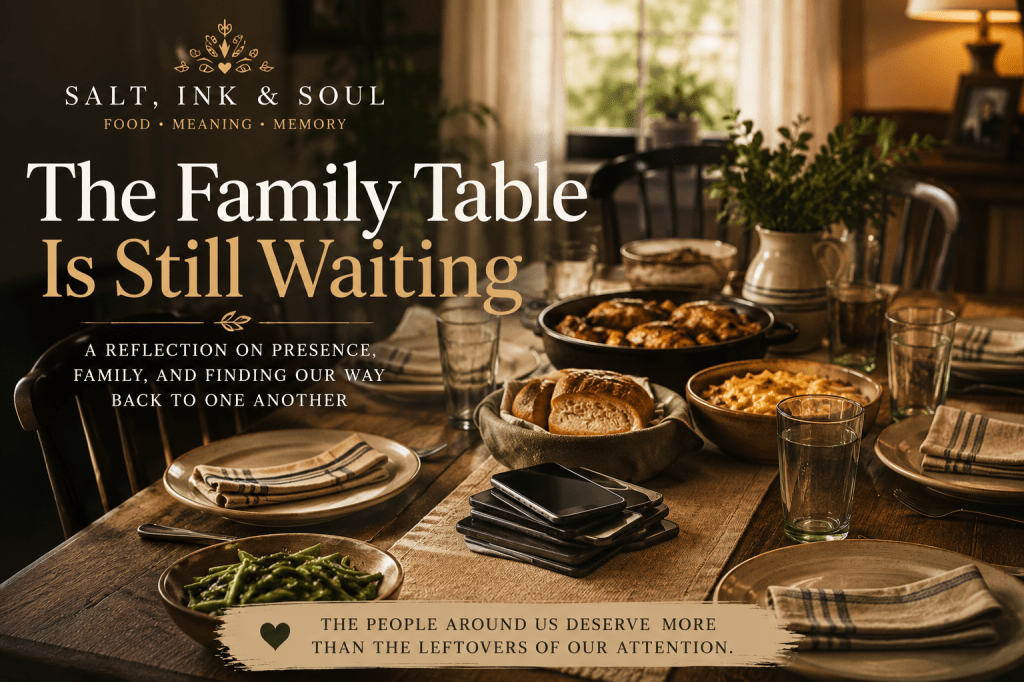
    Just a stack of phones in the middle of the table.

    Face down.

    Not because the phones are bad.

    Because the people around the table deserve our undivided attention, if only for the length of a meal.

    That stack becomes its own centerpiece.

    A quiet promise.

    For the next hour, no one outside this room needs more of us than the people inside it.

    Without the glow of our screens, we begin to notice things again.

    The way your father pauses before mentioning an old friend.

    The way your sister laughs a little harder than usual because she’s trying not to cry.

    The way your grandmother reaches for your hand without saying why.

    Those moments don’t trend.

    They don’t go viral.

    Most of them will never be photographed.

    But they are the moments that become our lives.

    The digital world will always ask us for another picture, another opinion, another performance of ourselves.

    The family table asks for something much simpler.

    It asks us to arrive.

    Not polished.

    Not interesting.

    Not curated.

    Just present.

    Maybe that’s enough.

    Maybe it always was.

    The family table is still waiting.

    The chairs are still there.

    The empty seat still knows your name.

    All it has ever wanted is the one thing no screen can offer.

    You.

    Kyle J. Hayes

    kylehayesblog.com

    Please like, comment, and share

    Resources for Hard Times

    If you’re looking for practical help, food support, or community resources, you can visit the Salt, Ink & Soul Resources Page.

    👉 Resources for Hard Times

  • To All the Men Called Dad

    To All the Men Called Dad

    To all the men who answer to Pop, Pops, Dad, Daddy, Father, or even “The Old Man.”

    Happy Father’s Day.

    Most of us do not ask for recognition. We do not keep score. We simply do what needs to be done.

    We wake up early. Stay up late. Carry worries we rarely speak aloud. We fix things, provide what we can, protect who we love, and keep moving even when we are tired.

    Much of what fathers do goes unnoticed because, when it is done well, it looks ordinary. The lights stay on. The bills get paid. The advice is there when needed. The steady hand remains available even when no one thinks to thank it.

    That is the nature of fatherhood. Much of the work happens quietly.

    But we know.

    We know the sacrifices made, the opportunities passed by, the extra hours worked, the fears swallowed, and the promises kept.

    So today, take the day.

    Take a breath.

    Sit in your favorite chair. Enjoy your coffee a little longer. Watch the game. Fire up the grill. Take a nap. Spend time with the people you love.

    The work will be there tomorrow.

    Today, give yourself a moment to appreciate the man in the mirror.

    You have earned it.

    Happy Father’s Day

    Kyle J. Hayes

    kylehayesblog.com

    Please like, comment, and share

    Resources for Hard Times

    If you’re looking for practical help, food support, or community resources, you can visit the Salt, Ink & Soul Resources Page.
    👉 Resources for Hard Times

  • What Juneteenth Means to Me

    What Juneteenth Means to Me

    I will be honest.
    I do not remember hearing much about Juneteenth when I was young.
    Maybe that was because I was from the Midwest. Maybe it was because, for a long time, Juneteenth was mostly spoken of as a Texas celebration. Maybe it was because some parts of our history were passed down in whispers, while other parts were left for us to find when we were older and strong enough to carry them.
    But when I did learn what Juneteenth meant, I felt something heavy settle in me.
    It saddened me.
    The kind of sadness that comes when you realize freedom was not only denied, but delayed. When you realize some people knew slavery had ended and still refused to release those who had already paid for this country with their bodies. Their labor. Their children. Their names. Their grief.
    It is one thing to know slavery existed.
    It is another thing to understand that even after freedom was declared, some still refused to let enslaved people go.
    That is the part that stayed with me.
    Those additional years.
    Those families were still held in fields, kitchens, barns, and houses while the world had already shifted on paper.
    And yet, inside that sadness, there was also relief.
    Relief that someone finally came. On June 19, 1865, word finally reached the enslaved people in Texas that they were free.
    Not free from struggle.
    But free from legal bondage.
    Free from being owned.
    And for that, we remember.
    For that, we gather.
    For that, we cook.
    Juneteenth, to me, has never felt like a holiday that should be reduced to a sale, a slogan, or a color palette. It is not simply a summer event. It is not just another reason to put something on a calendar and call it progress.
    It is ours.
    That does not mean others cannot stand beside us. I believe they can. I believe they should if they come to understand that this is not a costume, not a marketing angle, not a borrowed celebration to be emptied of its meaning.
    Juneteenth is not about making everyone comfortable.
    It is about telling the truth.
    It is about the last day of slavery, reaching the last people who were still being held in its grip. It is about delayed freedom and the people who survived long enough to hear it named.

    Kyle J. Hayes

    kylehayesblog.com

    Please like, comment, and share

    Resources for Hard Times

    If you’re looking for practical help, food support, or community resources, you can visit the Salt, Ink & Soul Resources Page.
    👉 Resources for Hard Times

  • Time, Distance, and the Things We Call Family

    Time, Distance, and the Things We Call Family

    It doesn’t take much to realize how far we’ve drifted.

    Not in miles.

    Not even in years.

    In the quiet spaces

    where we used to sit together.

    We move now.

    We relocate.

    We begin again in other places.

    And somewhere in that movement, something else moves too.

    Something harder to name.

    The habit of being known.

    Our families are not always close.

    Sometimes that’s geography.

    Sometimes it isn’t.

    You can live down the street from someone

    and still feel like a stranger to them.

    So we tell ourselves the past was different.

    That families were closer.

    That people showed up more.

    But was it?

    Or do we remember what we need to?

    Memory softens things.

    It keeps the warmth.

    Let the rest fade.

    And maybe that’s how we survive.

    But it leaves us with a question—

    What do we really mean when we say family?

    Because family is supposed to be more than a relation.

    More than shared blood or a last name.

    It’s supposed to be the place

    where your existence isn’t negotiated.

    The room where you don’t have to prove your worth.

    The table where your presence is enough.

    It’s supposed to be a shelter.

    Not just from the world—

    But from the weight of it.

    A place you can arrive tired, uncertain, and undone…

    and still be received.

    Not fixed.

    Not judged.

    Received.

    It’s supposed to be people who remember you

    without holding you hostage to who you used to be.

    People who let you grow.

    Who makes room for who you’re becoming?

    People who don’t keep score.

    Who shows up with what they have—

    a meal, a call, a ride, a hand on your back—

    and remind you that you’re not alone.

    That’s what family is supposed to mean.

    But supposed to is a heavy phrase.

    Because for many,

    that wasn’t the truth.

    For some, family was distant.

    Or silence.

    Or something that looked like love

    but never felt like safety.

    And if we’re honest,

    people come and go.

    We accept that with friends.

    But is family really different?

    Sometimes it is.

    Sometimes it isn’t.

    People leave.

    Through distance.

    Through time.

    Through things we don’t always say out loud.

    And sometimes the ones who stay

    are the ones who choose to.

    Not because they have to.

    Because they want to.

    Friendship has done the work

    we were told only family could do.

    Showing up.

    Holding space.

    Staying.

    Which means maybe the question isn’t

    who we’re related to.

    It could be simpler than that.

    Who shows up?

    Who makes room?

    Who tells the truth gently.

    Who lets you be more than who you used to be?

    That might be family.

    And it might not always look the way we were taught it should.

    Time and distance don’t just pull people apart.

    They reveal things.

    Who was there out of habit.

    And who was there out of care?

    Who can survive the space

    and still come back with something human?

    And who only knew how to love you

    when you were close enough to reach.

    Family isn’t about perfection.

    Or permanence.

    Maybe it’s about home.

    The people who let you set something down.

    The people who don’t make you smaller to stay.

    The people who can sit with you

    after everything has shifted…

    and still recognize you.

    If you have that, hold it.

    If you didn’t,

    That absence isn’t your fault.

    And if you’re still looking—

    remember this:

    Family has always been more than blood.

    Kyle J. Hayes

    kylehayesblog.com

    If this found you at the right time,

    Feel free to like, comment, or share it with someone who might need it too.

    Resources for Hard Times

    If you’re looking for practical help, food support, or community resources, you can visit the Salt, Ink & Soul Resources Page.
    👉 Resources for Hard Times

  • Bread, Memory, and the Price of Enough

    Bread, Memory, and the Price of Enough

    There were five of us—three girls and two boys—and we were poor. The kind of poor that leaves fingerprints on your adulthood. Back when “food stamps” weren’t digital cards but booklets you tore from and handed to the cashier like confessions. We weren’t the only ones, though it sometimes felt that way. Poverty has a way of isolating you, even when the whole block is living on the same prayer.

    Back then, families were closer. Sunday dinners were sacred, not just for the food but for the ritual of it. You could smell a neighborhood coming alive—collard greens wilting slowly on one stove, beans softening on another, cornbread baking somewhere down the street. These weren’t meals for show. They were meals that stuck to your ribs—food that held you up when money couldn’t. The kind of food that whispered, You’ll make it another week.

    Now, everything feels fragile. Groceries cost more than rent used to. People work two jobs and still stand in lines that stretch around food banks. The price of “enough” keeps climbing, and somehow, we’re supposed to just keep smiling through it.

      And with this government shutdown—when paychecks stop, and benefits are frozen—it’s hard not to feel that same hollow echo in the stomach that so many of us grew up with. You start to realize how close the edge really is, and how many are already there.

    We have celebrity chefs and cooking competitions, but fewer people know how to create something from almost nothing. Food has become entertainment instead of education. We scroll past videos of perfectly plated dishes while families debate whether to buy milk or gas. Somewhere between delivery apps and drive-thrus, we forgot how to feed ourselves.

    Maybe the answer isn’t some new system or trend. Perhaps it’s about remembering what our grandparents knew—the art of stretching a dollar, of savoring time itself, and learning to make the basics again. Bread. Beans. Rice. The things that built us.

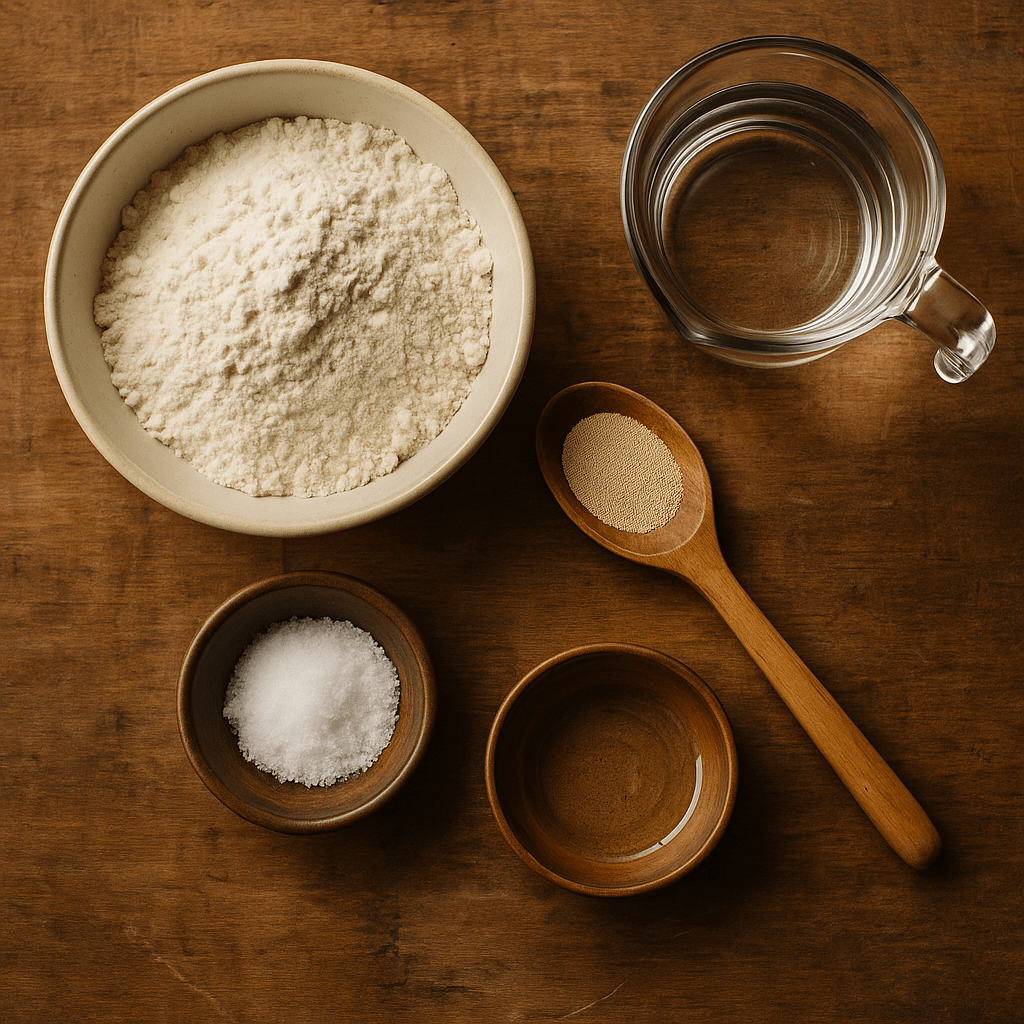
    Because bread isn’t just flour, salt, yeast, and water, it’s patience. It’s a skill born from necessity. It’s history kneaded into muscle memory. Once you have the supplies, it’s cheaper than store-bought—and better for you, body and spirit alike. I’ve found that unfortified flour—the kind left untouched by additives—makes a difference. It’s raw, honest, and stripped down to its true essence.

    That’s what we need more of now.

    Less enrichment, more essence.

    Less spectacle, more survival.

    Learning to make the basics again might not fix everything, but it’s a start—a quiet way of reclaiming control in a world that continually raises the price of dignity. Because the table, when it’s full of simple food and shared stories, still has a kind of wealth that can’t be counted.

    And maybe that’s what it really means to eat something that sticks to your ribs.

    If you want to start anywhere, start with bread. The most basic bread is humble—just flour, salt, yeast, and water: no milk, no butter, no sugar. You stir, you wait, you fold. You give it time to rise, and it teaches you patience in return. Baked until golden and stiff on the outside, soft and honest on the inside. Tear it apart while it’s still warm, and you’ll understand why people around the world have made it for centuries. It’s not about luxury—it’s about survival, about care, about transforming the simplest things into something that sustains.

      And in moments like this—when uncertainty feels like the new normal—maybe that kind of bread, bare and honest, isn’t just food. Perhaps it’s a reminder that we’ve been here before and we made it through.

    Kyle J. Hayes

    kylehayesblog.com

    Please like, comment, and share

    Note from the Author:

    If this reflection stirred something in you — that quiet urge to create, to remember, to feed — you can start where I did: with bread.

    I’ve shared the simplest recipe I know, one that costs little and teaches much.

    👉 The Most Basic Bread Recipe

    Four ingredients. A little patience.

    And a reminder that even in hard times, we can still make enough.

    Resources for Hard Times

    If you’re looking for practical help, food support, or community resources, you can visit the Salt, Ink & Soul Resources Page.

    👉 Resources for Hard Times

  • The Most Basic Bread

    The Most Basic Bread

    (Flour. Salt. Yeast. Water. Nothing else.)

    Ingredients

    • 3 cups (375g) unfortified all-purpose or bread flour
    • 1 teaspoon fine sea salt
    • ½ teaspoon active dry yeast
    • 1ÂĽ cups (300ml) warm water (around 105–110°F / 40°C)

    Instructions

    1. Mix the Basics
    2. In a large bowl, combine the flour, salt, and yeast. Pour in the warm water and stir with a spoon or your hands until it forms a shaggy, sticky dough. Don’t overthink it—just bring it together.
    3. Rest and Wait
    4. Cover the bowl with a damp cloth or plastic wrap. Let it sit at room temperature for 12–18 hours. Time is your secret ingredient here—patience transforms the dough into something alive.
    5. Shape and Rest Again
    6. When the dough has doubled in size and is dotted with bubbles, scrape it onto a floured surface. Gently fold it over a few times, shaping it into a round loaf. Place it on parchment paper or a lightly floured towel, cover again, and let it rest for 1–2 more hours.
    7. Preheat and Bake
    8. Place a heavy pot with a lid (like a Dutch oven) into your oven and preheat to 450°F (230°C). When hot, carefully place your dough inside, cover, and bake for 30 minutes. Remove the lid and bake for an additional 10–15 minutes, until the crust turns a deep golden brown and becomes hard.
    9. Cool and Remember
    10. Let it cool before slicing—if you can resist the temptation. The crust will crackle, the inside will steam. Tear off a piece, hold it warm in your hands, and remember that this is what survival tastes like.

    Notes

    • If you only have instant yeast, reduce to ÂĽ teaspoon.
    • Whole wheat or rye flour can replace up to one-third of the white flour for more depth.
    • The flavor deepens overnight, just like the memory of meals that once held families together.

    This bread doesn’t ask for luxury—just time, trust, and a little hunger to remind you what’s real.

    Resources for Hard Times

    If you’re looking for practical help, food support, or community resources, you can visit the Salt, Ink & Soul Resources Page.
    👉 Resources for Hard Times