The mornings are getting cooler. The evenings invite us to slow down a little. Before long, kitchens across the state will fill with the familiar smells of green chile stew, posole, and calabacitas.
These are the foods of this time of year. The kind that warms the kitchen, fills the house with something wonderful, and reminds us the seasons aren’t just something we see outside our windows. They’re something we taste.
But as much as I’ve come to appreciate New Mexico and its food traditions, there’s still a good bit of the Midwest in me.
And back home, we had a saying for certain meals.
Food that sticks to your ribs.
I always liked that expression.
It wasn’t about fancy ingredients or how something looked on a plate. It meant a meal with some substance. Something hearty enough to satisfy you, something that made you feel like you’d actually eaten.
Growing up, those meals often mattered most. They filled you up, kept you going, and needed little explanation.
I still love that kind of cooking.
Give me something warm, filling, and full of flavor, especially when the weather begins to turn, and I’m a happy man.
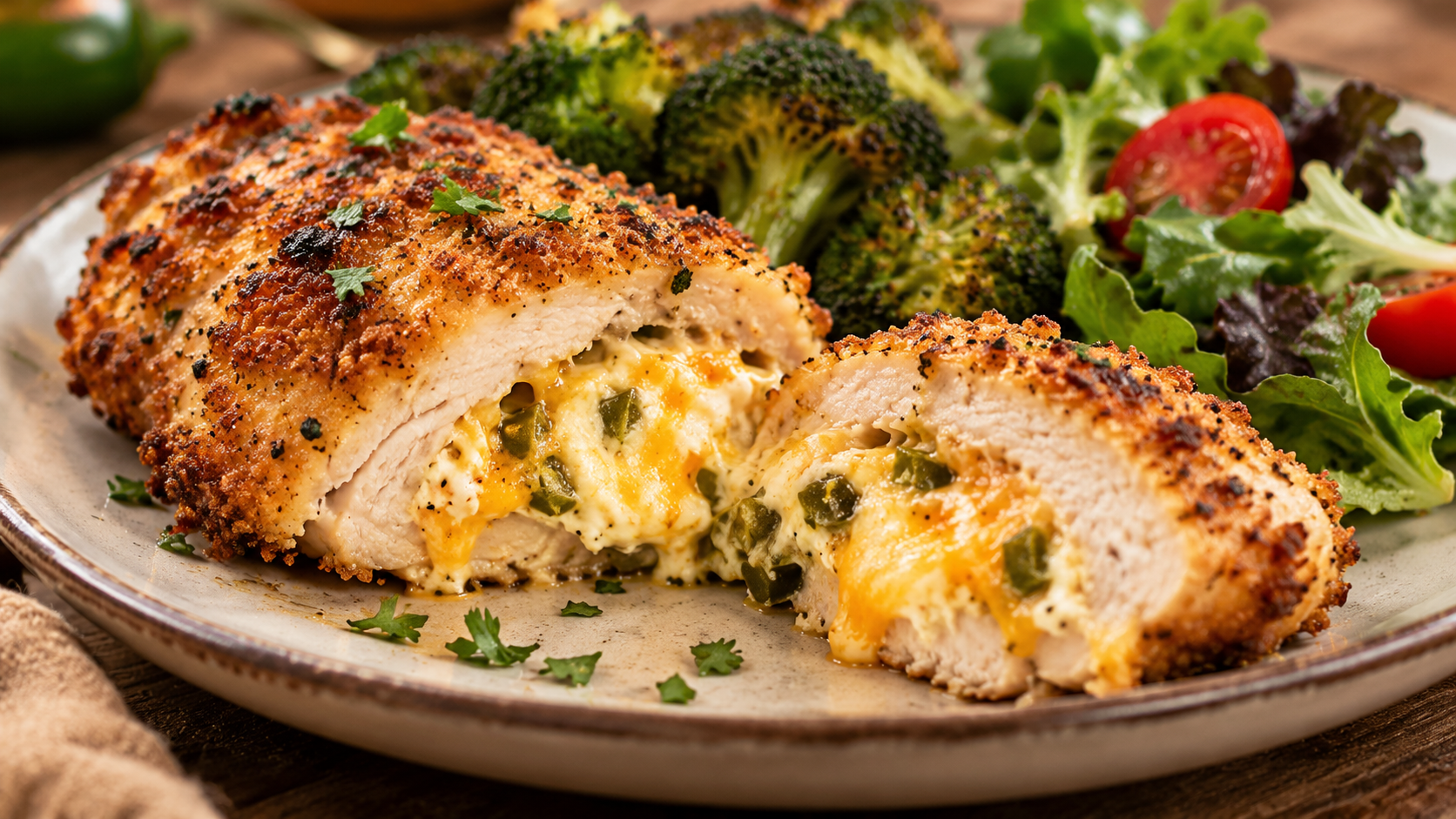
Which brings me to this Jalapeño Popper Chicken.
It’s not a traditional New Mexican dish, and I won’t pretend otherwise. But it brings together a few things I enjoy: tender chicken, melted cheese, and just enough jalapeño to remind you that a little heat can be wonderful.
I’ve also decided to use almond flour instead of crushed pork rinds for the coating. It gives the chicken a slightly nutty flavor and keeps carbs relatively low without unnecessarily complicating the recipe.
And that’s another thing I’ve come to appreciate about cooking.
Not every meal needs to be an event. Sometimes you just want something good coming out of the oven, a comfortable place to sit, and enough food on your plate that you won’t find yourself wandering back into the kitchen an hour later.
This is one of those meals.
A little heat. A lot of comfort. And something that just might stick to your ribs.
Jalapeño Popper Chicken
Prep time: 15–20 minutes
Cook time: Approximately 25–35 minutes
Total time: 40–55 minutes
Servings: 4
Ingredients
- 4 boneless, skinless chicken breasts
- 8 ounces cream cheese, softened
- 1 cup shredded sharp cheddar cheese
- ½ cup diced jalapeños, seeds removed for less heat
- ½ teaspoon garlic powder
- ½ teaspoon onion powder
- Salt and freshly ground black pepper, to taste
- 1 cup finely ground almond flour
- 1 tablespoon olive oil or olive oil cooking spray
- ½ teaspoon smoked paprika (optional)
Instructions
1. Get the oven ready.
Preheat your oven to 375°F (190°C).
Lightly grease a casserole dish or baking dish with olive oil or cooking spray.
Nothing complicated here. Just give the chicken a comfortable place to settle.
2. Prepare the filling.
In a medium mixing bowl, combine the softened cream cheese, shredded cheddar cheese, diced jalapeños, garlic powder, and onion powder.
Season lightly with salt and pepper, then mix until everything is evenly combined.
For more heat, leave some of the jalapeño seeds in. If you prefer something milder, remove them.
There’s no prize for making dinner hotter than you can enjoy.
3. Prepare the chicken.
Using a sharp knife, carefully slice a pocket into the thickest side of each chicken breast.
Be careful not to cut all the way through. You want enough space for the filling without giving the cheese an easy way to escape.
4. Stuff the chicken.
Divide the cream cheese mixture evenly among the four chicken breasts.
Spoon the filling into each pocket, then gently press the chicken closed.
If necessary, use toothpicks to hold everything together.
A little cheese may escape during baking. That’s perfectly fine. It happens.
5. Prepare the almond flour coating.
Spread the almond flour onto a shallow plate.
Season with a little salt, black pepper, and smoked paprika if you’re using it.
Lightly brush the outside of each stuffed chicken breast with olive oil, then gently press it into the almond flour mixture until coated.
Almond flour behaves differently from traditional breadcrumbs. It won’t develop quite the same crunchy crust, but it adds a pleasant texture and subtle nutty flavor.
6. Into the oven.
Arrange the coated chicken breasts in your prepared baking dish, leaving a little room between them.
Lightly spray or drizzle the tops with olive oil to encourage browning.
Bake uncovered for about 25–35 minutes, depending on the chicken’s thickness.
The chicken is done when the thickest part reaches 165°F (74°C).
For extra color, briefly broil the dish, watching carefully. Almond flour can brown quickly.
7. Give it a moment.
Once the chicken is done, remove it from the oven and let it rest for about five minutes.
Remove any toothpicks before serving.
I know it’s tempting to cut into it right away, especially with all that melted cheese inside.
But trust me, molten cream cheese reminds you to be patient.
What to Serve With It
I like keeping the side dishes simple.
Roasted broccoli, sautéed green beans, or a fresh garden salad would all work nicely.
If you’re not particularly concerned about carbohydrates, a baked potato or a little rice would make this an even heartier meal.
And if you happen to have some roasted green chile in the refrigerator, I certainly wouldn’t argue against adding a little to your plate.
We are in New Mexico, after all.
A Few Thoughts From My Kitchen
One thing I’ve come to appreciate about getting older is that I’ve stopped believing everything needs to be more complicated than it is.
That includes cooking.
I enjoy a good meal. I enjoy trying something different. And I appreciate the people who can turn a handful of ingredients into something extraordinary.
But I also believe there’s something to be said for ordinary food prepared with a little care.
A chicken breast isn’t particularly exciting on its own. Neither is a block of cream cheese or a handful of peppers.
But bring them together, give them a little attention, and suddenly you’ve got something worth looking forward to.
Maybe that’s one of cooking’s quieter pleasures.
Taking what you have and making something good out of it.
As the mornings grow cooler and Albuquerque’s balloons disappear from the sky until next year, I know there will be plenty of opportunities for soups, stews, and all those wonderful dishes that make fall feel like fall.
But sometimes, I still want something that reminds me of the Midwest.
Something hearty.
Something comforting.
Something that sticks to my ribs.
And this chicken will do just fine.
Until next time, take care of yourself, eat something good, and remember that a little comfort doesn’t have to be complicated.
Please like, comment, and share
Resources for Hard Times
If you’re looking for practical help, food support, or community resources, you can visit the Salt, Ink & Soul Resources Page.