Tag: Home Cooking

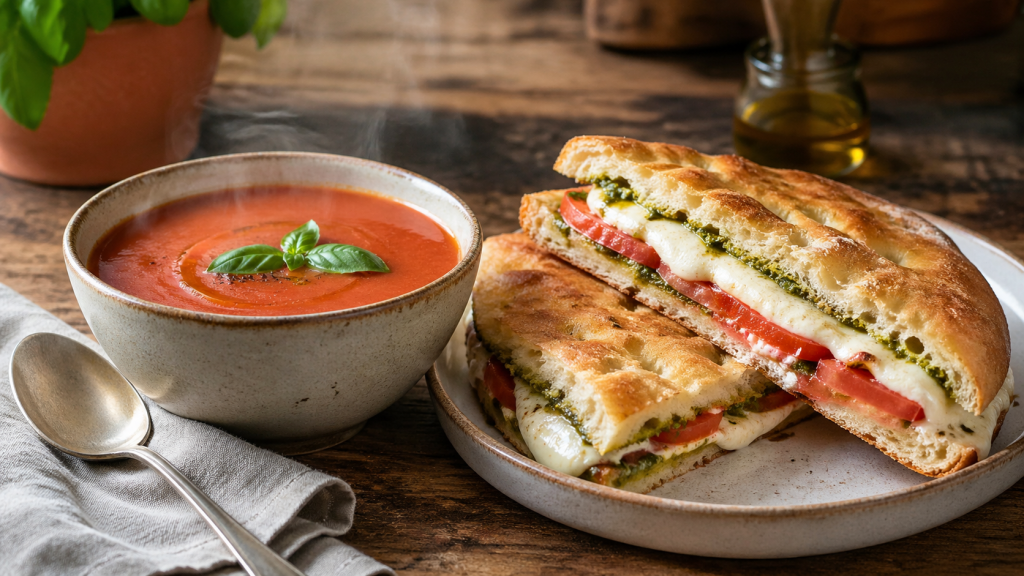
  • Simple Tomato Soup for the Caprese Focaccia Press

    Simple Tomato Soup for the Caprese Focaccia Press

    Some sandwiches ask for soup.

    Not because they are incomplete, but because certain meals understand the value of companionship. The crisp edge of focaccia. The softened mozzarella. The tomato was tucked inside the bread. The basil carried through the pesto. All of it already works.

    But then there is the bowl beside it.

    Warm. Red. Steady.

    Tomato soup does not need to announce itself. It does not need to be dressed up beyond recognition. It only needs to be honest. A little onion. A little garlic. Good tomatoes. Enough seasoning to wake everything up. Maybe a little cream if the day calls for softness.

    This is the kind of soup made for dipping.

    The kind that turns a sandwich into a meal.

    The kind that reminds you that comfort does not have to be complicated to be real.

    Tomato Soup

    Ingredients

    • 1 tablespoon olive oil or butter
    • 1 small onion, diced
    • 2 cloves garlic, minced
    • 1 can crushed tomatoes, 28 ounces
    • 1 cup vegetable broth or chicken broth
    • ½ teaspoon salt, plus more to taste
    • ¼ teaspoon black pepper
    • ½ teaspoon dried basil or Italian seasoning
    • ½ teaspoon sugar, optional, to soften the acidity
    • ¼ to ½ cup heavy cream, half-and-half, or milk, optional

    Method

    Warm the olive oil or butter in a pot over medium heat.

    Add the diced onion and cook until softened, about 5 minutes. You are not trying to rush it. Let the onion mellow and settle into the oil.

    Add the garlic and cook for about 30 seconds, just until fragrant.

    Pour in the crushed tomatoes and broth.

    Add the salt, black pepper, dried basil or Italian seasoning, and sugar if using.

    Stir everything together and let the soup simmer for 15 to 20 minutes.

    Blend until smooth using an immersion blender. If using a regular blender, work carefully in batches and do not overfill it.

    Stir in the cream, half-and-half, or milk for a richer, softer soup.

    Taste and adjust the salt and pepper.

    To Serve

    Ladle the soup into a bowl.

    Finish with a drizzle of olive oil, a little black pepper, a spoonful of pesto, or a few shreds of Parmesan if you have them.

    Serve beside the Caprese Focaccia Press.

    Dip the sandwich into the soup while the bread is still crisp and the cheese is still warm.

    That is the meal.

    Not fancy.

    Not loud.

    Just bread, tomato, warmth, and the quiet pleasure of making something at home that feels like it could have come from somewhere better lit, with smaller tables, and a bill folded neatly at the end.

    Except this time, you made it yourself.

    Kyle J. Hayes

    kylehayesblog.com

    Please like, comment, and share

    Resources for Hard Times

    If you’re looking for practical help, food support, or community resources, you can visit the Salt, Ink & Soul Resources Page.
    👉 Resources for Hard Times

  • The Sandwich Press Deserved Better

    The Sandwich Press Deserved Better

    Sometimes you just want a good sandwich.

    Not the sad one built over the sink with the refrigerator door hanging open. Not the emergency sandwich. Not the one made because hunger showed up, and standards quietly left the room.

    That sandwich has its place.

    It has saved many of us.

    But this was not that.

    I wanted bread. Warmth. A little crunch. Something that felt like lunch had bothered to put on a clean shirt.

    I had been thinking about a Caprese salad. Tomato. Mozzarella. Basil. Olive oil. Balsamic glaze. Simple ingredients. Dangerous in the wrong hands because there is nowhere to hide.

    But I did not want a salad.

    I wanted focaccia.

    I wanted the sandwich press, that forgotten little appliance sitting there like an unemployed line cook, to do something useful.

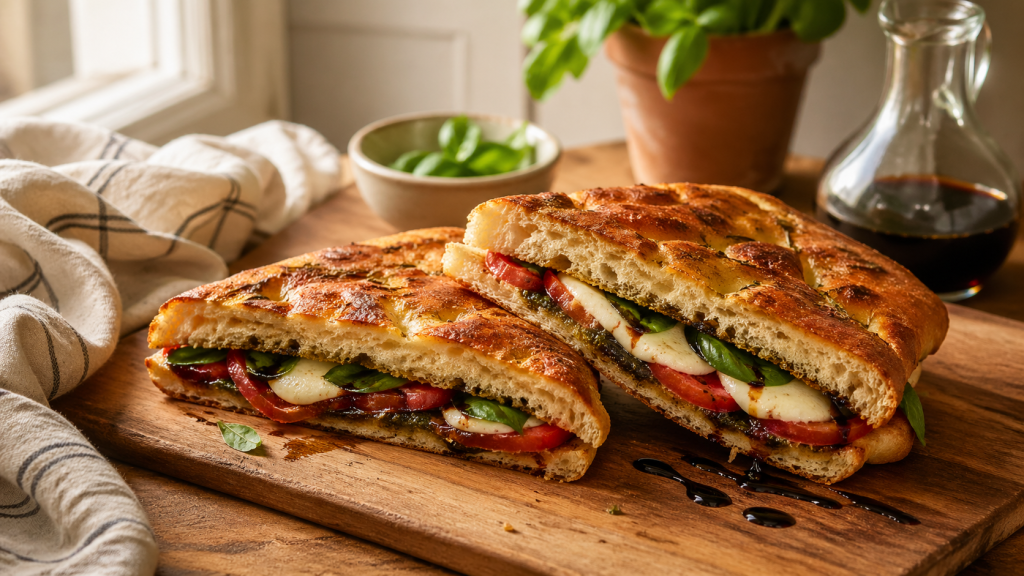
    So I made a Caprese Focaccia Press.

    Focaccia already knows what it is. Oil in the crumb. Salt on the skin. Soft, sturdy, ready for trouble. Press it, and it becomes better. Crisp outside. Warm inside. Mozzarella softening into the tomato. Basil is waking up. Pesto is getting loud in the best way. A small thread of balsamic pulls the whole thing together.

    That is the thing about a good sandwich.

    It is not just filling between bread.

    It is architecture.

    Pressure and tenderness.

    Restraint and appetite.

    This is not fancy food.

    It is not chef food.

    It is home food with better posture.

    Caprese Focaccia Press

    Ingredients

    Makes 1 large sandwich or 2 smaller servings

    • 1 piece of focaccia bread, about 15 x 20 cm, sliced in half horizontally
    • 100–125 g fresh mozzarella, sliced
    • 1 medium tomato, about 120–150 g, thinly sliced
    • 6–8 fresh basil leaves
    • 1–2 tablespoons pesto or 1 tablespoon olive oil
    • 1–2 teaspoons balsamic glaze
    • Pinch of salt
    • Pinch of black pepper
    • 1 teaspoon olive oil, optional, for brushing the outside of the bread

    Optional Additions

    • 15–20 g arugula
    • 2–3 slices prosciutto
    • 30–40 g roasted red peppers, drained and patted dry

    Method

    1. Prepare the tomato

    Slice the tomato thinly.

    Place the slices on a paper towel and gently pat them dry.

    This small step matters. It keeps the sandwich from becoming soggy.

    2. Prepare the focaccia

    Slice the focaccia horizontally in half to create a top and bottom piece.

    Spread 1–2 tablespoons of pesto on the inside of the bread.

    If using olive oil instead of pesto, drizzle about 1 tablespoon over the inside of the focaccia.

    3. Build the sandwich

    Layer the sliced mozzarella over the bottom half of the focaccia.

    Add the tomato slices.

    Season the tomato lightly with salt and black pepper.

    Add the fresh basil leaves.

    Drizzle 1–2 teaspoons of balsamic glaze over the filling.

    Use a light hand here.

    The goal is flavor, not a wet sandwich.

    Add any optional ingredients, if using.

    Close the sandwich with the top half of the focaccia.

    4. Brush the outside

    If the focaccia feels dry, lightly brush the outside with 1 teaspoon olive oil.

    You do not need much.

    Focaccia already carries oil in its bones.

    5. Press the sandwich

    Heat a sandwich press or panini press.

    Place the sandwich inside and press for 4–6 minutes, or until the outside is golden and crisp and the mozzarella has softened.

    If using a skillet, place the sandwich in the pan over medium heat. Press it down gently with another pan or a heavy spatula. Cook for 3–4 minutes per side, until crisp and warmed through.

    6. Rest and serve

    Let the sandwich rest for 1–2 minutes before cutting.

    This helps the cheese settle and keeps the filling from sliding out.

    Cut in half and serve warm.

    Notes From My Kitchen

    Pat the tomato dry.

    Do not overdo the balsamic glaze.

    Let the sandwich rest before cutting.

    Those are small things, but small things often decide whether a meal feels cared for.

    Kyle J. Hayes

    kylehayesblog.com

    Please like, comment, and share

    Resources for Hard Times

    If you’re looking for practical help, food support, or community resources, you can visit the Salt, Ink & Soul Resources Page.
    👉 Resources for Hard Times

  • The Salad That Doesn’t Compete

    The Salad That Doesn’t Compete

    Caesar Salad (As It Was Meant to Be)

    There’s a misunderstanding that follows certain dishes.

    Caesar salad is one of them.

    Somewhere along the way, it became something else.

    Covered. Overloaded. Turned into a platform for whatever someone felt like adding that day. Chicken most of all—placed on top like it needed saving, like it wasn’t enough on its own.

    But it was always enough.

    It was never meant to be heavy.

    Never meant to carry the whole meal.

    It was meant to support.

    To balance.

    To bring something sharp and clean to a plate that needed it.

    That may be why it belongs here.

    Next to something rich.

    Something warm.

    Something like jalapeño popper chicken.

    Because not everything on the plate needs to speak loudly.

    Some things just need to be right.

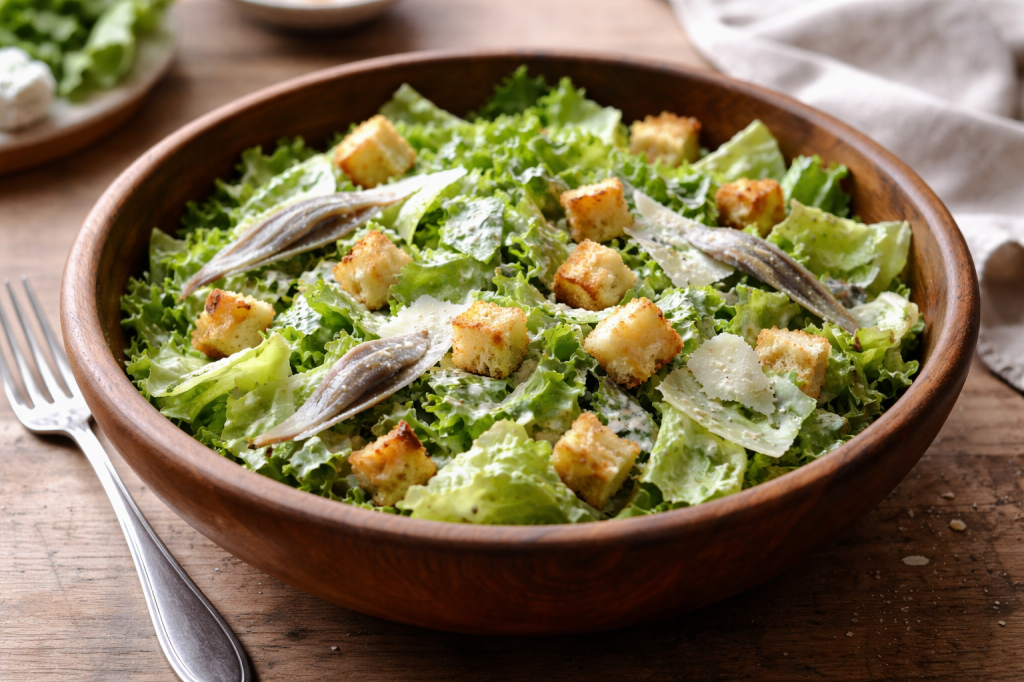
    Caesar Salad

    Serves 4 to 8

    Ingredients

    For the Croutons

    • 1 cup extra-virgin olive oil (from total below)
    • 4 oil-packed anchovies, drained
    • 2 garlic cloves, peeled and smashed
    • 6 slices of white sandwich bread, cut into ¾-inch cubes
    • ¼ cup finely grated Parmigiano-Reggiano
    • Salt and freshly ground black pepper

    For the Dressing

    • Remaining 1½ cups extra-virgin olive oil
    • 6 oil-packed anchovies, drained
    • 2 garlic cloves, finely chopped
    • 1 teaspoon Dijon mustard
    • Juice of 1 lemon (about 2 tablespoons)
    • ½ teaspoon Worcestershire sauce
    • Dash of Tabasco
    • 3 egg yolks
    • Salt and freshly ground black pepper

    For the Salad

    • 1 large or 2 small heads of romaine lettuce, washed, chilled, and coarsely chopped
    • ¾ cup finely grated Parmigiano-Reggiano
    • Boquerones (optional, for garnish)

    Instructions

    1. Make the Croutons

    In a wide pan, heat 1 cup of olive oil over medium-low heat.

    Add anchovies and smashed garlic, letting them slowly dissolve into the oil.

    Not rushed. Not forced.

    Increase the heat slightly and add the bread cubes.

    Toss until golden on all sides.

    Remove and transfer to a bowl.

    Toss gently with parmesan, salt, and pepper.

    Let them rest.

    2. Build the Dressing

    In a food processor or blender, combine:

    • anchovies
    • chopped garlic
    • mustard
    • lemon juice
    • Worcestershire
    • Tabasco
    • egg yolks

    Blend until smooth.

    Slowly drizzle in the remaining olive oil.

    Let it come together gradually.

    Taste. Adjust.

    This is where it becomes yours.

    3. Bring It Together

    In a large bowl, add the lettuce.

    Toss with dressing—just enough to coat.

    Not drown.

    Add the remaining parmesan.

    Toss again, gently.

    Plate it simply.

    This salad was made to sit beside something richer.

    Something warm. Something with weight.

    Like the Jalapeño Popper Chicken.

    Notes from the Kitchen

    • This salad is meant to balance, not compete.
    • Keep it clean. Keep it intentional.
    • The anchovies matter.
    • They don’t make it “fishy”—they make it complete.
    • Use enough dressing to coat, not overwhelm.
    • There’s a difference between flavor and excess.
    • And leave the chicken off.
    • It already has its place on the plate.

    A Quiet Understanding

    There’s something honest about a dish that knows what it is.

    It doesn’t try to become more.

    Don’t try to carry everything.

    It just does its job well.

    And next to something rich—

    something heavy with flavor and warmth—

    This salad reminds you that balance isn’t subtraction.

    Its intention.

    Not everything needs to stand alone.

    Some things are meant to stand beside one another.

    And when they do…

    The whole plate makes sense.

    Kyle J. Hayes

    kylehayesblog.com

    If this found you at the right time,

    Feel free to like, comment, or share it with someone who might need it too.

    Resources for Hard Times

    If you’re looking for practical help, food support, or community resources, you can visit the Salt, Ink & Soul Resources Page.
    👉 Resources for Hard Times

  • Cooking Once, Living Twice

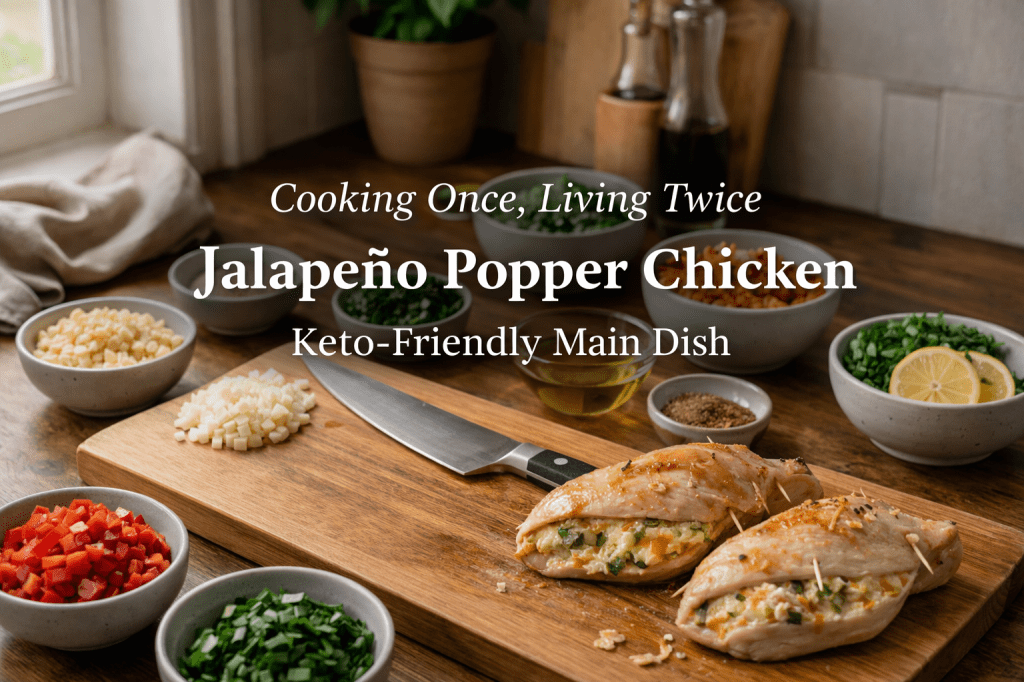
    Cooking Once, Living Twice

    Jalapeño Popper Chicken (Keto-Friendly Main Dish)

    There’s a certain kind of heat that doesn’t come from the stove.

    It comes from the day itself.

    From the bill you just paid.

    From the receipt, you didn’t want to look at too closely.

    From the quiet math you do in your head while standing in the grocery aisle, deciding what stays and what goes.

    And in the middle of all that, the kitchen still calls.

    Not for perfection.

    Not for performance.

    Just for something steady.

    I’ve learned this slowly—meals don’t always need to be made fresh every night to be meaningful. Sometimes the most honest kind of cooking is the kind that understands tomorrow before it gets here. The kind that asks: How do I take care of myself now… so I don’t have to struggle later?

    That’s where this dish lives.

    Not in nostalgia.

    Not in tradition alone.

    But in adaptation.

    Because this isn’t the casserole people expect.

    This is something sharper.

    Warmer.

    A little louder in flavor, but still grounded in the same idea that built kitchens long before ours—cook once, stretch it, make it last.

    And more importantly… make it good.

    Ingredients

    • 4 boneless, skinless chicken breasts
    • 8 oz cream cheese, softened
    • 1 cup shredded cheddar cheese
    • 1/2 cup diced jalapeños (adjust to your comfort)
    • 1/2 teaspoon garlic powder
    • 1/2 teaspoon onion powder
    • Salt and pepper, to taste
    • 1 cup crushed pork rinds (or almond flour for a softer coating)
    • Olive oil or cooking spray

    Instructions

    1. Preheat your oven to 375°F (190°C).
    2. Give the space time to warm up. Rushing the beginning rarely helps the end.
    3. Prepare the filling.
    4. In a bowl, combine cream cheese, cheddar, jalapeños, garlic powder, onion powder, salt, and pepper.
    5. Mix until it becomes one thing. Smooth. Intentional.
    6. Create space in the chicken.
    7. Lay each breast flat and slice a pocket into the side.
    8. Not too deep. Just enough.
    9. Sometimes that’s all that anything needs.
    10. Stuff the chicken.
    11. Divide the mixture evenly and fill each piece.
    12. Secure with toothpicks if needed. Nothing fancy. Just hold it together.
    13. Prepare the coating.
    14. Crush the pork rinds into fine crumbs—or use almond flour.
    15. Spread them on a plate, then press each chicken breast into the coating until it’s fully coated.
    16. Set the pan.
    17. Place the chicken on a parchment-lined baking sheet. Lightly coat with oil or spray.
    18. Give everything its place before the heat begins.
    19. Bake for 25–30 minutes, until the chicken is cooked through and the outside turns golden and crisp.
    20. This is the part where the house changes. Where effort becomes something you can smell.
    21. Rest before serving.
    22. Let it sit for a few minutes.
    23. Not everything needs to be rushed to the plate.

    Notes from the Kitchen

    • This dish holds well. That matters.
    • It reheats without losing itself, which makes it more than dinner—it becomes tomorrow, already handled.
    • Adjust the jalapeños to your tolerance.
    • Heat should support the dish, not overwhelm it.
    • If you’re planning ahead—and I suggest you do—prep everything the night before.
    • When the time comes, all you’ll need to do is move.
    • Pair it with something simple.
    • A side salad. Steamed vegetables. Nothing that competes. Just something that completes.

    A Quiet Understanding

    There’s a kind of respect that doesn’t get talked about enough.

    Respect for your time.

    For your energy.

    For the version of you that will walk into the kitchen tomorrow already tired.

    This kind of cooking honors that person.

    It says: I thought about you already.

    I made sure you’d have something waiting.

    And maybe that’s what this really is.

    Not just a recipe.

    Not just another meal.

    But a small refusal to live in constant reaction.

    A decision to step ahead of the moment instead of being caught inside it.

    Cooking once.

    Living twice.

    And in times like these…

    That’s not just practical.

    That’s necessary.

    Kyle J. Hayes

    kylehayesblog.com

    If this found you at the right time,

    Feel free to like, comment, or share it with someone who might need it too.

    Resources for Hard Times

    If you’re looking for practical help, food support, or community resources, you can visit the Salt, Ink & Soul Resources Page.
    👉 Resources for Hard Times

  • Cooking Without Panic

    Cooking Without Panic

    What Mise en Place Taught Me About Preparation, Presence, and Respect

    I’ve talked about this before.

    And I’m saying it again.

    Not because I enjoy repeating myself. But because some lessons don’t land the first time you hear them. They settle slowly. They wait for you to live long enough to recognize them when they show up again.

    The more I cook, the more I understand this:

    Preparation is not optional.

    It is the difference between peace and panic.

    And nothing reveals that truth faster than the day of a big meal.

    There’s a moment that comes. Always.

    Something is already on the stove. Heat is rising. Time has started moving in a way that doesn’t allow for hesitation. And then—you realize something is missing.

    Not something dramatic.

    Something small.

    Garlic. Butter. An onion you thought you had.

    Now you’re standing there, caught between what’s already begun and what you forgot to prepare. Keys in your hand. Mind racing. Trying to decide if you can leave without losing everything you’ve started.

    I’ve been there.

    More than I care to admit.

    And what I’ve learned is this—those moments don’t come from bad luck. They come from skipping the quiet work.

    When I first started cooking, everything I did lived in that space.

    Chaos.

    Not the kind people romanticize. Not the version that looks like passion from a distance. I mean the real kind. Drawers open. Utensils everywhere. Every pan is dirty. Knives in places they didn’t belong.

    I read recipes while I cooked.

    Not before.

    During.

    Steam in my face. Oil snapping at me like it had something to prove. Words like simmer and boil feel less like guidance and more like pressure.

    I was always catching up.

    And still… the food came out.

    Not great. Not something I would remember.

    But it fed me.

    And at that time, that mattered.

    Because cooking wasn’t about mastery. It was about survival, trying to become something more. It was effort. It was care. Even if it was scattered.

    A love letter written too fast. But still real.

    Then I learned something that didn’t look like much at first.

    Mise en place.

    Everything in its place.

    It sounded simple. Too simple, honestly. Like one of those things people say when they’ve already figured it out.

    But over time, I realized it wasn’t about control.

    It was about respect.

    You start by reading the recipe.

    All of it.

    Not just the parts you think you need.

    Because understanding what’s coming changes how you move.

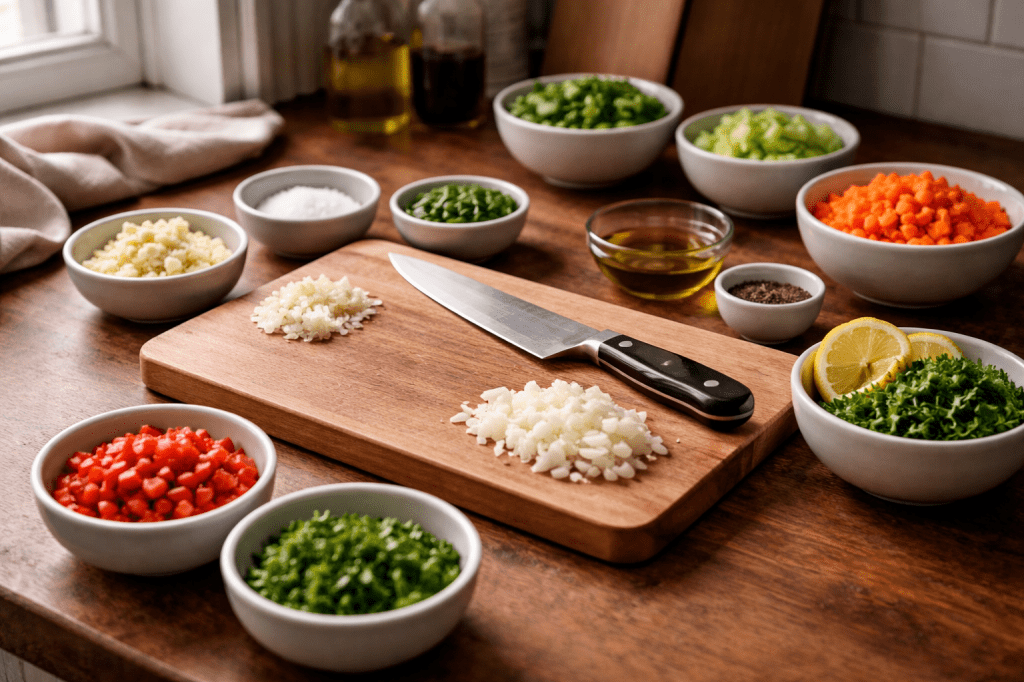
    Then you gather.

    Everything.

    The obvious ingredients. The small ones. The things you assume you won’t forget—until you do.

    Because you will.

    Then you prepare.

    You chop before the heat starts. You measure while your mind is still clear. You take your time while time still belongs to you.

    And in doing that, something shifts.

    You’re no longer reacting.

    You’re deciding.

    Then you separate. You organize. You place.

    And what you begin to notice is that the space around you starts to feel different.

    Clearer.

    Quieter.

    More intentional.

    Because a cluttered space doesn’t just slow your hands.

    It scatters your thinking.

    And most of us, if we’re honest, didn’t learn how to move through life in an organized way.

    Some of us learned to move quickly.

    To adapt.

    To figure things out in motion because there wasn’t another option.

    So we bring that with us.

    Into the kitchen. Into our work. Into the way we handle pressure.

    That urgency.

    That feeling of being just a step behind.

    Mise en place doesn’t erase that.

    But it offers you another way.

    I recognized this before I understood it.

    In another role. Another environment.

    Setting things up the same way every time. Same tools. Same order. Same rhythm.

    Not because everything would go smoothly.

    But because it wouldn’t.

    Because when pressure rises, your thoughts don’t always arrive the way you need them to.

    But your preparation does.

    Your hands remember.

    The kitchen asks for the same thing.

    Now, when I know I’m about to cook something that matters—a meal that will stretch across days, or one meant to be shared—I don’t wait until the moment begins.

    I start the night before.

    I chop. I portion. I set things aside.

    I make sure everything I need is already there.

    No last-minute store runs.

    No 3-leaving a pot on the stove while I go searching for something I should have already had.

    No panic.

    Just movement.

    Steady. Intentional. Present.

    And the food reflects that.

    Not just in how it tastes.

    But in how it feels to make it.

    Because cooking, when you allow it to be, is a form of care.

    And care does not rush.

    I know people get tired of hearing this.

    They want the shortcut. The quicker way. The version that skips the preparation and still delivers the result.

    But it doesn’t work like that.

    Not in the kitchen.

    Not in anything that matters.

    There are things you can rush.

    Clarity is not one of them.

    Mise en place teaches you that.

    It teaches you that preparation is not wasted time.

    That slowing down is not falling behind.

    That respect—for the process, for what you’re working with, for yourself—changes the outcome in ways you can’t always measure, but you can always feel.

    And maybe that’s why I keep coming back to it.

    Because it’s not just about cooking.

    It’s about choosing not to live in constant reaction.

    It’s about creating space before things begin.

    It’s about giving yourself a chance to meet the moment with something steadier than panic.

    Everything in its place.

    Not because life is perfect.

    But because you’re learning how to move through it with intention.

    And sometimes…

    That’s enough to change everything.

    Kyle J. Hayes

    kylehayesblog.com

    If this found you at the right time,

    Feel free to like, comment, or share it with someone who might need it too.

    Resources for Hard Times

    If you’re looking for practical help, food support, or community resources, you can visit the Salt, Ink & Soul Resources Page.
    👉 Resources for Hard Times

  • Cheeseburger Casserole

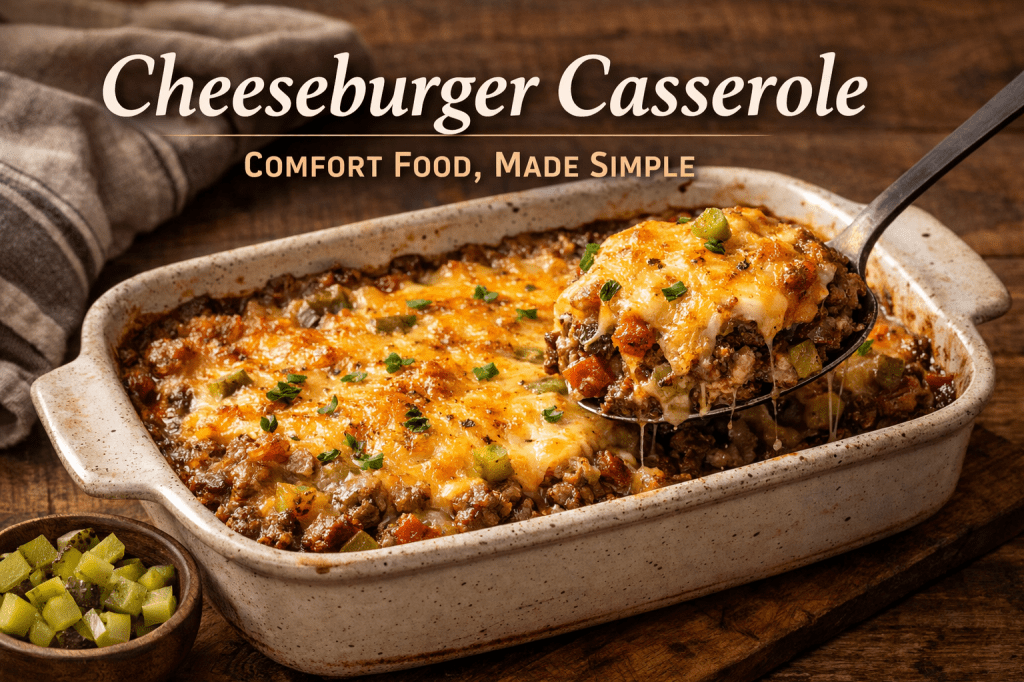
    Cheeseburger Casserole

    A familiar meal, made to be shared

    Some people look at the recipes I make and wonder why they lean so heavily toward casseroles.

    It’s a fair question.

    I eat well when I can. To be mindful. To make choices that feel like they’re moving me in the right direction. But I also love food—real food, the kind that doesn’t pretend to be anything other than what it is.

    This dish comes from something simple. I like cheeseburgers. Always have. The bun… I can take or leave. What stays with me is everything inside it—the beef, the cheese, the sharpness of mustard, the quiet tang of pickles. That’s the part that matters.

    And somewhere along the way, the idea shifted.

    If the bun isn’t necessary, then what’s left?

    Something you can gather. Something you can make once and return to. Something that holds for a few days without losing what made it good in the first place.

    So it became this.

    Not a replacement. Not a shortcut.

    Just another way of holding on to a flavor I wasn’t ready to let go of.

    Cheeseburger Casserole

    Serves

    6–8

    Ingredients

    • 1 pound ground beef
    • 1 small onion, diced
    • 2 cloves garlic, minced
    • Salt and pepper, to taste
    • 1 cup chopped tomatoes
    • 1 cup diced pickles
    • 1 cup shredded cheddar cheese
    • 1 cup shredded mozzarella cheese
    • 1 cup milk
    • 2 eggs
    • 2 tablespoons ketchup
    • 2 tablespoons mustard
    • 1 teaspoon Worcestershire sauce

    Instructions

    1. Preheat the oven

    Set your oven to 350°F (175°C).

    Let it warm slowly. No need to rush it.

    2. Build the base

    In a skillet over medium heat, cook the ground beef with the diced onion and garlic.

    Let it brown. Let the onions soften.

    Season with salt and pepper.

    Drain off any excess fat. What remains should feel clean, not heavy.

    3. Bring in the familiar

    Stir in the chopped tomatoes and diced pickles.

    This is where it starts to feel like something you already know.

    Transfer the mixture to a greased 9×13 baking dish and spread it evenly.

    4. Add the cheese

    Sprinkle the cheddar and mozzarella over the top.

    Nothing precise. Just enough to cover what’s there.

    5. Prepare the sauce

    In a separate bowl, whisk together:

    • milk
    • eggs
    • ketchup
    • mustard
    • Worcestershire sauce

    It won’t look like much yet.

    It doesn’t need to.

    6. Bring it together

    Pour the mixture evenly over the casserole.

    Let it settle into the spaces between everything else.

    7. Bake

    Place the dish in the oven and bake for 25–30 minutes.

    Until the top is melted, slightly golden, and the edges begin to bubble.

    8. Let it rest

    Remove from the oven and let it sit for a few minutes before serving.

    Some meals need that pause.

    This is one of them.

    To Serve

    Serve warm.

    You can finish it with:

    • a few extra diced pickles
    • chopped herbs
    • Or leave it just as it is

    It doesn’t need much.

    Serve This As a Complete Table

    This dish was never meant to stand alone.

    It belongs beside something that brings balance.

    • Low-Carb Coleslaw (coming Friday)
    • Almond Cream Cake  (coming Saturday)

    Together, they create something steady.

    Not heavy.

    Not complicated.

    Just enough.

    Kyle J. Hayes

    kylehayesblog.com

    If this found you at the right time,

    Feel free to like, comment, or share it with someone who might need it too.

    Resources for Hard Times

    If you’re looking for practical help, food support, or community resources, you can visit the Salt, Ink & Soul Resources Page.
    👉 Resources for Hard Times

  • Notes from the Kitchen: What I Learned Slowly

    Notes from the Kitchen: What I Learned Slowly

    There are things the kitchen teaches you slowly.

    Not in a single recipe. Not in a moment where everything finally makes sense. But over time. Through repetition. Through small mistakes. Through paying attention in ways you didn’t know you needed to.

    Some of those lessons stay with you.

    Quiet things. Practical things. The kind that don’t feel important until you realize they’ve changed the way you move through the room.

    If there is ever a question about washing your meat, the answer is yes.

    I learned that in a place that didn’t leave much room for guessing—a summer spent working in a beef processing plant. Some lessons don’t need to be debated after you’ve seen how things are handled before they reach your kitchen.

    At home, I keep it simple.

    A little vinegar. Half a lemon.

    Not complicated. Just care.

    Flour is one of those things I didn’t understand until I did.

    I used to avoid it without knowing why. Something about it never sat right with me. It wasn’t until I started paying attention—really paying attention—that I realized not all flour is the same.

    Now I buy unbleached, unfortified flour. I use King Arthur.

    And yes… I can tell the difference.

    Not just in the way it bakes. In the way it feels afterward.

    Sometimes the body knows things before the mind catches up.

    For a long time, I bought boneless, skinless chicken.

    Convenient. Clean. Quick.

    But convenience has a way of taking something away without telling you.

    At some point, I stopped.

    Started buying whole chickens instead.

    Learning how to break them down. Learning where each cut comes from. Learning how much more you get when you take the time.

    What you don’t use right away becomes broth.

    What used to be thrown away becomes something that feeds you again later.

    There’s a quiet satisfaction in that.

    Some tools make the kitchen easier, not louder.

    A digital thermometer.

    A digital scale.

    They don’t take anything away from the experience. They give you clarity. They remove the guessing that sometimes turns simple cooking into frustration.

    The same goes for learning the metric system.

    Especially when baking.

    It’s not about being technical. It’s about being consistent.

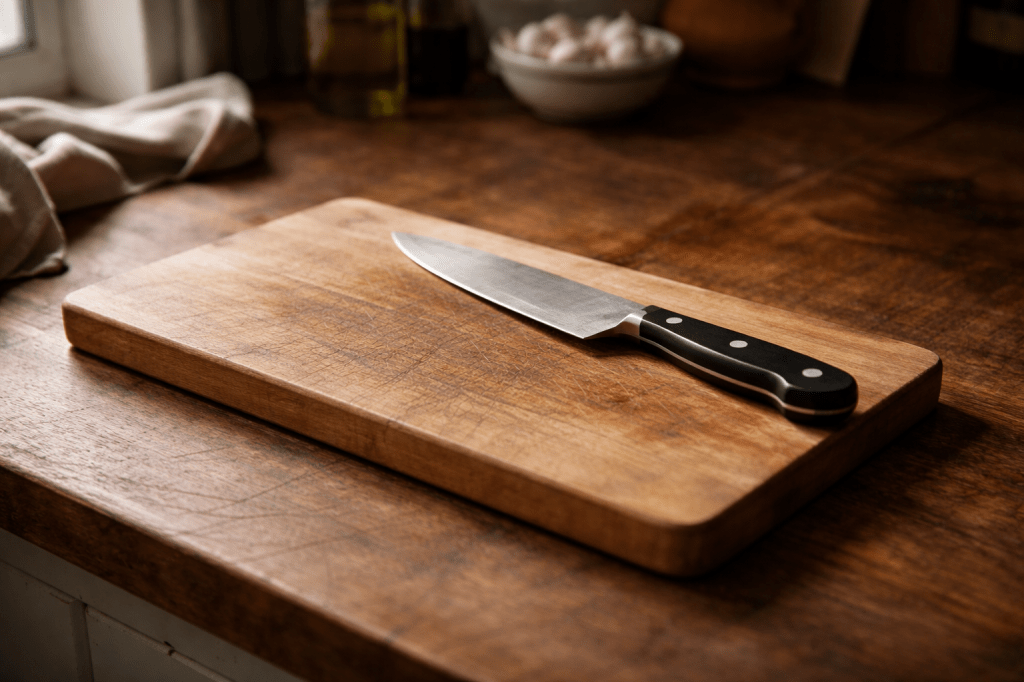
    A sharp knife changes everything.

    I didn’t realize how much effort I was wasting until I didn’t have to anymore.

    There’s a difference between fighting your tools and working with them.

    The kitchen feels different when things move the way they’re supposed to.

    I wear gloves in the kitchen.

    Some people might not.

    That’s fine.

    But I’ve come to appreciate finishing a meal without the smell of onions or garlic following me around for the rest of the day.

    Small choices. Small comforts.

    They add up.

    One of the simplest things I’ve learned is also one of the most important.

    Read the recipe all the way through.

    Not while you’re cooking. Not halfway in.

    At the moment you think about making it.

    Some recipes take time. Some take planning. Some ask more of you than they let on at first glance.

    It’s better to know that before you begin.

    And maybe the most practical lesson of all:

    Plan your meals.

    Not in a rigid way. Not like a schedule you have to obey.

    Just with a little intention.

    Think about what’s coming next. Think about what leftovers can become. Think about how one meal can lead to another.

    It makes things easier.

    More affordable.

    Less wasteful.

    More thoughtful.

    None of these things is complicated.

    That’s the point.

    The kitchen doesn’t always ask for more skill.

    Sometimes it just asks for more attention.

    And over time, that attention becomes something else.

    Something quieter.

    Something steady.

    Something that feels a lot like care.

    Kyle J. Hayes

    kylehayesblog.com

    If this found you at the right time,

    Feel free to like, comment, or share it with someone who might need it too.

    Resources for Hard Times

    If you’re looking for practical help, food support, or community resources, you can visit the Salt, Ink & Soul Resources Page.

    👉 Resources for Hard Times