
Subscribe to continue reading
Subscribe to get access to the rest of this post and other subscriber-only content.

Subscribe to get access to the rest of this post and other subscriber-only content.
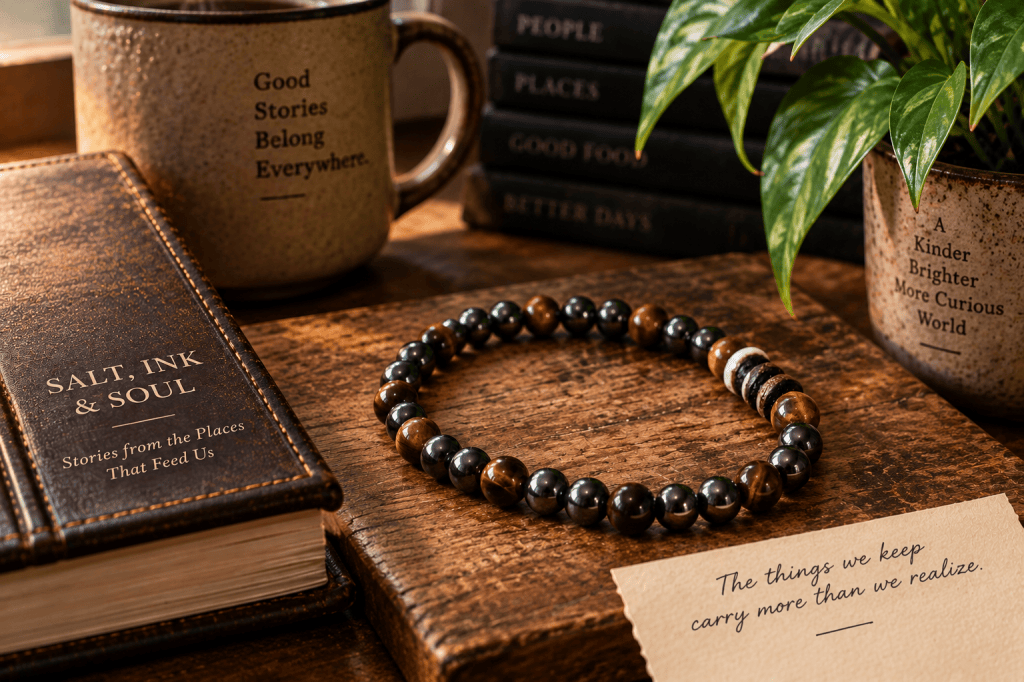
Sometimes, when my feelings begin to overwhelm me, I reach down and touch the bracelet my sister made.
It is a small movement. Easy to miss.
My fingers find the beads, and I remember that somewhere, far from where I live, someone in my family took the time to make something for me. Then she sent it.
There was no occasion.
She thought of me.
Some days, I need something I can touch to remember that.
Those who have read certain pieces here know that my childhood was difficult. I have written about parts of it. Other parts remain harder to explain, even to myself.
I live far from my family now. That was my choice, and much of the time, I believe it was the right one.
It can also be lonely.
There is an awkwardness in admitting that. Once you choose distance, you can begin to feel you have surrendered the right to miss anyone. As though loneliness were a consequence you agreed to accept without complaint.
But a decision can be necessary and still leave something aching.
I can appreciate the life I have here and sometimes wish being close to family felt simpler. I can enjoy my solitude and reach the end of a day wanting to hear a familiar voice.
Both belong to me.
At times, I look at the closeness other people seem to have with their families and feel that I missed something. The ease of belonging. The ordinary assumption that someone will call, that there is a place at the table, that your presence does not require an explanation.
I know I cannot see the whole of another family from the outside. Every table has conversations people avoid.
Still, there are kinds of ease I wish I had known.
There is grief in that, too. Missing something you cannot quite remember having.
My sister is an artist.
Some time ago, she sent me a beaded bracelet she had made. I have become attached to it in a way that might be difficult to explain if you were only looking at the bracelet.
Before I could hold it, she had to.
Before it became something I wore, it was something she was giving her attention to.
There is a tenderness in that which I did not fully understand until I found myself reaching for it.
We speak about time so often as something we lack. We are busy. We are tired. We will call when things settle down. Most of us mean it.
Then someone takes a little of the time they have and makes you something.
You get to keep that time.
I think this is why certain things become impossible to throw away.
A coffee cup with a chipped rim. A cheap watch that no longer works. A book with someone’s handwriting in the margin. A recipe on a stained piece of paper, written by a person who never understood why you needed the measurements.
A stranger might sort them into a donation box.
We would have to sit down first.
The value is difficult to explain because it lives outside the object. It belongs to a kitchen, a voice, an afternoon. Someone reaching across a table. Someone writing your name.
We can describe what a thing is and still say almost nothing about why we keep it.
My bracelet is like that.
It also reminds us that we don’t have to wait until someone is gone to understand the importance of what they have given us. Distance has its own way of teaching us to notice. So does loneliness.
Sometimes a gift becomes precious because the person who made it is alive, somewhere else, carrying on with her day.
And here you are, carrying a little of her care through yours.
A difficult childhood can make care complicated to receive.
I sometimes wonder whether part of me is still learning what to do with affection that arrives without my having to ask for it. Whether I am so accustomed to managing my feelings alone that a small kindness can reach places a grand gesture would never find.
There are moments when loneliness begins making claims beyond what it actually knows.
You are alone becomes You have always been alone.
No one is here becomes No one cares.
When I am overwhelmed, those can feel like the same sentence.
Then I touch the bracelet.
My sister made this.
She sent it to me.
Whatever else I am feeling, those things happened.
The bracelet does not settle every question I have about family. It does not repair my childhood or erase the reasons I live far away. I would not ask something so small to carry all of that.
But it helps me leave room for a fact my sadness sometimes overlooks.
Someone cared enough to make this for me.
I am trying to let that matter without immediately qualifying it.
Perhaps that is part of learning how to live with a complicated history: allowing a kindness to reach you without requiring it to answer for everything that came before.
My sister’s gift deserves to be received on its own terms.
She made something.
She thought I should have it.
And I do.
There are still lonely evenings. I still live far away. Some feelings arrive with more force than I know what to do with.
When they do, I reach down.
My fingers find the beads.
I think of my sister, and for a moment I can hold on to the thought that I may not be as alone as I feel.
Please like, comment, and share
If you’re looking for practical help, food support, or community resources, you can visit the Salt, Ink & Soul Resources Page.
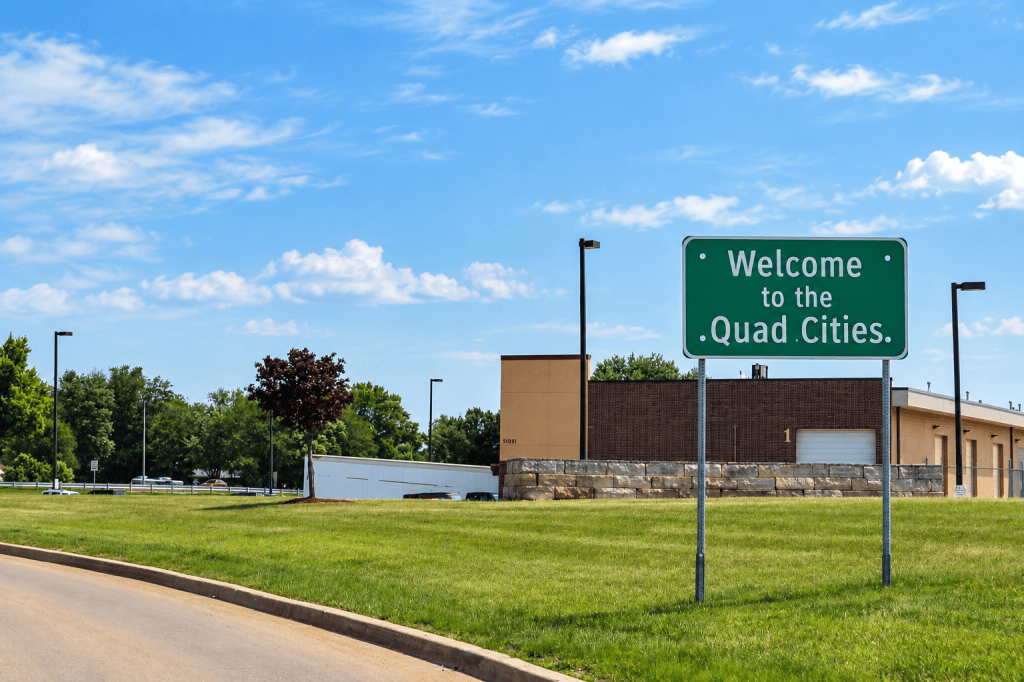
This morning, I needed Maps.
That should not have bothered me.
People use Maps every day.
We use them to find restaurants, stores, roads we have forgotten, places that have moved, places that did not exist the last time we were somewhere.
But something about needing directions here unsettled me.
This is supposed to be home.
Or at least, it used to be.
I drove through streets I once knew without thinking.
Streets where a bicycle had been enough transportation.
Streets where friends lived.
Streets that once led to malls, comic book stores, familiar corners, familiar faces, the small geography of a boy’s world.
Back then, I did not need a map.
Everything I needed seemed to be here.
Now I find myself slowing down at intersections.
Looking at street signs.
Listening to a voice from my phone tell me where to turn.
And somewhere between one unfamiliar building and another, it occurred to me:
I am moving through my hometown like a tourist.
There is a strange arrogance in memory.
Memory convinces us that places belong to us because we once belonged to them.
We leave, carrying a version of a city in our heads, and somehow expect that version to wait.
The old store will still be there.
The neighborhood will still look the same.
The route we walked home will still make sense.
The place where we bought comics, ate lunch, wasted afternoons, met friends, waited for rides, dreamed about getting older—all of it should remain exactly where we left it.
But cities do not wait.
I left.
The city did not.
It kept moving.
Businesses closed.
Buildings came down.
Other buildings went up.
Roads changed.
Neighborhoods changed.
People arrived.
People left.
What was important to one generation became irrelevant to another.
The places that once formed the boundaries of my life became someone else’s before I realized I had surrendered them.
There is nothing cruel about that.
It is simply what time does.
Still, you feel it.
I have been staying at the Blackhawk Hotel.
The building has been here since 1915.
It has watched generations arrive dressed for weddings and funerals, business meetings and celebrations. It has watched automobiles change, fashions change, fortunes rise and fall.
And somehow it remains.
Standing where it has stood.
A foothold of tradition surrounded by a sea of change.
There is something comforting about that.
Perhaps because so little else seems willing to recognize me.
The hotel does not remember me, of course.
Buildings don’t remember.
We do.
But sometimes an old building gives memory somewhere to rest.
A wall still standing can feel like evidence.
See?
You did not imagine all of it.
Some of what you remember really existed.
Some places from childhood survive only inside us.
Eventually even the buildings disappear.
And when they do, memory becomes the only address left.
I’m not sure whether the changes here are good or bad.
I don’t think that is mine to decide anymore.
That realization may be the strangest part.
There was a time when I might have looked around and said:
What happened to this place?
As though the city owed me an explanation.
As though the version I knew was somehow the correct one.
But the people who live here now get to answer that question.
They know which restaurant is good and which one used to be better.
They know where to go without opening Maps.
This belongs to them now.
Not in the legal sense.
In the intimate one.
They possess the current version of this place.
I possess an older edition.
And perhaps that is what returning Home eventually becomes.
Not a return to the place itself.
A return to the distance between what was and what is.
We use the word Home as though it describes geography.
But I am beginning to think Home may have more to do with time.
Maybe my hometown was never merely this collection of streets beside the river.
Maybe it was a particular moment.
When my friends were here.
When bicycles were transportation.
When an afternoon at the mall seemed like an event.
When comic book stores were destinations.
When adults knew where things were, and I did not yet understand how quickly places could disappear.
That version of the city existed.
I lived there.
But it doesn’t exist anymore.
And neither does the boy who lived in it.
There is grief in saying that.
But perhaps there is freedom too.
Losing it does not mean it meant less.
It belonged to a time that finished.
We understand that loving someone does not guarantee they will remain with us forever.
Maybe places deserve the same grace.
So I drove around this morning.
A little lost.
A little amused by being lost.
A little saddened by it too.
Maps telling me where to turn in a city where I once would have laughed at the idea of needing directions.
And for the first time, I stopped trying to make the place match my memory.
I simply looked at it.
What it has become.
Not what I wanted it to remain.
There is humility in that.
The city does not owe me preservation.
Time does not owe me continuity.
The people who live here do not owe my childhood a monument.
They are busy making memories of their own.
Maybe someday one of them will return after many years and drive these same streets.
They will look for a restaurant that disappeared.
A school that changed names.
A store where they once spent entire afternoons.
Their phone will tell them to turn left.
They will realize that the place they called Home has continued without them.
Maybe that is when we understand that leaving happens twice.
The first time is when we go.
The second is when we return and discover the place we left has gone too.
I am not sure I can call this Home anymore.
Not in the way I once did.
It is the place where I grew up.
That is different.
It is the place that helped make me.
That is different too.
And there is no bitterness in saying it.
Only recognition.
The Blackhawk still stands.
The river still moves.
Some streets still carry familiar names.
But I no longer live inside that version of it.
I carry it.
Maybe that is what Home eventually becomes for some of us.
Not somewhere we can return to.
Something we take with us.
And this morning, driving around with Maps telling me where to go, I finally understood something I had not expected to learn here.
I did come home.
I just came home as a tourist.
Please like, comment, and share
If you’re looking for practical help, food support, or community resources, you can visit the Salt, Ink & Soul Resources Page.

I chose the better room on purpose.
That probably doesn’t sound like much of a decision.
People choose hotel rooms every day. They look at the pictures, compare the prices, decide whether they want the larger bed or the better view, and click the button.
But I sat there for a while before I clicked mine.
Because somewhere inside me, an old voice was doing the math.
Not the math of whether I could afford it.
I could.
A different kind of math.
Do you really need that?
I know that question well.
I grew up with it.
When you grow up without much, necessity becomes its own kind of morality. You learn there are things you need and things you want, and good people are supposed to know the difference.
You don’t pay extra for the view.
You don’t need the bigger room.
A bed is a bed.
A room is somewhere to sleep.
Why spend money on something you can do without?
There was wisdom in that.
I don’t want to pretend otherwise.
Those lessons came from people who understood what it meant to stretch a dollar until there wasn’t much stretch left. People who knew that money spent carelessly today might be money desperately needed tomorrow.
They taught us how to survive scarcity.
The problem is that nobody tells you what to do with those lessons when scarcity is no longer your everyday condition.
Sometimes the circumstances change before the thinking does.
So this time, I chose the better room.
Not because I needed it.
I chose it because I wanted to be comfortable.
Even writing that feels a little strange.
My brother arrived a day earlier than expected.
He wanted me to meet his wife, and while he was still on the road, he called me. Somewhere in the conversation, we started talking about the hotel.
My brother has done well for himself.
Very well.
At some point, he mentioned that he doesn’t usually stay in places like this.
I didn’t think much about it at first.
Then I did.
Because I know where he came from.
He came from where I came from.
And I found myself wondering whether an old voice was still doing the math inside him, too.
I can’t say if there is.
His reasons belong to him.
But I wondered.
Two brothers, years removed from the circumstances of their childhood, both successful enough to make choices our younger selves couldn’t have made, perhaps still hearing echoes from a time when spending money on comfort would have seemed foolish.
Maybe even irresponsible.
It made me wonder how much of our past continues making decisions for us long after we believe we have left it behind.
Scarcity teaches you things.
Some of them are useful.
You learn how to make do.
You learn how to repair instead of replace.
You learn that expensive and good are not synonyms.
You learn not to confuse wanting something with needing it.
Those are lessons I hope I never lose.
But scarcity can teach other lessons too.
It can teach you to feel guilty when you have more than enough.
It can make comfort feel suspicious.
It can convince you that choosing the cheaper thing is always evidence of wisdom, even when the difference no longer matters much to your life.
And perhaps most quietly, it can teach you to ask whether you need something when that is no longer the only question available to you.
I am not talking about living beyond your means.
I am not talking about buying things to impress people who aren’t paying your bills.
I am not talking about mistaking luxury for happiness.
I have lived long enough to know better than that.
I am talking about living comfortably within your means.
There is a difference.
And I am beginning to think that difference matters.
Maybe there comes a point when the question changes.
For much of my life, the question was:
Do I really need this?
That question served me well.
But there are times now when I can ask something else.
Can I afford it?
Will it make this experience better?
Am I making the choice responsibly?
And if the answers are yes, maybe I don’t need to summon hardship as proof that I still remember where I came from.
Maybe remembering is enough.
That is the part I am still learning.
Because there is something complicated about doing better than you once did.
People talk about success as though it simply opens doors.
They don’t talk as much about how long you can stand in the doorway wondering whether you are supposed to walk through.
Some of us become very good at surviving.
So good that survival follows us into rooms where it is no longer required.
We carry it in the way we shop.
The way we save.
The things we refuse ourselves.
The small calculations nobody else sees.
And perhaps that isn’t entirely bad.
I don’t want to lose the boy who understood that money mattered.
I don’t want to become careless simply because I no longer have to count every dollar the way people around me once did.
There is honor in remembering.
But there should also be some room for living.
So I am sitting in the better room.
There is more space than I need.
There are things here I could certainly do without.
And tomorrow morning, when I wake up, none of it will have transformed my life.
It is just a hotel room.
I know that.
But perhaps choosing it was never really about the room.
Maybe it was about giving myself permission to enjoy something I could responsibly afford without immediately explaining why I didn’t need it.
Maybe it was about understanding that the people who taught me how to survive would not necessarily want survival to be the ceiling of my life.
I don’t know.
I’m still thinking about that.
But I know this:
There is nothing wrong with remembering how to live with less.
I just don’t want to become so faithful to scarcity that I forget I no longer have to.
Please like, comment, and share
If you’re looking for practical help, food support, or community resources, you can visit the Salt, Ink & Soul Resources Page.

There is something strange about anniversaries.
They do not ask permission before arriving.
A year ago, Malcolm-Jamal Warner left this world.
Like so many people, I first knew him as Theo, not as a character, exactly, but as someone who quietly occupied a corner of my life. Week after week, he reminded us that growing up was awkward, that mistakes did not have to define us, and that being a young Black man could include gentleness, humor, uncertainty, and love.
He became familiar.
And familiarity has a way of convincing us we know someone.
I have thought about that a great deal over this past year.
When he died, I did what many of us do now. I searched.
Not because I wanted headlines. I wanted something closer to the man than the memories television had given me.
That search led me somewhere I never expected.
Apple Music.
I typed his name.
That is where I found Miles Long.
At first I wondered if it could really be him. Then I pressed play.
What I discovered wasn’t simply another creative pursuit from an actor I admired.
It was another language.
The music carried the warmth of the records that raised many of us. Soul. Jazz. Hip-hop. Spoken word. Music that wasn’t trying to chase trends because it understood something more important.
Truth never goes out of style.
The grooves were patient.
The bass never hurried.
The lyrics trusted you enough to meet them halfway.
They sounded like conversations that begin after midnight, when people finally stop pretending they’re fine.
Listening to those songs felt less like discovering a new artist than discovering a room in a house I thought I already knew.
And that realization stayed with me.
How many people have I admired while never truly seeing them?
How many lives have I reduced to the role they played in my own story?
We often say we should give people their flowers while they’re here.
But flowers are not enough if we never walk through the garden.
Malcolm-Jamal Warner was never just the young man who helped redefine television. He was a poet. A musician. A thinker. A man still asking questions about love, identity, fatherhood, justice, and becoming.
His work was larger than the spotlight.
Maybe that is the lesson I have carried this past year.
Most of us are more than the thing the world applauds us for.
The teacher paints.
The mechanic writes poetry.
The grandmother who makes the best cornbread also carries stories no one has bothered to ask about.
The quiet man in the corner may have spent decades composing songs no one in the room has ever heard.
We spend our lives introducing ourselves through occupations.
But our souls rarely fit inside a job title.
A year later, I still return to Miles Long.
Not because grief demands it.
Because gratitude does.
Those songs remind me to slow down.
To look again.
Rest well, Malcolm.
Thank you for reminding us that the most beautiful parts of a person are often the ones waiting just beyond what everyone already knows.
Please like, comment, and share
If you’re looking for practical help, food support, or community resources, you can visit the Salt, Ink & Soul Resources Page.
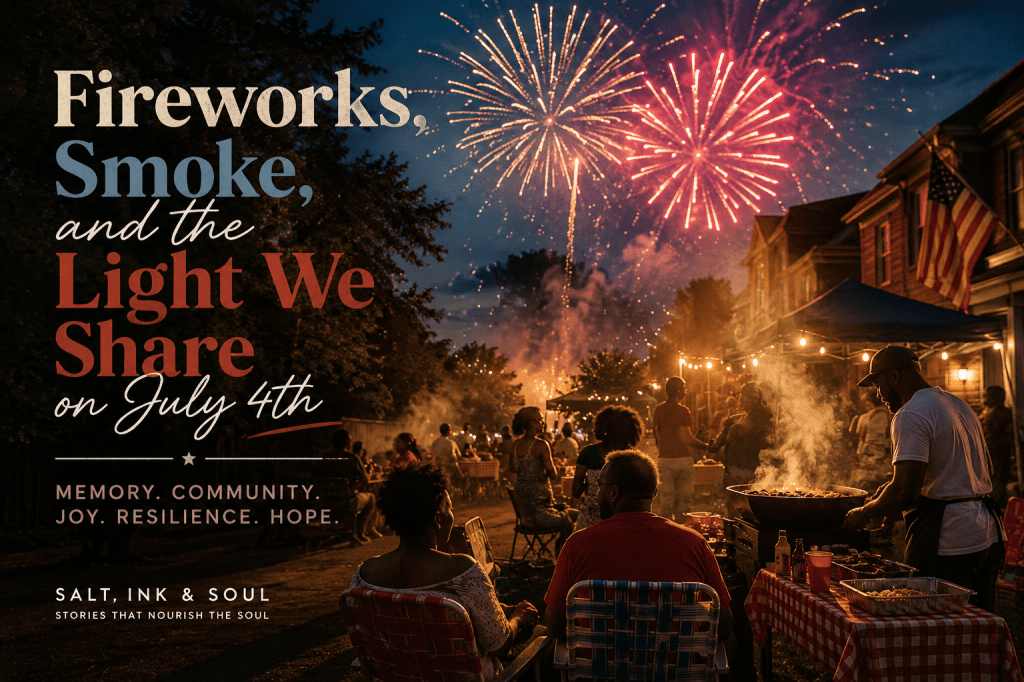
I remember the Fourth of July first through the body.
Not through history books.
Not through speeches.
Not through the careful language of founding documents.
I remember it through smoke.
Smoke rising from grills in backyards. Smoke drifting over alleyways. Smoke clinging to shirts and hair and folding itself into the memory of summer. I remember children running with sparklers, paper plates bending under ribs, baked beans, deviled eggs, and potato salad that everybody quietly judged but still ate.
I remember laughter louder than the cheap fireworks we lit off in the alley.
We did not talk much about the Declaration of Independence. We did not sit around quoting Jefferson. We talked about who cooked what. Who brought the good ice. Who made the punch too sweet. Who showed up with store-bought chicken and tried to pass it off like they had been standing over grease all morning.
But we were celebrating something.
Maybe not the country in the way textbooks wanted us to.
Maybe not independence in its cleanest form.
Maybe what we celebrated was presence.
The gift of still being here.
The gift of people gathered close enough to call your name across a yard.
The gift of neighbors who knew your mother, your children, your business, and sometimes your middle name.
As I grew older, the smoke stayed the same, but the fire changed.
Sparklers became firecrackers. Firecrackers became bottle rockets. Bottle rockets became whole nights spent standing outside, daring the sky to answer us. Later, it became more organized. City festivals. Parades. Firework shows over rivers, stadiums, parks, and fairgrounds.
You would drive somewhere with a blanket, a cooler, and just enough patience to sit in traffic afterward. Then the first burst would open above you, and for a moment, everybody stopped pretending to be separate.
We all looked up.
Together.
That was always the part that mattered most to me.
Not just the color.
Not just the sound.
But the shared looking.
The brief agreement that something beautiful was happening above us, and we were willing to be quiet long enough to receive it.
Now, I often watch the fireworks on television.
I sit in the quiet of a home I work hard to keep. The sound comes through speakers. The colors fill the screen. There is no smoke in the room. No uncle yelling, “Don’t blow your fingers off.” No cousin running too close to the grill. No auntie guarding the good aluminum foil pans like national treasure.
And some years, I have wondered what the Fourth of July is supposed to mean.
I have wondered how to celebrate a nation that has so often complicated celebration.
I have wondered how to hold joy in one hand and history in the other without dropping either one.
Because for Black folks, America has always asked a strange thing of us.
It has asked us to love a house we helped build while reminding us which rooms were never meant for us.
It has asked us to sing while carrying memory.
It has asked us to wave flags that did not always wave for us.
And yet, somehow, we kept making room for joy.
We made room around tables.
We made room in church basements.
We made room on porches, in parks, on folding chairs, beside grills, under trees, and in the middle of neighborhoods the world too often misunderstood.
That is no small thing.
To still find laughter, cook, dance, gather, and still look up.
Please like, comment, and share
If you’re looking for practical help, food support, or community resources, you can visit the Salt, Ink & Soul Resources Page.
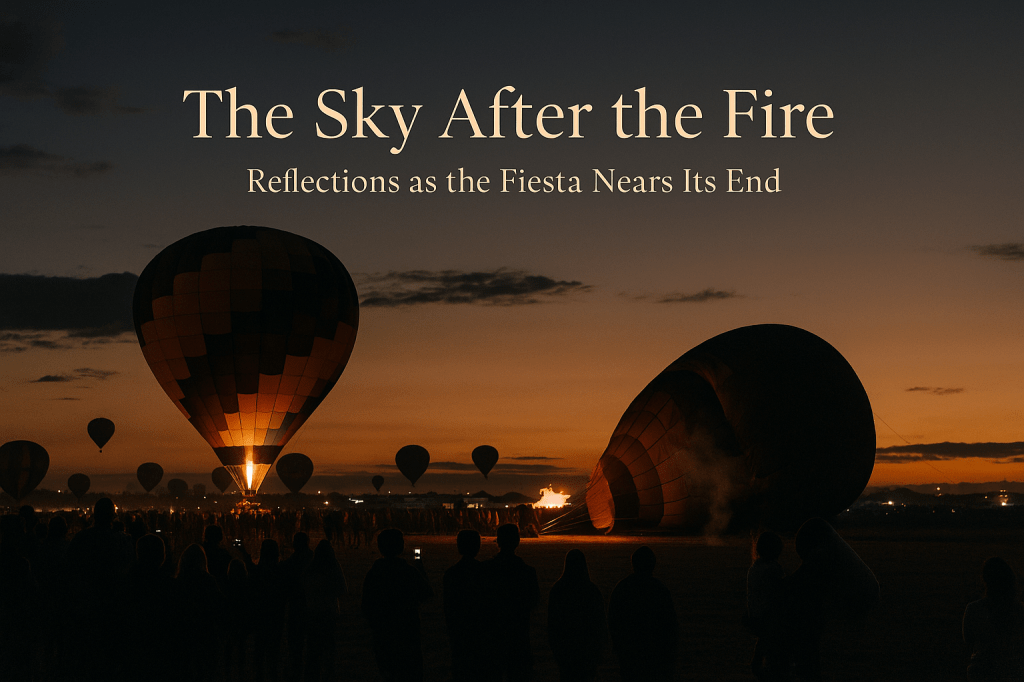
There’s a stillness that settles in the air when something beautiful begins to end.
You can almost feel it—like the warmth that lingers after a fire dies down, or the echo that hangs in the air long after the music stops.
That’s what Albuquerque feels like tonight.
The Balloon Fiesta is winding toward its final days. The crowds are still here, the balloons will still rise, but there’s a quiet awareness—something in the way people talk, the way they linger at the park gates a little longer, or look up just a bit differently, knowing that soon the sky will be empty again.
By Sunday, the burners will hiss one last time. The night glow will fade into memory, the food stalls will close, and the field will return to stillness. But for now, we are in that sacred in-between—the pause before goodbye.
I think back to how it all started.
The first flames in France—men daring the sky with nothing but fire, silk, and faith. That was the beginning of this story, the first breath of what would become centuries of wonder. Then came the dawn patrols—those early risers who carried hope into the dark, proving that courage often burns brightest before sunrise. And then, the chase—crews and families and strangers all following what cannot be caught, learning that beauty was never meant to be possessed, only witnessed.
And now, here we are, standing at the edge of it all—at the night glow, where the sky turns into a mirror for our longing.
If you’ve never stood there, it’s hard to explain. Balloons tethered to the ground, illuminated from within, flickering to life like lanterns in the desert. The sound of burners—deep, thunderous breaths breaking the cool air. Families sitting together, children wrapped in blankets, their faces bathed in orange light. The laughter, the awe, the warmth—it’s all there, suspended for a few hours in the thin October air.
I’ve stood among them, camera in hand, burrito and coffee long gone cold, watching as the sky became a living painting. It’s strange how something as simple as hot air and fabric can stir something so deep. Maybe it’s the fire—how it connects us back to something ancient, something communal. Long before we had cities or machines, people gathered in the dark, their faces lit by flames, sharing warmth and stories.
That’s what the night glow feels like—an echo of the first fires that made us human.
Somewhere between the bursts of flame and the cheers of the crowd, I found myself thinking of next year. That’s the quiet magic of the Fiesta—it always leaves you wanting more, not in greed, but in gratitude. It doesn’t end so much as it plants something in you, a small spark that waits all year for October to return.
By Sunday night, the last balloons will glow against the dark, one final dance between fire and air. The crowd will cheer, children will wave goodbye, and the sky will go black again. But everyone who’s been here will carry a piece of it home—the sound, the color, the feeling of standing still in a world that, for a few fleeting days, felt united in wonder.
I think about the first fire in France and how they must have felt as they watched their creation lift into the air, untethered. I think about the dawn pilots who rise before light, guided by faith in the unseen. I think about the chasers who follow, knowing the joy is in the pursuit, not the catch. And I realize that each of us here—spectator or pilot, child or elder—is a part of that same story.
We rise.
We drift.
We land.
And somewhere between those moments, we learn what it means to live.
So yes, the Fiesta is nearing its end, but endings are just quiet beginnings waiting for their turn. The fire will go out. The balloons will rest. But next October, when the air turns crisp again and the Sandias blush pink at dawn, we’ll all return.
Because the sky after the fire isn’t empty.
It’s waiting.
And so are we.
Kyle J. Hayes
kylehayesblog.com
Please like, comment, and share

In October, I step outside and my neck betrays me. It tilts. It’s a reflex now, a habit stitched into the muscle: look up. I’ve lived in Albuquerque for years and still, when the air is cool and the light is clean, I search the sky for color. I tell myself I won’t take more pictures—I have too many already, crooked and overexposed—but I do. I raise the phone anyway. Because a balloon drifting over a familiar street makes the world feel briefly unfamiliar, blessed, less ordinary. It’s hard not to look up when something is gently urging you to do so.
But you cannot spend all your time with your eyes in the clouds. Others are looking up, too—looking for different reasons. Those are the crews. The chasers. They scan the same sky, but they are reading it. They are mapping a moving target, listening to radios crackle with wind reports and altitude changes, translating the invisible into action. Where I see spectacle, they see a set of decisions unfolding minute by minute.
The pilot calls down their altitude, drift, and plan. In the basket: a burner, a few tanks, and nerve. On the ground: the crew vehicle, a map app with layers of roads and arroyos, a stack of known landing spots, and the experience to know when to ignore them all. A good crew doesn’t just follow; they “lead from behind.” They stay downwind and look ahead, anticipating the arc of the flight, not tailgating the balloon but shadowing its intention.
They read the day the way a cook reads heat. A small helium “piball” might have been launched before dawn to trace the low-level winds; the pilot tests layers by climbing or sinking—thirty feet, three hundred, three thousand—finding slight changes that turn the craft, teasing out a path. From the ground, the chase watches power lines and private land, traffic and fences, the geometry of a field that will forgive a landing. When the pilot radios, “Looking good to set down,” the crew hustles to the far side, positioning themselves where the envelope will finally touch down against the earth.
The landing looks quiet from a distance. Up close, it’s choreography. Someone grabs the crown line to steady the top of the balloon. Someone else works the deflation port when the pilot says the word. Burners hush. Heat thins. The nylon slacks, then it lay down like a tired animal. Hands spread across fabric, smoothing, gathering, rolling. The envelope is folded and fed back into its bag—this miraculous, airborne thing turned back into luggage. The basket is tipped, the rigging coiled, the tanks stowed. Strangers wave from sidewalks. Kids ask if they can help push. Photos are taken. A little dust on the cuffs. The radio goes quiet.
It isn’t glamorous. It is a practiced tenderness, the way a team returns something fragile to the ground without bruising it.
This is where I stop pretending the chase is only about balloons. The longer I live here, the more I know: life is mostly pursuit. We chase the moments we cannot keep. We follow after brief, beautiful things—youth, luck, a parent’s laugh, a friend’s forgiveness—knowing they will descend somewhere we can’t reasonably predict. We listen for small signals. We study the currents. We get into the truck and try to be there—downwind, ready—when whatever we love returns to earth.
Impermanence isn’t a flaw in the design. It is the design. Ballooning admits what we try to deny: everything rises; everything comes down. Beauty isn’t proof of permanence; it is evidence of grace while it lasts. You accept that, or you live angry at gravity. The crews seem to know this. They are at peace with the terms. They’ll chase again tomorrow.
“If flying is the miracle, catching is the mercy.”
What saves all of this from loneliness is how many people do it together. Balloons make families out of strangers. Some have been crewing for decades—grandparents in fleece vests, their kids in ballcaps, their kids’ kids holding the crown line with serious faces, learning the work. Friends who met in a field at dawn are now godparents to each other’s children. Out-of-towners come from great distances—Wisconsin, Japan, South Africa, and Bristol—and are adopted for a week, handed gloves and a thermos, and told where to stand and when to pull. The language barrier disappears the moment the envelope tugs, and everyone leans in the same direction.
I’ve seen reunions happen between baskets and tailgates, the kind only a shared ritual can produce. People who fly together once a year but text all year long. People who plan entire vacations around a wind pattern. People who teach their children to cheer not just when the balloon rises, but when the crew in the dust makes the landing gentle. There are potlucks at rented casitas, toasts at brewery patios, quiet walks along the bosque when the morning debrief is done. A city of chasers, binding themselves to a season and, in doing so, to each other.
It would be easy to romanticize this, to pretend it is always a postcard. It isn’t. Sometimes the wind is wrong, the traffic snarls, a landing field vanishes into a “No Trespassing” sign, the radio fritzes, the plan collapses. Sometimes you arrive on time, and sometimes you don’t. Sometimes you watch the balloon settle two streets over, and all you can do is wave and keep moving. There is a lesson in missing, too: you cannot own what you love; you can only accompany it faithfully.
Still, when it works—when the crew turns down the last dirt road and the basket kisses the earth softly—something inside unclenches. Relief, yes. But also recognition. The craft came back, and so did you. The chase isn’t only a pursuit; it’s a return.
By late morning, the city shrugs back into itself. On a block near an arroyo, a crew kneels in the grass, palms flat, as they push the final folds of nylon into a bag. Someone cinches the strap. Someone else pulls the zipper home. A kid ties a knot and grins like they invented rope. Tank valves are checked. The basket is loaded. A pilot thanks the landowner for the use of the field. Phones trade photos. Numbers are saved. Promises are made for next year.
They pile into the truck, and the radio is silent now, not because the day is over but because the work has moved inside them. Another memory stored. Another morning added to the ledger. Albuquerque is good at this—turning weather into ritual, strangers into companions, a week in October into a reason to belong.
Suppose Origins was about our first attempts to rise, and Dawn Patrol was about the discipline of hope in the dark. In that case, the chase is their echo in daylight—the acceptance of impermanence, the grace of pursuit, and the belonging we find in catching together what can never be kept alone.
I still look up when I step outside. I still take too many pictures. But I’ve learned to love the ground as much as the sky: the chase, the coordination, the imperfect arrivals. The balloon rises; we give chase; it lands; we fold it carefully and carry it out. We do not pretend it will last forever. We honor it because it won’t.
That is the heart of this city’s October. Impermanence accepted, beauty in pursuit. We chase what can’t be kept, and in chasing together, we become the kind of people who know how to let go—gently, gratefully—and still remember where to meet again when the winds turn kind.
By Kyle J. Hayes
kylehayesblog.com
Please like, comment, and share

