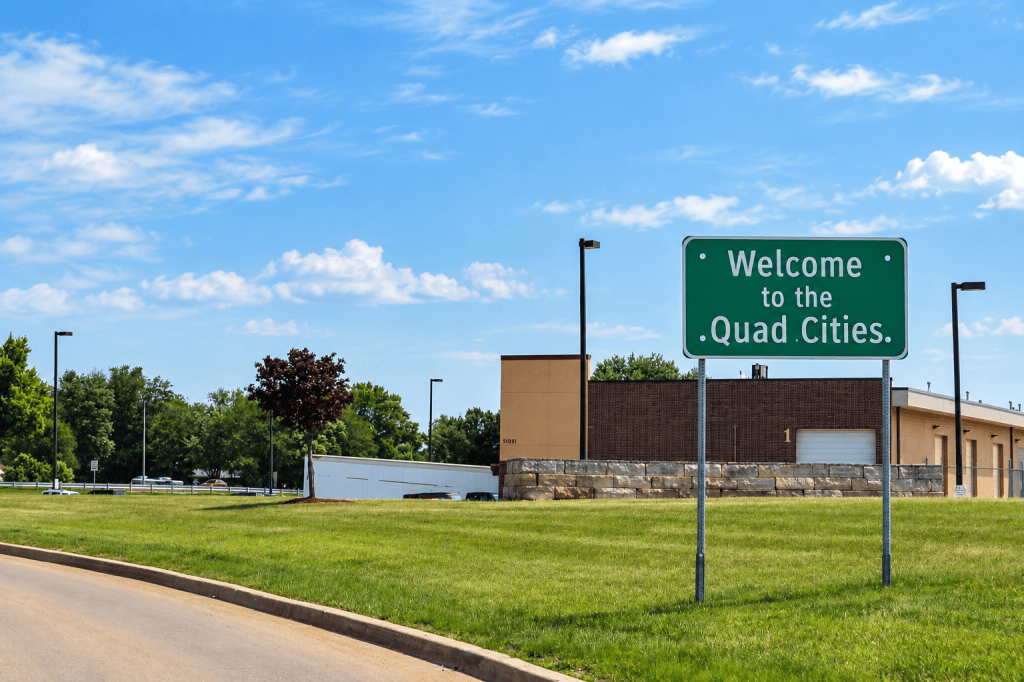
This morning, I needed Maps.
That should not have bothered me.
People use Maps every day.
We use them to find restaurants, stores, roads we have forgotten, places that have moved, places that did not exist the last time we were somewhere.
But something about needing directions here unsettled me.
This is supposed to be home.
Or at least, it used to be.
I drove through streets I once knew without thinking.
Streets where a bicycle had been enough transportation.
Streets where friends lived.
Streets that once led to malls, comic book stores, familiar corners, familiar faces, the small geography of a boy’s world.
Back then, I did not need a map.
Everything I needed seemed to be here.
Now I find myself slowing down at intersections.
Looking at street signs.
Listening to a voice from my phone tell me where to turn.
And somewhere between one unfamiliar building and another, it occurred to me:
I am moving through my hometown like a tourist.
There is a strange arrogance in memory.
Memory convinces us that places belong to us because we once belonged to them.
We leave, carrying a version of a city in our heads, and somehow expect that version to wait.
The old store will still be there.
The neighborhood will still look the same.
The route we walked home will still make sense.
The place where we bought comics, ate lunch, wasted afternoons, met friends, waited for rides, dreamed about getting older—all of it should remain exactly where we left it.
But cities do not wait.
I left.
The city did not.
It kept moving.
Businesses closed.
Buildings came down.
Other buildings went up.
Roads changed.
Neighborhoods changed.
People arrived.
People left.
What was important to one generation became irrelevant to another.
The places that once formed the boundaries of my life became someone else’s before I realized I had surrendered them.
There is nothing cruel about that.
It is simply what time does.
Still, you feel it.
I have been staying at the Blackhawk Hotel.
The building has been here since 1915.
It has watched generations arrive dressed for weddings and funerals, business meetings and celebrations. It has watched automobiles change, fashions change, fortunes rise and fall.
And somehow it remains.
Standing where it has stood.
A foothold of tradition surrounded by a sea of change.
There is something comforting about that.
Perhaps because so little else seems willing to recognize me.
The hotel does not remember me, of course.
Buildings don’t remember.
We do.
But sometimes an old building gives memory somewhere to rest.
A wall still standing can feel like evidence.
See?
You did not imagine all of it.
Some of what you remember really existed.
Some places from childhood survive only inside us.
Eventually even the buildings disappear.
And when they do, memory becomes the only address left.
I’m not sure whether the changes here are good or bad.
I don’t think that is mine to decide anymore.
That realization may be the strangest part.
There was a time when I might have looked around and said:
What happened to this place?
As though the city owed me an explanation.
As though the version I knew was somehow the correct one.
But the people who live here now get to answer that question.
They know which restaurant is good and which one used to be better.
They know where to go without opening Maps.
This belongs to them now.
Not in the legal sense.
In the intimate one.
They possess the current version of this place.
I possess an older edition.
And perhaps that is what returning Home eventually becomes.
Not a return to the place itself.
A return to the distance between what was and what is.
We use the word Home as though it describes geography.
But I am beginning to think Home may have more to do with time.
Maybe my hometown was never merely this collection of streets beside the river.
Maybe it was a particular moment.
When my friends were here.
When bicycles were transportation.
When an afternoon at the mall seemed like an event.
When comic book stores were destinations.
When adults knew where things were, and I did not yet understand how quickly places could disappear.
That version of the city existed.
I lived there.
But it doesn’t exist anymore.
And neither does the boy who lived in it.
There is grief in saying that.
But perhaps there is freedom too.
Losing it does not mean it meant less.
It belonged to a time that finished.
We understand that loving someone does not guarantee they will remain with us forever.
Maybe places deserve the same grace.
So I drove around this morning.
A little lost.
A little amused by being lost.
A little saddened by it too.
Maps telling me where to turn in a city where I once would have laughed at the idea of needing directions.
And for the first time, I stopped trying to make the place match my memory.
I simply looked at it.
What it has become.
Not what I wanted it to remain.
There is humility in that.
The city does not owe me preservation.
Time does not owe me continuity.
The people who live here do not owe my childhood a monument.
They are busy making memories of their own.
Maybe someday one of them will return after many years and drive these same streets.
They will look for a restaurant that disappeared.
A school that changed names.
A store where they once spent entire afternoons.
Their phone will tell them to turn left.
They will realize that the place they called Home has continued without them.
Maybe that is when we understand that leaving happens twice.
The first time is when we go.
The second is when we return and discover the place we left has gone too.
I am not sure I can call this Home anymore.
Not in the way I once did.
It is the place where I grew up.
That is different.
It is the place that helped make me.
That is different too.
And there is no bitterness in saying it.
Only recognition.
The Blackhawk still stands.
The river still moves.
Some streets still carry familiar names.
But I no longer live inside that version of it.
I carry it.
Maybe that is what Home eventually becomes for some of us.
Not somewhere we can return to.
Something we take with us.
And this morning, driving around with Maps telling me where to go, I finally understood something I had not expected to learn here.
I did come home.
I just came home as a tourist.
Please like, comment, and share
Resources for Hard Times
If you’re looking for practical help, food support, or community resources, you can visit the Salt, Ink & Soul Resources Page.


Leave a Reply