Tag: salt ink and soul

  • Deep-Dish Grilled Onions & Mushroom Pizza 

    Deep-Dish Grilled Onions & Mushroom Pizza 

    There is something satisfying about making pizza from the beginning.

    Not opening a box.

    Not waiting for someone to knock on the door.

    Flour. Water. Yeast. A little patience.

    And perhaps patience is the ingredient we have become most reluctant to use.

    This dough spends the night in the refrigerator. Nothing dramatic happens. It simply rests while the yeast does its quiet work, turning a handful of ordinary ingredients into something that tastes as though considerably more effort went into it.

    The next day, onions and mushrooms go into a hot skillet. The onions soften and sweeten. The mushrooms lose their water and begin to brown. Shred a pound of mozzarella by hand.

    And yes, shred the cheese yourself.

    The bagged stuff is convenient, but convenience sometimes comes with a small tax on quality. Pre-shredded cheese is coated to keep the pieces separate, which also keeps them from melting quite as beautifully. For this pizza, buy the block.

    Then build the thing.

    No shortcuts necessary.

    10-Inch Overnight Deep-Dish Pizza

    Makes: One 10-inch deep-dish pizza

    Serves: 4 generously

    Dough fermentation: 12–24 hours

    Bake: approximately 25–30 minutes at 475°F / 246°C

    For the Seasoned Overnight Dough

    • 265 g bread flour
    • 158 g warm water, about 95–100°F / 35–38°C
    • 35 g extra-virgin olive oil
    • 6 g kosher salt
    • 2 g sugar
    • 1.5 g instant yeast
    • 1.5 g garlic powder
    • 1.5 g onion powder
    • 0.5 g dried oregano
    • 0.5 g dried basil
    • 0.5 g freshly ground black pepper

    Optional, but very good:

    • 3 g finely grated Parmesan
    • 0.5 g smoked paprika
    • 0.25 g dried thyme

    For the Pan

    • 14 g extra-virgin olive oil
    • 4 g cornmeal

    For the Pizza

    • 1 lb / 454 g low-moisture whole-milk mozzarella, freshly shredded from a block
    • 8 oz / 225 g fresh mushrooms, sliced
    • 1 medium red or yellow onion, about 170–200 g, sliced into approximately ¼-inch strips
    • 1 tablespoon / 14 g olive oil, for grilling the vegetables
    • ¼ teaspoon kosher salt
    • Freshly ground black pepper
    • 1¼ cups / about 300 g thick pizza sauce
    • 20–25 g freshly grated Parmesan or Pecorino Romano
    • ½ teaspoon dried oregano
    • Optional red-pepper flakes

    I like red onion here, especially with mushrooms. It retains a little character after cooking and gives the finished pizza some sweetness without disappearing into the sauce.

    The Night Before

    Put the flour, salt, sugar, yeast, garlic powder, onion powder, oregano, basil, and black pepper into a large bowl.

    If you’re using the Parmesan, smoked paprika, and thyme, add those too.

    Pour in the warm water and olive oil.

    Mix until the ingredients come together into a rough dough.

    Knead by hand for about 8 minutes, or about 5 minutes in a stand mixer.

    You’re not looking for perfection. You’re looking for a dough that has changed beneath your hands—smooth, elastic, soft, and just slightly tacky.

    Lightly oil a bowl and put the dough inside.

    Cover it and leave it on the counter for 30 minutes.

    Then put it in the refrigerator.

    Leave it there for 12–24 hours.

    Eighteen to twenty-four is even better.

    Time is doing some of the cooking before we’ve ever turned on the oven.

    The Next Day

    Take the dough from the refrigerator about 1½–2 hours before you want to make the pizza.

    Cold dough remembers where it has been. Give it time to loosen up.

    While it does, make the toppings.

    Grill the Onions and Mushrooms

    Heat a large skillet—cast iron is excellent here—over medium-high heat.

    Add the tablespoon of olive oil.

    Add the mushrooms first and spread them into a relatively even layer. Let them cook for 3–4 minutes before moving them much.

    Mushrooms contain a remarkable amount of water. We want that water in the skillet, not trapped beneath our cheese.

    Once they’ve begun releasing their moisture, add the sliced onion.

    Season lightly with salt and black pepper.

    Continue cooking for another 5–7 minutes, stirring occasionally, until the mushrooms have browned and the onions are tender with some caramelized edges.

    Don’t cook the onions all the way down into jam. They still have another half hour in a hot oven.

    Transfer everything to a plate and allow it to cool.

    This step matters.

    Raw mushrooms placed directly onto a deep-dish pizza can release enough water to make the center soggy. Cooking them first concentrates their flavor while protecting the crust.

    Shred the Cheese

    While the vegetables cool, shred the mozzarella.

    All of it.

    One pound.

    It sounds excessive until you remember what we’re making.

    This isn’t a thin pizza where cheese is scattered politely across the surface. Deep dish requires structure. That mozzarella forms a rich layer between the crust and everything wet that comes afterward.

    Use low-moisture whole-milk mozzarella, preferably sold as a block.

    Avoid fresh mozzarella packed in water for this particular pizza. It carries too much moisture.

    And skip the pre-shredded bag if you can.

    Freshly grated mozzarella melts into long, uninterrupted pools of cheese that remind you why pizza became beloved in the first place.

    Prepare the Pan

    Preheat the oven to 475°F / 246°C. Give it a good 30–45 minutes to heat through.

    Coat the bottom and sides of a 10-inch / 25-cm deep-dish pan with 14 g olive oil.

    Don’t be timid with it.

    That oil is partly responsible for the wonderful thing that happens to the bottom and edges of this crust. It doesn’t merely bake.

    It almost fries.

    Sprinkle the bottom with the cornmeal.

    Place the dough in the center and begin pressing outward with your fingertips.

    Work it across the bottom and approximately 1½ inches / 4 cm up the sides.

    If the dough keeps shrinking back, stop.

    Give it ten minutes.

    Then try again.

    Sometimes dough, like people, becomes considerably more cooperative when you stop fighting with it.

    Cover the pan and let the shaped dough rest for 45–60 minutes.

    Build the Pizza

    Deep dish asks us to forget some of what we know about pizza.

    The sauce does not go down first.

    Layer it like this:

    1. Freshly shredded mozzarella
    2. Grilled mushrooms and onions
    3. Pizza sauce
    4. Parmesan or Pecorino
    5. Oregano

    Spread most of the mozzarella directly over the dough, taking it nearly to the edges.

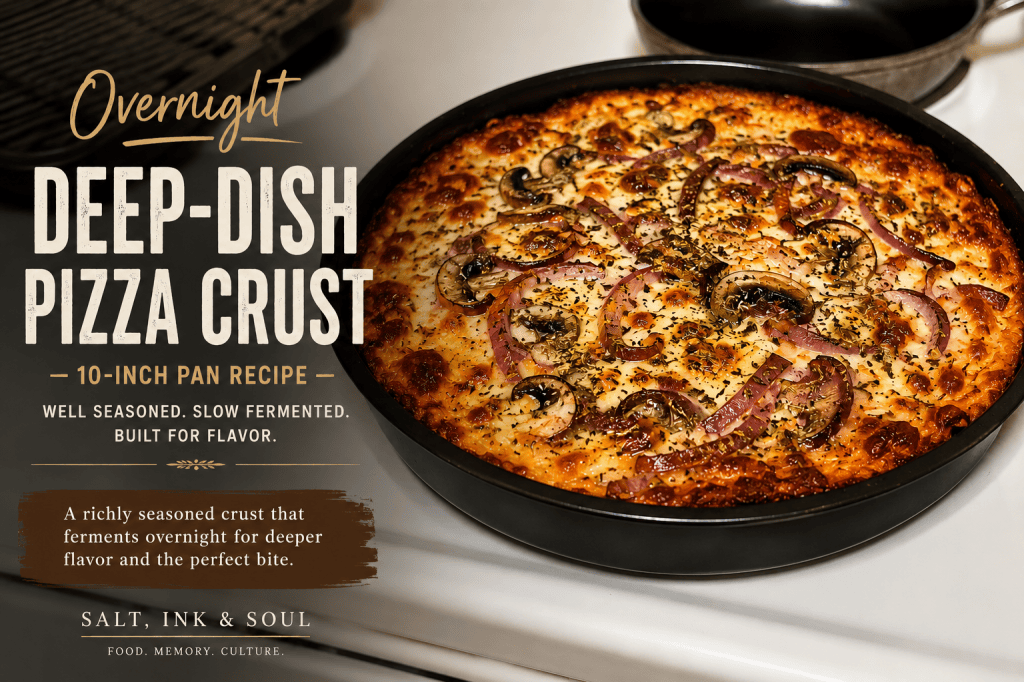
    Reserve roughly 75 g if you’d like some browned cheese visible on top, as in your pizza.

    Scatter the grilled mushrooms and onions evenly over the mozzarella.

    Spoon approximately 300 g pizza sauce over everything. Don’t mash it down. Spoon it across the surface and gently spread it.

    Finish with Parmesan or Pecorino, oregano, and the reserved mozzarella.

    A little crushed red pepper is welcome if that’s your way.

    Bake

    Place the pizza on the lower third of the oven.

    Bake at 475°F / 246°C for 25–30 minutes.

    Start watching carefully around 22 minutes.

    The cheese should be bubbling and beautifully browned in places. More importantly, the outer crust should be a deep golden brown.

    If the cheese is getting too dark before the crust is ready, loosely tent the top with aluminum foil.

    When it’s finished, take the pan from the oven and do something surprisingly difficult:

    Leave it alone.

    Give it 10–15 minutes before cutting.

    That rest lets the cheese, sauce, and vegetables settle. Cut immediately, and all that beautiful filling is much more likely to run onto the plate.

    Run a thin spatula around the edge, slice it into wedges, and serve.

    A Note From the Kitchen

    There are easier ways to make pizza.

    That’s worth admitting.

    You can buy dough. Buy shredded cheese. Open a jar. Throw raw vegetables over everything and have dinner on the table considerably sooner.

    And sometimes that is exactly what dinner needs to be.

    But this is something different.

    You make the dough tonight for something you won’t eat until tomorrow. You grate a pound of cheese. You stand over a skillet long enough for mushrooms to brown and onions to soften.

    None of these things is particularly difficult.

    They simply ask you to care.

    And maybe that’s one of the quiet pleasures of cooking at home.

    Every once in a while, we make something slowly, not because we have to, but because we can.

    Kyle J. Hayes

    kylehayesblog.com

    Please like, comment, and share

    Resources for Hard Times

    If you’re looking for practical help, food support, or community resources, you can visit the Salt, Ink & Soul Resources Page.

    👉 Resources for Hard Times

  • The Foot and the Flower

    The Foot and the Flower

    This is a longer reflection than I usually share. I allowed it the space it needed because some wounds cannot be understood in a few sentences.

    For weeks now, I have been thinking about a flower.

    Not a particular kind. No rose or sunflower. 

    Just an ordinary flower trying to grow.

    Every morning, someone steps on it.

    Not hard enough to kill it. Just enough pressure to bend the stem. To bruise what has begun to open. To make the flower spend its strength recovering instead of growing.

    Then, after enough days have passed, the same person looks down and asks why it did not bloom properly.

    Why are you so small?

    Why do you lean that way?

    Why are your petals damaged?

    Why can’t you grow like the others?

    I have not been able to let that image go.

    Perhaps because I know what it feels like to be the flower.

    As a Black man, I have watched criticism presented as a form of love for most of my life. I have seen people embarrassed in front of others and told it was for their own good. I have heard jokes sharpened into weapons, then dismissed with the familiar accusation that the person wounded was too sensitive.

    We call it keeping someone humble.

    Keeping their head from getting too big.

    Making sure they don’t start thinking they are better than everyone else.

    Preparing them for the world.

    There is always a reason given for the foot.

    We are told that the world will not be gentle with us, so there is no point in being gentle with one another. We tell ourselves that ridicule builds a thick skin. That public embarrassment creates discipline. That if we cut someone down before the world gets the chance, perhaps they will be less surprised when it happens outside the safety of home.

    But I have begun to wonder what kind of safety requires us to imitate the danger.

    What kind of love practices the cruelty it claims to be preparing us to survive?

    The world has rarely needed our help hurting Black people.

    It has been remarkably capable on its own.

    I understand the value of correction. None of us should move through life surrounded by people too afraid to tell us when we are wrong. We need honesty. We need accountability. We need someone willing to say that we have fallen short, that our choices caused harm, or that the work we offered was not yet our best.

    But honesty does not require humiliation.

    Correction does not need an audience.

    Love does not have to leave a person smaller than it found them.

    Somewhere along the way, we began confusing humility with humiliation.

    Humility teaches us that we are not above anyone.

    Humiliation teaches us that we are beneath everyone.

    One keeps the ego from becoming a throne.

    The other convinces the spirit it does not deserve a chair.

    They are not the same.

    I have heard stories that some of this behavior may have roots in slavery. Stories of Black people hiding the intelligence, strength, skill, or beauty of someone they loved because being noticed by those who controlled their lives could be dangerous. An exceptional ability might attract attention. Attention could lead to exploitation, separation, or sale.

    I cannot say exactly how often it happened in that way.

    But I understand the fear beneath the story.

    There were times when being seen was dangerous for us.

    There were times when a person’s ability did not belong to them but became another thing someone else could profit from.

    Perhaps, under those conditions, love sometimes learned to hide itself.

    Perhaps protection sometimes sounded like criticism.

    Perhaps people made their children appear smaller because the world had made Black excellence unsafe.

    Survival can require strange disguises.

    But survival habits do not always disappear when the original danger changes.

    Sometimes they remain long after the people who first needed them are gone.

    A shield carried for generations can become too heavy to lift.

    A behavior created to protect the flower can eventually become the foot that keeps stepping on it.

    That is the question troubling me now.

    What are we protecting one another from today when we mock someone for being intelligent?

    What good are we creating when we ridicule a person for speaking differently, dressing differently, dreaming differently, or wanting more than the people around them were taught to expect?

    We excuse much of this by saying it is part of the culture.

    But culture is not an excuse.

    Culture is an inheritance.

    And like every inheritance, it must be examined.

    Much of what we carry is beautiful.

    But we have also carried wounds.

    Some have been passed down so carefully that we began mistaking them for traditions.

    Loving our culture does not require defending everything within it.

    Sometimes love means looking at what we inherited and asking whether it still serves us.

    Sometimes love means admitting that something once born from survival has become another source of pain.

    Not everything that survived deserves to lead us.

    I think of how often Black children are taught not to think too highly of themselves.

    There is wisdom in teaching a child that they are no better than anyone else.

    But there is danger in teaching them they are nothing special.

    The world will offer that lesson often enough.

    A child should not have to receive it first from home.

    How many young people have hidden their intelligence because achievement separated them from the group?

    How many have learned to pronounce words incorrectly so no one would accuse them of trying to sound white?

    How many sensitive boys learned to harden themselves because tenderness attracted ridicule?

    How many girls learned to dim their confidence so others would not call it arrogance?

    We tell ourselves we are keeping people grounded.

    Sometimes we are burying them.

    A particular expectation is placed on Black men.

    We are supposed to take it.

    The joke.

    The insult.

    The criticism.

    The public embarrassment.

    We are expected to remain still while someone cuts into us and then laugh to prove the blade was not sharp.

    If we admit that something hurt, we are called weak.

    If we object, we are told we cannot take a joke.

    So we learn to laugh.

    Sometimes we laugh before everyone else does.

    We make ourselves the joke so no one can accuse us of being unable to take one.

    We wound ourselves publicly and call it confidence.

    But laughter is not always evidence that something was harmless.

    Sometimes laughter is the sound a person makes while trying not to bleed in front of everyone.

    I have wondered how much of myself this shaped.

    How many times did I make myself smaller before entering a room?

    How often did I question my own thoughts because someone had taught me that confidence invited punishment?

    How often did I speak less clearly than I could have, not because I lacked the words, but because I did not want anyone to think I believed I belonged among those who used them?

    After being stepped on long enough, the foot no longer has to be present.

    You begin doing the work yourself.

    You criticize the idea before sharing it.

    You diminish the accomplishment before anyone can accuse you of pride.

    You reject the opportunity before someone else can tell you that you are not ready.

    You hide enthusiasm because joy makes you visible.

    You keep your expectations low and call it realism.

    That may be the cruelest part.

    The person who once harmed you can leave, but the voice remains.

    Then one day, you look at the life you have built and wonder why so much of it was shaped by fear of becoming visible.

    I do not believe the answer is empty praise.

    Flowers do not grow because we stand over them and tell them they are perfect.

    They need light, water, room, and care.

    Sometimes they need pruning.

    Care is not the absence of correction.

    Care is correction offered in service of growth.

    There is a difference between telling someone the truth and making them ashamed of being alive.

    There is a difference between preparing someone for difficulty and becoming one more source of it.

    There is a difference between helping someone grow and demanding that they prove they can survive being crushed.

    I wonder what would happen if we learned that difference.

    What might our communities look like if encouragement did not make us suspicious?

    What if we could watch someone rise without needing to remind them of every place they once fell?

    What if we understood that celebrating another person’s light does not dim our own?

    Perhaps more of us would reach adulthood without needing to rebuild the parts of ourselves that were dismantled at home.

    Perhaps excellence would feel less lonely.

    Perhaps a gifted child would not have to choose between belonging and becoming.

    Perhaps the young person who seems strange would be allowed enough time to discover that strangeness is a gift before the world has found a name for it.

    We often praise the person who grows through hardship.

    We admire the flower breaking through concrete.

    We photograph it.

    We turn it into a symbol of resilience.

    But we rarely ask why the flower had to fight concrete in the first place.

    Strength born from suffering is still strength.

    But suffering should not receive credit for everything a person became despite it.

    Pain may teach us.

    That does not mean pain was the only possible teacher.

    The flower that survived beneath the foot might have grown taller without it.

    It might have bloomed earlier.

    It might have spent less of its life healing from injuries others insisted were lessons.

    We may never know.

    That uncertainty carries its own sorrow.

    I cannot change every moment when I was cut down.

    I cannot recover every piece of myself I learned to hide.

    But I can decide what kind of person I will be when I stand near someone else who is beginning to grow.

    I do not want to be the foot.

    I do not want to wound them and then congratulate myself for making them stronger.

    I want to learn how to tell the truth with care.

    I want to recognize potential before it becomes achievement.

    I want to encourage people while they are still uncertain, not only after the world has permitted me to believe in them.

    I want to say:

    I see something in you.

    Keep going.

    You do not have to shrink to make me comfortable.

    Your gift does not threaten mine.

    That is how a culture changes.

    Not all at once.

    Not through speeches or declarations.

    Perhaps it begins with small acts of refusal.

    Refusing to laugh when the joke is meant to reduce someone.

    Refusing to mistake cruelty for honesty.

    Refusing to pass down a wound merely because it was handed to us.

    Perhaps it begins when we stop asking how much pressure a person can endure and start asking what they might become with the right care.

    A flower does not need to be stepped on to learn how to grow.

    It already knows to reach for the light.

    Our responsibility is not to test how much damage it can survive.

    It is to stop blocking the sun.

    Kyle J. Hayes

    kylehayesblog.com

    Please like, comment, and share

    Resources for Hard Times

    If you’re looking for practical help, food support, or community resources, you can visit the Salt, Ink & Soul Resources Page.
    👉 Resources for Hard Times

  • When Did We Stop Believing Each Other?

    When Did We Stop Believing Each Other?

    I don’t know exactly when we stopped believing each other.

    Maybe there wasn’t a moment.

    There rarely is.

    Things like trust don’t usually disappear all at once.

    They leave a little at a time.

    A promise not kept.

    A story that turned out not to be true.

    An institution that told us one thing while doing another.

    A person we trusted who taught us, painfully, that perhaps we shouldn’t have.

    Eventually, enough little fractures become a break.

    And lately, I have been wondering whether we are living inside that break.

    We don’t just disagree anymore.

    We suspect.

    We question motives before we consider words.

    Someone tells us something happened, and before we ask whether they are all right, somebody asks for proof.

    A photograph can be manipulated.

    A voice can be cloned.

    A video can be manufactured.

    A headline may have been written less to inform us than to make us angry enough to click it.

    Even our own eyes have become unreliable witnesses.

    So we approach one another with our hands already raised.

    Not necessarily to fight.

    Sometimes just to protect ourselves.

    I understand that instinct.

    Especially because some of us come from people who learned that trust could be dangerous.

    We Learned to Be Careful

    For Foundational Black Americans, distrust of institutions did not begin with social media.

    There is history behind our suspicion.

    Reconstruction came with promises that were abandoned.

    Black communities were redlined while being told opportunity was available to anyone willing to work for it.

    Black men with syphilis in Tuskegee were deceived by people they had every reason to believe were there to help them.

    The War on Drugs devastated communities while being presented as Protection.

    We learned something from all of that.

    Sometimes the people telling you to trust the system are protected from what happens when the system fails you.

    That lesson did not disappear simply because the calendar changed.

    It traveled.

    Grandparents taught parents.

    Parents taught children.

    Sometimes deliberately.

    Sometimes through nothing more than the way somebody’s voice changed when they said:

    Be careful.

    There was wisdom in that.

    There still is.

    But I have begun wondering about something else.

    What happens when Protection Becomes a Wall

    Distrust can protect you.

    It can also imprison you.

    That is the part we don’t talk about enough.

    If you have been betrayed, caution makes sense.

    If history has shown you that an institution is capable of harming people like you, skepticism isn’t paranoia.

    It can be memory doing its job.

    But there is a difference between asking someone to earn your trust and deciding nobody ever can.

    There is a difference between skepticism and allowing suspicion to become the lens through which you see the entire world.

    Because once you believe everyone is trying to fool you, eventually nobody can tell you anything.

    Not a journalist.

    Not a doctor.

    Not a teacher.

    Not a neighbor.

    Not your own family.

    Everybody has an angle.

    Everybody wants something.

    Everybody is lying.

    And the strange thing about living that way is that after a while it can begin to feel like wisdom.

    You can’t fool me.

    Perhaps not.

    But nobody can reach you either.

    A World Where Everything Can Be Fake

    Technology has made this more complicated.

    We carry machines in our pockets that can connect us to almost anyone on earth.

    And somehow many of us have never been more suspicious of the person on the other side of the screen.

    We scroll through arguments between strangers.

    We watch fifteen seconds of someone’s worst moment and decide we understand their character.

    We read a headline and decide we understand the story.

    We encounter information that confirms what we already believe and call it truth.

    Information that challenges us becomes propaganda.

    And now artificial intelligence has introduced something even more unsettling.

    We are entering a world where seeing may no longer be believing.

    A photograph can show something that never happened.

    A voice can say words its owner never spoke.

    A video can place someone somewhere they have never been.

    For most of our lives, proof meant something.

    We could argue about what something meant, but at least we could point to the photograph.

    Listen to the recording.

    Watch the video.

    Now even evidence can require evidence.

    We don’t yet fully understand what that will do to us.

    Because trust requires some shared agreement about reality.

    And when everything can potentially be fake, suspicion becomes almost reasonable.

    Almost.

    Somewhere behind all of this is another uncomfortable reality.

    Someone is making money.

    Anger keeps us watching.

    Fear keeps us scrolling.

    Suspicion keeps us engaged.

    A society constantly asking, Can you believe what they did? is very profitable.

    Trust is quieter.

    Trust doesn’t refresh every thirty seconds.

    Trust doesn’t generate nearly as much outrage.

    Trust is usually two people doing something remarkably uninteresting.

    Keeping their word.

    Showing up when they said they would.

    Telling the truth when lying would have been easier.

    Listening.

    Apologizing.

    Trying again.

    There isn’t much viral content in that.

    But there might be a civilization.

    When We Needed One Another

    I think about neighborhoods sometimes.

    Not because the past was perfect.

    It wasn’t.

    People lied then.

    People cheated.

    People stole.

    People disappointed one another.

    Human beings did not suddenly become flawed when Wi-Fi arrived.

    But needing one another required a certain amount of trust.

    Somebody watched the children.

    Somebody had a spare key.

    Somebody borrowed a cup of sugar.

    Somebody knew whose child belonged to whom.

    Someone noticed when the elderly woman down the street hadn’t opened her curtains that morning.

    You couldn’t build a community without taking some risk on other people.

    Maybe that is what trust has always been.

    Risk.

    We talk about trust as though it means certainty.

    It doesn’t.

    If I knew with absolute certainty that you would never hurt me, I wouldn’t need to trust you.

    Trust exists precisely because I don’t know.

    I am handing you something you could break.

    A confidence.

    A promise.

    My vulnerability.

    Sometimes my heart.

    And believing you will handle it carefully.

    That is terrifying when you’ve already had things broken.

    So I understand why people retreat.

    I understand the small circles.

    I understand the locked doors.

    I understand saying, I’m good by myself.

    There have been times in my own life when folding inward felt safer than reaching outward.

    But safety and living are not always the same thing.

    The Price We Pay

    There is a price for never trusting anyone.

    Eventually we stop showing up.

    Why help the neighbor if you think he’s taking advantage of you?

    Why believe someone’s pain if you assume everybody is exaggerating?

    Why join anything if you think everyone involved has an agenda?

    Why build community if community itself feels dangerous?

    Little by little, we become me.

    And perhaps that is one of the greatest costs of this age.

    Not simply that we don’t believe our institutions.

    But that we are slowly forgetting how to believe one another.

    I don’t think the answer is blind trust.

    Some people should not be trusted.

    Some institutions have earned scrutiny.

    Some doors should remain locked.

    But I don’t want betrayal to have the final say in what kind of person I become.

    I don’t want the people who proved themselves untrustworthy to teach me that nobody is worthy of trust.

    That gives them too much.

    The Quiet Work of Trust

    Maybe rebuilding trust begins much smaller than we imagine.

    Not with another platform promising to bring us together.

    Maybe it begins with keeping the promise you made yesterday.

    Calling when you said you would.

    Admitting when you don’t know something.

    Returning what you borrowed.

    Listening to somebody’s story before deciding whether you believe it.

    Being trustworthy yourself.

    People in my life have helped me through quiet battles without ever knowing they were doing it.

    They showed up.

    Again.

    And again.

    And again.

    Nothing dramatic.

    No speeches.

    Just consistency.

    Perhaps that is how trust returns.

    Not through declarations.

    Through repetition.

    One kept promise placed beside another until eventually somebody believes it is safe to put a little weight there.

    Then a little more.

    Until one day you realize something has been built between you.

    Something invisible.

    Something fragile.

    Something extraordinarily valuable.

    Trust.

    I don’t know whether we can restore trust in all the institutions that have lost it.

    Some of them have considerable work to do before they deserve it.

    We can decide what happens between us.

    We can remain cautious without becoming cold.

    We can remember history without letting it convince us that betrayal is inevitable.

    We can ask questions without assuming every answer is a lie.

    We can make people earn our trust without making the price impossible to pay.

    And perhaps most importantly, we can become people whose word still means something.

    Because the world may give us plenty of reasons to doubt one another.

    I don’t want to give it another.

    Maybe that is where rebuilding begins.

    Not by demanding that somebody trust me.

    By living in such a way that, eventually, they can.

    Kyle J. Hayes

    kylehayesblog.com

    Please like, comment, and share

    Resources for Hard Times

    If you’re looking for practical help, food support, or community resources, you can visit the Salt, Ink & Soul Resources Page.
    👉 Resources for Hard Times

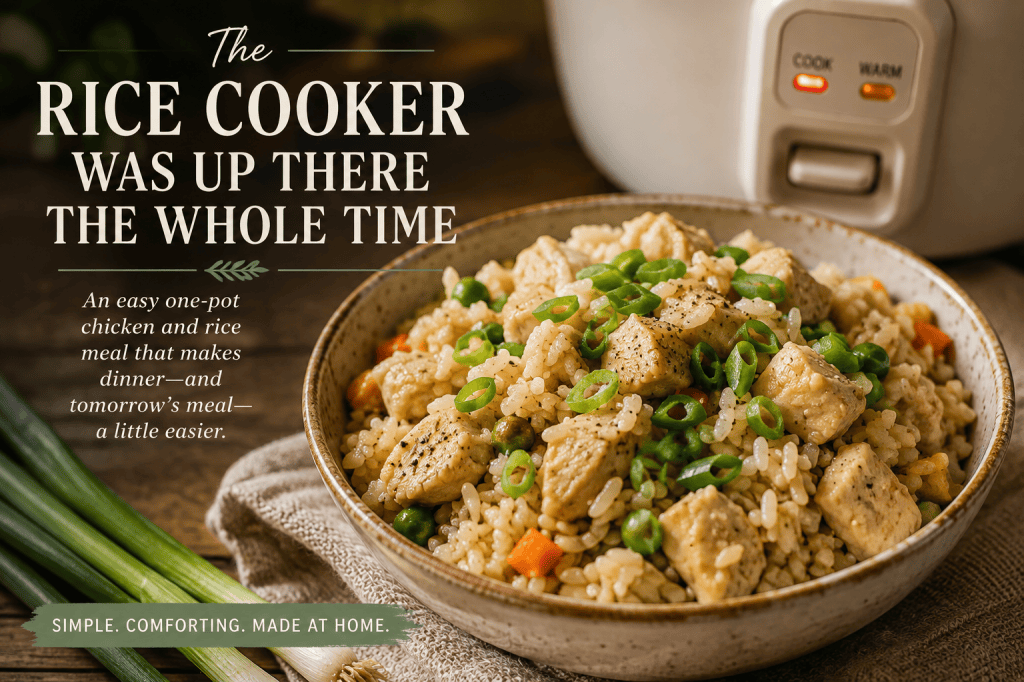
  • The Rice Cooker Was Up There the Whole Time

    The Rice Cooker Was Up There the Whole Time

    I have written before about my air fryer and its role in my ongoing battle against kitchen heat.

    When it is hot outside, I have very little interest in making it hotter inside.

    There are meals worth suffering for.

    There are also days when I don’t particularly feel like suffering for dinner.

    The air fryer became one of my weapons in that fight. It lets me cook something good without turning on the oven and making the kitchen feel like somewhere I immediately regret being.

    But lately, I have recruited another appliance.

    My rice cooker.

    The funny thing is, it was already here.

    It had been sitting on top of my kitchen cabinets for who knows how long, quietly watching me complain about the heat while apparently knowing it could have helped the entire time.

    I just wasn’t really using it.

    I had always thought of a rice cooker as exactly what the name says it is.

    You put rice in.

    You put water in.

    You push a button.

    Rice comes out.

    Useful, certainly.

    Exciting, not particularly.

    Then the YouTube algorithm did what the YouTube algorithm does.

    You watch one video.

    Then another appears.

    Then another.

    Before long, I started seeing people making entire meals in rice cookers.

    Not just rice.

    Chicken.

    Vegetables.

    Seasonings.

    Sauces.

    Everything going into one pot and coming out as dinner.

    I looked up at the top of my cabinets.

    Apparently, I had been underestimating an employee.

    The Beauty of One Pot

    There is something deeply appealing to me about a meal that doesn’t require much ceremony.

    Maybe that comes from getting older.

    Maybe it comes from cooking enough meals to understand that good food doesn’t always need to announce how hard you worked to make it.

    Sometimes you want to chop a few things, put them into a pot, push a button, and go about your business.

    Especially when it is hot.

    And especially when you are meal prepping.

    That was the other thing that caught my attention.

    One cup of uncooked rice becomes roughly three cups once cooked. Add a chicken breast, some seasoning, and green onion, and suddenly I have about three portions of food without dirtying three pans or spending an hour standing over the stove.

    There is something satisfying about that kind of efficiency.

    Not the efficiency of eating something you don’t particularly want simply because it is convenient.

    The efficiency of making actual food convenient.

    I think there is a difference.

    I still want dinner to taste like somebody cared about it.

    Even when the somebody is me.

    Rice Cooker Chicken & Rice with Green Onion

    Makes approximately 3 servings

    This is deliberately simple.

    It isn’t supposed to be the kind of recipe that sends you searching three grocery stores for an ingredient you will use once and then discover in the back of the cabinet two years from now.

    Most of this is probably already somewhere in the kitchen.

    Ingredients

    • 1 cup uncooked white rice, rinsed
    • 1 boneless, skinless chicken breast, cut into small bite-size pieces
    • 2 cups chicken broth or water (or the amount recommended on your rice package)
    • 1 tablespoon soy sauce
    • 1 teaspoon sesame oil
    • 1 teaspoon honey or brown sugar, optional
    • ½ teaspoon garlic powder
    • ¼ teaspoon onion powder
    • ½ teaspoon ground ginger, optional
    • Black pepper to taste
    • 2 green onions, thinly sliced
    • ½–1 cup frozen peas and carrots, optional

    Directions

    1. Prepare the green onions.

    Slice the green onions and separate the white and light-green portions from the darker green tops.

    Add the lighter portions to the rice cooker. Save those beautiful dark-green pieces for the end.

    2. Make the sauce.

    Pour the chicken broth into the rice cooker.

    Add the soy sauce, sesame oil, honey or brown sugar, garlic powder, onion powder, ginger, and a little black pepper.

    Give everything a quick stir.

    3. Add the rice.

    Add the rinsed rice to the liquid and gently stir it once so everything is evenly distributed.

    4. Add the chicken.

    Spread the uncooked chicken pieces evenly over the rice.

    Sprinkle the white and light-green portions of the green onions over everything.

    Close the lid.

    5. Push the button.

    Use your rice cooker’s normal white-rice setting.

    Then leave it alone.

    This may actually be the most difficult part of the recipe.

    There is a temptation when cooking to keep looking at things.

    To stir.

    To check.

    To interfere.

    Resist it.

    The machine knows what it is doing.

    6. Make sure the chicken is done.

    When the rice cooker finishes, check one of the largest pieces of chicken with a food thermometer.

    The chicken needs to reach an internal temperature of 165°F (74°C).

    If it hasn’t reached that temperature, continue cooking until it does.

    7. Finish with the green onions.

    Fluff the chicken and rice together.

    Stir in some of the dark-green onion tops and sprinkle the rest over each serving.

    If you are adding frozen peas and carrots, stir them into the piping-hot chicken and rice, close the lid again, and let everything sit for about five minutes, or until the vegetables are thoroughly heated.

    Taste.

    If it needs a little more soy sauce, add it now.

    Then eat.

    Or, if you are meal prepping like I am, divide everything into three containers.

    Tomorrow’s dinner has already been handled.

    Use What You Already Have

    I think there may be a small lesson hiding somewhere in all of this.

    We accumulate things with good intentions.

    Appliances.

    Books.

    Tools.

    Ideas.

    We tell ourselves we are going to use them.

    Then life happens.

    They sit there.

    And sometimes all it takes is seeing an old thing differently.

    My rice cooker hasn’t changed.

    I stopped seeing it as something that only makes rice and started seeing what else it could do for me.

    It gives me another way to cook without heating up the kitchen.

    It makes meal prep easier.

    It gives me three meals from one pot.

    There is less cleanup.

    Less standing over the stove.

    Less thinking about what I am going to eat tomorrow.

    And most importantly, it still allows me to eat something that feels like dinner.

    Something made at home.

    I think that matters.

    Because convenience has somehow become associated with not caring.

    Fast food.

    Frozen dinners.

    Something eaten standing over the sink because we don’t feel like making anything.

    But convenience doesn’t have to mean neglect.

    Sometimes convenience can be another form of care.

    It can mean making things a little easier for the person you’ll be tomorrow.

    The person who will open the refrigerator, tired and hungry, and discover that someone already thought about dinner.

    Even if that someone was you yesterday.

    Cook’s Note: Rice varieties and rice cookers can behave differently. The rice I used calls for 2 cups of liquid for every 1 cup of uncooked rice. I initially tried less and ended up with rice that was undercooked and burned in places. Check the directions on your rice package and adjust the liquid if necessary.

    Kyle J. Hayes

    kylehayesblog.com

    Please like, comment, and share

    Resources for Hard Times

    If you’re looking for practical help, food support, or community resources, you can visit the Salt, Ink & Soul Resources Page.
    👉 Resources for Hard Times

  • Maybe a Good Life Is Smaller Than We Think

    Maybe a Good Life Is Smaller Than We Think

    I grew up poor enough to know what government cheese tasted like.

    Powdered milk too.

    Those were not stories we told about hardship. They were groceries.

    They were what helped get a family from one part of the month to the other.

    When you grow up like that, the good life can take on a particular shape in your imagination.

    It gets bigger than necessary.

    A giant house.

    Luxury cars.

    Vacations in places you have never seen.

    A refrigerator full of food, so nobody has to worry about running out.

    Bills paid before they are due.

    Maybe even the kind of life we used to see on television.

    When the electricity was on.

    The houses looked enormous.

    The kitchens looked spotless.

    Nobody seemed to worry about the light bill.

    Nobody opened a refrigerator and stood there doing arithmetic.

    Nobody looked at the last few slices of bread and wondered how many people still needed to eat.

    On television, there always seemed to be enough.

    More than enough.

    As a child, I thought that was the good life.

    Maybe that made sense.

    When you don’t have much, abundance looks a lot like happiness.

    You imagine that if you can just get far enough away from what you knew, everything will finally feel safe.

    A bigger house will do it.

    A nicer car.

    More money.

    A vacation where nobody has to count every dollar before ordering dinner.

    I don’t judge the younger version of myself for wanting those things.

    He was trying to imagine security with the only language he had been given.

    Money.

    Space.

    Possessions.

    Distance.

    The farther you could get from government cheese and powdered milk, the better you must be doing.

    But getting older has a way of changing definitions.

    Sometimes you simply wake up one day and realize you are no longer chasing the things you once thought would prove you had made it.

    I don’t live in a giant house.

    I live in a nice apartment.

    And I like it.

    I have an SUV that I love, and unless somebody takes the keys away from me one day, I plan to keep it forever.

    It gets me where I need to go.

    It is comfortable.

    It is mine.

    I have a small group of close friends.

    Not a crowd.

    Not a room full of people.

    Just a few of the best friends I have ever known.

    People I trust.

    People I can laugh with.

    People who know enough about me to understand when I am talking and when I am avoiding what I really mean.

    There was a time when I might have looked at this life and thought it was smaller than what I wanted.

    Now I wonder if I was measuring with the wrong ruler.

    Maybe the good life is smaller than we think.

    Not smaller in value.

    Smaller in scale.

    Maybe it does not require a mansion.

    Maybe it requires a place where you feel at peace when you close the door.

    Maybe it doesn’t require a luxury car.

    Maybe it requires something reliable that takes you home.

    Maybe it does not require being surrounded by people.

    Maybe it requires a few who would notice if you disappeared.

    Maybe it does not require eating in expensive restaurants.

    Maybe sometimes it is knowing there is enough food in the refrigerator and not having to worry about what will be left next week.

    There are things you notice differently when you grew up without enough.

    A full pantry can feel like wealth.

    A paid electric bill can feel like wealth.

    Being able to turn on the air conditioning without fear can feel like wealth.

    Buying something at the grocery store because you want it, instead of because it is the cheapest option, can feel like wealth.

    Going home to a place you actually enjoy living can feel like wealth.

    Having someone call and ask how you are, and knowing they really want the answer, can feel like wealth.

    None of these things photograph especially well.

    That may be part of the problem.

    We live in a world that is very good at showing us what success is supposed to look like.

    But somewhere along the way, we can begin confusing a life that looks impressive with a life that feels good to live.

    Those are not always the same thing.

    You can own a large house and dread going home.

    You can sit in an expensive car and feel completely alone.

    You can stand on a beach halfway around the world and still carry every worry you packed with you.

    Money can solve many problems.

    I would never pretend otherwise.

    People who have lived without enough usually understand that better than anybody.

    Enough matters.

    Maybe more than excess.

    There is a particular peace in enough.

    Enough food.

    Enough money to breathe.

    Enough space.

    Enough people who love you.

    Enough time to sit still for a while.

    Enough confidence in yourself that you no longer need everything you own to explain your worth to somebody else.

    That kind of enough does not make much noise.

    It doesn’t need to.

    Kyle J. Hayes

    kylehayesblog.com

    Please like, comment, and share

    Resources for Hard Times

    If you’re looking for practical help, food support, or community resources, you can visit the Salt, Ink & Soul Resources Page.

    👉 Resources for Hard Times

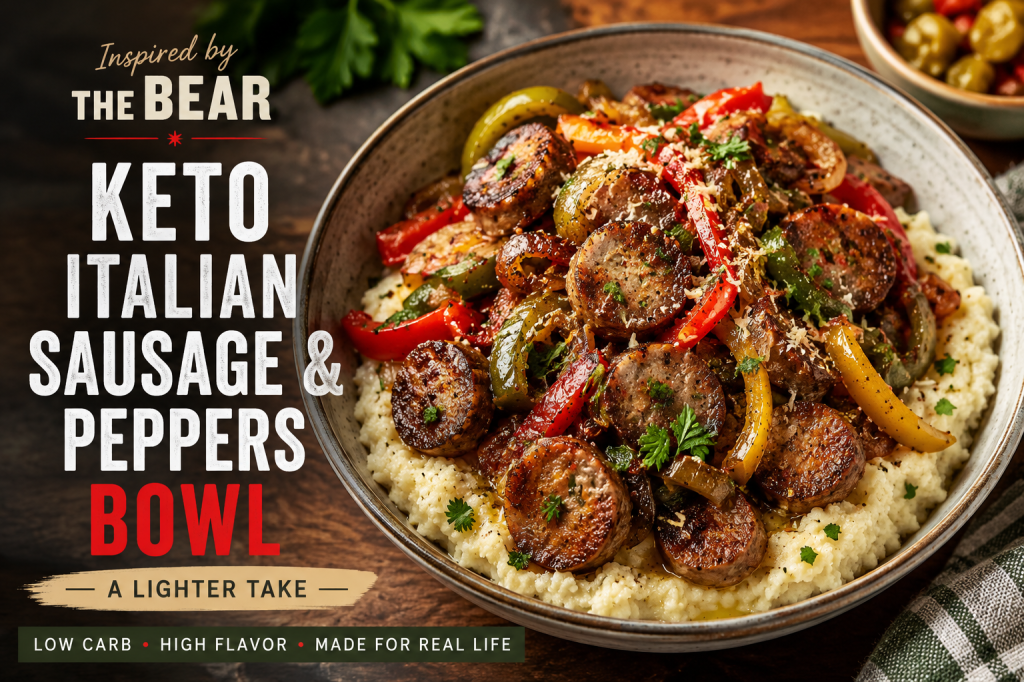
  • Keto Italian Sausage & Peppers

    Keto Italian Sausage & Peppers

    If you’ve watched Season 1 of The Bear, you’ve probably noticed that not every dish gets a close-up. During the rush at The Original Beef of Chicagoland, the kitchen fills with a constant rhythm of shouted orders. Alongside the famous Italian beef, one order comes up again and again:

    “Sausage-pepper!”

    The show never stops to explain how it’s made. It doesn’t need to. In a neighborhood Chicago sandwich shop, Italian sausage and peppers are simply part of the rhythm of the day. It’s dependable, the kind of meal regular customers order without even looking at the menu.

    This recipe imagines that classic in a way that fits today’s kitchen. Instead of serving it on a crusty Italian roll, we’re building a hearty bowl with creamy cauliflower mash, sweet roasted peppers, and juicy Italian sausage. It’s lower in carbohydrates, perfect for meal prep, and easy enough for anyone to make—even if you’re just beginning to feel comfortable in the kitchen.

    Because good food doesn’t have to be complicated.

    It just has to make people feel like someone cared enough to cook.

    Servings

    4–6

    Prep Time: 15 minutes

    Cook Time: 40 minutes

    Ingredients

    For the Sausage

    • 2 pounds Italian chicken sausage or lean Italian pork sausage (mild or hot)
    • 1 tablespoon olive oil

    For the Peppers

    • 2 red bell peppers
    • 2 green bell peppers
    • 1 yellow bell pepper
    • 1 large yellow onion
    • 4 garlic cloves
    • 1 tablespoon olive oil

    Seasonings

    • 1 teaspoon dried oregano
    • 1 teaspoon dried basil
    • 1 teaspoon garlic powder
    • ½ teaspoon smoked paprika
    • ½ teaspoon crushed fennel seed (optional, but recommended)
    • ½ teaspoon kosher salt
    • ½ teaspoon black pepper
    • Pinch of crushed red pepper flakes (optional)

    For the Cauliflower Mash

    • 1 large head cauliflower (or two bags of frozen cauliflower florets)
    • 2 tablespoons butter
    • ¼ cup grated Parmesan cheese
    • 2 tablespoons heavy cream
    • Salt and pepper to taste

    Optional Toppings

    • Fresh parsley
    • Fresh grated Parmesan
    • Giardiniera
    • Pepperoncini

    Instructions

    Step 1: Slice the Vegetables

    Wash the peppers.

    Cut them in half and remove the seeds.

    Slice the peppers into strips about the width of your finger.

    Slice the onion into thin strips.

    Peel and finely chop the garlic.

    Don’t worry if everything isn’t exactly the same size. Home cooking isn’t about perfection.

    Step 2: Brown the Sausage

    Heat a large skillet or frying pan over medium heat.

    Add the olive oil.

    Place the sausages into the pan.

    Cook them for about 8 to 10 minutes, turning every couple of minutes until browned on all sides.

    They don’t need to be fully cooked yet.

    Move them to a plate.

    Step 3: Cook the Peppers

    Using the same pan, add the peppers and onions.

    Cook them for about 10 to 12 minutes, stirring occasionally.

    They should become soft and slightly golden around the edges.

    Add the chopped garlic.

    Cook for one more minute.

    Sprinkle in:

    • oregano
    • basil
    • garlic powder
    • smoked paprika
    • fennel seed
    • salt
    • pepper
    • red pepper flakes (if using)

    Stir everything together.

    Step 4: Finish the Sausage

    Slice the browned sausage into bite-sized pieces.

    Return it to the pan with the peppers.

    Cover with a lid.

    Cook another 8 to 10 minutes, stirring once or twice, until the sausage is fully cooked.

    If the pan starts looking dry, add a few tablespoons of water or chicken broth.

    The vegetables will absorb all those wonderful flavors.

    Step 5: Make the Cauliflower Mash

    While the sausage cooks, boil or steam the cauliflower until it’s very soft.

    Drain it well.

    Place it into a food processor or blender with:

    • butter
    • Parmesan
    • heavy cream
    • a pinch of salt
    • a little black pepper

    Blend until smooth.

    If you don’t have a blender, use a potato masher. The texture will be more rustic, but just as delicious.

    Build Your Bowl

    Start with a generous scoop of cauliflower mash.

    Top with:

    • Italian sausage
    • Sweet peppers
    • Onions

    Finish with:

    • Fresh parsley
    • Parmesan
    • A spoonful of giardiniera if you like a little heat.

    Serve while everything is hot.

    Meal Prep

    This recipe was made for busy weeks.

    Divide into containers with:

    • Cauliflower mash on one side
    • Sausage and peppers on the other

    Refrigerate for up to 4 days.

    The flavors become even better overnight, making leftovers something to look forward to.

    Estimated Nutrition

    (Per serving, based on 6 servings using chicken Italian sausage)

    • Calories: Approximately 430
    • Protein: 32 grams
    • Fat: 29 grams
    • Net Carbohydrates: 9–11 grams

    Salt, Ink & Soul

    There is a quiet dignity in everyday food.

    Not every meal is meant to impress strangers on the internet. Most are meant for something much smaller, and somehow much more important. A family sitting around the table after a long day. A meal packed for tomorrow’s lunch. A friend who drops by without warning. A cook making enough so no one leaves hungry.

    Those are the meals that shape our memories.

    Kyle J. Hayes

    kylehayesblog.com

    Please like, comment, and share

    Resources for Hard Times

    If you’re looking for practical help, food support, or community resources, you can visit the Salt, Ink & Soul Resources Page.
    👉 Resources for Hard Times

  • A Veterans Day Reflection

    A Veterans Day Reflection

    Lately, this space has been about doing what I can — small things, quiet things. Writing about food that costs less but still feeds fully. Reminding people that hard times have come before, and somehow, we made it. Trying to turn memory into a map, so maybe others can find their way through their own lean seasons.

    But today, I want to turn that attention outward — toward a different kind of endurance. Toward a group of people who also know what it means to do what they can — and often, far more. The ones who gave years, limbs, sanity, and sometimes everything, in the name of something larger than themselves.

    We set aside a day for them — Veterans Day — meant to honor those who served this country and, in too many cases, came home carrying its invisible weight. We say “thank you for your service,” and we mean it, most of us. But I keep wondering if that’s all we’ve learned to say.

    You don’t have to look far to see the contradiction: a country that never stops telling itself that it leaves no one behind, and yet, at almost every intersection, you can see someone it did. Veterans sleeping under bridges. Holding cardboard signs. Waiting at food pantries. People who once trained to survive in the most hostile places on earth are now fighting to survive at home.

    Yes, there are programs. Yes, there are benefits. But if you’ve ever stood in line at the VA or talked to someone navigating that system, you know the difference between what exists and what works.

    I’m not here to offer solutions. I don’t have them. I don’t know how to fix the machinery of a government that can spend billions on war but seems to run out of compassion on the return trip. What I know are smaller things — human things. I know how to say thank you. I know how to feed someone. I know how to remember.

    And maybe that’s something, even if it isn’t enough.

    When I write about food, I’m really writing about survival — about how we keep going when everything feels stripped bare. And in a way, that’s what veterans know better than anyone. They know how to keep moving through the noise. How to turn discipline into a ritual. How to make meaning in the middle of chaos. They’ve done it for us, even when we didn’t deserve it.

    The stories I tell, about stretching enough to feed a family — they’re small, domestic wars of endurance. Theirs were louder, bloodier, lonelier. But the lesson is the same: survival costs something, and someone always pays.

    I think about the phrase “thank you for your service.”

    How tidy it sounds. How quick. It fits easily into conversation, into tweets, into holiday speeches. But behind that politeness are pieces of people scattered across decades — the ones who never came back, and the ones who did, but not completely.

    I don’t have parades or medals to give.

    I have words — small, imperfect ones, but offered with weight.

    To every man and woman who served — thank you. For your strength, your sacrifice, your impossible patience. For doing what many couldn’t or wouldn’t.

    And to those still fighting their own wars at home — for housing, for healthcare, for peace of mind — I see you. I don’t have answers, but I have recognition. I have gratitude. And I have the conviction that we can do more, that we must do more, for a country that still calls itself free.

    So today, I’ll do what I can — remember, write, feed whoever I can reach.

    Because service shouldn’t end when the war does.

    Kyle J. Hayes

    kylehayesblog.com

    Please like, comment, and share

    Resources for Hard Times

    If you’re looking for practical help, food support, or community resources, you can visit the Salt, Ink & Soul Resources Page.

    👉 Resources for Hard Times

  • Nothing Wasted – The Grace of Leftovers

    Nothing Wasted – The Grace of Leftovers

    I grew up in a house where tomorrow lived in the refrigerator—stacked in mismatched containers, labeled only by memory and love. We didn’t have much, so we learned to keep what we had. A pot cooled on the stove like a promise. A slice of bread wrapped in a paper towel felt like insurance against whatever the next day might bring.

    So when I hear people say they don’t eat leftovers—say it like a flex, like the world owes them a fresh performance every night—I don’t understand. Why throw away another lunch, another midnight snack, another chance to make something out of almost nothing? Where I’m from, waste isn’t just waste. It’s disrespect—to the hands that cooked, to the hours that earned the money, to the hunger we remember even when our plates are full.

    Leftovers carry a particular kind of grace. They’re proof that somebody planned ahead, that care was stretched across time. They’re the echo of yesterday’s effort, still singing. And yes—I still cook too much on purpose. Because there’s a relief in opening the door after a heavy day and finding your own kindness waiting for you in a glass dish.

    The world will tell you that food is a spectacle, a one-night show with a Michelin curtain call. But in the kitchens where I learned, food was a continuum. It traveled: pot to plate to container to skillet to lunchbox to after-school bowl. It got better with time, the way beans deepen and soups settle into themselves. The trick wasn’t reinvention for the sake of reinvention. It was respect.

    Here’s what I’ve learned about the second life of supper—the way a meal can keep feeding us if we let it.

    Second Lives (How I use Leftovers)

    Bread

    • Day 2: Toast with a swipe of butter and a little salt.
    • Day 3: Croutons (cube, oil, bake) or breadcrumbs (dry, blitz, jar).
    • Day 4: Bread pudding—milk, eggs, a handful of raisins; Sunday morning becomes gentler.

    Roast Chicken or Baked Thighs

    • Night after: Shred into tacos or quesadillas with onions and a squeeze of lime.
    • Lunch: Chicken salad with whatever’s around—celery, apple, a spoon of yogurt or mayo.
    • Final act: Simmer bones with onion ends and carrot stubs to create a stock that tastes like patience.

    Rice

    • Day after: Fried rice—egg, scallions, soy, any lonely vegetables.
    • Or fold into soup to make it stick to your ribs.
    • Or press into a pan with oil for a crispy rice cake topped with a soft egg.

    Beans

    • Next day: Blend half for a quick refried spread; reserve the other half whole.
    • Stretch: Chili with whatever ground meat (or none), or spoon over toast with hot sauce.
    • Last stop: Bean soup—stock, garlic, a heel of Parmesan if you’ve got it.

    Roasted Vegetables

    • Breakfast: Hash in a skillet with an egg on top.
    • Bowl life: Toss with greens and grains; finish with vinaigrette.
    • Soup move: Blitz with warm stock, then drizzle with olive oil and a sprinkle of pepper.

    Pasta & Sauce

    • Baked life: Mix with a spoon of ricotta or cottage cheese, top with breadcrumbs, and bake.
    • Pan-fry in a little olive oil until the edges crackle; suddenly, the old becomes new.

    Casseroles

    • Next day slice: Reheat in a skillet with a little butter for crisp corners and a better story.
    • Croquettes: Mash, bread, pan-fry—humble gold.

    Steak, Pork Chops, or Sausage (leftover bits)

    • Fried rice, breakfast hash, or quick tacos with pickled onions.
    • Tiny pieces become flavor—sprinkled into greens or beans like punctuation.

    The Scraps

    • Herb stems → chimichurri or stock.
    • Parmesan rinds → soup.
    • The last spoon of jam → vinaigrette with vinegar and oil.
    • Pickle brine → marinade for chicken, or a bracing splash in potato salad.

    The Quiet Rules (Because Respect Is Also Safety)

    Cool food within two hours. Store in shallow containers.

    Most cooked dishes: 3–4 days in the fridge; many soups and casseroles freeze up to 2 months.

    Reheat until steaming—not just warm, but honest. Label and date so that in the future you don’t have to guess.

    The Weeklong Buffet We Call Thanksgiving

    Thanksgiving is the high holy day of leftovers—the only time Americans brag about cold turkey like it’s a love language. The fridge becomes a geography: stuffed with hills, cranberry lakes, and green-bean valleys. We start with the classic sandwich—turkey, dressing, gravy, maybe that scandalous swipe of cranberry—and then we get clever:

    • Turkey pot pie with leftover vegetables and gravy, topped with a quick crust.
    • Stuffing waffles pressed in the iron, crowned with a runny egg.
    • Mashed potato pancakes—crisp outside, forgiving inside.
    • Bone broth that warms the house for days.

    Thanksgiving teaches what the year forgets: abundance is not a single meal but a stretch of days made tender by forethought.

    When people say they won’t eat leftovers, I hear a kind of amnesia. I hear a forgetting of the hands that peeled, stirred, salted, tasted. I hear a forgetting of the mile between hunger and relief. In my kitchen, we don’t forget. We reheat. We revive. We say thank you twice.

    Because leftovers aren’t the past. They’re the persistence of care.

    They are proof that enough can last, if we let it.

    And in a life that asks so much of us, there’s no virtue more radical than refusing to throw away what still has love to give.

    Kyle J. Hayes

    kylehayesblog.com

    Please like, comment, and share

    Resources for Hard Times

    If you’re looking for practical help, food support, or community resources, you can visit the Salt, Ink & Soul Resources Page.
    👉 Resources for Hard Times

  • The Weight of Enough – The Evolution of Survival Food

    The Weight of Enough – The Evolution of Survival Food

      I remember coming home from school, kicking off my shoes by the door, and walking into the kitchen to find a pot of beans soaking in the sink. That image never left me. It was more than just food preparation—it was a message written in silence. It said, We’re making it work. It said, We may not have much, but we have a plan.

    Back then, in houses filled with too many people and too few dollars, meals weren’t about individual plates or balanced portions. There wasn’t a “starch, meat, and vegetable” arrangement like you see on cooking shows now. There was one pot. One pan. One chance to stretch a few ingredients into something that felt like home.

    Large families, tight budgets, and long days demanded creativity. You learned to make things that filled the space—both in the belly and in the heart. And that’s where casseroles came in. They were the unsung heroes of survival: layered, forgiving, endlessly adaptable. Casseroles didn’t judge you for being poor. They rewarded you for being resourceful.

    Everyone had their version. Some made them creamy with soup and cheese; others baked them dry and crisp on top. You could throw in whatever you had—no shame, no rules. Maybe that’s why I still love them. They remind me that abundance isn’t about what’s on the table—it’s about who’s gathered around it.

    Even now, I see casseroles for what they are: a working-class masterpiece. Budget-friendly, easy to make, and rich in the kind of flavor only struggle can season. They fed the tired, the hopeful, and the ones just trying to get through another week. They turned scarcity into comfort, and comfort into something close to gratitude.

    And among them all, one dish reigns supreme—The tuna casserole.

    There’s nothing glamorous about it. Just noodles, canned tuna, soup, and maybe a handful of frozen peas if you had them. But when it came out of the oven—bubbling, golden, smelling faintly of warmth and memory—it was enough. Enough to feed five. Enough to quiet the noise of hunger. Enough to make the world, for a few minutes, feel merciful.

    It wasn’t luxury that kept us going; it was the quiet faith that one can of tuna, a few noodles, and some love could be enough. Even now, it still is. For less than ten dollars, you can make a meal that hums with history—a dish that has fed generations without needing more than it asks for.

    That’s what I think about now, every time I pull a casserole from the oven. The weight of the pan in my hands feels heavier than it should. Maybe it’s not just the food—it’s the memory, the repetition of an act passed down from one generation to the next. Each time we stir, layer, and bake, we’re participating in something bigger than the recipe.

    We’re reminding ourselves that we come from people who made enough from almost nothing.

    And that, even in times like these, might be the most nourishing meal of all.

    This piece is part of The $10 Meals Collection—The recipes and reflections that sustained us when the world gave us little. Because food, at its best, has never been about wealth—it’s been about survival, love, and the quiet grace of making enough.

    Kyle J. Hayes

    kylehayesblog.com

    Please like, comment, and share

    Resources for Hard Times

    If you’re looking for practical help, food support, or community resources, you can visit the Salt, Ink & Soul Resources Page.
    👉 Resources for Hard Times

  • Bread, Memory, and the Price of Enough

    Bread, Memory, and the Price of Enough

    There were five of us—three girls and two boys—and we were poor. The kind of poor that leaves fingerprints on your adulthood. Back when “food stamps” weren’t digital cards but booklets you tore from and handed to the cashier like confessions. We weren’t the only ones, though it sometimes felt that way. Poverty has a way of isolating you, even when the whole block is living on the same prayer.

    Back then, families were closer. Sunday dinners were sacred, not just for the food but for the ritual of it. You could smell a neighborhood coming alive—collard greens wilting slowly on one stove, beans softening on another, cornbread baking somewhere down the street. These weren’t meals for show. They were meals that stuck to your ribs—food that held you up when money couldn’t. The kind of food that whispered, You’ll make it another week.

    Now, everything feels fragile. Groceries cost more than rent used to. People work two jobs and still stand in lines that stretch around food banks. The price of “enough” keeps climbing, and somehow, we’re supposed to just keep smiling through it.

      And with this government shutdown—when paychecks stop, and benefits are frozen—it’s hard not to feel that same hollow echo in the stomach that so many of us grew up with. You start to realize how close the edge really is, and how many are already there.

    We have celebrity chefs and cooking competitions, but fewer people know how to create something from almost nothing. Food has become entertainment instead of education. We scroll past videos of perfectly plated dishes while families debate whether to buy milk or gas. Somewhere between delivery apps and drive-thrus, we forgot how to feed ourselves.

    Maybe the answer isn’t some new system or trend. Perhaps it’s about remembering what our grandparents knew—the art of stretching a dollar, of savoring time itself, and learning to make the basics again. Bread. Beans. Rice. The things that built us.

    Because bread isn’t just flour, salt, yeast, and water, it’s patience. It’s a skill born from necessity. It’s history kneaded into muscle memory. Once you have the supplies, it’s cheaper than store-bought—and better for you, body and spirit alike. I’ve found that unfortified flour—the kind left untouched by additives—makes a difference. It’s raw, honest, and stripped down to its true essence.

    That’s what we need more of now.

    Less enrichment, more essence.

    Less spectacle, more survival.

    Learning to make the basics again might not fix everything, but it’s a start—a quiet way of reclaiming control in a world that continually raises the price of dignity. Because the table, when it’s full of simple food and shared stories, still has a kind of wealth that can’t be counted.

    And maybe that’s what it really means to eat something that sticks to your ribs.

    If you want to start anywhere, start with bread. The most basic bread is humble—just flour, salt, yeast, and water: no milk, no butter, no sugar. You stir, you wait, you fold. You give it time to rise, and it teaches you patience in return. Baked until golden and stiff on the outside, soft and honest on the inside. Tear it apart while it’s still warm, and you’ll understand why people around the world have made it for centuries. It’s not about luxury—it’s about survival, about care, about transforming the simplest things into something that sustains.

      And in moments like this—when uncertainty feels like the new normal—maybe that kind of bread, bare and honest, isn’t just food. Perhaps it’s a reminder that we’ve been here before and we made it through.

    Kyle J. Hayes

    kylehayesblog.com

    Please like, comment, and share

    Note from the Author:

    If this reflection stirred something in you — that quiet urge to create, to remember, to feed — you can start where I did: with bread.

    I’ve shared the simplest recipe I know, one that costs little and teaches much.

    👉 The Most Basic Bread Recipe

    Four ingredients. A little patience.

    And a reminder that even in hard times, we can still make enough.

    Resources for Hard Times

    If you’re looking for practical help, food support, or community resources, you can visit the Salt, Ink & Soul Resources Page.

    👉 Resources for Hard Times