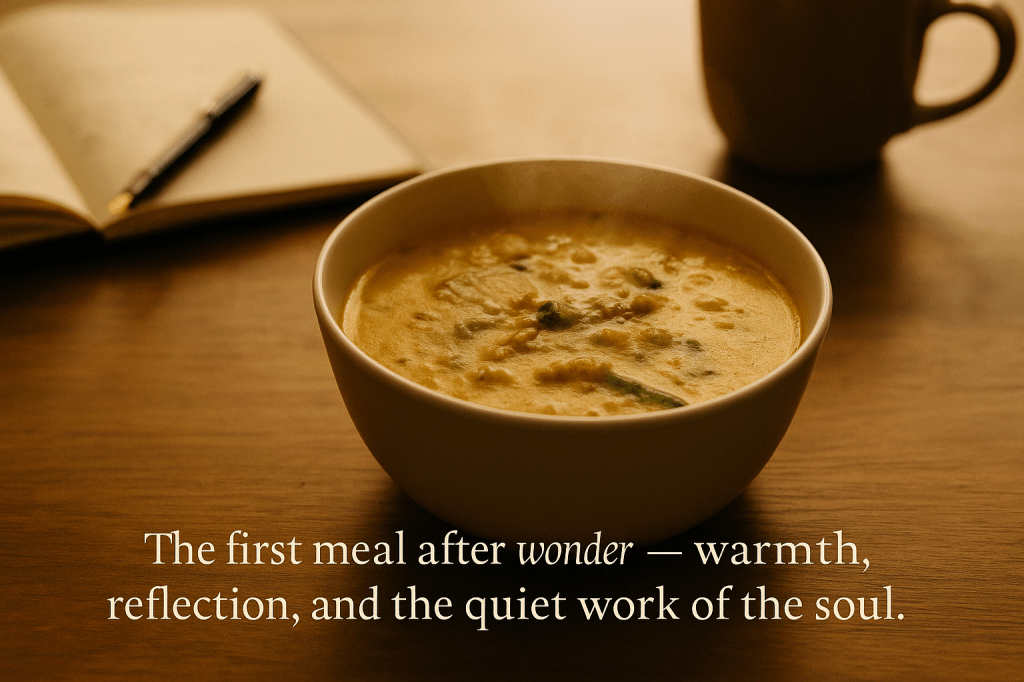
On cold fronts, memory, and a bowl of green chile chicken soup
The end of the Balloon Fiesta carries a silence you can taste. The burners dim, the silhouettes fold, and the field turns back into earth. Vendors pack away their sugar and smoke. Children in fleece hats tug at sleeves, still seeing balloons in the corner of their eyes. For days, we’ve lived by flame and lift, the city strung between propane thunder and the hush that follows. But when the sky empties, another truth arrives—the one I pretend not to notice until I feel it creep beneath the door: the cold is coming.
Cold has its own clock. It doesn’t show up with a shouted announcement; it settles in the way light changes, the way cottonwood leaves rattle like tiny bones, the way you reach for a heavier blanket without thinking. The air takes on a metallic taste of first frost. Someone you love says, “hot chocolate?” and you both hear the unspoken word tucked behind it—home.
Cold, for me, also means a summons to the kitchen. Not the glossy kind with copper pots and exacting vocabulary, but the honest room where you stand in your socks and let breath fog the window. It’s the season of dishes that do more than warm you. Some fight colds; some fight loneliness; some fight the old story that you have to carry this winter by yourself. They’re the soups and stews you make because the answer to wind against glass is heat you can hold in both hands.
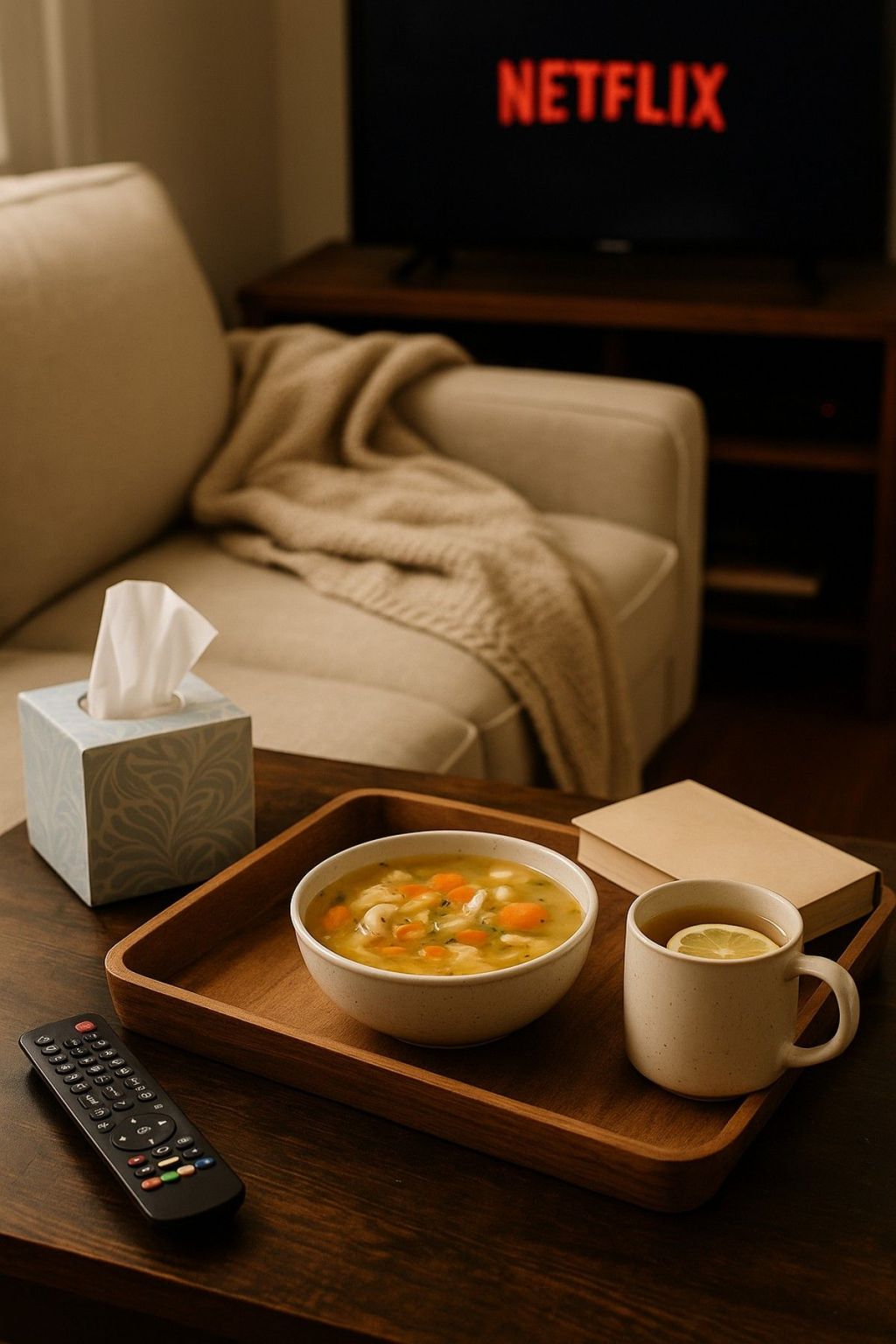
My winter has always begun with chicken soup. Not the postcard version with perfect coins of carrot and noodles set like train tracks, not even the kind anchored by rice. Chicken and vegetables—that’s what I knew. We were too broke to make it from scratch. We had cans, and when we moved up in the world to name brand, I felt like we’d crossed into a secret country. That red-and-white label was royal. I’d watch it burp into the pot in one heavy ring, smell the thin broth turn obedient under the coil burner, and think: What could be better than this?
Later came food shows and glossy knives, the promise that technique could turn a life. I tried noodles. I tried rice. I tried the whole geography of starch. I learned to sweat onions until they are sweet and glassy, to coax flavor from bones, to salt early rather than late. I knew the swagger of stock that whispers from the next room before you taste it. I learned that cooking is a ledger of small decisions, and that poverty teaches you something chefs can’t: make do until make do turns into this is mine.
But the most important lesson came from this place I call home. New Mexico has a way of editing your palate. You can live here long enough and discover that your mouth has a memory separate from your mind. The wind smells like roasting chile in the fall, and you salivate like a bell’s been rung. Someone says, “Christmas or red?”—it’s not a question so much as a doorway. If I were going to keep chicken soup as my winter prayer, I had to tell the truth of where I lived. The answer wasn’t noodles or rice. It was what the land keeps teaching: heat is not just temperature; heat is story.
So I started folding green chile into the pot.
At first, I was cautious, like meeting a new neighbor on the sidewalk—polite nods, measured conversation, and an exit plan. But Chile does what honest neighbors do: it shows up with a casserole and asks about your people. It doesn’t simply add spice; it adds clarity. The broth stands a little straighter. The vegetables stop playing in the background. Chicken remembers it used to be a living thing and offers you something back—protein and humility. The whole bowl finds its voice.
And yet, I’ll confess: I made it mild. I told myself I was being considerate of guests, or cautious of colds, or faithful to my childhood memory. Truth is, I was worried about changing the soup I’d used as a map out of boyhood. I didn’t want to betray the tinny comfort of cans we could barely afford, or the later triumph of stepping up to Campbell’s. But a place will tell you when you’re hedging. The longer I lived here, the more I wanted the bowl to match the sky. The sunsets are not shy. The mountains do not whisper. Why should the soup?
I need it spicier now.
Not recklessly hot; not pain for performance. I’m talking about the warmth that starts in the throat and blooms behind the sternum like a lantern. Heat that doesn’t drown the other notes but conducts them, the way a good conductor doesn’t overpower an orchestra—just raises a hand and brings brass, strings, woodwinds into a single breath. I want a bowl that can meet the first real wind of winter at the door and say, kindly, not today.
The strange gift of getting older is realizing that comfort and challenge aren’t enemies. The same bowl that holds your hands steady can also invite you forward. Green chile does that to me. It keeps the humble truth of chicken soup—one bird, a few vegetables, a pot, patience—while insisting on place and present tense. It says: This is New Mexico, and you live here now. It says: memory is better with light.
That’s why I like making it after the Fiesta. The week is a public exhale. The city has been up early, shoulder to shoulder with strangers, heads tilted back until necks ache—faith expressed as attention. We return home with digital evidence that wonder still exists, then wake up to leaf blowers, coffee, and a fridge that needs a plan. The world becomes regular again. You could call that a comedown. I call it a kitchen.
I set a pot on the stove. The onions hit oil and give up their sweetness. Bell pepper follows. Turkey sausage crumbles and browns. The room starts to smell like we’re going to make it. I add broth, the kind that listens when it boils. The chicken goes in—shredded, humble, sure. And then the green chile. The pot takes a small, ceremonial breath. It becomes a place.
There’s no need for noodles. No need for rice. I thought I needed them for ballast, for respectability, for proof. Turns out I wanted space—room for pepper and onion to have their say, room for chile to tell me that winter is not a punishment but a way of paying attention. A bowl without ballast can still carry you, if you trust the hands that hold it.
When it’s done, I taste for salt and let a little cheese drift in at the end. Sometimes I whisk an egg and pour it slowly, like a soft snowfall meeting steam. I stand by the stove in my sock feet with the window fogged and the mountains beginning their evening trick of becoming larger while pretending to recede. I think of canned soup and coil burners, of the day the label meant we’d made it, of the shows that taught me vocabulary for feelings I already had. I think of how love sneaks into your life disguised as minor improvements: a better pot, a sharper knife, a chile that bites and then forgives.
Outside, the cold is practicing its scales. Inside, the spoon finds the bottom of the bowl and returns with proof. This is how we winter where I live now: not by refusing the season but by seasoning our refusal to quit. The Fiesta will return. The sky will bloom again. Between now and then, we’ll build our own heat—quiet, steady, shared.
If you ask me what I’d change about my soup, I’ll say the same thing I want for the coming months: a little more fire. Not to scorch. To clarify. To remind me that comfort can have a backbone, and that home, at its best, is a place that warms you and wakes you up.
The cold is coming. Good. I’ve got a pot on.
➤ Read the recipe: Keto Green Chile Chicken Soup →
A bowl of warmth, reflection, and the quiet work of the soul.
Kyle J. Hayes
kylehayesblog.com
Please like, comment, and share