Tag: Nostalgia

  • When the Neighborhood Song Finds You Again

    When the Neighborhood Song Finds You Again

    There are nights when adulthood feels heavier than it should.

    No catastrophe.

    No crisis that would make the evening news.

    Just the quiet pressure that settles in your chest after years of carrying things you rarely speak about. Bills. Expectations. The slow arithmetic of responsibility. The strange loneliness that can exist even when you’re surrounded by people.

    People like to say, ” Just talk to someone.

    And sometimes that’s good advice.

    But the truth adults rarely admit is that it isn’t always that simple.

    Sometimes you don’t know how to explain what you’re feeling. Sometimes the words are tangled. Sometimes the weight is vague—more like weather than injury. A fog rolling in without asking permission.

    Tonight was one of those nights for me.

    The kind where the mind circles the same questions again and again. Where the quiet in the house feels louder than usual. Where you sit with yourself and realize that being an adult often means being the one expected to have answers—even when you feel like the smallest person in the room.

    So I did something simple.

    I opened YouTube.

    Not looking for wisdom. Not looking for motivation or productivity advice or someone promising to unlock the secret to success in ten easy steps.

    Just something gentle.

    And somehow I landed on a channel filled with old episodes of Mr. Rogers’ Neighborhood.

    The moment the music started, something happened that I didn’t expect.

    That piano.

    That calm rhythm.

    That familiar invitation into a living room that somehow always felt safe.

    “It’s a beautiful day in the neighborhood…”

    Before I knew it, I was smiling.

    Not the polite smile adults wear in public. The real kind. The one that sneaks up on you when a memory taps you on the shoulder.

    I started singing along.

    And somewhere between the first line and the moment he changed his shoes, something inside me loosened. The stress that had been sitting in my chest all evening dissolved like sugar in warm coffee.

    Just like that.

    No lecture.

    No complicated explanation.

    No grand philosophy.

    Just a man speaking calmly about learning to ride a bicycle.

    About the moment when a child moves from three wheels to two.

    About wobbling.

    About trying again.

    About how growing up sometimes means doing things that feel a little scary at first.

    And there I was.

    A grown man sitting in his living room, smiling like a kid again.

    It made me wonder about something.

    How is it that someone who passed away in 2003 can still reach through time and calm the nervous system of a stranger sitting alone decades later?

    How can a quiet voice, a soft sweater, and a steady presence still quiet the storms adulthood sometimes builds inside us?

    The answer may be simpler than we think.

    He wasn’t trying to impress anyone.

    He wasn’t trying to dominate the room or prove how intelligent he was or convince the world he had all the answers.

    He was doing something far rarer.

    He was making space.

    Space for children to feel understood.

    Space for feelings to exist without being rushed away.

    Space for gentleness in a world that often rewards noise.

    And maybe—though we rarely admit it—adults need that space just as much as children do.

    Maybe the part of us that once sat cross-legged in front of a television, listening carefully to a man who spoke slowly and kindly, never actually disappears.

    It just gets buried.

    Under bills.

    Under expectations.

    Under the quiet belief that growing up means we should already know how to carry the weight.

    But every once in a while, something reminds us.

    A song.

    A memory.

    A familiar voice from another time.

    And suddenly the armor loosens.

    You remember what it felt like to be small, curious, and hopeful about the world. You remember that kindness isn’t weakness. That patience isn’t outdated. That gentleness—real gentleness—is one of the strongest things a human being can offer another.

    Watching that episode tonight made me think of something simple.

    Maybe the world needs more people like him.

    People who slow things down rather than speed them up.

    People who speak softly instead of shouting.

    People who remind us that it’s okay to feel what we feel.

    Especially when the world gets heavy.

    I could write more about this tonight.

    About kindness.

    About childhood.

    About how strange and beautiful it is that a simple television show can still calm an adult heart decades later.

    But the truth is…

    There’s another episode waiting.

    And for a little while longer, I’d like to sit here and watch the show.

    Kyle J. Hayes

    kylehayesblog.com

    Please like, comment, and share

    Resources for Hard Times

    If you’re looking for practical help, food support, or community resources, you can visit the Salt, Ink & Soul Resources Page.
    👉 Resources for Hard Times

  • The Last Ingredient House

    The Last Ingredient House

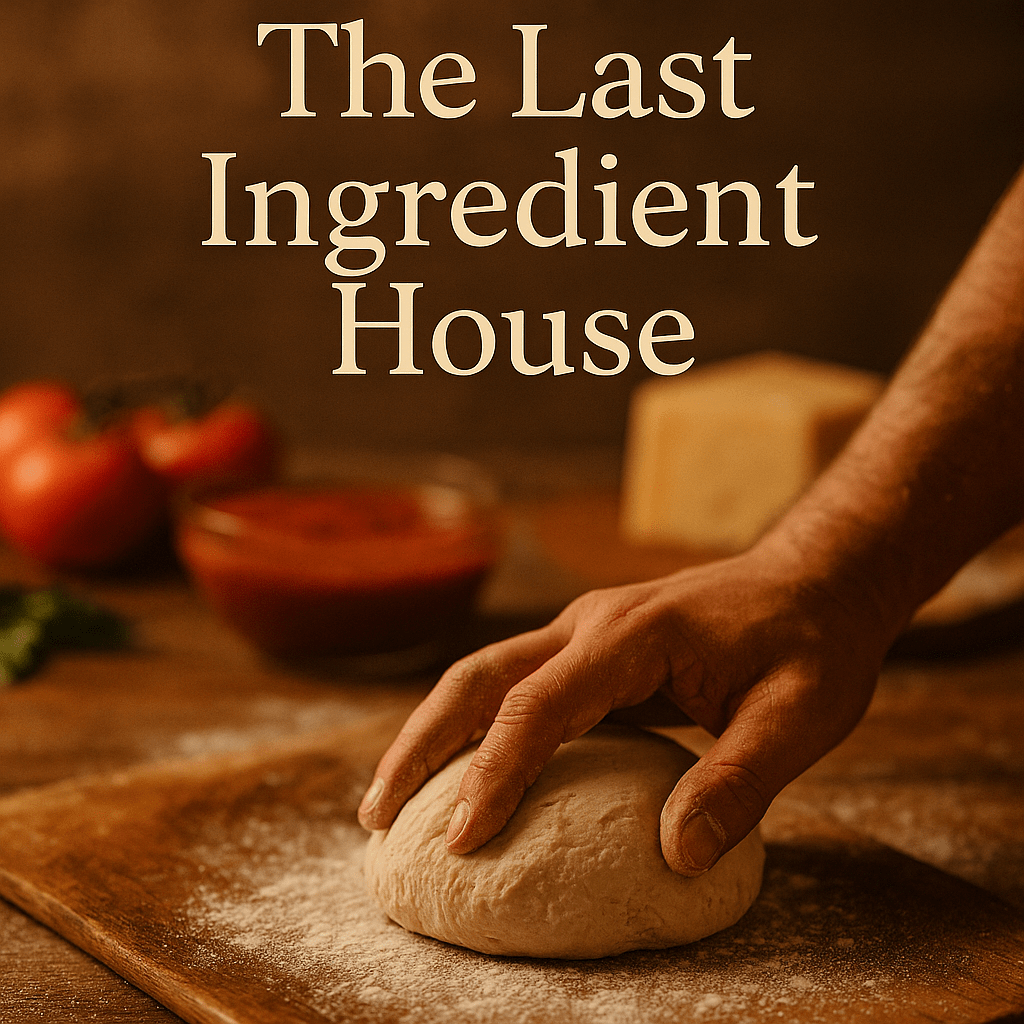
    I was just running in for a couple of things — Mozzarella cheese, maybe some crushed tomatoes. The kind of trip you make when you’ve already decided the night’s ritual: I was going to make pizza. And by making pizza, I mean the whole thing — crust proofed over two days, sauce coaxed slowly from garlic, basil, and crushed tomatoes, Cheese grated by hand until my knuckles risked losing skin.

    At the register, the cashier noticed the haul — the Cheese, the flour, the good olive oil — and smiled.

    “Making pizza?” she asked.

    “Yes,” I said. And just like that, a conversation bloomed.

    She told me she came from what she called an ingredient house. A house where the kitchen was a kind of altar — stocked with the quiet assurance that if company came calling at the last minute, her mother could turn out a beautiful meal without panic. Beans soaking on the stove, onions already sweating in cast iron, a roast pulled from the freezer because it had been waiting for just such a night.

    I nodded, letting the phrase roll around in my mind: ingredient house.

    My own home growing up was… not quite that. We had food, sure — plenty of it — but a lot of it came sealed in boxes with microwave instructions printed in cheerful fonts. Frozen lasagna, instant potatoes, and cans of soup you could doctor up if you felt ambitious. There was love in those meals, but also an efficiency, a shorthand. Meals that required only heat or water, not intuition.

    The Age of Premade Fresh

    Now, we live in a time where you don’t even need to own salt. Walk into any grocery store and you’re surrounded by the new altar — pre-marinated proteins, ready-to-bake pizzas, trays of vegetables already washed, chopped, and glistening under plastic. Fresh, yes. But fresh in a way that requires no relationship, no waiting, no patience.

    And then there’s DoorDash — the pandemic’s golden child. The savior we thanked when we could not leave our homes, when fear of each other turned kitchens into bunkers. Now it lingers, reshaping our sense of effort. You don’t even have to boil the water anymore. You just scroll, tap, and wait for a stranger to leave your dinner at the door like a sacrament.

    What We Lose

    Standing there at the checkout, I realized I wasn’t just buying Cheese. I was buying memory. I was buying slowness. I was buying back the hours required to knead dough, to wait for it to rise, to smell the kitchen change as it bakes.

    I thought about her ingredient house — the kind of place where a pantry wasn’t just storage but possibility. And I wondered what we lose when we give that up. When dinner stops being a verb and becomes an algorithm.

    There is something quietly radical about knowing how to feed yourself from scratch. About putting your hands in dough, trusting yeast to do its slow, invisible work, and showing up for it when it’s ready. Something stubborn and beautiful about refusing the constant seduction of “just heat and serve.”

    What’s Next?

    Sometimes I wonder what comes after this. If premade fresh is today’s answer, what’s tomorrow’s? Meals that make themselves while you scroll? Nutrition is delivered intravenously, so you don’t have to chew. Or maybe a return to ingredient houses — not as nostalgia but as rebellion.

    Maybe that’s why I make pizza this way. Because there’s a small act of resistance in it. In a world of frictionless consumption, I choose friction. I choose to slice garlic thin enough to smell on my fingertips hours later. I choose to shred Cheese until my hands ache. I choose to wait for the dough to rise because I want the reminder that some things — the best things — cannot be rushed.

    And maybe, if I keep doing this, my home becomes the ingredient house I didn’t grow up in. A house where you can pull a meal out of thin air, not because it’s convenient, but because you’ve kept faith with the slow, stubborn art of feeding people well.

    By Kyle J. Hayes

    kylehayesblog.com

    Please like, comment, and share

    Please click here for my Pizza Crust and Sauce Recipe.

  • “The Disappearance and the Dreamers: A Return to Small Town America”

    “The Disappearance and the Dreamers: A Return to Small Town America”

    I could start this in a few ways.

    I could tell you about the beauty of small-town America—how it smells like earth after rain, how it feels like old denim, soft at the edges and worn in all the right places. I could paint a picture of local parades, gas stations where they know your name, and corner stores that sold glass-bottle soda as if they were dealing in gold. I could start there.

    Or I could tell you about the slow death.

    About how it creeps in not with a scream, but with silence. A corner shop goes dark. The comic book store fades into memory. That one spot that always had a single cook and a single delivery guy—hollowed out by time, or worse, by convenience. We didn’t even get to say goodbye. One day it was there, and the next… it was nowhere to be found.

    That’s how I found it, this town that raised me. A shell and a fight. Graying at the temples but still kicking. Still trying.

    I returned home with a chip on my shoulder and an axe to grind. My past visits had been disappointments—full of quiet judgment and half-empty shelves. I began to see the town as Lucy holding the football. I, the fool, forever falling for a nostalgia that never delivered.

    But then I noticed it.

    Not a rebirth exactly. More like resistance. Quiet. Stubborn. And beautiful.

    A locally brewed beer sitting proudly on a shelf next to Budweiser, daring you to taste something made here. A sushi place—yes, sushi—in a town where raw fish used to be called bait with a laugh. A barista pulling espresso in a repurposed mechanic shop, poetry on the walls, and indie jazz in the air. It didn’t look like the town I left, but it was trying to feel like the one I loved.

    The resistance is no longer being led by factory foremen or overtime heroes. It’s the dreamers.

    The artists. The comics shop rebels. The coffee shop philosophers. The chefs, brewers, and boutique owners who aren’t just surviving small-town America—they’re redefining it.

    I keep thinking about that comic book store.

    The one where I spent more time than I did money, though God knows I wanted to spend more. That store helped shape the person I am. Not because of what I bought, but because of what I learned.

    Inside those walls, you weren’t just reading stories—you were being trained in how to dream.

    You met other kids who knew backstories you didn’t, who taught you how a single issue could reframe an entire arc. You learned how to imagine better. To think in color. To expect the impossible and call it plot development.

    Sure, comics still exist. There are still conventions. Online communities. But they don’t replace the bike ride to the store on release day.

    They don’t replace the smell of fresh ink. The thrill of a new issue in your hands. Or seeing the store owner, and knowing him, not as an employee, but as a keeper of stories.

    That’s what we’re losing.

    Not just the stores.

    But there is humanity in the transaction.

    I was prepared to write a eulogy.

    To mourn the death of small-town America.

    But what I found instead… was a kind of defiance.

    Maybe it’s not dying. It could be changing. Perhaps the overgrown trees and cracked sidewalks aren’t signs of decay, but rather Mother Nature is taking her seat at the town hall meeting. Maybe she’s in on the plan.

    And maybe—just maybe—the artists are saving it.

    Not by keeping it the same, but by daring to imagine it differently.

    In this era, I don’t need to fly to the Quad Cities for a box of Lagomarcino’s. It’s a click away. That’s the gift and the curse. Accessibility without presence.

    However, some places still require in-person visits.

    Not for the product, but for the chance. Because on one of those visits, you might notice something new. A new mural. A new flavor. A new owner with an old soul and a dream too stubborn to die.

    So go. Walk the street you used to know.

    The one who forgot your name and then remembered it.

    The one still fighting, in ways you didn’t expect.

    The death of small-town America may still be in progress.

    But so is its reinvention.

    And I’d bet everything on the dreamers.

    By Kyle Hayes

    Please like, Comment, and subscribe.