Tag: SaltInkAndSoul

  • Simple Asparagus Parmesan Egg Bake (Perfect Weekend Brunch)

    Simple Asparagus Parmesan Egg Bake (Perfect Weekend Brunch)

    There are mornings you have nothing to do.

    No rush to be somewhere.

    No need to prove anything to anyone.

    Just a little light coming through the window.

    A quiet kitchen.

    And enough time to make something warm.

    This is that kind of dish.

    Not complicated.

    Not dressed up to be more than it is.

    Just eggs, asparagus, and Parmesan—brought together slowly, the way good things tend to come together when you leave them alone long enough.

    Asparagus Parmesan Egg Bake

    There’s a steadiness to this.

    Eggs holding their shape.

    Cream softens the edges.

    Parmesan adds just enough salt to keep everything grounded.

    And asparagus—still green, still present, not lost in the mix.

    Ingredients

    • 2 cups asparagus spears, trimmed and chopped
    • 1 cup grated Parmesan cheese
    • 6 large eggs
    • 1 cup heavy cream
    • Salt and black pepper, to taste
    • Olive oil (for greasing)

    Method

    1. Preheat the oven

    Set to 375°F. Let the oven take its time getting there.

    2. Blanch the asparagus

    Bring a pot of water to a boil. Add the asparagus and let it cook just until it turns bright green—about 2 to 3 minutes.

    Then move it to ice water.

    This keeps the color. Keeps the bite.

    Keeps it from disappearing.

    3. Build the base

    Lightly oil a casserole dish.

    Lay the asparagus evenly across the bottom.

    Scatter the Parmesan over it.

    No need to be exact. Just don’t crowd it.

    4. Bring it together

    Whisk the eggs, cream, salt, and pepper until smooth.

    Pour it slowly over the asparagus and cheese.

    Let it settle. Don’t rush it into place.

    5. Bake

    Place in the oven for 30–35 minutes.

    You’re looking for a center that’s set

    and has a lightly golden top.

    Not overdone. Just finished.

    6. Let it rest

    Give it a few minutes before cutting.

    Some things need a moment to become what they’re supposed to be.

    Notes From My Kitchen

    • If the asparagus is thin, shorten the blanch time slightly
    • A heavier hand with Parmesan brings more depth—but go too far, and it takes over
    • This reheats well, but it’s best the first time, when everything is still soft and warm

    The Table

    This isn’t a brunch built for a crowd.

    It’s for a morning that feels like it’s yours.

    A second cup of coffee.

    A quiet conversation.

    Or no conversation at all.

    Kyle J. Hayes

    kylehayesblog.com

    If this found you at the right time,

    Feel free to like, comment, or share it with someone who might need it too.

    Resources for Hard Times

    If you’re looking for practical help, food support, or community resources, you can visit the Salt, Ink & Soul Resources Page.
    👉 Resources for Hard Times

  • Vanilla Cinnamon Ricotta Cream (Keto)

    Vanilla Cinnamon Ricotta Cream (Keto)

    A gentle way to end things

    There’s a moment after a meal where everything slows.

    The plates are mostly empty. The conversation softens. The weight of what you’ve eaten begins to settle, not heavily—but honestly. And in that space, you don’t need another course that tries to impress you.

    You need something that understands the moment.

    Something cool.

    Something light.

    Something that doesn’t ask for attention.

    Just enough sweetness to remind you the meal mattered.

    This is that kind of dessert.

    Ingredients (Serves 2–3)

    • 1 cup whole milk ricotta
    • 1/4 cup heavy cream
    • 1 to 2 tablespoons powdered erythritol (or preferred keto sweetener), to taste
    • 1 teaspoon vanilla extract
    • 1/2 teaspoon ground cinnamon
    • Pinch of salt

    Optional (if you want a little more, but not too much):

    • A few raspberries or sliced strawberries
    • A light drizzle of sugar-free syrup
    • A few shavings of dark chocolate

    Method

    Start by bringing everything into one place.

    In a bowl, add the ricotta, heavy cream, sweetener, vanilla, cinnamon, and a pinch of salt. Nothing complicated. Just ingredients that already understand each other.

    Whisk it gently. Or use a hand mixer if you prefer. A minute or two is enough. You’re not trying to force air into it—you’re just smoothing it out, letting it become something cohesive.

    Taste it.

    This part matters. Adjust the sweetness if needed, but keep it restrained. This isn’t meant to be loud.

    If you have the time, let it rest in the refrigerator for 20 to 30 minutes. It settles there. The texture firms slightly. The flavors come together more quietly.

    Spoon it into a bowl.

    Leave it plain, or add a few berries, a light drizzle of syrup, or a touch of chocolate. Nothing that overwhelms what’s already there.

    Notes From My Kitchen

    • This works best when it stays simple—too much sweetness changes its purpose
    • If your ricotta feels too thick, a small splash of cream will bring it back
    • Best served chilled, especially after a warm meal

    Closing Thought

    Some desserts try to be remembered.

    This one just lets you rest.

    It doesn’t ask for more space than it needs. It doesn’t pull you back into hunger after you’ve already been fed.

    It simply brings things to a close—gently, honestly, and without excess.

    At the Table

    This is how the meal ends.

    But it didn’t begin here.

    It started with something warm and steady—Green Chile Beef & Cauliflower Casserole.

    And something fresh came alongside it—Crisp Lime & Avocado Salad.

    This just carries you the rest of the way.

    Kyle J. Hayes

    kylehayesblog.com

    If this found you at the right time,

    Feel free to like, comment, or share it with someone who might need it too.

    Resources for Hard Times

    If you’re looking for practical help, food support, or community resources, you can visit the Salt, Ink & Soul Resources Page.

    👉 Resources for Hard Times

  • Crisp Lime & Avocado Salad

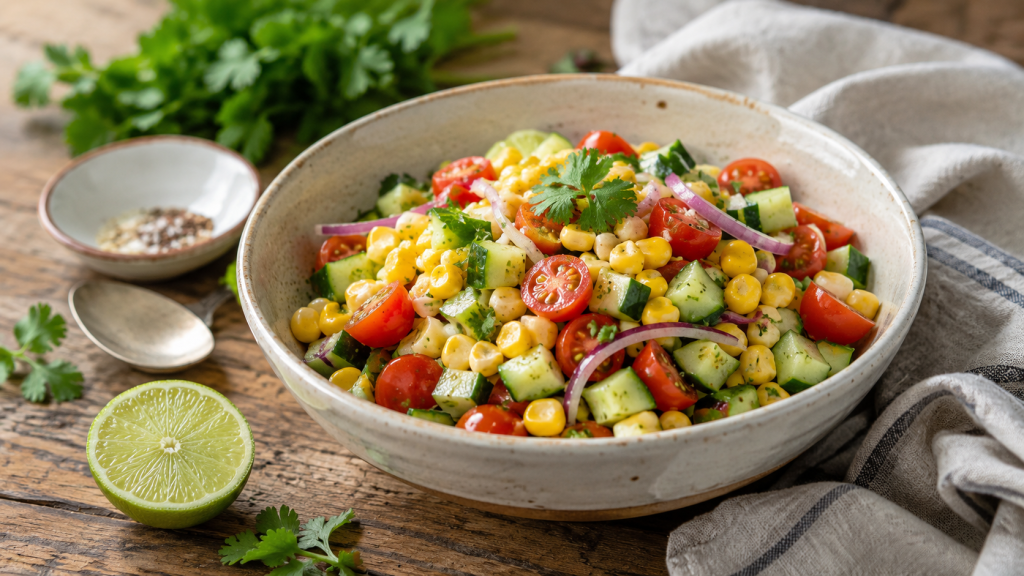
    Crisp Lime & Avocado Salad

    The Space Between Bites

    Not everything on a table is meant to carry weight.

    Some things are meant to make space.

    After a meal that sits heavy—in a good way, in a lasting way—you need something that reminds you that not everything has to. Something that doesn’t compete, doesn’t demand attention, doesn’t try to be more than it is.

    Just something cool.

    Something bright.

    Something that clears the path for the next bite.

    This is that kind of dish.

    Crisp Lime & Avocado Salad

    Ingredients (Serves 2–4)

    • 2 cups romaine or mixed greens
    • 1 large avocado, sliced
    • 1/2 cucumber, thinly sliced
    • 1 cup cherry tomatoes, halved
    • 2 tbsp olive oil
    • Juice of 1 lime
    • Salt and black pepper, to taste

    Optional (if you want a little more):

    • Sliced green onion
    • A few cilantro leaves

    Method

    1. Start with what’s fresh

    In a large bowl, add the greens, cucumber, and tomatoes.

    Nothing complicated here. Just clean, simple ingredients that don’t need much help.

    2. Add the avocado last

    Slice the avocado and place it gently into the bowl.

    Not everything needs to be tossed aggressively. Some things are better handled with care.

    3. Dress it lightly

    In a small bowl, whisk together:

    • Olive oil
    • Lime juice
    • Salt and pepper

    Pour over the salad just before serving.

    4. Toss gently

    Use your hands or a large spoon. Keep the avocado intact as much as possible.

    This isn’t a chopped salad. It’s a composed one.

    Notes From My Kitchen

    • The lime is what makes this work—it cuts through everything that came before it
    • Keep the dressing simple; anything heavier starts to compete
    • This is best made fresh, just before serving

    At the Table

    This was never meant to stand on its own.

    It belongs beside something warm. Something steady. Something that holds the center.

    → Green Chile Beef & Cauliflower Casserole (Mon)

    And after both have done their work—after the meal has said what it needed to say—

    There’s something lighter waiting at the end.

    → Vanilla Cinnamon Ricotta Cream (Fri)

    Not to add more.

    Just to bring it to a close.

    Kyle J. Hayes

    kylehayesblog.com

    If this found you at the right time,

    Feel free to like, comment, or share it with someone who might need it too.

    Resources for Hard Times

    If you’re looking for practical help, food support, or community resources, you can visit the Salt, Ink & Soul Resources Page.

    👉 Resources for Hard Times

  • The Quiet Work of Making Enough

    The Quiet Work of Making Enough

    There’s a kind of cooking that doesn’t announce itself.

    It doesn’t arrive plated with intention or styled for admiration. It doesn’t ask to be photographed before it’s eaten. It lives somewhere else—closer to memory than performance.

    It’s the kind of cooking that understands what it means to stretch.

    Not out of lack.

    But out of knowing.

    Knowing that a meal doesn’t have to be extravagant to be meaningful.

    That feeding yourself—feeding others—isn’t about excess. It’s about attention.

    It’s about taking what you have and refusing to let it fall short.

    Ground beef. Green chile. A little cream.

    And something else—something that doesn’t try to replace what’s there, only to help carry it further.

    Cauliflower.

    Not as a substitute.

    But as support.

    This is that kind of meal.

    Green Chile Beef & Cauliflower Casserole

    Ingredients (Serves 4–6)

    • 900 g ground beef (80/20 preferred)
    • 300–400 g cauliflower rice (fresh or frozen)
    • 1 small onion, diced
    • 3 cloves garlic, minced
    • 200 g roasted green chiles, chopped (Hatch if you can find them)
    • 120 ml heavy cream
    • 120 g cream cheese, softened
    • 150 g shredded cheddar cheese
    • 100 g shredded Monterey Jack (or mozzarella)
    • 1 tbsp olive oil (if needed)

    Seasoning

    • 1 tsp ground cumin
    • 1 tsp smoked paprika
    • Salt and black pepper, to taste

    Method

    1. Start with the part most people skip

    Heat a large skillet over medium-high heat.

    Add the cauliflower rice with no oil. Let it cook for 5–7 minutes, stirring occasionally, until the moisture cooks off and it begins to feel dry.

    This step matters more than it seems.

    It’s the difference between something that holds together… and something that falls apart.

    Set aside.

    2. Brown the beef

    In the same skillet, cook the ground beef over medium heat until browned, breaking it apart as it cooks.

    Drain excess grease if needed, but don’t take all of it.

    Flavor lives in what you leave behind.

    3. Build the base

    Add the diced onion and cook until softened.

    Stir in garlic, cumin, and smoked paprika. Let it sit in the heat for a moment—just long enough for the aroma to rise.

    4. Bring in the chile

    Add the chopped green chiles and stir.

    Let everything sit together for a minute or two.

    There’s a point where the smell changes—where it stops being a collection of separate ingredients and becomes something whole.

    That’s when you move on.

    5. Make it one thing

    Lower the heat.

    Add the cream cheese and heavy cream. Stir slowly until everything melts together into a single mixture.

    Not layered. Not divided.

    Just one.

    6. Fold in the cauliflower

    Return the cooked cauliflower rice to the skillet.

    Stir until it’s fully combined and coated.

    This is where the dish changes.

    It becomes something that can stretch. Something that can last.

    7. Assemble

    Transfer the mixture to a greased baking dish.

    Top with the shredded cheddar and Monterey Jack. Spread it evenly—enough to cover, not enough to hide what’s underneath.

    8. Bake

    Place in a preheated oven at 375°F (190°C).

    Bake for 20–25 minutes, until bubbling at the edges and lightly golden on top.

    9. Let it rest

    Give it 5–10 minutes before serving.

    It settles here.

    Finds its structure.

    Becomes what it was meant to be.

    Notes From My Kitchen

    • Cooking the cauliflower first isn’t optional—it’s what keeps the dish from becoming watery
    • Pepper Jack can be used if you want more heat
    • This reheats well, and like many things made with care, it often tastes better the next day

    Closing Thought

    There’s a quiet dignity in meals like this.

    Meals that don’t try to be more than they are.

    Meals that understand that feeding someone—yourself included—isn’t about spectacle.

    It’s about presence.

    About taking what’s in front of you and making sure it’s enough.

    Not just for now.

    But for whoever comes back to the table later.

    There’s more to a meal than what sits in the center of it.

    Something fresh to cut through the richness.

    Something light to close it out.

    I’ll share those soon.

    Kyle J. Hayes

    kylehayesblog.com

    If this found you at the right time,

    Feel free to like, comment, or share it with someone who might need it too.

    Resources for Hard Times

    If you’re looking for practical help, food support, or community resources, you can visit the Salt, Ink & Soul Resources Page.

    👉 Resources for Hard Times

  • The Table Still Matters

    The Table Still Matters

    I try not to say much on Sundays.

    But this has been sitting with me.

    Food costs more now.

    You feel it at the store.

    You feel it before you even decide what to cook.

    But the part that stays with me isn’t just the price.

    It’s what we’re slowly letting go of.

    Sunday used to mean something.

    Not because everything was easier.

    But because people made time anyway.

    Now we go out.

    We wait.

    We pay.

    We leave.

    And somewhere in that, something quieter disappears.

    So maybe… stay home.

    Cook what you can.

    Nothing complicated.

    Nothing perfect.

    Sit down with people who know you.

    People who don’t need a menu to understand you.

    The table doesn’t need much.

    Just a place.

    A little time.

    Someone willing to share it.

    That might still be enough.

    Kyle J. Hayes

    kylehayesblog.com

    If this found you at the right time,

    Feel free to like, comment, or share it with someone who might need it too.

    Resources for Hard Times

    If you’re looking for practical help, food support, or community resources, you can visit the Salt, Ink & Soul Resources Page.

    👉 Resources for Hard Times

  • Honey Butter Brown Sugar Detroit-Style Dessert Pizza

    Honey Butter Brown Sugar Detroit-Style Dessert Pizza

    A Different Kind of Ending

    There’s a moment at the end of a meal where you realize you don’t need more.

    Not more weight. Not more richness. Not something trying to outdo what came before it.

    Just something that settles in gently.

    Something warm. Slightly sweet. Familiar in a way that doesn’t ask for attention.

    This comes from the same place as the main dish.

    Same dough. At the same time. Same care.

    It just chooses a different direction.

    Ingredients

    Base

    Topping

    • 3 tablespoons unsalted butter
    • ¼ cup brown sugar
    • 1–2 tablespoons honey
    • Pinch of sea salt

       Method

    1. Bring the dough back

    Remove your overnight dough from the refrigerator about 2 hours before baking.

    Let it come to room temperature.

    Transfer it to your well-oiled 9×13 pan and gently stretch it toward the edges.

    If it resists, let it rest.

    Then come back to it.

    Let it rise until it looks soft. Slightly puffy. Ready.

    2. Prepare the butter

    Melt the butter gently over low heat.

    If you want to take it a step further, let it cook just long enough to turn lightly golden—until it smells slightly nutty.

    Not dark. Not burnt. Just deeper.

    3. Build the base

    Brush the dough generously with the melted butter.

    Sprinkle the brown sugar evenly across the surface.

    Not too much. Just enough to melt into the dough as it bakes.

    4. Bake

    Preheat your oven to 500°F (or as high as it will go).

    Bake for 12–15 minutes.

    You’re looking for:

    • A golden surface
    • Light caramelization
    • Edges that crisp slightly against the pan

    5. Finish

    As soon as it comes out of the oven:

    • Drizzle with honey
    • Add a small pinch of sea salt

    Let it rest for about 5 minutes.

    Then slice.

    This wasn’t the beginning.

    It started with something structured. Something that took time.

    Not Every Square Pizza Is Detroit Style 

    And somewhere in between, there was something that brought it back into balance.

    What Cuts Through the Richness 

    This is just where it settles.

    Kyle J. Hayes

    kylehayesblog.com

    If this found you at the right time,

    Feel free to like, comment, or share it with someone who might need it too.

    Resources for Hard Times

    If you’re looking for practical help, food support, or community resources, you can visit the Salt, Ink & Soul Resources Page.
    👉 Resources for Hard Times

  • Crisp Garden Salad with Lemon Shallot Vinaigrette

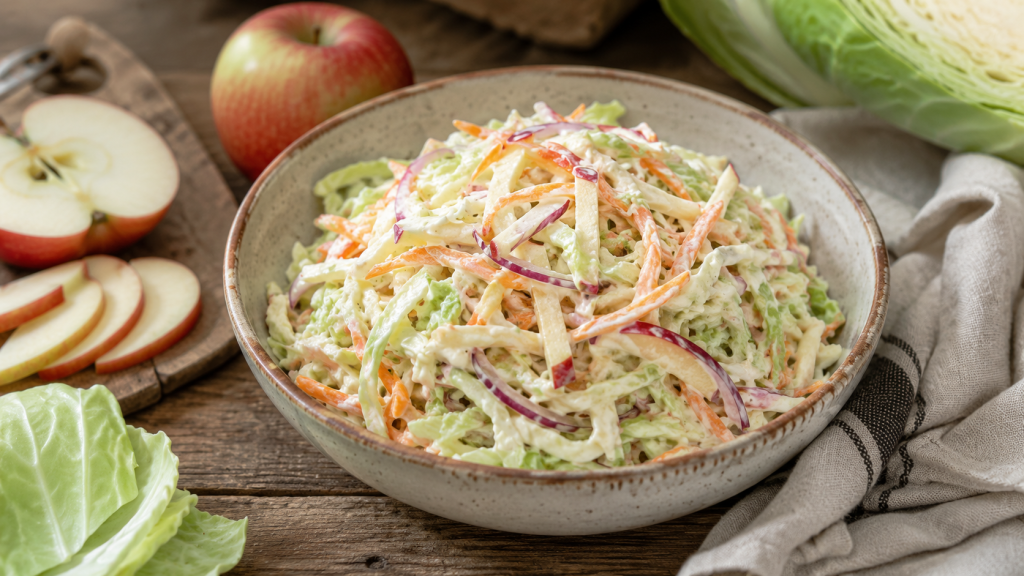
    Crisp Garden Salad with Lemon Shallot Vinaigrette

    A lighter, sharper version built to sit beside Detroit-style pizza

    Ingredients

    Salad

    • 1 head Boston lettuce, washed and torn into bite-size pieces
    • 3 red radishes (or watermelon/breakfast radish), very thinly sliced
    • 1 large or 2 medium carrots, peeled and coarsely grated
    • 1 apple (Granny Smith), cored and julienned
    • 3 tablespoons chopped fresh chives (or mix with parsley, mint, or basil)

    Lemon Shallot Vinaigrette

    • 3 tablespoons extra-virgin olive oil
    • 2 tablespoons fresh lemon juice
    • 1 tablespoon finely minced shallot (or a small amount of red onion)
    • 1 teaspoon Dijon mustard
    • ¾ teaspoon salt (adjust to taste)
    • ¼ teaspoon freshly ground black pepper

    Method

    1. Make the vinaigrette

    In a small bowl, whisk together:

    • Lemon juice
    • Shallot
    • Dijon mustard
    • Salt and pepper

    Then slowly whisk in the olive oil until lightly emulsified.

    Taste it.

    It should feel bright first—then settle.

    2. Prepare the salad

    In a large bowl, combine:

    • Lettuce
    • Radishes
    • Carrots
    • Apple
    • Chives or herbs

      If prepping ahead:

    • Toss apples lightly in lemon juice to prevent browning

    3. Dress just before serving

    Drizzle a small amount of vinaigrette over the salad and toss gently.

      Important:

    • Use less than you think you need
    • You can always add more
    • You can’t take it away

    4. Serve immediately

    Once dressed, the salad should be served right away.

    This isn’t a salad that waits.

    Notes From My Kitchen

    This wasn’t meant to stand on its own.

    It sits beside something richer. Something structured. Something that asked for time.

    If you haven’t seen it yet, the beginning starts here:

    Not Every Square Pizza Is Detroit Style 

    And after this—

    There’s something softer waiting.

    A different kind of ending. Built from the same foundation, but moving in another direction:

    → A Different Kind of Ending (Honey Butter Detroit-Style Dessert Pizza) (tomorrow)

    This is the middle of it.

    A meal that moves in parts.

    Not all at once. Not rushed.

    Just enough at a time to understand what’s in front of you

    before moving on to the next step.

    Kyle J. Hayes

    kylehayesblog.com

    If this found you at the right time,

    Feel free to like, comment, or share it with someone who might need it too.

    Resources for Hard Times

    If you’re looking for practical help, food support, or community resources, you can visit the Salt, Ink & Soul Resources Page.

    👉 Resources for Hard Times

  • Not Every Square Pizza Is Detroit Style

    Not Every Square Pizza Is Detroit Style

    It seems lately that everywhere I turn, I see the words “Detroit-style pizza.”

    On menus. In passing conversations. In videos where the crust is held up like proof of something—something important, something worth noticing. For a while, I thought I understood it. I thought the difference was simple. That Detroit-style pizza was just pizza that had been squared off. A shape. A presentation. Something visual.

    I was wrong.

    That’s the danger of distance. From far enough away, everything starts to look the same. Dough becomes Dough. Pizza becomes pizza. Regions blur into each other until all that’s left is the outline of something that used to mean more.

    But I’m from the Midwest, and the Midwest doesn’t really believe in sameness, no matter how often it’s flattened into that idea.

    Chicago is not Detroit.

    Casey’s is not Chicago.

    And Detroit is not trying to be either one.

    Each of them carries something specific. Built from the people who made it. The work they did. The pace at which they lived. The kind of hunger they came home with. Food like this isn’t accidental. It doesn’t happen because someone wanted to be different. It happens because the difference was already there.

    And maybe that’s why I kept seeing it.

    Because something in me recognized that I had mistaken shape for substance.

    So here I am, in Albuquerque, New Mexico, standing in a kitchen far from where this pizza began, trying to understand it the only way that ever really works—by making it.

    Not quickly. Not forcefully. But with time.

    Because Detroit-style pizza, the kind people talk about like it matters, doesn’t come together in a rush. The Dough sits overnight. It rests. It changes. It becomes something else while you’re doing something else. And by the time you come back to it, it’s no longer just ingredients. It’s something with structure. With intention.

    And that feels familiar.

    Because many things in life don’t reveal themselves immediately, a lot of things ask you to wait. Ask you to trust that something is happening even when you can’t see it yet.

    This is my attempt at that kind of patience.

    My attempt at making something I once misunderstood.

    Detroit-Style Pizza

    9 x 13 Pan — Overnight Dough

    Why This Pizza Is Different

    Detroit-style pizza isn’t just square.

    It’s built in layers that challenge expectations.

    Cheese goes to the edges.

    Sauce comes last.

    Oil becomes part of the crust, not just something used to keep it from sticking.

    And the Dough—maybe the most important part—takes its time.

    Dough Ingredients (Overnight Fermentation)

    • 2 ½ cups (300g) bread flour
    • 1 teaspoon salt
    • 1 teaspoon sugar
    • ½ teaspoon instant yeast
    • 1 cup (240g) warm water
    • 1 tablespoon olive oil

    For the Pan

    • 2 to 3 tablespoons olive oil

    Cheese and Toppings

    • 12 to 16 ounces low-moisture mozzarella, shredded or cubed
    • Optional: brick cheese, if available
    • Pepperoni, if desired

    Sauce

    • 1 cup crushed tomatoes
    • 1 tablespoon olive oil
    • 1 clove garlic, grated
    • Salt to taste
    • Pinch of sugar (optional)
    • Dried oregano or basil

    Method

    Night Before — Let It Begin

    In a bowl, combine the flour, salt, sugar, yeast, warm water, and olive oil. Stir until a sticky, shaggy dough forms.

    It won’t look finished. That’s fine.

    Let it rest for about 10 to 15 minutes. Then, if you want, do one gentle stretch and fold in the bowl. Just once. Enough to give it some direction without forcing it into something it isn’t ready to be.

    Cover the bowl and refrigerate overnight.

    12 to 18 hours.

    This is where the real work happens. Quietly. Without you.

    Next Day — Bring It Back

    Take the Dough out of the refrigerator about 2 hours before you plan to bake. Let it come to room temperature slowly.

    Oil your 9 x 13 pan with 2 to 3 tablespoons of olive oil. Spread it generously.

    Transfer the Dough into the pan and gently stretch it toward the corners.

    If it resists, don’t force it. Let it rest. Come back in 10 to 15 minutes. Dough responds better to patience than pressure.

    Second Rise — In the Pan

    Let the Dough rise in the pan for 1 to 2 hours.

    It should look soft. Puffy. Alive in a quiet way.

    Make the Sauce

    In a small saucepan, combine the crushed tomatoes, olive oil, garlic, salt, and herbs. Add a pinch of sugar if needed.

    Simmer for 10 to 15 minutes until slightly thickened.

    Set aside.

    Build the Pizza

    Preheat your oven to 500°F, or as high as it will go.

    Add the cheese across the entire surface of the Dough, pushing it to the edges. This matters more than it seems. The cheese that touches the pan becomes something else entirely—dark, crisp, almost laced into the crust itself.

    Add pepperoni if you like.

    Bake

    Place the pizza in the oven and bake for 12 to 15 minutes, until the cheese is bubbling and the edges are deeply golden.

    Remove it briefly and spoon the sauce across the top in stripes.

    Return it to the oven for another 3 to 5 minutes.

    Finish

    Let the pizza rest in the pan for about 5 minutes.

    Then carefully loosen it and lift it out.

    If everything came together the way it should, the bottom will be crisp, the inside soft and airy, and the edges will carry that deep, caramelized texture that makes this style unmistakable.

    Notes From My Kitchen

    Overnight Dough changes things.

    Not dramatically. Not in a way that demands attention. But in a way, you notice once you’ve had it.

    The flavor is deeper. Slightly more complex. The texture feels more settled. More certain of itself.

    That could be the part that stays with me.

    Because we live in a time that pushes for speed. For immediacy. For results that appear as quickly as the desire for them.

    But some things don’t respond well to that kind of urgency.

    Some things need to sit.

    Need to rest.

    Need to become.

    This pizza reminded me of that.

    Reminded me that what looks simple from the outside often carries more intention than we realize. That shape isn’t the story. That time is part of the recipe, whether we acknowledge it or not.

    And that sometimes, if you’re willing to wait—

    What you end up with isn’t just better.

    It’s understood.

    Kyle J. Hayes

    kylehayesblog.com

    If this found you at the right time,

    Feel free to like, comment, or share it with someone who might need it too.

    Resources for Hard Times

    If you’re looking for practical help, food support, or community resources, you can visit the Salt, Ink & Soul Resources Page.

    👉 Resources for Hard Times

  • Ginger, Turmeric, and the Work of Taking Care

    Ginger, Turmeric, and the Work of Taking Care

    A daily anti-inflammatory citrus shot

    Some mornings don’t arrive gently.

    They come carrying what yesterday left unfinished.

    The weight you didn’t set down. The thoughts that stayed up longer than you did.

    And before the world begins asking anything of you, there is a small window.

    A moment that still belongs to you.

    This is something you can do in that moment.

    Not to fix everything.

    Not to become someone new.

    Just to take care.

    The Drink

    This is not a miracle.

    It is ginger, sharp and awake.

    Turmeric, steady and grounding.

    Citrus is bright enough to cut through the heaviness.

    Pepper and oil, doing quiet work you don’t see but still feel.

    Nothing here is dramatic.

    But taken daily, it adds up.

    Ingredients

    Makes 8 oz — enough for four 2-oz morning shots

    • 3 inches of fresh ginger
    • (or 1½–2 tablespoons organic minced ginger)
    • 1 orange
    • 1 lemon
    • ¾ teaspoon ground turmeric
    • ⅛ teaspoon freshly ground black pepper
    • 1 teaspoon extra virgin olive oil
    • ¼ teaspoon ground cinnamon

    Optional

    • 1 teaspoon raw honey
    • 1–2 oz water (if you need to soften it)

    Method

    Wash the ginger.

    Peel it if you want. Leave it if you don’t.

    Peel the orange and lemon.

    Run everything through a juicer.

    Or blend it with a small splash of water, then strain it until only the liquid remains.

    In a separate bowl, mix the turmeric and olive oil together first.

    It will look like nothing at first. Then it will come together.

    Add that into the juice.

    Stir in the black pepper.

    Add the cinnamon.

    Mix it well.

    Then mix it again.

    Pour into a jar.

    Refrigerate.

    Each Morning

    Shake the jar before pouring.

    The parts that matter tend to settle.

    Measure out 2 oz.

    Take it in one go.

    Or take your time.

    You can drink it on an empty stomach.

    Or after a few sips of water if your body needs a gentler start.

    What It Tastes Like

    It will not taste like comfort.

    It will be sharp.

    Warm.

    Earthy.

    Alive in a way that asks your attention.

    If it feels like too much, adjust it.

    A little water.

    A little honey.

    Not to make it easy.

    Please make sure you come back to it tomorrow.

    Notes from My Kitchen

    Consistency does more than intensity ever will.

    A perfect recipe you abandon does nothing.

    A simple one you return to—daily, quietly—changes things.

    This is not about chasing inflammation away in a single morning.

    It’s about showing your body, again and again, that it is worth the effort.

    There are enough things in this world that take from you.

    Let this one give something back.

    Kyle J. Hayes

    kylehayesblog.com

    If this found you at the right time,

    Feel free to like, comment, or share it with someone who might need it too.

    Resources for Hard Times

    If you’re looking for practical help, food support, or community resources, you can visit the Salt, Ink & Soul Resources Page.

    👉 Resources for Hard Times

  • When a Rap Battle Becomes a Reckoning

    When a Rap Battle Becomes a Reckoning

    Two years ago, we didn’t yet understand what we were watching.

    It looked small at first. Familiar. Another flare-up in a genre built on pressure and pride. Another moment where two men sharpened language into something meant to cut. We have seen that before. We have been taught to expect it. Hip-hop has always known how to turn conflict into rhythm, into spectacle, into something you can nod your head to even as it bruises.

    But this felt different.

    Not immediately. Not at the beginning.

    It took time.

    That is how earthquakes work. The ground does not announce itself all at once. It shifts quietly beneath you, rearranging things you thought were fixed, until one day you realize the landscape is not what it was.

    And by then, it’s already happened.

    I did not arrive at Kendrick Lamar through reverence.

    I arrived the way many of us do now—through fragments. Through what was handed to me. Through what was already popular enough to reach me without effort. After the 2022 Super Bowl, I began listening, but not studying. Sampling, not sitting. I knew the songs people knew. The ones already flattened into familiarity.

    But I did not yet understand the architecture.

    I did not yet understand that some artists do not make songs. They are building rooms. And those rooms are not always comfortable places to stand.

    By the time Mr. Morale & the Big Steppers arrived, I could feel something shifting, even if I didn’t yet have the language for it. That album did not ask to be liked. It asked to be endured. It asked you to sit with a contradiction. With confession. With the uncomfortable truth that growth does not always look like progress.

    And maybe that was the beginning of it for me.

    Not the battle.

    But the preparation.

    Because the truth is, what happened in 2024 did not begin in 2024.

    It began in 2013, when Kendrick stepped onto “Control” and did something that, at the time, felt like sport. He named names. He made ambition sound like confrontation. It was framed as competition, but competition has a memory. And memory, when left long enough, becomes something else.

    You could hear it if you went back.

    In Drake’s “The Language.”

    In Kendrick’s verses that refused to soften.

    In “King Kunta,” where the accusations didn’t need to be named outright to be understood.

    For years, it lived in that space hip-hop knows well—half-lit, half-spoken, never fully denied. A tension you could feel without being told.

    Until someone said it plainly.

    “Big three.”

    And another voice answered:

    No.

    When “Like That” dropped, something old finally exhaled.

    And what followed was not just music.

    It was an escalation.

    “Push Ups.”

    “Taylor Made Freestyle.”

    “Euphoria.”

    “6:16 in LA.”

    “Family Matters.”

    “Meet the Grahams.”

    “Not Like Us.”

    “The Heart Part 6.”

    A sequence that felt less like a back-and-forth and more like a dismantling. Not just of reputations, but of identity itself. Each record didn’t just respond. It reframed. It attempted to redefine the other man in public.

    And that is where it stopped being entertainment.

    Because when accusation enters the room—real accusation, heavy accusation, the kind that reaches beyond art and into life—you are no longer just listening. You are witnessing something that carries weight beyond rhythm.

    The music no longer existed in isolation.

    It spilled.

    Into headlines.

    Into conversations that had nothing to do with rap.

    Into people who had never followed either artist, but suddenly had an opinion.

    That is when you know something has changed.

    When the audience is no longer just fans, but witnesses.

    After it ended—or at least after it slowed—I went backward.

    Because that is what moments like this demand of you. They send you into the archive. They make you reconsider what you thought you understood.

    Lines sound different when you know where they were headed.

    Verses carry a weight they didn’t have before.

    “Control” becomes less of a spark and more of a blueprint.

    “King Kunta” sharpens.

    “First Person Shooter” stops sounding like a celebration and starts sounding like a miscalculation.

    You begin to understand that some conflicts are not sudden.

    They are patient.

    They wait.

    And then came what felt, to me, like the real shift.

    Not the songs.

    Not even the outcome.

    But what came after.

    The lawsuit.

    Because something about that moment felt like crossing a line that had always been there, even if we didn’t acknowledge it. Hip-hop has always existed in tension with power—economic power, corporate power, the machinery that turns art into product.

    But to see a rap battle move from the booth to the courtroom…

    That changes the feeling of it.

    It reminds you that this thing we love does not live outside of systems. It moves through them. It is shaped by them. And sometimes, it is constrained by them in ways we don’t fully see until moments like this pull the curtain back.

    It is one thing to win a record.

    It is another thing to contest what that record does once it leaves your hands.

    And still, Kendrick kept moving.

    The album.

    The Grammys.

    The Super Bowl.

    The tour.

    Each step is not just a continuation, but a widening.

    Because winning a battle is one thing.

    Turning that moment into something lasting—that is something else.

    By the time he stood on that stage, in front of the largest audience possible, it no longer felt like we were watching a rapper.

    It felt like we were watching a moment that had outgrown its origin.

    And what stayed with me was not the victory.

    It was the restraint.

    The decision to center the story over spectacle.

    To stand in the aftermath of noise and choose something deliberate.

    That is harder than it looks.

    Kendrick has said he is not our savior.

    And I understand that.

    Because we ask too much of people, we turn them into symbols. We expect them to carry our belongings. Our questions. Our contradictions. Our need to believe someone else has clarity we do not.

    That is not fair.

    But I find myself returning to that word anyway.

    Not as worship.

    Not as absolution.

    But as recognition.

    Because sometimes what saves you is not a person.

    It is a reminder.

    A reminder that language can still be sharp.

    That art can still demand something of you.

    That you are allowed—maybe even required—to think more deeply than what is handed to you at the surface.

    That is what this did for me.

    It pulled me out of passive listening.

    It made me go back.

    Made me sit longer.

    Made me hear not just what was said, but what was built beneath it.

    And in a time where so much is designed to be consumed quickly, forgotten easily…

    That feels rare.

    So when I look back now, I don’t just see a feud.

    I see an education.

    I see how something that started as competition has become more like an examination. Of artistry. Of ego. Of truth and performance and the space between them.

    I see how I entered through familiarity and stayed because something deeper kept calling me back.

    And I think about how often we miss that.

    How often do we stand at the beginning of something, thinking it is small, not realizing we are already inside something that will change how we understand the thing itself?

    Some moments are noise while they are happening.

    And history once they pass.

    This was both.

    And what it left behind, at least for me, is simple:

    I listen differently now.

    And sometimes, that is enough.

    Kyle J. Hayes

    kylehayesblog.com

    If this found you at the right time,

    Feel free to like, comment, or share it with someone who might need it too.

    Resources for Hard Times

    If you’re looking for practical help, food support, or community resources, you can visit the Salt, Ink & Soul Resources Page.

    👉 Resources for Hard Times