Tag: soulfood

  • Sweet Potato Buttermilk Pancakes with Bourbon Maple Syrup

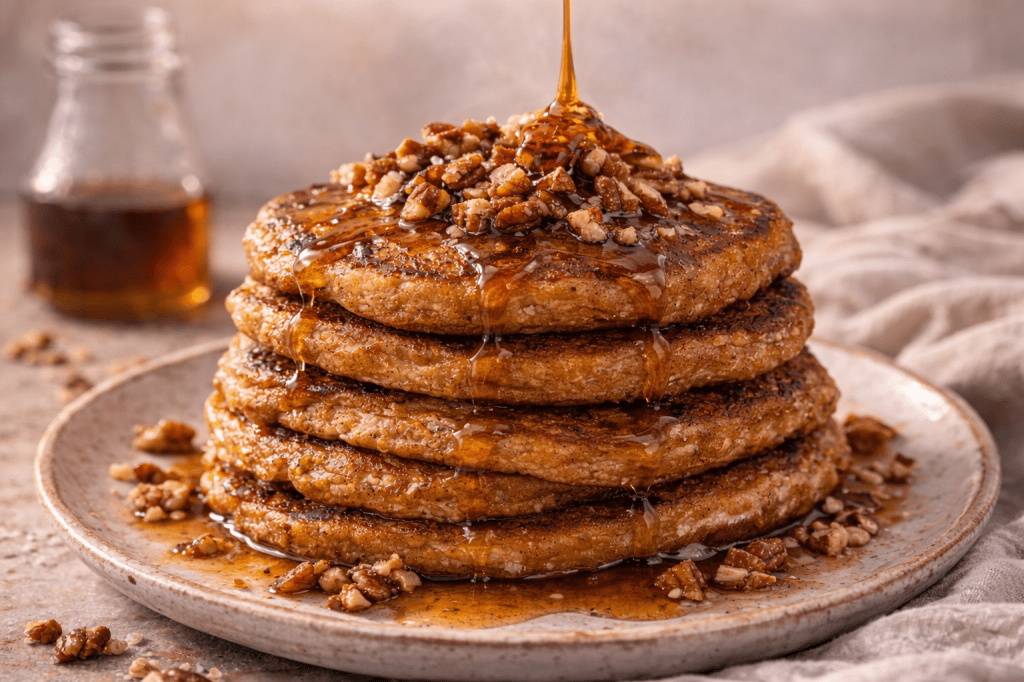
    Sweet Potato Buttermilk Pancakes with Bourbon Maple Syrup

    There’s a reason certain combinations survive long enough to become myth.

    Chicken and waffles did not rise because it was clever. It rose because it was honest.

    In Harlem, long after midnight, musicians stepped off stages with their shirts still damp and their bones still humming. They wanted fried chicken. They wanted waffles. They wanted both. At places like Wells Supper Club, someone understood that hunger does not neatly divide itself into categories. Dinner or breakfast. Savory or sweet. Survival or joy.

    So they were given both.

    That instinct — to refuse narrowing — runs deep in our kitchens.

    It lives in the sweet potato.

    A root carried across water it did not choose. Pressed into unfamiliar soil. It grew anyway. Fed families anyway. Quietly. Steadily. Without demanding recognition.

    Roast it long enough, and it deepens. The sugars darken. The flesh softens. What seemed simple reveals complexity.

    I love sweet potato pie.

    I love pancakes.

    And the older I get, the less patience I have for pretending I must choose one love over another.

    So, for the final recipe of Black History Month, I did what those musicians did, in my own way.

    I said yes to both.

    Sweet Potato Buttermilk Pancakes with Bourbon Maple Syrup.

    Not as a gimmick.

    As a continuation.

    The pancakes are tender but grounded. The sweet potato gives them weight without heaviness. The buttermilk brings tang. Cinnamon and nutmeg whisper rather than shout. The syrup carries a faint burn at the edge — just enough to remind you that sweetness has always required something.

    This is not performance food.

    It is an inherited food.

    Black history is often spoken loudly in February. Speeches. Panels. Timelines. Names we should never forget.

    But history also lives in smaller places.

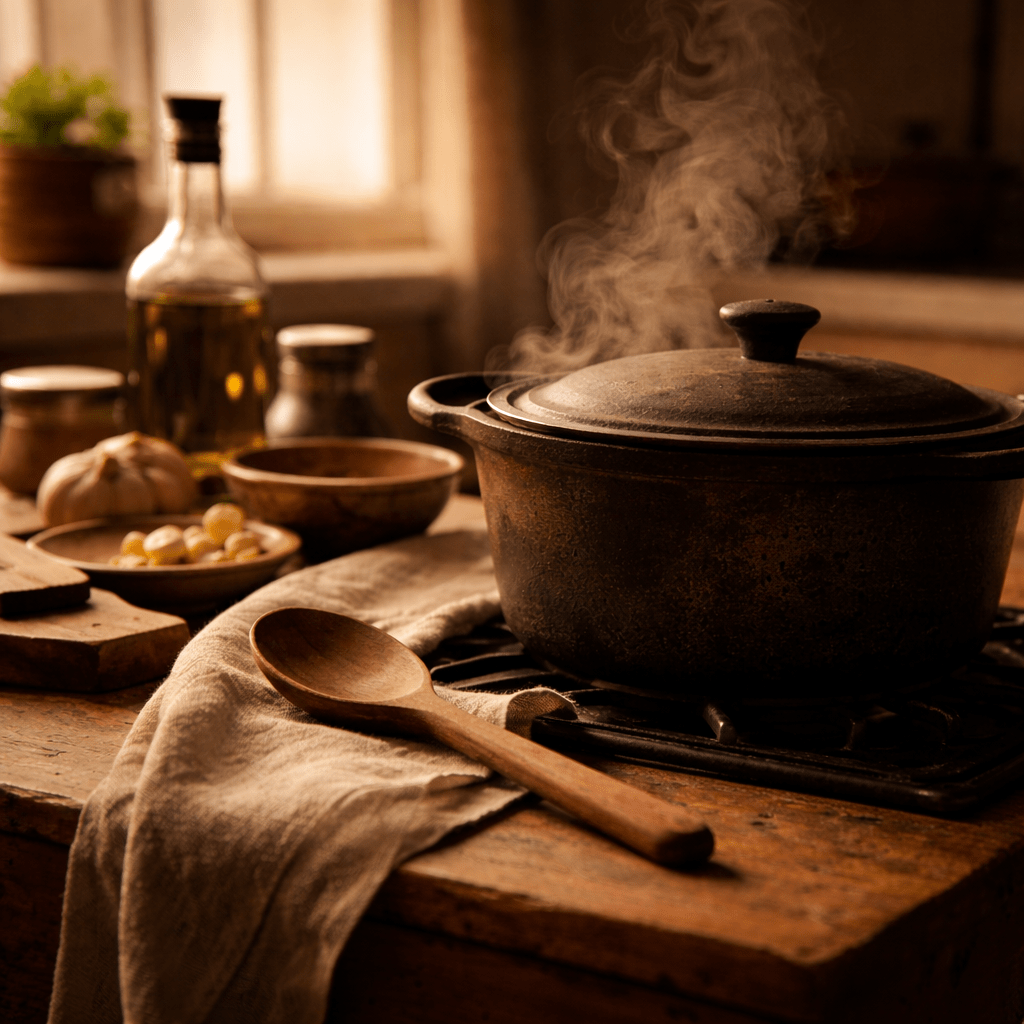
    In cast iron, warming slowly.

    In flour dusted across a wooden counter.

    In a root mashed by hand.

    Sometimes remembrance is not a declaration.

    Sometimes it is breakfast.

    Made with both hands.

    Served warm.

    Eaten without apology.

    🥞 Sweet Potato Buttermilk Pancakes with Bourbon Maple Syrup

    Ingredients

    Pancakes

    • 1 cup mashed roasted sweet potato (cooled)
    • 1 ¼ cups all-purpose flour
    • 1 tablespoon brown sugar
    • 1 teaspoon baking powder
    • ½ teaspoon baking soda
    • ½ teaspoon salt
    • ½ teaspoon cinnamon
    • ¼ teaspoon nutmeg
    • 1 cup buttermilk
    • 1 large egg
    • 2 tablespoons melted butter
    • ½ teaspoon vanilla extract

    Bourbon Maple Syrup

    • ½ cup pure maple syrup
    • 1 tablespoon unsalted butter
    • 1–2 teaspoons bourbon (optional)
    • Pinch of sea salt

    Method

    1. Roast the Sweet Potato

    Roast at 400°F until fork-tender and caramelized at the edges. Mash until smooth. Let cool fully before mixing.

    Depth matters.

    2. Combine the Dry Ingredients

    Whisk flour, brown sugar, baking powder, baking soda, salt, cinnamon, and nutmeg in a bowl.

    Keep it simple.

    3. Combine the Wet Ingredients

    In another bowl, mix sweet potato, buttermilk, egg, melted butter, and vanilla.

    Stir gently. No rushing.

    4. Bring Them Together

    Fold wet into dry. Do not overmix. Small lumps are welcome.

    Tenderness lives there.

    5. Cook

    Heat a lightly buttered skillet over medium heat.

    Pour ¼ cup batter per pancake.

    Cook until bubbles rise and edges set. Flip once. Finish until golden brown.

    Low heat rewards patience.

    6. Make the Syrup

    Warm the maple syrup and butter in a small saucepan. Remove from heat. Stir in bourbon and sea salt.

    The scent should rise before the steam fades.

    Serve With

    Toasted pecans.

    Soft butter.

    Strong coffee.

    Unhurried conversation.

    Kyle J. Hayes

    kylehayesblog.com

    Please like, comment, and share

    Resources for Hard Times

    If you’re looking for practical help, food support, or community resources, you can visit the Salt, Ink & Soul Resources Page.
    👉 Resources for Hard Times

  • Chicken Mac and Cheese Casserole

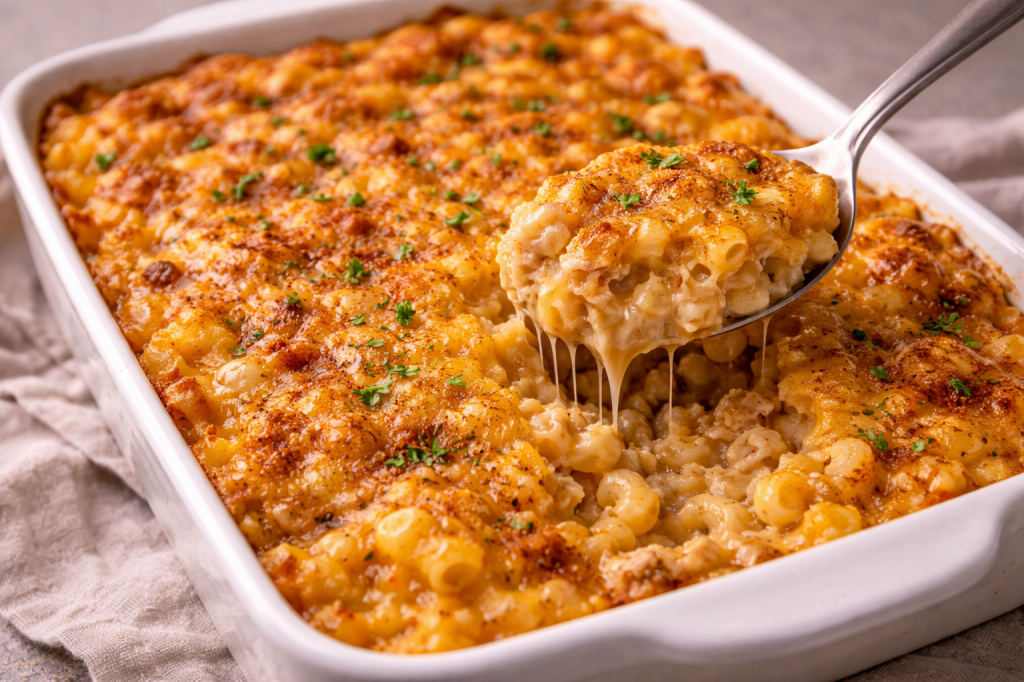
    Chicken Mac and Cheese Casserole

    A dish that understands gathering

    Some meals feel like Sunday even when it isn’t.

    Chicken and macaroni baked together is one of them.

    It sits somewhere between stretch and celebration — practical enough for a weeknight, rich enough for company. This isn’t the neon orange shortcut version. This is layered. Seasoned. Baked until the edges tell the truth.

    It’s the kind of dish that doesn’t ask who’s coming.

    It just makes room.

    Why This Version Works

    • Seasoned chicken — not plain filler
    • Real cheese, layered
    • Baked, not just stirred
    • Creamy but structured

    This is casserole as care.

    Recipe Details

    Serves: 6–8

    Prep Time: 20 minutes

    Cook Time: 35–40 minutes

    Total Time: About 1 hour

    Ingredients

    For the Chicken

    • 2 cups cooked chicken, shredded or diced
    • (Rotisserie works, but season it again)
    • ½ tsp garlic powder
    • ½ tsp onion powder
    • ½ tsp smoked paprika
    • ¼ tsp black pepper
    • Pinch cayenne (optional)

    For the Mac Base

    • 12 oz elbow macaroni
    • 3 tbsp butter
    • 3 tbsp flour
    • 2 cups whole milk
    • ½ cup heavy cream
    • 1 tsp Dijon mustard (optional but right)
    • ½ tsp salt
    • ½ tsp black pepper
    • ½ tsp smoked paprika

    The Cheese

    • 2 cups sharp cheddar, shredded
    • 1 cup Monterey Jack or Colby, shredded
    • ½ cup mozzarella (for stretch)

    Topping (Optional but Encouraged)

    • ½ cup shredded cheddar
    • ¼ cup crushed butter crackers or seasoned breadcrumbs
    • 1 tbsp melted butter

    Instructions

    1. Boil the pasta

    Cook macaroni in salted water until just shy of al dente.

    Drain. Set aside.

    2. Season the chicken

    Toss cooked chicken with garlic powder, onion powder, smoked paprika, pepper, and cayenne.

    It shouldn’t taste like an afterthought.

    3. Build the sauce

    In a large saucepan:

    Melt butter over medium heat.

    Whisk in the flour and cook for 1–2 minutes, until lightly golden.

    Slowly whisk in milk and cream.

    Cook until thickened — about 4–5 minutes.

    Stir in:

    • salt
    • pepper
    • smoked paprika
    • Dijon

    Lower heat. Add cheddar and Monterey Jack.

    Stir until smooth and fully melted.

    4. Bring it together

    Fold pasta and seasoned chicken into the cheese sauce.

    Taste. Adjust salt if needed.

    It should taste complete before it hits the oven.

    5. Assemble

    Preheat oven to 375°F.

    Lightly grease a 9×13 baking dish.

    Pour the mixture into the dish.

    Top with mozzarella and extra cheddar.

    If using topping:

    Mix crushed crackers with melted butter and sprinkle lightly.

    6. Bake

    Bake uncovered for 30–40 minutes, until bubbly and golden at the edges.

    Let rest 10 minutes before serving.

    Resting matters. It settles everything.

    To Serve

    Serve with:

    • Collard greens
    • Green beans
    • Or just a quiet kitchen and people who came hungry

    Notes

    • Add sautéed onions or bell peppers for depth
    • For extra richness, add 4 oz cream cheese to the sauce
    • This reheats beautifully

    This is not fast food.

    It’s food that remembers why we gather.

    Kyle J. Hayes

    kylehayesblog.com

    Please like, comment, and share

    Resources for Hard Times

    If you’re looking for practical help, food support, or community resources, you can visit the Salt, Ink & Soul Resources Page.
    👉 Resources for Hard Times

  • Liver and Onions 

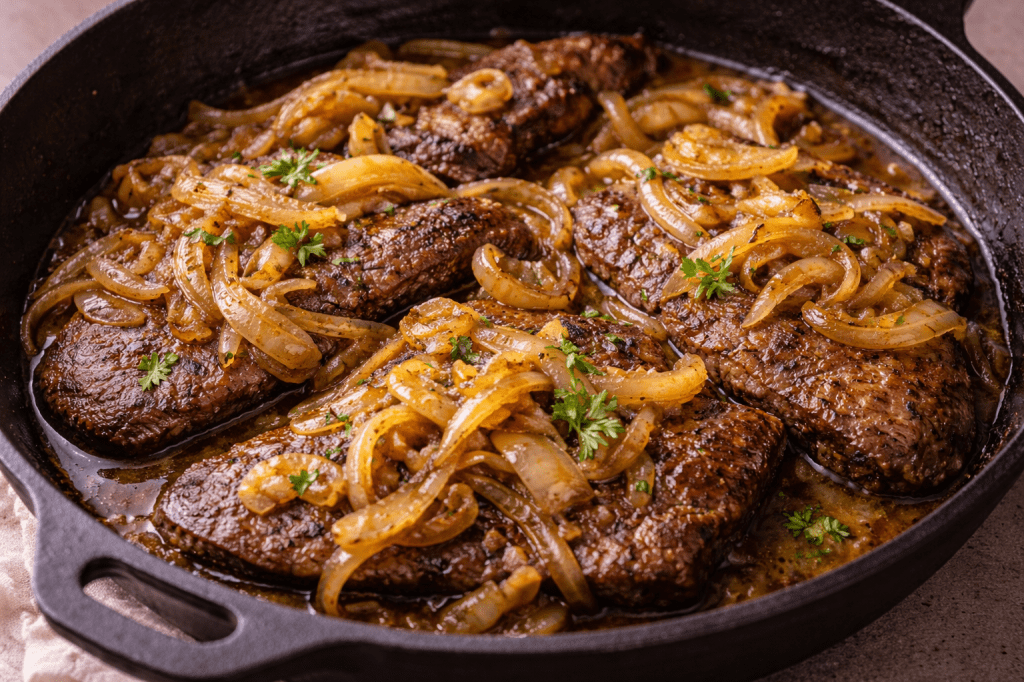
    Liver and Onions 

    Like most children, I hated liver.

    Everything about it — the look, the smell, the taste. You were always told it was good for you, the way adults say things when they know you won’t enjoy them. My mother made liver and onions every now and then, and like most people we knew, she cooked it well done, like every other meat. By the time it hit the plate, it resembled shoe leather. You ate it fast so you wouldn’t taste it, swallowing memory along with obligation.

    That stayed with me.

    So when people later talked about how good liver could be, I assumed they were either lying or nostalgic. Then someone whose opinion I respected told me something simple: your taste buds change. So I tried it again. I don’t know if it was age or skill, but what I tasted wasn’t what I remembered. This recipe is for anyone still traumatized by that first version. Try it. You might like it.

    Why This Version Works for me 

    • Liver cooked tender, not punished
    • Onions are slow and sweet, not rushed
    • Respect for the ingredient — and the eater

    Recipe Details

    Serves: 2–3

    Prep Time: 15 minutes

    Cook Time: 20 minutes

    Total Time: About 35 minutes

    Ingredients

    Liver

    • 1 lb beef liver, sliced
    • 1 cup milk (for soaking)
    • Salt and black pepper, to taste
    • ½ tsp garlic powder
    • ½ tsp onion powder
    • ½ tsp smoked paprika
    • ¼ tsp cayenne pepper (optional)
    • ½ cup all-purpose flour (for dredging)

    Onions

    • 2 large yellow onions, thinly sliced
    • 2 tbsp butter
    • 1 tbsp oil
    • Pinch of salt

    For Cooking

    • 2 tbsp oil
    • 1 tbsp butter

    Instructions

    1. Soak the liver

    Place liver slices in a bowl and cover with milk.

    Soak for 20–30 minutes, then drain and pat dry.

    This softens the flavor and changes everything.

    2. Season and dredge

    Season the liver lightly with:

    • salt
    • black pepper
    • garlic powder
    • onion powder
    • smoked paprika
    • cayenne (if using)

    Dredge lightly in flour. Shake off excess.

    3. Cook the onions

    Heat butter and oil in a skillet over medium heat.

    Add onions with a pinch of salt.

    Cook slowly, stirring occasionally, until soft, golden, and lightly sweet — about 10–12 minutes.

    Remove and set aside.

    4. Cook the liver

    In the same skillet, add oil and butter if needed.

    Cook liver slices over medium-high heat, about 2–3 minutes per side.

    You want a good sear and a tender center — not overcooked.

    5. Bring it together

    Return onions to the skillet.

    Gently toss with the liver and let everything warm together for 1–2 minutes.

    Taste and adjust seasoning.

    Serve

    Serve hot with:

    • mashed potatoes
    • rice
    • or a piece of cornbread to catch what’s left in the pan. (see recipe)

    This is food that asks you to slow down — just a little.

    Notes

    • Overcooking is what ruins liver. Stop before you think you should.
    • Milk soak matters. Don’t skip it.
    • This dish is about restraint, not force.

    Kyle J. Hayes

    kylehayesblog.com

    Please like, comment, and share

    Resources for Hard Times

    If you’re looking for practical help, food support, or community resources, you can visit the Salt, Ink & Soul Resources Page.
    👉 Resources for Hard Times

  • Smothered Pork Chops

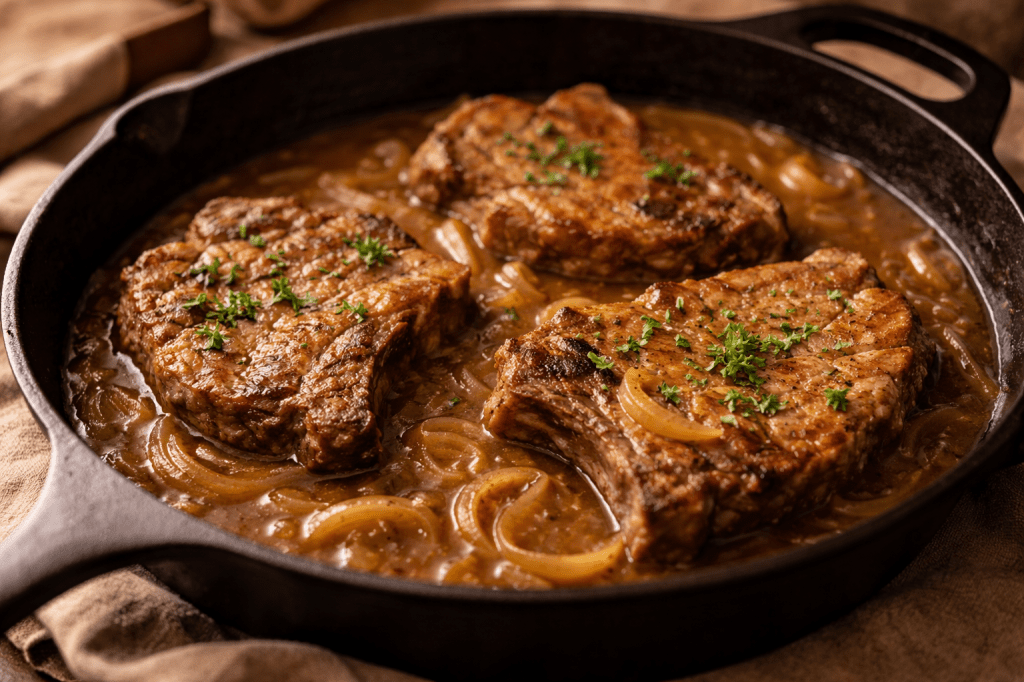
    Smothered Pork Chops

    Some meals announce themselves.

    And some meals wait.

    Smothered pork chops belong to the second kind. They don’t arrive crispy or loud. They don’t crackle for attention. They lower the heat and take their time. They understand that tenderness isn’t something you rush—it’s something you protect.

    This is the kind of food you make when you’re tired but still want to eat well. When the day took more than it gave back. When you need something steady. Something that doesn’t argue with you.

    Smothering is an act of care.

    You cover the meat to keep it from drying out. You keep it close to the gravy so it can soften without falling apart. You let it go slow enough to become what it’s supposed to be.

    That’s the point.

    This isn’t restaurant food. It isn’t meant to impress. It doesn’t photograph clean. It shows up in a pan and asks you to sit down.

    Smothered Pork Chops

    Serves 2–3. Scales easily.

    Ingredients

    • 4 pork chops
    • (bone-in if you can—flavor and patience live there)
    • Salt and black pepper
    • Garlic powder (optional, but familiar)
    • Onion powder (same)
    • ½ cup all-purpose flour
    • 2–3 tbsp neutral oil or bacon fat
    • 1 large onion, sliced
    • 2 cups chicken broth (or water, if that’s what you have)
    • Optional additions:
      • a splash of milk or cream
      • a pinch of cayenne
      • a little butter at the end

    How to Make Them

    Pat the pork chops dry. Season both sides generously with salt, pepper, and whatever else you think is right. Not measured. Just enough that you’d miss it if it wasn’t there.

    Dredge lightly in flour. Shake off the excess. You’re not breading. You’re giving the gravy something to hold onto later.

    Heat the oil in a wide skillet over medium heat. Brown the chops on both sides until they pick up color. Not cooked through. Just enough to look like they’ve lived a little.

    Remove the chops and set them aside.

    Lower the heat. Add the onions to the same pan. Stir them through the leftover flour and oil. Let them soften. Let them take their time. Scrape up the brown bits. Those matters.

    Slowly pour in the broth, stirring as you go. The gravy will thicken on its own if you let it. If it gets too thick, add a little more liquid. If it’s thin, give it time. Gravy knows what it’s doing.

    Taste. Adjust. This is where you decide what kind of night it’s been.

    Nestle the pork chops back into the gravy. Spoon some over the top. Cover the pan. Lower the heat.

    Let them simmer gently for 30–45 minutes, until tender. Not falling apart. Just easy.

    Finish with a little butter or milk for softness. Or don’t.

    How to Eat Them

    With rice.

    With mashed potatoes.

    With whatever helps you get the gravy where it needs to go.

    Eat them while they’re hot. Save what’s left.

    They’ll be better tomorrow.

    Some meals don’t need applause.

    They just need a fork, a chair, and a little quiet.

    Kyle J. Hayes

    kylehayesblog.com

    Please like, comment, and share

    Resources for Hard Times

    If you’re looking for practical help, food support, or community resources, you can visit the Salt, Ink & Soul Resources Page.
    👉 Resources for Hard Times

  • For Now, February

    For Now, February

    A Salt, Ink & Soul opening to a month of food, memory, and refusal

    For now, the calendar still gives us February.

    For now, it still calls it Black History Month—like history is something you can contain inside thirty-one little squares. Like the story fits neatly between a Valentine’s aisle and a President’s Day sale. Like you can honor a people with a banner and then go right back to pretending you don’t owe them anything.

    But I keep saying for now because I can feel the drag of erasure in the air.

    Not the dramatic kind.

    Not the kind that arrives with sirens.

    The quiet kind.

    The administrative kind.

    The kind that wears a clean shirt and says, We’re just updating the curriculum.

    The kind that edits a paragraph, removes a name, deletes a program, and calls it “neutral.”

    The kind that pretends it isn’t doing violence because it isn’t shouting while it does it.

    It is a strange thing to watch a country try to forget the very hands that helped hold it together.

    Stranger still to watch it happen while the evidence is everywhere—under glass in museums, in the bones of cities, in the laws written to contain us, and in the culture that gets celebrated only after it’s been drained of its origin.

    Because that’s the trick, isn’t it?

    America loves Blackness the way it loves seasoning.

    It wants the flavor without the farm.

    The rhythm without the bruises.

    The sweetness without the sweat.

    So yes—for now.

    And since forgetting seems to be trending, I’m going to do what Black folks have always done in the face of people trying to erase us.

    I’m going to make something undeniable.

    I’m going to cook.

    Not the kind of cooking meant to impress strangers.

    Not the kind that performs.

    Not the kind that comes with tweezers and a lecture.

    I mean the real kind.

    The kind that stains the wooden spoon.

    The kind that fogs the windows.

    The kind you smell in your clothes the next morning and don’t even mind—because it reminds you that you fed somebody. That you survived another week. That you made a house feel like a home.

    This month, I’m focusing on one part of our contribution that no one can remove from me because it’s been in me since birth:

    Food.

    Not as a trend.

    Not as content.

    As inheritance.

    Because even if they remove our names from the walls, they can’t remove the way we seasoned what we were given. They can’t remove the improvisation—how we learned to make a feast out of “not much.” They can’t remove the genius of turning what was dismissed into something worth gathering around.

    They can’t remove the way our people built entire philosophies of care from pots and pans and whatever showed up in the week’s hands.

    Food is history you can taste.

    And the beautiful, complicated truth is this: our food is not one thing.

    It is regional the way our lives have always been regional—shaped by migration, soil, water, weather, what was available, what was stolen, what was traded, what was shared, what was guarded.

    A dish can have the same name and still be a different story depending on where you’re standing when you make it.

    Someone in Louisiana will tell you the right way and mean it.

    Someone in Georgia will tell you the right way and mean it, too.

    Someone in Mississippi will roll their eyes at both of them and start cooking anyway.

    All three are telling the truth.

    Because food isn’t just ingredients. It’s teaching. It’s what your auntie did when you were sick. It’s how your granddad ate when money was tight. It’s the way your family made the ordinary feel sacred without ever using the word sacred.

    So what I’m offering this month won’t claim to be universal. It won’t pretend to be the official version of anything.

    These dishes will be mine—shaped by what I was taught, what I learned the hard way, and what I had to make work when there wasn’t time, money, or energy for anything fancy.

    That’s what makes them honest.

    And if you come from your own line of recipes, your own set of we don’t do it like that, understand this:

    You belong here, too.

    This isn’t about declaring a winner.

    It’s about keeping the record alive.

    It’s about refusing the lie that our culture is just a vibe anyone can borrow without context.

    It’s about saying:

    We were here.

    We are here.

    And we fed this country in more ways than it can admit.

    Because food is one of the most intimate ways people leave fingerprints on the world.

    Laws can be rewritten.

    Statues can be removed.

    Books can be banned.

    But try taking a taste memory from somebody.

    Try telling someone to forget greens cooked right.

    Try telling them to forget cornbread that actually means something.

    Try telling them to forget a kitchen that felt like safety.

    You can’t. Not fully.

    That’s why they try to package it.

    Rebrand it.

    Sell it back.

    Make it “comfort food” without ever naming the discomfort it came from.

    But we know.

    And this month, I want to honor what we know—not with speeches, but with a plate.

    So yes, please enjoy.

    And yes, you will probably have to walk a few extra steps.

    Not because this is indulgence for indulgence’s sake, but because our food was never meant to be eaten with shame. It was meant to be eaten with gratitude. In the community. Without apology.

    Walk your steps.

    Drink your water.

    Take your time.

    Then come back to the table.

    Because this month—for now—I’m choosing to tell Black history the way I learned it first:

    Not from a textbook.

    From a kitchen.

    From a hand that loved me enough to season what little we had.

    From a people who refused to disappear.

    Welcome to February.

    Kyle J. Hayes

    kylehayesblog.com

    Please like, comment, and share

    Resources for Hard Times

    If you’re looking for practical help, food support, or community resources, you can visit the Salt, Ink & Soul Resources Page.

    👉 Resources for Hard Times

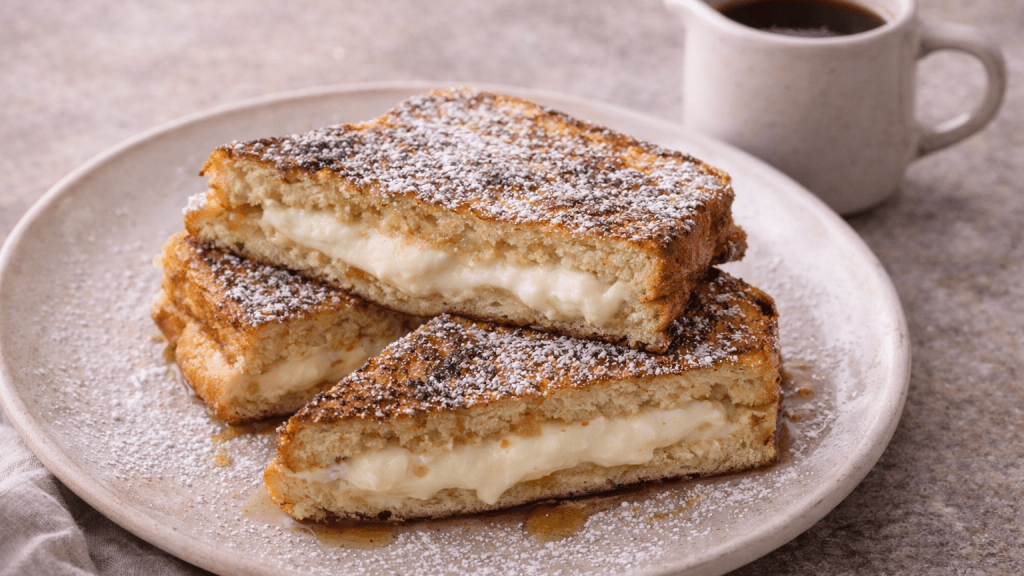
  • Soul-Food Cream Cheese–Stuffed French Toast

    Soul-Food Cream Cheese–Stuffed French Toast

    A Salt, Ink & Soul Sunday Brunch

    Some dishes live between hunger and remembrance.

    Not flashy. Not rushed.

    Just warm enough to ask you to sit down.

    This French toast belongs to Sunday mornings that don’t demand productivity. The kind that carries quiet, coffee steam, and the understanding that sweetness doesn’t need to shout to be felt.

    Recipe Details

    Serves: 2–3

    Prep Time: 15 minutes

    Cook Time: 15 minutes

    Total Time: About 30 minutes

    Ingredients

    Cream Cheese Filling

    • 4 oz cream cheese, softened
    • 1½ tbsp brown sugar
    • (white works, but brown hums deeper)
    • ½ tsp vanilla extract
    • Pinch cinnamon

    Optional, but right:

    • 1 tsp sweet potato purée or
    • 1 tbsp mashed ripe banana

    French Toast Base

    • 6 thick slices of bread
    • Sandwich Bread or Use the recipe for “The Most Basic Bread.”
    • 2 large eggs
    • ½ cup milk or evaporated milk
    • ½ tsp cinnamon
    • ¼ tsp nutmeg
    • Pinch salt

    For Cooking

    • Butter
    • Neutral oil (canola or vegetable)

    To Finish (Choose What Fits the Morning)

    • Warm cane syrup or maple syrup
    • Powdered sugar
    • Butter-pecan drizzle (optional, but devastating)
    • Fried apples or peaches
    • Crispy bacon or sausage on the side

    Instructions

    1. Make the filling

    In a small bowl, mix together:

    • cream cheese
    • brown sugar
    • vanilla
    • cinnamon
    • sweet potato or banana (if using)

    The texture should feel spreadable and slow — something meant to be handled gently.

    2. Assemble the sandwiches

    Spread the filling evenly over 3 slices of bread.

    Top with the remaining slices.

    Press gently.

    This is care, not force.

    3. Make the custard

    In a shallow bowl, whisk together:

    • eggs
    • milk
    • cinnamon
    • nutmeg
    • salt

    Dip each sandwich briefly, turning once.

    No drowning. Just enough.

    4. Cook slowly

    Heat a skillet over medium-low heat.

    Add butter with a small splash of oil.

    Cook the sandwiches 3–4 minutes per side, slow and steady, until deeply golden and warmed through.

    If the outside speaks before the inside is ready, lower the heat.

    Always.

    Optional: Skillet Fruit

    In a small pan, add:

    • 1 apple or peach, sliced
    • 1 tbsp butter
    • 1 tsp brown sugar
    • Pinch cinnamon

    Cook until soft and glossy.

    Not jam.

    Just a memory waking up.

    To Serve

    Slice diagonally.

    Dust lightly with powdered sugar.

    Drizzle syrup after plating.

    Serve breakfast meat on the side — not on top.

    Coffee poured slowly.

    This isn’t a brunch that performs.

    It sits with you.

    A Quiet Note

    This French toast isn’t about indulgence.

    It’s about enough.

    Enough sweetness to feel cared for.

    Enough restraint to leave room for thought.

    Enough history in the spices to remind you where you’ve been.

    It’s the kind of dish that understands silence at the table.

    The kind that doesn’t need praise.

    Just presence.

    Other Recommendations:

  • This May Sound Like I’m Angry

    This May Sound Like I’m Angry

    This may sound like I’m angry.

    That’s because I am.

    I’m angry about food.

    But not just food.

    I’m angry about what gets buried with it.

    What we let slip through our fingers.

    What we protect so fiercely that we never get to pass it on.

    Some recipes in families are so tied to memory, and they might as well be spiritual.

    Not written in cookbooks, not on notecards, but in gestures.

    In pinches, pours, and stirs done just so, the things you only learn by being in the room.

    But those rooms are empty now.

    We call it tradition, secrecy, and the selfish need to be the one who gets all the oohs and ahhs at the family gathering.

    To be the keeper of the sacred gumbo, the only one who knows how the sweet potatoes get that crust just right.

    We hoard recipes like treasure, and I get it—maybe it’s the only thing some of us ever had to call our own.

    But it’s not treasure if it dies with you.

    That’s not legacy. That’s vanity.

    And the loss is deeper than ingredients.

    Every time someone passes and their recipe goes with them, we don’t just lose a dish.

    We lose a moment.

    A whole damn lifetime of Sundays.

    Of back-porch stories.

    Of laughing so hard over The Red Kool-Aid and potato salad, you forget how hard life has been for a second.

    Healing as it’s passed hand to hand with every spoonful.

    You know what it’s like to taste a memory?

    To close your eyes and feel the presence of someone who’s been gone for a decade, just because their dinner rolls hit your tongue the right way?

    We lost that.

    Because someone wanted to be special.

    Because someone needed to be seen more than they needed to share.

    And then life happened.

    People fell out.

    Phones stopped ringing.

    The kitchen got quiet.

    And just like that, the recipe is gone.

    And all the meals it ever touched, all the stories it ever summoned—gone, too.

    So yes—hell yes I’m mad.

    Because these aren’t just dishes.

    They’re time machines.

    They’re inheritance.

    They’re how a little Black boy in the Midwest learns about a cousin he never met, not through a photograph, but through how his mama seasons her Greens.

    And we’re letting them vanish.

    We call food “soul” and starve our legacy because we’re too proud, wounded, or petty to pass it on.

    We forget that food was how our ancestors hid love in plain sight.

    That in a world where everything could be taken—freedom, names, land—the ability to make a damn good meal was the one thing they couldn’t steal.

    That’s what we throw away whenever we let a recipe die with a grudge.

    You want to be special?

    Be the one who teaches.

    Be the one who says, “Come on. I’ll show you.”

    Be the one who writes it down—not to post online, but to slip into the hands of the next generation.

    To say:

    This is yours now.

    This is where we come from.

    This is how we survived.

    Because the pot of greens is more than flavor.

    The macaroni isn’t just texture.

    The peach cobbler is not just a dessert.

    It’s home.

    It’s a ritual.

    It’s a reminder of who we were, even when the world tried to make us forget.

    So yes—I’m angry.

    Because we’ve buried too much already.

    I’m tired of funerals where we cry over both the person and the food we’ll never taste again.

    I’m tired of silence being passed off as tradition.

    I’m tired of watching people wait until it’s too late to care.

    If we want our culture to live, we must do more than eat it.

    We have to honor it, share it, teach it, and protect it—not like a secret but like the gospel it is.

    Because in the end, a guarded recipe dies in the dark.

    But a shared one?

    That’s how we stay alive.

    By Kyle J. Hayes

    Please Like, Comment, and Subscribe