So I wanted to cook,
Not to become a chef. Not to impress anyone.
I wanted to cook because I loved sweets. I loved good food.
That pure, unsophisticated craving for something warm, buttery, something you pull out of the oven and burn your tongue on because you just couldn’t wait.
But there’s a difference between loving food and understanding it.
Between throwing ingredients together and crafting something worth remembering.
Everyone wants to skip straight to the fun part. The stirring. The sizzling. The magic.
But before you set up your mise en place, before the measuring cups hit the counter or the oven light flickers on, there’s one thing I recommend you do first:
Learn the damn metric system.
I know, I know.
Growing up in America, we treated the metric system like some kind of foreign threat—a decimal-based conspiracy from the cold bureaucrats of Europe and Asia.
Why use grams and milliliters when you could fumble through cups, tablespoons, ounces, and whatever a pint actually is?
We were proud of our confusion.
We turned inconsistency into tradition.
But if you want to cook—and I mean really cook—you’ve got to let that go.
Because the metric system isn’t about politics.
It’s about precision.
A gram is a gram.
It doesn’t change depending on the weather, your mood, or how aggressively you packed that cup of flour.
And that level of consistency is everything.
Ever wonder why that cake turns out dry even though you swear you followed the recipe?
Why did the sauce split, the bread collapsed, or the texture didn’t feel right?
It’s probably because you were measuring like a cowboy.
So here’s what you do.
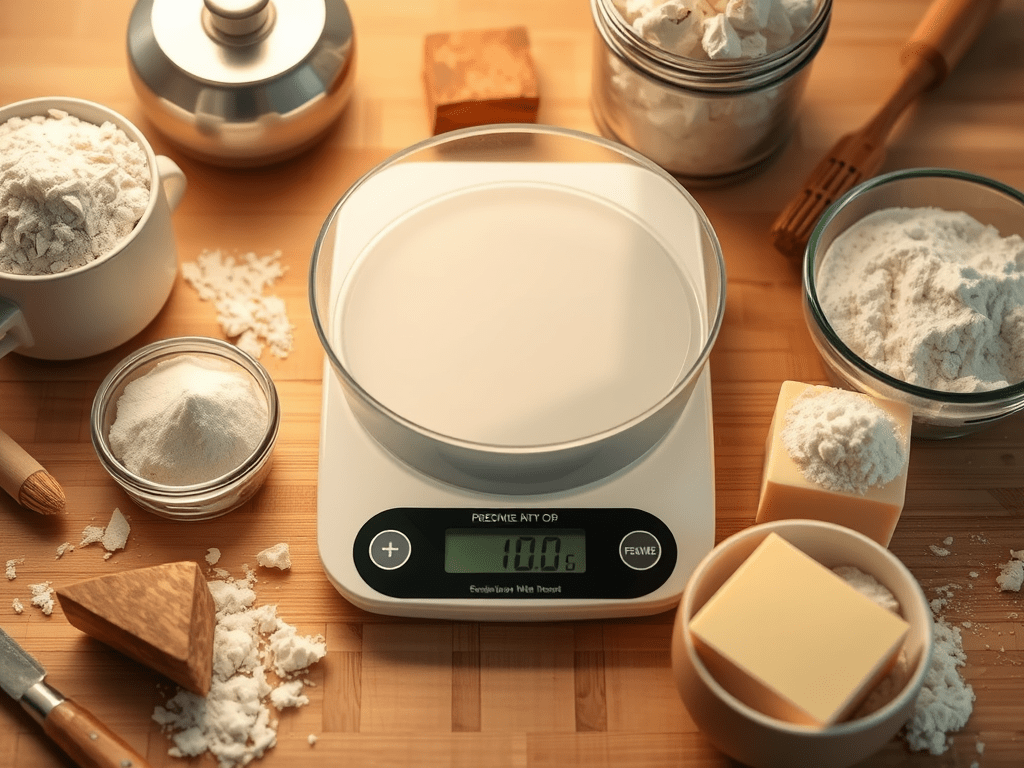
Go out and buy a digital scale.
Not the fancy kind. Just a solid, reliable one.
Get yourself a digital thermometer while you’re at it.
Knowing the internal temperature of your roast matters more than what the recipe says 45 minutes in the oven should look like.
These two tools—simple and affordable—will change the way you cook.
Not because they make you smarter.
But because they force you to slow down and pay attention.
And that’s what cooking really is.
It’s not chaos. It’s not improvisation.
It’s control disguised as creativity.
The freedom to riff, to invent, to push boundaries?
That comes later.
First, you need discipline.
A foundation. A system.
And it starts with knowing how much 200 grams of flour actually feels like.
It starts with temperature, timing, and respect for the numbers.
So yeah, you want to make sweets?
Great.
Start with the scale.
Get your metrics straight.
Because food is a lot like life.
It’s better when you stop guessing.
By Kyle Hayes
Please Like, comment, and subscribe.
 Salt,Ink, & Soul
Leave a comment