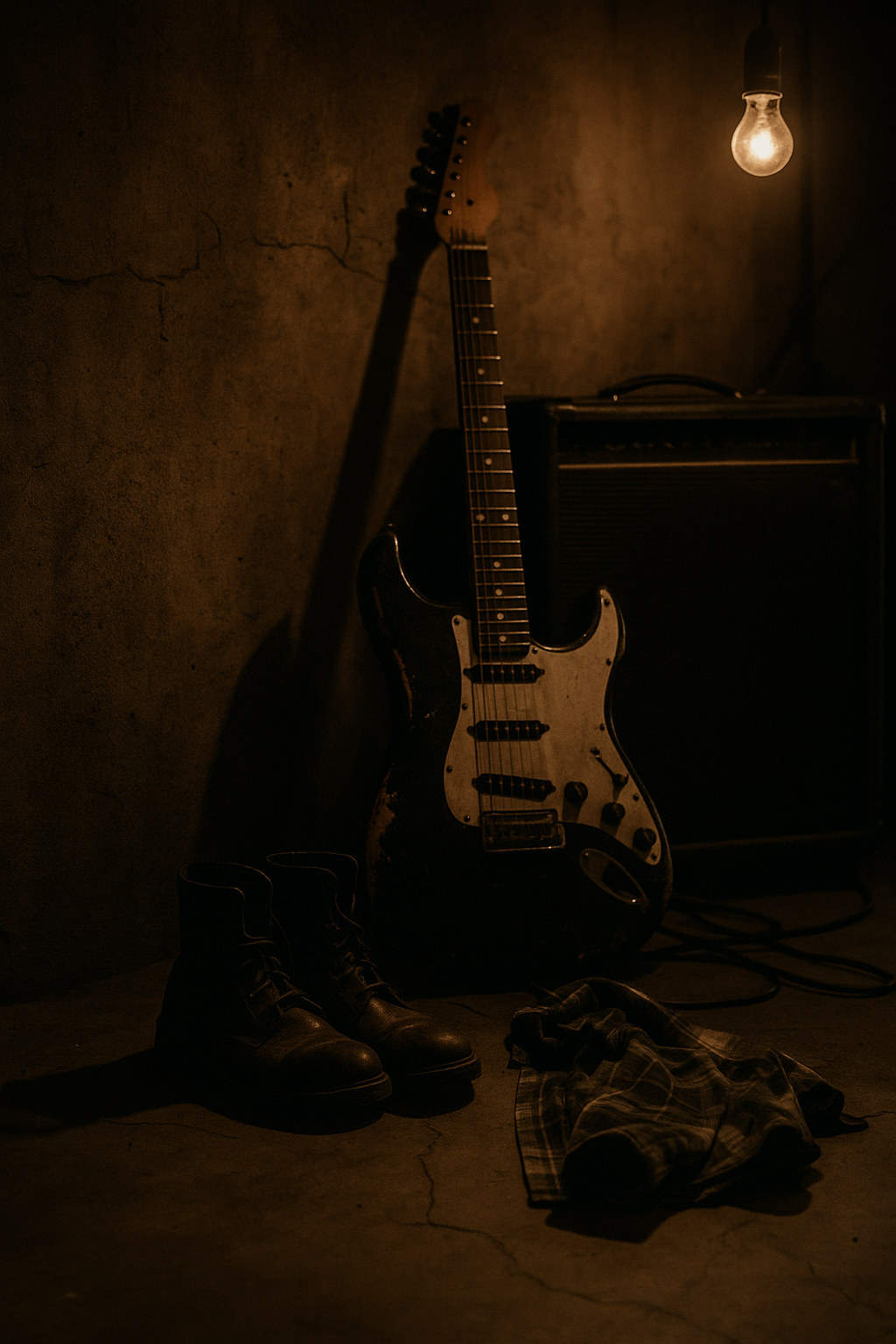
I remember grunge before it was a word. Before magazines called it a “scene” or MTV turned it into a countdown. To me, the Seattle sound was not a fashion—it was a correction. It was music dragging itself out of the glitter-drenched studios of the late ’80s, out of the overproduced gloss and neon, and back into the garage. Grunge was a basement with the carpet moldy from too many rainy days. It was amplifiers pushed too hard, a voice breaking on purpose because that was the only honest way it could come out.
It wasn’t pretty. It wasn’t supposed to be. That was the point.
Grunge emerged from discontent, from economic anxiety, and a generation raised on promises that crumbled as quickly as they were spoken. Seattle in the late 1980s wasn’t yet the gleaming headquarters of tech titans; it was a working-class, rain-soaked city still reeling from industrial decline. Out of that damp heaviness came guitars tuned low and lyrics that refused to smile for the camera.
The rebellion wasn’t only against mainstream music—it was against a culture that wanted rebellion to be marketable, predictable, and safe. Grunge didn’t arrive in designer jeans. It came in thrift store flannels, torn knees, and boots scarred from wear. It was ugly and unpolished because life was ugly and unpolished.
Now, decades later, I scroll past TikTok and Instagram posts labeled “clean grunge.” And what I see isn’t rebellion—it’s choreography. Smoky eyes smudged with precision. Flannel jackets cut by stylists. A brand of rebellion polished and filtered until it gleams, made safe for marketing campaigns and mall shelves.
The record companies, which once scrambled to repackage Nirvana and Pearl Jam for mass consumption, have found a new hustle: repackaging the image of rebellion itself. This time, they don’t even need the music. All they need is an aesthetic.
And so, the movement that once told the truth about pain and survival gets reborn as an Instagram filter, stripped of its soul. The line between protest and product has never been thinner.
This isn’t only about eyeliner and ripped jeans. It’s about what happens when culture takes a language of survival and repurposes it for profit. When pain becomes aesthetic, the memory of why that pain mattered gets erased.
In the same way, soul food becomes “Southern cuisine” without the history of chains and resilience that gave birth to it. The same way hip-hop gets siphoned into ad jingles without the block that gave it life. Grunge wasn’t about style—it was about a generation’s refusal to look clean when life was dirty. By polishing it, you erase the very rebellion that made it matter.
We live in an age where collapse itself is entertainment. Where burnout, breakdowns, and public unravelings get clipped and shared for profit. Grunge was one of the first loud refusals of that machine—too raw to be scripted, too messy to be safe. And yet, here we are again, with corporations teaching us how to buy “authenticity” in neatly packaged doses.
The question isn’t whether grunge can make a comeback. The question is: Can rebellion survive once it’s been made aesthetic? Can truth survive when it’s curated for likes?
When I think of grunge, I don’t think of smoky eyeliner or carefully ripped denim. I think of a garage where the walls shook, where voices cracked under the weight of what they carried, where kids who had nothing found a sound that meant something.
And maybe the real rebellion now is not to buy what they’re selling us as “grunge,” but to remember what the original movement taught us: that beauty can be broken, that truth can be ugly, and that music, like life, is never meant to be clean.
By Kyle J. Hayes
kylehayesblog.com
Please like, comment, and share

 Salt,Ink, & Soul
Leave a comment