Category: Personal Reflection

  • Thriller Was Never Gone

    Thriller Was Never Gone

    There are some things the world rediscovers only because it has forgotten how long they have been living inside it.

    That is how I feel watching people circle back to Thriller now, with all this renewed attention around Michael Jackson because of the movie, the trailers, the conversations, the clips, the younger people discovering what some of us never lost. The biopic “Michael” has brought his name back into the center of popular conversation, though for many of us, his name never really left. His music has continued to find new ears, new dance floors, new bedrooms, new cookouts, new children standing in front of mirrors, trying to make their feet obey something their spirit already understands. Even now, Jackson’s catalog keeps returning to the charts and to public memory in fresh ways. 

    But Thriller is different.

    I can keep this short, but that would feel dishonest. Thriller is not simply an album I admire. It is one of those cultural monuments that sits so deeply in the landscape that people sometimes stop seeing how large it is. It becomes weather. It becomes background. It becomes one of those things everyone knows, and because everyone knows it, we risk forgetting how impossible it once was.

    There are albums, and then there are events.

    Thriller was an event.

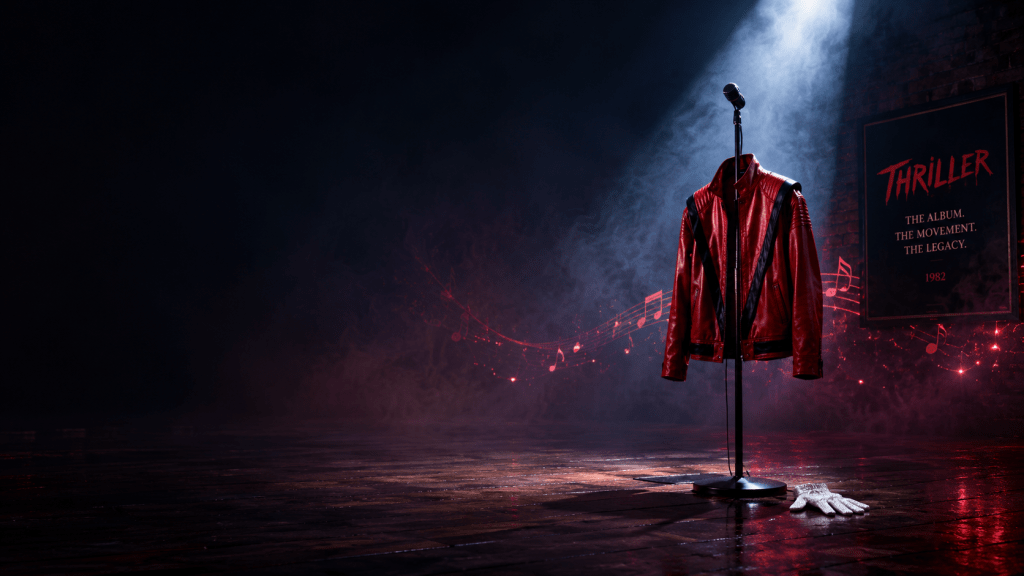
    Not just a release date. Not just a collection of songs pressed into vinyl, cassette, and memory. It was a door being kicked open with polished shoes, a red jacket, a white glove, and a sound so precise it felt engineered by lightning. Released in 1982, it became the kind of record that did not merely dominate its time. It bent time around itself. It went on to become widely recognized as the best-selling album of all time. It was later preserved by the Library of Congress for its cultural, historical, and aesthetic significance. 

    But numbers only tell part of the story.

    Numbers can count sales.

    They cannot count the way a room changes when “Billie Jean” begins.

    They cannot measure the way the bass line walks in before the man does. That quiet, dangerous pulse. That sound of suspicion dressed as elegance. That feeling that something has entered the room wearing a fedora and secrets.

    They cannot count how many children ruined socks trying to moonwalk across kitchen floors.

    They cannot count how many shoulders moved before permission was granted.

    They cannot count the first time somebody saw him lean forward at an angle that seemed to argue with gravity itself and realized that the human body, under the right command, could become punctuation.

    Thriller was music, yes.

    But it was also proof.

    Proof that Black artistry did not need to be translated into something smaller to be understood by the world. Proof that soul, funk, pop, rock, theater, horror, dance, precision, and spectacle could sit at the same table and not fight for space. Proof that a Black artist could become the center of the machine, not as a guest, not as a novelty, not as someone grateful to be let in, but as the reason the doors had to be widened.

    That part matters.

    It mattered then, and it matters now.

    Because there was a time when the industry loved Black sound but feared Black centrality. It loved the rhythm, the invention, the sweat, the church, the moan, the hips, the hunger, the heat. It loved what we made, but not always us standing in the bright middle of it. And then came Michael, not asking permission so much as revealing that permission had always been too small a thing for what he carried.

    He did not just cross over.

    He made the crossing look foolish.

    He made the border disappear.

    That is one of the reasons Thriller remains so difficult to reduce. It was not merely “Black music” becoming acceptable to white audiences. It was Black excellence arriving so fully formed, so undeniable, so complete in its craft, that the old categories began to buckle. The album did not abandon Blackness to become universal. It showed that Blackness had always contained the universal.

    That is the thing some people still struggle to understand.

    The universal does not always begin in the middle.

    Sometimes it begins in Gary, Indiana.

    Sometimes it begins in Motown rehearsal rooms.

    Sometimes it begins in gospel phrasing, James Brown feet, street-corner rhythm, Sunday-morning ache, and the discipline of a child who learned too early that applause could be both love and labor.

    And that is where the beauty of Thriller becomes complicated.

    Because when we talk about Michael Jackson, we are never only talking about music. We are talking about genius and cost. We are talking about what America does to its brightest children, especially the ones it wants to consume. We are talking about the strange bargain of being loved by the world and still somehow being alone inside yourself.

    There is joy in Thriller, but there is also pressure.

    You can hear the perfectionism.

    You can hear the reach.

    You can hear a man trying to become larger than every room that ever tried to contain him.

    Maybe that is why the album still feels alive. It is polished, but not empty. It is immaculate, but not bloodless. Even at its most dazzling, there is something haunted running beneath it. “Billie Jean” is not a party song, though people dance to it. “Wanna Be Startin’ Somethin’ moves like celebration, but it carries anxiety in its bones. “Beat It” has the muscle of rock, but the wisdom of survival. Even “Thriller,” with its monsters and choreography and graveyard theater, knows something serious about fear: that sometimes the only way to face it is to dance directly in front of it.

    That is the secret.

    The album moves because it understands movement as more than entertainment.

    Movement is escape.

    Movement is resistance.

    Movement is testimony.

    Movement is a child saying, “Look what I can do.”

    Movement is a man saying, “You will not look away.”

    And we did not look away.

    We still have not.

    The visuals changed everything. “Billie Jean” helped push Michael onto MTV at a time when Black artists were not being given the same access to that new visual marketplace. The “Thriller” short film took the music video and stretched it into cinema, into an event, into a ritual. After that, a song was no longer just something you heard. It could be something you entered. Something you watched. Something you wore. Something you practiced in the mirror until your body began to remember what your mind could not explain. 

    The red jacket became scripture.

    The glove became a symbol.

    The loafers became instruments.

    The choreography became a language passed down without formal instruction.

    Nobody had to explain it to us. We saw it once, and the body understood.

    That is rare.

    That is not marketing.

    That is culture.

    And culture, real culture, does not stay where it is placed. It travels. It leaks under doors. It crosses oceans. It lands in countries where people do not speak the language but know exactly when to throw their shoulders back. It becomes a wedding reception, a school talent show, a Halloween party, a family reunion, a halftime routine, a child alone in a hallway trying to spin without falling.

    That is why I smile a little when people say Michael Jackson is “back.”

    Back from where?

    He has been in the grocery store aisle.

    He has been in the skating rink.

    He has been at the cookout.

    He has been in the DNA of every pop star who has ever learned that the body could sell the song as much as the voice.

    He has been in the architecture field.

    The truth is, some artists do not disappear. The world only changes its volume.

    For those of us who lived with the music, Thriller was never a relic. It was never just nostalgia. It was not trapped in the 1980s with the jackets, the hair, the posters, the television specials, the moonwalk, and the glow of a world beginning to understand the power of images. It kept breathing. It kept showing up, generation after generation, because great work does not ask permission to survive.

    It survives because it is useful.

    It gives people joy.

    It gives people movement.

    It gives people memory.

    And maybe that is what I return to most when I think about Thriller: memory.

    I think about how music marks us. How a song can become a room. How a bass line can bring back a floor, a television set, a cousin, a summer, a mother’s voice from another room. I think about how the records we love become part of the family even when we do not say it that way. They sit with us. They raise us a little. They teach us rhythm, confidence, drama, and escape. They teach us that ordinary life can suddenly become cinematic if the right song comes on.

    That is what Thriller did.

    It made the world feel bigger.

    It made possibility feel visible.

    It made a Black boy from Indiana into a global language.

    And it did so with craft.

    That part should never be forgotten. The magic was not accidental. Quincy Jones and Michael Jackson built that album with care, discipline, taste, and hunger. Nothing feels wasted. Every song knows what it is doing. Every groove has a purpose. Every silence has shape. The album is joyful, but it is not careless. It is smooth, but not soft. It is commercial, but not hollow. It is accessible without being simple.

    That is a hard thing to do.

    To make something everybody can enter, without making it cheap.

    To make something polished enough for the whole world, but still alive enough to sweat.

    That is why the greatness of Thriller is not really up for debate.

    People may debate Michael.

    People may debate legacy, celebrity, myth, memory, pain, and all the complicated human wreckage that surrounds a life lived too publicly.

    But Thriller?

    The work stands.

    It stands because the work still works.

    Drop the needle. Press play. Let the first few seconds hit. Watch what happens.

    The body answers before the mind can form an argument.

    And maybe that is the final proof.

    Not the sales.

    Not the awards.

    Not the records.

    Not even the history.

    The proof is in the involuntary response.

    The foot taps.

    The shoulders loosen.

    The room wakes up.

    Somebody smiles before they mean to.

    That is not just an album.

    That is inheritance.

    That is architecture.

    That is a force of nature dressed in melody and leather.

    That is Thriller.

    Kyle J. Hayes

    kylehayesblog.com

    Please like, comment, and share

    Resources for Hard Times

    If you’re looking for practical help, food support, or community resources, you can visit the Salt, Ink & Soul Resources Page.

    ๐Ÿ‘‰ย Resources for Hard Times

  • What are the biggest mistakes people make when visiting your country?

    What are the biggest mistakes people make when visiting your country?

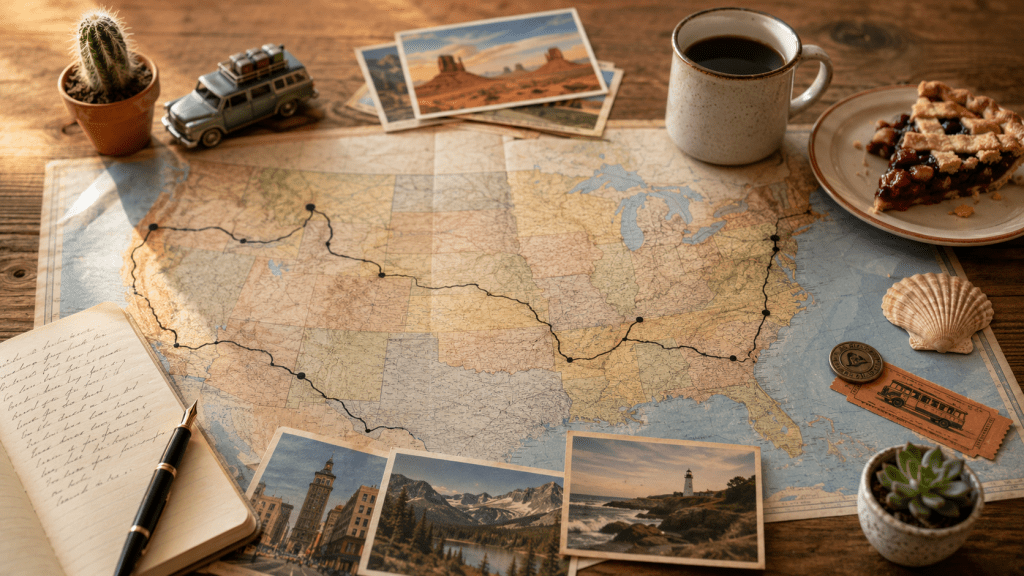
    I think one of the biggest mistakes people make when visiting the United States is believing they have arrived in one place.

    Technically, yes.

    It is one country.

    One flag. One federal government. One name printed across maps and passports. But to move through America as if it is all the same is to miss one of the strangest and most interesting things about it.

    America is not one room.

    It is a house with many rooms.

    And each room has its own temperature.

    It’s own smell.

    Its own music coming from somewhere down the hallway.

    Its own way of speaking, eating, driving, laughing, arguing, welcoming, warning, and remembering.

    You can land in New York and think you understand America because you have seen the tall buildings, the crowded sidewalks, the hurry in people’s steps, the way everyone seems to be late for a life they are already living. New York has its own rhythm. Fast. Sharp. Alive. A place where the food comes from everywhere, and the streets feel like they are always in conversation.

    But New York is not Texas.

    Texas stretches itself out differently. The sky feels larger there. The food speaks in smoke, spice, beef, heat, and pride. The pace changes. The accent changes. The idea of distance changes. A short drive in Texas might be a whole afternoon somewhere else.

    And Texas is not Florida.

    Florida is almost its own world.

    Part Southern, part Caribbean, part retirement dream, part swamp, part beach, part chaos, part beauty. A place where sunshine can feel like paradise in the morning and a warning by afternoon. Florida does not always make sense, but maybe that is part of its personality. It refuses to be only one thing.

    Then there are all the other places people forget when they speak of America too quickly.

    The Midwest, where politeness can be both warmth and code.

    The South, where history sits at the table whether it is invited or not, and where food can taste like memory, labor, grief, celebration, and somebody’s grandmother refusing to measure anything.

    The West Coast, with its ocean edges, wellness language, ambition, earthquakes, reinvention, and strange mixture of freedom and performance.

    The Southwest, with its desert light, green chile, Native presence, Mexican influence, adobe walls, open sky, and a kind of beauty that does not shout but stays with you.

    The Pacific Northwest, gray and green, coffee-warmed, rain-softened, full of trees and quiet moods.

    The Appalachian places.

    The prairie places.

    The border towns.

    The old industrial cities.

    The small towns where everybody knows your truck before they know your name.

    The mistake is thinking America can be understood from one airport, one city, one movie, one accent, one stereotype, or one plate of food.

    It cannot.

    This country is too large for that.

    Too contradictory.

    Too regional.

    Too full of people who share a nation but not always a culture.

    Even the language changes depending on where you are. The same word can be pronounced differently in different mouths. A greeting can be quick and clipped in one place, slow and musical in another. Some people say soda. Some say pop. Some say Coke means almost anything carbonated. Some places put sugar in the tea before you even ask. Some places look at you strangely if you ask for it that way.

    Food may be one of the clearest maps.

    Pizza in New York.

    Barbecue in Texas, Kansas City, Memphis, and the Carolinas, each one ready to defend itself in court if necessary.

    Seafood in Maryland and Louisiana.

    Green chile in New Mexico.

    Cuban sandwiches in Florida.

    Hotdish in Minnesota.

    Gumbo, biscuits, tacos, bagels, burgers, fried chicken, clam chowder, soul food, diner food, food trucks, and gas station food that has no business being as good as it is.

    Every region has its own appetite.

    And appetite tells the truth.

    So if someone is visiting the United States, I would tell them not to come here looking for one America.

    Come here ready to meet many.

    Do not assume Los Angeles explains Chicago.

    Do not assume Miami explains Atlanta.

    Do not assume Boston explains New Orleans.

    Do not assume Las Vegas explains anything except Las Vegas.

    Each place has a story. Each place has a mood. Each place has a history beneath the surface. Some of it is beautiful. Some of it is painful. Some of it is loud. Some of it is buried. But it is there.

    That is the real lesson.

    America is not simple.

    It is not one flavor.

    It is not one accent.

    It is not one kind of person.

    It is a country of regions pretending to be a single idea, and somehow, for better and worse, still trying to hold together.

    So the biggest mistake visitors make is assuming America is all the same.

    It is not.

    America is a collection of different places, foods, accents, histories, and ways of life. That is what makes traveling through it interesting. The best way to experience the United States is to stay curious, pay attention, try the local food, listen to how people speak, and remember that every state has its own story to tell.

    Kyle J. Hayes

    kylehayesblog.com

    Please like, comment, and share

    Resources for Hard Times

    If you’re looking for practical help, food support, or community resources, you can visit the Salt, Ink & Soul Resources Page.

    ๐Ÿ‘‰ย Resources for Hard Times

  • What’s a song that always puts you in a good mood?

    What’s a song that always puts you in a good mood?

    Daily writing prompt
    Whatโ€™s a song that always puts you in a good mood?

    This may be one of the best writing prompts I have seen.

    Even thinking about the answer makes me smile.

    Some songs do not simply play. They arrive. They kick the door open. They bring light with them. They grab some younger version of you by the hand and pull him back into the room before you have time to argue with memory.

    For me, that song is “Walking on Sunshine” by Katrina and the Waves.

    I am Gen X, so that song does not just sound like music to me.

    It sounds like high school.

    It sounds like MTV.

    It sounds like Converse Chuck Taylors hitting the floor with the quiet confidence of somebody who did not yet know all the things life would ask him to carry.

    And yes, I had several pairs.

    Of course I did.

    Some songs make you think. Some songs make you remember. Some songs sit beside you in sadness and help you name the ache.

    But this one is different.

    This one is joy with its sleeves rolled up.

    It does not ask permission. It does not arrive carefully. It does not knock politely and wait to see if you are emotionally prepared. It just starts, bright and shameless, and suddenly the room changes.

    That opening hits, and something in me stands up.

    Not the serious part.

    Not the tired part.

    Not the part that pays bills, watches the news, carries old pain, and tries to make meaning out of everything.

    The other part.

    The part that still remembers being young.

    The part that remembers when music videos felt like events. When the world seemed to come through the television in color, noise, and possibility. When a song could live in your head all day and make even an ordinary walk feel like a scene from something larger.

    That is what “Walking on Sunshine” does.

    It takes me back without making me feel trapped there.

    That matters.

    Some nostalgia is heavy. Some songs pull you into the past and leave you standing in rooms you cannot return to. But this song does not feel like grief. It feels like a window being thrown open.

    It feels like sneakers.

    It feels like sunlight.

    It feels ridiculous and uncaring.

    And yes, it is still on my playlist.

    Absolutely.

    Some songs earn permanent residence. They survive every version of you. They stay through changing tastes, changing years, changing moods, changing bodies. They remain because they know how to reach a place in you that has not been ruined by time.

    That place is important.

    We talk a lot about pain. About healing. About survival. About what we lost and what we are still trying to understand.

    But joy deserves witnesses, too.

    Joy deserves to be named.

    Joy deserves its own altar, even if that altar is just a YouTube video, an old song, and a grown man singing like no one is listening.

    And that is exactly what I plan to do after I finish writing this.

    I am going to play the video.

    I am going to let the song do what it has always done.

    I am going to smile.

    I am going to sing.

    Badly, maybe.

    Loudly, probably.

    Freely, definitely.

    Because sometimes the soul does not need a lesson.

    Sometimes it needs three minutes and a change of pure, unreasonable brightness.

    Sometimes it needs to remember that not everything has to be heavy to be true.

    Sometimes it needs to walk on sunshine

    Kyle J. Hayes

    kylehayesblog.com

    Please like, comment, and share

    Resources for Hard Times

    If you’re looking for practical help, food support, or community resources, you can visit the Salt, Ink & Soul Resources Page.

    ๐Ÿ‘‰ย Resources for Hard Times

  • What’s a fear you’ve overcome โ€” and how did you do it?

    What’s a fear you’ve overcome โ€” and how did you do it?

    Daily writing prompt
    Whatโ€™s a fear youโ€™ve overcome โ€” and how did you do it?

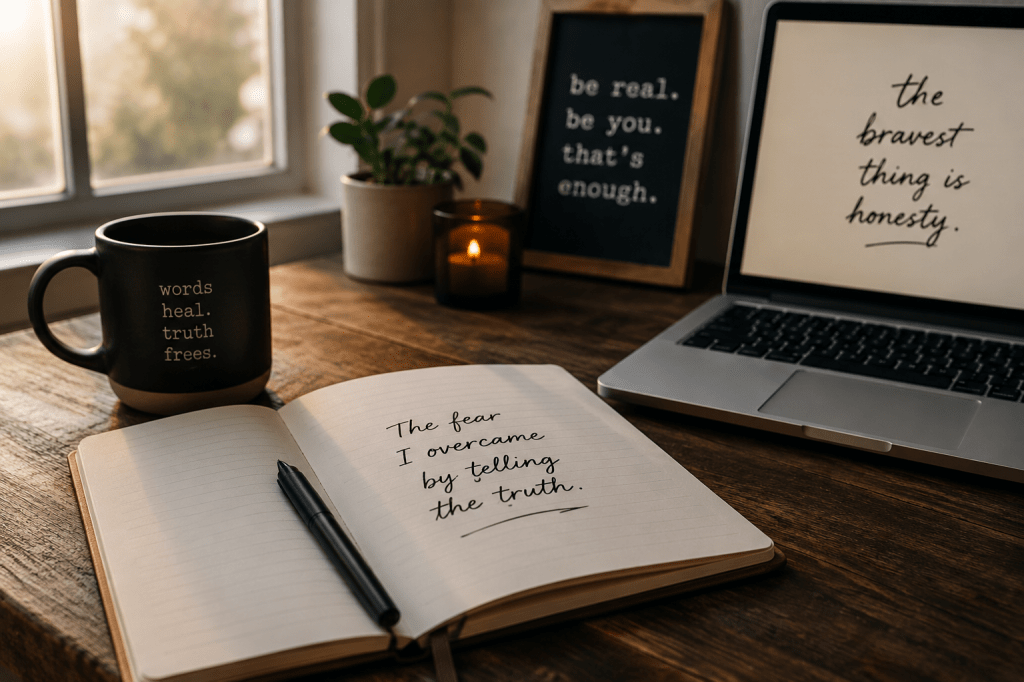
    The fear I had to overcome was the fear of truly expressing myself.

    Not writing.

    I could write.

    I had always known there were words somewhere inside me, moving around in the dark, waiting for a place to go. But expression is different from writing. Expression asks more of you. Expression does not let you hide behind cleverness or distance. It asks you to bring the real thing forward.

    The feeling.

    The thought.

    The wound.

    The part of yourself you learned to protect because the world had already shown you what it could do with anything soft.

    I grew up being teased for anything and everything. That kind of thing does not leave you all at once. People like to pretend childhood cruelty is small because children are small, but that is not true. Small hands can still leave fingerprints. Small voices can still become the echoes a person carries into adulthood.

    After a while, you learn to hold yourself back.

    You learn to measure every word before it leaves your mouth. You learn to hide enthusiasm. You learn to make yourself less visible. You learn that being seen can feel dangerous.

    So the idea of putting myself on paper, my feelings, my thoughts, my pain, my emotions, and then placing it online where anyone could read it, was terrifying.

    It felt almost unnatural.

    Like standing in the middle of a room and taking off the armor I had spent years building.

    And yet, I did it.

    Not all at once.

    Not bravely in the way people imagine bravery.

    I did it one piece at a time.

    A sentence.

    A paragraph.

    A post.

    A confession softened by craft.

    A truth placed carefully enough that I could survive seeing it outside my body.

    The more I wrote, the more something inside me began to loosen. Not disappear. Not healed completely. But loosen. Writing became a way to take what had been trapped inside me and give it shape. Once it had shape, it was no longer just pain. It was testimony. It was a memory. It was language. It was something I could hold, examine, revise, and understand.

    And the more I did it, the better I felt.

    The better I got.

    That matters too.

    Because fear wants you to believe that expression will destroy you. It tells you that if people see the real thing, they will laugh. They will turn away. They will misunderstand. They will prove every old voice right.

    And sometimes people may not understand.

    But sometimes they do.

    Sometimes someone leaves a comment that lets you know your words reached a place in them they had not been able to name. Sometimes someone tells you that what you wrote helped them. Sometimes they do not say it loudly, but you can feel it. They saw themselves in your story. They realized they were not the only ones who had carried that kind of ache.

    That changes something.

    Because then the writing is not only about me.

    It becomes a bridge.

    A small one, maybe.

    But still a bridge.

    One person telling the truth from one side of loneliness, and another person hearing it from the other.

    That is how I overcame the fear.

    Not by becoming fearless.

    I do not think that is how fear works.

    I overcame it by learning that the fear did not get the final vote. I overcame it by writing anyway. By sharing anyway. By letting the work prove to me that vulnerability does not always lead to humiliation. Sometimes it leads to a connection. Sometimes it leads to healing. Sometimes it becomes the very thing that helps someone else survive their own silence.

    And in helping them, I help myself.

    That may be the part I did not expect.

    Every time someone responds and says, in some way, I know this feeling too, I am reminded that I am not alone either. The pain I thought was only mine was never only mine. The fear I thought made me strange was part of being human. The loneliness I carried had echoes in other people.

    Writing taught me that.

    Or maybe sharing did.

    Private writing can save you in one way. But public honesty can save you in the long run. It can turn the locked room into a doorway.

    I still feel the fear sometimes.

    I still know what it costs to tell the truth.

    But I also know what silence costs.

    And I have paid enough for that.

    So I keep writing.

    I keep placing pieces of myself on the page.

    Not because it is easy.

    Because somewhere, someone may need the words.

    And maybe I need them too.

    Kyle J. Hayes

    kylehayesblog.com

    Please like, comment, and share

    Resources for Hard Times

    If you’re looking for practical help, food support, or community resources, you can visit the Salt, Ink & Soul Resources Page.

    ๐Ÿ‘‰ย Resources for Hard Times

  • What Could Have Been

    What Could Have Been

    Thoughts on the life I escaped.

    Maybe escaped is too much. There was no dramatic chase. No single door kicked open. No heroic music swelling in the background while a man heads to the southwest with all his wounds packed neatly in the trunk.

    It was quieter than that.

    It was the kind of escape that happens after years of feeling the walls move closer and closer until one day you realize the room has been shrinking around you. Not because anyone touched the walls. Not because anyone admitted what was happening. But because the life around you had already decided its limits for you, and if you were not careful, you would mistake those limits for destiny.

    I come from the Quad Cities.

    I say that with no hatred.

    A place can wound you and still feed you. A place can raise you and still not have room for you to become. A place can know your name and still never know what lives inside you.

    That is the complicated truth of home.

    People from the outside sometimes imagine the Midwest as simple. Quiet. Polite. Decent. Hardworking. Neighborly. They imagine front porches, snow shovels, church fish fries, factory shifts, Friday night bars, and grocery stores where everybody knows somebody’s cousin.

    And some of that is true.

    But truth is rarely clean.

    The Midwest has a way of hiding its knives in soft cloth.

    The racism was not always loud.

    That was part of the trouble.

    It did not always come wearing a hood or shouting from the street. It came smiling. It came with a handshake. It came with a joke you were supposed to laugh at if you wanted to keep the peace. It came in the silence after you spoke too well. It came in the promotion you were never quite right for. It came in the form of people making you feel grateful for being tolerated.

    Polite racism is a special kind of poison.

    It asks you to pretend you have not been poisoned.

    It asks you to be reasonable. Professional. Mature. Understanding. It asks you to bow your head and call it patience. It asks you to keep working, keep smiling, keep proving, keep swallowing. And because jobs are few and far between, because opportunity is treated like a chair in a crowded room, once you get a seat, you are expected to sit there and be thankful, no matter how hard the wood cuts into you.

    That is how a life gets built smaller than the soul.

    One concession at a time.

    You get a job and keep it.

    Good or not.

    Fair or not.

    Respectful or not.

    You keep it because there may not be another one waiting. You keep it because rent does not care about dignity. Groceries do not care about dreams. The light bill does not lower itself because your spirit is tired. So you learn the mathematics of survival. You calculate the insult against the paycheck. You measure humiliation against health insurance. You teach yourself to be quiet because quiet pays on Friday.

    And then one day, the quiet becomes you.

    That is the thing I fear most when I think about what might have been.

    Not poverty.

    Not struggle.

    Not even failure.

    I fear becoming quiet.

    I fear being a man who learned to live without asking what living was supposed to mean.

    There is a version of me who stayed.

    I can see him sometimes.

    He is not a bad man. That may be the saddest part. He is not foolish. He is not weak. He is not lazy. He is smart. Maybe too smart for the room and too tired to do anything about it.

    He works because work is what men are told to do. He buys the house he can afford because that is what responsibility looks like from the outside. He keeps his head down. He takes the jokes. He lets certain comments pass through him like winter air through an old window.

    He tells himself this is adulthood.

    He tells himself everybody compromises.

    He tells himself dreams are for people with softer lives.

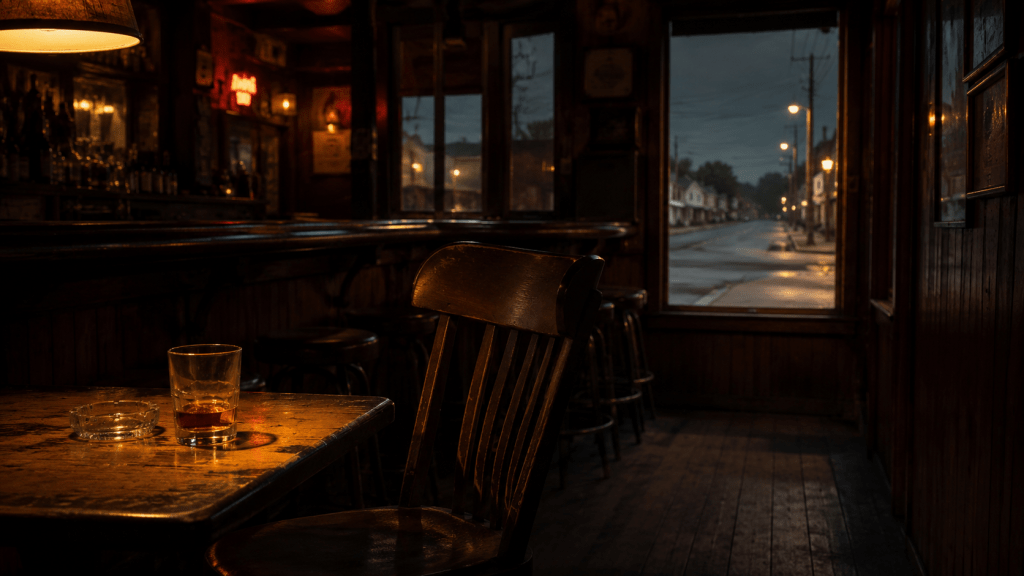
    And every evening, maybe he ends up in some corner bar where the same songs from the eighties keep playing like time got drunk and forgot to leave.

    Maybe Springsteen comes through the speakers, singing about glory days, and everybody smiles because they know the words. They know the rhythm. They know the ache, even if they would never call it grief.

    But I never wanted to become that man.

    The man sitting under the dim light, nursing a drink, telling the same stories about who he used to be because the present has become too small to speak of. The man who once had promise, once had fire, once had some bright and dangerous thing inside him, but somewhere along the way learned to trade becoming for remembering.

    That was the life I feared.

    Not the bar itself.

    Not the music.

    Not even nostalgia, because memory can be holy when handled with care.

    What I feared was getting trapped there. Becoming fluent in the language of almost.

    Almost left.

    Almost wrote.

    Almost tried.

    Almost became.

    A man with intelligence enough to know the cage had a lock, but not enough courage left to reach for the door.

    Which is to say, a man dying of recognition in a room too small for his questions.

    That is no life.

    Not because bars are bad.

    Not because familiar music is bad.

    Not because staying in your hometown is a failure.

    Some people stay and build beautiful lives. Some people remain and become pillars. There are people whose roots run deep enough to turn the soil around them into fertile ground.

    But for me, staying would have been a kind of burial.

    I know that now.

    The Quad Cities are not ignorant. That is one of the lies people tell about places like that. People are educated there. People read. People think. People work hard. People earn degrees. But a degree is not the key if every door in the city is already full of people waiting for the same narrow opening.

    I have seen baggers at local stores with college degrees.

    That image stays with me.

    Not because honest work is shameful. There is dignity in all work done with care. But there is something brutal about a place where education does not always become movement. Where intelligence gets folded into survival. Where ambition learns to speak softly because there is nowhere for it to go. The local economy can make a person feel ridiculous for wanting more than what is available.

    You learn to lower your voice around your own dreams.

    You stop saying certain things out loud.

    Writing would have been one of those things.

    Writing, in that life, would have sounded absurd. Not because writing is absurd, but because harsh places train people to distrust anything that does not immediately pay the bills. Art becomes suspicious. Expression becomes indulgence. A man saying he wants to write sounds like a man saying he wants to starve beautifully.

    So the dream would have been crushed.

    Not all at once.

    Crushed slowly.

    Under overtime.

    Under politeness.

    Under fatigue.

    Under the need to be practical.

    Under the look people give you when you reveal some secret part of yourself, and they do not know whether to laugh or feel sorry for you.

    I might have stopped writing before I ever truly began.

    That thought troubles me.

    Because now I know what writing has become for me.

    It is not a hobby.

    It is not decoration.

    It is not some charming little side project meant to make me feel interesting.

    Writing is the place where I tell the truth before the world edits it. It is where I gather the broken pieces and make them speak. It is where I take what hurt me and refuse to let it die without meaning.

    But in the life I escaped, meaning might have had to wait.

    And wait.

    And wait.

    Until one day, it forgot my name.

    That is what small lives can do when they are not chosen freely. They do not always destroy you by violence. Sometimes they destroy you by routine. You wake up. You work. You endure. You pay. You sleep. You repeat. You become reliable. You become respected in the acceptable ways. You become the kind of man people point to and say, “He’s doing all right,” while something sacred inside you sits in the dark, starving.

    I could have become that man.

    That is why I do not speak of leaving lightly.

    Leaving was not only about geography.

    Leaving was disobedience.

    It was a refusal to let the place that shaped me become the place that sealed me shut. It was me saying, perhaps before I even had the language, that survival was not enough if survival required the death of everything tender, strange, creative, and true inside me.

    New Mexico did not make me from nothing.

    I brought myself here.

    I brought the scars, the questions, the intelligence, the anger, the hunger, the ache. I brought the boy who read because books were doors. I brought the man who wanted more but did not always believe more was allowed. I brought the Midwestern discipline, the working-class suspicion of easy promises, the memory of what it means to keep going when nothing romantic is happening.

    But New Mexico gave me room.

    And room can feel like grace when you come from a place where every dream had to crouch.

    Here, the sky does not crouch.

    The land stretches out like it is daring you to unclench. The mountains do not ask you to justify your existence. The light falls on everything with a kind of ancient indifference that somehow feels merciful. You can be small here without being erased. You can be quiet without disappearing. You can be alone without being trapped.

    And somehow, in that space, the writing came.

    The life that might have been still visits me sometimes.

    I see the house I could have bought because it was affordable, not because it held my future. I see the job I would have kept because leaving felt too dangerous. I see the polite insults swallowed whole. I see the younger men at the bar becoming older men at the same bar, telling the same stories under the same neon signs while the same songs play and the years pass without asking permission.

    I see myself there.

    And I feel grief.

    Not superiority.

    Grief.

    Because there are many brilliant people trapped in lives too narrow for them. Many gifted people never leave because leaving requires money, courage, timing, madness, or some combination of all four. There are many dreams buried under good sense. Many books have never been written. Many songs have never been sung. Many meals were never made. Many paintings were never painted. Many selves never met.

    The world calls that reality.

    Sometimes it is.

    But sometimes, reality is just a cage everybody’s gotten used to.

    I do not want to romanticize leaving. It costs. It takes things from you. It makes you a stranger. It removes the comfort of being easily understood. It teaches you that reinvention is not clean. There are lonely nights in new places. There are moments when the old life, for all its limits, looks warm simply because it is known.

    But I would rather be lonely in the direction of becoming than comfortable in the direction of disappearance.

    That is the truth I keep returning to.

    If I had stayed, maybe I would have been fine.

    That is the haunting part.

    Fine is a dangerous word.

    Fine can hide a thousand funerals.

    Fine can mean the bills are paid, but the soul has gone quiet. Fine can mean nobody worries about you because you have learned to maintain stability. Fine can mean the dream died so politely that even you forgot to mourn it.

    I did not want to be fine.

    I wanted to be alive.

    Not loud.

    Not famous.

    Not untouched by pain.

    Alive.

    Aware of my own mind. Responsible for my own becoming. Free enough to write badly until I wrote honestly. Free enough to tell the truth. Free enough to sit with the anger and ask whether it was protecting me or imprisoning me. Free enough to discover that I was more than the smartest man in a room I had outgrown.

    That is what New Mexico gave me.

    Or helped me claim.

    A life where writing became possible.

    A life where the old bitterness began to lose its authority.

    A life where the boy who once dreamed in silence could finally put words on the page and let them breathe.

    And maybe that is why New Mexico feels less like a place I moved to and more like the land that let me become. Because I know the life I might have stayed long enough to inherit. I know the man I might have become. And I know, with a gratitude I still cannot fully explain, that I was given room before the dream went quiet.

    I do not hate the place I came from.

    I carry it.

    The Quad Cities are in me. The Midwest is in me. The gray winters. The modest houses. The factory logic. The polite cruelty. The educated frustration. The bars with old songs playing. The people are doing their best with what the place allows. The aching knowledge that intelligence does not always become freedom.

    All of it is in me.

    But it is not over me.

    Not anymore.

    And maybe that is what escape really means.

    Not that you outrun the past.

    But that you live long enough, and choose bravely enough, to stop letting the past decide the size of your future.

    There is a life I did not stay long enough to become.

    I mourn him sometimes.

    I honor him, too.

    Because he reminds me of what was at stake.

    He reminds me that every page I write is not merely a page. It is evidence.

    Evidence that the dream survived the harshness.

    Evidence that the man did not bow his head forever.

    Evidence that the corner bar did not become the whole world.

    Evidence that I left.

    Kyle J. Hayes

    kylehayesblog.com

    Please like, comment, and share

    Resources for Hard Times

    If you’re looking for practical help, food support, or community resources, you can visit the Salt, Ink & Soul Resources Page.
    ๐Ÿ‘‰ย Resources for Hard Times

  • Do you believe in soulmates?

    Do you believe in soulmates?

    Daily writing prompt
    Do you believe in soulmates? Why or why not?

    I want to.

    That is the honest answer.

    Not the polished one. Not the answer dressed up for people who need certainty. Not the answer that pretends I have made peace with everything the world has shown me.

    I want to believe in soulmates.

    I want to believe there is someone out there whose spirit recognizes yours before language has to explain anything. Someone who sees the strange shape of your silence and does not run from it. Someone who understands the parts of you that came from pain, not because they enjoy the wound, but because they know healing does not happen when a person is asked to hide what hurt them.

    I want to believe in the kind of love that feels less like discovery and more like return.

    Like arriving somewhere your soul had been walking toward before your body knew the road.

    But the world has a way of making belief expensive.

    The world keeps showing me something else.

    That people leave.

    That promises can be made sincerely and still break under the weight of ordinary life.

    That chemistry is not destiny.

    That wanting someone deeply does not mean they are meant for you.

    That longing can dress itself up as fate if you are lonely enough.

    And that is the part that bothers me.

    Because I would love for soulmates to be true.

    I would love for there to be some sacred architecture beneath all this confusion. Some quiet design. Some person placed in the world with a heart shaped closely enough to mine that, when we finally found each other, the ache would make sense.

    But reality is rarely that gentle.

    In reality, love is not a fairytale.

    It is not guaranteed.

    It does not arrive because you have suffered enough to deserve it. It does not guarantee a reward for endurance. It does not always find the people who are ready for it. It does not always stay with the people who would have honored it.

    And maybe that is why the idea of soulmates hurts.

    Not because it is childish.

    Because it is beautiful.

    And beautiful things are painful when the world keeps refusing to confirm them.

    There is a sadness in wanting to believe something your experience keeps disproving. A private kind of grief. The kind you do not always say out loud because people will either mock you for being too romantic or scold you for being too bitter.

    But I do not think it is bitter to tell the truth.

    I think it is human.

    I think most of us carry some version of this question.

    Is there someone made for me?

    Or am I supposed to keep becoming whole without waiting for anyone to recognize the pieces?

    Maybe the truth is that soulmates do not exist the way we were taught to imagine them. Maybe no one is born as the missing half of us. Maybe no one comes fully equipped to understand, heal, rescue, and complete another person.

    Maybe that is too much to place on any human being.

    Maybe it is unfair.

    But still.

    Still, I understand the wanting.

    I understand wanting one person whose presence makes the room feel less hostile. One person who sees you without turning you into a project. One person who chooses you without needing you to become easier to love.

    That desire is not foolish.

    It is tender.

    It is proof that some part of us still believes connection should be deeper than convenience. That love should be more than timing, attraction, shared interests, and fear of being alone.

    But if I am honest, I do not know if I believe in soulmates anymore.

    I believe in compatibility.

    I believe in effort.

    I believe in kindness repeated over time.

    I believe in people choosing each other after the first spell wears off.

    I believe in friendship as the spine of love.

    I believe in patience.

    I believe in the quiet work of learning someone honestly, not the fantasy version, not the convenient version, but the real person standing there with their history, habits, wounds, and weather.

    Maybe that is less magical.

    But maybe it is more merciful.

    Because if soulmates are not real, then love is not about finding the one person the universe assigned to you.

    It is about finding someone willing to build something true.

    And being willing to build it too.

    Still, I will not pretend the loss of the fairytale does not make me sad.

    It does.

    There is a grief in outgrowing certain hopes.

    There is a loneliness in realizing the world may not be arranged around our deepest desires.

    But maybe there is also freedom there.

    A hard freedom.

    The freedom to stop waiting for fate to prove we are lovable.

    The freedom to know that love, if it comes, will not be less meaningful because it was not written in the stars.

    Maybe it will matter more because two people, with every reason to be selfish, distracted, afraid, and wounded, chose tenderness anyway.

    Not because destiny forced them.

    Because they decided.

    And maybe that is the closest thing we get.

    Not soulmates as a fairytale.

    Not one perfect person made to complete us.

    But two imperfect people choosing, again and again, not to make the world harder for each other.

    I wish I believed in soulmates.

    I truly do.

    But maybe what I believe in now is quieter.

    Less certain.

    Less romantic in the old way.

    I believe in the ache that makes us hope for them.

    I believe in the sadness that comes when we doubt they exist.

    I believe in the courage it takes to keep a soft place inside yourself, even after the world keeps showing you reasons to harden.

    And maybe that softness is the soul’s real mate.

    The part of us that still wants love to be true.

    Even when we are no longer sure the fairytale is

    Kyle J. Hayes

    kylehayesblog.com

    Please like, comment, and share

    Resources for Hard Times

    If you’re looking for practical help, food support, or community resources, you can visit the Salt, Ink & Soul Resources Page.

    ๐Ÿ‘‰ย Resources for Hard Times

  • Do you believe in minimalism?

    Do you believe in minimalism?

    Daily writing prompt
    Do you believe in minimalism?

    Yes.

    But not as a trend.

    Not as a clean white room arranged for somebody else’s approval. Not as a performance of emptiness. Not as another way for the world to sell us less, package it beautifully, and convince us we have become more enlightened because the shelf looks better in the photograph.

    I believe in minimalism as a kind of quiet.

    A kind of release.

    A way of asking yourself, again and again, What am I actually carrying?

    For the past few years, I have felt myself moving in that direction. Slowly. Not perfectly. Not with some grand announcement. Just little decisions. Fewer things. Less clutter. Less noise sitting in corners. Less to clean around. Less to keep track of. Less to worry about when the mind is already full.

    There is a kind of exhaustion that comes from owning too much.

    Not just physically.

    Spiritually.

    Every object asks something of you. It wants space. It wants attention. It wants maintenance. It wants to be remembered, moved, dusted, stored, protected, justified. And after a while, a room can become crowded with versions of yourself you no longer are.

    The shoes you thought would make you someone else.

    You bought the gadget because it promised convenience.

    The clothes for a life you imagined but never lived.

    The things kept out of guilt.

    The things kept out of fear.

    The things were kept because maybe someday.

    Minimalism, for me, is not about having nothing.

    It is about learning what deserves to remain.

    That is the part people miss sometimes. They think minimalism is about denial. About stripping life down until it becomes cold and severe. But I do not want a life without warmth. I do not want a home without memory. I do not want a table with no evidence of living.

    I want enough.

    That word has become more important to me with time.

    Enough.

    Not the latest.

    Not the greatest.

    Not the thing everyone is praising this week, only to forget it next month.

    Enough to live.

    Enough to think.

    Enough to breathe.

    Enough to make a meal, write a page, sit in quiet, and not feel chased by my own possessions.

    There is something powerful about discovering what you truly need. Because once you begin to see it clearly, the world’s noise loses some of its authority. The advertisement becomes less convincing. The upgrade becomes less urgent. The hunger to prove something through ownership begins to weaken.

    And maybe underneath all of that, you find the harder question.

    What is important?

    Not what looks impressive.

    Not what fills the room.

    Not what makes other people assume you are doing well.

    But what actually matters when the door is closed, and no one is watching.

    Peace matters.

    Clarity matters.

    A good chair.

    A quiet morning.

    A clean counter.

    A notebook.

    A meal made without hurry.

    A home that does not feel like a storage unit for anxiety.

    A life with enough space left in it to hear yourself think.

    That is what I am moving toward.

    Not perfection.

    Not aesthetic purity.

    Just less of what weighs me down.

    More of what lets me breathe.

    Because the truth is, I do not want to spend my life managing things I never truly needed. I do not want to be buried beneath my wants and call it abundance. I do not want my attention scattered across objects that cannot love me back.

    I want a life that feels honest.

    Simple.

    Quiet.

    Mine.

    So yes, I believe in minimalism.

    But more than that, I believe in making room.

    Room for peace.

    Room for thought.

    Room for gratitude.

    Room for the person I am still becoming.

    Kyle J. Hayes

    kylehayesblog.com

    Please like, comment, and share

    Resources for Hard Times

    If you’re looking for practical help, food support, or community resources, you can visit the Salt, Ink & Soul Resources Page.

    ๐Ÿ‘‰ย Resources for Hard Times

  • What’s the first book you ever finished and still remember to this day?

    What’s the first book you ever finished and still remember to this day?

    Daily writing prompt
    Whatโ€™s the first book you ever finished and still remember to this day?

    The first grown-up book I remember finishing was Pawn of Prophecy by David Eddings.

    I call it grown-up because, to the boy I was then, grown-up did not mean taxes, sorrow, responsibility, or learning how to carry silence in your chest without letting it spill everywhere.

    Grown-up meant no pictures.

    Grown-up meant more than two hundred pages.

    Grown-up meant opening a book and realizing nobody was going to help you with images anymore. The world was not going to be handed to you in color and ink. You had to build it yourself. You had to listen to the words, trust them, and let your own mind do part of the work.

    That was new to me.

    Before that, reading had often come with pictures. Comic books had taught me movement. They had taught me color, conflict, rhythm, and myth. They had taught me that pain could wear a cape, that responsibility could arrive before a person was ready, that the world was always asking somebody to stand up.

    But Pawn of Prophecy did something different.

    It slowed me down.

    It invited me into a world that did not appear all at once. It unfolded. A little here. A little there. A name. A road. A secret. A strange feeling that the ordinary life of one boy might not be ordinary at all.

    That is one of the great promises of fantasy.

    The idea that you may be more than you have been told.

    That the small place you begin is not the full measure of your life.

    That somewhere beyond the familiar road, there may be danger, yes, but also meaning.

    I did not know then that I was being drawn into a tradition. I did not have the language for genre, worldbuilding, archetype, quest, prophecy, or inheritance. I just knew that I wanted to keep going.

    Page after page.

    Chapter after chapter.

    Not because someone made me.

    Because I wanted to know.

    That mattered.

    Many children are taught to read as a duty. As homework. As proof. As something adults measure, grade, and turn into performance. But this book helped me learn that reading could be a pleasure. Reading could be hunger. Reading could be a private door opening inside an ordinary day.

    I read the rest of the series.

    Then I read the second series that came later.

    That is how obsession begins sometimes. Not with thunder. Not with some grand declaration. Just one book that works its way into you and leaves the door open behind it.

    And once that door is open, you become dangerous in the best possible way.

    You become a child who knows there are other worlds.

    You become someone who understands that paper can hold kingdoms.

    You become someone who can sit in a room, turn a page, and be gone.

    Gone, but not lost.

    Elsewhere, but still becoming.

    I think back on that book now not only because of the story itself, but because of what it gave me permission to feel. It told me that long books did not have to be intimidating. That imagination was not childish. That fantasy was not an escape, as people sometimes say, with judgment in their mouths.

    Fantasy was training.

    It was a rehearsal for wonder.

    It was a way of learning that the visible world is not the only world.

    And maybe that is why I remember it so clearly. Because that book did not just lead me into science fiction and fantasy. It taught me that stories could be lived inside. It taught me that a book without pictures could still fill the mind with images. It taught me that reading was not only something you did.

    It was somewhere you went.

    These days, I do not spend as much time reading what other people have created. I have been trying to build my own. Trying to take the lessons those old books left behind and shape them into something that carries my own breath, my own questions, my own ache.

    But I remember where it started.

    With more than two hundred pages and no pictures.

    Kyle J. Hayes

    kylehayesblog.com

    Please like, comment, and share

    Resources for Hard Times

    If you’re looking for practical help, food support, or community resources, you can visit the Salt, Ink & Soul Resources Page.
    ๐Ÿ‘‰ย Resources for Hard Times

  • What’s a movie you expected to hate but ended up loving?

    What’s a movie you expected to hate but ended up loving?

    Daily writing prompt
    Whatโ€™s a movie you expected to hate but ended up loving?

    Sharknado.

    Even now, saying the name makes me smile.

    Not because it was elegant.

    Not because it was some carefully carved piece of cinema, polished until every corner reflected prestige. Nobody sat down in front of Sharknado expecting the sacred hush of a theater full of people witnessing art descend from the heavens.

    The title told you what it was.

    Sharks.

    In a tornado.

    That was the promise.

    And somehow, against all good sense, it kept it.

    I do not remember exactly when I first watched it. I only remember not knowing what to expect. Maybe that was part of its strange little magic. Some movies disappoint you because they reach for greatness and miss. Some movies bury themselves under ambition, money, special effects, celebrity, and the desperate need to be taken seriously.

    Then there is Sharknado, standing there with no shame at all, holding up the most ridiculous idea it could find and saying, Here. Watch this.

    And I did.

    And I loved it.

    It looked, at times, like it had been filmed and edited in somebody’s garage after everyone had already agreed not to ask too many questions. The effects were not trying to fool the eye so much as wink at it. The plot moved with the logic of a dream you have after eating too late and falling asleep with the television on.

    But somehow, it worked.

    Because it knew its mission.

    Entertainment.

    That sounds simple, but it is not always respected. Somewhere along the way, people started acting like fun was not enough. Like everything had to justify itself. Like a movie could not simply exist to make you laugh, shake your head, and say, “What am I watching?”

    Sharknado understood something that many expensive movies forget.

    You do not always need a massive budget to make something memorable.

    You do not always need perfection.

    Sometimes you need a wild idea, full commitment, and enough honesty to admit exactly what kind of ride you are taking people on.

    That is what made it work for me.

    It did not pretend to be more than it was. It did not dress itself up in false importance. It gave us sharks in a tornado, and once it began, there was no backing away from the absurdity. It leaned in. It committed. It trusted the joke enough to let the whole movie live inside it.

    And I respect that.

    There is a lesson in that, maybe. A strange one, but a real one.

    Sometimes we underestimate the thing that knows exactly what it is.

    Sometimes we laugh at what looks cheap, simple, or foolish, not realizing that sincerity can survive without polish. Not realizing that entertainment does not always arrive wearing a tuxedo. Sometimes it comes flying through the sky with teeth.

    I expected to hate it.

    Instead, I watched the sequels as they came out.

    Each one more absurd than the last. Each one was somehow aware that the audience had not come for restraint. We came for the storm. We came for the madness. We came because, for a little while, nobody had to pretend this made sense.

    That is a gift too.

    A ridiculous gift.

    A low-budget, impossible, airborne-shark kind of gift.

    And maybe that is why I still think about it with affection. Because Sharknado reminded Hollywood of something ordinary people already knew.

    You do not always need a huge budget to entertain somebody.

    You need imagination.

    You need nerve.

    You need to understand the promise you are making.

    And if your promise is sharks in a tornado, then give us sharks in a tornado.

    Kyle J. Hayes

    kylehayesblog.com

    Please like, comment, and share

    Resources for Hard Times

    If you’re looking for practical help, food support, or community resources, you can visit the Salt, Ink & Soul Resources Page.
    ๐Ÿ‘‰ย Resources for Hard Times

  • What’s a moment that made you realize you were stronger than you thought?

    What’s a moment that made you realize you were stronger than you thought?

    Daily writing prompt
    Whatโ€™s a moment that made you realize you were stronger than you thought?

    I do not think strength always announces itself.

    Sometimes it does not come roaring into the room, chest out and hands raised. Sometimes strength is quieter than that. Sometimes it is only a man standing in the wreckage of a moment, looking around, realizing he is still breathing.

    Still here.

    Still capable of taking one more step.

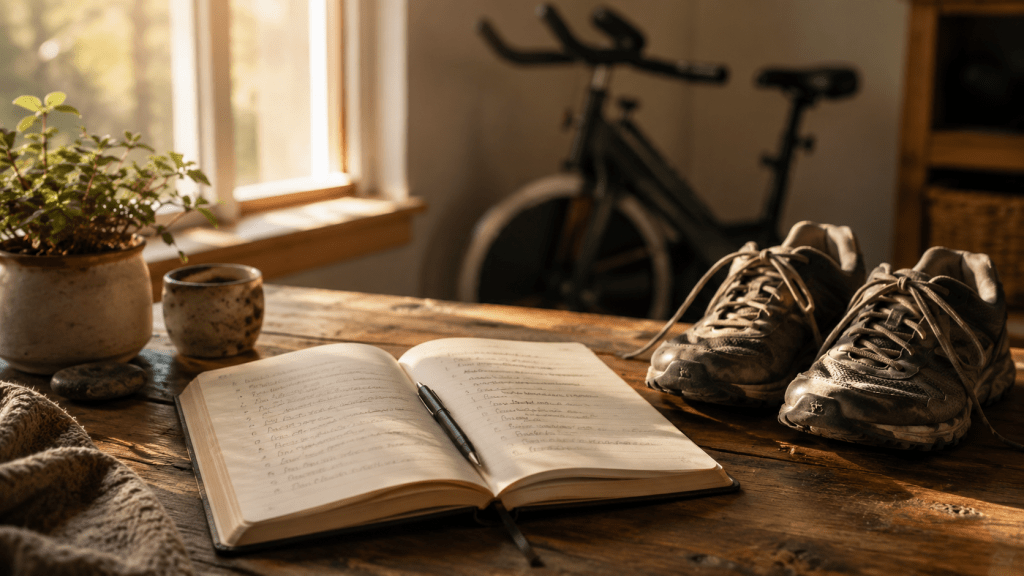
    When I began my self-improvement journey, someone told me to write down the things that proved my toughness. Not the things I wished were true. Not the things I wanted other people to see. The real things. The evidence. The life that the receipts had already given me.

    So I wrote them down.

    And I still read them sometimes.

    Not because I live in the past.

    Because sometimes the present tries to make you forget what you have already survived.

    In high school, I learned to ride a three-wheeler with friends. I was young then, still learning the shape of courage and embarrassment, still trying to figure out what kind of boy I was becoming. At some point, I rolled it off the side into a ditch.

    I could have let that be the story.

    The fall.

    The mistake.

    The proof that I did not belong on it.

    But I was fine.

    And more than that, I learned how to ride.

    That may sound small to someone else. But a lot of life is hidden inside moments like that. You fall into the ditch. You find out you are not broken. You climb out. You learn.

    Later, I joined the military.

    That was not a small thing.

    Basic training has a way of stripping a person down. It removes comfort. It removes softness. It removes the illusion that you can always negotiate your way out of difficulty. You learn what your body can do when your mind is tired. You learn what your mind can do when your body is begging for mercy. You learn that discipline is not a feeling. It is a decision repeated until it becomes part of you.

    I survived basic training.

    Then I graduated from A.I.T.

    There are pieces of me that still stand at attention because of that. Pieces of me that know how to endure discomfort without calling it the end. Pieces of me that understand that tired is not the same as finished.

    Then there was the city.

    A new city.

    No job.

    No friends.

    No place to live.

    There are few silences louder than arriving somewhere with nothing certain beneath your feet. No familiar face waiting. No soft landing. No guarantee that the decision you made was brave instead of foolish.

    But I came anyway.

    And now I have the best job.

    The best friends.

    A great apartment.

    That did not happen by magic. That happened because I stayed. Because I figured things out one problem at a time. Because the life I have now was built by a version of me who had every reason to be afraid and kept moving anyway.

    And then there was my back.

    Surgery has a way of making the body feel like a question mark. It reminds you that flesh is fragile. The spine is not just anatomy. It is architecture. It is permission. It is the quiet structure that lets a person stand, walk, work, and live.

    I was told I might not walk.

    A sentence can change the temperature of a room.

    I might not walk.

    That kind of possibility does something to you. It turns every ordinary movement into a prayer you did not know you were praying. It makes you aware of your legs, your feet, your balance, and your body’s willingness to answer when called.

    And now I am on my exercise bike.

    Not because everything was easy.

    Because it was not.

    Not because fear disappeared.

    Because it did not.

    But because strength, real strength, is not always the absence of fear. Sometimes it is pedaling after being told you might not walk. Sometimes it is building a life in a city where you arrived with almost nothing. Sometimes it is finishing training when quitting would have been easier. Sometimes it is climbing out of a ditch and learning how to ride.

    I used to think strength was something you had to prove to the world.

    Now I think it is something you sometimes have to prove to yourself.

    Again and again.

    That is why I keep the list.

    Because on the hard days, when doubt comes dressed in logic, when fear tries to sound like wisdom, when the old voices return and ask who I think I am, I can look back at what I have already conquered.

    I can remember.

    I have fallen.

    I have started over.

    I have endured.

    I have healed.

    I have rebuilt.

    And I am still here.

    Kyle J. Hayes

    kylehayesblog.com

    Please like, comment, and share

    Resources for Hard Times

    If you’re looking for practical help, food support, or community resources, you can visit the Salt, Ink & Soul Resources Page.

    ๐Ÿ‘‰ย Resources for Hard Times